Finding a qualified english speaking dentist in Ho Chi Minh City ensures accurate clinical diagnoses, transparent treatment planning, and safe execution of complex dental procedures. Clear communication eliminates language barriers, allowing international patients to receive world-class, evidence-based dental care tailored to their specific anatomical and aesthetic needs.
Clinical Summary:
For international patients seeking dental care in Vietnam, consulting an English-speaking dentist is critical for ensuring precise diagnostic comprehension and informed consent. High-standard clinics in Ho Chi Minh City integrate advanced digital dentistry—such as CBCT imaging and intraoral scanning—with fluent communication to execute complex treatments like implantology and full-arch restorations safely. This combination of linguistic proficiency and clinical expertise guarantees that treatment protocols align with global standards, mitigating risks associated with miscommunication during complex maxillofacial procedures and ensuring predictable, long-term oral health outcomes.
Key Takeaways:
- Fluent communication prevents diagnostic errors and ensures fully informed consent prior to invasive procedures.
- English-speaking clinics in HCMC utilize digital workflows for precise, predictable surgical and prosthetic outcomes.
- Complex procedures like dental implants require detailed, multi-phase treatment explanations to manage patient expectations.
- International standards of sterilization and infection control are strictly maintained to prevent cross-contamination.
- Comprehensive post-operative instructions delivered in English significantly reduce the risk of clinical complications.
The Clinical Importance of Clear Communication in Dentistry
Effective communication between dentist and patient is a fundamental clinical requirement that ensures accurate medical history recording, precise diagnostic understanding, and fully informed consent before any procedure.
In the realm of modern healthcare, the ability to communicate complex medical concepts clearly is just as critical as the clinician’s technical proficiency. When international patients seek comprehensive general dentistry abroad, the presence of an English speaking dentist in Ho Chi Minh City becomes a vital component of safe and effective care. The initial consultation serves as the foundation for all subsequent treatments, requiring a meticulous review of the patient’s systemic health, pharmacological history, and chief complaints.
A thorough medical history is paramount in preventing life-threatening complications during dental procedures. An English-speaking clinician can accurately inquire about systemic conditions such as hypertension, poorly controlled diabetes mellitus, or cardiovascular diseases. For instance, understanding a patient’s use of anticoagulant medications (like Warfarin or NOACs) is essential for managing hemostasis during oral surgery. Furthermore, identifying the use of intravenous bisphosphonates is critical to mitigating the risk of Medication-Related Osteonecrosis of the Jaw (MRONJ) following extractions or implant placement[1].
Beyond medical history, accurate diagnosis relies heavily on the patient’s ability to describe their symptoms. The character, duration, and triggers of dental pain provide vital diagnostic clues. A patient must be able to articulate whether pain is sharp and provoked by thermal stimuli (suggestive of reversible pulpitis) or spontaneous, throbbing, and lingering (indicative of irreversible pulpitis). Misinterpretation of these subjective symptoms due to language barriers can lead to misdiagnosis and inappropriate endodontic or surgical interventions.
“Informed consent is not merely a legal formality; it is a continuous educational dialogue where the clinician translates complex biomechanical and physiological realities into understandable concepts, empowering the patient to make autonomous decisions regarding their oral health.”
Dr. Nguyen Van Cuong emphasizes that informed consent requires the patient to fully comprehend the proposed treatment, alternative options, potential risks, and anticipated outcomes. When discussing invasive procedures, the clinician must explain anatomical limitations, such as the proximity of the inferior alveolar nerve or the maxillary sinus floor, in clear English. This level of transparency builds trust and ensures that the patient’s expectations align with clinical realities.
Diagnostic Workflows and Treatment Planning for International Patients
Modern diagnostic workflows rely on 3D imaging and digital scanning, which must be clearly explained in English to help patients understand their anatomical constraints and proposed treatment phases.
The integration of digital technology into dental diagnostics has revolutionized treatment planning, particularly for complex restorative and surgical cases. However, the data generated by these advanced systems is highly technical. An English speaking dentist in Ho Chi Minh City plays a crucial role in translating this data into a comprehensive narrative that the patient can understand, thereby facilitating collaborative decision-making when structuring a comprehensive dental treatment plan.
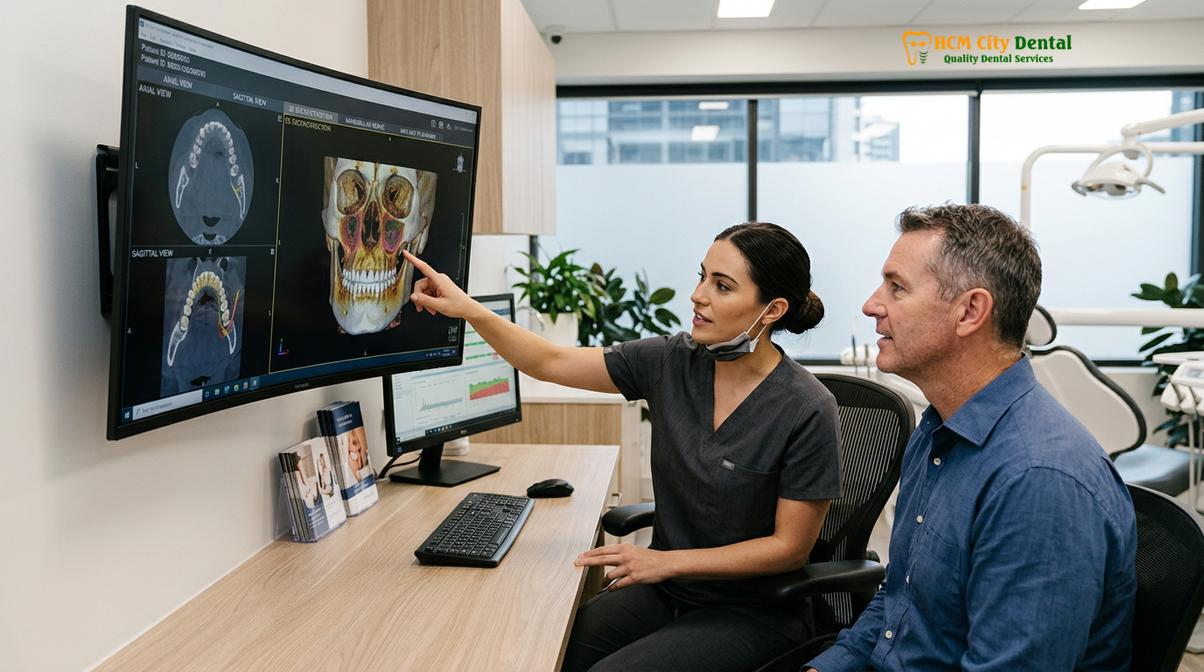
Cone Beam Computed Tomography (CBCT) is the gold standard for three-dimensional maxillofacial imaging. Unlike traditional two-dimensional panoramic radiographs, CBCT provides undistorted, cross-sectional views of the osseous architecture. During the consultation, the dentist will review the CBCT scan with the patient, pointing out critical anatomical landmarks. They will explain the available bone volume (height and width) and assess bone density (Hounsfield units), which are critical determinants for primary implant stability[2].
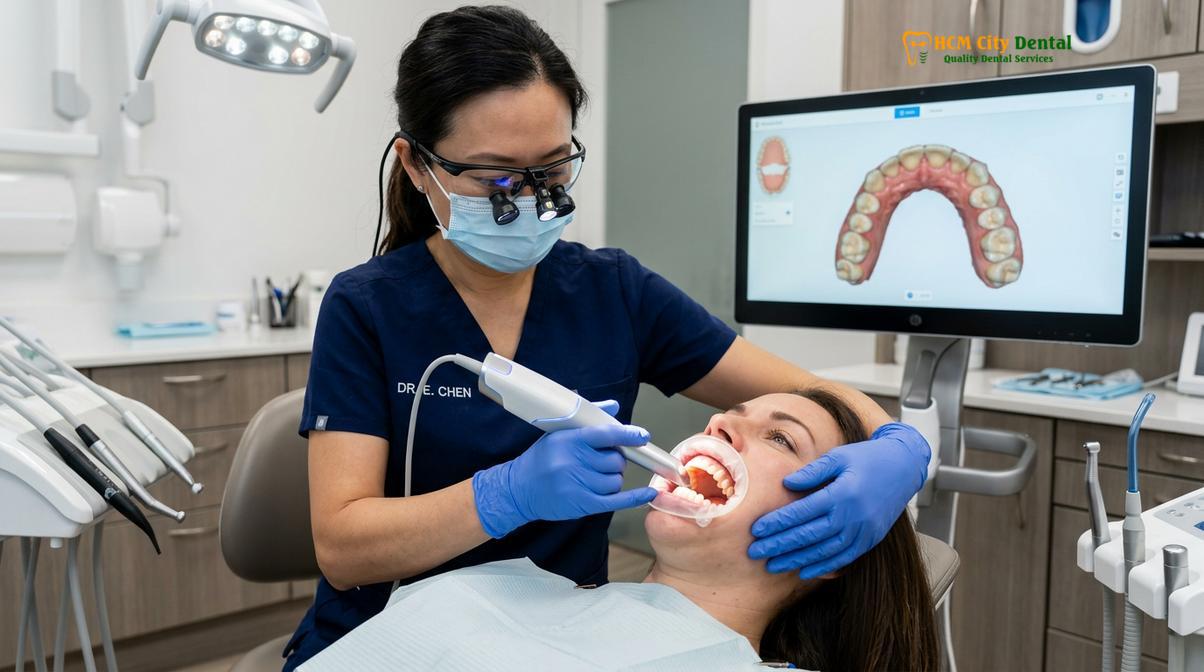
Intraoral digital scanning has largely replaced conventional elastomeric impressions (such as Polyvinyl Siloxane). These optical scanners capture highly accurate 3D representations of the dental arches and soft tissues. The resulting digital models are used for virtual smile design, orthodontic aligner fabrication, and the design of surgical guides. The clinician must explain how these digital impressions improve the marginal adaptation of ceramic restorations and enhance the predictability of the final aesthetic outcome.
| Diagnostic Parameter | Traditional Workflow | Digital Workflow (Modern Standard) |
|---|---|---|
| Radiographic Imaging | 2D Panoramic / Periapical X-rays (superimposition of structures) | 3D CBCT Scans (cross-sectional, undistorted volumetric data) |
| Impression Technique | PVS / Alginate materials (prone to dimensional changes and gag reflex) | Intraoral Optical Scanning (highly accurate, comfortable, immediate data transfer) |
| Treatment Planning | Analog model articulation and manual wax-ups | CAD/CAM software, virtual smile design, and digital articulation |
| Surgical Execution | Freehand implant placement based on mental navigation | Static or dynamic computer-guided surgery using 3D printed stents |
| Patient Communication | Difficult to visualize final outcomes using plaster models | Interactive 3D simulations allowing patients to preview results |
By utilizing these digital tools, the dentist can create a virtual mock-up of the proposed treatment. This visual aid, combined with fluent English explanations, allows the patient to see the anticipated changes in tooth morphology, gingival contours, and overall facial harmony before any irreversible tooth preparation occurs.
Advanced Dental Procedures: Why an English-Speaking Dentist Matters
Complex treatments such as implantology and orthodontics require meticulous, multi-stage explanations regarding surgical risks, biomechanical principles, and long-term maintenance protocols.
When undertaking advanced restorative or surgical procedures, the margin for error is minimal. The success of these treatments depends not only on the clinician’s surgical skill but also on the patient’s adherence to pre-operative and post-operative protocols. An English speaking dentist in Ho Chi Minh City ensures that international patients fully grasp the complexities of their treatment, from the initial incision to the final prosthetic delivery.
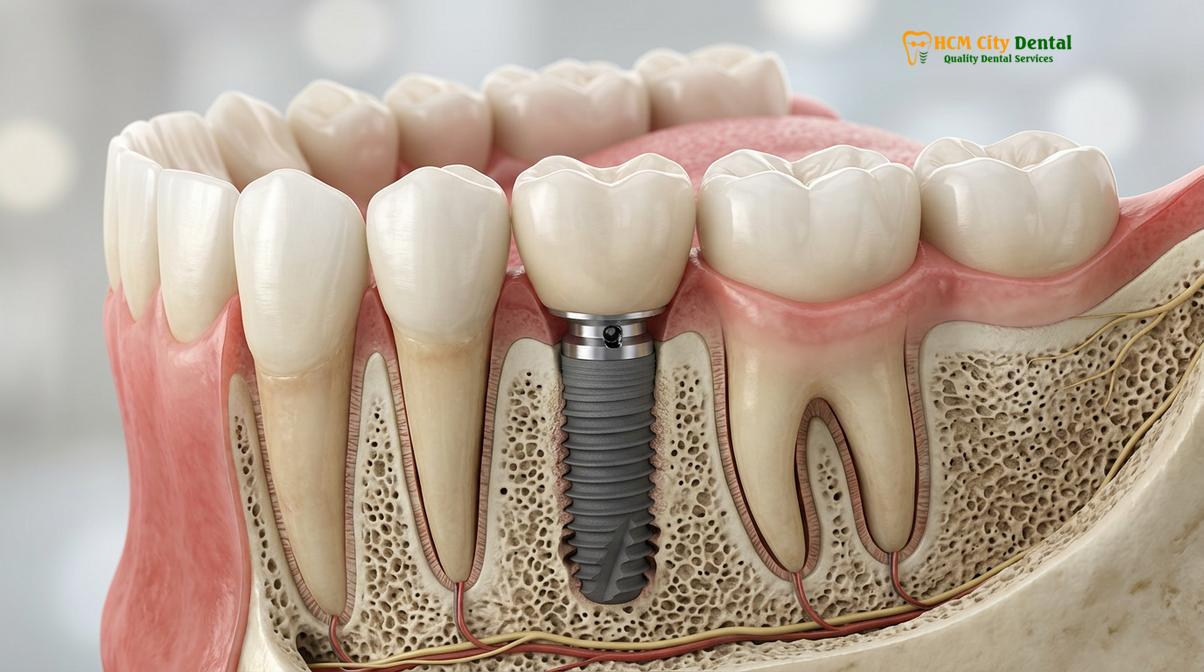
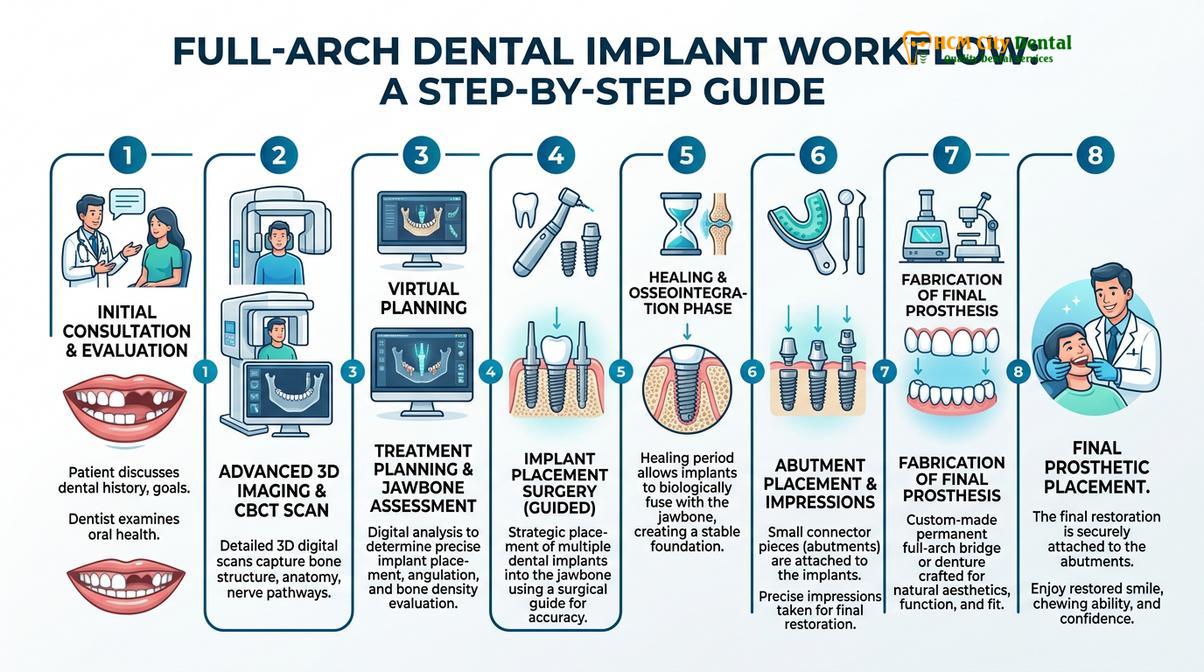
Dental implantology is a prime example of a procedure requiring extensive communication. The process of osseointegration—where living bone cells (osteoblasts) attach directly to the titanium oxide surface of the implant—takes several months. Patients must understand that this biological healing phase cannot be rushed. The clinician will explain the necessity of a two-stage surgical approach versus immediate loading protocols, depending on the insertion torque and primary stability achieved during surgery[3].
Clinical Case Review: Full-Arch Rehabilitation
A 58-year-old international patient presented to HCMC Dental Clinic in Ho Chi Minh City with severe generalized periodontitis and terminal dentition. Dr. Nguyen Van Cuong conducted a comprehensive consultation in fluent English, explaining the pathophysiology of periodontal bone loss and the rationale for transitioning to an implant-supported prosthesis. Utilizing CBCT data, Dr. Cuong detailed the All-on-4 surgical protocol, explaining how tilting the posterior implants maximizes anterior-posterior spread and avoids the maxillary sinus. The patient’s clear understanding of the biomechanical principles and the required soft tissue healing phase led to excellent compliance and a highly successful, predictable aesthetic outcome.
For patients requiring extensive bone augmentation, such as guided bone regeneration (GBR) or maxillary sinus floor elevation (sinus lift), the dentist must articulate the biological rationale for using particulate bone grafts and resorbable collagen membranes. Understanding these adjunctive procedures is crucial when financial planning for dental implants and evaluating regional implantology standards.
Similarly, orthodontic treatments demand clear communication regarding biomechanics and patient compliance. Whether utilizing traditional fixed appliances or clear aligner therapy, the orthodontist must explain how continuous, light forces induce bone remodeling (osteoclastic resorption on the pressure side and osteoblastic deposition on the tension side). Patients must understand the importance of wearing aligners for the prescribed 22 hours a day and the role of interproximal reduction (IPR) or composite attachments in facilitating complex tooth movements. Clear instructions are also vital for managing orthodontic discomfort during the initial stages of treatment[4].
Infection Control and International Clinical Standards in Ho Chi Minh City
Top-tier dental facilities adhere to rigorous global sterilization protocols, utilizing Class B autoclaves and strict cross-infection prevention measures to guarantee patient safety during invasive procedures.
For international patients, verifying the infection control standards of a foreign dental clinic is a primary concern. Reputable clinics in Ho Chi Minh City operate under strict protocols that mirror or exceed those mandated by international health organizations, such as the CDC and the WHO. An English-speaking dentist can confidently articulate these safety measures, providing peace of mind to patients undergoing invasive surgical procedures.
The cornerstone of modern dental infection control is the sterilization of critical and semi-critical instruments. High-standard clinics utilize Class B pre-vacuum autoclaves. Unlike standard gravity displacement sterilizers, Class B autoclaves use a vacuum pump to remove air from the chamber before steam is introduced. This ensures deep steam penetration into hollow instruments, such as surgical handpieces and implant drills, effectively destroying all microbial life, including highly resistant bacterial endospores[5].
“Rigorous infection control is non-negotiable in modern dentistry. The implementation of strict barrier techniques, single-use disposables, and validated sterilization cycles forms an invisible yet impenetrable shield against cross-contamination, ensuring the absolute safety of the surgical environment.”
In addition to instrument sterilization, environmental surface disinfection and the management of dental unit waterlines (DUWLs) are critical components of the infection control chain. Clinics employ EPA-registered hospital-grade disinfectants to decontaminate clinical contact surfaces between every patient. Furthermore, independent water reservoir systems and anti-retraction valves are used to prevent the formation of microbial biofilms within the waterlines, ensuring that sterile irrigants are used during surgical procedures. Understanding these protocols provides insight into the evolution of modern implant techniques and safety standards.
When to See a Doctor: Recognizing Dental Emergencies Abroad
Experiencing a dental emergency while traveling can be highly distressing. Recognizing the clinical signs that require immediate professional intervention is crucial for preventing the spread of infection and preserving the vitality of the dentition. An English speaking dentist in Ho Chi Minh City is essential in these acute situations to rapidly diagnose the pathology and implement effective pain management and treatment strategies.
Acute odontogenic pain is often the primary reason patients seek emergency care. If you experience spontaneous, severe, and throbbing pain that awakens you from sleep, or pain that lingers long after a hot or cold stimulus is removed, you may be suffering from irreversible pulpitis. This condition indicates that the neurovascular tissue within the tooth is severely inflamed or necrotic, necessitating immediate endodontic therapy (root canal treatment) or extraction.
Important Clinical Considerations: Dental Emergencies
Seek immediate emergency dental care if you experience any of the following symptoms, as they may indicate a severe, potentially life-threatening fascial space infection:
- Rapidly spreading facial swelling, particularly if it extends to the eye or down the neck.
- Difficulty swallowing (dysphagia) or restricted mouth opening (trismus).
- A systemic fever accompanied by lethargy and localized intraoral purulent discharge (pus).
- Traumatic avulsion (complete displacement) of a permanent tooth—time is critical for successful replantation.
In cases of dental trauma, such as a luxated or avulsed (knocked-out) tooth, immediate clinical intervention is paramount. The periodontal ligament cells on the root surface begin to die rapidly outside the oral cavity. An English-speaking clinician can guide you over the phone on how to properly transport the tooth (e.g., in milk or Hank’s Balanced Salt Solution) and will prioritize your immediate treatment upon arrival at the clinic. Following any emergency intervention, receiving detailed post-operative care instructions in your native language is vital for uncomplicated healing.
Frequently Asked Questions
Why is it clinically important to choose an English-speaking dentist in Vietnam?
Clear communication prevents diagnostic errors and ensures accurate medical history recording. An English-speaking dentist can thoroughly explain complex treatment phases, surgical risks, and post-operative protocols, ensuring you provide fully informed consent before any invasive procedure begins. This dialogue is essential for identifying systemic contraindications and tailoring the treatment plan to your specific anatomical needs.
How do language barriers affect complex dental treatments like implants?
Language barriers can lead to misunderstandings regarding bone density, surgical risks, and prosthetic expectations. Fluent communication ensures you comprehend the biomechanical principles of osseointegration, the necessity of bone grafting, and the precise timeline required for successful implant therapy. Without clear explanations, patients may develop unrealistic expectations or fail to adhere to critical healing protocols.
What international sterilization standards do top clinics in Ho Chi Minh City follow?
Leading clinics adhere strictly to global infection control protocols, utilizing Class B pre-vacuum autoclaves for instrument sterilization. They employ rigorous barrier techniques, single-use disposables, and continuous biological spore testing to prevent cross-contamination and ensure patient safety. These measures are designed to eliminate all microbial life, including highly resistant pathogens, from the surgical environment.
Can an English-speaking dentist accurately review my foreign medical records?
Yes, a proficient English-speaking clinician can accurately interpret international medical records, including pharmacological histories and systemic health conditions. This is vital for identifying contraindications, such as the use of bisphosphonates or anticoagulants, prior to oral surgery. Accurate interpretation of these records prevents severe intraoperative and postoperative complications.
What should I do if I experience a dental emergency while visiting Ho Chi Minh City?
Seek immediate care from an English-speaking dental professional who can accurately diagnose acute conditions like irreversible pulpitis or fascial space infections. Prompt, clear communication is essential for rapid pain management, appropriate antibiotic prescription, and emergency intervention. Do not delay treatment, as odontogenic infections can spread rapidly to adjacent anatomical spaces.
References
- Journal of the American Dental Association. The impact of patient-provider communication on clinical outcomes in dentistry. (2021).
- International Journal of Oral and Maxillofacial Implants. Digital workflows and patient comprehension in implant dentistry. (2020).
- Clinical Oral Investigations. Biomechanical considerations in full-arch implant-supported prostheses. (2019).
- American Journal of Orthodontics and Dentofacial Orthopedics. Patient compliance and communication in clear aligner therapy. (2022).
- Journal of Hospital Infection. Efficacy of Class B autoclaves in modern dental practice sterilization protocols. (2018).
For personalized diagnostic assessments and to discuss your specific clinical needs, we recommend scheduling a comprehensive consultation with our English-speaking specialists at HCMC Dental Clinic.