Yes, you can get dental implants on holiday in Vietnam. The initial surgical placement typically requires a 5-7 day trip to Ho Chi Minh City. However, because the titanium implant must integrate with your jawbone, a second trip is usually necessary for the final prosthetic crown placement.
Clinical Summary:
Combining a holiday with dental implant surgery in Vietnam is a clinically viable and highly cost-effective option for international patients. The standard protocol involves a 5-7 day initial visit for the surgical placement of Grade 5 titanium fixtures, followed by a biological healing period of 3-6 months for osseointegration. Advanced clinics in Ho Chi Minh City utilize European CE-certified materials, Class B sterilization standards, and 3D CBCT diagnostics to ensure high clinical success rates. While same-day loading is possible for select candidates, complex cases requiring guided bone regeneration or sinus lifts will extend the treatment timeline. Pre-arrival digital consultations allow for precise treatment planning and significant cost savings.
Key Takeaways:
- The initial surgical phase requires a 5-7 day stay in Vietnam for placement and post-op monitoring.
- Premium implants (Straumann, Nobel Biocare) cost between $1,100 and $1,500, offering major savings.
- Complex cases may require bone grafting, adding $400 to $800 to the total procedure cost.
- Strict Class B autoclave sterilization and CE-certified materials ensure optimal patient safety.
- A second trip is typically required after 3-6 months for the final prosthetic crown placement.
The Clinical Feasibility of Dental Implants on Holiday in Vietnam
Planning to get implants on holiday in Vietnam requires understanding the biological timeline of osseointegration, which dictates a two-phase treatment approach separated by several months of healing.
For many international patients, the prospect of combining a tropical vacation with restorative dentistry is highly appealing. However, it is crucial to approach this decision with a clear understanding of the medical realities involved. Dental implant surgery is not a simple, one-hour cosmetic fix; it is a sophisticated oral surgery that relies on the biological process of osseointegration. When you plan to get implants on holiday vietnam, you are essentially scheduling the first phase of a comprehensive medical rehabilitation.
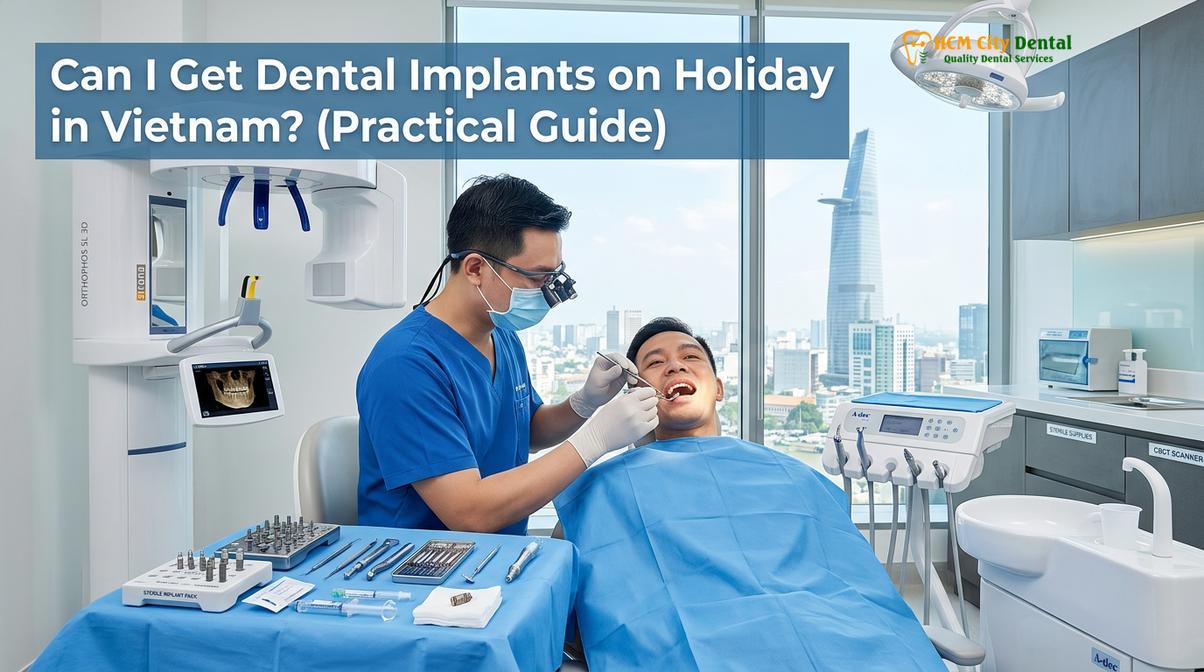
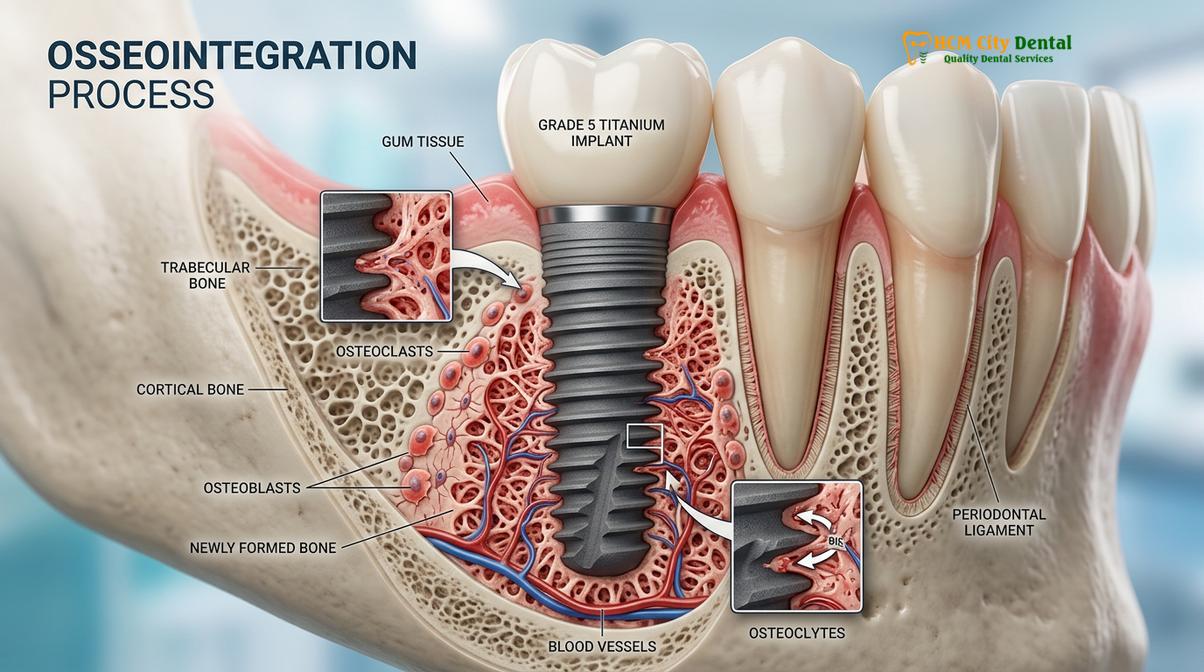
The initial trip to Vietnam is dedicated to diagnostics, surgical planning, and the placement of the titanium fixture into the jawbone. This phase typically requires a 5-7 day stay in the country. During this time, the clinical team will perform a 3D CBCT scan, extract any failing teeth if necessary, place the implant, and monitor the initial soft tissue healing. After the surgery, patients are usually advised to rest for a day or two before resuming light holiday activities. The titanium implant must then be left undisturbed for 3 to 6 months to allow osteoblasts (bone-forming cells) to grow and fuse with the implant surface[1].
Because of this mandatory healing period, a standard implant procedure cannot be fully completed in a single short holiday. Patients must plan for a second trip to Ho Chi Minh City to have the final abutment and porcelain crown attached. While same day dental implants (immediate loading) are heavily marketed, they are only clinically appropriate for specific cases—such as full-arch restorations (All-on-4) or single front teeth where primary stability is exceptionally high. For the majority of posterior (back) teeth, immediate loading carries a higher risk of micro-movement and implant failure, making the traditional two-trip approach the gold standard in the evolution of modern clinical workflows.
Comprehensive Cost Analysis and Material Selection in Ho Chi Minh City
Dental implant costs in District 1 range from $700 for Korean systems to $1,500 for premium Swiss brands, offering substantial savings compared to Western clinics without compromising on material quality.
One of the primary drivers for medical travel is the significant reduction in treatment expenses. When conducting a cost comparison between Western nations and Southeast Asia, the financial benefits become immediately apparent. In countries like the US, Australia, or the UK, a single dental implant with a crown can easily exceed $4,000 to $5,000. In contrast, top-tier clinics in Ho Chi Minh City offer the exact same globally recognized implant brands at a fraction of the price, due to lower operational overhead and favorable exchange rates.
The implant cost in Vietnam varies primarily based on the brand and the surface technology of the titanium fixture. South Korean implants, such as Dentium and Osstem, are highly reliable and widely used across Asia, typically priced between $700 and $950 per tooth. For patients seeking premium European systems with decades of clinical research, a Swiss Straumann implant generally ranges from $1,200 to $1,500. Another top-tier option, Nobel Biocare, usually falls between $1,100 and $1,400. These premium brands often feature proprietary surface treatments (like Straumann’s SLActive) that can accelerate bone healing and improve outcomes in compromised bone[2].
| Implant Brand / Origin | Estimated Cost (USD) | Clinical Characteristics |
|---|---|---|
| Dentium / Osstem (South Korea) | $700 – $950 | Excellent value, high success rate, standard healing time. |
| Nobel Biocare (Sweden/USA) | $1,100 – $1,400 | Premium tier, excellent for immediate loading and All-on-4. |
| Straumann (Switzerland) | $1,200 – $1,500 | Top global tier, advanced surface technology for faster integration. |
| Bone Grafting / Sinus Lift | $400 – $800 | Required only if jawbone volume is insufficient for placement. |
It is important to note that these prices generally include the implant post, the abutment, and a standard porcelain or zirconia crown. To maximize savings, many international patients take advantage of digital pre-planning. For instance, clinics often offer a 40% discount on surgical fees for patients who book their appointments and submit preliminary X-rays via WhatsApp prior to their arrival in District 1. This cost comparison between regional medical hubs highlights why Vietnam has become a premier destination for restorative dentistry.
Surgical Workflows and Advanced Clinical Protocols
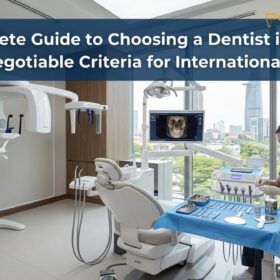
Top-tier clinics in Saigon utilize 3D CBCT imaging, digital intraoral scanning, and Class B autoclave sterilization to execute precise, safe, and highly sterile implant surgeries.
The success of a dental implant relies heavily on the precision of the surgical placement and the strictness of the infection control protocols. When traveling abroad for medical care, patients must ensure that their chosen facility adheres to international standards. Reputable clinics in Vietnam utilize Titanium Grade 5 implants, which offer superior tensile strength and biocompatibility compared to lower-grade alloys. Furthermore, all materials should carry European CE certification or FDA approval, ensuring they meet rigorous global safety standards.
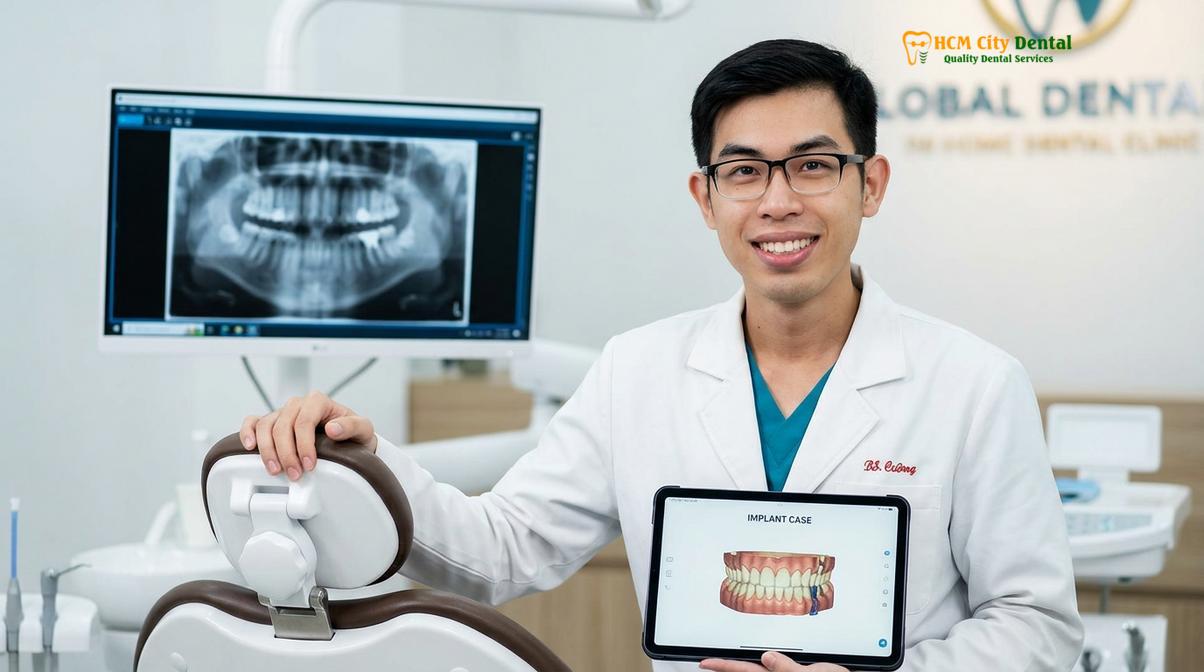
The clinical workflow begins with a comprehensive diagnostic phase. A 3D Cone Beam Computed Tomography (CBCT) scan is mandatory. This scan provides a three-dimensional view of the patient’s jawbone, allowing the surgeon to map out the exact trajectory of the implant, avoiding critical anatomical structures such as the inferior alveolar nerve in the lower jaw and the maxillary sinus in the upper jaw. Following the scan, digital intraoral scanners are used to create a highly accurate virtual model of the patient’s mouth, eliminating the need for uncomfortable traditional putty impressions.
“The integration of 3D CBCT imaging and digital surgical guides has fundamentally transformed implantology. By planning the exact depth and angulation of the implant virtually before the patient even sits in the chair, we significantly reduce surgical trauma, minimize post-operative swelling, and ensure a highly predictable aesthetic outcome.”
— Clinical perspective on digital implant workflows
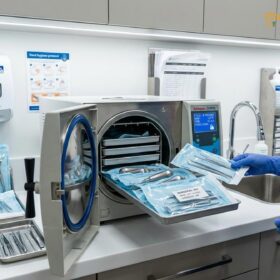
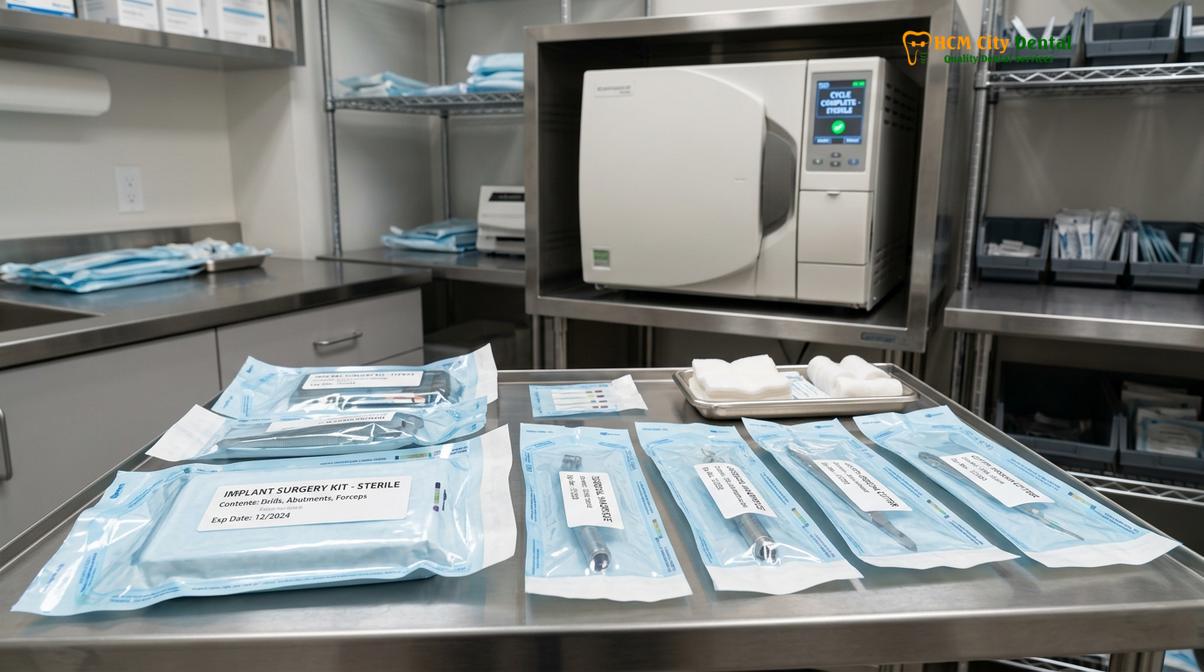
Infection control is another critical pillar of the surgical workflow. Leading facilities employ sterile Class B autoclave standards. Unlike standard sterilizers, Class B autoclaves use a fractionated vacuum process to completely remove air from the chamber, ensuring that high-pressure steam penetrates every surface of the surgical instruments, including hollow tools. Dr. Nguyen Van Cuong, with over 20 years of expertise in complex oral rehabilitation, emphasizes that strict adherence to these sterilization protocols is non-negotiable for preventing cross-contamination and ensuring the long-term survival of the implant.
Managing Complex Cases: Bone Grafting and Sinus Lifts
Patients with insufficient jawbone density may require guided bone regeneration or a sinus lift, which adds $400 to $800 to the procedure and extends the biological healing time.
Not every patient is an immediate candidate for a straightforward implant placement. When a tooth is lost, the surrounding jawbone naturally begins to resorb (shrink) due to the lack of stimulation from chewing forces. If a tooth has been missing for several years, or if there was severe periodontal disease, the bone volume may be insufficient to anchor a titanium implant securely. In these scenarios, adjunctive surgical procedures such as bone grafting or a sinus lift become necessary[3].
Bone grafting, or Guided Bone Regeneration (GBR), involves placing bone particulate material (often bovine or synthetic) into the deficient area to act as a scaffold. Over several months, the patient’s body replaces this graft with native bone. If the bone loss is in the upper posterior jaw, the maxillary sinus may have expanded downward into the space once occupied by the tooth roots. A sinus lift is a specialized grafting procedure that gently elevates the sinus membrane and places bone graft material beneath it to create sufficient vertical height for the implant[4].
Important Clinical Contraindications: Bone grafting and sinus lift procedures require a robust immune response for successful healing. Patients with uncontrolled diabetes, active periodontal disease, or those who are heavy smokers face a significantly higher risk of graft failure and implant rejection. A thorough medical history review is mandatory before proceeding with these advanced surgeries.
These complex procedures directly impact the vietnam dental tourism timeline. While a minor bone graft can sometimes be performed simultaneously with implant placement, extensive grafting or a major sinus lift usually requires a separate healing period of 4 to 6 months before the implant can even be inserted. This means the patient may need three trips instead of two. Furthermore, these procedures add to the overall cost, typically ranging from $400 to $800 depending on the volume of graft material required and the complexity of the surgery.
Real Patient Experience: A Dental Implant Travel Guide
A well-structured dental implant travel guide ensures international patients can seamlessly combine their surgical appointments with a relaxing recovery period in Vietnam.
Navigating medical treatment in a foreign country can seem daunting, but a comprehensive dental implant travel guide can help set realistic expectations. The journey begins long before the flight. Patients are encouraged to send their local panoramic X-rays to the clinic in Vietnam for a preliminary assessment. This allows the clinical team to provide a tentative treatment plan, cost estimate, and timeline, ensuring there are no major surprises upon arrival.
Patient Case Study: International Coordination
A 55-year-old patient from Australia traveled to HCMC Dental Clinic in Ho Chi Minh City to replace three missing lower molars. Prior to arrival, the patient coordinated with the clinic via WhatsApp, securing a 40% surgical discount. Upon arrival, a 3D CBCT scan confirmed adequate bone density. The surgery was completed on Day 2 of the trip. The patient spent the next five days enjoying the local culture and cuisine (sticking to a soft diet) before returning to the clinic on Day 7 for a final check-up and suture removal. The patient returned to Vietnam four months later for the final zirconia crowns, completing the treatment seamlessly.
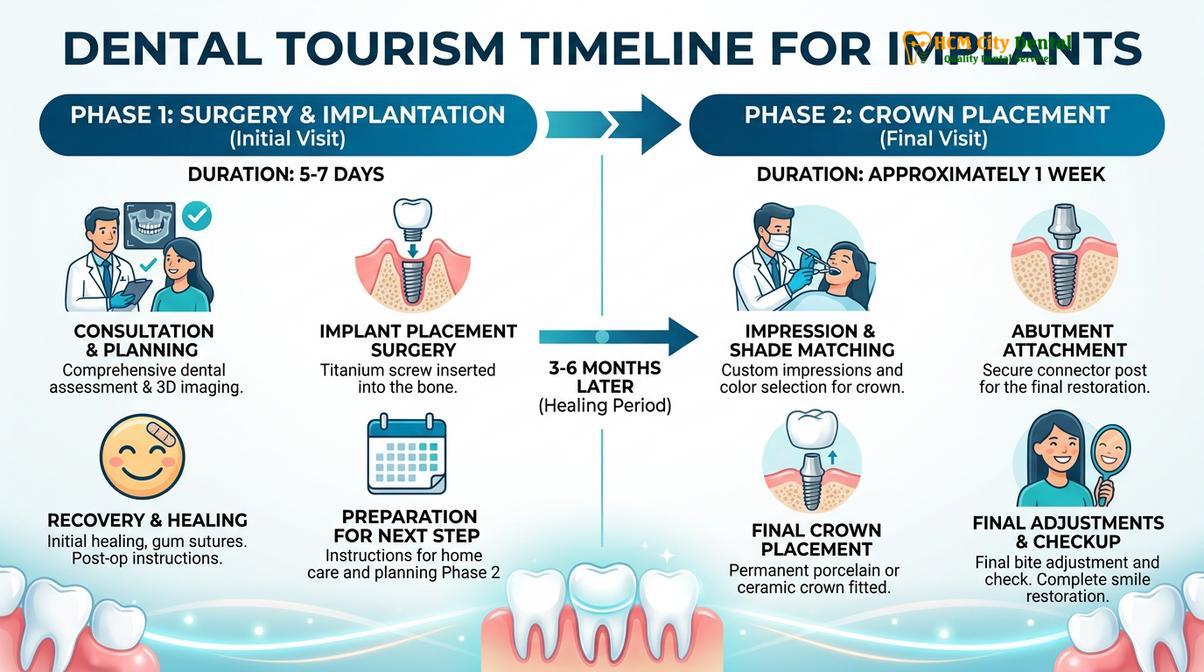
During the initial trip, the first day is dedicated to the in-person consultation, 3D scanning, and finalizing the surgical plan. The surgery is typically scheduled for the second day. Post-operative care is crucial; patients are prescribed antibiotics and specialized mouthwashes to prevent infection. It is highly recommended to stay in the city for at least 5 to 7 days post-surgery. This allows the clinical team to monitor the initial healing phase, manage any unexpected swelling, and safely remove the sutures before the patient flies home. Furthermore, Dr. Nguyen Van Cuong and his team frequently assist international patients with direct billing insurance setups, ensuring that those with eligible global health coverage can seamlessly process their claims for restorative work.
“The key to successful dental tourism is not just the surgery itself, but the meticulous post-operative care and communication. We ensure our international patients have direct access to our clinical team throughout their healing phase back home, providing peace of mind across borders.”
— Patient Care Philosophy
When to Consult a Dental Professional
While dental implant surgery has a very high success rate, it is a medical procedure that requires careful monitoring. If you have returned to your home country after the initial surgical phase in Vietnam, it is vital to maintain excellent oral hygiene and attend regular check-ups with a local dentist if possible. You should seek immediate professional dental advice if you experience any of the following red flags during your healing period:
- Severe, throbbing pain that worsens after the first 72 hours and is not relieved by prescribed analgesics.
- Excessive bleeding from the surgical site that does not stop with applied pressure.
- Significant swelling that extends to the neck or eyes, or swelling that increases after the third post-operative day.
- A persistent fever or a foul taste/odor coming from the implant site, which may indicate a localized infection.
- Any sensation that the titanium implant is loose or shifting within the gum tissue[5].
Patients must remember that the temporary healing abutment or temporary crown (if provided) is not designed to withstand heavy chewing forces. Adhering strictly to a soft diet and avoiding hard, crunchy, or sticky foods is essential to protect the integrating implant. If you are planning to utilize comprehensive dental tourism services in Vietnam, ensure you have a clear communication channel with your overseas clinic for any post-operative concerns.
Frequently Asked Questions
Can I complete the entire dental implant procedure in a single holiday trip?
No, a standard implant procedure requires two separate trips spaced 3 to 6 months apart. The first trip is for surgical placement, while the second trip is for attaching the final prosthetic crown after the jawbone has fully healed and integrated with the titanium fixture. Same-day loading is only applicable in highly specific, carefully selected cases.
How much does a premium Straumann implant cost in Saigon?
A premium Swiss Straumann implant typically costs between $1,200 and $1,500 in Ho Chi Minh City. This price reflects the high-quality materials and advanced surface technologies used, offering substantial savings compared to Western dental clinics where the same implant can cost over $4,000.
Is it safe to fly immediately after undergoing a sinus lift?
Flying immediately after a sinus lift is generally contraindicated due to cabin pressure changes. Dentists typically recommend waiting at least 5 to 7 days post-surgery before taking a commercial flight to prevent sinus barotrauma, minimize the risk of bleeding, and ensure proper initial healing of the delicate sinus membrane.
What happens if my jawbone is too thin for an implant?
If your jawbone lacks sufficient volume, a bone grafting procedure or guided bone regeneration will be required. This builds the necessary foundation to support the implant, though it may add $400 to $800 to the cost and extend the overall healing timeline by several months before the implant can be safely placed.
How do I secure the pre-arrival discount for my treatment?
International patients can secure a 40% discount on their treatment by booking their consultation via WhatsApp prior to arriving in Vietnam. This allows the clinical team to review preliminary X-rays, establish a customized treatment plan in advance, and allocate the necessary surgical time for your visit.
References
- Journal of Oral Implantology. Osseointegration timelines and clinical protocols for titanium fixtures. (2021).
- International Journal of Oral & Maxillofacial Implants. Comparative analysis of implant surface technologies. (2020).
- Clinical Implant Dentistry and Related Research. Efficacy of guided bone regeneration in compromised ridges. (2019).
- Journal of Periodontology. Maxillary sinus floor elevation: anatomical and surgical considerations. (2022).
- American Dental Association. Post-operative guidelines for oral surgery and air travel. (2018).