
Dental tourism Vietnam from Australia
Dental treatment in Vietnam for Australian patients
Quick Answer: Australian travelers save an average of $15,000 on major dental work. HCMC Dental provides complete English claim packets with itemized receipts, diagnostic charts, and pre/post X-rays for Medibank, Bupa, HCF, or NIB extras claims.
Plan treatment in Ho Chi Minh City with timeline efficiency, transparent scope confirmation, and communication support that fits international travel windows.
Australian patients usually prioritize efficient trip scheduling, realistic recovery windows, and clear pre-arrival planning.
Quick Answer: Australians save 60–70% on dental work in Ho Chi Minh City. A single implant costs AUD 1,100 at HCMC Dental vs AUD 4,500–6,500 in Australia. Direct flight from Sydney ≈ 8 hours.
Engaging in dental tourism vietnam from australia offers patients access to premium clinical care, including complex implantology and full-mouth rehabilitations, at significantly lower costs than Australian private clinics. With direct flight routes to Ho Chi Minh City and a generous 45-day visa-free entry, Australians can seamlessly combine world-class restorative dental treatments with a memorable international holiday.
Clinical Summary:
Dental tourism from Australia to Vietnam has evolved into a highly regulated, premium healthcare sector. Patients traveling to Ho Chi Minh City benefit from advanced digital dentistry, including 3D CBCT diagnostics and CAD/CAM restorations, utilizing globally recognized materials such as Straumann implants and IPS e.max ceramics. By leveraging favorable exchange rates and lower operational overheads, Australian patients achieve substantial cost savings while receiving care that meets stringent international clinical standards. The streamlined 5-day treatment workflow, combined with convenient travel logistics, makes Vietnam an optimal destination for complex restorative and cosmetic dentistry.
Key Takeaways:
- Australian patients can save up to 60-70% on major dental procedures compared to domestic private fees.
- A single premium dental implant in Vietnam averages $800 to $1,200 AUD, utilizing top-tier European materials.
- Australians benefit from a 45-day visa-free entry, simplifying travel logistics to Ho Chi Minh City.
- Top clinics employ strict Class B autoclave sterilization and international cross-infection protocols.
- A highly optimized 5-day clinical workflow allows for efficient completion of crowns, veneers, and initial implant placements.
Why Choose Dental Tourism in Vietnam from Australia?
Australian patients save up to 70% on major dental procedures in Vietnam without compromising on clinical quality, utilizing the exact same premium European materials found in domestic clinics.
The landscape of global healthcare has shifted dramatically, with Southeast Asia emerging as a premier hub for medical and dental excellence. For Australian citizens facing prohibitive out-of-pocket expenses for restorative dentistry, traveling abroad has become a highly viable and clinically sound alternative. The primary driver for this trend is the profound economic advantage. When evaluating the dental implant cost vietnam aud, patients quickly realize that the financial savings are substantial enough to cover premium flights, luxury accommodation, and a comprehensive holiday, while still returning home with capital to spare[1].
However, cost reduction is only one facet of the equation. The clinical quality available in top-tier Vietnamese facilities rivals standard domestic care. Clinics catering to international patients invest heavily in cutting-edge technology, including intraoral scanners, 3D Cone Beam Computed Tomography (CBCT), and in-house CAD/CAM milling laboratories. This digital integration ensures precise diagnostics, predictable surgical outcomes, and highly aesthetic restorations, adhering to rigorous international quality assurance protocols[2].
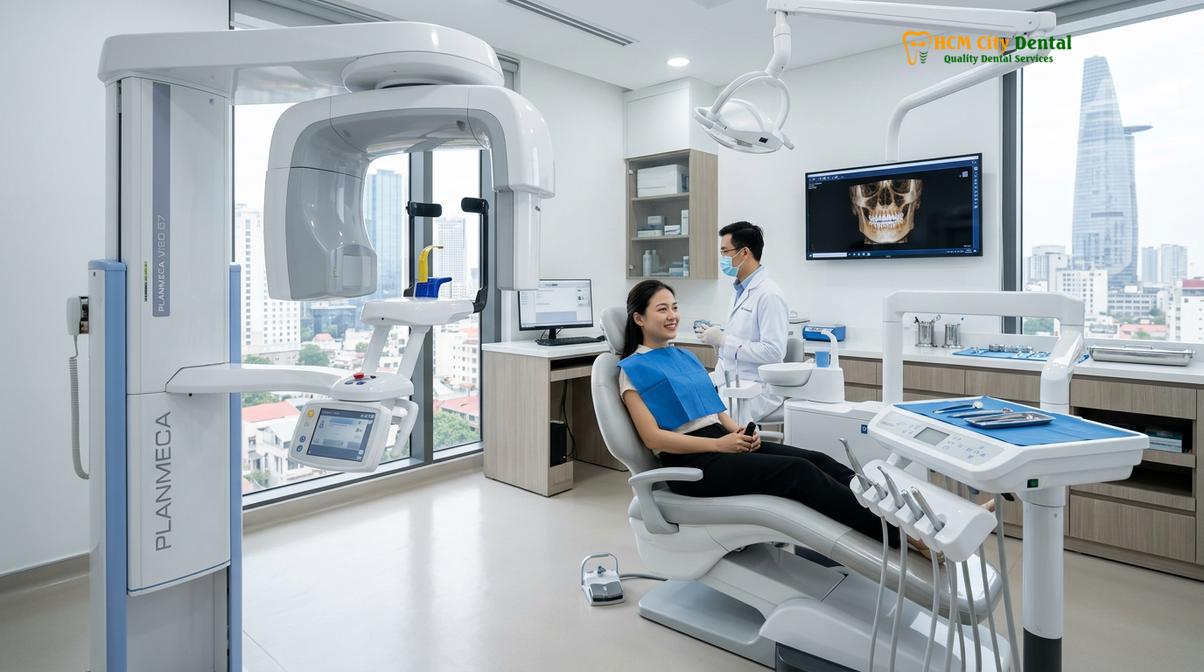
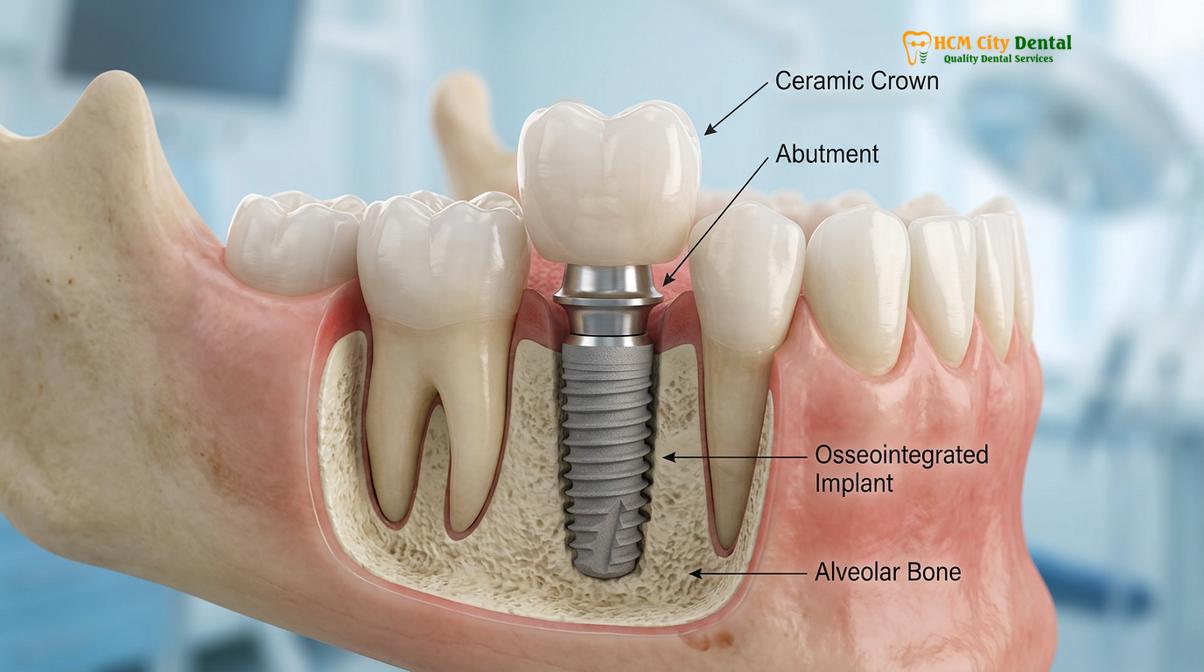
Furthermore, the materials utilized are identical to those used by top practitioners globally. Whether a patient requires a single tooth replacement or a full-arch rehabilitation, reputable clinics exclusively use imported, FDA-approved, and CE-marked products. Brands such as Straumann (Switzerland), Nobel Biocare (Sweden), and Ivoclar Vivadent (Liechtenstein) are standard offerings. This commitment to quality supports long-term biocompatibility, optimal osseointegration, and superior mechanical strength.
Comprehensive Cost Comparison: Australia vs. Vietnam
To illustrate the financial viability of this clinical pathway, consider the average fees for common procedures. The following table outlines the estimated costs in Australian Dollars (AUD), highlighting the profound economic efficiency of seeking care in Ho Chi Minh City.
| Dental Procedure | Average Cost in Australia (AUD) | Average Cost at HCMC Dental Clinic (AUD) | Estimated Savings |
|---|---|---|---|
| Single Dental Implant (including Crown) | $4,500 - $6,000 | $800 - $1,200 | Up to 75% |
| Porcelain Veneer (E.max / per tooth) | $1,200 - $1,800 | $350 - $450 | Up to 70% |
| Zirconia Crown (per tooth) | $1,500 - $2,000 | $300 - $400 | Up to 75% |
| All-on-4 Full Arch Implant System | $20,000 - $30,000 | $6,000 - $8,000 | Up to 70% |
| Root Canal Treatment (Molar) | $1,200 - $1,600 | $200 - $300 | Up to 80% |
These figures demonstrate why exploring a clinical guide to premium care is essential for patients looking to maximize their healthcare investments. The lower costs in Vietnam are not a reflection of inferior quality, but rather the result of lower operational overheads, favorable currency exchange rates, and a highly competitive, specialized medical tourism market.
The 5-Day Clinical Treatment Workflow in Ho Chi Minh City
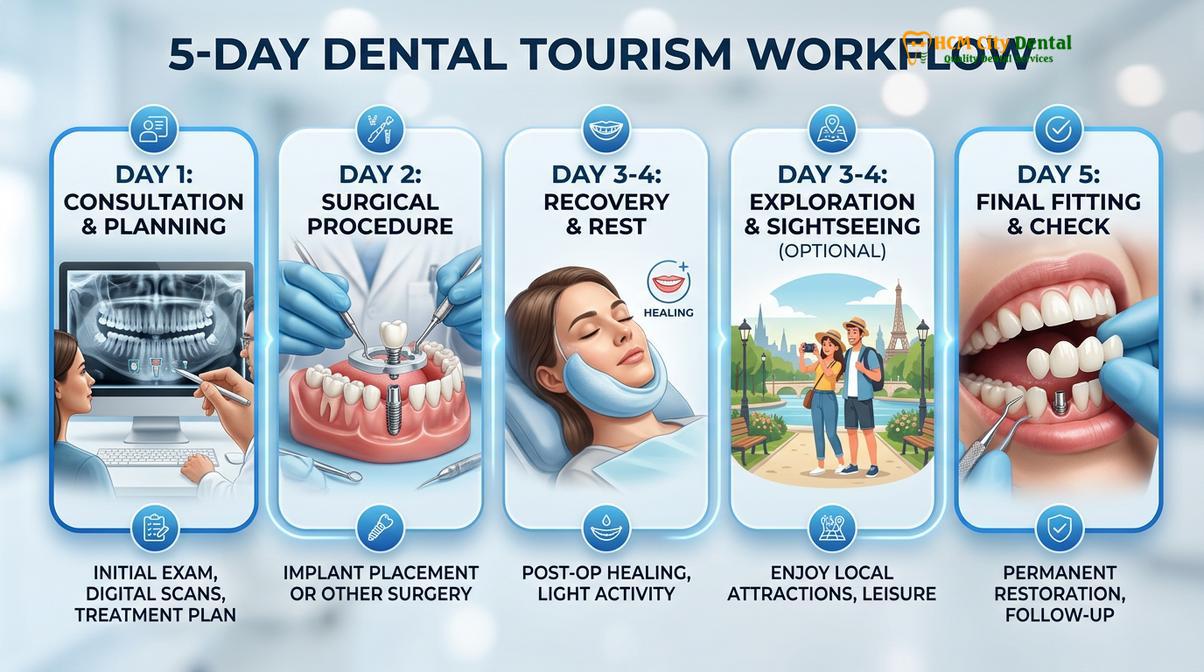
A highly optimized 5-day clinical timeline allows international patients to complete complex restorative work, from initial 3D CBCT scanning to final custom bite adjustments, with maximum efficiency.
One of the most significant advantages of undertaking a vietnam dental holiday australia is the streamlined efficiency of the treatment process. Unlike domestic clinics where appointments for complex procedures may be spread over several weeks or months, international clinics are structured to deliver rapid, high-quality care within a condensed timeframe. This is achieved through dedicated international patient coordinators, in-house dental laboratories, and highly synchronized clinical teams.
For patients requiring cosmetic restorations (such as veneers or crowns) or the surgical placement of dental implants, a standard 5-day itinerary in Ho Chi Minh City is typically structured as follows:
Day 1: Arrival, Diagnostics, and Clinical Consultation
Upon arrival at Tan Son Nhat International Airport (SGN), patients are often greeted by clinic concierge services. The clinical journey begins with a comprehensive diagnostic session. This includes a 3D CBCT scan to assess bone density and anatomical structures, followed by digital intraoral scanning. Patients then have an in-depth consultation with senior specialists to formulate a precise treatment plan. During this session, the final clinical approach is confirmed, and any necessary pre-operative preparations are completed.
Day 2: Surgical Phase or Restorative Preparation
The second day is dedicated to the primary clinical intervention. For implant patients, this involves the surgical placement of the titanium fixtures into the jawbone under local anesthesia or twilight sedation. For cosmetic patients, the teeth are meticulously prepared, and highly accurate digital impressions are sent instantly to the in-house CAD/CAM laboratory. Temporary restorations are placed to ensure the patient remains comfortable and aesthetically presentable.
Day 3 & 4: Laboratory Fabrication and Patient Recovery
While the patient recovers and enjoys sightseeing around the vibrant districts of Ho Chi Minh City, the dental laboratory technicians are hard at work. Utilizing advanced milling machines and master ceramists, the final zirconia or lithium disilicate (e.max) restorations are crafted. This period allows patients to experience the local culture, cuisine, and hospitality, transforming a medical trip into a genuine holiday.
Day 5: Final Try-In, Occlusal Adjustment, and Warranty Issuance
On the final clinical day, the temporary restorations are removed, and the permanent crowns or veneers are tried in. The dentist meticulously checks the marginal fit, aesthetic integration, and occlusal harmony (bite alignment). Once the patient and the clinician are completely satisfied, the restorations are permanently bonded. The patient is then provided with post-operative care instructions, necessary medications, and an international warranty passport for their specific materials.
"The integration of in-house digital laboratories has revolutionized dental tourism, allowing complex full-mouth rehabilitations to be completed with microscopic precision in a fraction of the traditional timeframe."
Travel Logistics: Flights, Visas, and Accommodation
Traveling from Australia to Ho Chi Minh City is highly convenient, featuring direct flights, a 45-day visa exemption, and affordable luxury hotels located just minutes from the clinic.
Organizing dental work vietnam for australians is remarkably straightforward due to excellent bilateral travel infrastructure. Ho Chi Minh City (formerly Saigon) serves as the primary gateway for medical tourists, offering a seamless blend of modern amenities and rich cultural heritage. Proper logistical planning ensures that the focus remains entirely on clinical recovery and relaxation, which is a primary motivation for many international patients seeking care abroad[5].
Flight Routes and Accessibility
Major Australian cities offer excellent connectivity to Tan Son Nhat International Airport (SGN). Direct flights are frequently available from Sydney (SYD), Melbourne (MEL), and Brisbane (BNE) via carriers such as Vietnam Airlines, Jetstar, and VietJet Air. The flight duration is typically between 8 to 9 hours, making it a highly manageable journey. For patients seeking maximum comfort post-surgery, upgrading to premium economy or business class is often feasible given the substantial savings on the dental procedures themselves.
Visa Requirements for Australian Citizens
A major logistical advantage for Australian passport holders is the current visa policy. Australians are eligible for a 45-day visa-free entry into Vietnam. This generous timeframe is more than sufficient for almost all dental treatment phases, including extended recovery periods or extended holidays. For those who wish to stay longer, an e-visa can be easily applied for online prior to departure, granting up to 90 days of stay.
Accommodation and Local Transit
Ho Chi Minh City boasts a vast array of accommodation options to suit every budget. Most premium dental clinics are strategically located in or near District 1, the city's central hub. Patients can find excellent 4-star and 5-star hotels ranging from $40 to $150 AUD per night. Staying in District 1 ensures close proximity to the clinic, minimizing travel time for appointments. For local transit, ride-hailing applications are ubiquitous, offering safe, air-conditioned, and highly affordable transportation throughout the city.
Premium Dental Implants and Cosmetic Restorations
Top-tier clinics in Vietnam utilize globally recognized implant systems like Straumann and Nobel Biocare, alongside IPS e.max ceramics, ensuring long-lasting, biocompatible results.
The cornerstone of successful dental tourism lies in the uncompromising quality of the materials and the strict adherence to international safety protocols. When patients travel for complex procedures, they must be assured that the biological integration and mechanical durability of their restorations are world-class. High osseointegration success rates are heavily dependent on the quality of the titanium fixtures utilized during surgery[3].
For implantology, the choice of the titanium fixture is critical. Leading clinics utilize systems with proven hydrophilic surface technologies, such as Straumann SLActive or Nobel Biocare TiUnite. These advanced surfaces actively promote faster blood coagulation and accelerate the osseointegration process, significantly reducing the healing time and increasing the overall success rate, especially in patients with compromised bone density. Patients often compare dental implants in Vietnam vs Thailand, finding that Vietnam offers highly competitive pricing for these exact same premium brands.
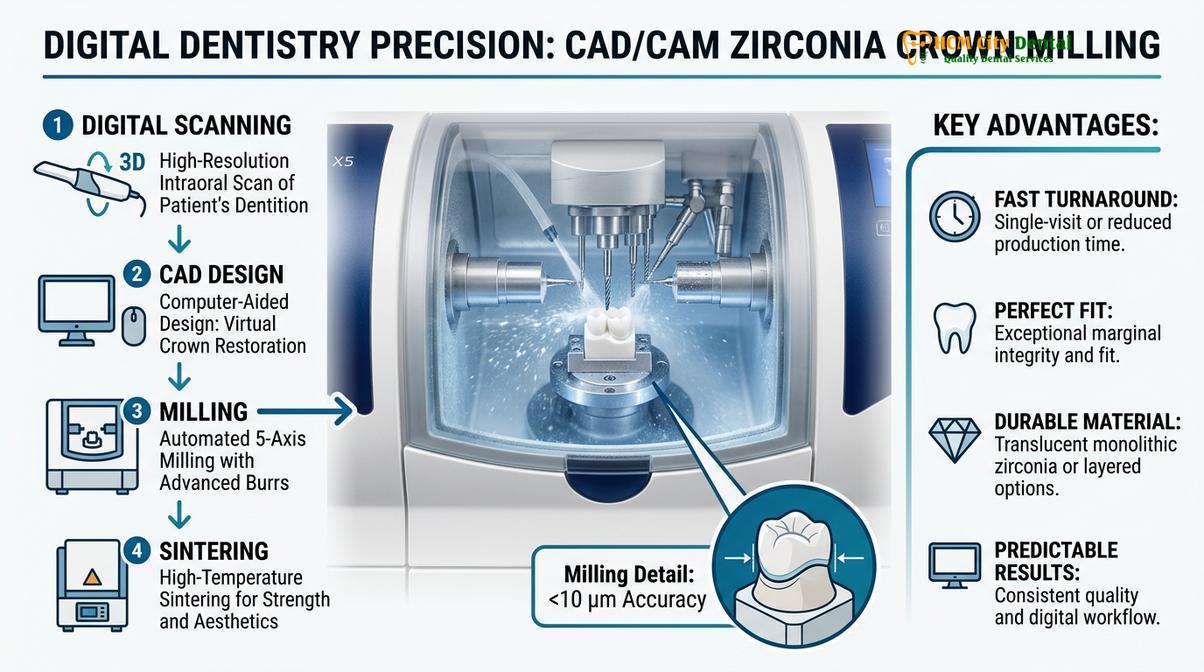
In the realm of cosmetic dentistry, the shift towards metal-free restorations has become the gold standard. High-translucency Zirconia and Lithium Disilicate (IPS e.max) are the materials of choice for crowns and veneers. These ceramics offer exceptional light-reflecting properties that mimic natural tooth enamel, combined with immense flexural strength that withstands heavy occlusal forces. The precision of modern CAD/CAM workflows ensures that the marginal fit of these restorations is virtually seamless, preventing micro-leakage and secondary decay[4].
Clinical Case Study: Full Arch Rehabilitation
A 58-year-old patient from Sydney presented to HCMC Dental Clinic in Ho Chi Minh City with severe periodontal disease and failing dentition. After a comprehensive 3D CBCT evaluation, an All-on-4 treatment plan was formulated. The failing teeth were extracted, and four premium Straumann implants were placed in the upper arch during a single surgical session. A fixed, provisional acrylic bridge was attached immediately. Months later, the patient returned for the final fitting of a custom-milled, titanium-reinforced Zirconia bridge. The total cost was approximately 65% less than the quoted price in Australia, restoring both profound masticatory function and aesthetic confidence.
"Adherence to ISO-certified sterilization protocols and the utilization of Class B autoclaves are non-negotiable standards for clinics catering to the international medical tourism sector."
When to Consult a Specialist (Important Clinical Considerations)
Prior to traveling, patients must undergo a thorough clinical evaluation to identify any underlying systemic conditions or severe bone deficiencies that could complicate treatment.
While dental tourism offers immense benefits, it requires careful clinical consideration and responsible patient selection. Not every patient is an immediate candidate for complex surgical procedures abroad. It is highly recommended that patients undergo a preliminary examination with their local dentist in Australia, or arrange a comprehensive virtual consultation with their chosen clinic in Vietnam, utilizing recent panoramic X-rays or CBCT scans.
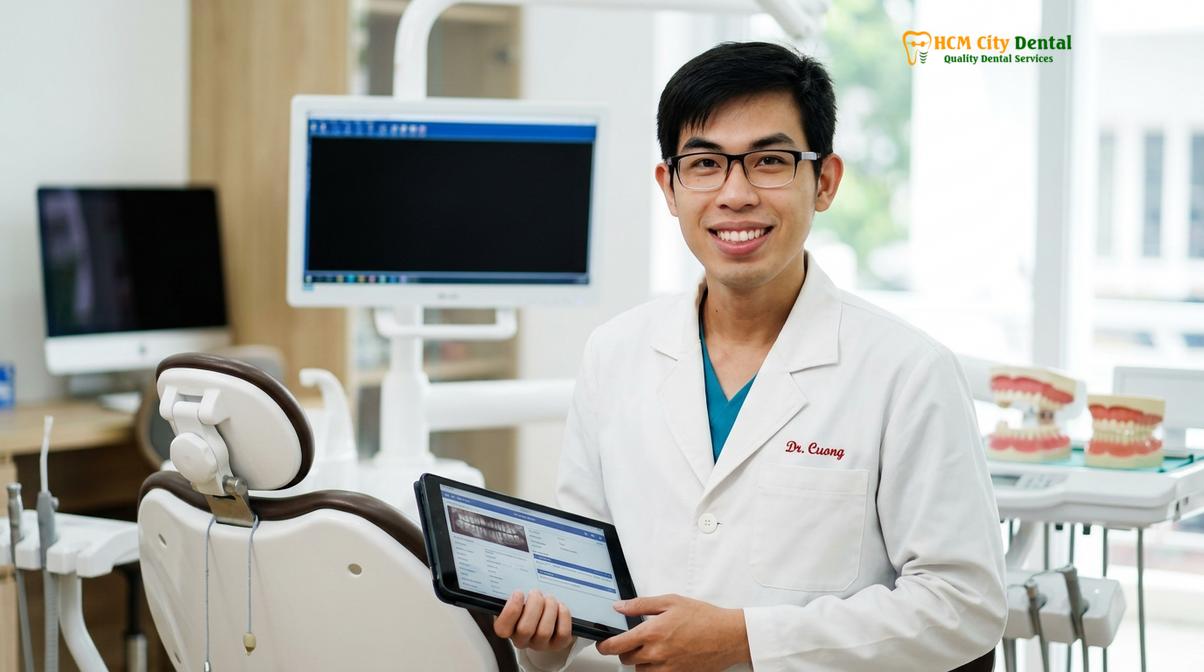
Dr. Nguyen Van Cuong, a leading specialist at HCMC Dental Clinic, emphasizes the importance of comprehensive pre-operative diagnostics. Patients seeking an English speaking dentist in Ho Chi Minh City can rely on Dr. Cuong and his dedicated clinical team to provide transparent, evidence-based treatment plans tailored to international standards. Furthermore, all procedures strictly adhere to the cross-infection control guidelines established by the Vietnam Ministry of Health (MOH), ensuring a sterile and highly safe environment for every patient.
Patients must disclose their full medical history. Systemic conditions such as uncontrolled diabetes, autoimmune disorders, or a history of intravenous bisphosphonate therapy can significantly impair wound healing and increase the risk of implant failure. Additionally, heavy smoking is a major contraindication for implant surgery, as it constricts blood vessels and impedes the necessary blood flow to the surgical site.
Clinical Warning:
Patients with severe maxillary bone resorption may require sinus lift procedures or extensive bone grafting prior to implant placement. These adjunctive surgeries require a dedicated healing period of 4 to 6 months before implants can be safely loaded. Attempting to rush these biological timelines to fit a travel schedule can lead to implant failure. Always prioritize biological healing over logistical convenience.
Conclusion & Next Steps
Choosing to travel for dental care is a significant decision that requires thorough research and clinical guidance. By selecting a reputable facility equipped with modern digital technology and staffed by experienced specialists, Australian patients can achieve outstanding restorative outcomes (such as biocompatible dental implants or customized porcelain veneers) while enjoying substantial financial savings. If you are ready to explore your treatment options, reviewing comprehensive Kiến thức nha khoa (dental knowledge) is an excellent first step. Contact the dedicated international team at HCMC Dental Clinic, Ho Chi Minh City today to schedule your virtual consultation and begin planning your customized dental journey.
Travel and Stay Summary
- ✈️ Flights: Sydney → HCMC ≈ 8h direct · Melbourne → HCMC ≈ 9h. Return fares typically AUD 600–1,000.
- 🛂 Visa: Australian citizens receive 45-day visa-free entry to Vietnam.
- 🏨 Accommodation: District 1 hotels near the clinic from $40/night (3-star) to $150/night (5-star).
- 🌤️ Best time to visit: November – April (dry season in HCMC).
Frequently asked questions
Yes. Share your concern, photos, and available X-rays through WhatsApp or Messenger. You receive initial planning guidance, then final scope is confirmed after in-clinic diagnostics.
Budget for treatment plus flights, accommodation, local transport, and schedule buffer. Use the pricing and cost pages together for a more complete estimate.
Complex implant and rehabilitation cases can require staged return visits. This is clarified in planning so you can organize travel and leave windows safely.
Review doctor profile, sterilization standards, patient reviews, and awards pages before confirming treatment. These pages are linked in this country guide.
References
- Journal of Oral Implantology. Economic analysis of cross-border dental care and implantology. (2021).
- International Dental Journal. Quality assurance and sterilization protocols in Southeast Asian dental tourism. (2020).
- Clinical Implant Dentistry and Related Research. Osseointegration success rates of premium titanium implants. (2019).
- Journal of Prosthetic Dentistry. CAD/CAM workflows in modern restorative dentistry. (2022).
- Australian Dental Journal. Patient motivations and clinical outcomes in international dental travel. (2018).
Treatments hub link map (service-level routing)
Direct navigation to service pages for clinical details, workflow, and candidacy review before consultation.
Full-mouth rehabilitation
Open service page ›Dental bonding
Open service page ›Braces
Open service page ›Dental cleaning
Open service page ›Root canal
Open service page ›Wisdom tooth extraction
Open service page ›Dental fillings
Open service page ›Dentures
Open service page ›Gum treatment
Open service page ›TMJ treatment
Open service page ›Tooth extraction
Open service page ›Pediatric dentistry
Open service page ›Sedation dentistry
Open service page ›Nightguard / mouthguard
Open service page ›General dentistry
Open service page ›Emergency dentistry
Open service page ›🌐 Departure Guides for Other Countries
Compare clinical timelines, travel logistics, and flight considerations from other departure markets.