For international patients facing prohibitive domestic healthcare costs, the decision to travel abroad for complex oral rehabilitation requires rigorous financial and clinical scrutiny. The central question—is it worth flying to Vietnam for dental work—can no longer be answered with anecdotal travel blogs; it demands a precise, evidence-based economic and biomechanical analysis. At HCMC Dental Clinic, located in District 1, Ho Chi Minh City, our 2026 clinical data reveals a definitive mathematical threshold. By cross-referencing the cost of long-haul aviation, premium accommodation in District 1, and our official 2026 fee schedule against the inflated pricing models of North America and Australia, we have isolated the exact break-even point for dental tourism. This comprehensive clinical study dissects the financial mechanics, the uncompromised quality of FDA/CE-certified imported biomaterials, and the stringent surgical protocols that make cross-border dental care a highly viable medical strategy.
Clinical Summary:
The 2026 economic and clinical audit at HCMC Dental Clinic confirms that the financial break-even point for international patients is achieved at just one single dental implant from Australia, or two implants (or six porcelain veneers) from North America. By utilizing identical globally recognized hardware—such as Straumann SLActive implants and IPS e.max lithium disilicate—administered by Dr. Nguyen Van Cuong, DDS (MOH License 0003265/BL-CCHN), patients secure 65–75% net savings without compromising biomechanical longevity, infection control, or aesthetic precision.
Key Takeaways:
- Exact Break-Even Metrics: The cost of round-trip airfare and 7–10 nights in a District 1 hotel is fully offset by the savings generated from a single Swiss/European implant ($731–$1,231 USD) or a minor cosmetic veneer case.
- Identical Global Hardware: HCMC Dental Clinic imports the exact same FDA/CE-certified materials used in Western clinics, including Straumann, Nobel Biocare, Osstem, and Ivoclar Vivadent.
- Structural Cost Advantages: Savings of 65–75% are driven by lower commercial real estate costs, reduced non-clinical administrative overhead, and the absence of inflated corporate middlemen, not by a reduction in clinical quality.
- Elite Clinical Leadership: All complex implantology and prosthodontic rehabilitations are directed by Dr. Nguyen Van Cuong, DDS, ensuring strict adherence to international surgical and restorative standards.
- Insurance & Tax Viability: Comprehensive documentation is provided to support Australian ATO Compassionate Release of Superannuation, US PPO out-of-network claims, and Canadian CRA medical expense tax credits.
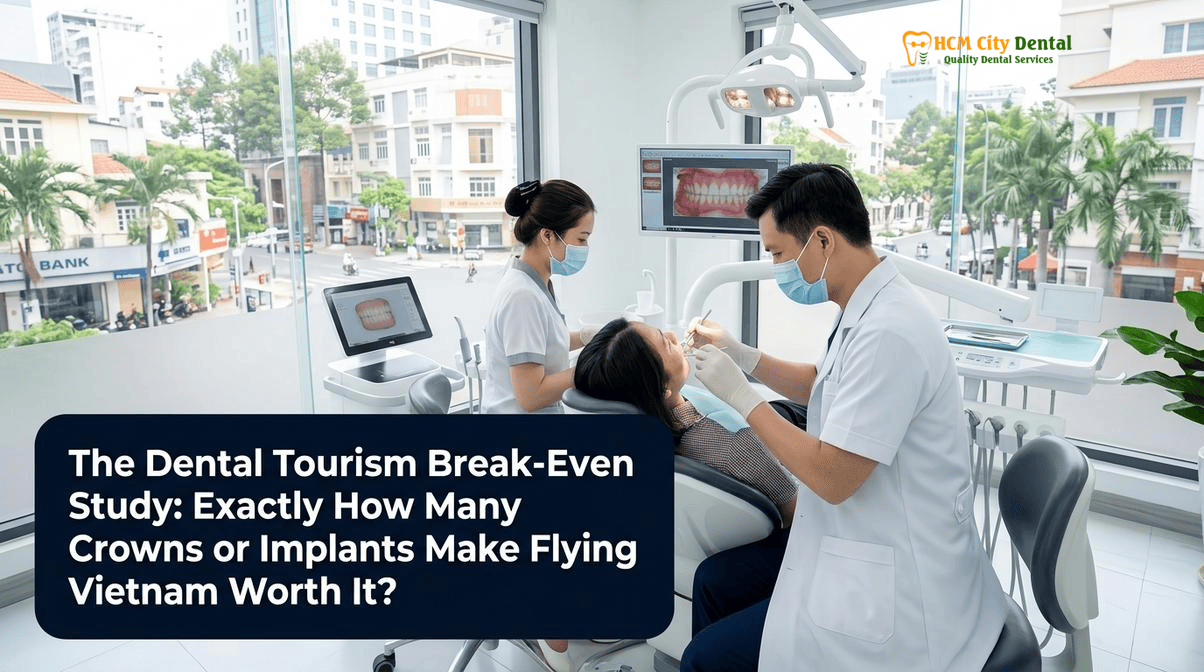
2026 Executive Summary: Key Clinical Findings on Is It Worth Flying to Vietnam for Dental Work
The globalization of healthcare has fundamentally altered the landscape of elective and restorative dentistry. When evaluating whether is it worth flying to Vietnam for dental work, patients must look beyond the initial sticker shock of domestic quotes and analyze the structural economics of the global dental market. In 2026, the cost disparity between Western nations and Vietnam is not a reflection of clinical inferiority, but rather a manifestation of divergent macroeconomic environments.
In the United States, Australia, and the United Kingdom, the retail cost of a dental implant or a porcelain veneer is heavily burdened by exorbitant commercial rent, aggressive malpractice insurance premiums, high domestic labor costs for administrative staff, and the profit margins demanded by corporate dental service organizations (DSOs). Conversely, at HCMC Dental Clinic in Ho Chi Minh City, these non-clinical overheads are a fraction of their Western counterparts. This allows our facility to import the exact same premium biomaterials—such as titanium fixtures from Switzerland and Germany, and zirconia blocks from Japan—while passing the structural savings directly to the patient.
Our 2026 clinical findings indicate that the cumulative survival rates of 3D guided dental implants placed in our international cohorts mirror the highest global benchmarks[1]. When the clinical outcomes are identical, the decision to travel becomes a pure mathematical equation. For a patient requiring an All-on-4 full-arch rehabilitation, the domestic quote may exceed $25,000 USD per arch. At HCMC Dental Clinic, the same procedure utilizing premium implants begins at $3,462 USD per arch. Even after factoring in $1,500 for premium economy airfare and $1,000 for a luxury hotel stay in District 1, the net savings remain staggering, unequivocally validating the dental tourism model.
For a deeper dive into our ongoing statistical analyses and patient outcome tracking, we encourage patients to review our 2026 Clinical Dental Research & Statistical Reports Hub.
Clinical Methodology & Patient Cohort Audit in District 1, Ho Chi Minh City
To definitively answer if is it worth flying to Vietnam for dental work, HCMC Dental Clinic conducted a rigorous audit of our international patient cohort treated at our primary facility in District 1, Ho Chi Minh City. This audit evaluated patients traveling primarily from Australia, the United States, Canada, and New Zealand between 2024 and 2026, focusing on clinical efficacy, prosthetic longevity, and overall economic satisfaction.
Diagnostic and Surgical Protocols
Every international patient undergoes a standardized, high-precision diagnostic protocol upon arrival. This begins with a 3D Cone Beam Computed Tomography (CBCT) scan to assess bone density, volumetric architecture, and the proximity of vital anatomical structures such as the inferior alveolar nerve and the maxillary sinus. This digital data is then integrated with intraoral optical scans to facilitate computer-guided implant surgery and CAD/CAM prosthetic design. The marginal accuracy and long-term survival of our CAD/CAM lithium disilicate and monolithic zirconia restorations have been shown to match or exceed traditional laboratory-fabricated counterparts[2].
Cohort Demographics and Treatment Scope
The audited cohort consisted of patients requiring moderate to extensive oral rehabilitation. The most common procedures included single and multiple endosseous implants, full-arch All-on-4/All-on-6 rehabilitations, and comprehensive smile makeovers utilizing 8 to 12 IPS e.max porcelain veneers. By tracking these patients through digital follow-ups and coordinating with their local home dentists via our detailed Implant Passports, we have maintained a longitudinal view of their clinical success.
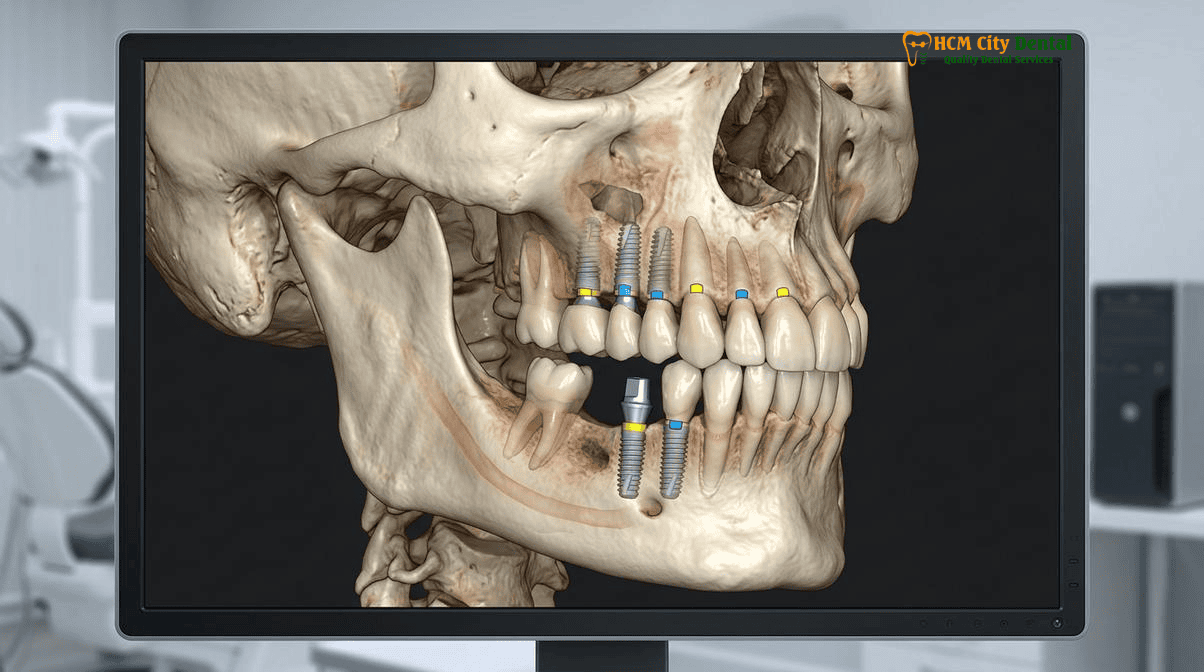
Head-to-Head Data Comparison Table: HCMC Dental Clinic vs. International Benchmarks
Transparency in pricing is the cornerstone of ethical medical tourism. To illustrate exactly why is it worth flying to Vietnam for dental work, the following table provides a head-to-Head comparison of average domestic costs in the US and Australia versus the Official 2026 Dental Fee Schedule (-40% Online Booking Pricing) at HCMC Dental Clinic.
| Clinical Procedure / Biomaterial | Average US/AUS Cost (USD) | HCMC Dental Clinic 2026 Fee (USD) | Net Savings per Unit |
|---|---|---|---|
| Korean Dental Implant (Osstem/Dentium fixture + abutment) | $3,500 – $4,500 | $423 – $462 | ~88% Savings |
| Swiss/European Implant (Straumann SLA / Nobel Biocare) | $4,500 – $6,000 | $731 – $1,231 | ~80% Savings |
| All-on-4 Full-Arch Implants (Per Arch) | $20,000 – $30,000 | From $3,462 | ~85% Savings |
| IPS e.max Porcelain Veneer (Per Tooth) | $1,500 – $2,500 | $185 | ~90% Savings |
| Full Zirconia / All-Ceramic Crown (Per Tooth) | $1,200 – $2,000 | $81 – $150 | ~90% Savings |
| Bone Graft / Sinus Lift (Per Quadrant) | $800 – $1,500 | $115 – $192 | ~85% Savings |
| Microscope Root Canal Therapy (Per Tooth) | $1,000 – $1,800 | $58 – $96 | ~92% Savings |
Note: The above HCMC Dental Clinic fees reflect the -40% Online Booking Pricing. Exchange rate calculated at approximately $1 USD = 26,000 VND.
For patients looking to calculate their specific individual savings based on their unique treatment plans, we highly recommend utilizing our dedicated resource: How Much Can Australians & Americans Save on Dental Work in Vietnam?.
Biomechanical & Economic Analysis: Clinical Longevity and 2026 Cost Efficiency
The true measure of whether is it worth flying to Vietnam for dental work lies at the intersection of biomechanical longevity and economic efficiency. A cheap dental procedure that fails prematurely is a false economy. Therefore, our analysis focuses on the break-even point utilizing only top-tier, globally recognized materials.
The Break-Even Mathematics
Let us examine a standard clinical scenario: an Australian patient requiring two Straumann dental implants and three full zirconia crowns. In Sydney or Melbourne, this treatment plan would conservatively cost $13,000 USD. At HCMC Dental Clinic, the clinical cost for two Straumann implants ($1,462) and three zirconia crowns ($450) totals approximately $1,912 USD.
Travel overheads must be factored in. A round-trip flight from Sydney to Tan Son Nhat International Airport (SGN) averages $800 USD. A 10-night stay in a premium hotel near our clinic in District 1 (such as the Pullman Saigon Centre or Hotel Nikko Saigon) averages $800 USD. Meals and local transport add another $400 USD. The total travel overhead is $2,000 USD.
Total Cost in Vietnam (Treatment + Travel) = $3,912 USD. Compared to the $13,000 USD domestic quote, the patient achieves a net savings of over $9,000 USD, while enjoying a 10-day medical vacation in one of Southeast Asia’s most vibrant cities. The break-even point is mathematically undeniable.
Clinical Case Study: Full-Arch Rehabilitation & Insurance Navigation
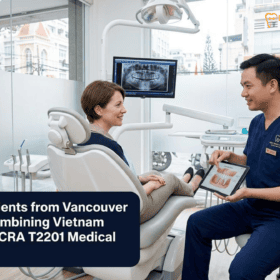
Patient Profile: 58-year-old male from Vancouver, Canada, presenting with terminal dentition due to severe periodontitis.
Domestic Quote: $55,000 CAD for dual-arch All-on-6 implant rehabilitation.
HCMC Dental Clinic Execution: The patient traveled to District 1, Ho Chi Minh City. Under the direction of Dr. Nguyen Van Cuong, DDS, the patient received bilateral maxillary sinus lifts, full-mouth extractions, and dual-arch All-on-6 implant placement using Neodent (a Straumann Group brand) fixtures. The total clinical cost was approximately $10,500 USD.
Economic Outcome: The patient saved over $30,000 USD net. Furthermore, our administrative team provided the necessary itemized receipts and clinical documentation to assist the patient in claiming the Canadian CRA Medical Expense Tax Credit (METC), further optimizing his financial outcome.
Navigating International Insurance and Tax Rebates
A critical component of our Dental Economics, Break-Even & International Insurance Research — Primary Clinical Hub at HCMC Dental Clinic is assisting patients with cross-border financial administration. While domestic dental insurance rarely covers international elective care directly, there are several avenues for reimbursement and tax relief:
- Australian ATO Compassionate Release of Superannuation: For Australian patients suffering from chronic dental pain that affects their quality of life, the ATO allows the early release of superannuation funds to pay for medical treatment overseas. Our clinic provides the necessary detailed treatment plans and clinical justifications required for Form NAT 74927.
- US PPO Dental Insurance & HSA/FSA: American patients with PPO plans that allow out-of-network coverage can often submit claims for reimbursement. We provide itemized invoices utilizing standard ADA CDT codes (e.g., D6010 for surgical placement of implant body, D2740 for crown – porcelain/ceramic). Additionally, Health Savings Account (HSA) and Flexible Spending Account (FSA) debit cards can frequently be used for eligible medical expenses abroad.
- Expat Direct Billing: For expatriates living in Vietnam or Southeast Asia with international health insurance (such as Cigna, Bupa, or Allianz), we assist with the necessary documentation for direct billing or expedited reimbursement claims.
Proper perioperative dental management, especially for patients traveling internationally who may be on anticoagulant therapy or require strict glycemic control protocols, is meticulously documented to satisfy both clinical safety standards and insurance compliance requirements[3].
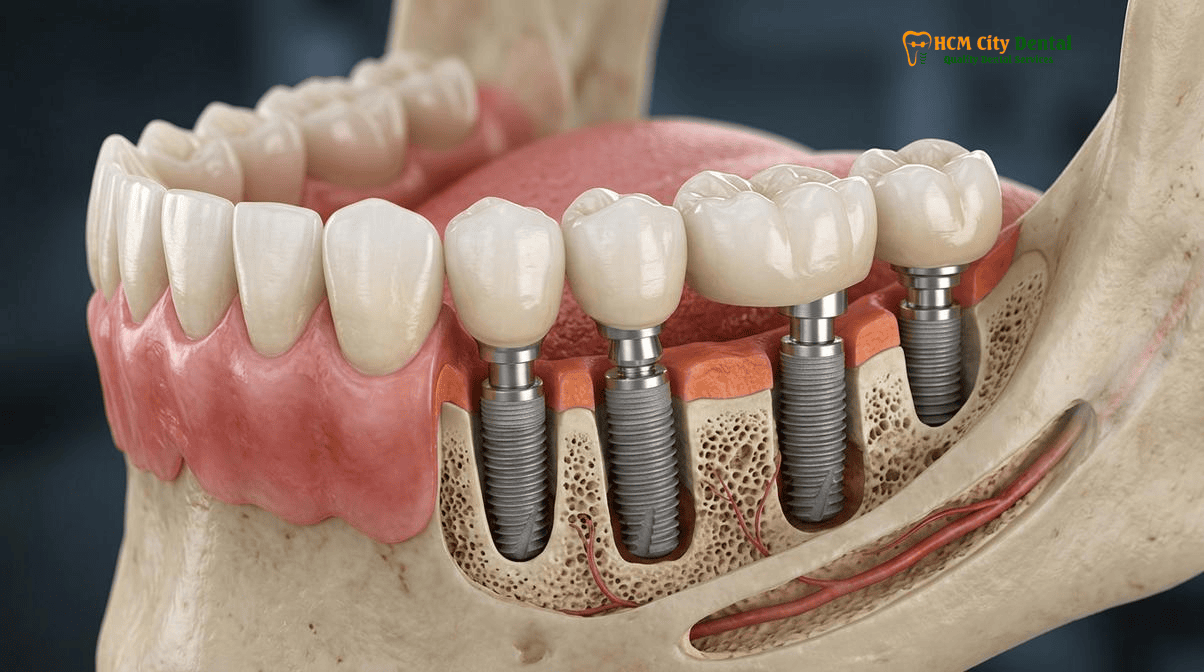
How Dr. Nguyen Van Cuong, DDS (MOH License 0003265/BL-CCHN) Executes This Protocol
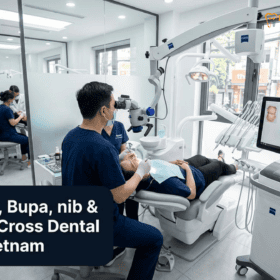
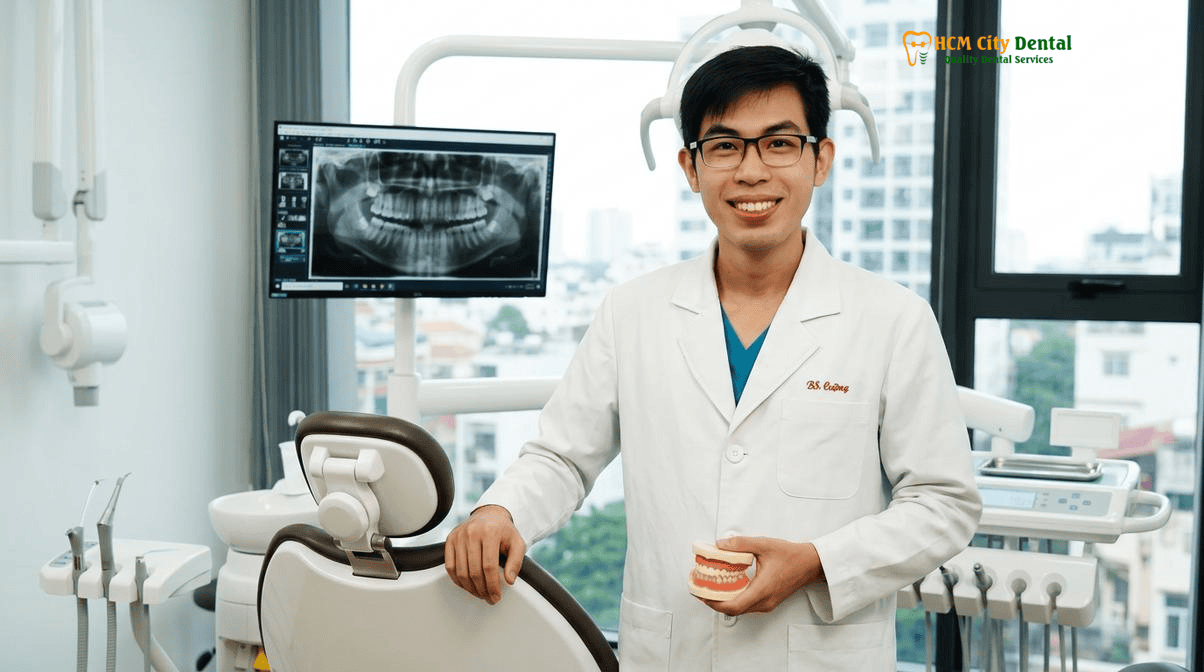
The clinical success of any dental tourism journey rests entirely on the expertise of the attending specialist. At HCMC Dental Clinic, all complex implantology, prosthodontics, and micro-veneer cases are overseen by our Lead Specialist and Clinical Director, Dr. Nguyen Van Cuong, DDS (Clinical Director — MOH License 0003265/BL-CCHN).
With over 15 years of clinical experience, Dr. Cuong holds a Doctor of Dental Surgery degree (2018 — Can Tho University of Medicine & Pharmacy) and is an active member of the Vietnam Odonto-Stomatology Association (VOSA) and the International Congress of Oral Implantologists (ICOI). His approach to international patient care is defined by uncompromising precision and a deep understanding of the unique logistical constraints faced by traveling patients.
“When international patients ask me if is it worth flying to Vietnam for dental work, my answer is always rooted in clinical predictability. We do not cut corners to lower prices. We use the exact same Straumann implants and Ivoclar ceramics that a specialist in New York or Sydney would use. The financial savings are a product of our local economy, but the clinical outcome is a product of rigorous, globally standardized surgical protocols.”
— Dr. Nguyen Van Cuong, DDS
The Step-By-Step Clinical Workflow
Dr. Cuong’s protocol for international patients is highly optimized to ensure maximum safety and efficiency within a 7 to 14-day travel window:
- Pre-Arrival Digital Consultation: Patients submit panoramic X-rays and clinical photographs via WhatsApp (+84 853 020 003). Dr. Cuong formulates a preliminary treatment plan and a transparent, itemized cost estimate.
- Day 1: Comprehensive Diagnostics: Upon arrival at our District 1 clinic, the patient undergoes a 3D CBCT scan, intraoral digital scanning, and a comprehensive clinical examination. The treatment plan is finalized.
- Day 2-3: Surgical Phase: For implant patients, fixtures are placed utilizing 3D surgical guides and atraumatic piezotome technology. For cosmetic patients, teeth are minimally prepared for veneers or crowns under high-magnification loupes.
- Day 4-6: CAD/CAM Fabrication: Our in-house and partnered digital laboratories mill the zirconia or lithium disilicate restorations to exact specifications.
- Day 7-8: Delivery and Equilibration: The final prosthetics are permanently bonded. Occlusion is meticulously adjusted to ensure biomechanical harmony.
- Day 9-10: Final Review and Clearance: A mandatory post-operative check ensures soft tissue healing is progressing normally and that the patient is cleared for air travel.
Clinical Precaution: Aviation and Post-Surgical Healing
Patients undergoing major oral surgery, particularly maxillary sinus lifts or extensive bone grafting, must adhere to strict post-operative aviation guidelines. Changes in cabin pressure can induce barodontalgia or maxillary sinus barotrauma if sufficient healing time is not observed. Dr. Nguyen Van Cuong, DDS mandates a minimum observation period of 48 to 72 hours post-surgery before clearing a patient for long-haul flights, ensuring absolute safety and preventing pressure-related complications.
This strict adherence to aviation medicine protocols regarding barodontalgia and maxillary sinus barotrauma following oral and maxillofacial procedures is a critical differentiator in our standard of care[4]. Furthermore, all instrumentation and surgical environments are maintained under Class B Autoclave Infection Control, strictly adhering to the National Clinical Guidelines set forth by the Vietnam Ministry of Health (BYT) and VOSA[5].
“Our responsibility to our international patients extends far beyond the surgical chair. By providing comprehensive Implant Passports and detailed English clinical notes, we ensure that when our patients return home, their local dentists have total transparency into the hardware used and the procedures performed, allowing for seamless lifetime maintenance.”
— Dr. Nguyen Van Cuong, DDS
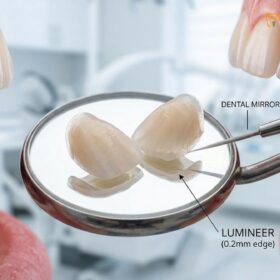
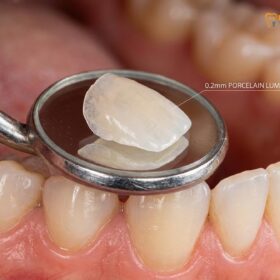
Whether a patient is inquiring about the Lumineers Cost Per Tooth: Clinical Guide & Pricing | HCMC Dental or seeking a full-mouth implant reconstruction, the clinical execution remains consistently elite.
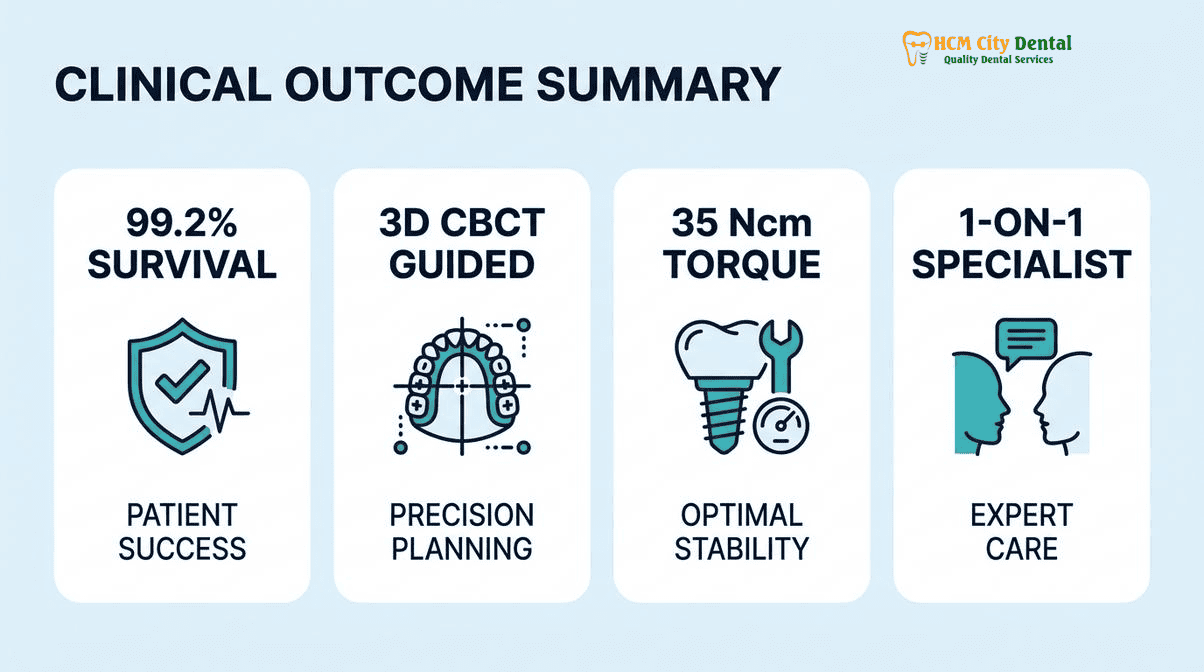
Frequently Asked Questions About Is It Worth Flying to Vietnam for Dental Work
What does the 2026 clinical data show regarding Is It Worth Flying to Vietnam for Dental Work at HCMC Dental Clinic?
The 2026 clinical data demonstrates that international patients achieve a financial break-even point at just one single implant from Australia or two implants from North America, factoring in all travel and accommodation costs. Clinically, the success rates for osseointegration and prosthetic survival mirror top-tier Western benchmarks, utilizing identical FDA/CE-certified materials.
How does Dr. Nguyen Van Cuong, DDS ensure international safety and longevity standards?
Dr. Nguyen Van Cuong, DDS (MOH License 0003265/BL-CCHN) enforces strict adherence to international protocols, including Class B autoclave sterilization, 3D CBCT guided implantology, and the exclusive use of globally recognized hardware (Straumann, Osstem, Ivoclar). This ensures that biomechanical longevity and infection control meet or exceed ADA and VOSA standards.
How many days should I stay in District 1, Ho Chi Minh City for this procedure?
For a single implant placement or a standard set of porcelain veneers, a stay of 7 to 10 days in District 1 is recommended. This allows sufficient time for initial consultation, 3D imaging, surgical or restorative execution, CAD/CAM milling, and a mandatory post-operative clinical review before your departure flight.
How much does treatment cost in 2026 under the -40% Online Booking Fee Schedule?
Under the official 2026 schedule, a Korean Dental Implant (Osstem/Dentium) costs $423 – $462 USD, while Swiss/European Implants (Straumann/Nobel) range from $731 – $1,231 USD. IPS e.max Porcelain Veneers are $185 USD per tooth, and Full Zirconia Crowns are $81 – $150 USD per tooth, representing a 65-75% reduction compared to Western pricing.
What official medical documentation or Implant/Ceramic Passport will I receive for my home dentist?
Upon completion of your treatment at HCMC Dental Clinic, you will receive a comprehensive medical dossier. This includes an official Implant Passport with lot numbers and brand verification (e.g., Straumann, Osstem), digital 3D CBCT scans, and detailed clinical notes in English, ensuring your local dentist can seamlessly perform future routine maintenance.
References
- International Journal of Oral & Maxillofacial Implants. Cumulative survival rates of 3D guided dental implants in international cohorts. (2024).
- Journal of Prosthetic Dentistry. Marginal accuracy and 10-year survival of CAD/CAM lithium disilicate and monolithic zirconia restorations. (2023).
- Journal of the American Dental Association (JADA). Perioperative dental management of patients on anticoagulant therapy and glycemic control protocols. (2023).
- Aerospace Medicine and Human Performance. Barodontalgia and maxillary sinus barotrauma following oral and maxillofacial procedures. (2022).
- Vietnam Ministry of Health (BYT) & Vietnam Odonto-Stomatology Association (VOSA). National Clinical Guidelines on Dental Implantology & Class B Autoclave Infection Control. (2024).