Porcelain lumineers are ultra-thin, minimally invasive ceramic restorations designed to enhance smile aesthetics with little to no enamel reduction. They offer a conservative alternative to traditional veneers, preserving natural tooth structure while effectively correcting mild discoloration, minor spacing issues, and slight misalignments.
Clinical Summary:
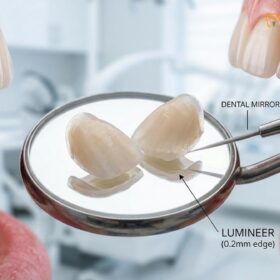
Porcelain lumineers represent a significant advancement in conservative cosmetic dentistry. Fabricated from proprietary high-strength ceramics, these ultra-thin shells (approximately 0.2mm to 0.3mm thick) are bonded directly to the facial surface of anterior teeth. Unlike traditional porcelain veneers, which typically require 0.5mm to 0.8mm of enamel reduction, lumineers are often placed using a “no-prep” or “minimal-prep” technique. This preserves the structural integrity of the natural tooth, maximizes the adhesive bond strength to enamel, and minimizes postoperative sensitivity. However, careful case selection is paramount; inappropriate application on severely crowded or deeply stained teeth can result in over-contoured, bulky restorations or inadequate shade masking. Clinical success relies heavily on precise digital smile design, meticulous adhesive bonding protocols, and comprehensive periodontal evaluation to ensure optimal emergence profiles and long-term gingival health.
Key Takeaways:
- Porcelain lumineers are ultra-thin (0.2mm) ceramic shells requiring minimal to no natural enamel removal.
- They are clinically ideal for correcting microdontia, minor interdental spacing, and mild tooth discoloration.
- The conservative no-prep technique preserves tooth vitality and is considered highly reversible.
- Strict case selection is critical to prevent bulky margins that could compromise periodontal health.
- Long-term success depends on meticulous adhesive bonding protocols and excellent patient oral hygiene.
Clinical Definition and Material Science of Porcelain Lumineers
Porcelain lumineers are proprietary, ultra-thin ceramic veneers made from high-strength Cerinate porcelain, designed to alter tooth shape and color without aggressive enamel preparation.
The evolution of cosmetic dentistry has consistently moved toward more conservative, tissue-sparing techniques. At the forefront of this movement are porcelain lumineers, a specific brand and style of ultra-thin dental veneers. To understand their clinical value, one must examine the underlying material science. Traditional veneers are typically milled or pressed from feldspathic porcelain or lithium disilicate, requiring a certain thickness (usually 0.5mm or more) to maintain structural integrity and mask underlying tooth color. In contrast, lumineers are fabricated from a proprietary leucite-reinforced or specialized lithium disilicate ceramic known as Cerinate porcelain[1].
This advanced ceramic material possesses exceptional flexural strength and fracture toughness, allowing it to be fabricated at thicknesses as minimal as 0.2mm to 0.3mm—roughly the thickness of a contact lens. Despite this delicate profile, once the ceramic is adhesively bonded to the natural enamel, the resulting biomimetic complex becomes incredibly resilient to the shear and compressive forces of normal mastication. The optical translucency of this material mimics the delicate light-scattering properties seen in a fine porcelain tea set, allowing natural dentin shades to reflect through while enhancing the overall brightness and surface texture of the smile.
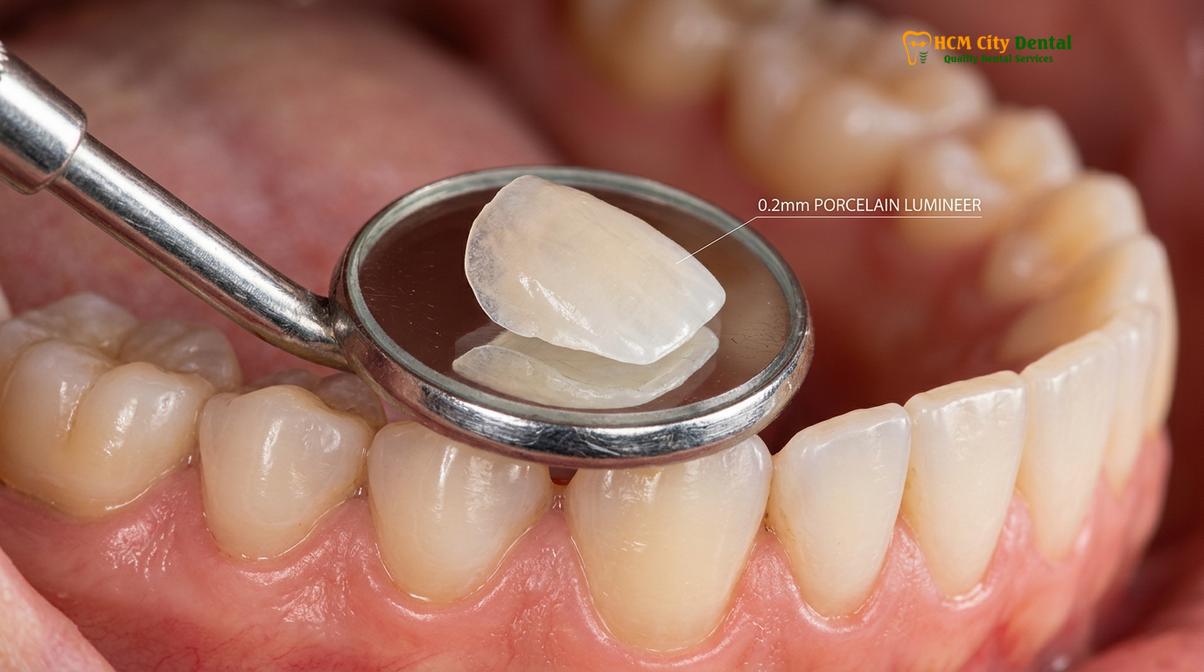
From a biomechanical perspective, the preservation of the dentinoenamel junction (DEJ) is one of the most significant advantages of this material. Enamel is highly mineralized, consisting of tightly packed hydroxyapatite crystals, which provides an ideal substrate for adhesive dentistry. By eliminating the need to drill into the softer, more porous dentin layer, clinicians can achieve a superior, long-lasting bond. Furthermore, preserving the enamel ensures that the tooth remains structurally robust and vital, drastically reducing the risk of endodontic complications or postoperative thermal sensitivity.
However, the ultra-thin nature of the material also dictates its clinical limitations. Because the ceramic is highly translucent, it relies on the underlying tooth color to provide the base shade. If a tooth is severely discolored—such as from intrinsic tetracycline staining or endodontic treatment—a 0.2mm layer of translucent porcelain will not provide sufficient opacity to mask the darkness. In such cases, the clinician must carefully evaluate whether a thicker traditional veneer or an adjunctive bleaching therapy is required prior to restoration.
Porcelain Lumineers vs. Traditional Veneers: A Clinical Comparison
While traditional veneers require irreversible enamel reduction for a flush fit, lumineers are bonded directly to the tooth surface, offering a reversible, pain-free alternative for suitable candidates.
When patients explore options within General Dentistry for smile enhancement, the choice between traditional porcelain veneers and no-prep lumineers is a frequent topic of discussion. Both modalities aim to improve the size, shape, and color of the anterior dentition, but their clinical workflows, structural requirements, and long-term implications differ significantly.
Traditional veneers require the clinician to prepare the tooth by removing approximately 0.5mm to 0.8mm of facial enamel, and often reducing the incisal edge. This preparation creates physical space for the ceramic material, ensuring that the final restoration sits flush with the surrounding natural tooth structure and does not feel bulky to the patient’s lips or tongue. Because enamel is permanently removed, traditional veneers are an irreversible procedure; the tooth will always require a protective covering[2].
Conversely, porcelain lumineers champion the “no-prep” or “micro-prep” philosophy. Because the material is exceptionally thin, it can often be bonded directly onto the unprepared facial surface of the tooth. This eliminates the need for local anesthesia (dental injections) and the use of high-speed handpieces (drilling). Consequently, the procedure is highly appealing to patients with dental anxiety. Furthermore, because the natural tooth structure remains intact, the procedure is considered reversible. If the lumineers are removed in the future, the underlying teeth remain healthy and structurally sound, requiring only the careful polishing of residual resin cement.
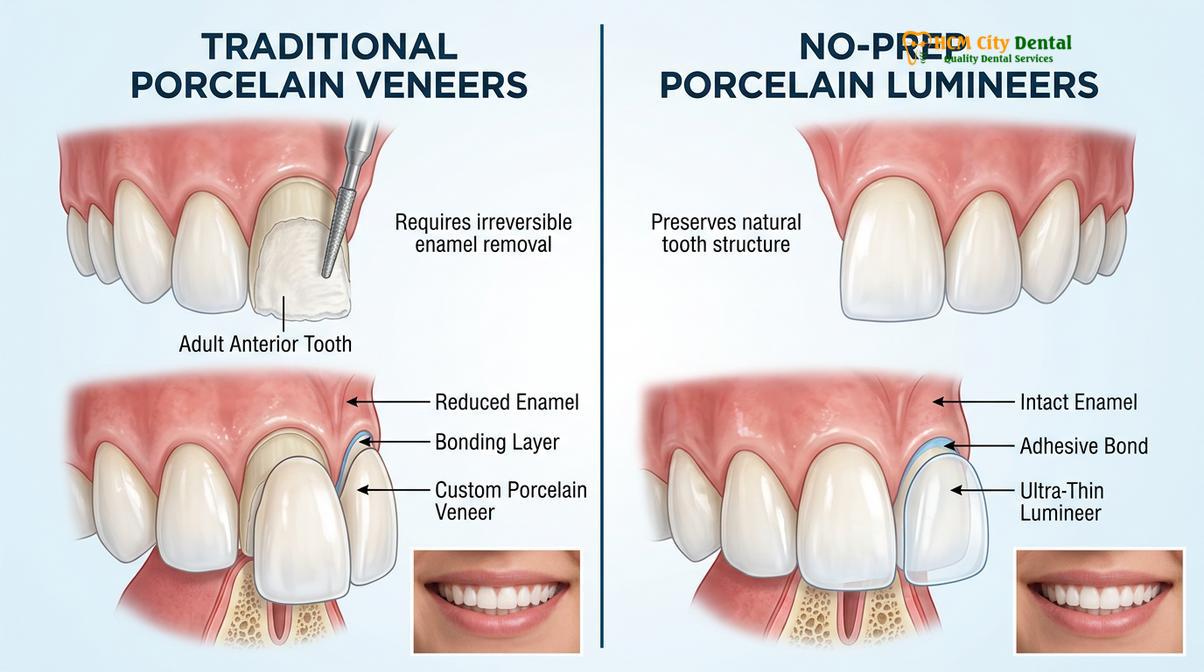
To clearly delineate the clinical differences, the following table outlines the primary comparative factors between the two restorative options:
| Clinical Parameter | Traditional Porcelain Veneers | Porcelain Lumineers (No-Prep) |
|---|---|---|
| Material Thickness | 0.5mm – 0.8mm (requires space) | 0.2mm – 0.3mm (ultra-thin) |
| Enamel Reduction | Required (irreversible alteration) | None to minimal (preserves enamel) |
| Anesthesia Required | Yes (typically required for comfort) | No (virtually painless procedure) |
| Masking Ability | Excellent for severe discoloration | Moderate (best for mild/moderate stains) |
| Reversibility | Irreversible | Highly reversible |
| Ideal Candidacy | Crowded, misaligned, or dark teeth | Microdontia, spaced, or lingually inclined teeth |
It is crucial to note that while lumineers offer a conservative approach, they are not a universal solution. Patients with significant dental crowding or those seeking to correct severe misalignment may be better served by orthodontic intervention first. Understanding the Invisalign vs Braces Cost and treatment timelines can help patients decide if pre-restorative alignment is necessary to achieve the best aesthetic outcome without over-contouring the teeth.
The Diagnostic and Treatment Workflow
The lumineer workflow involves comprehensive digital smile design, precise intraoral scanning, and meticulous adhesive bonding protocols to ensure a seamless and durable aesthetic result.
The clinical workflow for placing porcelain lumineers is highly technique-sensitive, demanding precision at every stage to ensure both aesthetic excellence and biomechanical longevity. The process begins with a comprehensive consultation and diagnostic phase. During this initial visit, the clinician conducts a thorough examination of the patient’s periodontal health, occlusal dynamics (bite relationship), and facial aesthetics. High-resolution clinical photographs and digital intraoral scans are captured to create a virtual model of the patient’s dentition.
This phase involves critical dentist negotiation, where the clinician and patient collaboratively discuss aesthetic expectations, shade preferences, and anatomical limitations. Digital Smile Design (DSD) software is often utilized to simulate the final outcome, allowing the patient to visualize the proposed changes before any clinical work begins. If the patient’s oral hygiene is suboptimal, a professional prophylaxis is mandated. Patients often inquire about the How Much Does a Teeth Cleaning Cost Without Insurance to prepare their dentition for optimal bonding conditions.
“The success of a no-prep veneer lies not just in the thinness of the ceramic, but in the meticulous planning of the emergence profile. A restoration that adds volume must be carefully designed to avoid encroaching on the biologic width, ensuring the gingival tissues remain healthy and inflammation-free.”
Once the treatment plan is finalized, the digital impressions are sent to a specialized dental laboratory. Because lumineers require no temporary veneers (as the teeth are not reduced), the patient leaves the initial appointment with their natural smile intact. The laboratory technicians then use CAD/CAM technology and skilled artisanal layering to fabricate the custom ultra-thin ceramic shells, a process that typically takes two to three weeks[3].
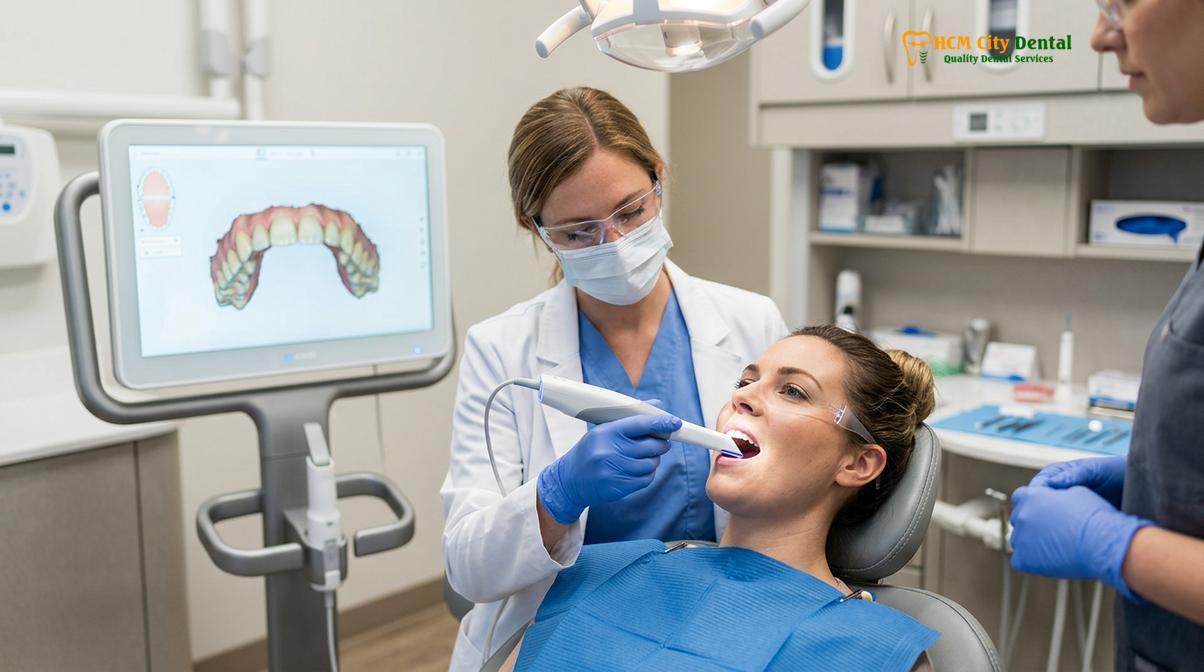
The final delivery appointment is where the clinical expertise of the dentist is truly tested. The adhesive bonding protocol must be executed flawlessly to ensure long-term retention and prevent microleakage. The workflow proceeds as follows:
- Isolation: The teeth are isolated using a rubber dam or specialized retractors to prevent moisture contamination from saliva or crevicular fluid.
- Surface Preparation: The natural enamel is cleaned and etched with a mild phosphoric acid solution to create microscopic porosities. Simultaneously, the intaglio (inner) surface of the lumineer is treated with hydrofluoric acid and a silane coupling agent to facilitate chemical bonding.
- Try-In and Shade Verification: The lumineers are temporarily placed using water-soluble try-in pastes to verify the fit, marginal adaptation, and final color. The shade of the underlying resin cement can be adjusted to subtly warm or brighten the final result.
- Cementation: A light-cured or dual-cured resin cement is applied. The lumineers are carefully seated, and excess cement is meticulously removed from the margins before the final light-curing process polymerizes the bond.
- Finishing and Polishing: The margins are polished to a high gloss to ensure a seamless transition between the ceramic and the natural tooth, preventing plaque accumulation.
Aesthetic Outcomes and Periodontal Considerations
Achieving a natural aesthetic with lumineers requires balancing ceramic translucency with precise marginal adaptation to prevent gingival inflammation and ensure long-term periodontal health.
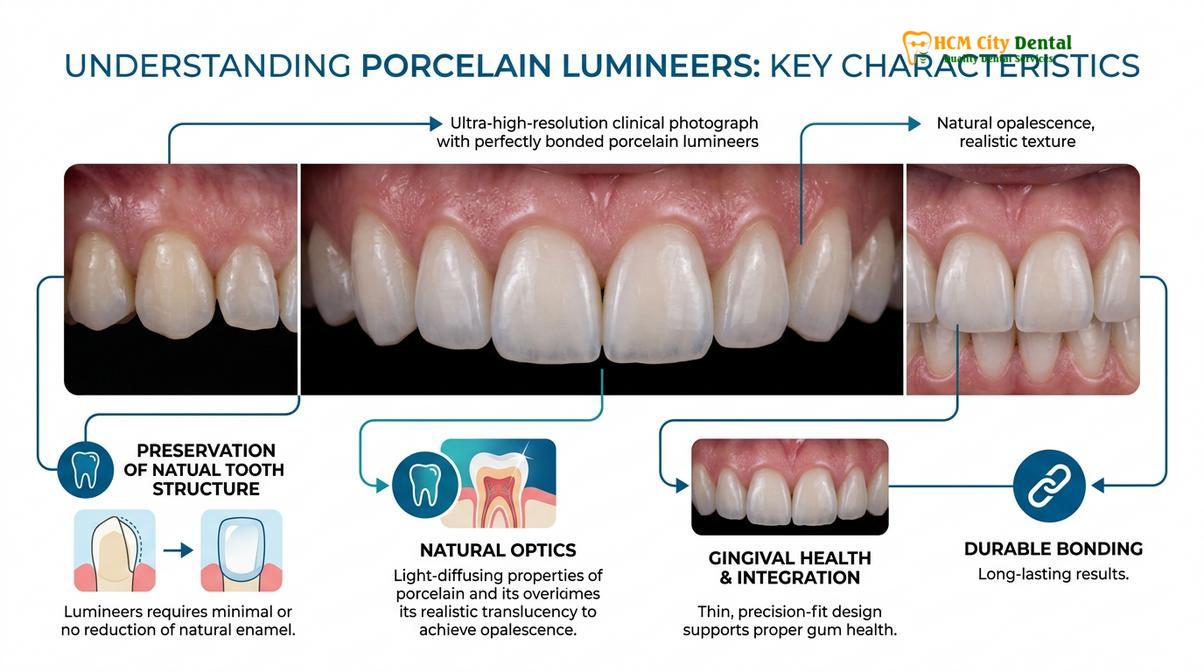
The primary motivation for patients seeking porcelain lumineers is the enhancement of their smile’s aesthetics. When executed correctly, the results are highly natural and visually stunning. The Cerinate porcelain mimics the opalescence and fluorescence of natural enamel, reflecting light dynamically rather than appearing opaque or artificial. However, achieving this outcome requires a profound understanding of optical physics and periodontal biology.
One of the most significant clinical challenges with no-prep veneers is managing the emergence profile—the angle and contour at which the tooth emerges from the gumline. Because lumineers add material to the existing tooth surface, there is an inherent risk of creating an over-contoured or “bulky” appearance. If the ceramic margin is too thick or poorly adapted, it creates a microscopic ledge at the gingival margin. This ledge acts as a plaque trap, leading to localized gingivitis, periodontal attachment loss, and eventual recession of the gum tissue[4].
“Periodontal health must never be sacrificed for cosmetic enhancement. The integration of the ceramic margin with the soft tissue is the ultimate determinant of a restoration’s long-term success. A seamless, highly polished margin ensures that the gingiva remains pink, stippled, and firmly attached.”
To mitigate these risks, skilled clinicians employ a “micro-prep” technique when necessary. While adhering to the minimally invasive philosophy, they may perform a very slight enameloplasty—smoothing sharp line angles or creating a microscopic chamfer at the gingival margin—to allow the ceramic to sit flush with the tooth. This ensures that the final restoration feels completely natural to the patient and allows for effortless flossing and daily hygiene maintenance. For patients missing adjacent teeth who are considering comprehensive reconstruction, understanding How Much Does a Dental Bridge Cost alongside veneer therapy can help in planning a full-mouth rehabilitation.
Furthermore, occlusal dynamics play a critical role in the longevity of the restorations. The dentist must evaluate the patient’s anterior guidance and envelope of function to ensure that the lower teeth do not place excessive shear forces on the delicate ceramic edges during speaking or chewing. If a patient exhibits signs of bruxism (nighttime teeth grinding), an occlusal guard is strictly recommended to protect the investment[5]. In cases where structural support is needed across multiple missing teeth, a 4 Tooth Dental Bridge might be integrated into the broader cosmetic treatment plan.
Clinical Case Study: Smile Transformation
A conservative approach using ultra-thin lumineers successfully corrected microdontia and diastemas, delivering a broader, brighter smile while preserving 100% of the patient’s natural enamel.
Patient Profile: A 28-year-old female presented to HCMC Dental Clinic in Ho Chi Minh City with concerns about her “gummy smile,” small teeth (microdontia), and multiple spaces (diastemas) between her upper anterior teeth. She expressed high dental anxiety and strongly desired a solution that did not involve drilling or permanent alteration of her natural teeth.
Clinical Assessment: Dr. Nguyen Van Cuong conducted a comprehensive evaluation. The patient had excellent periodontal health, a stable Class I occlusion, and naturally light-colored enamel. Her teeth were slightly lingually inclined (tilted inward), making her an ideal candidate for a no-prep additive approach.
Treatment Protocol: Digital impressions were captured, and a 3D smile design was created to plan the closure of the diastemas and increase the length and volume of the teeth. Eight custom Cerinate porcelain lumineers were fabricated. During the delivery appointment, the teeth were isolated, etched, and the lumineers were adhesively bonded using a translucent resin cement to maximize natural light transmission.
Outcome: The patient achieved a dramatically broader, more symmetrical smile. The additive nature of the lumineers corrected the lingual inclination, providing better lip support. Because no enamel was removed, the patient experienced zero postoperative sensitivity and required no local anesthesia during the procedure. The gingival tissues responded excellently to the highly polished, seamless margins.
When to See a Doctor for Cosmetic Dental Assessment
While porcelain lumineers offer a fantastic, minimally invasive route to a beautiful smile, they are a highly specialized medical device that requires precise clinical indication. Patients should schedule a comprehensive consultation with a qualified cosmetic dentist to determine their specific candidacy. It is essential to understand that cosmetic dentistry is not a one-size-fits-all discipline; what works perfectly for one anatomical presentation may be contraindicated for another.
Important Clinical Considerations & Contraindications:
Porcelain lumineers are generally NOT recommended for patients exhibiting the following conditions without prior corrective therapy:
- Severe Dental Crowding: Adding material to already overlapping teeth will exacerbate the bulky appearance and create severe plaque traps. Orthodontic alignment is required first.
- Deep Intrinsic Staining: Severe tetracycline stains or fluorosis cannot be adequately masked by 0.2mm translucent ceramic.
- Active Periodontal Disease: Unresolved gingivitis or periodontitis must be treated and stabilized before any cosmetic restorations are placed.
- Severe Bruxism: Unmanaged teeth grinding can generate forces that exceed the fracture toughness of ultra-thin ceramics, leading to chipping or debonding.
If you are experiencing functional issues, jaw pain, or have severely misaligned teeth, your clinician may recommend structural or orthodontic treatments first. Exploring options and understanding the Damon System Braces Cost can provide insight into efficient pre-restorative alignment. Dr. Nguyen Van Cuong emphasizes that a thorough diagnostic workup, including radiographs and occlusal analysis, is the only way to ensure that cosmetic enhancements are built upon a foundation of absolute oral health.
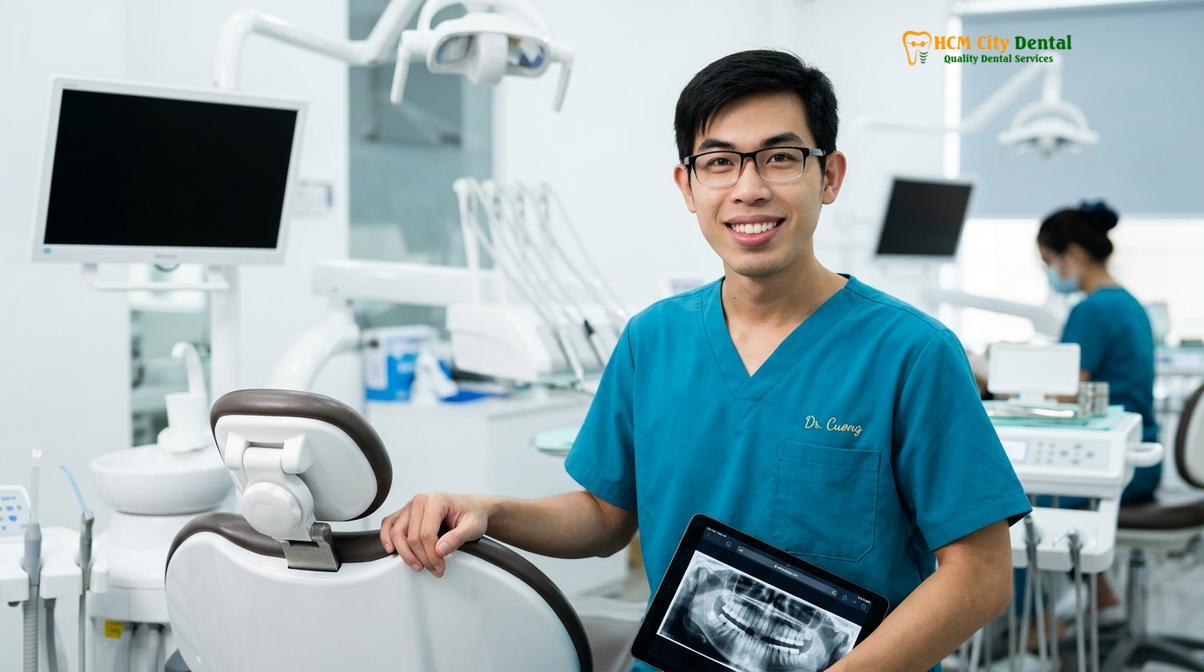
For patients ready to explore their cosmetic options, reviewing Dentist Reviews and Feedback can help in selecting a clinician with a proven track record in minimally invasive aesthetic dentistry. A personalized consultation at HCMC Dental Clinic in Ho Chi Minh City will provide you with a tailored treatment plan, ensuring your smile transformation is both beautiful and biologically sound.
Frequently Asked Questions
How long do porcelain lumineers typically last?
Porcelain lumineers can last between 10 to 20 years with proper clinical placement and excellent patient maintenance. Longevity depends heavily on the quality of the adhesive bond to the enamel, the patient’s occlusal forces, and strict adherence to daily oral hygiene practices. Regular professional cleanings and the use of a nighttime occlusal guard can significantly extend their lifespan.
Are porcelain lumineers completely reversible?
Yes, porcelain lumineers are generally considered reversible because they require little to no removal of natural tooth enamel. If removed by a skilled clinician, the underlying natural tooth structure remains largely intact, though some residual bonding resin may need to be carefully polished away. This makes them an excellent option for patients hesitant about permanent tooth alteration.
Can lumineers cover severely stained or dark teeth?
Lumineers are highly translucent and may struggle to fully mask severe intrinsic discoloration, such as deep tetracycline stains. In cases of severe darkening, traditional veneers with greater thickness or adjunctive professional teeth whitening prior to placement are usually recommended for optimal aesthetic results. Your dentist will evaluate your base shade to determine the best material.
Do porcelain lumineers look bulky or unnatural?
Lumineers can appear bulky if placed on teeth that are already prominent or severely crowded without any enamel preparation. Careful case selection and precise digital smile design by an experienced cosmetic dentist are essential to ensure a seamless, natural emergence profile at the gumline. When applied to appropriately sized or slightly retruded teeth, they look exceptionally natural.
Is the application process for lumineers painful?
The application process is virtually painless, as the no-prep technique typically eliminates the need for aggressive drilling or local anesthesia. Patients generally experience a comfortable procedure, though mild, temporary thermal sensitivity may occur immediately following the final adhesive bonding process as the teeth adjust to the new restorations.
References
- Journal of Prosthetic Dentistry. Clinical performance and longevity of ultra-thin porcelain veneers. (2019).
- Dental Materials. Optical properties and fracture resistance of Cerinate lithium disilicate ceramics. (2020).
- Journal of Esthetic and Restorative Dentistry. Periodontal tissue response to no-prep veneer margins. (2021).
- American Journal of Dentistry. Long-term survival rates of minimally invasive ceramic restorations in anterior dentition. (2018).
- International Journal of Periodontics & Restorative Dentistry. Soft tissue integration and emergence profiles of ultra-thin laminate veneers. (2022).