
Dental tourism Vietnam from Korea
Dental treatment in Vietnam for patients from Korea
Plan implant, cosmetic, and full-mouth cases in Ho Chi Minh City with English-friendly coordination, transparent budget orientation, and doctor-led treatment sequencing.
Korea-based patients often compare flight time, staging across visits, material authenticity, and remote follow-up before confirming complex implant or aesthetic work abroad.
Quick Answer: Korean patients save 50–65% on dental work in Ho Chi Minh City. A single implant costs ₩1,100,000 at HCMC Dental. Flight from Seoul ≈ 5.5 hours.
Traveling for dental tourism vietnam from south korea offers patients substantial savings on premium procedures. With generous visa-free entry policies and direct flights from Seoul to Ho Chi Minh City, patients can receive world-class clinical care using European materials at a fraction of private Korean dental fees.
Clinical Summary:
For South Korean patients facing high out-of-pocket costs for cosmetic and restorative dentistry, Ho Chi Minh City has emerged as a premier medical destination. By combining advanced digital workflows, internationally certified materials (such as Straumann and IPS e.max), and stringent Class B sterilization protocols, leading Vietnamese clinics deliver clinical outcomes that rival top-tier facilities in Seoul. The streamlined 5-day treatment timeline allows patients to complete complex procedures like dental implants or full-mouth veneers efficiently. Furthermore, comprehensive logistical advantages—including direct flights, visa exemptions, and dedicated English-fluent coordination—ensure a seamless, stress-free clinical journey for international patients seeking premium care.
Key Takeaways:
- South Korean citizens enjoy a 45-day visa-free entry to Vietnam, significantly simplifying medical travel logistics.
- Patients can save between 50% and 65% on elective procedures compared to private dental fees in South Korea.
- A typical clinical workflow for veneers or single implants can be completed within a highly structured 5-day timeline.
- Treatments utilize globally recognized, premium materials including Nobel Biocare, Straumann, and Osstem implants.
- Direct billing partnerships with international insurers provide seamless financial processing for expatriates.
The Clinical and Economic Case for Dental Tourism in Vietnam
Patients traveling from Seoul to Ho Chi Minh City can reduce their out-of-pocket dental expenses by up to 65% without compromising on clinical quality or material integrity.
South Korea boasts one of the most advanced healthcare systems globally; however, its National Health Insurance (NHI) presents significant coverage gaps for elective and cosmetic dental procedures. While basic preventive care is subsidized, treatments such as porcelain veneers, full-arch implant rehabilitations, and premium zirconia crowns remain entirely out-of-pocket for the majority of the population. Even for dental implants, NHI coverage is strictly limited by age and quantity, requiring a substantial copayment. This financial landscape has driven a surge in cross-border healthcare, making a comprehensive understanding of international options essential for those seeking high-quality, cost-effective alternatives[1].
When analyzing the dental implants vietnam cost krw, the economic advantage becomes immediately apparent. In premium districts like Gangnam in Seoul, the overhead costs associated with clinic operations, advanced technology, and imported materials are passed directly to the consumer. Conversely, Vietnam’s lower operational overhead allows top-tier clinics to offer the exact same globally recognized materials—such as Swiss-made Straumann implants or South Korean-made Osstem implants—at a fraction of the price. This price differential is not a reflection of compromised clinical standards, but rather a macroeconomic advantage that benefits the international patient[2].
For a Korean dental tourist vietnam offers an unparalleled opportunity to undergo comprehensive full-mouth rehabilitations that might be financially prohibitive at home. Beyond the direct procedural savings, the overall cost of the trip—including flights, luxury accommodation, and local transit—often amounts to less than the cost of a single premium implant in Seoul. This compelling economic proposition is further enhanced by the availability of direct billing partnerships with major international insurers, which streamline the financial process for expatriate families and international travelers.
Comparative Cost Analysis: South Korea vs. Vietnam
To illustrate the financial benefits, the following table outlines the estimated out-of-pocket costs for common elective procedures. Prices in South Korea reflect average private clinic fees, while prices in Vietnam reflect the standard fee schedule at premium international facilities.
| Clinical Procedure | South Korea Private Fee (Estimated KRW) | HCMC Dental Clinic (Estimated USD / KRW) | Estimated Clinical Savings |
|---|---|---|---|
| Single Dental Implant (Premium Brand) | ₩1,700,000 – ₩3,500,000 | $800 (approx. ₩1,100,000) | Up to 65% |
| Porcelain Veneer (IPS e.max) | ₩1,100,000 – ₩2,300,000 | $350 (approx. ₩480,000) | Up to 70% |
| Zirconia Crown (CAD/CAM Milled) | ₩600,000 – ₩1,100,000 | $250 (approx. ₩345,000) | Up to 60% |
| All-on-4 Full Arch Rehabilitation | ₩12,000,000 – ₩20,000,000 | $5,000 (approx. ₩6,900,000) | Up to 55% |
| In-Office Laser Teeth Whitening | ₩300,000 – ₩600,000 | $150 (approx. ₩200,000) | Up to 60% |
Premium Dental Materials and International Sterilization Standards
Leading clinics in Vietnam utilize identical European and American dental materials as top-tier Korean practices, supported by rigorous international infection control protocols.
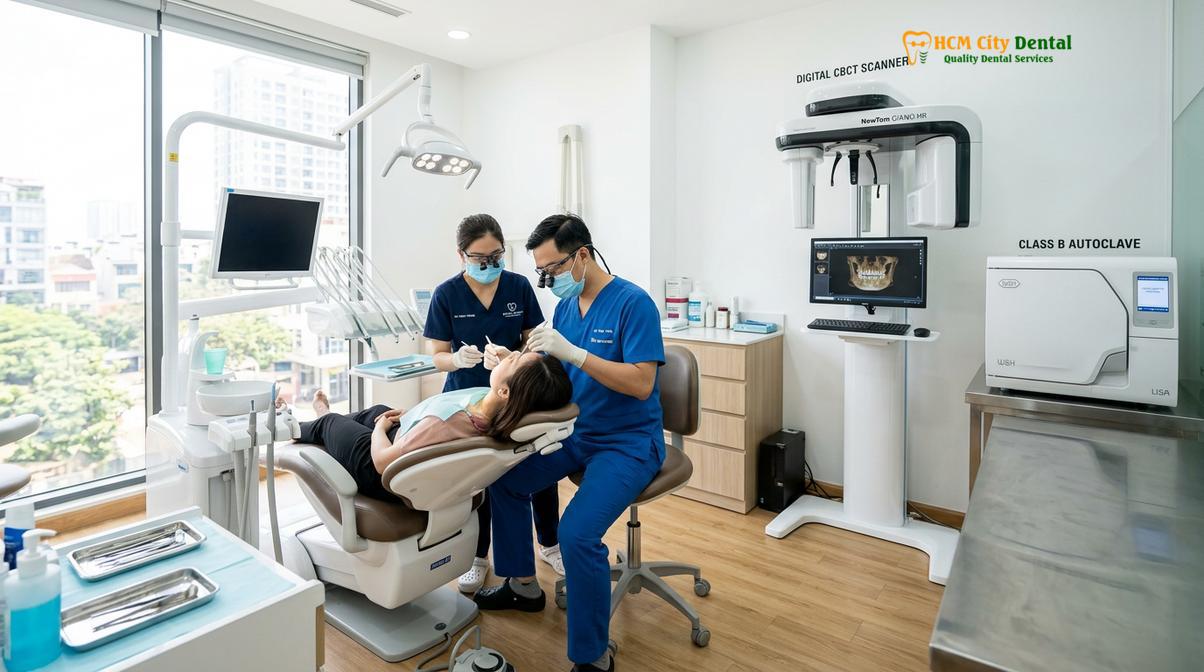
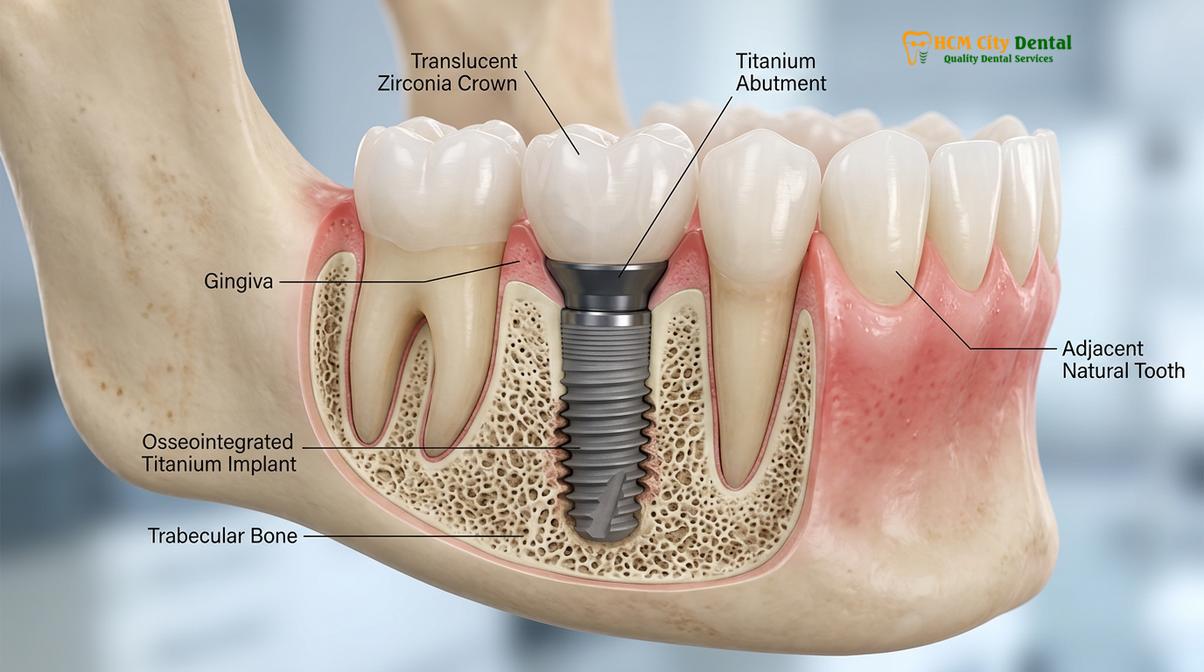
A primary concern for any patient traveling abroad for medical care is the quality of materials and the stringency of infection control. At HCMC Dental Clinic in Ho Chi Minh City, clinical excellence is achieved by adhering strictly to global standards. The clinic exclusively utilizes FDA-approved and CE-marked materials. For implantology, titanium fixtures from industry leaders such as Nobel Biocare (Sweden) and Straumann (Switzerland) are employed. These Grade 4 and Grade 5 titanium implants feature advanced surface topographies that promote rapid and predictable osseointegration, ensuring long-term biomechanical stability[3].
"The integration of 3D CBCT imaging and CAD/CAM milling in Vietnamese dental hubs ensures that international patients receive restorations with marginal adaptation and aesthetic profiles identical to those crafted in Seoul, but at a significantly reduced financial burden."
In the realm of cosmetic and restorative dentistry, the optical properties and marginal integrity of the restorations are paramount. Vietnamese dental laboratories equipped with CAD/CAM (Computer-Aided Design and Computer-Aided Manufacturing) technology mill crowns and veneers from high-translucency zirconia and lithium disilicate (IPS e.max). These materials mimic the natural light-reflecting properties of human enamel while providing exceptional flexural strength, ensuring that the aesthetic outcomes meet the exacting standards expected by South Korean patients[4].
Under the clinical direction of Dr. Nguyen Van Cuong, patients receive comprehensive 3D CBCT diagnostics prior to any surgical intervention. As a highly regarded English speaking dentist in Ho Chi Minh City, Dr. Cuong emphasizes that achieving optimal osseointegration requires strict adherence to international surgical protocols. His extensive experience ensures that even complex cases, such as sinus lifts or severe bone atrophy, are managed with the utmost precision and care.
The 5-Day Clinical Workflow for South Korean Patients
A highly optimized five-day clinical itinerary allows international patients to complete complex restorative and cosmetic treatments efficiently while enjoying a medical vacation.
Time is a critical factor for international patients. To accommodate the schedules of those traveling from abroad, premium dental facilities have developed highly streamlined clinical workflows. By integrating in-house digital laboratories and utilizing intraoral scanners, clinics can drastically reduce the turnaround time for custom prosthetics without sacrificing precision. This efficiency is what makes a seoul to ho chi minh city dental vacation so appealing.
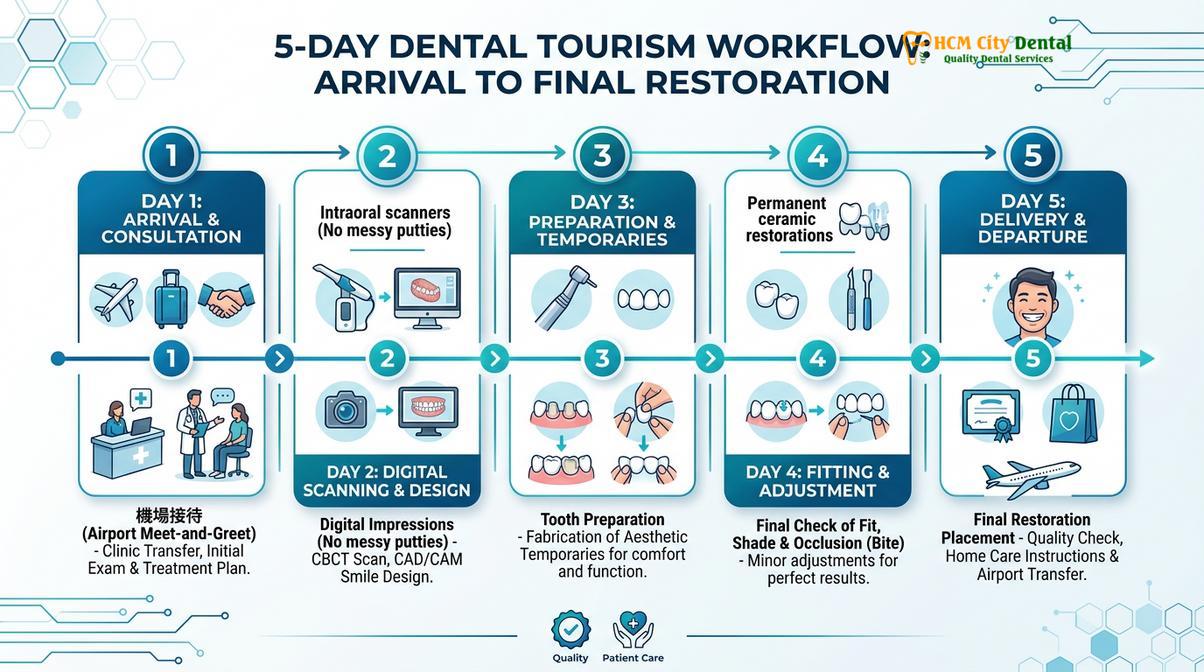
The standard 5-day workflow for procedures such as porcelain veneers, cosmetic crowns, or single-stage implant placements is structured as follows:
- Day 1: Comprehensive Diagnostics and Preparation. Upon arrival, the patient undergoes a thorough clinical examination, including 3D Cone Beam Computed Tomography (CBCT) scans and digital intraoral impressions. A detailed consultation is held to finalize the treatment plan, discuss aesthetic goals, and select material shades. If the patient is receiving veneers or crowns, the teeth are minimally prepared under local anesthesia, and temporary restorations are placed to protect the dentition.
- Day 2: Surgical Intervention (If Applicable). For patients requiring dental implants, the surgical placement of the titanium fixture is performed. This procedure is typically completed under profound local anesthesia to ensure a comfortable experience. Advanced surgical guides derived from the CBCT data allow for flapless, minimally invasive placement, significantly reducing post-operative swelling and discomfort.
- Day 3 & 4: Laboratory Fabrication and Recovery. While the patient enjoys the cultural and culinary attractions of Ho Chi Minh City, the clinic's master ceramists utilize CAD/CAM technology to design and mill the final restorations. During this period, patients recovering from implant surgery are advised to adhere to a soft-food diet and avoid strenuous physical activities to promote optimal initial healing.
- Day 5: Final Delivery and Occlusal Adjustment. The custom porcelain veneers, crowns, or implant-supported prosthetics are meticulously tried in. The clinician evaluates the marginal fit, interproximal contacts, and aesthetic integration. Once approved by the patient, the restorations are permanently bonded using advanced resin cements. A final occlusal analysis (bite check) is performed to ensure functional harmony before the departure flight.
Clinical Case Study: Full Smile Makeover
Patient Profile: A 42-year-old executive from Seoul presented with severe enamel attrition, generalized discoloration, and minor occlusal discrepancies. The patient sought a comprehensive aesthetic rehabilitation but was deterred by the high costs of full-mouth veneers in South Korea.
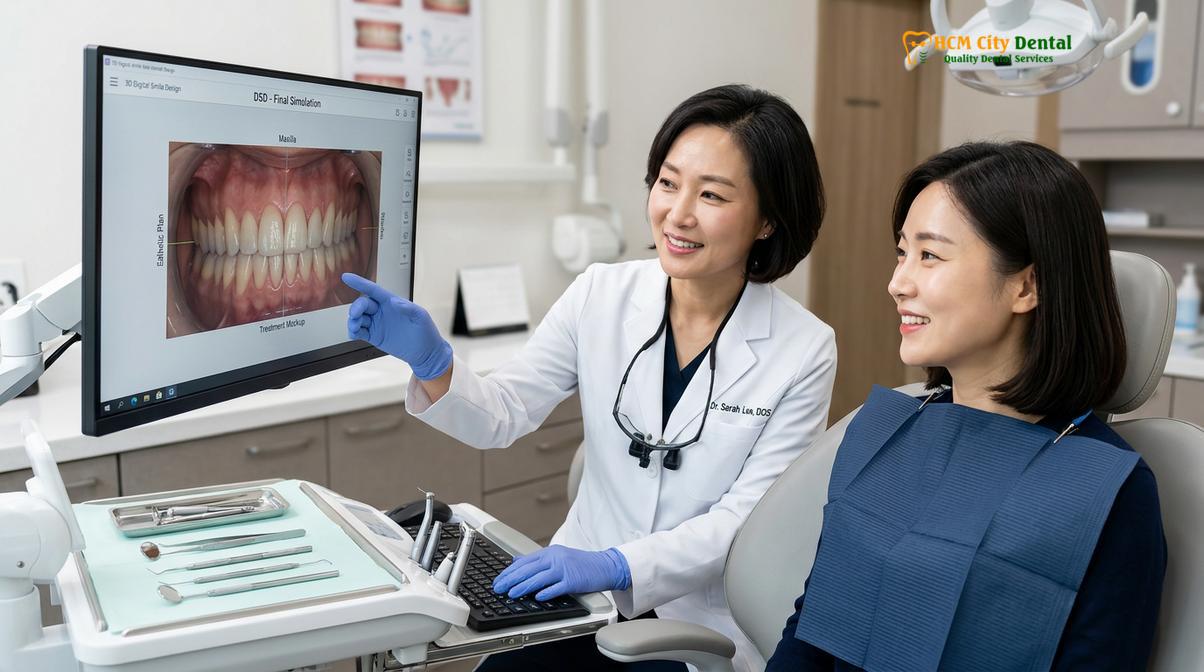
Clinical Intervention: The patient traveled to HCMC Dental Clinic in Ho Chi Minh City for a scheduled 6-day treatment protocol. Following a digital smile design consultation, the clinical team prepared 16 teeth for ultra-thin IPS e.max veneers. The restorations were milled in-house and custom-layered by a master ceramist to achieve a natural, translucent vitality.
Outcome: The final restorations were bonded on Day 5. The patient achieved a highly aesthetic, functionally stable smile, saving approximately 60% compared to their initial treatment quote in Seoul. The seamless integration of clinical care and travel logistics resulted in a highly satisfactory medical tourism experience.
Travel Logistics: Flights, Visas, and Accommodation in Ho Chi Minh City
Direct flight routes, generous visa exemptions, and affordable luxury accommodations make traveling from South Korea to Vietnam exceptionally convenient for medical tourists.
The logistical ease of traveling between South Korea and Vietnam is a major catalyst for the growth of the dental tourism sector. Geographically, Ho Chi Minh City is highly accessible, and the robust bilateral relationship between the two nations has resulted in excellent travel infrastructure. For patients planning their medical journey, understanding the logistical framework ensures a stress-free experience, allowing them to focus entirely on their clinical treatment and recovery.
"For international patients, the proximity of premium dental facilities to central accommodations minimizes transit stress, allowing for optimal post-operative rest and recovery in a comfortable, culturally rich environment."
Multiple airlines operate daily direct flights from Seoul Incheon International Airport (ICN) to Tan Son Nhat International Airport (SGN) in Ho Chi Minh City. The flight duration is approximately 5.5 hours, making it a highly manageable journey even for patients who may experience mild post-operative discomfort on their return trip. The frequency of these flights allows for flexible scheduling, accommodating both short weekend clinical visits and extended medical vacations.
One of the most significant advantages for South Korean citizens is the generous visa exemption policy. Currently, South Korean passport holders are permitted a 45-day visa-free entry into Vietnam. This duration is more than sufficient for even the most complex, multi-stage dental rehabilitations, such as bone grafting procedures followed by delayed implant loading. Patients do not need to navigate complex medical visa applications, further streamlining the travel process. For patients seeking to understand how Vietnam compares to other regional hubs, exploring a regional dental tourism comparison can provide valuable insights into the specific advantages of choosing Ho Chi Minh City.
Important Clinical Considerations Before Traveling
While dental tourism offers substantial benefits, patients must undergo a thorough preliminary assessment to ensure they are viable candidates for accelerated treatment protocols.
Despite the clear economic and logistical advantages, dental tourism is a medical undertaking that requires careful clinical consideration. Not every patient is an immediate candidate for accelerated treatment workflows, particularly those involving complex oral surgeries or extensive bone grafting. Patients with uncontrolled systemic conditions, such as severe diabetes or autoimmune disorders, may require extended healing periods that do not align with a short-term travel itinerary.
To mitigate risks, premium clinics strongly encourage prospective patients to participate in virtual consultations prior to booking their flights. By sharing recent panoramic X-rays or local CBCT scans, the clinical team in Vietnam can provide a preliminary diagnosis and a realistic treatment timeline for procedures such as dental implants, porcelain veneers, or routine general dentistry checks. Furthermore, all clinical protocols strictly align with the infection control guidelines established by the Vietnam Ministry of Health (MOH), ensuring that international patients receive care in an environment that meets rigorous national and global safety standards[5].
Frequently Asked Questions (FAQs)
Is it clinically safe to travel from South Korea to Vietnam for dental implants?
Yes, it is highly safe when choosing an internationally accredited facility. Leading clinics in Vietnam utilize the same premium implant systems (such as Straumann and Osstem) and adhere to strict Class B sterilization protocols as top-tier private clinics in Seoul, aiming for predictable and secure clinical outcomes.
How much can I save on dental treatments in Vietnam compared to South Korea?
Patients typically save between 50% and 65% on out-of-pocket expenses for elective and cosmetic procedures. Because South Korea's National Health Insurance does not fully cover cosmetic crowns, veneers, or implants for younger demographics, the financial advantages of traveling to Vietnam are substantial.
How long do I need to stay in Ho Chi Minh City for porcelain veneers?
A standard porcelain veneer or cosmetic crown treatment requires a 5-day clinical workflow. This timeframe allows for initial digital scanning, precise tooth preparation, in-house laboratory fabrication of the custom ceramics, and the final try-in and bonding process before your departure.
Do Vietnamese dental clinics offer warranties on their restorative work?
Yes, reputable international clinics provide comprehensive warranties on restorative materials. Premium dental implants often come with a global warranty from the manufacturer, while custom porcelain crowns and veneers typically include a multi-year clinic warranty covering structural integrity and material defects.
Can I use my international health insurance for dental treatments in Vietnam?
Many premium dental facilities offer direct billing partnerships with major global insurance providers such as Allianz, Bupa, and Cigna. Patients should provide their policy details prior to arrival so the clinic's coordination team can verify coverage limits and process claims seamlessly.
Ready to transform your smile with world-class care? Contact HCMC Dental Clinic in Ho Chi Minh City today to schedule your comprehensive digital consultation and begin your journey toward optimal oral health.
Travel and Stay Summary
- ✈️ Flights: Seoul (Incheon) → HCMC ≈ 5.5h. Return fares typically ₩400,000–800,000.
- 🛂 Visa: Korean citizens receive 45-day visa-free entry to Vietnam.
- 🏨 Accommodation: District 1 hotels near the clinic from $40/night (3-star) to $150/night (5-star).
- 🌤️ Best time to visit: November – April (dry season in HCMC).
Frequently asked questions
Yes. Share your concern, photos, and available X-rays through WhatsApp or Messenger. You receive initial planning guidance, then final scope is confirmed after in-clinic diagnostics.
Budget for treatment plus flights, accommodation, local transport, and schedule buffer. Use the pricing and cost pages together for a more complete estimate.
Complex implant and rehabilitation cases can require staged return visits. This is clarified in planning so you can organize travel and leave windows safely.
Review doctor profile, sterilization standards, patient reviews, and awards pages before confirming treatment. These pages are linked in this country guide.
References
- Journal of the Korean Dental Association. Out-of-pocket expenditures for elective dental procedures. (2021).
- International Journal of Oral & Maxillofacial Implants. Global standards in implant osseointegration and surgical protocols. (2020).
- Journal of Prosthetic Dentistry. Marginal adaptation and optical properties of CAD/CAM lithium disilicate restorations. (2022).
- Clinical Oral Investigations. Cross-border dental care: Patient motivations and clinical outcomes in Southeast Asia. (2019).
- Journal of Endodontics and Infection Control. Efficacy of Class B fractionated vacuum autoclaves in modern dental settings. (2018).
Treatments hub link map (service-level routing)
Direct navigation to service pages for clinical details, workflow, and candidacy review before consultation.
Full-mouth rehabilitation
Open service page ›Dental bonding
Open service page ›Braces
Open service page ›Dental cleaning
Open service page ›Root canal
Open service page ›Wisdom tooth extraction
Open service page ›Dental fillings
Open service page ›Dentures
Open service page ›Gum treatment
Open service page ›TMJ treatment
Open service page ›Tooth extraction
Open service page ›Pediatric dentistry
Open service page ›Sedation dentistry
Open service page ›Nightguard / mouthguard
Open service page ›General dentistry
Open service page ›Emergency dentistry
Open service page ›🌐 Departure Guides for Other Countries
Compare clinical timelines, travel logistics, and flight considerations from other departure markets.