
Dental tourism Vietnam from Singapore
Dental treatment in Vietnam for Singapore patients
Compare high private dental fees in Singapore (SGD) with premium, doctor-led treatment in Ho Chi Minh City. Direct flights under 2 hours make staging and weekend treatments extremely practical.
Singapore patients often prioritize fast turnaround, premium European materials, and dental crowns or implants completed during short, convenient trips.
Quick Answer: Singapore patients save 50–60% with just a 2-hour flight to Ho Chi Minh City. A single implant costs SGD 1,100 at HCMC Dental vs SGD 3,800–5,500 in Singapore.
Patients traveling for dental tourism vietnam from singapore can often save up to 60% on premium treatments like dental implants, full-arch rehabilitations, and porcelain veneers. With a short two-hour flight, generous visa-free entry, and world-class clinical standards available at HCMC Dental Clinic, Singaporeans can receive exceptional restorative care without facing prohibitive out-of-pocket costs.
Clinical Summary:
Dental tourism from Singapore to Ho Chi Minh City offers a highly viable clinical alternative for complex restorative and cosmetic procedures. By leveraging favorable exchange rates and lower operational overheads, patients can access premium European materials—such as Straumann implants and IPS e.max ceramics—at a fraction of Singaporean private clinic fees. The standard workflow involves a streamlined five-day protocol, integrating 3D CBCT diagnostics, precise surgical intervention, and custom laboratory fabrication, all executed under stringent international sterilization protocols.
Key Takeaways:
- Singaporean patients can save significantly on complex dental procedures compared to local private fees.
- A single premium dental implant typically costs approximately $800 to $1,200 SGD at HCMC Dental Clinic.
- Citizens of Singapore enjoy a 45-day visa-free entry to Vietnam, simplifying travel logistics.
- A typical full-arch or multi-veneer treatment can generally be completed within a structured 5-day clinical timeline.
- Direct billing partnerships with major international insurers facilitate seamless claims for expat families.
The Clinical and Economic Case for Dental Tourism
Singaporean patients face exceptionally high out-of-pocket dental costs, making Ho Chi Minh City an attractive destination for premium, cost-effective restorative dentistry without compromising clinical quality.
The healthcare system in Singapore is globally recognized for its excellence; however, dental care—particularly elective, cosmetic, and complex restorative procedures—remains largely excluded from comprehensive public subsidies. While local schemes offer limited relief for basic preventive care or partial surgical offsets, the financial burden of full-arch rehabilitations, multiple implants, or comprehensive smile makeovers falls heavily on the patient. This economic reality has driven a significant surge in patients seeking comprehensive dental treatments across the region.
When evaluating the economics of a dental work vietnam singapore itinerary, the cost disparities are striking. The lower cost of treatment in Vietnam is not a reflection of inferior materials or outdated techniques. Rather, it is the direct result of significantly lower commercial real estate overheads, reduced administrative labor costs, and favorable currency exchange rates. Premium dental facilities in Ho Chi Minh City import the exact same FDA-approved and CE-marked materials used in Mount Elizabeth or Orchard Road clinics, including Straumann titanium fixtures, Nobel Biocare systems, and Ivoclar Vivadent ceramics[1].
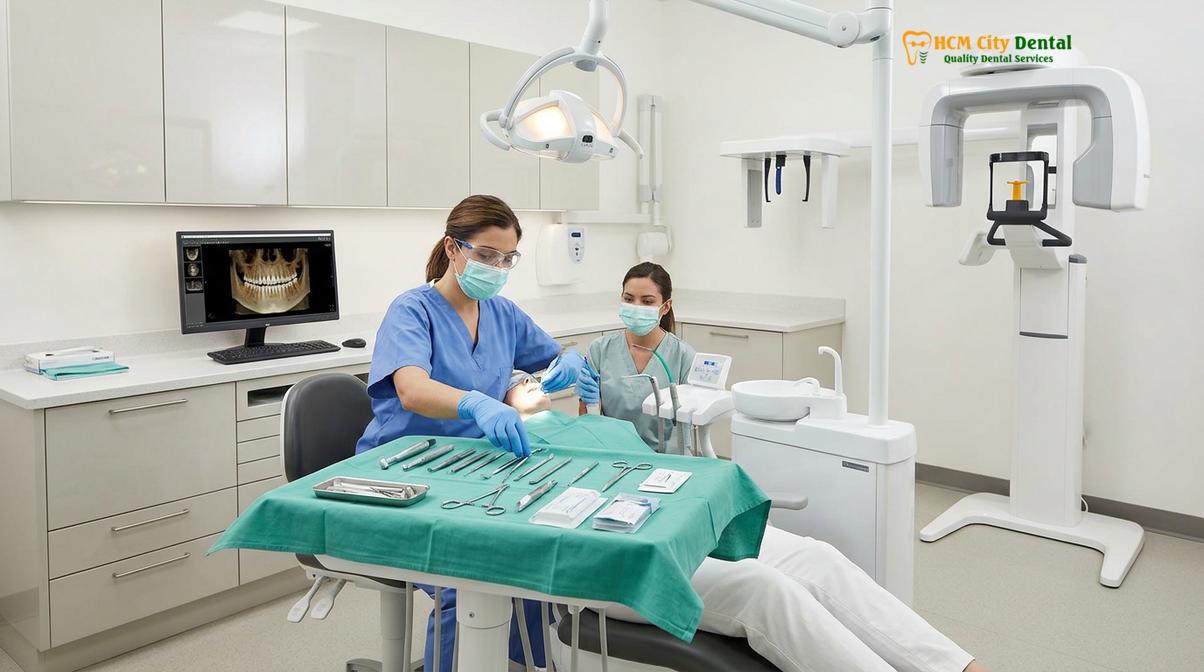
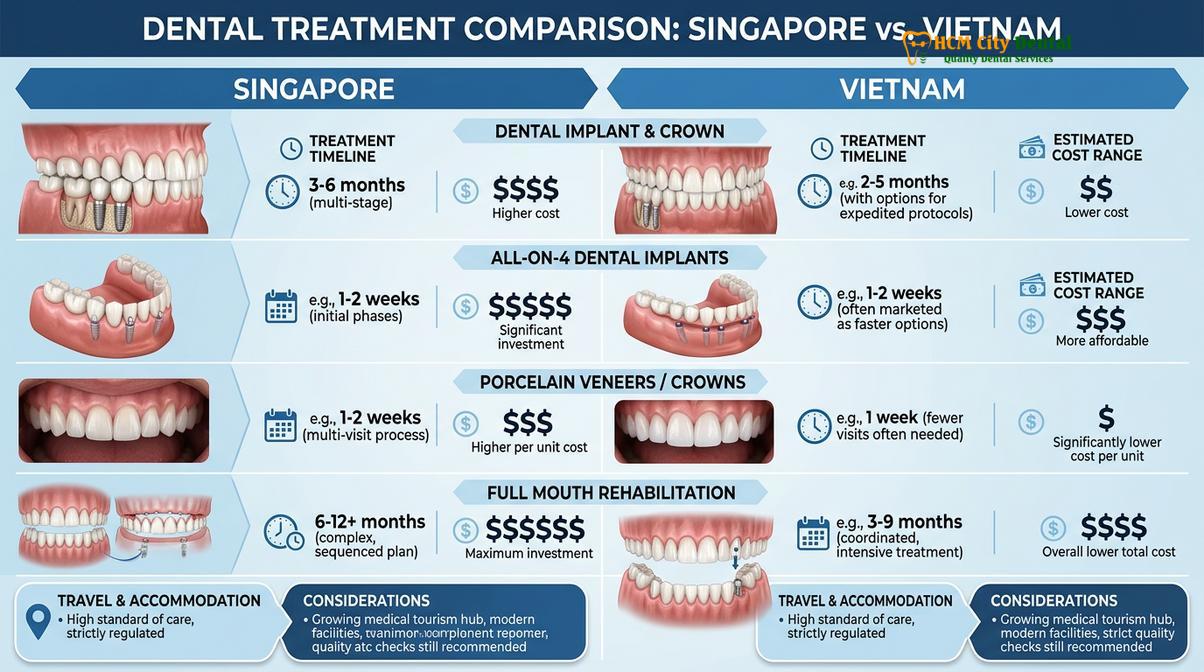
For perspective, a single dental implant (comprising the surgical fixture, abutment, and porcelain crown) in a private Singaporean clinic typically ranges from $3,000 to $5,000 SGD. In contrast, the same procedure utilizing identical European materials costs approximately $800 to $1,200 SGD at HCMC Dental Clinic. When these savings are multiplied across a full-mouth restoration or a set of 10 to 20 porcelain veneers, the financial benefits vastly outweigh the minimal costs of regional travel.
Comparative Cost Analysis (SGD)
The following table outlines the estimated cost differences for standard restorative and cosmetic procedures. Prices are indicative and subject to clinical assessment, but they highlight the profound economic advantage of cross-border care.
| Clinical Procedure | Estimated Cost in Singapore (SGD) | Estimated Cost at HCMC Dental Clinic (SGD) | Approximate Savings |
|---|---|---|---|
| Single Dental Implant (Complete) | $3,000 - $5,000 | $800 - $1,200 | Up to 75% |
| Porcelain Veneer (Per Tooth) | $1,200 - $2,500 | $400 - $600 | Up to 70% |
| All-on-4 Full Arch Implant | $20,000 - $35,000 | $8,000 - $12,000 | Up to 65% |
| Zirconia Crown | $1,000 - $1,800 | $350 - $500 | Up to 70% |
| Professional Teeth Whitening | $800 - $1,200 | $200 - $300 | Up to 75% |
Beyond the direct procedural costs, patients must also factor in the high standard of clinical execution. By comparing regional dental destinations, it becomes evident that Vietnam's rapid investment in digital dentistry infrastructure has positioned it as a premier hub for complex oral rehabilitation.
Comprehensive 5-Day Treatment Timeline in Ho Chi Minh City
A structured five-day clinical protocol ensures precise diagnostics, safe surgical intervention, and custom prosthetic fabrication without compromising recovery time or material integrity.
One of the primary concerns for international patients is the time required away from work and family. Fortunately, advancements in CAD/CAM (Computer-Aided Design and Computer-Aided Manufacturing) technology and immediate-load implant protocols have drastically reduced treatment durations. A well-planned singapore to ho chi minh city dental care itinerary can typically be completed within a single working week, allowing patients to return home promptly with fully restored function[2].
Day 1: Arrival and Advanced Clinical Diagnostics
Upon arrival at Tan Son Nhat International Airport, patients settle into their accommodation before attending their initial clinical consultation. This first appointment is critical for establishing a precise diagnostic baseline. At HCMC Dental Clinic, the protocol mandates a comprehensive 3D Cone Beam Computed Tomography (CBCT) scan. This imaging technology provides a three-dimensional view of the maxillofacial structures, allowing the surgical team to assess bone density, locate the inferior alveolar nerve, and map the exact trajectory for implant placement.
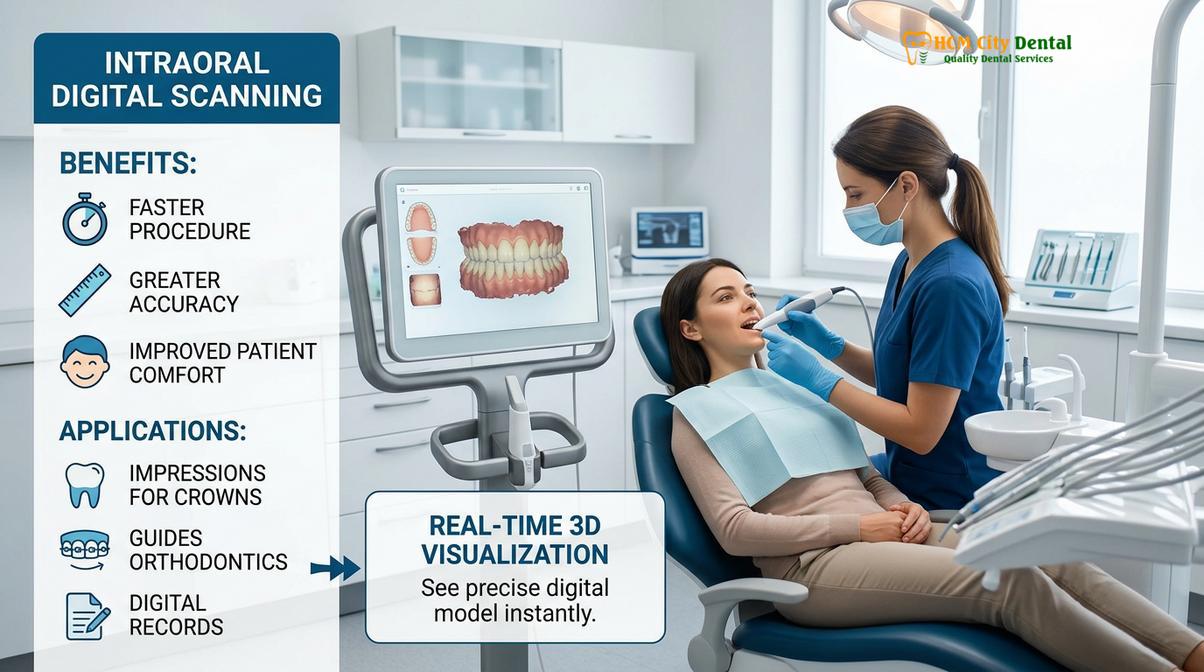
During this session, patients undergo a detailed clinical evaluation. The clinical team utilizes digital intraoral scanners to capture highly accurate optical impressions of the dentition. This eliminates the need for uncomfortable traditional putty impressions and allows for immediate digital smile design simulations.
Day 2: Surgical Intervention or Prosthetic Preparation
The second day is dedicated to the primary clinical procedure. For patients undergoing implant surgery, the placement of the titanium fixtures is performed under profound local anesthesia or, if requested, intravenous twilight sedation. The use of computer-guided surgical stents ensures that the implants are placed with sub-millimeter accuracy, minimizing tissue trauma and accelerating the postoperative healing phase.
For those receiving porcelain veneers or crowns, this day involves the conservative preparation of the enamel. The teeth are gently reshaped to accommodate the ceramic restorations, and temporary crowns are fabricated and bonded in place to protect the dentin and maintain aesthetics while the permanent restorations are milled.
Clinical Case Study: Full-Arch Rehabilitation
Patient Profile: Mr. T, a 58-year-old expatriate residing in Singapore, presented with severe periodontal disease and failing dentition, seeking a cost-effective alternative to local full-arch replacement.
Clinical Action: After a comprehensive digital assessment at HCMC Dental Clinic in Ho Chi Minh City, the clinical team designed a bilateral All-on-4 treatment plan. The failing teeth were extracted, and four premium Straumann implants were placed per arch using a guided surgical protocol.
Outcome: A fixed provisional prosthesis was loaded within 48 hours. The patient reported minimal postoperative edema and returned to Singapore with fully restored masticatory function, saving a substantial amount compared to his initial local quotation.
Days 3 and 4: Laboratory Fabrication and Recovery
While the patient recovers and enjoys a weekend dental trip to saigon—exploring the historic architecture of District 1 or enjoying the local culinary scene—the in-house dental laboratory is hard at work. Utilizing 5-axis milling machines, master ceramists craft the final restorations from blocks of monolithic zirconia or lithium disilicate (IPS e.max). Each crown or veneer is meticulously characterized, stained, and glazed to mimic the natural translucency, mamelon structures, and light-reflecting properties of natural enamel.
Day 5: Final Try-In, Occlusal Adjustment, and Departure
The final clinical appointment involves the removal of temporary restorations and the try-in of the final ceramics. The dentist evaluates the marginal fit, interproximal contacts, and aesthetic integration. Once the patient approves the appearance, the restorations are permanently bonded using dual-cure resin cements.
A critical step in this phase is the occlusal adjustment. Using articulating paper, the dentist ensures that the bite forces are evenly distributed, preventing premature wear or catastrophic fracture of the ceramics. Before departing for the airport, the patient receives a comprehensive postoperative care package, including a custom night guard (if indicated) and an international warranty passport for their implants or restorations.
Travel Logistics: Flights, Visas, and Accommodation
Traveling from Changi Airport to Tan Son Nhat International Airport is highly efficient, supported by visa-free entry and affordable premium accommodations in the city center.
The logistical ease of traveling between Singapore and Vietnam is a major catalyst for the growth of this medical corridor. The flight from Singapore Changi Airport (SIN) to Tan Son Nhat International Airport (SGN) takes approximately two hours, with multiple daily direct flights operated by major carriers. This high frequency allows patients to easily schedule flights that align with their clinical appointments, contributing to high patient satisfaction rates in cross-border care[4].
From an immigration standpoint, the process is exceptionally streamlined. Citizens of Singapore are granted a 45-day visa-free entry into Vietnam. This generous allowance provides ample time not only for the primary dental procedures but also for any necessary follow-up adjustments or extended leisure travel across the country.
Upon arrival, navigating Ho Chi Minh City is straightforward. Patients are advised to book accommodations in District 1 or District 3, which are the central commercial hubs and home to the majority of premium medical facilities. Hotel options range from comfortable boutique stays to luxury international chains. For local transit, ride-hailing applications are ubiquitous, offering safe, cashless, and highly affordable transportation between the hotel and the clinic.
Advanced Clinical Protocols and Patient Safety
Premium dental facilities in Vietnam adhere strictly to international sterilization standards and utilize globally recognized European dental materials to ensure optimal patient outcomes.
When seeking healthcare abroad, patient safety and infection control must be the paramount considerations. Reputable clinics catering to international patients operate under stringent protocols that mirror or exceed those found in Western nations. This commitment to safety is evident in the sterilization workflows, material selection, and transparent clinical communication.
Infection control begins in the central sterilization room. Instruments undergo a rigorous multi-step decontamination process: manual scrubbing, ultrasonic cleaning with enzymatic solutions, individual pouching, and final sterilization in a Class B pre-vacuum autoclave. This specific type of autoclave uses pulsed vacuum technology to ensure that high-pressure steam penetrates even the most complex hollow instruments, effectively neutralizing all bacterial spores and viral pathogens[3]. Furthermore, premium facilities strictly adhere to the infection control guidelines set forth by the Vietnam Ministry of Health (MOH) and the Vietnam Odonto-Stomatology Association (VOSA), ensuring that cross-contamination risks are mitigated.
"The implementation of Class B autoclaving and strict single-use disposable protocols in Southeast Asian premium dental centers has statistically equalized cross-infection risks with those of top-tier Western facilities, ensuring a highly secure environment for medical tourists."
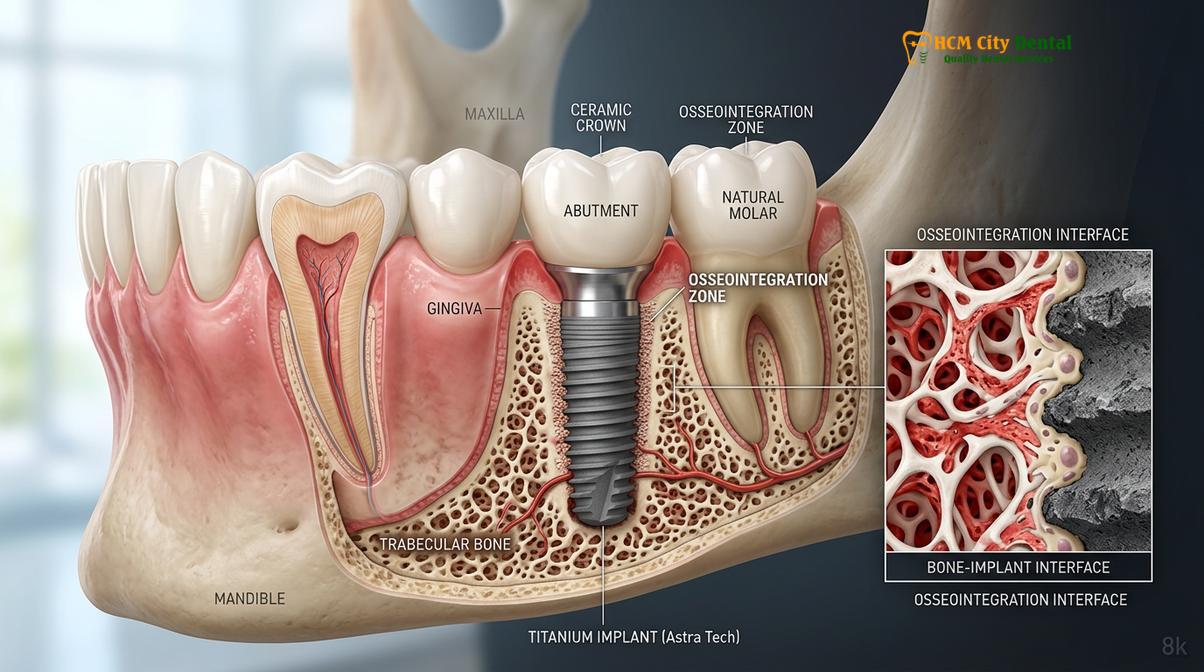
Material provenance is another critical factor. To guarantee long-term success, elite clinics exclusively utilize materials from industry-leading manufacturers. For implantology, this means relying on fixtures with proven surface topographies—such as the SLA surface from Straumann or the TiUnite surface from Nobel Biocare—which have been clinically proven to accelerate osseointegration and maximize bone-to-implant contact compared to standard generic fixtures[5].
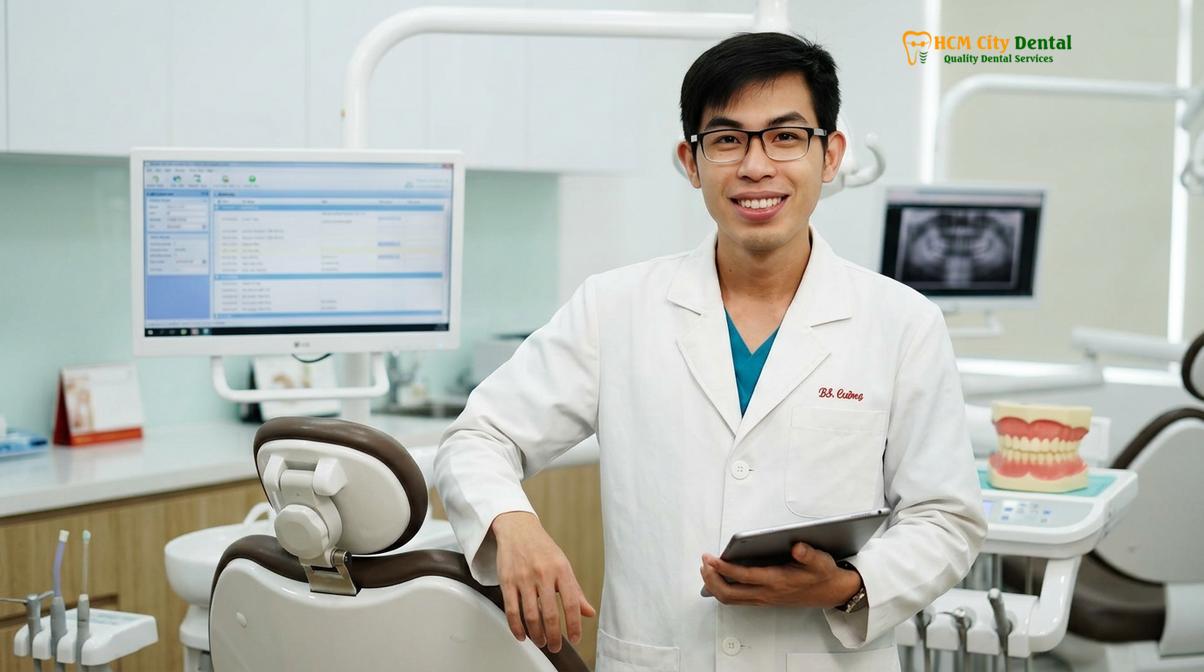
Dr. Nguyen Van Cuong leads the clinical team with a strong commitment to international standards. As a highly sought-after dentist in Ho Chi Minh City, Dr. Cuong ensures that every international patient receives personalized, evidence-based care. His expertise in complex oral rehabilitation has made HCMC Dental Clinic a trusted destination for expatriates and medical tourists alike, bridging the gap between affordability and clinical excellence.
Furthermore, communication barriers are virtually non-existent in top-tier facilities. Patients can expect to be treated by English-fluent dental professionals who can clearly articulate complex medical concepts, discuss risk factors, and provide detailed postoperative instructions. For expatriates living in Singapore, many clinics also offer seamless administrative support, including direct billing partnerships with major international insurance providers, significantly reducing out-of-pocket expenses for covered restorative work.
When to See a Doctor (Pre-Travel Consultation)
A thorough pre-travel consultation and medical clearance are essential steps to ensure that you are a suitable candidate for complex dental surgery abroad.
Before booking flights for a dental tourism itinerary, it is highly recommended to undergo a preliminary clinical assessment. Patients should schedule a consultation with a local dentist in Singapore to obtain a panoramic X-ray (OPG) and a basic periodontal evaluation. This diagnostic data can often be emailed to the clinic in Vietnam for a preliminary remote consultation, allowing the overseas surgical team to draft an accurate treatment plan and cost estimate for procedures like dental implants, porcelain veneers, or routine general dentistry treatments.
"Comprehensive pre-surgical screening is the cornerstone of successful implantology. Identifying systemic risk factors prior to international travel prevents clinical complications and ensures a predictable restorative outcome."
Certain systemic conditions require careful medical management before undergoing invasive dental surgery abroad. Patients must disclose their full medical history to the clinical team, particularly if they have:
- Uncontrolled Diabetes Mellitus: Elevated HbA1c levels significantly impair wound healing and increase the risk of implant failure and postoperative infection.
- History of Bisphosphonate Therapy: Medications used for osteoporosis or certain cancers can alter bone metabolism, increasing the risk of Medication-Related Osteonecrosis of the Jaw (MRONJ) following extractions or implant placement.
- Severe Cardiovascular Disease: Patients on heavy anticoagulant therapy or those with recent myocardial infarctions require medical clearance and potential medication adjustments prior to oral surgery.
- Active Periodontitis: Untreated gum disease must be stabilized before any cosmetic or implant work is initiated to ensure a healthy foundation for the restorations.
If you experience severe acute dental pain, rapid facial swelling, or uncontrolled bleeding while planning your trip, you should seek immediate emergency dental care in Singapore rather than waiting for your scheduled travel dates. Dental tourism is best suited for planned, elective, and comprehensive restorative procedures rather than acute emergency management.
Are you considering traveling from Singapore for premium dental care? Contact HCMC Dental Clinic in Ho Chi Minh City today to schedule your remote consultation and discover how our expert team can restore your smile safely and affordably.
Travel and Stay Summary
- ✈️ Flights: Singapore → HCMC ≈ 2h (multiple daily flights). Return fares typically SGD 150–400.
- 🛂 Visa: Singapore citizens receive 45-day visa-free entry to Vietnam.
- 🏨 Accommodation: District 1 hotels near the clinic from $40/night (3-star) to $150/night (5-star).
- 🌤️ Best time to visit: Year-round (HCMC has tropical climate). Dry season: Nov–Apr.
Frequently asked questions
Yes. Share your concern, photos, and available X-rays through WhatsApp or Messenger. You receive initial planning guidance, then final scope is confirmed after in-clinic diagnostics.
Budget for treatment plus flights, accommodation, local transport, and schedule buffer. Use the pricing and cost pages together for a more complete estimate.
Complex implant and rehabilitation cases can require staged return visits. This is clarified in planning so you can organize travel and leave windows safely.
Review doctor profile, sterilization standards, patient reviews, and awards pages before confirming treatment. These pages are linked in this country guide.
References
- Journal of Oral Implantology. Economic analysis of cross-border dental implantology. (2021).
- International Journal of Prosthodontics. Clinical outcomes of CAD/CAM restorations in dental tourism. (2020).
- Journal of Clinical Periodontology. Infection control protocols in Southeast Asian private dental sectors. (2019).
- British Dental Journal. Patient satisfaction and cost-benefit ratios in international dental travel. (2022).
- American Journal of Dentistry. Biomechanical evaluation of premium vs standard implant fixtures. (2018).
Treatments hub link map (service-level routing)
Direct navigation to service pages for clinical details, workflow, and candidacy review before consultation.
Full-mouth rehabilitation
Open service page ›Dental bonding
Open service page ›Braces
Open service page ›Dental cleaning
Open service page ›Root canal
Open service page ›Wisdom tooth extraction
Open service page ›Dental fillings
Open service page ›Dentures
Open service page ›Gum treatment
Open service page ›TMJ treatment
Open service page ›Tooth extraction
Open service page ›Pediatric dentistry
Open service page ›Sedation dentistry
Open service page ›Nightguard / mouthguard
Open service page ›General dentistry
Open service page ›Emergency dentistry
Open service page ›🌐 Departure Guides for Other Countries
Compare clinical timelines, travel logistics, and flight considerations from other departure markets.