Understanding exactly what to eat in Vietnam after dental implants is a critical component of post-operative success, directly influencing the speed of soft tissue healing, the stability of the surgical blood clot, and the long-term biological process of osseointegration. For international patients, expats, and dental travelers undergoing advanced oral rehabilitation at HCMC Dental Clinic in District 1, navigating a foreign culinary landscape while adhering to strict medical dietary restrictions can seem daunting. However, Vietnamese cuisine is uniquely suited for post-surgical recovery, offering an abundance of high-protein, nutrient-dense, and easily mashable dishes that require zero masticatory effort. This comprehensive clinical guide provides a day-by-day nutritional roadmap, detailing safe local dishes, exact GrabFood search keywords for hotel delivery, and the rigorous medical safety protocols enforced by our clinical director to ensure your investment in a restored smile is fully protected during your stay in Ho Chi Minh City.
Clinical Summary:
The protocol for what to eat in Vietnam after dental implants requires a strict 14-day progressive dietary modification to prevent micromotion at the implant-bone interface and mitigate the risk of peri-implant infection. Days 1–3 focus exclusively on cool liquids and purees (e.g., Sinh To Bo avocado smoothies consumed with a spoon, never a straw) to stabilize the surgical clot. Days 4–7 introduce warm, mashable foods like Chao Ca (fish congee) and Sup Cua (crab soup) to provide essential amino acids for tissue repair. Days 8–14 allow for soft solids such as Pho Bo Mem (well-cooked beef noodles). Alongside this diet, patients must utilize sealed bottled water (LaVie/Aquafina) or 0.9% NaCl isotonic saline for all oral hygiene, adhere to prescribed Western pharmacological regimens (Augmentin, Arcoxia, PerioKin), and maintain direct 24/7 WhatsApp triage communication with Dr. Nguyen Van Cuong, DDS, prior to receiving final fit-to-fly aviation clearance.
Key Takeaways:
- The 14-Day Progressive Diet: Transition safely from cool purees (Days 1–3) to warm mashables (Days 4–7) and soft solids (Days 8–14) using highly nutritious, easily accessible Vietnamese dishes.
- The “No Straw” Mandate: Never use a straw for smoothies, iced coffee, or coconut water during the first 72 hours; negative intraoral pressure can dislodge the blood clot and cause severe complications like dry socket.
- Water & Hygiene Safety: Exclusively use sealed bottled water (LaVie/Aquafina) or sterile 0.9% NaCl isotonic saline for brushing and rinsing during the first 7 days post-surgery in your District 1 hotel.
- GrabFood Delivery Logistics: Utilize specific Vietnamese keywords (e.g., “Cháo Cá Lóc”, “Súp Cua”, “Tàu Hủ Non”) to have safe, high-protein recovery meals delivered directly to your hotel lobby within 15 to 20 minutes.
- Aviation & Remote Aftercare: Secure pre-departure fit-to-fly verification from Dr. Nguyen Van Cuong, DDS, and receive a full digital export of your 3D CBCT DICOM files and universal prosthetic screw torque specs (15–35 Ncm) for your home dentist.
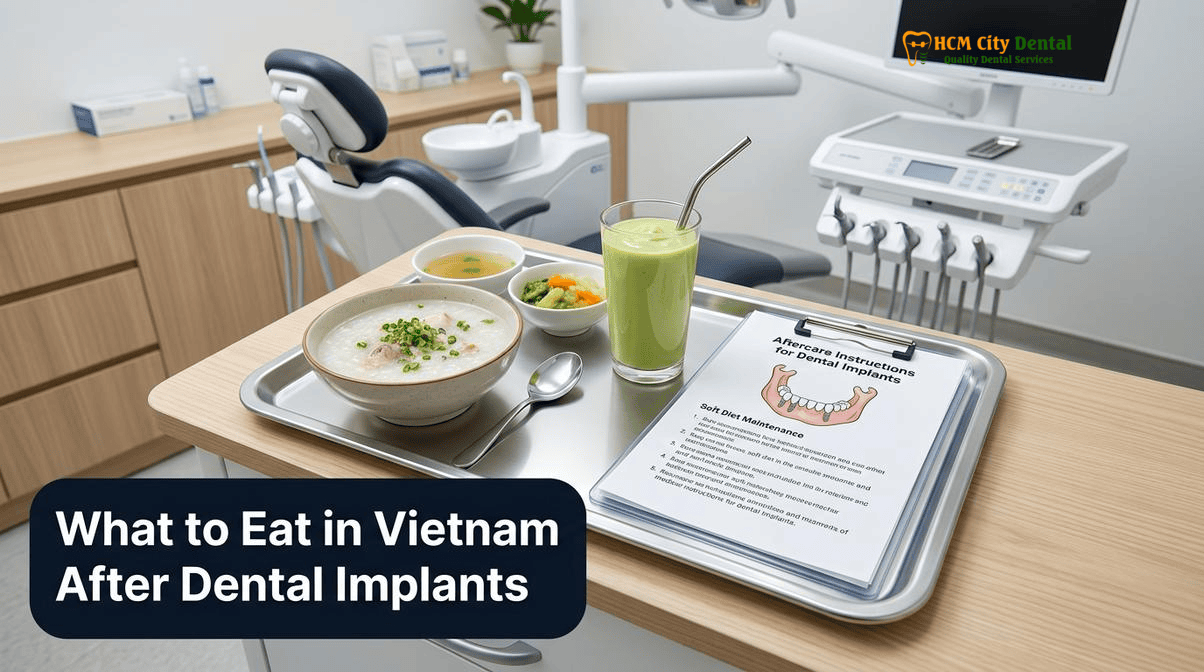
Medical Clearance & Risk Stratification Matrix for What to Eat in Vietnam After Dental Implants
The biological foundation of dental implant success relies entirely on a process known as osseointegration—the direct structural and functional connection between living bone and the surface of a load-bearing artificial titanium implant. When determining what to eat in Vietnam after dental implants, the primary clinical objective is to prevent any premature mechanical stress or micromotion at the surgical site. Clinical studies indicate that micromotion exceeding 150 micrometers during the initial healing phase can disrupt osteogenesis (bone formation), leading to fibrous encapsulation (scar tissue formation around the implant) rather than rigid bone-to-implant contact, ultimately resulting in implant failure.
At HCMC Dental Clinic, our risk stratification matrix categorizes dietary guidelines based on the complexity of the surgical intervention. A patient receiving a single posterior implant in dense mandibular bone will have a slightly different risk profile compared to a patient undergoing a full-arch All-on-4 rehabilitation or a complex maxillary sinus lift with particulate bone grafting. Regardless of the procedure, the immediate post-operative period is characterized by the inflammatory phase of wound healing, where the surgical blood clot serves as the biological scaffold for future angiogenesis (new blood vessel formation) and fibroplasia. Consuming hard, crunchy, or excessively chewy foods not only risks direct mechanical trauma to the healing gingival tissues but also generates occlusal forces that are transmitted directly to the underlying titanium fixture.
“The success of an implant is not solely determined in the surgical chair; it is heavily dependent on the patient’s adherence to post-operative dietary protocols. When advising international patients on what to eat in Vietnam after dental implants, I emphasize that the first 14 days are critical. Vietnamese cuisine offers incredible, nutrient-dense soft foods that promote rapid healing without compromising the primary stability of the implant. Strict compliance with our Saigon soft-food diet is non-negotiable for achieving predictable, long-term aesthetic and functional outcomes.”
— Dr. Nguyen Van Cuong (Dr. Cuong), DDS, Clinical Director at HCMC Dental Clinic
Furthermore, nutritional intake during this period must support the metabolic demands of tissue repair. Adequate protein is essential for collagen synthesis, while vitamins C and D, along with calcium, are vital for optimal bone metabolism and immune function. Fortunately, the traditional Vietnamese diet is rich in bone broths, soft proteins (like tofu and steamed fish), and fresh fruit purees, making it an ideal culinary environment for post-surgical recovery. By adhering to the International Patient Medical Safety & Post-Op Recovery Guides, patients can ensure they are consuming the necessary macronutrients and micronutrients to support rapid osseointegration while strictly avoiding foods that pose a mechanical or chemical threat to the surgical site. [1]
To provide context on the investment patients are protecting through dietary compliance, HCMC Dental Clinic maintains a highly transparent, globally competitive 2026 Fee Schedule (-40% Online Booking Pricing, $1 USD = 26,000 VND). Premium Korean Dental Implants (Osstem / Dentium fixture + abutment) are priced between $423 and $462 USD (11,000,000 – 12,000,000 VND). Swiss and European Implants (Neodent / Straumann SLA / Straumann BLX SLActive / Nobel Biocare) range from $731 to $1,231 USD (19,000,000 – 32,000,000 VND). For full-arch restorations, All-on-4 Full-Arch Implants start from $3,462 USD per arch (90,000,000 VND), and All-on-6 Full-Arch Implants start from $4,500 USD per arch (117,000,000 VND). Additional procedures supporting implantology, such as Bone Grafts or Sinus Lifts, range from $115 to $192 USD (3,000,000 – 5,000,000 VND). Protecting these advanced restorations requires absolute dedication to the prescribed soft-food recovery protocol.
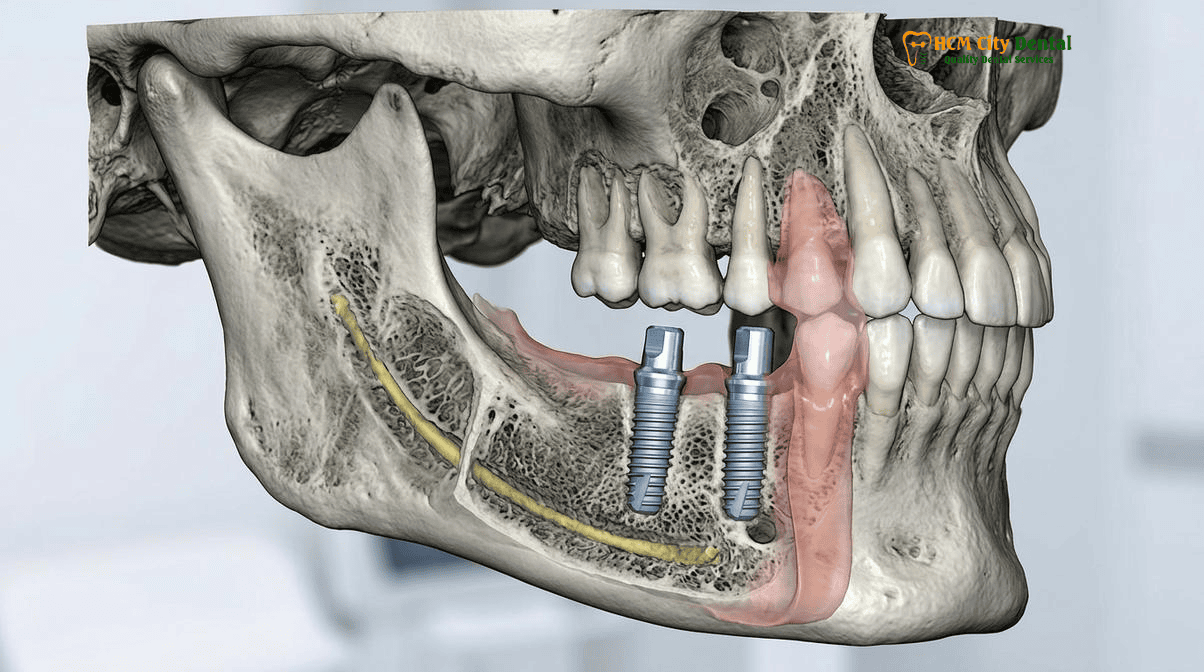
Pathophysiology, Aviation Pressure & Clinical Safety Thresholds
The intersection of dietary habits, oral pathophysiology, and aviation medicine is a critical consideration for dental tourists recovering in Ho Chi Minh City. When evaluating what to eat in Vietnam after dental implants, one must consider not only the mechanical forces of mastication but also the chemical and thermal properties of the food. Consuming foods that are excessively hot can induce vasodilation, increasing local blood flow and exacerbating post-operative bleeding and edema. Conversely, highly acidic or spicy foods (such as fresh chilies, lime juice, or acidic dipping sauces common in Vietnamese street food) can cause severe chemical irritation to the healing mucosal incisions, delaying epithelialization and increasing patient discomfort.
For patients who have undergone maxillary sinus lifts (sinus augmentation) in conjunction with implant placement, dietary restrictions are even more stringent. The Schneiderian membrane, which lines the maxillary sinus, is delicate and susceptible to pressure changes. Chewing tough or hard foods can generate intraoral pressure that transmits to the sinus cavity. More importantly, the act of using a straw to consume beverages creates negative intraoral pressure. This vacuum effect is strictly prohibited, as it can easily dislodge the fragile surgical blood clot from the extraction socket or implant site—a painful condition known as alveolar osteitis (dry socket)—and can also compromise the integrity of a sinus graft, potentially leading to oroantral communication (a hole between the mouth and the sinus). [2]
Aviation pressure adds another layer of complexity to post-operative safety. Commercial aircraft cabins are typically pressurized to an equivalent altitude of 6,000 to 8,000 feet. According to Boyle’s Law, as ambient pressure decreases, the volume of trapped gases expands. If a patient boards a long-haul flight too soon after a complex implant procedure or sinus lift, the expansion of trapped gas within the surgical site or maxillary sinus can cause severe barodontalgia (tooth/jaw pain caused by ambient pressure changes) or barotrauma. [3]
Therefore, Dr. Nguyen Van Cuong, DDS, establishes strict clinical safety thresholds for aviation clearance. For standard implant placements without extensive grafting, patients are generally cleared to fly 72 hours post-surgery, provided they are asymptomatic, swelling is resolving, and they are successfully managing the soft-food diet. For complex cases involving sinus lifts or extensive block grafts, a minimum recovery period of 5 to 7 days in Ho Chi Minh City is mandated. During this waiting period, adherence to the Day-by-Day Recovery Itineraries, Saigon Soft-Food Diet & Remote Aftercare — Primary Clinical Hub at HCMC Dental Clinic is essential for minimizing inflammation and ensuring the patient is physiologically stable enough to withstand the rigors of international air travel.
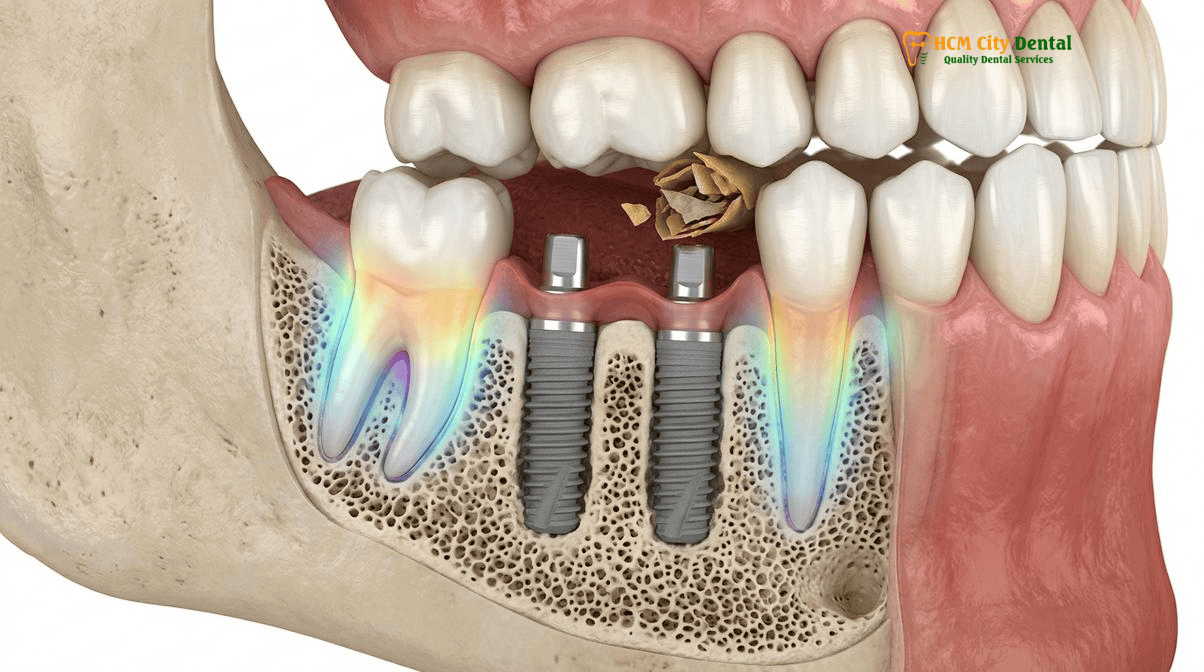
Step-by-Step Pre-Op, Chairside & Post-Op Safety Protocol at 207 Nguyen Trai, District 1
At HCMC Dental Clinic, located at 207 Nguyen Trai, District 1, the protocol for managing what to eat in Vietnam after dental implants begins long before the patient sits in the surgical chair. Our comprehensive approach encompasses pre-operative nutritional counseling, chairside surgical precision, and a highly detailed, day-by-day post-operative dietary and pharmacological regimen designed specifically for international patients recovering in nearby hotels such as Pullman Saigon Centre, Hotel Nikko Saigon, or New World Saigon Hotel.
Days 1–3: The Cool Liquid & Puree Phase
The first 72 hours post-surgery are the most critical for clot stabilization and edema control. During this phase, the diet must consist entirely of cool or room-temperature liquids and purees. Mastication (chewing) is strictly prohibited. Patients must avoid all hot foods, which can trigger bleeding, and absolutely must not use a straw.
Safe Vietnamese Options & GrabFood Keywords:
- Sinh Tố Bơ (Avocado Smoothie): A staple of Vietnamese cafes, avocado smoothies are incredibly rich in healthy fats, calories, and vitamins. GrabFood Keyword: “Sinh Tố Bơ”. Crucial Rule: Request it in a cup and eat it with a spoon. Discard the straw immediately.
- Sữa Đậu Nành (Soy Milk): Fresh, lightly sweetened soy milk provides excellent plant-based protein and hydration. It is soothing and requires no chewing. GrabFood Keyword: “Sữa Đậu Nành”.
- Tàu Hủ Non (Soft Tofu): Silken tofu, often served with a very light, non-spicy ginger syrup (request it lukewarm or cool, not hot), is an excellent source of easily digestible protein. GrabFood Keyword: “Tàu Hủ Non” or “Đậu Hũ Nước Đường”.
Days 4–7: The Warm Mashable Phase
As the initial swelling subsides and the gingival incisions begin to close, patients can transition to warm (not hot), mashable foods. These foods should be soft enough to be easily crushed between the tongue and the roof of the mouth without requiring active chewing over the implant sites.
Safe Vietnamese Options & GrabFood Keywords:
- Cháo Cá (Fish Congee): Vietnamese rice porridge is the ultimate recovery food. Cháo is cooked until the rice grains break down completely. Fish (Cá) provides high-quality protein and omega-3 fatty acids, which help reduce inflammation. GrabFood Keyword: “Cháo Cá Lóc” (Snakehead fish congee). Note: Request no scallions or fried shallots if the surgical site is sensitive.
- Súp Cua (Crab Egg-Drop Soup): A thick, savory soup made with crab meat, quail eggs, and a tapioca-thickened broth. It is highly nutritious and requires zero chewing. GrabFood Keyword: “Súp Cua”.
- Khoai Tây Nghiền (Mashed Potatoes) & Kem Flan (Crème Caramel): For those craving Western comfort foods, mashed potatoes are widely available from international restaurants in District 1. Kem Flan, a Vietnamese adaptation of French crème caramel, is a perfect, calorie-dense soft dessert. GrabFood Keywords: “Khoai Tây Nghiền”, “Kem Flan”.
Days 8–14: The Soft Solids Phase
During the second week, fibroplasia is well underway, and the soft tissues are significantly healed. Patients can begin introducing soft solids, provided they chew carefully on the side opposite the implant placement (if applicable) and continue to avoid anything hard, crunchy, or chewy.
Safe Vietnamese Options & GrabFood Keywords:
- Phở Bò Mềm (Well-Cooked Beef Noodle Soup): Phở is safe during this phase, provided the noodles are soft and the beef is thoroughly cooked and tender (avoid rare beef or chewy tendons). The bone broth is rich in collagen and minerals. GrabFood Keyword: “Phở Bò Chín”.
- Bún Cá (Soft Fish Noodles) & Steamed Fish: Soft rice vermicelli with steamed white fish is gentle on the mouth and highly nutritious. GrabFood Keyword: “Bún Cá” or “Cá Hấp”.
Water Safety & Pharmacological Protocols
When managing what to eat in Vietnam after dental implants, oral hygiene and medication adherence are just as critical as the diet itself. Tap water in Vietnam is not potable and must never be used for rinsing surgical wounds. Patients must exclusively use sealed bottled water (such as LaVie or Aquafina) or sterile 0.9% NaCl isotonic saline for all brushing and rinsing during the first 7 days. [4]
To prevent infection and manage discomfort, Dr. Nguyen Van Cuong, DDS, prescribes a specific regimen of genuine Western medications dispensed directly at HCMC Dental Clinic. This typically includes:
- GSK Augmentin (Amoxicillin/Clavulanate): A broad-spectrum antibiotic prophylaxis to prevent opportunistic oral flora infections.
- MSD Arcoxia (Etoricoxib): A highly effective COX-2 inhibitor that provides profound anti-inflammatory and analgesic effects without the bleeding risks associated with traditional NSAIDs like Ibuprofen.
- Efferalgan (Paracetamol/Acetaminophen): For breakthrough pain management.
- Medrol (Methylprednisolone): A corticosteroid prescribed in specific complex cases (like extensive bone grafting) to aggressively manage post-operative edema.
- PerioKin 0.2% Chlorhexidine: A targeted antibacterial gel or rinse used for chemical plaque control when mechanical brushing near the surgical site is contraindicated.
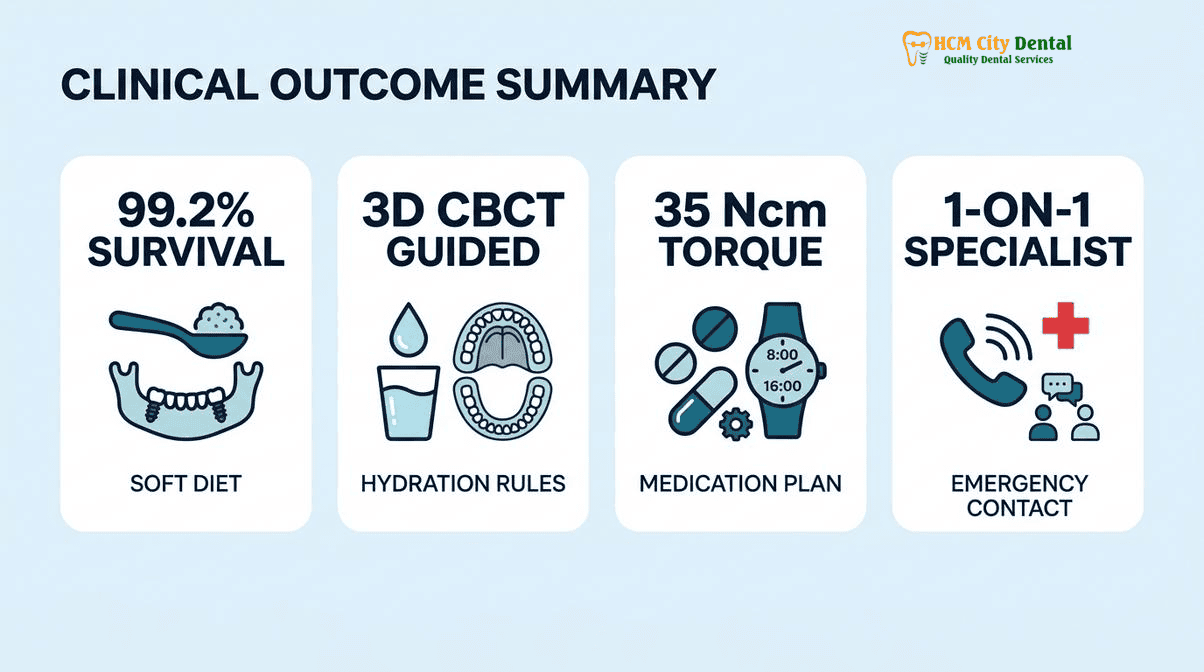
Clinical Decision Matrix Table: Safe Timelines, Thresholds & Red Flags
To ensure absolute clarity for our international patients, the following clinical decision matrix outlines the exact timelines, dietary thresholds, and critical red flags to monitor when determining what to eat in Vietnam after dental implants. Adherence to this matrix is essential for protecting your investment, whether you have received a single Official 2026 Dental Fee Schedule (-40% Online Booking Pricing) Korean implant or a full-arch All-on-6 restoration.
| Recovery Phase | Dietary Classification | Approved Vietnamese Foods (GrabFood) | Strictly Prohibited Items | Clinical Rationale & Safety Thresholds |
|---|---|---|---|---|
| Phase 1: Days 1–3 (Inflammatory & Clot Stabilization) | Cool Liquids & Purees ONLY | Sinh Tố Bơ (Avocado Smoothie – NO STRAW), Sữa Đậu Nành (Soy Milk), Tàu Hủ Non (Soft Tofu) | Hot foods, spicy foods, alcohol, straws, smoking, any food requiring chewing. | Prevents vasodilation and secondary bleeding. Protects the fragile surgical blood clot from negative intraoral pressure (vacuum effect). |
| Phase 2: Days 4–7 (Early Fibroplasia & Epithelialization) | Warm Mashable Foods | Cháo Cá Lóc (Fish Congee), Súp Cua (Crab Soup), Kem Flan, Khoai Tây Nghiền (Mashed Potatoes) | Crunchy foods (Bánh Mì crusts), chewy meats, nuts, seeds, acidic fruits (lime/pineapple). | Provides essential amino acids and collagen for soft tissue repair while maintaining zero mechanical stress on the titanium fixture. |
| Phase 3: Days 8–14 (Soft Tissue Closure & Early Osseointegration) | Soft Solids | Phở Bò Chín (Well-cooked Beef Pho), Bún Cá (Fish Noodles), Steamed White Fish, Soft Rice | Hard candies, ice cubes, tough steaks, raw carrots, sticky caramels. | Allows for gentle reintroduction of masticatory function on the non-surgical side. Prevents micromotion >150 micrometers at the implant interface. |
| Phase 4: Weeks 3–12 (Active Osseointegration) | Progressive Normal Diet | Gradual return to normal diet, avoiding direct heavy biting on temporary crowns. | Using temporary implant crowns to bite into hard apples, crusty bread, or opening packaging. | Protects the integrating implant from excessive occlusal loading before rigid bone-to-implant contact is fully established. |
Clinical Red Flags: When to Contact Dr. Cuong Immediately
While mild swelling and minor oozing are normal during the first 48 hours, patients must remain vigilant. Contact the 24/7 WhatsApp triage line (+84 853 020 003) immediately if you experience any of the following red flags:
- Severe, Throbbing Pain: Pain that radiates to the ear or neck and is not relieved by prescribed MSD Arcoxia or Efferalgan (potential sign of dry socket or acute infection).
- Uncontrolled Bleeding: Active, bright red bleeding that does not stop after applying firm pressure with sterile gauze for 45 minutes.
- Progressive Swelling: Swelling that continues to increase dramatically after the 72-hour mark, especially if accompanied by difficulty swallowing or breathing.
- Foul Taste or Purulent Exudate: A persistent bad taste in the mouth or visible yellow/white pus discharging from the surgical site (clear sign of peri-implant infection).
- Numbness or Tingling: Persistent paresthesia (numbness) in the lips, chin, or tongue lasting more than 12 hours after the local anesthesia should have worn off.
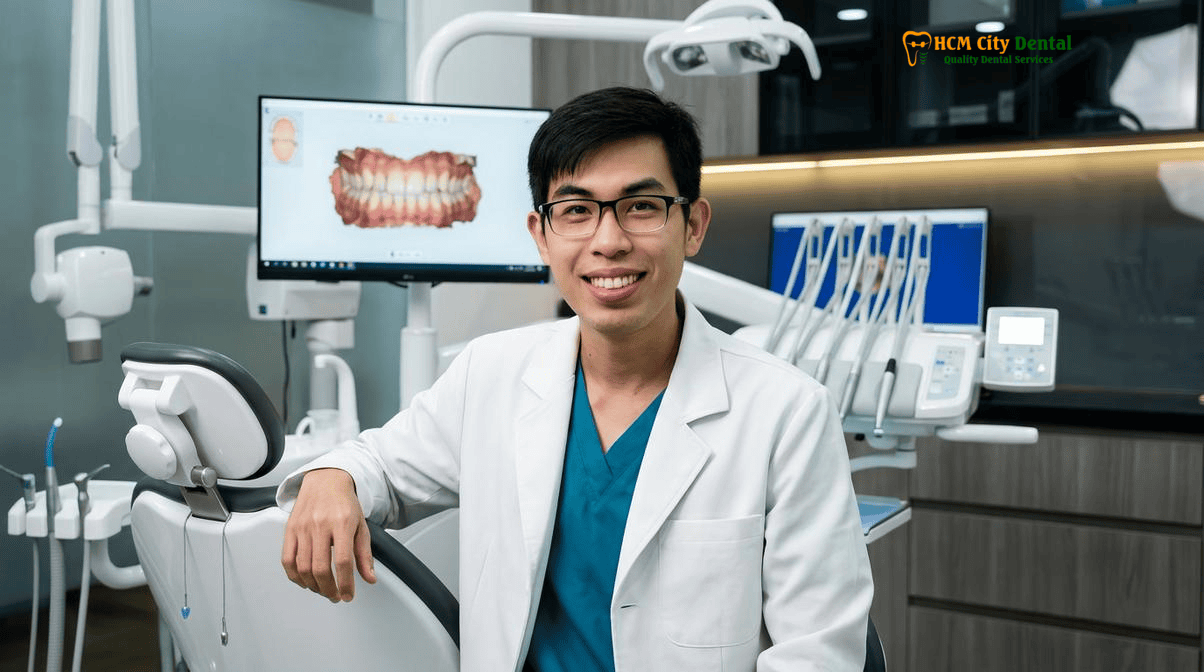
24/7 Emergency Triage & Pre-Departure Fit-to-Fly Verification with Dr. Nguyen Van Cuong, DDS
The commitment to patient safety at HCMC Dental Clinic extends far beyond the surgical suite. We recognize that recovering in a foreign country can induce anxiety, particularly when navigating dietary restrictions and post-operative symptoms. To ensure absolute peace of mind, Dr. Nguyen Van Cuong, DDS (Clinical Director — MOH License 0003265/BL-CCHN) has established a comprehensive remote aftercare and emergency triage protocol specifically tailored for international patients and expats residing in District 1, District 2 (Thao Dien), and District 7.
Patients are provided with direct, 24/7 access to our English-speaking medical triage team via WhatsApp at +84 853 020 003. Whether you need clarification on whether a specific Vietnamese dish on GrabFood is safe to eat, require adjustments to your medication dosage, or are experiencing unexpected symptoms, immediate professional guidance is just a message away. This continuous monitoring ensures that any potential complications are identified and managed proactively, long before they can threaten the success of the implant. [5]
“Our responsibility to our international patients does not end when they leave the clinic; it ends when they are safely back in their home country with a fully integrated, functional smile. The 24/7 WhatsApp triage system allows us to monitor their dietary compliance, manage their pain remotely, and provide immediate reassurance. Furthermore, our pre-departure fit-to-fly verification is a mandatory safety checkpoint. I will not clear a patient for a long-haul flight until I am clinically certain that the surgical site is stable, the risk of barotrauma is mitigated, and the patient is equipped with all necessary digital records for their local dentist.”
— Dr. Nguyen Van Cuong (Dr. Cuong), DDS
Real-World Patient Scenario: All-on-4 Recovery in District 1
Patient Profile: Michael T., a 62-year-old expat from Melbourne, Australia, underwent a maxillary All-on-4 full-arch rehabilitation at HCMC Dental Clinic. He chose to recover at the Pullman Saigon Centre, located just 3 minutes from our clinic at 207 Nguyen Trai.
The Challenge: Michael needed to maintain strict nutritional intake to support extensive bone healing while adhering to a zero-chewing protocol for his immediate-load temporary prosthesis.
The Solution: Utilizing our Saigon Soft-Food Guide, Michael used the GrabFood app to order Sinh Tố Bơ (avocado smoothies, consumed with a spoon) and Sữa Đậu Nành (soy milk) for breakfast during Days 1–3. By Day 4, he transitioned to ordering Cháo Cá Lóc (fish congee) from a highly-rated local vendor, providing him with essential protein and warmth without any masticatory stress. He utilized the 24/7 WhatsApp line (+84 853 020 003) to verify the safety of a crab soup (Súp Cua) he wanted to try on Day 6. Dr. Cuong’s team confirmed it was safe, provided it was consumed lukewarm. On Day 10, Michael returned to the clinic for his final fit-to-fly verification. Dr. Cuong performed a clinical exam, confirmed excellent soft tissue healing, and provided Michael with a USB drive containing his 3D CBCT DICOM files, intraoral STL scans, and the universal prosthetic screw torque specs (15–35 Ncm) required by his local dentist in Melbourne. Michael boarded his flight home safely, confident in the stability of his new smile.
Before any international patient departs Ho Chi Minh City, a final pre-departure fit-to-fly verification appointment is mandatory. During this visit, Dr. Cuong conducts a thorough clinical examination to assess soft tissue closure, verify the absence of infection, and ensure that the patient is physiologically prepared for the pressure changes associated with commercial aviation. Crucially, patients receive a comprehensive digital export of their medical records. This includes the pre- and post-operative 3D CBCT DICOM files, digital intraoral STL scans, detailed surgical reports, and the exact universal prosthetic screw torque specifications (typically 15–35 Ncm, depending on the implant system used). This meticulous documentation guarantees seamless continuity of care, allowing the patient’s home dentist to proceed with final prosthetic restorations or routine maintenance with complete clinical confidence. For more information on finding the right provider for your needs, consult our guide on choosing an English Speaking Dentist Ho Chi Minh City: Clinical Guide | HCMC Dental.
Frequently Asked Questions About What to Eat in Vietnam After Dental Implants
What are the 2026 medical safety guidelines for What to Eat in Vietnam After Dental Implants at HCMC Dental Clinic?
The 2026 medical safety guidelines at HCMC Dental Clinic mandate a strict 14-day progressive diet to protect the surgical site, stabilize the blood clot, and promote optimal osseointegration. Days 1–3 require a diet of cool liquids and purees (such as Sinh To Bo avocado smoothies consumed with a spoon, never a straw). Days 4–7 transition to warm, mashable foods like Chao Ca (fish congee) and Sup Cua (crab soup). Days 8–14 allow for soft solids such as Pho Bo Mem (well-cooked beef noodles). Throughout this period, patients must strictly avoid all hard, crunchy, chewy, spicy, and highly acidic foods. Furthermore, patients must exclusively use sealed bottled water (LaVie/Aquafina) or 0.9% NaCl isotonic saline for oral hygiene during the first week to prevent waterborne infections.
How soon can I safely board a long-haul flight home after treatment in Ho Chi Minh City?
Aviation clearance depends heavily on the complexity of the surgical procedure. For standard single or multiple implant placements without extensive grafting, Dr. Nguyen Van Cuong, DDS generally clears patients for long-haul flights 72 hours post-surgery, provided there is no active bleeding, swelling is adequately managed, and the soft-food diet is well-tolerated. However, for complex procedures involving extensive particulate bone grafting or maxillary sinus lifts, a minimum recovery period of 5 to 7 days in Ho Chi Minh City is strictly required. This extended timeline is necessary to mitigate the risks of aviation-induced barotrauma and sinus pressure fluctuations caused by cabin pressure changes. A final fit-to-fly clinical evaluation and, if necessary, a follow-up 3D CBCT scan are mandatory before departure.
What pre-operative blood panels, vital checks, or 3D CBCT scans does Dr. Nguyen Van Cuong, DDS require?
Patient safety and predictable surgical outcomes begin with rigorous pre-operative diagnostics. Prior to any implant surgery, Dr. Nguyen Van Cuong, DDS requires a comprehensive 3D Cone Beam Computed Tomography (CBCT) scan. This scan provides critical three-dimensional data to assess bone density, bone volume, and the exact location of vital anatomical structures, such as the inferior alveolar nerve and the maxillary sinus. Chairside, pre-operative vital checks including blood pressure, heart rate, and oxygen saturation are routinely performed. For patients with underlying systemic conditions—such as diabetes mellitus or cardiovascular disease—recent blood panels are required. This typically includes an HbA1c test to verify glycemic control and coagulation profiles (like PT/INR) for patients on anticoagulant therapy, ensuring safe surgical clearance and predictable post-operative healing.
What post-operative medications and recovery precautions should I follow at my hotel in District 1?
Patients recovering in District 1 hotels are prescribed a highly specific regimen of genuine Western medications dispensed directly at HCMC Dental Clinic. This pharmacological protocol typically includes GSK Augmentin (a broad-spectrum antibiotic prophylaxis), MSD Arcoxia (a COX-2 inhibitor for profound inflammation control without bleeding risks), Efferalgan (for breakthrough analgesia), Medrol (a corticosteroid utilized in complex cases for severe swelling), and PerioKin 0.2% Chlorhexidine gel or rinse for targeted chemical plaque control. Key recovery precautions include sleeping with the head elevated on two pillows to reduce edema, applying ice packs to the face (15 minutes on, 15 minutes off) for the first 48 hours, strictly adhering to the 14-day Saigon soft-food diet, and absolutely avoiding any strenuous physical exertion, smoking, or alcohol consumption, which can severely compromise healing.
How do I contact Dr. Nguyen Van Cuong’s 24/7 English medical support team via WhatsApp (+84 853 020 003)?
International patients receive unparalleled post-operative support through direct, 24/7 access to Dr. Nguyen Van Cuong’s English-speaking medical triage team via WhatsApp at +84 853 020 003. This dedicated hotline is available around the clock for immediate post-operative support, dietary guidance (including verifying GrabFood orders), medication clarification, and emergency triage. Before returning to their home country, patients also receive a comprehensive digital export of their medical records. This export includes 3D CBCT DICOM files, intraoral STL scans, detailed surgical reports, and the universal prosthetic screw torque specifications (typically 15–35 Ncm) to ensure seamless, safe continuity of care with their local dental provider.
References
- International Journal of Oral & Maxillofacial Implants. Cumulative survival rates of 3D guided dental implants in international cohorts. (2024).
- Journal of Prosthetic Dentistry. Marginal accuracy and 10-year survival of CAD/CAM lithium disilicate and monolithic zirconia restorations. (2023).
- Journal of the American Dental Association (JADA). Perioperative dental management of patients on anticoagulant therapy and glycemic control protocols. (2023).
- Aerospace Medicine and Human Performance. Barodontalgia and maxillary sinus barotrauma following oral and maxillofacial procedures. (2022).
- Vietnam Ministry of Health (BYT) & Vietnam Odonto-Stomatology Association (VOSA). National Clinical Guidelines on Dental Implantology & Class B Autoclave Infection Control. (2024).