The truth about same day crowns and 24 hour dental restorations is that while they offer unmatched convenience, they often sacrifice the meticulous hand-finishing required for optimal marginal seal and aesthetic vitality. For complex cases, a multi-day laboratory process remains the clinical gold standard for long-term success.
Clinical Summary:
Same-day crowns utilize CAD/CAM technology to mill a restoration in a single visit, eliminating the need for temporaries. However, rushing this process can compromise the crown margin seal longevity and bite alignment. Dr. Nguyen Van Cuong advises that while 24-hour restorations suit certain straightforward cases, premium materials like zirconia require careful sintering and dental lab hand finishing to achieve maximum durability and natural aesthetics. A standard 3 to 4-day protocol significantly reduces the same day dental crown risk by allowing master ceramists to perfect the restoration, ensuring a precise fit that protects the underlying tooth from secondary decay.
Key Takeaways:
- Same-day crowns prioritize speed but may lack the aesthetic depth of lab-created restorations.
- Rushed milling can lead to micro-gaps, increasing the risk of secondary decay and cement washout.
- Premium zirconia requires extended sintering times that do not fit optimally into a 24-hour window.
- Dental lab hand finishing is essential for precise color matching and optimal bite alignment.
- A 3 to 4-day fabrication protocol offers a safer, more durable alternative for international patients.
The Appeal of Same-Day Crowns for Dental Tourists
For international patients on tight schedules, 24-hour crowns offer the allure of immediate results, eliminating temporary restorations and minimizing clinical visits. However, this convenience must be weighed against potential compromises in long-term structural integrity.
In the rapidly expanding landscape of global healthcare, the demand for expedited treatments has surged. Patients traveling abroad for medical care often seek to maximize their time, leading to the immense popularity of “teeth in a day” concepts. When planning a comprehensive dental holiday in Vietnam, the prospect of arriving at a clinic in the morning and leaving by the afternoon with a fully restored smile is undeniably attractive. This streamlined approach eliminates the need for messy traditional impressions, bypasses the temporary crown phase, and condenses multiple appointments into a single clinical session.
The psychological appeal of a 24-hour dental restoration is powerful. Patients who suffer from dental anxiety often prefer to undergo the entire procedure—from tooth preparation to final bonding—under a single administration of local anesthesia. Furthermore, for busy professionals or tourists eager to explore Ho Chi Minh City without the restriction of a fragile temporary crown, the same-day workflow appears to be the perfect solution. Clinics heavily market these rapid turnarounds, utilizing advanced chairside milling machines as a primary selling point to attract international clientele.
However, from a strict clinical perspective, speed does not always equate to superiority. While chairside CAD/CAM (Computer-Aided Design and Computer-Aided Manufacturing) technology is a remarkable achievement in modern dentistry, it operates within specific physical and material limitations. The rush to deliver a final product within hours often forces clinicians to bypass critical steps that traditionally ensure the longevity and lifelike appearance of a restoration. Dr. Nguyen Van Cuong frequently cautions patients that while the convenience is tempting, the biological requirements of the tooth and the mechanical properties of premium ceramics must dictate the treatment timeline, not the patient’s flight schedule.
At HCMC Dental Clinic, we recognize the value of your time, but we prioritize your long-term oral health above all else. For patients seeking high-end cosmetic outcomes, such as Porcelain Veneers or complex full-mouth rehabilitations, a slightly extended timeline is non-negotiable. To accommodate our international guests, we offer a highly efficient yet clinically sound saigon crown fabrication turnaround that balances speed with uncompromising quality. Patients can take advantage of our current 40% online booking discount and initiate a direct clinical consultation with Dr. Cuong via WhatsApp to determine the safest, most effective timeline for their specific restorative needs.
The CAD/CAM Milling Process: How Same-Day Restorations Work
Same-day restorations rely on intraoral digital scanning and in-office CAD/CAM milling machines to carve a crown from a pre-manufactured ceramic block within hours. This digital workflow streamlines production but bypasses the nuanced layering techniques of a master ceramist.
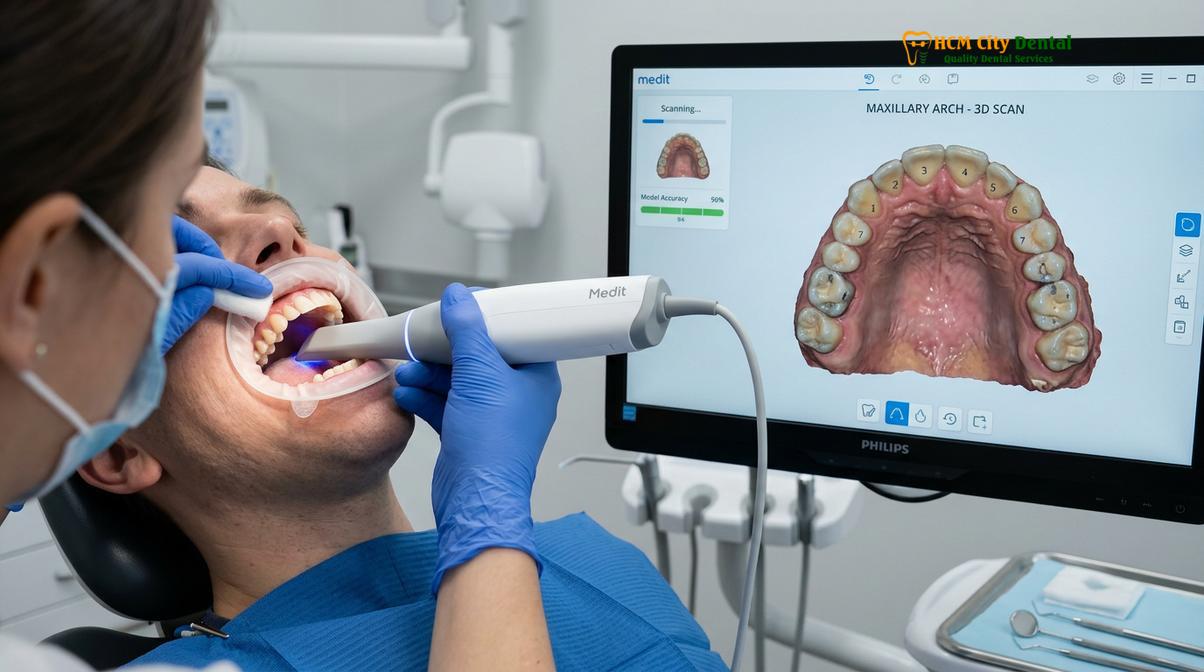
To understand the limitations of a 24-hour restoration, one must first understand the mechanics of chairside CAD/CAM dentistry. The process begins with the preparation of the damaged tooth, followed by the capture of a digital impression using a high-resolution intraoral scanner. This optical device takes thousands of images per second, stitching them together to create a highly accurate 3D model of the patient’s dentition on a computer screen. This digital file is then imported into specialized design software, where the dentist or an in-house technician digitally sculpts the new crown to fit the prepared tooth and align with the opposing bite[1].
Once the digital design is finalized, the data is transmitted to a compact milling unit located within the clinic. A solid block of ceramic or composite resin—chosen to approximate the patient’s natural tooth shade—is placed into the machine. Using diamond-coated burs, the milling unit carves the crown out of the block, a process that typically takes between 15 to 45 minutes depending on the complexity of the anatomy and the hardness of the material. After milling, the crown is polished, sometimes lightly glazed, and then bonded directly onto the patient’s tooth.
While this technology is impressive, it is inherently subtractive. The machine can only remove material from a monochromatic block; it cannot add the subtle internal characterizations, varying opacities, and intricate color gradients that exist in natural human enamel. Consequently, a chairside milled crown often presents a slightly flat or opaque appearance when compared to a restoration that has undergone extensive dental lab hand finishing. For posterior (back) teeth where aesthetics are less critical, this may be acceptable. However, for anterior (front) teeth in the aesthetic zone, the lack of custom layering is often visually apparent.
Furthermore, the production of a cad cam milled zirconia crown in a single day pushes the boundaries of material science. Zirconia, renowned for its exceptional fracture toughness, is milled in a “green” or pre-sintered state, meaning it is relatively soft and enlarged. It must then be fired in a specialized sintering furnace at extremely high temperatures (often exceeding 1,500°C) to shrink to its final size and achieve its maximum crystalline strength. Traditional sintering protocols require 8 to 12 hours of gradual heating and cooling. To deliver a zirconia crown in one day, clinics must use rapid-sintering ovens that complete the cycle in under two hours. Clinical studies indicate that these accelerated thermal cycles can compromise the material’s translucency and potentially reduce its long-term resistance to mechanical stress[2].
Clinical Risks of Rushed Crowns: Poor Margins and Bite Misalignment
Accelerating crown fabrication into a 24-hour window significantly increases the risk of marginal discrepancies, occlusal interferences, and premature mechanical failure. A compromised fit invites bacterial microleakage and secondary caries beneath the restoration.
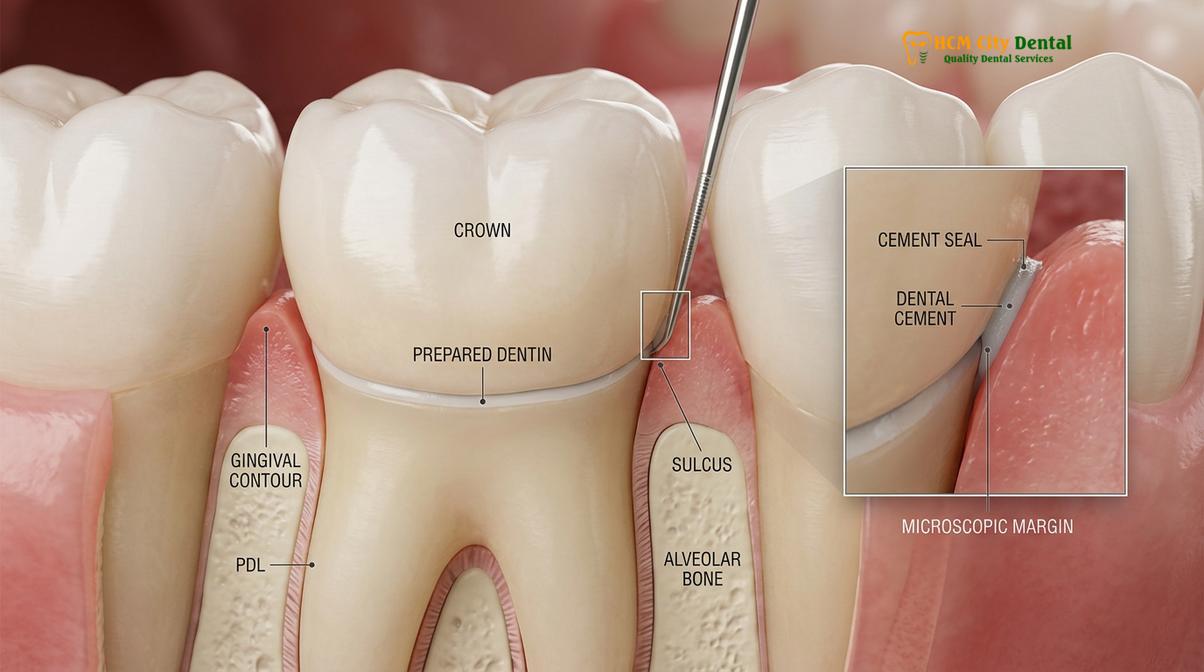
The most critical factor in the survival of any dental restoration is the integrity of its margin—the microscopic junction where the edge of the crown meets the natural tooth structure. In a healthy restoration, this margin should be virtually seamless, ideally presenting a gap of less than 50 to 100 microns. When a crown is rushed through a chairside milling machine, the physical limitations of the milling burs (which have a specific diameter and cannot carve infinitely sharp internal angles) can result in a less precise fit compared to a lab-fabricated crown. This discrepancy directly impacts the crown margin seal longevity.
If the margin is open or bulky, the dental cement used to bond the crown is exposed to the oral environment. Over time, saliva and chewing forces cause this exposed cement to wash out, creating a microscopic tunnel for bacteria to invade the underlying dentin. This phenomenon, known as microleakage, is a primary driver of the same day dental crown risk. Because the tooth is covered by the crown, the patient may not notice the developing decay until it has reached the dental pulp, necessitating a complex root canal treatment or resulting in the extraction of the tooth.
Clinical Warning: Secondary Caries and Microleakage
Patients receiving expedited restorations must be vigilant about oral hygiene. An ill-fitting crown margin acts as a plaque trap, accelerating periodontal inflammation and secondary tooth decay. If you experience persistent sensitivity, a foul taste, or bleeding gums around a new crown, it is imperative to seek a professional clinical evaluation immediately to prevent irreversible damage to the underlying tooth structure.
Beyond marginal integrity, rushed restorations frequently suffer from occlusal (bite) misalignment. In a traditional laboratory setting, the patient’s digital or physical models are mounted on an articulator—a mechanical device that simulates the complex movements of the human jaw. This allows the technician to meticulously adjust the crown’s anatomy so that it harmonizes with the patient’s natural chewing patterns. In a 24-hour chairside workflow, the design software estimates the bite based on static scans. If the resulting crown is even a fraction of a millimeter too high, it will bear the brunt of the jaw’s biting force, leading to occlusal trauma, localized pain, and a high probability of the ceramic fracturing under stress.
“The allure of a one-day turnaround is strong, but biology does not respect our desire for speed. A restoration must integrate flawlessly with the gingival tissues and the opposing dentition. When we compress the fabrication timeline, we inherently reduce the margin for error, increasing the likelihood of micro-gaps and occlusal interferences that compromise the tooth’s future.”
— Dr. Nguyen Van Cuong, Lead Clinician at HCMC Dental Clinic
For patients selecting a qualified dental professional in Saigon, it is crucial to inquire about the clinic’s quality control measures. A reputable practitioner will not hesitate to recommend a multi-day laboratory process if the clinical situation demands it. The goal of restorative dentistry is not merely to fill a space quickly, but to provide a durable, biologically compatible solution that will function seamlessly for decades.
Why Premium Materials (Zirconia, E-Max) Benefit from Hand-Finishing
High-strength materials like zirconia and E-Max achieve their maximum fracture toughness and lifelike translucency only through controlled laboratory processing, extended sintering, and meticulous dental lab hand finishing.
Modern restorative dentistry relies heavily on two premier ceramic materials: Lithium Disilicate (commonly known by the brand name E-Max) and Yttria-Stabilized Tetragonal Zirconia Polycrystal (simply referred to as Zirconia). Both materials offer exceptional strength and biocompatibility, but they require highly specific handling protocols to reach their full potential. Attempting to force these materials into a 24-hour workflow often results in a sub-optimal final product.
Zirconia, as previously mentioned, undergoes a complex phase transformation during the sintering process. When heated slowly over 8 to 12 hours, the crystalline structure of the zirconia densifies uniformly, resulting in a restoration that can withstand massive occlusal forces—making it ideal for molars and patients who grind their teeth (bruxism). Rapid sintering, required for a same-day cad cam milled zirconia crown, can induce thermal shock and internal micro-stresses within the material. While the crown may appear intact upon delivery, these microscopic flaws significantly increase the risk of catastrophic fracture during normal chewing function months or years down the line[3].
Similarly, E-Max is milled in a “blue block” state (lithium metasilicate) which is relatively soft. It must be fired in a ceramic furnace to crystallize into lithium disilicate, gaining its final strength and tooth-like color. While this crystallization process is faster than zirconia sintering, the true beauty of E-Max is unlocked through the “cut-back and layer” technique. Instead of milling the crown to its full final contour, the machine mills a slightly smaller anatomical coping. A master ceramist then applies multiple ultra-thin layers of translucent liquid porcelain over this coping, firing the crown between each layer.
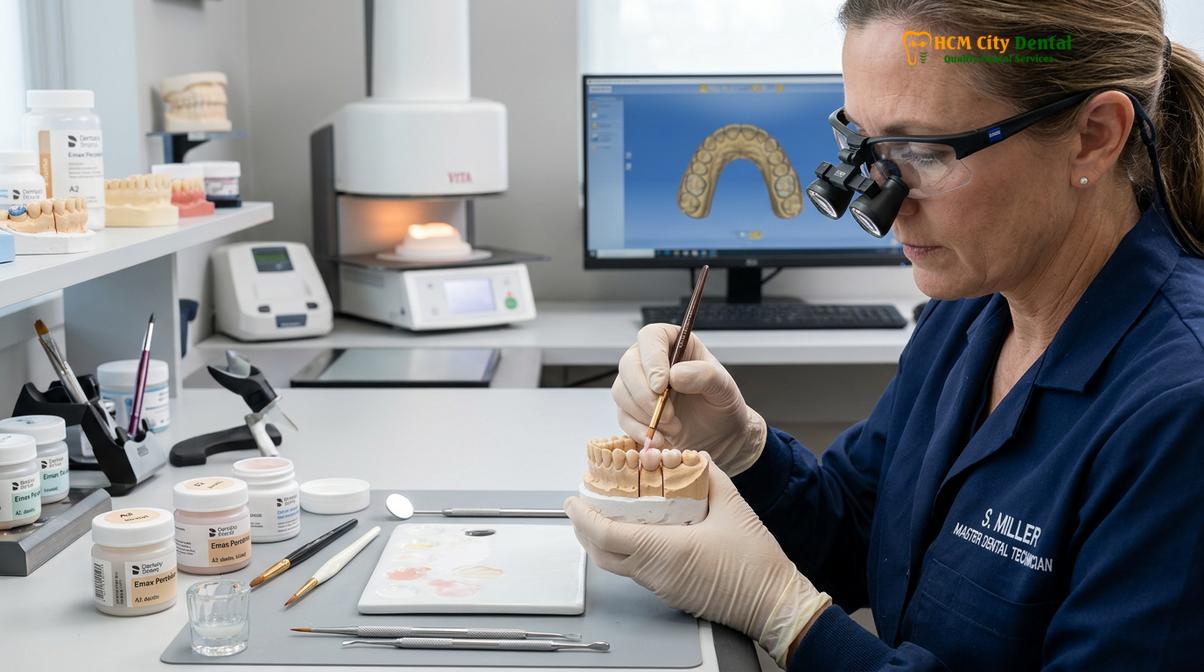
This intensive dental lab hand finishing is what creates the illusion of natural enamel. The ceramist can incorporate internal mamelons (the subtle ridges seen inside natural teeth), varying degrees of incisal translucency, and custom surface textures that reflect light exactly like a natural tooth[4]. A chairside milled block, even when polished and surface-stained, cannot replicate this three-dimensional depth.
| Feature | 24-Hour Chairside Crown | 3-4 Day Lab-Processed Crown |
|---|---|---|
| Material Processing | Rapid sintering/crystallization | Extended, controlled thermal cycling |
| Aesthetic Depth | Monolithic (surface stain only) | Multi-layered porcelain (high translucency) |
| Marginal Precision | Limited by milling bur diameter | Refined under high-magnification microscopes |
| Bite Alignment | Software estimated (static) | Articulator verified (dynamic movement) |
| Ideal Use Case | Single posterior tooth, urgent repair | Anterior aesthetics, complex rehabilitations |
For patients investing in their smile, particularly those organizing your dental itinerary around a vacation, allocating a few extra days for laboratory fabrication ensures that the final restorations are not just adequate, but exceptional. The difference between a machine-milled block and a hand-crafted ceramic masterpiece is profound, both in terms of longevity and visual harmony.
The HCMC Dental Protocol: Standard 3 to 4-Day Fabrication for Longevity
To ensure optimal crown margin seal longevity and aesthetic perfection, our clinical protocol mandates a 3 to 4-day fabrication window. This allows master technicians to execute precise layering, sintering, and quality control without compromising the final result.
At HCMC Dental Clinic, we have developed a specialized saigon crown fabrication turnaround that caters to the unique needs of international patients while strictly adhering to the highest global standards of restorative dentistry. We believe that a 3 to 4-day protocol represents the ideal balance between efficiency and clinical excellence. This timeframe allows our in-house master ceramists to utilize advanced CAD/CAM technology for precision, while dedicating the necessary hours to extended sintering and meticulous dental lab hand finishing.
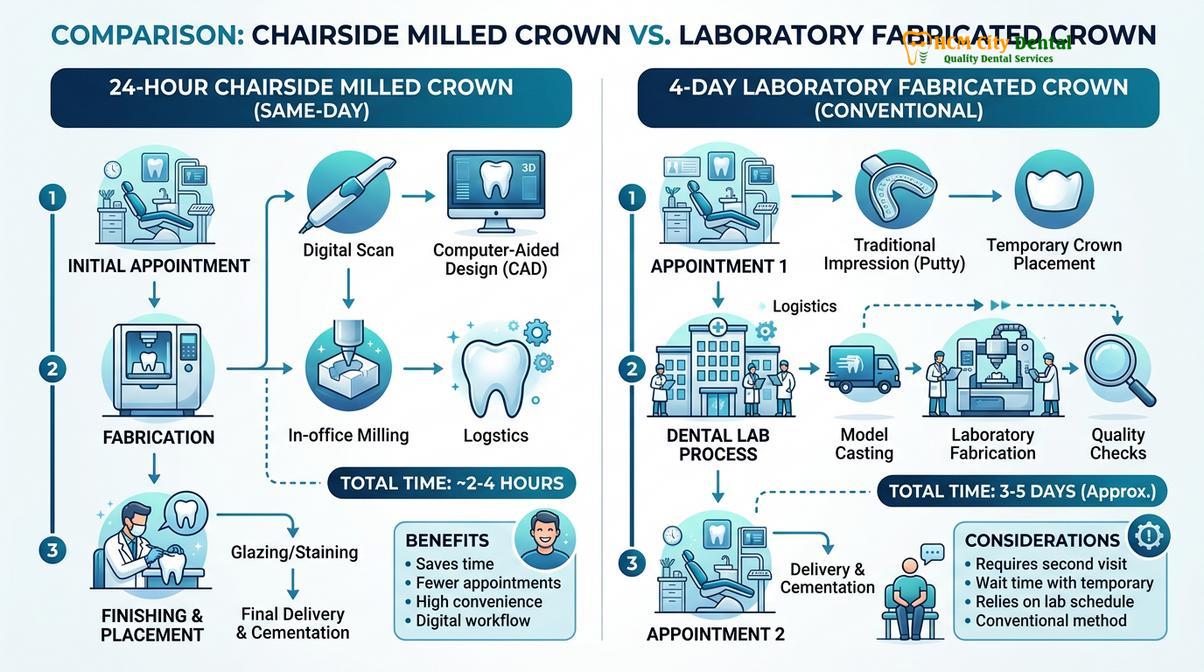
The workflow begins on Day 1 with a comprehensive clinical evaluation, 3D digital scanning, and precise tooth preparation. During this visit, a custom-fabricated temporary crown is placed to protect the tooth, prevent sensitivity, and maintain the bite. On Days 2 and 3, the digital data is transferred to our state-of-the-art laboratory. Here, the crown is milled, subjected to optimal, slow-cycle thermal processing, and painstakingly layered with porcelain to match the patient’s exact shade requirements. On Day 4, the patient returns for the final try-in. Dr. Cuong meticulously verifies the marginal fit, occlusal harmony, and aesthetic integration before permanently bonding the restoration.
Clinical Case Study: The Value of Patience
A 45-year-old international patient presented with a fractured upper central incisor, requesting a same-day replacement. Recognizing the high aesthetic demands of the anterior zone, Dr. Cuong advised against a 24-hour monolithic block. Instead, a 4-day protocol was initiated utilizing a layered E-Max restoration. The laboratory time allowed for custom internal shading and surface texturing. The final result was completely indistinguishable from the adjacent natural teeth, providing the patient with a flawless, confident smile that a rushed chairside procedure could not have achieved.
Throughout this process, patient safety and infection control remain our highest priorities. All instruments and handpieces undergo rigorous sterilization in our Class-B autoclaves, adhering strictly to European standards and WHO guidelines for infection prevention[5]. We understand that navigating a foreign city for medical care can be daunting, which is why our English-speaking support team is available via WhatsApp to assist with logistics, including hotel recommendations in District 1 and arranging seamless airport pickups.
“Our commitment to the 4-day protocol is a commitment to our patients’ long-term health. We refuse to compromise the structural integrity of a zirconia crown or the marginal seal of an E-Max restoration simply to save 48 hours. True quality requires time, precision, and the skilled hands of a master technician.”
— Dr. Nguyen Van Cuong
To make the process as convenient as possible, HCMC Dental Clinic accepts a wide variety of payment options, including Visa/Mastercard, international bank transfers, cash (USD/VND), PayPal, popular e-wallets, and major cryptocurrencies (Crypto). Whether you are seeking a single crown or combining restorative work with implant procedures, our team is dedicated to providing world-class care that stands the test of time. We encourage prospective patients to reach out via WhatsApp to secure our 40% online booking discount and begin planning their personalized treatment journey.
When to See a Doctor for Crown Complications
If you experience persistent pain, thermal sensitivity, or notice a foul odor around a newly placed crown, immediate clinical evaluation is necessary to rule out microleakage, occlusal trauma, or underlying nerve inflammation.
While modern dental crowns are highly predictable and successful restorations, complications can arise, particularly if the fabrication process was rushed or the marginal fit is compromised. It is essential to distinguish between normal post-operative healing and signs of a failing restoration. Mild thermal sensitivity (to hot or cold) is common for a few days following the placement of a new crown, as the underlying dentin and nerve adjust to the procedure and the bonding agents.
However, if you experience sharp, spontaneous pain, or pain that occurs specifically when biting down, this is a strong indicator of occlusal trauma—meaning the crown is slightly too high and is hitting the opposing tooth prematurely. This requires a simple but urgent bite adjustment by a dentist to prevent fracture of the ceramic or damage to the periodontal ligament. Furthermore, if you notice a persistent foul taste, bad breath, or bleeding gums localized around the crowned tooth, this strongly suggests an open margin and active microleakage. Bacteria trapped beneath the crown can rapidly cause secondary decay and periodontitis.
Do not ignore these symptoms. A compromised crown will not heal on its own. If you are experiencing any of these issues, especially after receiving expedited dental work abroad, we strongly recommend communicating with an English-speaking dental team for a comprehensive diagnostic X-ray and clinical examination. Early intervention can often save the underlying tooth and allow for the replacement of the defective restoration before catastrophic failure occurs.
Frequently Asked Questions
Are 24-hour crowns as durable as crowns that take a few days?
No, 24-hour crowns often lack the extended sintering and hand-layering required for maximum durability. While they are made from strong ceramics, lab-processed crowns that take three to four days undergo specialized thermal treatments that significantly enhance their long-term fracture resistance and structural integrity. The rapid heating cycles required for same-day fabrication can induce microscopic stresses within the material, making it more susceptible to chipping or cracking under heavy biting forces over time.
What is the risk of having a poorly fitted dental crown?
A poorly fitted crown creates microscopic gaps at the gumline, allowing bacteria to penetrate beneath the restoration. This microleakage leads to cement washout, severe secondary tooth decay, gum inflammation, and ultimately the potential loss of the underlying natural tooth structure. Because the decay occurs underneath the ceramic shell, it is often invisible to the naked eye and may only be detected via clinical X-rays once it has already reached the sensitive inner pulp of the tooth.
Can I get a temporary crown fitted while the permanent one is made?
Yes, a custom-fabricated temporary crown is routinely placed to protect your prepared tooth while the permanent restoration is crafted. This temporary acrylic or composite shield prevents thermal sensitivity, maintains your bite alignment, and protects the vulnerable dentin during the short laboratory fabrication period. It also ensures that the surrounding gum tissue remains healthy and properly contoured, which is essential for achieving a precise and aesthetic final fit when the permanent crown is bonded.
Is a CAD/CAM milled zirconia crown possible in one day?
While technically possible using rapid-sintering ovens, a one-day zirconia crown often compromises the material’s maximum strength and aesthetic translucency. Rushing the thermal processing of zirconia can lead to a more opaque appearance and a higher susceptibility to microscopic stress fractures over time. To achieve the legendary durability and lifelike optical properties that zirconia is known for, a slower, controlled sintering cycle lasting 8 to 12 hours in a dedicated dental laboratory is clinically recommended.
How does dental lab hand finishing improve the look of a crown?
Hand finishing allows a master ceramist to apply custom porcelain layers, internal stains, and precise surface textures that mimic natural enamel. This meticulous artisanal process transforms a monochromatic milled block into a lifelike restoration that blends seamlessly with your surrounding natural teeth. By carefully controlling the opacity at the gumline and increasing the translucency at the biting edge, the technician creates a three-dimensional depth that chairside milling machines simply cannot replicate.
References
- Journal of Prosthetic Dentistry. Marginal adaptation and clinical performance of CAD/CAM restorations. (2022).
- International Journal of Computerized Dentistry. Clinical evaluation of chairside milled monolithic crowns. (2021).
- Dental Materials Journal. Sintering protocols and fracture toughness of yttria-stabilized zirconia. (2023).
- Journal of Esthetic and Restorative Dentistry. The role of hand-finishing in advanced ceramic restorations. (2020).
- World Health Organization (WHO). Guidelines for infection prevention and sterilization in dental settings. (2021).
For premium porcelain crowns, bridges, and advanced smile reconstructions, visit our Dental Crowns & Bridges service page at HCMC Dental Clinic in Ho Chi Minh City.