When deciding between a dental implant vs bridge, the primary distinction lies in structural support. An implant replaces the entire tooth root independently, preserving jawbone health, whereas a bridge relies on altering adjacent healthy teeth for anchorage to span the edentulous gap.
Clinical Summary:
Choosing between a dental implant and a dental bridge requires a comprehensive evaluation of a patient’s anatomical, biological, and financial circumstances. Dental implants offer a standalone, root-level replacement that stimulates the jawbone and prevents long-term atrophy. Conversely, dental bridges provide a faster, non-surgical restoration but necessitate the irreversible reduction of neighboring abutment teeth. From a clinical perspective, implants are generally the superior long-term investment for single-tooth replacement, provided the patient has adequate bone density and systemic health. Bridges remain a viable alternative for patients with contraindications to surgery or those seeking immediate aesthetic rehabilitation without a prolonged healing phase.
Key Takeaways:
- Implants function independently by integrating directly with the jawbone, which helps maintain facial structure and bone density.
- Traditional bridges require the irreversible filing down of adjacent healthy teeth to support the suspended prosthetic crown.
- While bridges typically have a lower initial cost, implants often prove more cost-effective over a lifetime due to their superior durability.
- The implant workflow requires a surgical phase and several months of osseointegration, whereas a bridge can usually be completed in a few weeks.
- Clinical candidacy for implants depends heavily on adequate bone volume, whereas bridges rely on the periodontal health of the supporting teeth.
The Mechanics of Tooth Replacement: Independent vs. Anchored
Dental implants act as independent artificial roots surgically embedded into the jawbone, whereas dental bridges rely on the structural support of adjacent modified teeth to hold a suspended prosthetic crown.
Understanding the fundamental biomechanics of how each restoration functions is critical when evaluating a dental implant vs bridge. The human masticatory (chewing) system is designed to distribute immense forces through the teeth and into the underlying alveolar bone. When a tooth is lost, this delicate balance is disrupted, necessitating a replacement strategy that can withstand these dynamic forces while restoring functional harmony.
A dental implant is designed to mimic the natural anatomy of a tooth as closely as modern medical science allows. The system consists of three distinct components: the titanium or zirconia implant fixture (the artificial root), the abutment (the connector), and the final prosthetic crown. During the surgical phase, the implant fixture is precisely threaded into the jawbone. Over a period of several months, a biological process known as osseointegration occurs, wherein living bone cells grow directly into the micro-textured surface of the implant [1]. This creates a rigid, independent anchor that does not rely on any surrounding teeth for support. Once integrated, the implant transfers chewing forces directly into the bone, much like a natural tooth root.

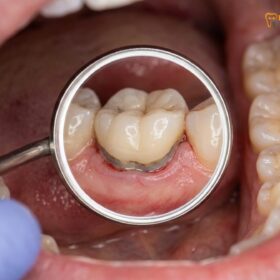
In stark contrast, a traditional fixed dental bridge operates on the principle of anchorage and suspension. A standard three-unit bridge consists of two abutment crowns (the anchors) and one pontic (the false tooth suspended between them). To accommodate the abutment crowns, the healthy teeth adjacent to the gap must undergo significant structural modification. The dentist must remove a substantial layer of enamel and dentin to create a path of insertion for the bridge. Once cemented in place, the bridge spans the edentulous space. However, the chewing forces exerted on the pontic are not transferred into the bone below; instead, they are distributed laterally to the two supporting abutment teeth. This alters the natural load-bearing dynamics of the jaw and places additional stress on the remaining natural dentition.
For patients seeking a comprehensive implant rehabilitation, the independent nature of the implant is often viewed as its most significant biomechanical advantage. It isolates the restorative work to the exact site of the missing tooth, leaving the rest of the dental arch entirely untouched.
Biological Impact: Preserving Adjacent Teeth and Jawbone
Implants actively stimulate the underlying jawbone to prevent atrophy, while bridges require the irreversible reduction of neighboring teeth and leave the underlying bone susceptible to gradual resorption.
The biological consequences of choosing between these two treatments extend far beyond the visible crown of the tooth. The most profound difference lies in how each method interacts with the alveolar bone and the adjacent natural teeth. Bone is a dynamic, living tissue that requires constant mechanical stimulation to maintain its volume and density—a physiological concept known as Wolff’s Law. In a healthy mouth, the roots of the teeth provide this stimulation every time you bite or chew.
When a tooth is extracted, the lack of stimulation causes the body to initiate a process of bone resorption. The osteoclasts (cells that break down bone) begin to outpace the osteoblasts (cells that build bone), leading to a gradual shrinking of the jawbone in that specific area. Dental implants are currently the only restorative option that provides effective bone resorption prevention. Because the titanium fixture integrates with the bone and transmits occlusal forces, it signals the body to maintain the bone volume, preserving the natural contours of the jaw and face [2].
Conversely, a dental bridge does not interact with the underlying bone. The pontic simply rests on or slightly above the gum tissue. Consequently, the bone beneath the missing tooth will continue to resorb over time. This can lead to a visible defect or “caving in” of the gum line, which may compromise the aesthetic outcome years down the line and create a space where food debris can easily become trapped.
“The preservation of alveolar bone volume is a critical objective in modern restorative dentistry. Implant-supported prosthetics uniquely provide the internal mechanical loading necessary to halt disuse atrophy, a biological advantage that tooth-supported bridges cannot offer.”
Furthermore, the biological cost to the adjacent teeth must be carefully weighed. The adjacent tooth preparation required for a bridge involves the irreversible removal of healthy, protective enamel. This aggressive reduction exposes the underlying dentin and places the tooth at a higher risk for future complications. Clinical studies indicate that teeth prepared for bridge abutments have an increased risk of developing pulpal necrosis (nerve death), which may eventually necessitate root canal therapy [3]. By choosing an implant, patients avoid this collateral damage entirely, adhering to the minimally invasive philosophy of preserving natural tooth structure whenever possible.
Upfront Costs vs. Lifelong Financial Commitment
Although the initial dental bridge cost is generally lower, the lifelong financial commitment often favors dental implants due to their exceptional durability and lower replacement frequency.
Financial considerations play a major role in the decision-making process for most patients. When evaluating the economics of tooth replacement, it is essential to look beyond the initial price tag and consider the total cost of ownership over a 10, 20, or 30-year horizon. The upfront investment for these two procedures differs significantly due to the materials, surgical expertise, and time required.
The initial dental bridge cost is typically lower than that of a single dental implant. The procedure is less complex, does not require surgical intervention, and can be completed in a matter of weeks. Additionally, many dental insurance plans provide a higher percentage of coverage for bridges compared to implants, making them an attractive short-term financial option. However, the long-term financial reality is often quite different.
Traditional dental bridges have an average clinical lifespan of 10 to 15 years. Over time, the cement holding the bridge in place can wash out, or the margins where the crown meets the natural tooth can become susceptible to recurrent decay. When a bridge fails, it often requires a complete replacement. In some cases, if the supporting abutment teeth have suffered extensive decay, they may need to be extracted, transforming a single missing tooth problem into a three-tooth deficit. This escalating cycle of retreatment can make the lifetime cost of a bridge substantially higher than initially anticipated.
| Comparison Factor | Dental Implant | Dental Bridge |
|---|---|---|
| Initial Investment | Higher upfront cost | Moderate upfront cost |
| Average Lifespan | 25+ years (often lifetime for the fixture) | 10 – 15 years |
| Maintenance Costs | Low (routine cleanings, potential crown replacement after 15+ years) | High (frequent replacement, risk of treating abutment teeth) |
| Insurance Coverage | Varies (often partial coverage for the crown) | Typically high coverage |
Dental implants, while requiring a higher initial investment, offer exceptional longevity. The titanium fixture itself is designed to last a lifetime, provided the patient maintains excellent oral hygiene and avoids peri-implantitis (gum disease around the implant). While the prosthetic crown attached to the implant may eventually succumb to normal wear and tear and require replacement after 15 to 20 years, the foundational implant remains intact [4]. When calculating the investment required for implant therapy over a patient’s lifetime, implants frequently emerge as the more cost-effective and predictable solution.
Aesthetic Outcomes and Chewing Efficacy
Both restorations deliver excellent aesthetic results, but dental implants provide superior chewing efficacy and a more natural emergence profile from the gum line compared to the suspended pontic of a bridge.
The ultimate goal of any dental restoration is to seamlessly replicate the form and function of the missing natural tooth. Both implants and bridges utilize advanced ceramic and zirconia materials that can be custom-shaded and characterized to match the surrounding dentition perfectly. However, the way these restorations interact with the soft tissues (gums) and handle occlusal (chewing) forces differs significantly.
From an aesthetic standpoint, a well-executed dental implant offers a superior “emergence profile.” Because the implant crown is attached to an abutment that rises through the gum tissue exactly like a natural tooth root, it creates a highly realistic appearance. The surrounding gingival tissues can be sculpted to form natural interdental papillae (the small triangles of gum between teeth), eliminating the dreaded “black triangle” effect. In contrast, a bridge pontic must rest on top of the gums. While skilled ceramists can design ovate pontics that give the illusion of emerging from the tissue, bone resorption over time can cause a visible gap to form between the pontic and the gum line, compromising the aesthetic result.
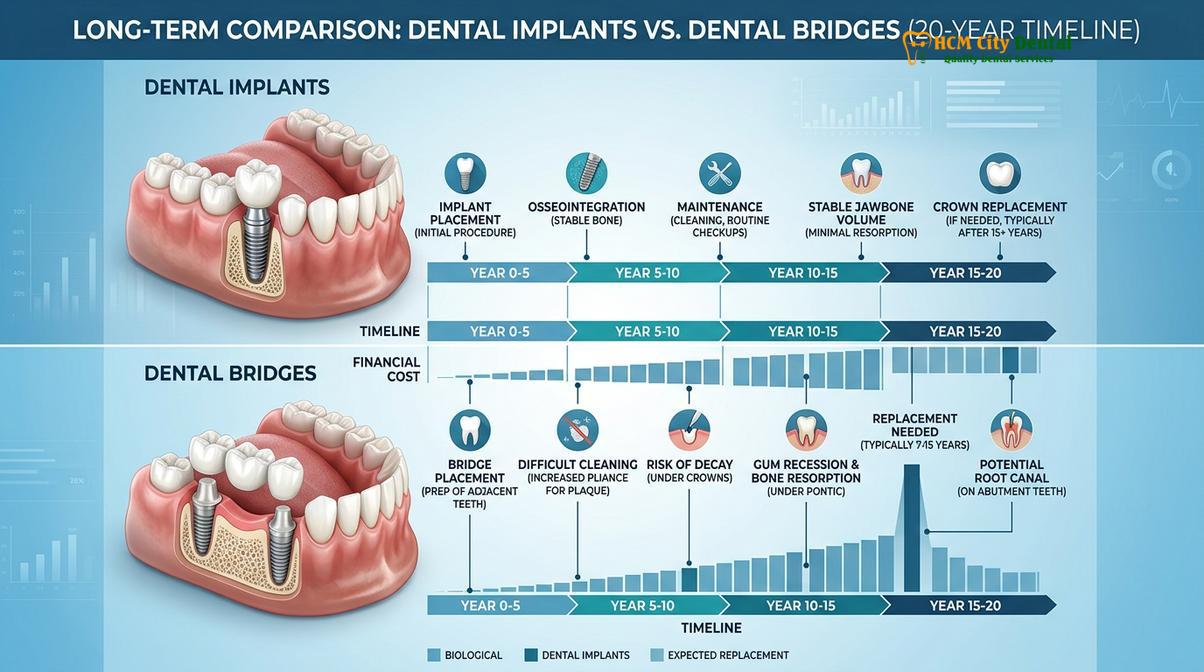
Functionally, implants reign supreme. Because they are anchored directly into the jawbone, implants can restore up to 90% or more of a patient’s natural bite force. This allows patients to consume a diverse, unrestricted diet, including tough meats and crunchy vegetables, without fear of dislodging the restoration. Bridges, while highly functional, distribute the chewing load of three teeth onto the roots of two. This can slightly reduce the overall chewing efficacy and may require patients to be more cautious with extremely hard or sticky foods to avoid fracturing the porcelain or breaking the cement seal.
Clinical Case Review: HCMC Dental Clinic
A 34-year-old patient visited HCMC Dental Clinic in Ho Chi Minh City seeking replacement for a fractured lower molar. The patient initially considered a bridge due to time constraints. However, after Dr. Cuong explained the necessity of grinding down two perfectly pristine adjacent premolars, the patient opted for a single titanium implant. Three years post-placement, clinical follow-ups show perfectly stable bone levels, zero impact on adjacent teeth, and a restoration that the patient reports feels indistinguishable from a natural tooth.
Maintenance and daily hygiene also heavily favor implants. An implant crown can be brushed and flossed exactly like a natural tooth. A dental bridge, however, requires specialized cleaning tools, such as floss threaders or water flossers, to clean underneath the suspended pontic. Failure to meticulously clean this area can lead to plaque accumulation, gingival inflammation, and decay on the supporting abutment teeth.
Clinical Candidacy: When to Choose an Implant over a Bridge
Implants are the gold standard for patients with adequate bone density and good systemic health, while bridges are preferred when surgery is contraindicated or adjacent teeth already require extensive restorative work.
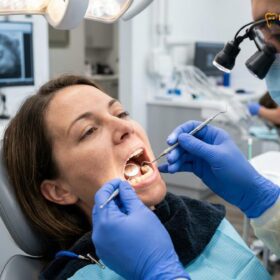
Determining the most appropriate treatment requires a thorough clinical evaluation. Not every patient is an ideal candidate for a dental implant, and in certain scenarios, a bridge may actually be the more conservative and predictable choice. The decision hinges on a combination of anatomical factors, systemic health, and the existing condition of the surrounding teeth.
The primary prerequisite for a successful dental implant is adequate bone volume and density. If a tooth has been missing for many years, severe bone resorption may have occurred, leaving insufficient foundation to anchor an implant securely. While bone grafting procedures can often rebuild the necessary volume, this adds time, cost, and surgical complexity to the treatment plan. Additionally, systemic health conditions play a crucial role. Patients with uncontrolled diabetes, severe autoimmune disorders, or those undergoing active bisphosphonate therapy for osteoporosis may have compromised healing capacities, increasing the risk of implant failure [5]. Heavy smoking is also a significant contraindication, as it severely restricts blood flow to the surgical site and drastically lowers the success rate of osseointegration.
For patients who are not candidates for surgery, or those seeking a comparing fixed and removable prosthetics alternative, a bridge serves as an excellent, non-surgical option. Some patients view a bridge as a relatively non-invasive tooth replacement because it avoids the surgical placement of a titanium fixture into the bone, even though it does require the modification of tooth enamel.
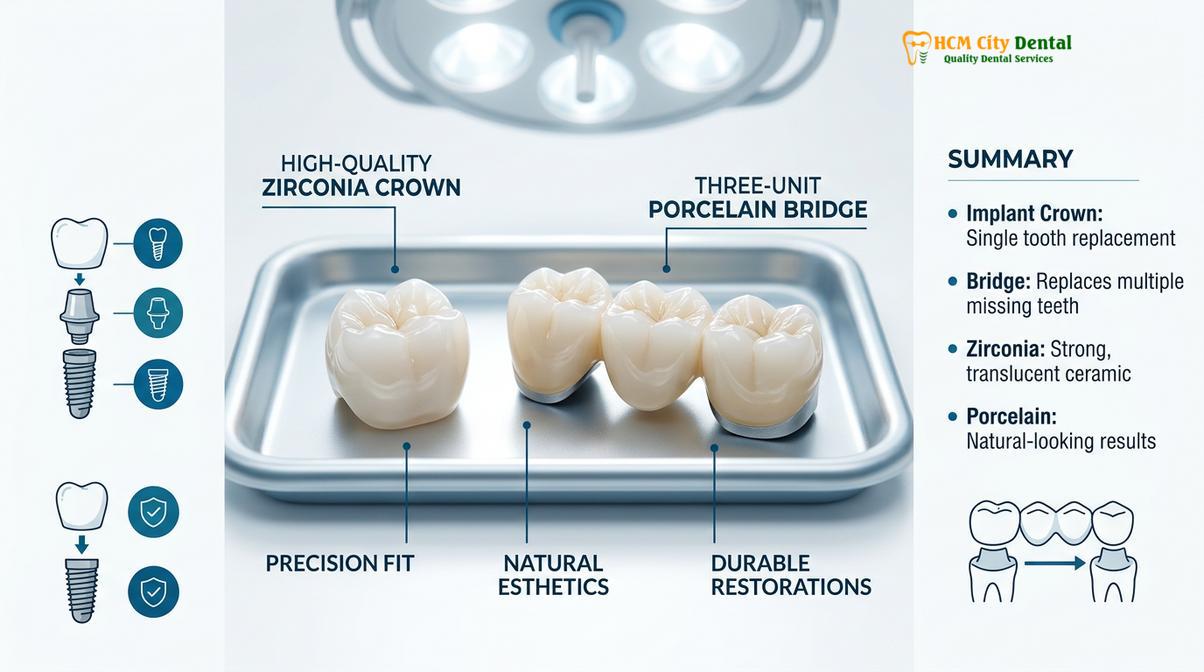
Furthermore, the condition of the adjacent teeth is a major deciding factor. If the teeth neighboring the missing tooth are perfectly healthy and untouched, it is biologically disadvantageous to grind them down for a bridge; an implant is highly recommended to preserve them. However, if the adjacent teeth already have large, failing fillings, extensive decay, or existing crowns that need replacement, a bridge becomes a highly logical and efficient choice. In this scenario, the bridge not only replaces the missing tooth but simultaneously restores and protects the compromised adjacent teeth.
Important Clinical Consideration
Patients with a history of severe bruxism (teeth grinding) must be carefully evaluated before receiving either restoration. Excessive occlusal forces can cause porcelain fracture on a bridge or lead to mechanical complications, such as screw loosening, in an implant system. A custom occlusal night guard is strongly recommended post-treatment to protect the investment.
At HCMC Dental Clinic, Dr. Nguyen Van Cuong emphasizes the importance of personalized diagnostics. “There is no universal ‘best’ option,” notes Dr. Cuong. “The optimal choice is always dictated by the patient’s unique anatomical landscape, their long-term oral health goals, and a rigorous assessment of their systemic health.”
When to See a Doctor
Whether you currently have a dental bridge, an implant, or are living with a missing tooth, timely professional intervention is critical to preventing complex complications. If you are missing a tooth, it is advisable to consult a restorative dentist promptly. Delaying treatment allows the adjacent teeth to shift into the empty space and accelerates jawbone resorption, which can limit your future restorative options and necessitate extensive bone grafting.
For patients who already have a dental bridge, you should schedule an immediate clinical evaluation if you experience localized pain, temperature sensitivity in the supporting teeth, or notice a foul odor or taste coming from beneath the pontic. These are classic signs of cement failure or recurrent decay at the crown margins. If a bridge feels loose or mobile, do not attempt to chew on it, as this can fracture the underlying abutment teeth.
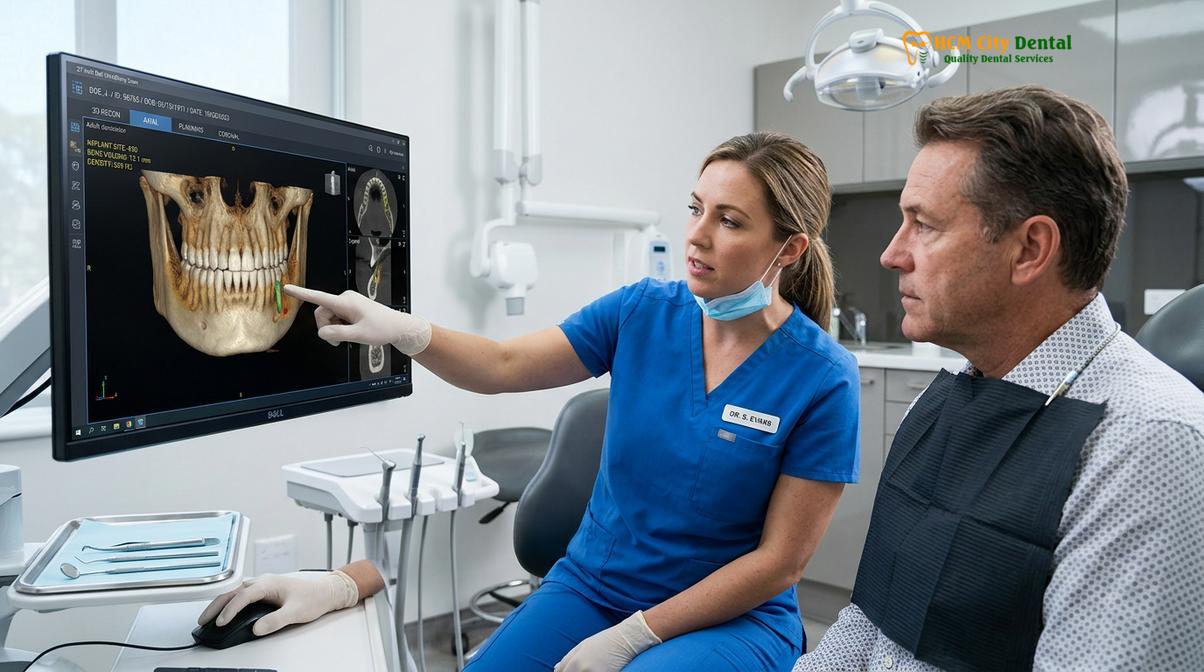
For patients with dental implants, while the titanium fixture cannot decay, the surrounding gum tissue is still susceptible to infection (peri-implantitis). Warning signs include bleeding when brushing around the implant, swelling, purulent discharge (pus), or any sensation of mobility in the crown. Early detection through routine radiographic imaging (CBCT scans) and professional probing is essential to halt disease progression and save the restoration. If you are experiencing any of these symptoms, seeking an expert evaluation at a specialized facility in Ho Chi Minh City can provide the precise diagnostics needed to protect your oral health.
Frequently Asked Questions
Is an implant safer than a dental bridge?
Neither procedure is inherently dangerous, but implants are generally considered biologically safer for long-term oral health. Because implants do not require the irreversible filing of adjacent healthy teeth, they preserve your natural dentition and prevent the structural bone loss that typically occurs beneath a traditional dental bridge. Both procedures carry standard dental risks, but implants offer a more conservative approach to the surrounding teeth.
How long does a dental bridge last compared to an implant?
A traditional dental bridge typically lasts between 10 to 15 years before requiring replacement due to marginal decay or structural wear. In contrast, a successfully integrated dental implant fixture can last a lifetime with proper maintenance, though the prosthetic crown attached to it may need replacement after 15 to 20 years. This makes implants a more permanent solution.
Does a bridge cause bone loss under the missing tooth?
Yes, a dental bridge does not prevent bone loss in the edentulous (empty) space. Because the bridge pontic simply rests above the gum line without penetrating the jawbone, the underlying bone lacks the mechanical stimulation required to maintain its volume, leading to gradual resorption over time. This can eventually cause aesthetic changes in the gum line.
Can I switch from a dental bridge to an implant later?
Yes, it is clinically possible to replace a failing dental bridge with an implant-supported restoration. However, because the underlying bone may have resorbed during the years the bridge was in place, bone grafting procedures are frequently required to rebuild the foundation before an implant can be successfully placed. The adjacent teeth will also need new individual crowns.
Is the dental implant procedure painful compared to getting a bridge?
Both procedures are performed under profound local anesthesia, ensuring you feel no pain during the treatment. Post-operatively, implant surgery may cause mild localized swelling and tenderness for a few days, whereas bridge preparation typically results in temporary temperature sensitivity in the modified adjacent teeth. Most patients report that implant recovery is surprisingly manageable with over-the-counter analgesics.
“The evolution of restorative dentistry has shifted heavily toward implantology, not merely for its high success rates, but for its profound ability to mimic the biomechanical and biological properties of the natural human dentition without compromising adjacent structures.”
Choosing the right path for your smile requires expert guidance and a thorough understanding of your unique clinical needs. By evaluating the advantages and limitations of implants alongside traditional bridges, you can make an informed decision that supports your long-term health. If you are considering premium implant systems or exploring restorative options for older adults, a comprehensive consultation is the first step toward restoring your confidence and chewing function.
References
- Journal of Clinical Periodontology. Long-term marginal bone level changes around dental implants. (2021).
- International Journal of Prosthodontics. Survival rates of fixed partial dentures vs single-tooth implants. (2020).
- Journal of the American Dental Association. Biomechanical impact of abutment preparation on pulpal vitality. (2019).
- Clinical Oral Implants Research. Osseointegration and crestal bone preservation protocols. (2022).
- Journal of Prosthetic Dentistry. Economic evaluation of single-tooth replacement strategies over a 20-year horizon. (2018).
For premium porcelain crowns, bridges, and advanced smile reconstructions, visit our Dental Crowns & Bridges service page at HCMC Dental Clinic in Ho Chi Minh City.