Dental implants offer a permanent, natural-feeling solution for missing teeth by preventing bone loss and restoring full chewing function. However, the procedure requires a higher initial investment, a multi-month healing period, and minor surgical risks. Understanding these pros and cons is essential for making an informed restorative decision.
Clinical Summary:
Dental implants are widely considered the gold standard for tooth replacement due to their unique ability to integrate directly with the human jawbone, preventing resorption and providing unparalleled structural stability. While the advantages include lifelong durability, natural aesthetics, and the preservation of adjacent healthy teeth, patients must also carefully weigh the disadvantages. These include a longer treatment timeline, the necessity of a minor surgical procedure, the potential need for preliminary bone grafting, and higher upfront costs. A comprehensive clinical evaluation, including 3D volumetric imaging, is required to determine individual candidacy based on bone density, soft tissue health, and systemic medical conditions.
Key Takeaways:
- Implants fuse directly with the jawbone, preventing the facial collapse commonly associated with prolonged tooth loss.
- They boast a clinical success rate of over 95% when placed by experienced specialists under optimal conditions.
- The treatment timeline typically spans several months to allow for proper cellular osseointegration.
- Unlike traditional fixed bridges, implants do not require the irreversible alteration of healthy adjacent teeth.
- Systemic conditions like uncontrolled diabetes or heavy smoking can significantly increase the risk of implant failure.
Understanding Dental Implants: A Clinical Overview
A dental implant is a biocompatible titanium post surgically placed into the jawbone to serve as an artificial tooth root, providing a highly stable foundation for a custom crown, bridge, or overdenture.
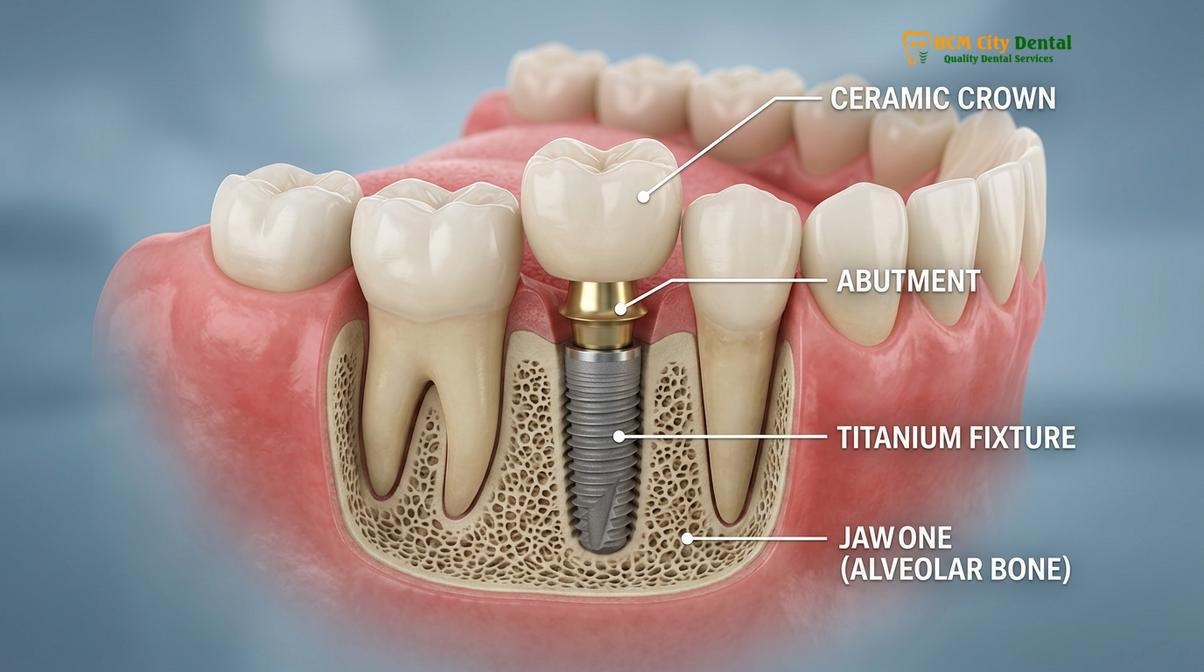
To fully grasp what are the pros and cons of dental implants, it is first necessary to understand the biomechanical design of the device itself. Unlike traditional restorative options that merely sit on top of the gums or rely on neighboring teeth for support, a dental implant is a comprehensive system designed to replicate the entire anatomical structure of a natural tooth. The system is comprised of three distinct components, each playing a critical role in the long-term success of the restoration.
The first component is the implant fixture, which is a precision-engineered screw typically manufactured from Grade 4 or Grade 5 commercially pure titanium or titanium alloy. Titanium is utilized due to its exceptional biocompatibility and its unique ability to undergo osseointegration—a biological process where living bone cells (osteoblasts) attach directly to the micro-roughened surface of the metal[1]. This creates a structural and functional connection between the living bone and the load-bearing artificial implant.
The second component is the abutment, a connector piece that is securely attached to the top of the implant fixture once osseointegration is complete. The abutment protrudes slightly above the gum line and serves as the physical anchor for the final restoration. Finally, the third component is the prosthesis itself, which can be a single ceramic crown, a multi-tooth fixed bridge, or a full-arch denture, depending on the patient’s specific clinical needs. For a comprehensive overview of the surgical and restorative phases, patients can explore our detailed guide on Dental Implants.
The Pros of Dental Implants: Why They Are the Gold Standard
The primary benefits of dental implants include lifelong durability, the prevention of jawbone deterioration, and the restoration of natural biting force without damaging adjacent teeth.
The shift in modern dentistry toward implant-supported restorations is driven by a multitude of clinical advantages that traditional prosthetics simply cannot match. By addressing tooth loss at the root level, implants provide benefits that extend far beyond mere aesthetics, deeply impacting the patient’s long-term oral health and systemic well-being.
Preservation of Jawbone Density and Facial Structure
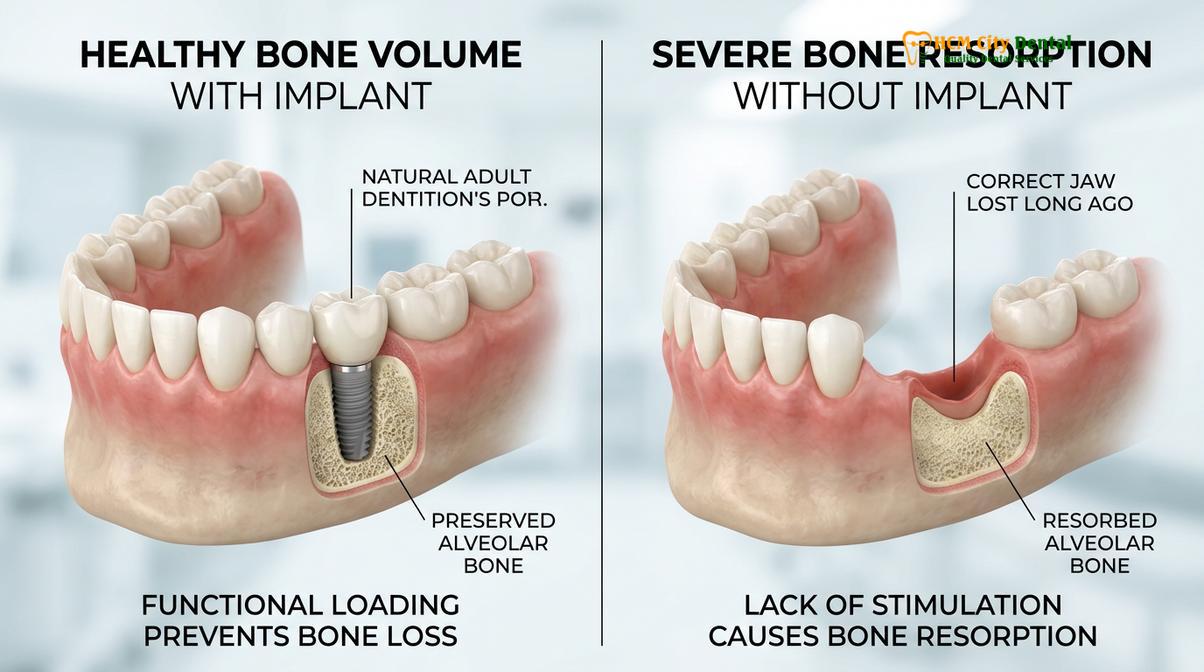
Perhaps the most significant physiological advantage of dental implants is their ability to halt alveolar bone resorption. According to Wolff’s Law of bone adaptation, bone tissue requires continuous mechanical stimulation to maintain its density and volume. In the oral cavity, this stimulation is provided by the roots of natural teeth during the act of chewing. When a tooth is extracted, the surrounding jawbone no longer receives this vital biomechanical input. Consequently, the body begins to resorb the idle bone tissue, leading to a rapid loss of bone width and height—often up to 25% in the first year following an extraction[2].
Dental implants are the only restorative option that mimics the natural tooth root, transmitting occlusal forces directly into the jawbone. This stimulation signals the body to maintain bone density, thereby preserving the structural integrity of the jaw and preventing the premature facial sagging or “collapsed” appearance frequently seen in long-term denture wearers.
“By mimicking the natural tooth root, titanium implants provide the necessary biomechanical stimulation to halt alveolar bone resorption, preserving both the patient’s functional bite and their natural facial aesthetics over a lifetime.”
— Dr. Nguyen Van Cuong
Unmatched Durability and Clinical Longevity
When evaluating what are the pros and cons of dental implants, longevity is a major factor in the “pro” column. Clinical studies consistently demonstrate that dental implants have a survival rate exceeding 95% over a 10-year period, and with meticulous oral hygiene, the titanium fixture can last a lifetime. While the prosthetic crown may eventually require replacement due to normal wear and tear, the underlying foundation remains secure. Patients interested in the long-term security of their investment should review the specifics of understanding your dental implant warranty coverage, which often provides global protection for the fixture.
Protection of Adjacent Healthy Teeth
Traditional fixed dental bridges require the irreversible reduction (shaving down) of healthy adjacent teeth to serve as anchors for the pontic (the fake tooth). This removal of protective enamel increases the risk of future decay, tooth sensitivity, and endodontic (root canal) complications in those supporting teeth. Dental implants are entirely self-supporting. They fill the edentulous space without relying on or damaging the neighboring dentition, thereby preserving the overall structural integrity of the dental arch.
Restored Chewing Function and Proprioception
Removable dentures often slip, click, or severely limit the types of food a patient can comfortably consume, typically restoring only 20% to 30% of natural bite force. Dental implants, being anchored directly into the bone, restore near-normal chewing capacity. Patients can confidently eat fibrous vegetables, tough proteins, and crunchy foods without fear of prosthetic displacement. Furthermore, implants provide a degree of proprioception (sensory feedback regarding bite pressure) that closely mimics natural teeth, enhancing the overall comfort of the stomatognathic system.
The Cons of Dental Implants: Clinical Limitations and Risks
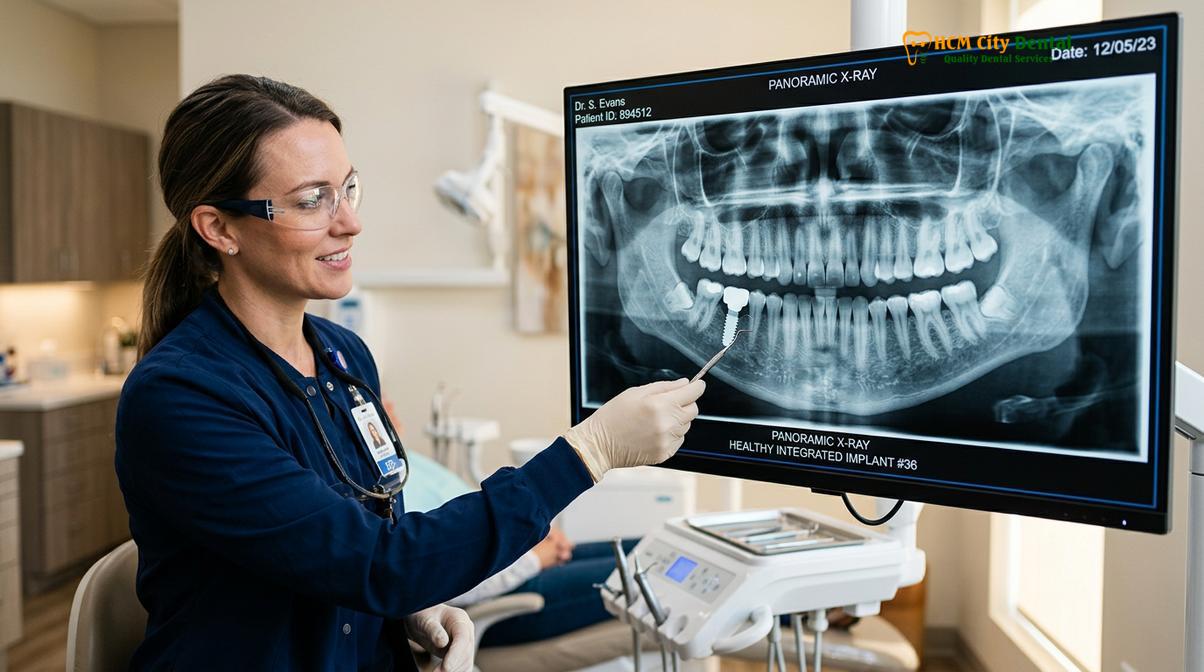
Despite their high success rate, dental implants require a surgical procedure, involve a healing period of several months, and demand a higher initial financial investment.
While the benefits are profound, a balanced clinical perspective requires a thorough examination of the potential drawbacks. Dental implants are not a universal solution for every patient, and specific anatomical, financial, and systemic factors must be carefully evaluated before proceeding with treatment.
Surgical Requirements and Extended Healing Time
Unlike a dental bridge, which can often be completed in two weeks, the implant process is a multi-phase journey. The procedure requires minor oral surgery to place the titanium fixture into the bone. Following placement, the implant must undergo osseointegration, a biological healing phase that typically takes between three to six months. During this time, the patient may wear a temporary prosthesis, but the final permanent crown cannot be loaded until the bone has fully fused to the implant. For a detailed breakdown of this timeline, patients can review how long the dental implant procedure takes from initial consultation to final restoration.
The Potential Need for Ancillary Procedures
If a patient has been missing a tooth for an extended period, or if the tooth was lost due to severe periodontal disease, there may not be sufficient bone volume to securely anchor an implant. In such cases, a preliminary bone grafting or sinus lift procedure is required. These ancillary surgeries add to the overall treatment time, increase post-operative recovery demands, and elevate the total cost of the restoration. Patients concerned about their anatomical suitability can learn more about whether you can get dental implants with existing bone loss.
Initial Financial Investment
The upfront cost of dental implants is undeniably higher than that of traditional bridges or removable dentures. This cost reflects the advanced biomaterials used, the necessity of 3D CBCT imaging, the surgical expertise required, and the custom fabrication of the prosthetic components. However, when amortized over a lifetime, implants often prove to be the most cost-effective option, as they do not require the frequent replacements associated with other prosthetics. Patients exploring financial planning can benefit from comparing dental implant costs internationally, as well as investigating independent dental insurance policies that may offer partial coverage for surgical procedures.
Potential Surgical Complications and Peri-Implantitis
As with any surgical intervention, implant placement carries inherent, albeit rare, risks. These include localized infection, minor bleeding, or temporary neurosensory alteration if the implant is placed too close to the inferior alveolar nerve. The most significant long-term risk is peri-implantitis, an inflammatory condition affecting the soft and hard tissues surrounding the implant, which can lead to bone loss and eventual implant failure if left untreated[3]. Strict adherence to peri-implantitis prevention protocols, including daily interdental cleaning and professional biannual prophylaxis, is mandatory for long-term success.
Comparing Dental Implants to Bridges and Dentures
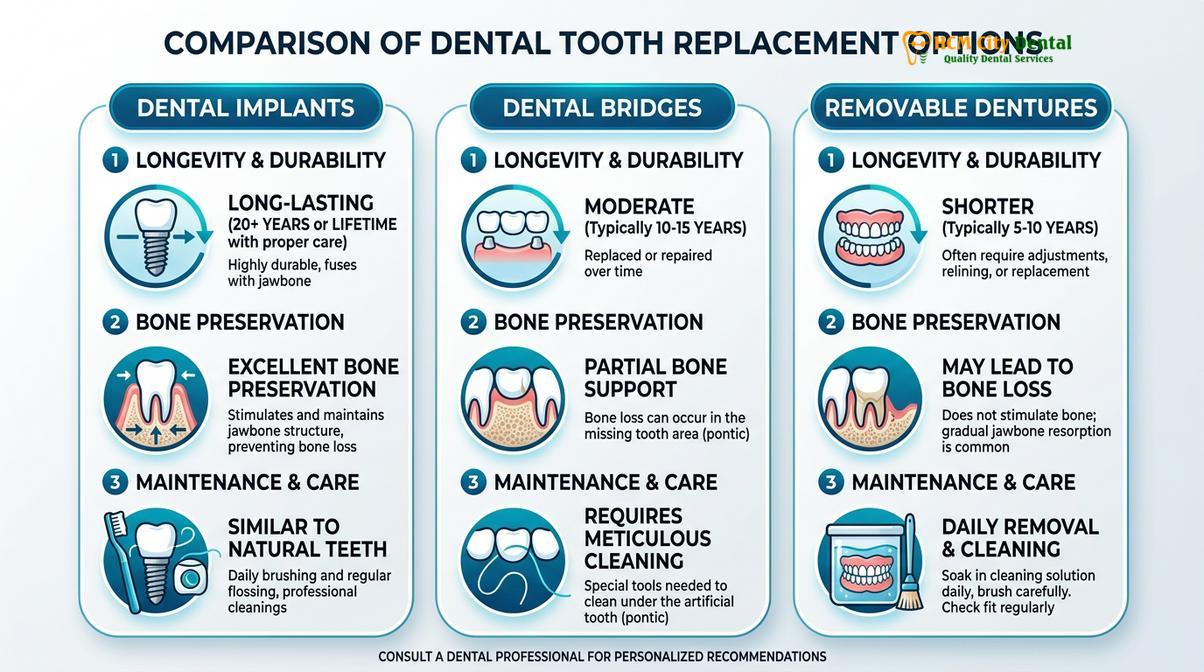
While bridges and dentures offer faster and more affordable tooth replacement, dental implants provide superior longevity, bone preservation, and structural independence.
To fully contextualize what are the pros and cons of dental implants, it is helpful to compare them directly against the traditional alternatives. Each modality has specific clinical indications, but their impact on long-term oral health varies dramatically.
| Clinical Feature | Dental Implants | Fixed Dental Bridges | Removable Dentures |
|---|---|---|---|
| Bone Preservation | Yes (stimulates jawbone) | No (bone loss continues under pontic) | No (accelerates bone resorption) |
| Impact on Adjacent Teeth | None (completely independent) | Requires irreversible enamel reduction | Clasp friction can cause wear and decay |
| Average Clinical Longevity | Lifetime (fixture); 10-15 years (crown) | 5 to 15 years (prone to recurrent decay) | 5 to 10 years (requires frequent relining) |
| Bite Force Restoration | 90% to 100% of natural function | 70% to 80% of natural function | 20% to 30% of natural function |
| Daily Maintenance | Standard brushing and flossing | Requires specialized floss threaders | Requires daily removal and chemical soaking |
As illustrated, while fixed bridges provide a rapid aesthetic fix, they introduce biomechanical vulnerabilities to the supporting teeth. Removable dentures are the most economical upfront but carry the highest long-term biological cost due to accelerated bone loss and diminished quality of life[4].
The Patient Experience: Is Dental Implant Surgery Painful?
Modern implant placement is performed under profound local anesthesia, making the procedure itself highly tolerable, with post-operative discomfort typically managed by standard analgesics.
A primary barrier for many prospective patients is dental anxiety. When researching what are the pros and cons of dental implants, patients frequently ask, is dental implant surgery painful? Clinically speaking, the surgical phase is highly controlled and often less traumatic than a complex tooth extraction. The jawbone itself contains very few pain-sensing nerve endings. The procedure is performed under profound local anesthesia (such as Articaine or Lidocaine), ensuring the surgical site is completely numb. Patients may feel mild pressure or vibration from the surgical instruments, but acute pain is effectively eliminated.
Post-operatively, once the anesthesia wears off, patients can expect mild to moderate tissue tenderness, localized swelling, and minor bruising. This inflammatory response is a normal part of the initial healing cascade. In the vast majority of cases, this discomfort peaks at 48 hours and is easily managed with a prescribed regimen of non-steroidal anti-inflammatory drugs (NSAIDs) like Ibuprofen, sometimes combined with Paracetamol. By the third or fourth day, most patients are able to return to their normal daily activities and a soft-food diet.
For patients with heightened dental phobia, many modern clinics offer adjunctive sedation options, ranging from nitrous oxide (laughing gas) to oral conscious sedation or intravenous (IV) sedation, ensuring a completely relaxed and amnesic experience during the surgery[5].
When to See a Doctor for Implant Consultation
Tooth loss is not merely a cosmetic issue; it is a progressive medical condition that affects the entire stomatognathic system. If you have recently lost a tooth due to trauma or decay, it is highly recommended to schedule a clinical consultation as soon as possible. Early intervention is critical because the alveolar bone begins to resorb almost immediately following an extraction. Placing an implant shortly after tooth loss often eliminates the need for complex and costly bone grafting procedures.
Additionally, you should seek a professional evaluation if you are currently wearing a removable denture that causes chronic sore spots, slips during speech, or prevents you from eating a nutritious diet. Similarly, if you have an older dental bridge that is showing signs of failure—such as sensitivity in the anchor teeth, a bad taste in the mouth indicating cement washout, or visible decay at the crown margins—an implant may be the most predictable long-term replacement strategy.
“Early intervention following tooth extraction is critical. The longer a missing tooth space is left untreated, the more complex and costly the eventual restoration becomes due to progressive bone resorption and the shifting of adjacent teeth.”
— Clinical Consensus
During a consultation at a specialized facility like HCMC Dental Clinic in Saigon, a prosthodontist or oral surgeon will perform a comprehensive examination. This includes a 3D Cone Beam Computed Tomography (CBCT) scan to map your bone topography, locate vital anatomical structures like the sinus cavities and mandibular nerves, and digitally plan the exact trajectory of the implant. This diagnostic precision ensures that the procedure is executed safely, predictably, and with the highest probability of long-term success.
Frequently Asked Questions
How long do dental implants actually last?
With proper oral hygiene and regular clinical maintenance, dental implants can last a lifetime. The titanium post integrates permanently with the jawbone, though the prosthetic crown may require replacement every 10 to 15 years due to normal occlusal wear. Consistent brushing, flossing, and biannual professional cleanings are essential to prevent peri-implantitis and ensure the longevity of the restoration.
Is dental implant surgery painful during recovery?
Most patients experience only mild to moderate discomfort during the first 48 to 72 hours post-surgery. This is typically well-managed with over-the-counter non-steroidal anti-inflammatory drugs (NSAIDs) and cold compresses, with severe pain being highly uncommon. Because the jawbone has few nerve endings, the recovery is often described by patients as less painful than the original tooth extraction.
Can my body reject a titanium dental implant?
True allergic rejection of a titanium implant is exceptionally rare, occurring in less than 1% of cases. However, an implant can fail to integrate due to infection, poor blood supply, or excessive micro-movement during the initial healing phase. Ensuring you are in good systemic health, avoiding smoking, and following all post-operative instructions drastically minimizes the risk of implant failure.
Are dental implants worth the higher upfront cost?
Yes, from a clinical and long-term financial perspective, implants are highly cost-effective. Because they prevent bone loss and do not require the replacement cycles of traditional bridges or dentures, their lifetime value significantly outweighs the initial investment. Furthermore, the preservation of adjacent healthy teeth saves patients from future endodontic or restorative expenses.
Do I need a bone graft before getting an implant?
A bone graft is only necessary if a 3D CBCT scan reveals insufficient jawbone volume or density to support the implant fixture. Patients who have been missing teeth for extended periods are more likely to require this preparatory procedure. The graft provides a scaffold for your body to regenerate new bone, ensuring a stable and secure foundation for the future implant.
References
- Journal of Clinical Periodontology. Long-term survival and success rates of dental implants. (2021).
- International Journal of Oral and Maxillofacial Implants. Biomechanical effects of titanium implants on alveolar bone preservation. (2020).
- Journal of Dental Research. Risk factors and clinical management of peri-implantitis. (2022).
- American Association of Oral and Maxillofacial Surgeons. Comparative outcomes of implant-supported prostheses versus fixed partial dentures. (2019).
- Clinical Implant Dentistry and Related Research. Pain perception and post-operative management in dental implant surgery. (2023).