Zirconia crowns in Vietnam offer a world-class, highly durable, and aesthetically natural restorative solution at a fraction of Western costs. Utilizing advanced CAD/CAM technology and biocompatible materials, top clinics provide precision-milled restorations that seamlessly restore both structural integrity and a flawless smile.
Clinical Summary:
Zirconia crowns represent the gold standard in modern metal-free restorations, boasting exceptional flexural strength and superior biocompatibility. In Vietnam, particularly at leading centers like HCMC Dental Clinic, patients benefit from sophisticated digital dentistry workflows, including powder-free intraoral scanning and 5-axis CAD/CAM milling. This integrated approach ensures microscopic marginal precision and lifelike aesthetics. While zirconia is highly durable and resistant to fracture, proper case selection by an experienced prosthodontist is crucial to ensure optimal occlusal harmony, appropriate tooth preparation, and long-term clinical success.
Key Takeaways:
- Zirconia offers superior flexural strength (up to 1200 MPa), making it ideal for both anterior aesthetic zones and high-load posterior regions.
- Treatments in Vietnam utilize the exact same premium German and American CAD/CAM technologies found in top-tier global practices.
- Patients can save significantly on restorative costs without compromising clinical quality, safety, or material longevity.
- The digital workflow allows for rapid fabrication, often completing custom restorations within a matter of days.
- The 100% metal-free composition eliminates the risk of dark gingival margins and adverse allergic tissue reactions.
The Clinical Superiority of Zirconia Crowns
Zirconia crowns provide unmatched mechanical strength and biocompatibility, making them the premier choice for restoring damaged teeth without the aesthetic drawbacks of traditional metal-based prosthetics.
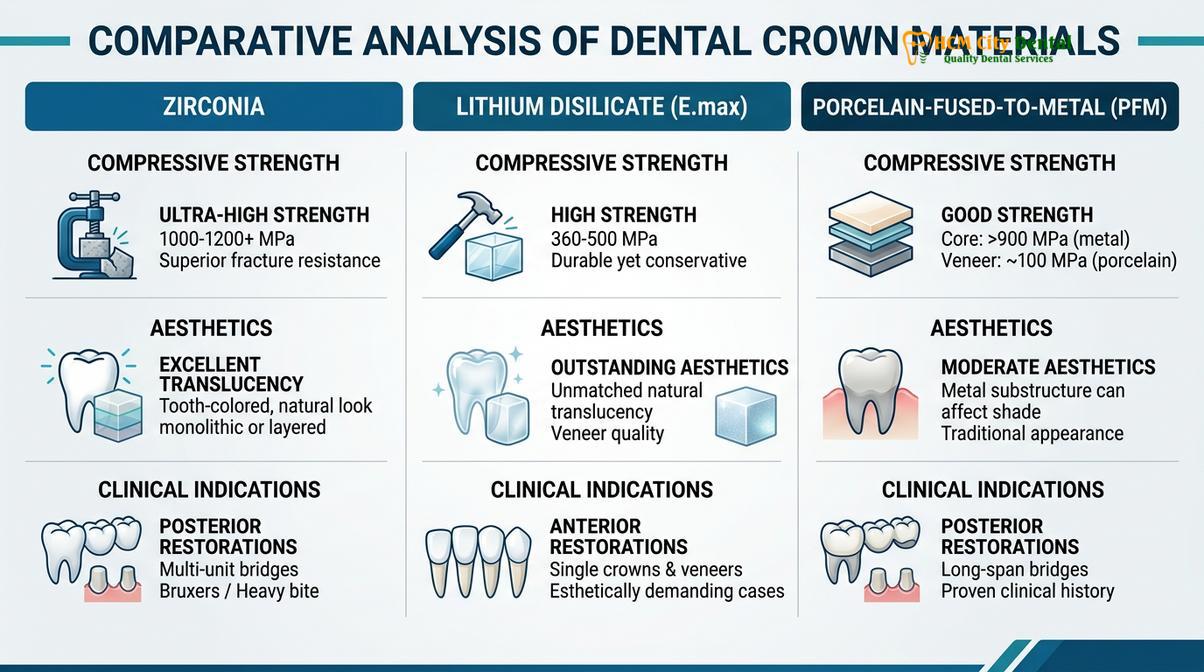
In the realm of modern restorative dentistry, the shift away from traditional porcelain-fused-to-metal (PFM) restorations has been largely driven by the advent of yttria-stabilized tetragonal zirconia polycrystal (Y-TZP). This advanced ceramic material offers a unique combination of extreme mechanical resilience and excellent optical properties. Unlike traditional ceramics that are prone to brittle fracture under heavy occlusal loads, zirconia possesses a unique biomechanical property known as phase transformation toughening. When a microscopic crack begins to propagate through the material, the crystalline structure at the tip of the crack transforms from a tetragonal phase to a monoclinic phase. This transformation is accompanied by a localized volumetric expansion, which effectively compresses the crack and halts its progression[1]. This self-healing characteristic grants zirconia a flexural strength that can exceed 1200 MPa, far surpassing that of lithium disilicate or conventional feldspathic porcelain.
Biocompatibility and Gingival Health
Beyond its mechanical prowess, zirconia is highly prized for its exceptional biocompatibility. Traditional PFM crowns often contain base metals that can elicit allergic responses or cause localized gingival inflammation in sensitive patients. Furthermore, as the gingival tissue naturally recedes over time, PFM crowns frequently expose an unsightly dark metallic margin. Zirconia is entirely metal-free and chemically inert, meaning it does not corrode, release ions into the oral environment, or provoke adverse immunological responses. The highly polished surface of a zirconia crown also resists plaque accumulation more effectively than natural enamel or composite resin, thereby promoting superior periodontal health and reducing the risk of secondary caries at the crown margin[4].
“The integration of monolithic zirconia in restorative protocols has revolutionized our ability to provide restorations that are not only virtually indestructible under normal physiological forces but also exceptionally kind to the surrounding periodontal tissues.”
Monolithic vs. Layered Zirconia
When discussing zirconia crowns vietnam, it is essential to distinguish between monolithic and layered variations. Monolithic zirconia is milled from a single, solid block of material. It offers maximum strength and is typically indicated for posterior teeth (molars and premolars) where masticatory forces are highest and aesthetic demands are slightly lower. Conversely, layered zirconia consists of a high-strength zirconia coping that is subsequently veneered with translucent feldspathic porcelain. This technique provides unparalleled aesthetic depth, mimicking the natural opalescence and translucency of human enamel, making it the restoration of choice for anterior teeth. Recent advancements have also introduced high-translucency (HT) monolithic zirconia, which bridges the gap by offering excellent aesthetics without the risk of porcelain delamination.
Step-by-Step Clinical Workflow in Vietnam
The restorative process involves precise tooth preparation, digital intraoral scanning, and automated CAD/CAM milling to ensure a flawless marginal fit and optimal occlusal alignment.
The clinical protocol for fabricating and delivering a zirconia crown requires meticulous attention to detail at every stage. At leading institutions such as HCMC Dental Clinic, the workflow is entirely digitized, enhancing both patient comfort and clinical accuracy. The process begins with a comprehensive diagnostic evaluation, including digital radiography and occlusal analysis, to determine the structural viability of the abutment tooth. If the tooth has suffered extensive decay or trauma, a core build-up or post-and-core procedure may be necessary to provide adequate retention for the final restoration.
Conservative Tooth Preparation
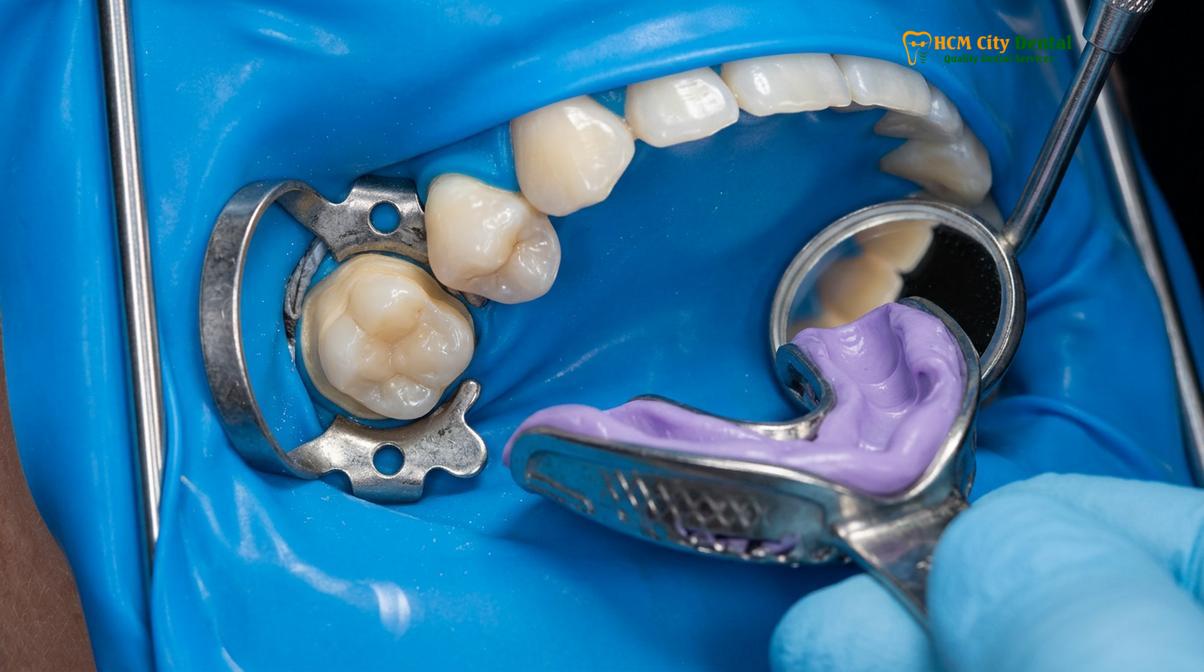
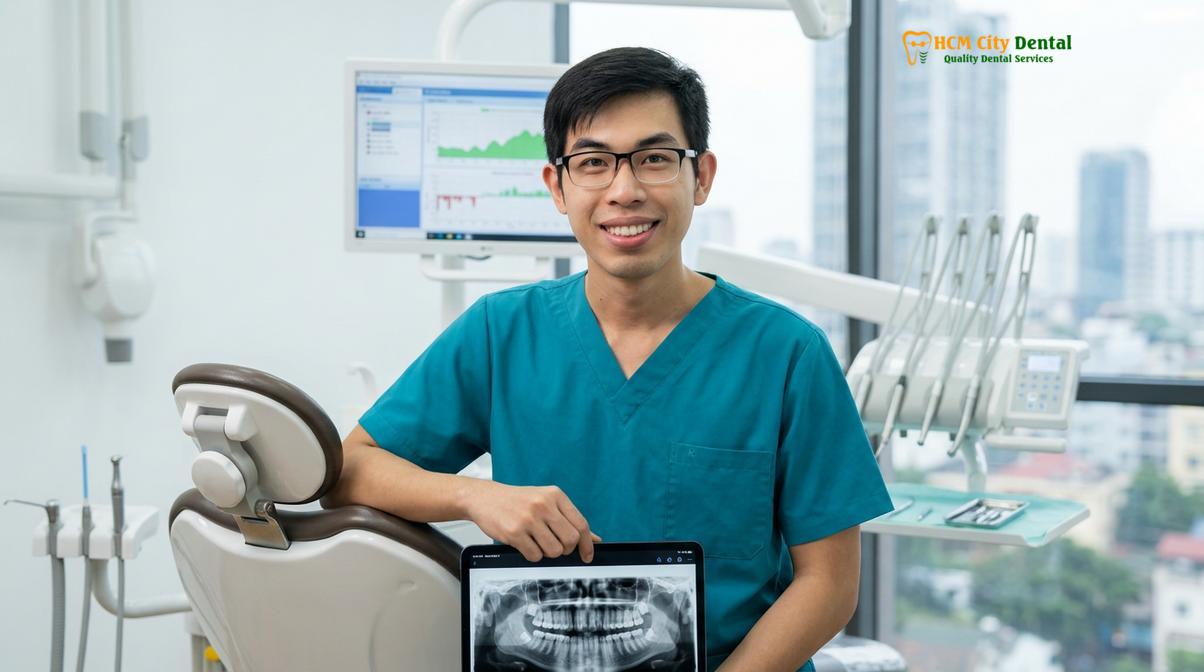
Dr. Nguyen Van Cuong, a leading specialist at HCMC Dental Clinic, emphasizes that conservative tooth preparation is paramount for long-term success. His approach to restorative dentistry ensures that every patient receives personalized care tailored to their unique anatomical needs. For more details on the premium standards maintained by his team, patients can review the HCMC Dental Clinic: Clinical Guide to Premium Care. Tooth preparation for zirconia differs significantly from that of traditional PFM crowns. Because zirconia is inherently stronger, it requires less occlusal and axial reduction, allowing the clinician to preserve more healthy tooth structure. Proper preparation ensures that the final crown seats passively while providing adequate thickness for the material to withstand functional loading.
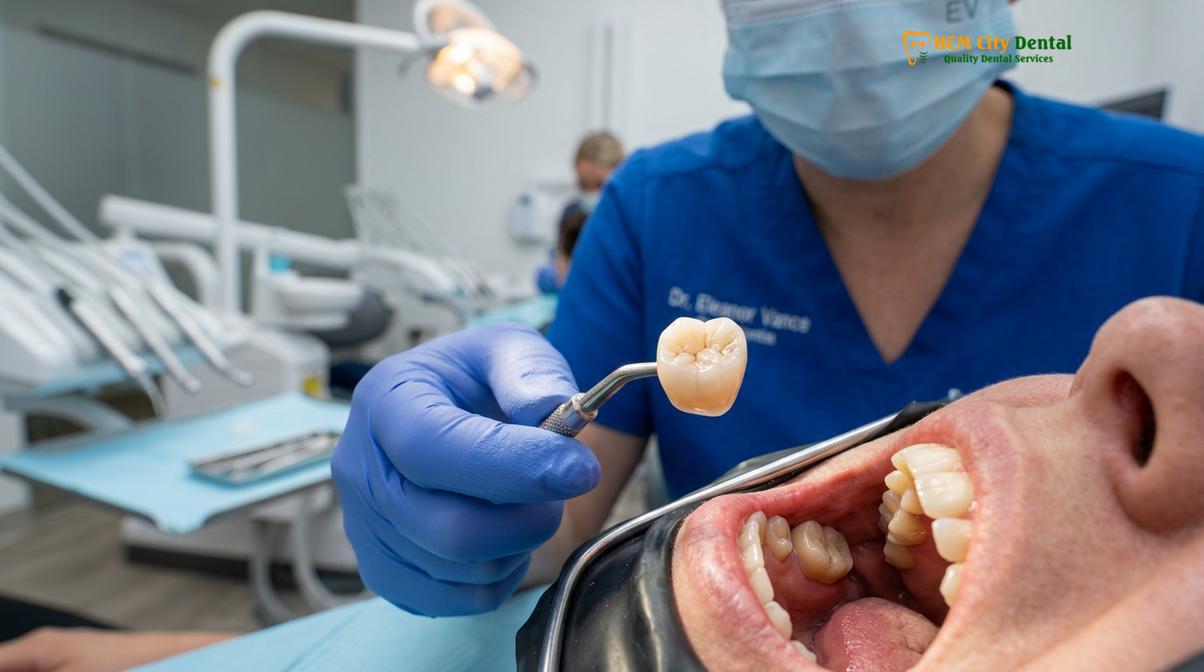
Digital Impressions and CAD/CAM Fabrication
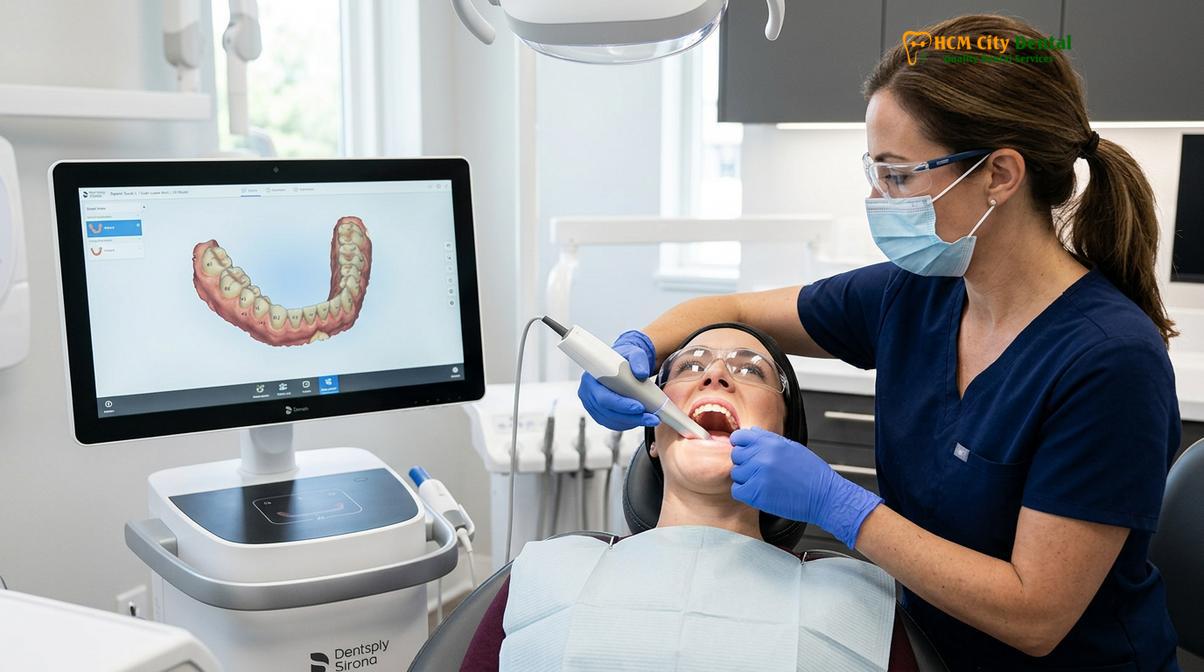
Once the tooth is prepared, the traditional, uncomfortable alginate or PVS impression materials are bypassed in favor of an intraoral digital scanner. This device captures thousands of images per second, stitching them together to create a highly accurate 3D model of the patient’s dentition. This digital file is then imported into specialized CAD (Computer-Aided Design) software, where the prosthodontist or master technician designs the crown. The software allows for precise control over the crown’s contours, contact points, and occlusal morphology, ensuring harmony with the opposing teeth[2].
The finalized design is transmitted to a 5-axis CAM (Computer-Aided Manufacturing) milling machine. The machine carves the crown from a pre-sintered zirconia puck with microscopic precision. After milling, the restoration is oversized to account for the exact shrinkage that occurs during the final sintering process. The crown is placed in a high-temperature furnace, where it densifies and achieves its final physical properties. For patients interested in expedited treatments, understanding the truth about 24-hour restorations is vital, as proper sintering times cannot be rushed without compromising material strength.
Cost-Benefit Analysis: Why Choose Ho Chi Minh City?
Undergoing restorative dentistry in Vietnam allows international patients to access premium materials and expert clinical care at highly competitive price points compared to Western markets.
The primary catalyst driving the surge in dental tourism to Vietnam is the profound cost disparity between local clinics and those in North America, Europe, or Australia. However, this price difference is not a reflection of inferior quality. Clinics in Ho Chi Minh City / Saigon / HCMC operate with significantly lower overhead costs, including facility leasing, administrative staffing, and laboratory fees. Furthermore, many elite clinics feature integrated in-house dental laboratories, eliminating the need to outsource fabrication to third-party facilities, thereby reducing both turnaround times and costs.
When evaluating dental tourism in Vietnam versus Thailand, patients consistently find that Vietnam offers comparable, if not superior, clinical expertise at even more accessible price points. The materials utilized—such as authentic German or American zirconia blocks—are identical to those used by top-tier dentists globally. The savings allow patients to undergo comprehensive full-mouth rehabilitations or combine their restorative work with Porcelain Veneers for a complete smile makeover, all while enjoying a vacation in a culturally rich destination.
Comparative Cost Overview
The following table illustrates the stark contrast in restorative costs, highlighting the economic viability of seeking treatment internationally.
| Region / Country | Estimated Cost per Zirconia Crown (USD) | Included Services (Typical) | Turnaround Time |
|---|---|---|---|
| United States / Canada | $1,200 – $2,500 | Consultation, Prep, Crown | 2 – 3 Weeks |
| Australia / New Zealand | $1,500 – $2,000 | Consultation, Prep, Crown | 2 – 3 Weeks |
| Thailand | $400 – $800 | Consultation, Scan, Crown | 5 – 7 Days |
| Vietnam (HCMC) | $250 – $450 | 3D Scan, CAD/CAM Design, Crown | 3 – 5 Days |
In addition to the immediate financial savings, reputable clinics provide comprehensive warranties on their zirconia restorations, often covering material fractures or structural failures for up to 10 years. This commitment to quality assurance provides international patients with profound peace of mind. For those planning their trip, understanding the timeline for aesthetic dental stays is crucial to ensure adequate time for both the clinical procedures and necessary post-operative evaluations.
Important Clinical Considerations and Contraindications
While highly versatile, zirconia restorations require careful case selection, particularly regarding occlusal clearance, opposing dentition wear, and the presence of parafunctional habits.
Despite its remarkable physical properties, zirconia is not a universal panacea for every clinical scenario. A thorough prosthodontic evaluation is mandatory to determine candidacy. One of the primary considerations is the amount of interocclusal clearance available. While monolithic zirconia requires less reduction than PFM crowns, a minimum thickness of 0.6mm to 1.0mm is still necessary to ensure adequate strength. In cases of severe microdontia or exceptionally short clinical crowns, achieving sufficient retention and resistance form without compromising the pulpal vitality can be challenging. Clinical oral investigations have shown that when these parameters are met, the long-term survival rates of anterior and posterior zirconia crowns are exceptionally high[5].
Clinical Contraindications: Zirconia crowns may be contraindicated in patients with severe, unmanaged bruxism (teeth grinding) unless accompanied by the fabrication of a protective occlusal splint (night guard). While the zirconia itself will not fracture, the extreme forces generated during parafunctional habits can cause severe wear on the opposing natural enamel or transmit excessive stress to the underlying tooth root and periodontal ligament, potentially leading to root fracture or implant failure.
Furthermore, the wear behavior of zirconia on opposing natural teeth has been a subject of extensive clinical research. Studies indicate that it is not the hardness of the material that dictates wear, but rather its surface roughness[3]. A meticulously polished monolithic zirconia crown is highly gentle on opposing enamel. However, if the crown is adjusted intraorally after cementation and not subsequently re-polished using specialized diamond-impregnated burs, the roughened surface can act as an abrasive file, causing rapid attrition of the opposing dentition. Therefore, precise occlusal adjustment and meticulous final polishing are non-negotiable steps in the clinical workflow. These protocols align closely with the standards set forth by the Vietnam Ministry of Health (MOH) regarding restorative dentistry and prosthodontic safety[6].
“The success of a ceramic restoration is not solely dependent on the material chosen, but heavily relies on the clinician’s understanding of occlusal dynamics, precise marginal preparation, and strict adherence to adhesive cementation protocols.”
When to See a Doctor for Crown Restorations
Recognizing the clinical signs that necessitate a dental crown is vital for preserving the underlying tooth structure and preventing the need for more invasive procedures.
Patients should seek a comprehensive evaluation from English-speaking dental professionals if they experience any of the following symptoms:
- Sharp Pain Upon Chewing: This often indicates a cracked tooth syndrome, where a micro-fracture opens under occlusal pressure. A crown acts as a splint, holding the tooth together and preventing the fracture from propagating into the pulp chamber.
- Extensive Dental Caries: When decay compromises more than 50% of the tooth’s structural integrity, a standard composite filling is insufficient to withstand masticatory forces.
- Post-Endodontic Treatment: Teeth that have undergone root canal therapy become brittle over time due to the loss of blood supply and internal moisture. A crown is universally recommended to protect the remaining structure from catastrophic fracture.
- Failing Existing Restorations: Old amalgam fillings or PFM crowns that exhibit marginal leakage, recurrent decay, or aesthetic degradation should be replaced to restore health and function.
Clinical Case Study: Full Arch Rehabilitation
A 52-year-old international patient presented to HCMC Dental Clinic in Ho Chi Minh City with severe occlusal wear, multiple failing PFM crowns, and generalized sensitivity. Dr. Nguyen Van Cuong conducted a comprehensive digital analysis, noting a loss of vertical dimension of occlusion (VDO). The treatment plan involved a full-mouth rehabilitation utilizing monolithic zirconia crowns for the posterior segments to withstand heavy bite forces, and highly translucent layered zirconia for the anterior teeth to achieve a natural, youthful aesthetic. The VDO was successfully restored, eliminating the patient’s TMJ discomfort and providing a highly durable, metal-free smile makeover within a two-week clinical timeframe.
References
- Journal of Prosthetic Dentistry. Phase transformation toughening and mechanical properties of yttria-stabilized zirconia.
- International Journal of Prosthodontics. Marginal adaptation and clinical outcomes of CAD/CAM milled zirconia restorations.
- Dental Materials. Wear behavior of polished versus glazed monolithic zirconia on opposing natural enamel.
- Journal of Oral Rehabilitation. Biocompatibility and gingival response to metal-free ceramic restorations.
- Clinical Oral Investigations. Long-term survival rates of anterior and posterior zirconia crowns in clinical practice.
- Vietnam Ministry of Health (MOH). National Guidelines on Restorative Dentistry and Prosthodontic Protocols.
Ready to restore your smile with premium, metal-free restorations? Contact the experts at HCMC Dental Clinic in Ho Chi Minh City today to schedule your comprehensive digital consultation and discover the benefits of world-class zirconia crowns.