The braces in Vietnam price typically ranges from $1,000 for traditional metal brackets to $4,500 for comprehensive clear aligner therapy. This cost-effective pricing reflects lower operational overhead in Southeast Asia, while premier clinics maintain strict international clinical standards, advanced diagnostic imaging, and authentic orthodontic biomaterials.
Clinical Summary:
Orthodontic treatment in Vietnam offers a highly viable solution for patients seeking to correct malocclusions, dental crowding, and skeletal discrepancies without the prohibitive costs often found in Western healthcare systems. The clinical landscape in major urban centers like Ho Chi Minh City is characterized by the integration of advanced digital dentistry, including cone-beam computed tomography (CBCT) and intraoral 3D scanning. Treatment modalities range from conventional stainless steel and aesthetic ceramic brackets to sophisticated self-ligating systems and clear thermoplastic aligners. The affordability of these procedures does not compromise the standard of care; rather, it is a reflection of regional economic factors. Successful outcomes rely on precise cephalometric diagnostics, customized biomechanical planning, and strict adherence to retention protocols to ensure long-term occlusal stability.
Key Takeaways:
- Traditional metal braces in Vietnam generally cost between $1,000 and $1,800, offering robust biomechanical control for complex cases.
- Aesthetic options, including ceramic brackets and clear aligners, range from $1,500 to $4,500, depending on the proprietary system utilized.
- Comprehensive diagnostics, including CBCT and cephalometric analysis, are critical prerequisites for formulating an effective orthodontic treatment plan.
- Treatment durations typically span 18 to 24 months, necessitating regular clinical adjustments and diligent patient compliance.
- Post-treatment retention, utilizing fixed or removable appliances, is biologically essential to prevent the relapse of dental alignment.
Clinical Overview of Orthodontic Modalities and Cost Structures
Orthodontic costs in Vietnam are structured around the specific biomaterials used, the complexity of the malocclusion, and the integration of digital diagnostic technologies. Patients benefit from international standards of care at a fraction of global prices.
The field of orthodontics focuses on the diagnosis, prevention, and correction of malpositioned teeth and jaws. When evaluating the braces in Vietnam price, it is essential to understand that the cost reduction compared to North American or European markets is driven by macroeconomic factors—such as lower facility overhead and administrative costs—rather than a reduction in clinical quality. Premier dental institutions in Vietnam utilize the exact same FDA-approved or CE-marked biomaterials, brackets, and archwires as their international counterparts.
Orthodontic tooth movement is a complex biological process. It relies on the application of sustained, controlled mechanical forces to the teeth, which induces a localized inflammatory response within the periodontal ligament (PDL) [1]. This mechanical stress translates into cellular activity: osteoclasts resorb alveolar bone on the pressure side of the tooth root, while osteoblasts deposit new osteoid tissue on the tension side. The precision of the orthodontic appliance directly dictates the efficiency and safety of this bone remodeling process.
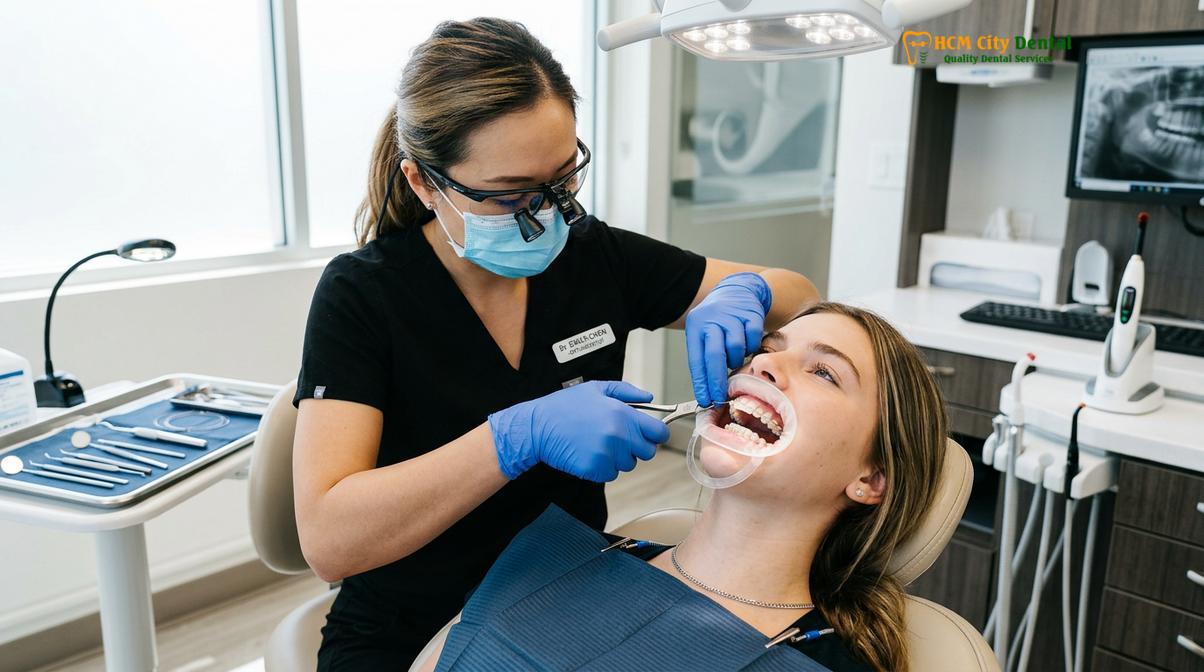
For patients traveling for medical care, understanding the full scope of comprehensive dental care protocols is vital. A successful orthodontic outcome is not merely about achieving straight teeth; it involves establishing a functional, stable occlusion (bite) that harmonizes with the temporomandibular joint (TMJ) and the patient’s facial aesthetics. The initial consultation typically involves a thorough clinical examination, digital intraoral scanning, and radiographic imaging to create a precise “digital twin” of the patient’s craniofacial structure.
Detailed Breakdown: Braces in Vietnam Price by Material
The financial investment for orthodontics varies significantly based on the chosen appliance, ranging from economical traditional metal brackets to premium, highly aesthetic clear aligner systems.
The selection of an orthodontic appliance is a collaborative decision between the clinician and the patient, balancing biomechanical requirements, aesthetic preferences, and financial considerations. Dr. Nguyen Van Cuong emphasizes that while aesthetic appliances are highly sought after, the primary objective remains the predictable and safe resolution of the malocclusion.
Traditional Metal Braces (Stainless Steel)
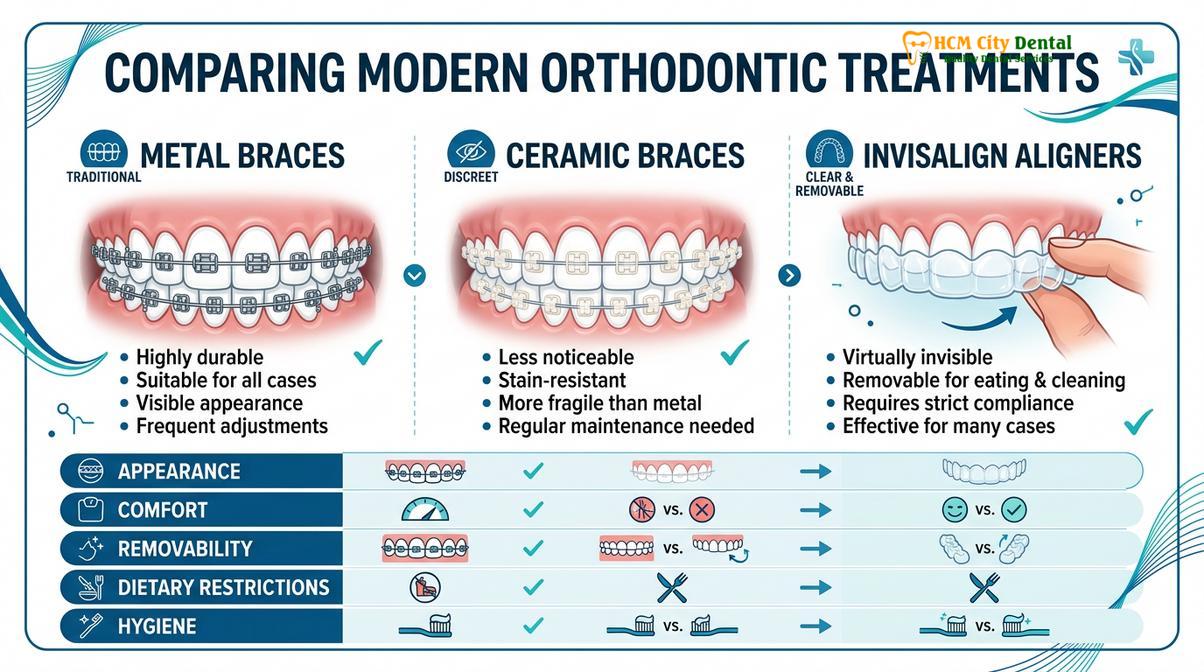
Traditional metal braces remain the gold standard for treating severe and complex malocclusions. Fabricated from high-grade medical stainless steel or titanium alloys, these brackets are bonded to the labial (front) surface of the teeth. They utilize a slot-and-wing design where an archwire is engaged and held in place by elastomeric ligatures or steel tie wires.
The primary advantage of metal brackets is their exceptional durability and the precise three-dimensional control they offer the clinician over tooth movement (tip, torque, and rotation). Because the materials are highly standardized and widely manufactured, metal braces represent the most cost-effective modality. In Vietnam, the fee for comprehensive bilateral treatment with metal braces generally ranges from $1,000 to $1,800.
Ceramic and Sapphire Braces
For patients seeking a less conspicuous fixed appliance, ceramic or monocrystalline sapphire brackets offer a highly aesthetic alternative. These brackets are engineered to blend seamlessly with the natural shade of the enamel. Modern polycrystalline alumina brackets resist staining and offer structural integrity that closely rivals stainless steel [2].
However, ceramic brackets are inherently more brittle than metal and can be prone to fracture under heavy occlusal forces. Furthermore, the friction between a metal archwire and a ceramic slot is higher than in an all-metal system, which can slightly alter the biomechanics of sliding tooth movement. Due to the higher cost of manufacturing these aesthetic biomaterials, ceramic braces in Vietnam typically range from $1,500 to $2,500.
Self-Ligating Bracket Systems
Self-ligating braces (such as the Damon™ System) eliminate the need for elastic or steel ligatures. Instead, they feature a built-in mechanical door or clip that secures the archwire within the bracket slot. This design can be either passive (allowing the wire to slide freely) or active (pressing the wire into the slot).
Clinically, self-ligating systems are purported to reduce friction, potentially allowing for more efficient initial alignment and leveling phases. They also facilitate easier oral hygiene maintenance since there are no elastomeric ties to harbor dental plaque. The advanced engineering of these brackets places their cost higher than conventional systems, generally ranging from $2,000 to $3,000.
Clear Aligner Therapy (Invisalign)
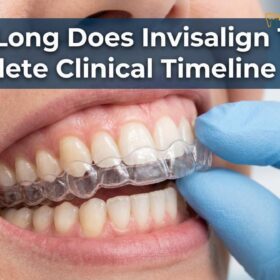
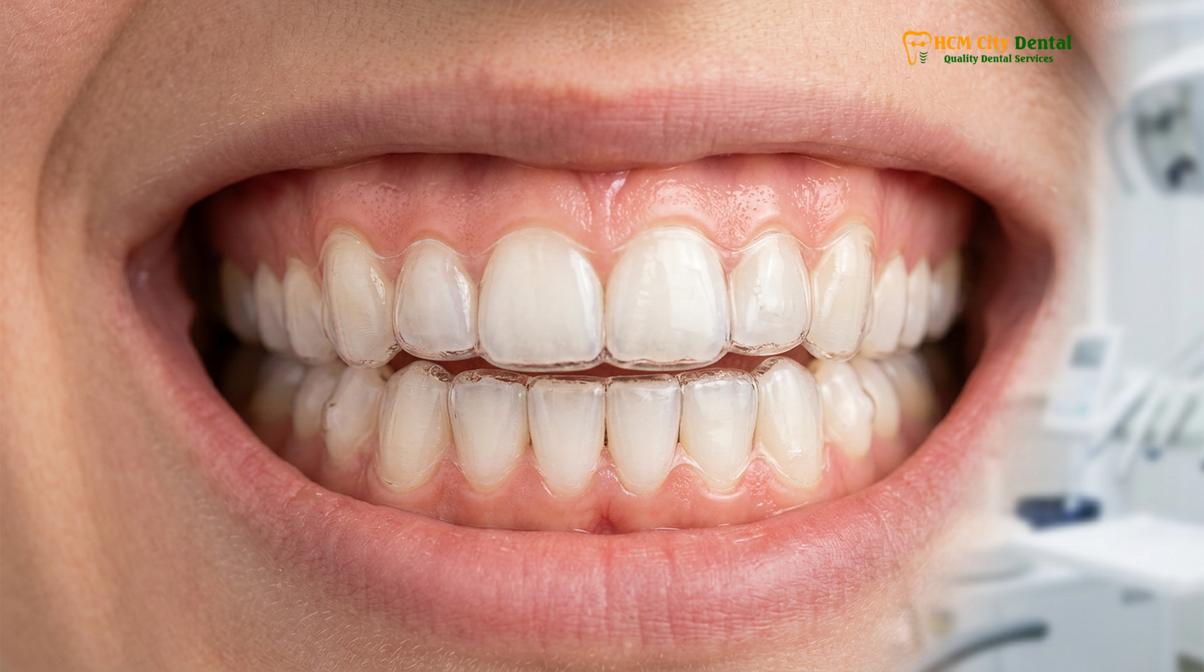
Clear aligners represent a paradigm shift in orthodontic biomechanics. Rather than pulling teeth via brackets and wires, aligners utilize a series of custom-fabricated, transparent thermoplastic trays to push teeth into their prescribed positions [3]. Systems like Invisalign rely on sophisticated CAD/CAM software to stage the tooth movements digitally before manufacturing the aligners.
Clear aligners are highly aesthetic, removable for eating and oral hygiene, and generally cause less soft tissue irritation. However, their efficacy is heavily dependent on strict patient compliance (wearing the trays for 20-22 hours per day). Complex movements, such as severe rotations or vertical extrusions, may require the bonding of composite “attachments” to the teeth to provide leverage points for the aligners. The cost of clear aligners in Vietnam is largely dictated by the laboratory fees of the proprietary manufacturer, typically ranging from $2,500 to $4,500.
| Orthodontic Modality | Aesthetic Level | Clinical Application | Estimated Price Range (USD) |
|---|---|---|---|
| Traditional Metal Braces | Low | All malocclusions, highly complex cases | $1,000 – $1,800 |
| Ceramic Braces | High | Mild to severe cases, aesthetic focus | $1,500 – $2,500 |
| Self-Ligating Braces | Medium/High | Efficient leveling, reduced friction | $2,000 – $3,000 |
| Clear Aligners (Invisalign) | Very High | Mild to moderate cases, high compliance required | $2,500 – $4,500 |
When comparing these costs to restorative and structural dental pricing, orthodontics represents a significant but highly predictable investment in long-term oral health and function.
Factors Influencing the Total Cost of Orthodontic Treatment
The final fee for orthodontic care is influenced by the severity of the malocclusion, the need for pre-orthodontic dental rehabilitation, and the potential requirement for adjunctive surgical procedures.
While the baseline price of the appliance forms the core of the financial estimate, comprehensive orthodontic care often involves multidisciplinary dental interventions. A transparent clinical assessment will outline all anticipated phases of treatment to prevent unexpected expenses.
Pre-Orthodontic Clinical Preparations
Orthodontic forces cannot be safely applied to teeth with active periodontal disease or unresolved carious lesions (cavities). Moving teeth through inflamed periodontal tissues can rapidly accelerate bone loss and lead to irreversible root resorption or tooth mobility. Therefore, a prerequisite for any orthodontic treatment is achieving optimal oral health.
Patients may require professional scaling and root planing, restorative fillings, or endodontic therapy prior to the bonding of brackets. These preparatory treatments are generally billed separately from the orthodontic contract. Consulting with specialized dental professionals in Ho Chi Minh City ensures that all foundational dental issues are addressed before initiating biomechanical tooth movement.
Clinical Warning: Initiating orthodontic treatment in the presence of active periodontitis is strictly contraindicated. The combination of bacterial inflammation and mechanical orthodontic forces can lead to rapid and severe alveolar bone destruction, potentially resulting in tooth loss.
Case Complexity and Malocclusion Severity
The duration and complexity of the treatment directly impact the overall cost. A simple Class I malocclusion with minor anterior crowding may be resolved in 6 to 9 months using a limited number of aligners or a short course of fixed braces. Conversely, a severe Class II or Class III skeletal discrepancy, deep bite, or open bite may require 24 to 36 months of active treatment.
Complex cases often necessitate adjunctive appliances to achieve specific biomechanical goals. For instance, Temporary Anchorage Devices (TADs)—small titanium mini-screws temporarily placed into the jawbone—may be required to provide absolute anchorage for moving specific segments of teeth without unwanted reciprocal movement. The surgical placement of TADs, or the use of palatal expanders and functional appliances, will add to the total treatment fee.
Strategic Extractions
In cases of severe dental crowding where the dental arches cannot accommodate the full complement of teeth, strategic extractions may be clinically indicated. The removal of premolars is a common protocol to create the necessary space to retract protruding anterior teeth and achieve a harmonious facial profile. Additionally, the prophylactic extraction of impacted third molars (wisdom teeth) is often recommended to prevent them from disrupting the final orthodontic alignment. Surgical extractions require specialized oral surgery protocols and represent an additional cost factor.
The Clinical Workflow for Orthodontic Patients in Ho Chi Minh City
The orthodontic journey follows a structured clinical pathway, beginning with comprehensive digital diagnostics, progressing through active biomechanical adjustment, and concluding with strict retention protocols.
For international patients and expatriates, understanding the timeline and required clinical visits is crucial for structuring a medical travel itinerary. Orthodontics is not a single-event procedure; it is a progressive therapy that requires ongoing professional supervision.
Phase 1: Diagnostic Records and Treatment Planning
The foundation of successful orthodontics is accurate diagnosis. During the initial consultation, the clinician will gather comprehensive records. This includes extraoral and intraoral photography to assess facial symmetry and soft tissue profiles. A panoramic radiograph evaluates the overall health of the dentition and surrounding bone, while a lateral cephalometric radiograph allows the orthodontist to measure the precise angles and relationships of the jaws and teeth.
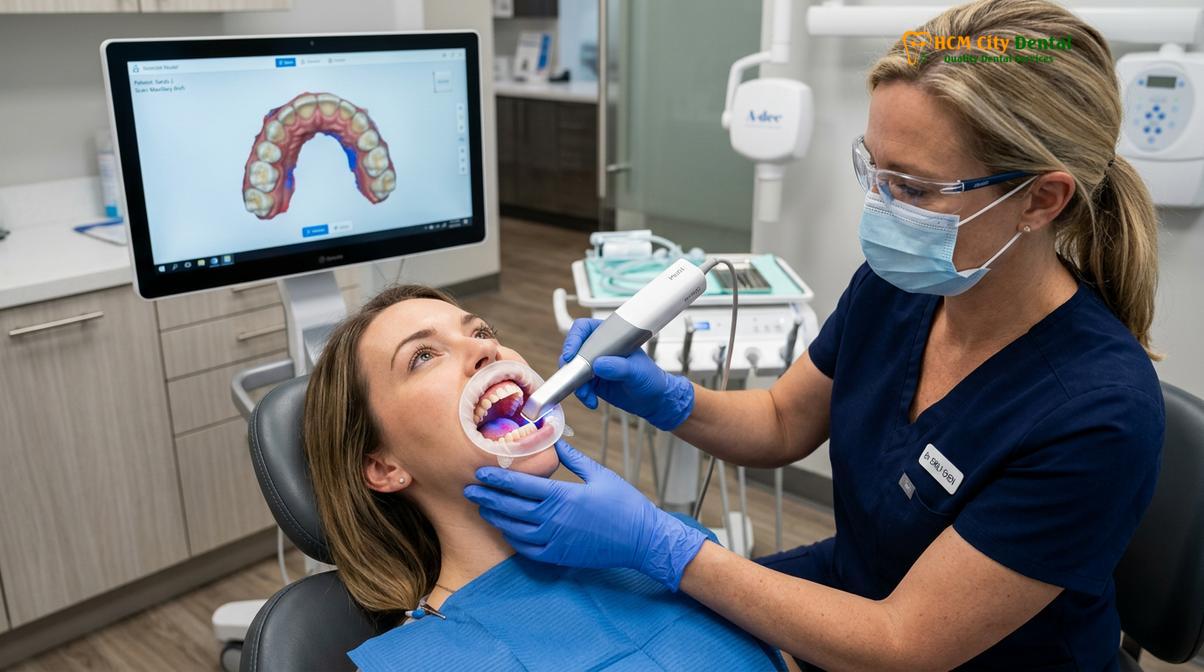
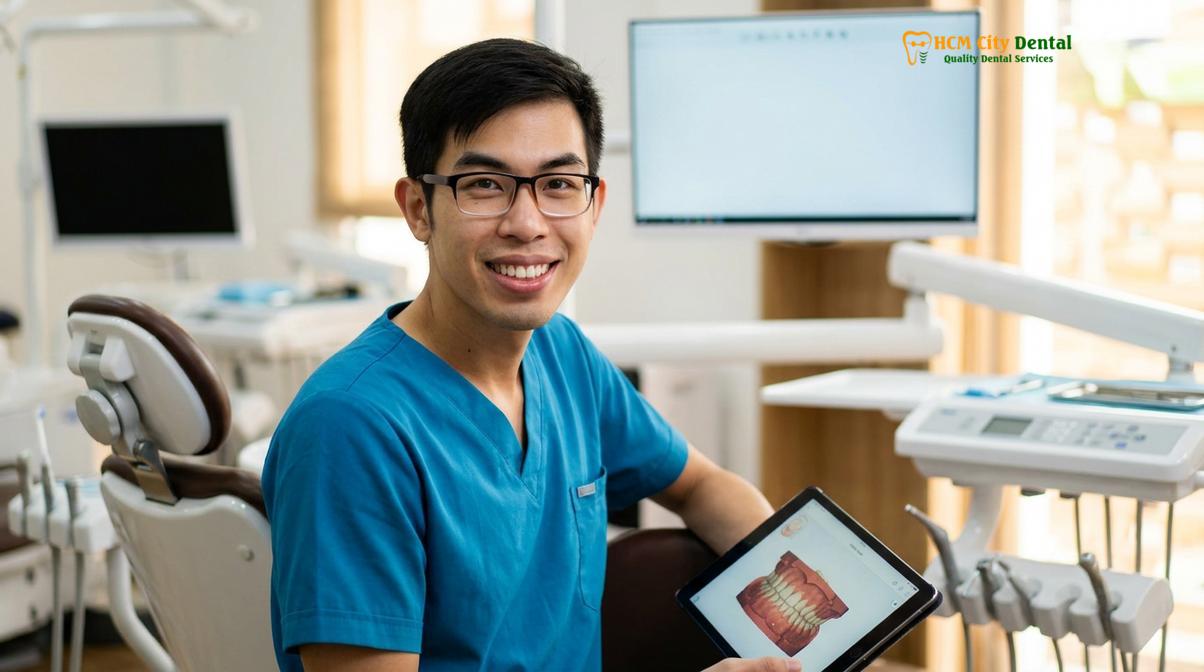
Intraoral 3D scanners have largely replaced traditional messy alginate impressions. These digital scans create a highly accurate virtual model of the teeth, which is used to simulate treatment outcomes and, in the case of clear aligners, manufacture the custom trays. Dr. Cuong utilizes these digital twins to meticulously plan the vectors of force required for each individual tooth.
Phase 2: Appliance Delivery and Bonding
Once the treatment plan is finalized and accepted, the active phase begins. For fixed braces, the teeth are isolated, cleaned, and etched with a mild acid to create microscopic porosities in the enamel. A specialized orthodontic adhesive is then used to bond the brackets precisely to the center of each clinical crown. The initial archwire—typically a highly flexible Nickel-Titanium (NiTi) wire—is engaged into the brackets. NiTi wires possess shape-memory properties; they are deformed when tied into crowded teeth and slowly return to their original arch form, exerting gentle, continuous forces to initiate tooth movement.
Clinical Case Review: An expatriate patient presented to HCMC Dental Clinic in Ho Chi Minh City with severe maxillary crowding and a narrow dental arch. Following a comprehensive cephalometric analysis, the clinical team opted for a self-ligating bracket system combined with a non-extraction expansion protocol. Over a 20-month period, the patient attended routine adjustments every 6 weeks. The advanced biomechanics of the self-ligating system allowed for efficient arch development, resulting in a broad, aesthetic smile and a stable Class I occlusion, all managed seamlessly within the patient’s local residency timeline.
Phase 3: Active Adjustments and Biomechanics
Throughout the treatment, patients must return to the clinic periodically—usually every 4 to 8 weeks. During these visits, the clinician assesses the progress of tooth movement and makes necessary adjustments. This often involves progressing to thicker, stiffer archwires (such as stainless steel or beta-titanium) to achieve root torque, close extraction spaces, and finalize the occlusion.
For patients undergoing clear aligner therapy, these visits are used to monitor the tracking of the teeth within the trays, perform interproximal reduction (IPR) if space is needed, and deliver the next series of aligners. This structured approach is highly effective for patients of all ages, including pediatric orthodontic interventions, where growth modification can be integrated into the treatment plan.
Managing Discomfort: Clinical Realities of Orthodontic Movement
Orthodontic tooth movement inherently involves a mild, transient inflammatory response, which patients perceive as pressure or soreness, typically peaking within the first few days after an adjustment.
A primary concern for many prospective patients revolves around pain perception. Questions such as does it hurt when you get braces are common. The actual procedure of bonding the brackets to the teeth is completely non-invasive and painless; no anesthetic is required. However, once the archwire is engaged and begins to exert force, the biological response begins.
So, does getting braces hurt in the days following the appointment? Patients typically experience a dull ache or generalized soreness in the teeth and jaws. This is a normal physiological response indicating that the periodontal ligament is remodeling and the teeth are beginning to move [4]. When patients ask how long do braces hurt, clinicians generally advise that this initial discomfort peaks at 24 to 48 hours and gradually subsides over 3 to 5 days.
“The perception of orthodontic pain is highly subjective and correlates directly with the initial inflammatory cascade within the periodontal ligament. Prophylactic and responsive management using non-steroidal anti-inflammatory drugs (NSAIDs) remains the most effective pharmacological intervention during the acute phase of archwire activation.”
To address how to make braces not hurt, clinicians recommend a multi-faceted approach. Over-the-counter analgesics, such as Ibuprofen or Acetaminophen, are highly effective if taken as directed. Adhering to a soft-food diet during the first few days minimizes the mechanical stress on the tender teeth. Additionally, the brackets and wires can initially cause friction against the buccal mucosa (the inside of the cheeks and lips), leading to small ulcerations. Orthodontic relief wax can be applied directly over the offending brackets to create a smooth barrier while the oral tissues adapt.
Patients considering alternative modalities often wonder, does invisalign hurt more than braces? Generally, clear aligners are reported to cause less soft tissue irritation because they lack sharp metal components. However, the teeth will still experience pressure and soreness each time a new, tighter aligner tray is inserted. The biological mechanism of moving the tooth through the bone is identical, regardless of the appliance used, so some degree of transient discomfort is unavoidable and clinically necessary for progress. For a deeper understanding of this process, patients can review detailed orthodontic pain management timelines.
Orthodontic Retention: Safeguarding the Investment
The removal of orthodontic appliances marks the end of active movement but the beginning of the critical retention phase, which is biologically necessary to prevent teeth from relapsing to their original positions.
Once the desired occlusion and aesthetic alignment are achieved, the active appliances are removed (debonded). However, the alveolar bone surrounding the newly moved teeth is not yet fully mineralized, and the gingival and periodontal fibers remain stretched. These tissues possess an elastic memory and will exert forces that attempt to pull the teeth back toward their pre-treatment positions—a phenomenon known as orthodontic relapse [5].
To counteract this, strict adherence to a retention protocol is mandatory. Retainers are custom-made devices designed to hold the teeth in their new positions while the surrounding bone and soft tissues reorganize and stabilize.
- Removable Essix Retainers: These are clear, thermoplastic trays similar in appearance to Invisalign aligners. They are highly aesthetic and typically worn full-time for the first few months, then transitioned to nighttime-only wear.
- Removable Hawley Retainers: Constructed from an acrylic palate and a metal wire that wraps around the anterior teeth. They are highly durable and allow for minor adjustments if slight settling of the bite is required.
- Fixed Lingual Retainers: A custom-adapted braided wire bonded to the lingual (tongue-facing) surfaces of the anterior teeth, usually from canine to canine. This provides continuous, compliance-free retention but requires diligent oral hygiene to prevent calculus buildup around the wire.
Clinicians generally recommend a combination of fixed and removable retainers to ensure maximum stability. The cost of the initial set of retainers is typically included in the comprehensive braces in Vietnam price, though replacement retainers due to loss or wear will incur additional fees.
When to See a Doctor for Orthodontic Evaluation
Orthodontic evaluations are not solely for aesthetic improvements; they are critical for diagnosing functional discrepancies that can impact long-term oral health. The American Association of Orthodontists recommends that children receive their first orthodontic screening by age 7. At this developmental stage, the clinician can assess the transverse width of the jaws, the eruption pattern of permanent teeth, and identify any skeletal asymmetries that may benefit from early interceptive treatment (Phase I orthodontics).
For adolescents and adults, a consultation is highly recommended if any of the following clinical signs are present:
- Severe Crowding or Spacing: Difficulty in flossing or maintaining oral hygiene due to overlapping teeth, which increases the risk of caries and periodontal disease.
- Traumatic Occlusion: Teeth that strike each other abnormally during closure, leading to accelerated enamel wear, chipping, or localized gingival recession.
- Crossbites: When the upper teeth bite inside the lower teeth, which can cause functional shifts of the mandible and asymmetric jaw growth.
- Protrusive Anterior Teeth: “Buck teeth” that are at a higher risk of trauma during sports or falls, and often prevent competent lip closure.
- Temporomandibular Joint (TMJ) Dysfunction: Chronic jaw pain, clicking, or difficulty chewing that may be exacerbated by a misaligned bite.
A comprehensive evaluation at a facility like HCMC Dental Clinic will provide a clear diagnostic picture. The clinical team will discuss the appropriate modalities, expected timelines, and provide a transparent breakdown of the treatment costs, ensuring patients can make informed decisions regarding their oral healthcare investment.
Frequently Asked Questions
How much do traditional metal braces cost in Vietnam?
Traditional metal braces in Vietnam typically cost between $1,000 and $1,800 for a complete bilateral treatment. This fee generally encompasses the diagnostic records, the full set of brackets and archwires, and routine clinical adjustments throughout the active phase. Complex cases requiring adjunctive appliances or extended treatment times may fall toward the higher end of this spectrum.
Are clear aligners like Invisalign available and affordable in Vietnam?
Yes, comprehensive clear aligner therapy is widely available in Vietnam, typically ranging from $2,500 to $4,500. Premier clinics utilize authentic proprietary materials and digital planning software, offering significant cost reductions compared to Western dental markets. The final price depends heavily on the number of aligner trays required to resolve the specific malocclusion.
How long does a standard orthodontic treatment take?
A standard orthodontic treatment typically requires 18 to 24 months of active biomechanical adjustment. However, minor aesthetic corrections may conclude in 6 to 12 months, while complex malocclusions involving skeletal discrepancies can extend beyond two years. The duration is highly dependent on the biological response of the patient’s tissues and strict compliance with clinical instructions.
Will I need tooth extractions before getting braces?
Tooth extractions are not universally required but may be clinically indicated in cases of severe dental crowding or bimaxillary protrusion. An orthodontist will perform a cephalometric analysis to determine if creating space via extraction is necessary for optimal alignment. Modern orthodontic protocols prioritize non-extraction expansion techniques whenever biologically feasible.
How often do I need to visit the clinic for adjustments?
Patients with traditional fixed appliances typically require clinical adjustments every 4 to 6 weeks. Those utilizing clear aligner systems may have longer intervals between physical visits, often checking in every 8 to 12 weeks depending on the treatment protocol. These visits are critical for monitoring tooth movement, modifying force vectors, and ensuring the health of the periodontal tissues.
References
- American Journal of Orthodontics and Dentofacial Orthopedics. Biomechanics of tooth movement and alveolar bone remodeling. (2021).
- Journal of Clinical Orthodontics. Material properties and clinical efficacy of aesthetic ceramic brackets. (2020).
- International Journal of Dentistry. Comparative analysis of clear aligner therapy versus fixed appliances. (2022).
- Angle Orthodontist. Pain perception and management protocols during initial orthodontic alignment. (2019).
- European Journal of Orthodontics. Long-term stability and retention protocols following active orthodontic treatment. (2023).