The complete dental implant procedure typically takes between 3 to 9 months from the initial clinical consultation to the final crown placement. While the actual surgical insertion lasts only 30 to 90 minutes per implant, the jawbone requires several months of biological healing to fuse securely with the titanium post.
Clinical Summary:
The timeline for dental implants is fundamentally divided into active surgical intervention and passive biological healing. Single implant placement surgery is highly efficient, often completed in under an hour under local anesthesia. However, the critical osseointegration phase—where the titanium fixture fuses at a cellular level with the alveolar bone—dictates the overall duration, typically spanning three to six months. Advanced clinical protocols, such as immediate loading, can condense this timeline by providing temporary prosthetics on the same day for eligible candidates. Nevertheless, standard protocols prioritize long-term biomechanical stability over speed. Comprehensive 3D diagnostics, the necessity for adjunctive procedures like bone grafting, and patient-specific anatomical factors ultimately govern the individualized treatment schedule.
Key Takeaways:
- Initial surgical placement of a single dental implant generally takes 30 to 60 minutes in the chair.
- Osseointegration, the essential biological bone-healing phase, requires 3 to 6 months to complete.
- Adjunctive procedures such as bone grafting or sinus lifts can extend the total treatment timeline by several months.
- Immediate load implants offer same-day temporary teeth for qualifying clinical cases with optimal bone density.
- Strict adherence to post-operative care and oral hygiene significantly reduces the risk of delayed healing or complications.
Understanding the Stages of the Dental Implant Procedure
The dental implant journey consists of four primary phases: comprehensive clinical consultation, surgical placement of the titanium post, the biological healing period, and the final prosthetic restoration.
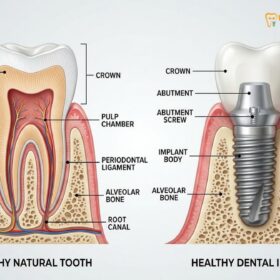
Embarking on the journey to restore missing teeth with Dental Implants requires a clear understanding of the phased approach utilized in modern implantology. Unlike conventional dental bridges or removable dentures, which sit on the surface of the gums, implants are surgically integrated into the human body. This integration necessitates a meticulously planned sequence of clinical events to ensure long-term functional and aesthetic success. The overall dental implant surgery duration is just a fraction of the total time required to achieve a fully restored smile.
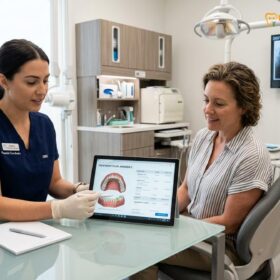
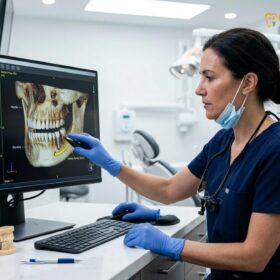
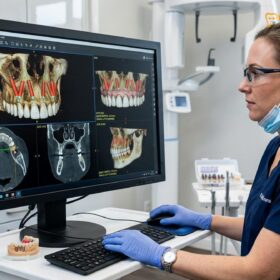
The first stage is the Comprehensive Clinical Consultation and Diagnostics. During this initial phase, the clinician evaluates the patient’s oral and systemic health to determine candidacy. A critical component of this stage is the acquisition of a Cone Beam Computed Tomography (CBCT) scan. This advanced 3D imaging allows the implantologist to assess the precise volume, density, and topography of the alveolar bone, as well as map out vital anatomical structures such as the inferior alveolar nerve in the lower jaw and the maxillary sinus cavities in the upper jaw[1]. Based on this data, a virtual surgical plan is formulated. If a patient visits a facility like HCMC Dental Clinic in Ho Chi Minh City, this diagnostic phase can often be completed in a single, thorough appointment.
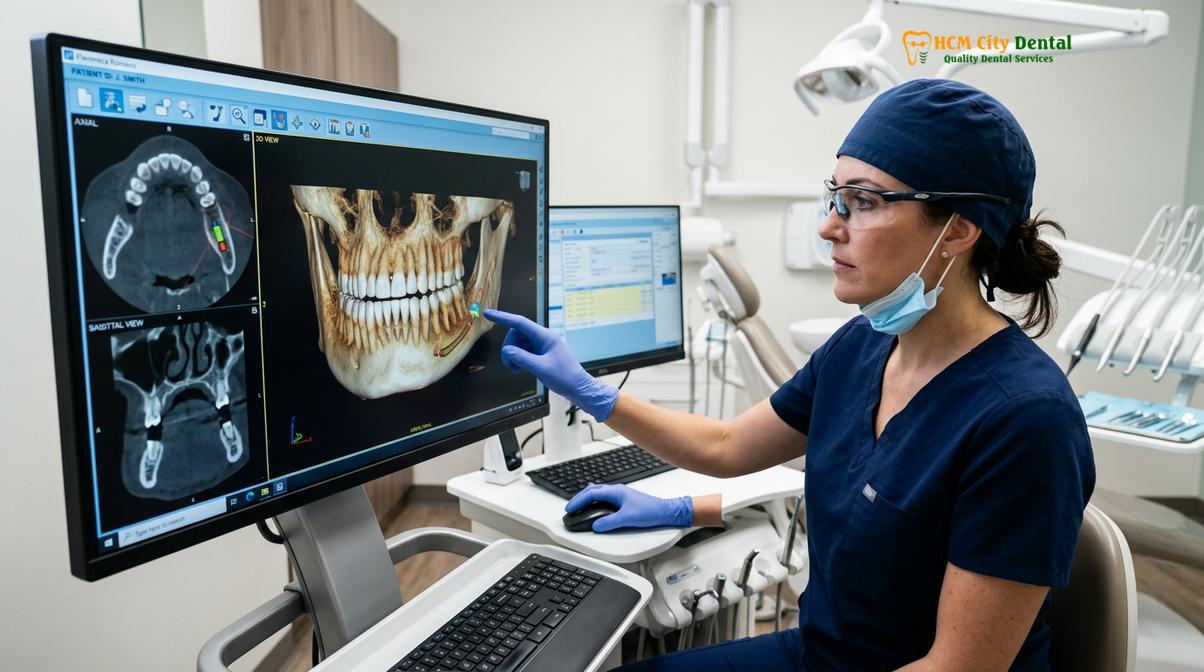
The second stage is the Surgical Placement Phase. Once the treatment plan is finalized, the patient is scheduled for surgery. Under local anesthesia (and optionally, conscious sedation), the surgeon makes a precise incision in the gingival tissue to expose the underlying bone. Using a sequence of specialized, calibrated drills, an osteotomy (a precisely sized hole) is created in the jawbone. The sterile titanium implant fixture is then threaded into this site with a specific torque value to achieve primary stability—the mechanical friction holding the implant tightly in the bone. Depending on the protocol, a healing abutment may be placed immediately (one-stage surgery), or the gum tissue may be sutured completely over the implant to protect it during healing (two-stage surgery).
The third stage is the Biological Healing Phase (Osseointegration). This is the most time-consuming portion of the implant journey. During this period, the patient is sent home to heal. Beneath the gums, a complex cellular process occurs where osteoblasts (bone-forming cells) migrate to the titanium surface and lay down new bone matrix, effectively locking the implant into the jaw. This passive healing phase requires patience, as rushing the process can lead to micromovement and subsequent implant failure.
The final stage is the Prosthetic Restoration Phase. Once osseointegration is confirmed via clinical testing and radiographs, the restorative phase begins. If the implant was buried under the gums (two-stage), a minor uncovery procedure is performed to attach a healing abutment, which shapes the gum tissue for a natural emergence profile. Following this, digital or traditional impressions are taken to capture the exact position of the implant. The dental laboratory then fabricates a custom-milled abutment and the final ceramic crown, which are subsequently secured to the implant, completing the treatment.
How Long Does the Surgery Itself Take? (Single vs. Multiple Implants)
A single uncomplicated implant surgery takes approximately 30 to 60 minutes, whereas multiple implants or full-arch restorations may require two to four hours in the surgical chair.
When patients inquire about the timeline, they are often primarily concerned with the time spent in the dental chair during the surgical intervention. The duration of the surgery is highly variable and depends entirely on the complexity of the clinical case, the number of implants being placed, and whether simultaneous adjunctive procedures (like extractions or minor bone grafting) are required.
For a Single Tooth Implant in a site with abundant, healthy bone, the procedure is remarkably swift. After the administration of local anesthesia has taken full effect, the actual surgical process—from the initial incision to the final suture—typically takes between 30 to 45 minutes. The preparation of the sterile field, patient positioning, and post-operative instructions may add another 30 minutes to the appointment. Therefore, patients can generally expect to be at the clinic for about an hour to an hour and a half for a single implant placement. The efficiency of this procedure minimizes surgical trauma, which in turn reduces post-operative swelling and discomfort[2].
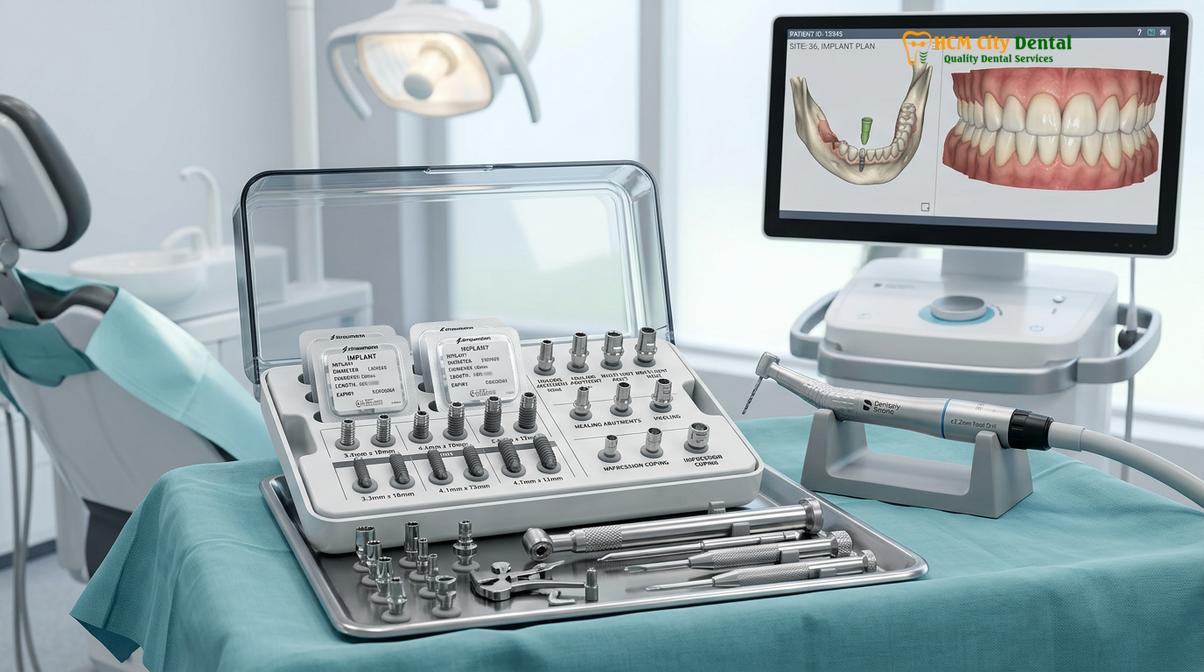
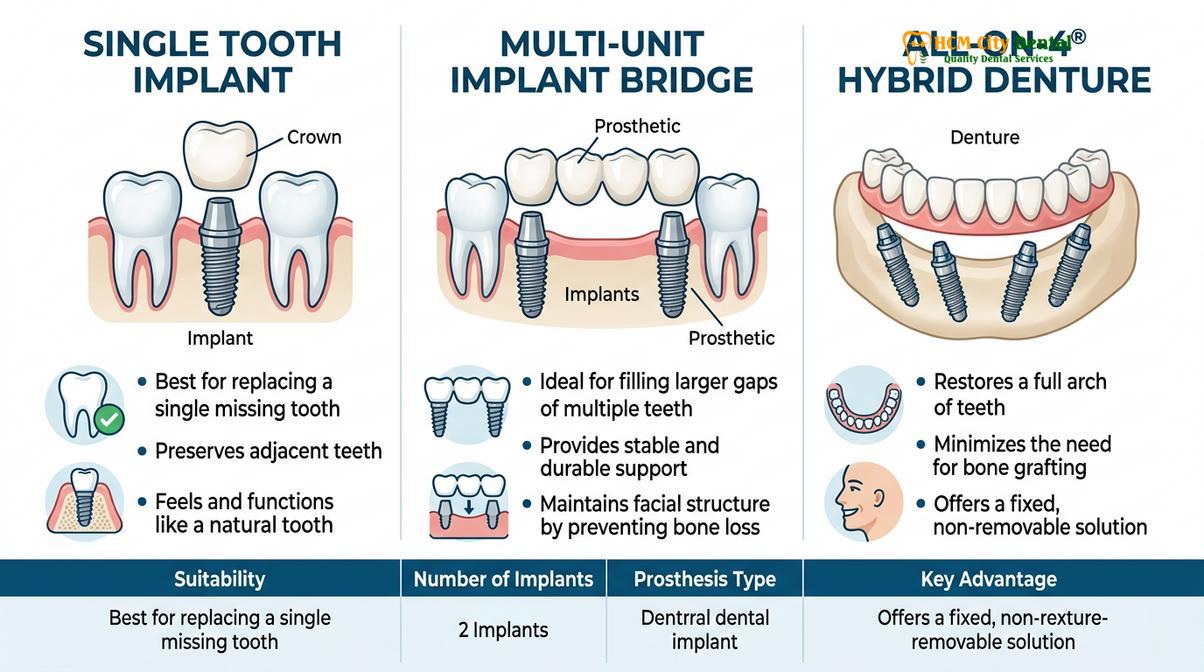
Conversely, the timeline shifts significantly when addressing Multiple Implants or Full-Arch Restorations. If a patient requires three or four implants to support a multi-unit bridge, the surgery may take 90 minutes to two hours. For comprehensive full-arch rehabilitations, such as the All-on-4 or All-on-6 protocols, the surgical phase is much more extensive. These procedures often involve the extraction of failing teeth, the leveling of the alveolar ridge (bone reduction) to create a flat foundation, the strategic placement of four to six implants at specific angles, and the immediate attachment of a provisional acrylic prosthesis. A full-arch surgery can take anywhere from two to four hours per arch.
“The surgical phase of implantology is an exercise in precision, not a race against the clock. While a single implant can be placed swiftly, our primary focus is always on achieving optimal 3D positioning and primary stability, which are the cornerstones of long-term success.”
— Dr. Nguyen Van Cuong, Lead Implantologist
It is also important to understand the concept of the same day dental implant timeline. In specific, highly favorable clinical scenarios, a technique known as “immediate loading” or “teeth in a day” can be employed. In this protocol, the surgeon places the implant and immediately attaches a temporary crown or bridge during the same appointment. While this provides instant aesthetic gratification, it is crucial to note that the underlying biological healing process remains unchanged. The patient leaves the clinic with a tooth, but they must adhere to a strict soft-food diet for several months to avoid disrupting the integrating implant.
For patients exploring options for replacing several missing teeth, understanding the workflow for multiple dental implants is essential, as the surgical duration and the restorative complexity increase proportionally with the number of fixtures required.
The Healing Phase: Osseointegration Timeline
Osseointegration is a biological necessity that takes roughly three to four months for the lower jaw and four to six months for the upper jaw due to differing bone densities.
The most significant variable in the overall implant timeline is the biological healing phase known as osseointegration. Coined by Professor Per-Ingvar Brånemark in the 1950s, osseointegration is defined as the direct structural and functional connection between living bone and the surface of a load-bearing artificial implant. This is not a process that can be rushed by the surgeon; it is dictated entirely by human cellular biology.
The implant healing process time varies depending on the anatomical location of the implant. The human jawbone is not uniform in its density. The mandible (lower jaw) is primarily composed of dense, thick cortical bone. Because of this robust structure, implants placed in the lower jaw typically achieve osseointegration faster, usually within 3 to 4 months. In contrast, the maxilla (upper jaw) consists largely of softer, more porous trabecular (spongy) bone. Implants in the upper jaw require a longer period to achieve the same level of cellular fusion, generally taking 4 to 6 months[3].
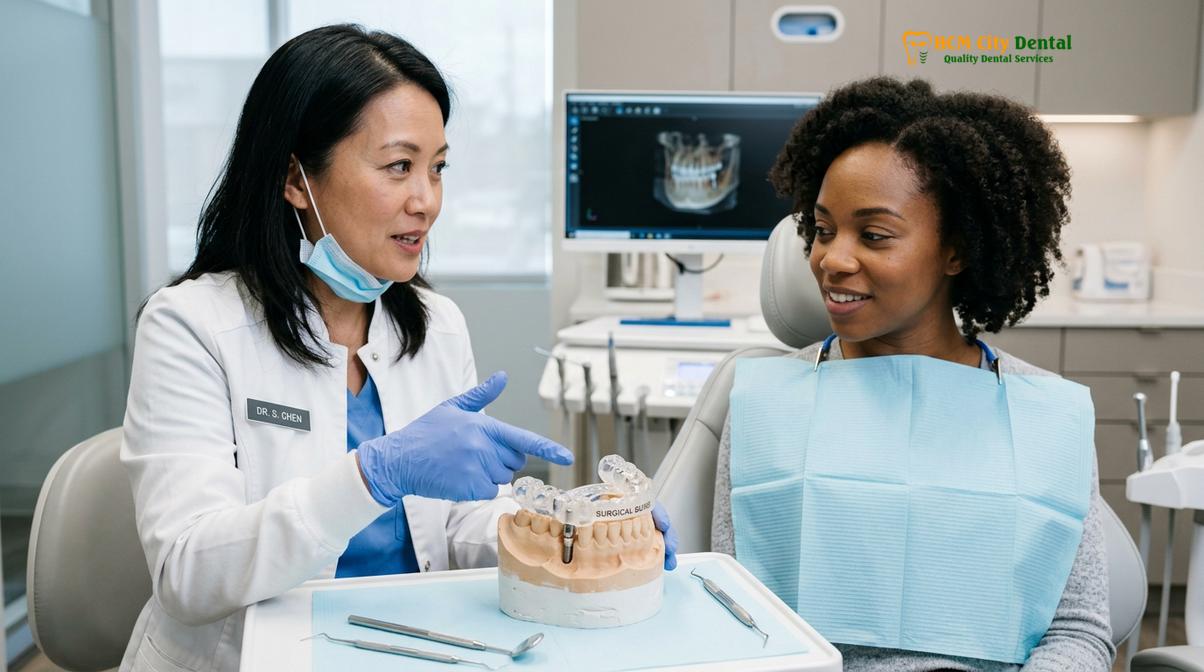
To provide a clear overview of expected healing timelines based on clinical scenarios, consider the following reference table:
| Clinical Scenario | Location | Estimated Osseointegration Time | Clinical Rationale |
|---|---|---|---|
| Standard Placement (No Grafting) | Lower Jaw (Mandible) | 3 to 4 Months | High density of cortical bone facilitates rapid cellular fusion. |
| Standard Placement (No Grafting) | Upper Jaw (Maxilla) | 4 to 6 Months | Porous trabecular bone requires more time for structural integration. |
| Placement with Minor Bone Grafting | Either Jaw | 5 to 7 Months | Simultaneous grafting requires additional time for the graft material to vascularize and turn into host bone. |
| Extensive Grafting / Sinus Lift (Staged) | Upper Jaw | 8 to 12+ Months Total | Graft must heal for 4-6 months *before* implant placement, followed by another 4-6 months of implant integration. |
During this passive healing phase, patients typically experience no pain or discomfort from the implant site itself. The titanium fixture rests quietly beneath or flush with the gum line. However, the patient must be diligent in maintaining excellent oral hygiene and avoiding excessive chewing forces on the area if a temporary prosthesis is in place. Premature loading or micromovement exceeding 150 micrometers can disrupt the delicate fibrin network forming around the implant, leading to fibrous encapsulation (scar tissue formation) instead of true bone integration, which ultimately results in implant failure.
Restoration Phase: Fabricating and Fitting the Permanent Crown
Once the implant has fully integrated, fabricating and fitting the custom permanent crown or bridge typically takes two to three weeks, involving digital impressions and laboratory crafting.
The final phase of the implant journey is the restorative phase, where the functional and aesthetic goals of the treatment are fully realized. After the designated healing period has elapsed, the patient returns to the clinic for an integration check. The clinician will assess the implant’s stability, often using a specialized device that measures the implant’s resonance frequency (ISQ value) to objectively confirm that osseointegration is complete and the fixture is ready to bear the heavy forces of mastication.
If a two-stage surgical protocol was utilized, a minor procedure is performed under local anesthesia to uncover the implant. A small incision is made in the gum tissue, the cover screw is removed, and a healing abutment (a small metal collar) is attached. This healing abutment protrudes through the gums and guides the soft tissue to heal in a natural, scalloped contour around the future crown. This soft tissue maturation typically takes about two weeks.
Clinical Case Review: Restorative Workflow
A 45-year-old patient visited HCMC Dental Clinic in Ho Chi Minh City for the restoration of a fully integrated implant in the upper right premolar region. Following the soft tissue maturation phase, the clinical team utilized an intraoral scanner to capture highly accurate 3D digital impressions of the implant position and surrounding dentition. These digital files were transmitted instantly to the in-house laboratory. Within 10 days, a custom-milled zirconia abutment and a highly aesthetic layered ceramic crown were fabricated. The final delivery appointment took only 45 minutes, resulting in a seamless integration with the patient’s natural smile.
Once the gums are optimally shaped, the definitive impression is taken. Modern clinics increasingly rely on digital intraoral scanners rather than traditional messy impression pastes. A scan body is attached to the implant, and the digital wand captures the exact 3D geometry of the site. The dental laboratory uses this data to design and mill the final components.
The fabrication process for the permanent crown, bridge, or denture generally takes between one to three weeks, depending on the complexity of the prosthesis and the laboratory’s workflow. When the final restoration is ready, the patient returns for the delivery appointment. The clinician will attach the permanent abutment, try in the crown, verify the interproximal contacts (how it touches neighboring teeth), and meticulously adjust the occlusion (the bite) to ensure forces are distributed evenly. Once perfected, the crown is either cemented onto the abutment or, more commonly in modern practice, screw-retained for easier future maintenance. Understanding the dental implant cost considerations often involves breaking down these distinct surgical and restorative phases.
Factors That Can Speed Up or Delay Your Implant Journey
Your overall treatment timeline is heavily influenced by your jawbone density, the necessity for preliminary bone grafting, systemic health conditions, and adherence to post-operative care protocols.
While standard timelines provide a helpful baseline, the reality is that every patient’s biology is unique. Several critical factors can either streamline the process or necessitate significant extensions to the treatment duration. Understanding these variables helps manage expectations regarding the HCMC dental implant time.
1. Bone Volume and Density: The most common reason for a delayed implant timeline is insufficient jawbone. When a tooth is lost, the surrounding alveolar bone begins to resorb (shrink) due to a lack of stimulation. If a patient has been missing a tooth for years, they will likely require a bone grafting procedure to rebuild the foundation before an implant can be placed. A minor socket preservation graft done at the time of extraction might only add a few months to the timeline. However, major ridge augmentation or a lateral window sinus lift can add 6 to 9 months of healing time before the implant surgery can even be attempted.
2. Systemic Health and Lifestyle Factors: A patient’s overall health plays a pivotal role in healing speed. Conditions that impair blood flow or immune response, such as uncontrolled diabetes or autoimmune disorders, can slow down osseointegration and increase the risk of complications. Smoking is perhaps the most detrimental lifestyle factor. Nicotine causes vasoconstriction, severely limiting the blood supply to the surgical site, which starves the healing bone of oxygen and essential nutrients. Smokers experience a significantly higher rate of delayed healing and outright implant failure compared to non-smokers[4].
Clinical Warning: Smoking and Periodontal Disease
Patients who smoke or use tobacco products must commit to a strict cessation protocol—typically stopping at least two weeks prior to surgery and continuing for a minimum of eight weeks post-operatively. Furthermore, any active gum disease must be completely eradicated before implant placement. Placing an implant into an environment with active periodontal pathogens drastically increases the risk of peri-implantitis and subsequent implant loss.
3. Presence of Active Infection: If an implant is replacing a tooth that was extracted due to a severe endodontic infection or advanced periodontitis, the surgeon may opt for a delayed placement protocol. The site must be thoroughly debrided and allowed to heal completely—often for 2 to 3 months—to ensure no residual bacteria compromise the sterile titanium implant. Patients with a history of gum issues should review the protocols for managing active periodontal disease prior to considering implant therapy.
4. The Surgeon’s Expertise and Technology: The utilization of advanced technology can streamline the process. Computer-guided surgery, utilizing 3D printed surgical stents, allows for flapless surgery in suitable cases. This minimally invasive approach reduces surgical trauma, minimizes post-operative swelling, and can slightly accelerate the initial soft tissue healing phase, allowing patients to return to their normal routines faster.
When to See a Doctor During Your Implant Recovery
While the dental implant procedure boasts a remarkably high success rate, it is a surgical intervention, and patients must remain vigilant during the recovery and osseointegration phases. Recognizing the difference between normal post-operative symptoms and signs of potential complications is crucial for long-term success.
In the first few days following surgery, mild to moderate swelling, minor bruising, and localized discomfort are entirely normal and expected. These symptoms typically peak around 48 to 72 hours post-surgery and gradually subside. However, if you experience any of the following red flag symptoms, you should contact your implantologist immediately:
- Severe, Throbbing Pain: Pain that worsens after the third or fourth day, or pain that is unresponsive to prescribed analgesic medications, may indicate an infection or nerve irritation.
- Prolonged Swelling or Purulent Exudate: Swelling that continues to expand after 72 hours, or the presence of pus (a white or yellow discharge) around the surgical site, is a clear sign of an active bacterial infection.
- Implant Mobility: If you feel the implant or the temporary crown shifting, clicking, or moving when you speak or eat, this is a critical warning sign. An implant must remain absolutely rigid to integrate properly.
- Paresthesia (Numbness): Persistent numbness, tingling, or a “pins and needles” sensation in your lips, chin, or tongue that lasts beyond the expected duration of the local anesthesia could indicate proximity to or compression of a nerve.
“Early intervention is the key to managing implant complications. If a patient suspects an issue, we prefer to evaluate them immediately. Many early-stage inflammatory conditions, such as peri-implant mucositis, are entirely reversible if caught and treated promptly before they progress to bone loss.”
— Dr. Nguyen Van Cuong, Lead Implantologist
Long-term maintenance is equally important. Even years after successful integration, implants can be susceptible to a condition called peri-implantitis, an inflammatory disease that destroys the surrounding bone[5]. Regular professional cleanings and adherence to peri-implantitis prevention protocols are mandatory to protect your investment. If you notice bleeding gums around your implant, bad breath, or deepening gum pockets, schedule a clinical evaluation without delay.

Frequently Asked Questions
Can I get implants placed in a single visit?
Yes, immediate load implants can be placed in a single visit if you have sufficient bone density and optimal oral health. However, while the titanium post and a temporary crown are placed on the same day, the biological osseointegration process still requires several months before the permanent, final crown can be safely attached to withstand full chewing forces. This protocol is highly case-specific and requires rigorous 3D diagnostic planning to ensure primary stability is achieved during the initial surgery.
How long after the implant placement can I eat solid foods?
You should stick to a soft food diet for the first 10 to 14 days following your implant surgery to protect the surgical site. After the initial soft tissue healing, you can gradually reintroduce firmer foods, but you must avoid chewing directly on the implant site with hard or crunchy foods until the final crown is placed and osseointegration is complete. Prematurely applying heavy masticatory forces to a healing implant can cause micromovements that disrupt bone fusion and lead to implant failure.
How many days do I need to stay in Vietnam for my dental implants?
For the initial surgical phase, international patients should plan to stay in Vietnam for 7 to 10 days to allow for the surgery and a crucial post-operative follow-up. You will then need to return 3 to 6 months later for a second trip lasting approximately 10 to 14 days to complete the final prosthetic restoration phase. This two-trip approach ensures that the biological healing process is respected and that the final restorations are fabricated with precision.
Does the dental implant procedure hurt?
The surgical placement of a dental implant is performed under local anesthesia, ensuring you feel no pain during the procedure itself. Post-operative discomfort is typically mild to moderate, peaking within the first 48 hours, and can usually be effectively managed with over-the-counter pain relievers and prescribed anti-inflammatory medications. Many patients report that the recovery from an implant placement is actually less painful than the recovery from a standard tooth extraction.
What happens if the implant fails to heal properly?
If an implant fails to integrate with the jawbone—a rare occurrence known as early failure—the mobile implant must be carefully removed by your clinician. The site is then cleaned, often grafted with new bone material, and allowed to heal for several months before a second attempt at implant placement can be safely considered. Implant failures are uncommon, but they highlight the importance of thorough diagnostics, strict adherence to post-operative care, and choosing an experienced surgical team.
References
- Journal of Oral Implantology. Clinical evaluation of osseointegration timelines in maxillary and mandibular arches. (2021).
- International Journal of Oral and Maxillofacial Surgery. Surgical duration and patient morbidity in single versus multiple implant placements. (2020).
- Clinical Implant Dentistry and Related Research. The impact of bone grafting and sinus floor elevation on overall treatment duration. (2019).
- Journal of Clinical Periodontology. Smoking and systemic health factors affecting dental implant survival rates. (2022).
- British Dental Journal. Diagnostic protocols for the early detection of peri-implant mucositis and peri-implantitis. (2018).