When choosing between dental implants vs dentures, the primary difference lies in structural integration. Implants fuse directly with the jawbone to replace the entire tooth root, offering permanent stability, whereas traditional dentures rest on the gums as removable prosthetics, providing a non-invasive but less stable functional replacement.
Clinical Summary:
The clinical decision between dental implants and traditional dentures represents a choice between structural restoration and surface-level cosmetic replacement. Dental implants utilize biocompatible titanium posts that undergo osseointegration, fusing with the alveolar bone to mimic natural tooth roots. This biological integration restores up to 90% of natural masticatory force, halts progressive bone resorption, and provides a permanent, fixed solution. Conversely, traditional removable dentures rely on mucosal support and suction. While they offer a faster, non-surgical method to replace missing dentition, they inevitably lead to reduced chewing efficiency, potential phonetic challenges, and accelerated jawbone atrophy due to the lack of internal mechanical stimulation. For patients experiencing edentulism, modern implantology—ranging from single-tooth replacements to full-arch fixed bridges—provides a superior standard of care for long-term oral health, facial profile preservation, and overall quality of life.
Key Takeaways:
- Bite Force: Implants restore nearly full chewing capacity, while dentures typically provide only 20-30% of natural bite force.
- Bone Health: Titanium implants actively stimulate the jawbone to prevent atrophy; dentures accelerate bone loss through surface pressure.
- Stability: Implants are permanently fixed in the mouth, eliminating the slipping, clicking, and friction associated with removable prosthetics.
- Maintenance: Implant restorations are brushed and flossed like natural teeth, whereas dentures require nightly removal and specialized soaking.
- Longevity: With proper clinical care, implants can last a lifetime, while dentures require relining or replacement every 5 to 8 years.
The loss of natural teeth initiates a cascade of physiological and biomechanical changes within the oral cavity. Historically, the standard of care for edentulism (tooth loss) was the fabrication of removable acrylic prosthetics. However, advancements in modern implantology have revolutionized restorative dentistry, offering patients solutions that not only replace the visible crown of the tooth but also the foundational root structure. Understanding the profound clinical differences between dental implants and traditional dentures is essential for making an informed decision about your long-term oral health.
This comprehensive clinical guide explores the biomechanical realities, functional outcomes, and physiological impacts of both treatment modalities, providing a detailed framework for patients evaluating their restorative options.
The Functional Gap: Chewing Efficiency and Bite Force
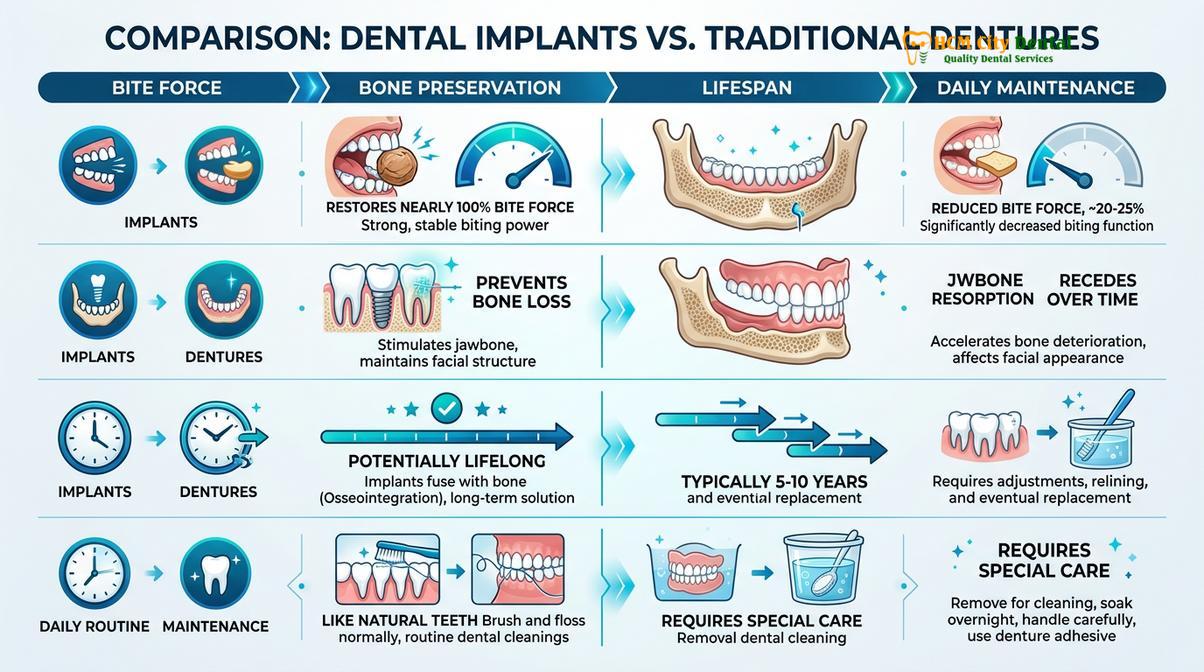
Dental implants restore up to 90% of natural bite force by anchoring into the jawbone, whereas traditional dentures typically deliver only 20% to 30% of original chewing capacity due to their reliance on mucosal support.
The primary function of the human dentition is mastication—the mechanical breakdown of food to facilitate digestion. The efficiency of this process is directly correlated to the stability of the teeth and the amount of occlusal (bite) force the jaw can exert. When evaluating the functional disparity between these two restorative options, the underlying biomechanics must be closely examined [1].
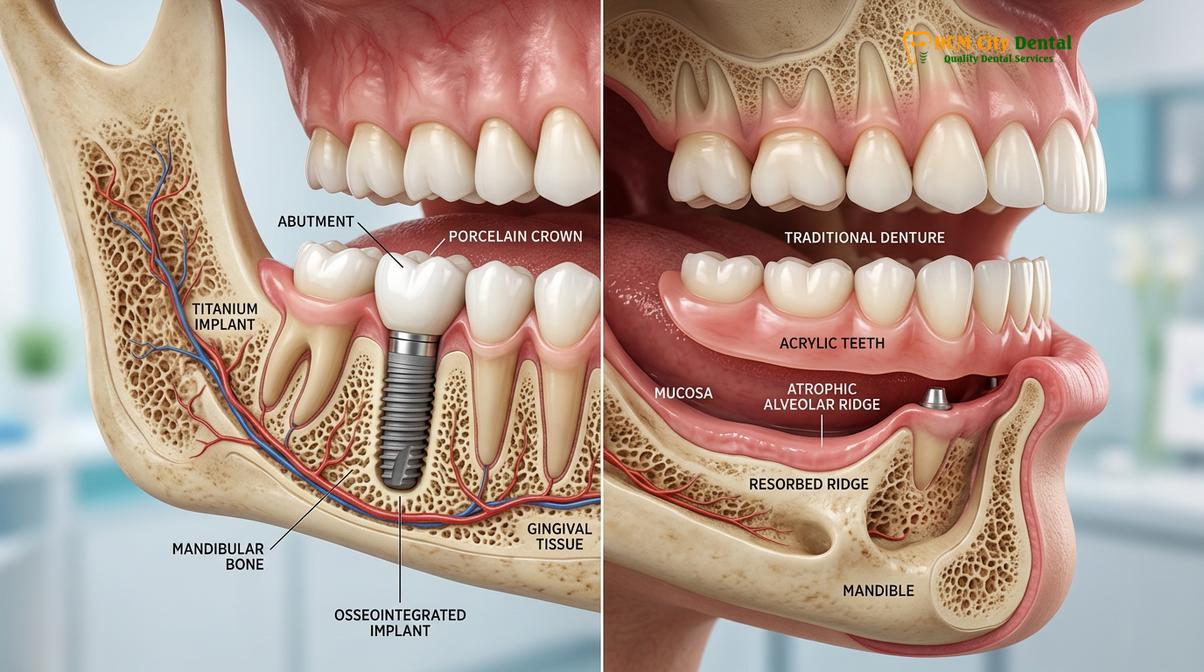
Natural teeth are anchored into the alveolar bone via the periodontal ligament, a specialized connective tissue that acts as a shock absorber. When a patient bites down, this ligament distributes the immense forces generated by the masseter muscles safely into the bone. Dental implants replicate this mechanism through a process called osseointegration. A biocompatible titanium screw is surgically placed into the jawbone. Over a period of several months, living bone cells (osteoblasts) grow directly onto the micro-roughened surface of the titanium, locking it permanently in place. This rigid, bone-anchored foundation allows implant-supported prosthetics to withstand occlusal forces nearly identical to those of natural teeth.
In stark contrast, traditional removable dentures are tissue-borne prosthetics. They rest entirely upon the delicate mucosal tissues (gums) overlying the residual alveolar ridge. Because the gums are not biologically designed to bear the heavy, repetitive loads of mastication, the brain subconsciously limits the contraction of the jaw muscles to prevent severe pain and tissue damage. Consequently, denture wearers experience a drastic reduction in bite force. Clinical studies indicate that while a healthy natural dentition can exert forces exceeding 200 pounds per square inch, a patient wearing conventional dentures may struggle to generate even 40 pounds of force [4].
This functional limitation profoundly impacts a patient’s diet and nutritional intake. Individuals relying on traditional dentures often find themselves unable to effectively chew fibrous vegetables, tough proteins, or crunchy fruits. The necessity to adopt a softer, highly processed diet can lead to systemic health issues, including gastrointestinal distress and nutritional deficiencies. For patients seeking true chewing power restoration, implant-supported solutions—whether single crowns, multi-unit bridges, or full-arch hybrids—are the only clinically viable method to return to a normal, unrestricted diet.
Comfort and Speech: Slippage vs. Rigid Stability
Implants eliminate the friction and movement associated with removable prosthetics, ensuring clear articulation and preventing the mucosal irritation commonly caused by shifting dentures during speech and mastication.
Beyond the mechanics of eating, the oral cavity plays a critical role in phonetics and daily comfort. The presence of a foreign prosthetic device in the mouth requires a period of neuromuscular adaptation. However, the degree of adaptation and the long-term comfort level differ vastly between fixed implants and removable dentures.
Traditional upper dentures rely on a combination of surface tension, saliva, and a precise peripheral seal across the palate (the roof of the mouth) to create suction. Lower dentures face an even greater challenge; they must balance on a much narrower ridge of bone while constantly competing with the dynamic movements of the tongue, cheeks, and lips. This inherent instability leads to a myriad of loose denture problems. Even with the use of messy chemical adhesives, conventional dentures are prone to micro-movements. This constant shifting creates friction against the underlying gum tissue, frequently resulting in painful ulcerations, sore spots, and a condition known as denture stomatitis (inflammation of the oral mucosa).
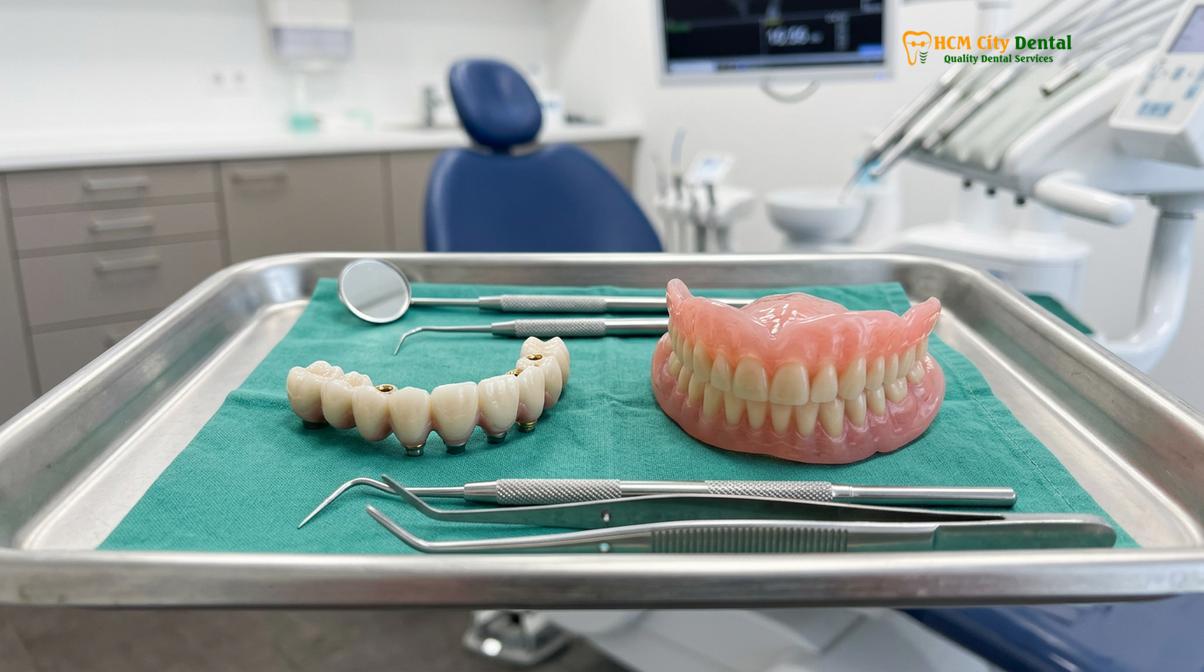
Furthermore, the bulky acrylic base required for traditional dentures significantly alters the internal architecture of the mouth. The coverage of the hard palate by an upper denture blunts tactile sensation and covers thousands of taste buds, diminishing the sensory experience of eating. Phonetically, the altered contours of the palate and the thickness of the prosthetic teeth can interfere with the tongue’s ability to articulate specific sounds, particularly fricatives and sibilants (such as “s,” “sh,” “f,” and “v” sounds). Patients often report a clicking noise during speech or a constant fear that the prosthetic may dislodge during social interactions.
“The psychological burden of an unstable prosthesis cannot be overstated. When we transition a patient from a removable denture to a fixed implant-supported bridge, the most immediate transformation we observe is not just in their bite, but in their absolute confidence to speak, laugh, and engage socially without hesitation.”
— Dr. Nguyen Van Cuong, Lead Implantologist
Dental implants completely circumvent these issues by providing rigid, bone-anchored stability. Because the prosthetic teeth are securely attached to the titanium posts, there is zero movement against the gum tissue, eliminating friction-induced sores. Moreover, implant-supported bridges do not require a bulky acrylic palate. The roof of the mouth remains completely uncovered, preserving natural taste sensation, thermal perception, and normal phonetic articulation. The prosthetic feels, functions, and occupies the same spatial volume as natural teeth, allowing patients to forget they even have a dental restoration.
Facial Profile Preservation: Preventing Alveolar Bone Loss
Because implants stimulate the jawbone through mechanical loading, they actively halt bone resorption, whereas traditional dentures accelerate tissue degradation by applying continuous surface pressure without internal root stimulation.
Perhaps the most critical, yet frequently misunderstood, distinction between these two treatments is their impact on the underlying skeletal structure of the face. The alveolar bone—the portion of the jaw that houses the tooth roots—is highly dependent on mechanical stimulation to maintain its volume and density. This biological principle, known as Wolff’s Law, dictates that bone remodels and strengthens in response to the physical stresses placed upon it.
When a natural tooth is extracted, the alveolar bone in that specific area no longer receives the tensile forces generated during chewing. Deprived of this essential stimulation, the body perceives the bone as redundant and initiates a process of resorption. Osteoclasts (bone-resorbing cells) begin to break down the bone matrix, reabsorbing the calcium and minerals into the bloodstream. This leads to rapid alveolar ridge shrinking, with the most significant volume loss occurring within the first twelve months following extraction [2].
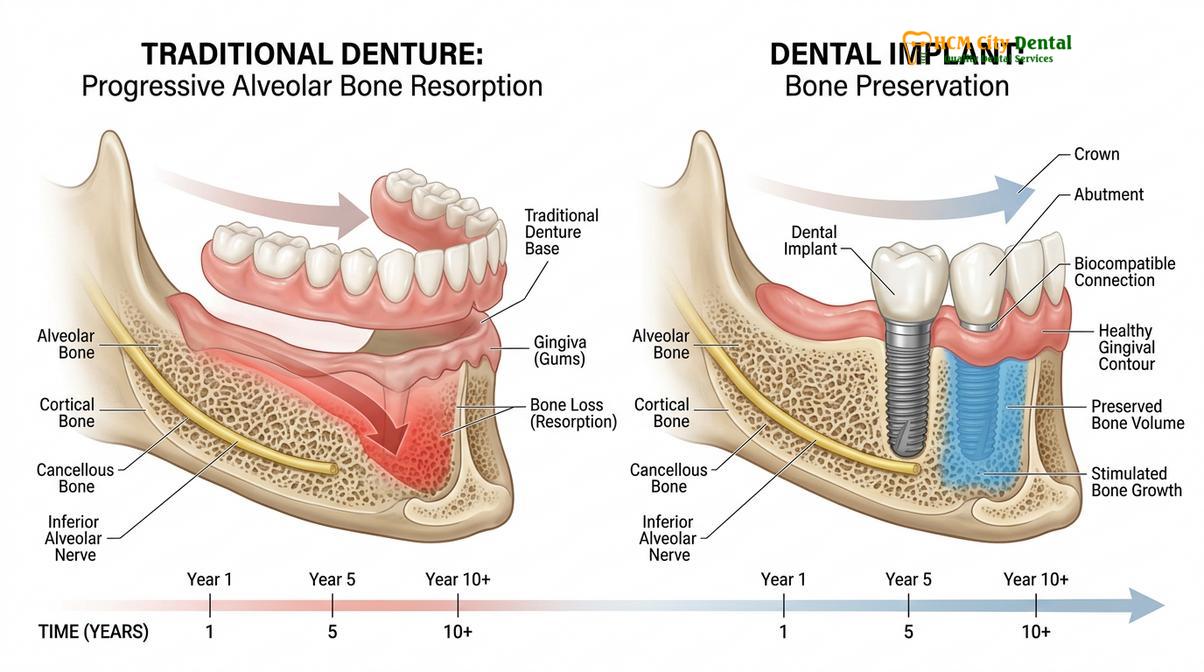
Traditional dentures do absolutely nothing to halt this physiological process. In fact, they exacerbate it. As the denture rests on the gums, the compressive forces of chewing are transferred directly onto the surface of the shrinking bone. This unnatural pressure restricts blood flow to the periosteum (the membrane covering the bone) and accelerates the rate of bone resorption. Over time, the jawbone becomes progressively flatter and narrower. This is why a denture that fits perfectly upon initial delivery will inevitably become loose and require clinical relining or complete replacement every few years.
Clinical Warning: Facial Collapse
Prolonged use of traditional removable dentures without implant support leads to severe, irreversible atrophy of the jawbone. As the vertical dimension of the face decreases, the chin rotates upward and forward, the lips thin and invert, and deep wrinkles form around the mouth—a condition clinically referred to as “facial collapse” or premature aging.
Dental implants are the only restorative treatment capable of preserving jawbone density. Because the titanium post acts as an artificial tooth root, it transmits the mechanical forces of mastication directly into the surrounding bone. This internal loading signals the body to continue sending nutrients to the area, maintaining the activity of osteoblasts (bone-building cells) and preserving the structural integrity of the jaw. By preventing bone loss, implants maintain the natural vertical dimension of the face, supporting the lips and cheeks, and preserving a youthful facial profile.
For patients who have already experienced significant bone loss due to long-term denture wear, advanced pre-prosthetic procedures such as bone grafting or sinus lifts may be required before implants can be placed. If you are considering the pros and cons of dental implants, the preservation of your facial skeleton should be a primary factor in your decision-making process.
Daily Maintenance and Lifestyle Convenience
Implant-supported restorations are maintained exactly like natural teeth with standard brushing and flossing, while removable dentures require specialized daily soaking, adhesive application, and periodic clinical relining.
The daily reality of living with a dental prosthesis is heavily dictated by its maintenance requirements. The hygiene protocols for implants versus dentures are fundamentally different, impacting not only oral health but also lifestyle convenience and long-term financial investment.
Traditional dentures demand a rigorous and somewhat tedious daily maintenance routine. Because the acrylic material is porous, it can harbor bacteria, plaque, and fungal organisms (such as Candida albicans) if not meticulously cleaned. Dentures must be removed after every meal to rinse away trapped food debris. At night, they must be taken out of the mouth to allow the mucosal tissues to rest and recover from the day’s compression. During this time, the dentures must be brushed with a specialized non-abrasive cleaner and soaked in an effervescent solution to prevent warping and bacterial colonization. Furthermore, the daily application and removal of dental adhesives add an ongoing recurring cost and inconvenience to the patient’s routine.
In contrast, fixed dental implants are designed to be a seamless integration into your life. Because they are permanently anchored, they are never removed. Patients care for implant-supported crowns and bridges exactly as they would their natural dentition: brushing twice a day with a soft-bristled toothbrush and non-abrasive toothpaste, and utilizing floss, interdental brushes, or water flossers to clean around the implant abutments. There is no need for soaking solutions, adhesives, or the embarrassment of removing teeth at night.
While implants are impervious to dental caries (cavities), the surrounding gum tissue must be kept healthy to prevent peri-implantitis—an inflammatory condition that can lead to bone loss around the implant [5]. Regular professional cleanings and clinical examinations remain essential.
| Clinical Feature | Dental Implants (Fixed) | Traditional Dentures (Removable) |
|---|---|---|
| Daily Cleaning | Brushing and flossing in the mouth | Removal, manual brushing, and overnight soaking |
| Adhesives Required | Never | Frequently needed for stability |
| Dietary Restrictions | None; can eat hard/sticky foods | Significant; soft diet recommended |
| Bone Preservation | Actively stimulates and preserves bone | Accelerates bone resorption |
| Expected Lifespan | Lifetime (with proper clinical care) | 5 to 8 years (requires relining/replacement) |
When evaluating the cost of dental implants, it is crucial to consider this long-term perspective. While the initial surgical investment for implants is higher, they eliminate the recurring costs of adhesives, specialized cleaners, and the inevitable need for prosthetic replacements and relines that accompany traditional dentures.
Making the Transition: Upgrading from Dentures to Implants
Patients suffering from unstable removable prosthetics can transition to implant-supported solutions through strategic bone grafting and advanced protocols like All-on-4, permanently securing their bite.
For many patients currently struggling with conventional removable prosthetics, the prospect of transitioning to a fixed solution can seem daunting. However, modern implant dentistry offers highly predictable workflows to upgrade failing dentition or unstable dentures into permanent, bone-anchored smiles.
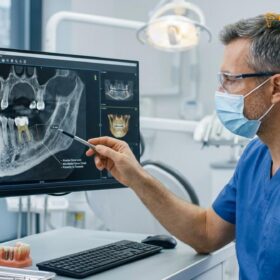
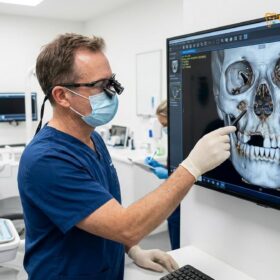
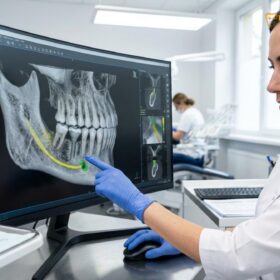
The transition begins with a comprehensive clinical evaluation. At HCMC Dental Clinic, this involves a 3D Cone Beam Computed Tomography (CBCT) scan. This advanced imaging technology allows the implantologist to assess the exact volume, density, and topography of the remaining alveolar bone in three dimensions. Based on this data, a customized surgical plan is developed. If the patient has experienced significant bone atrophy from years of denture wear, pre-prosthetic procedures such as particulate bone grafting or sinus augmentation may be performed to rebuild the necessary foundation.
Depending on the patient’s anatomical conditions and clinical goals, there are several pathways for a snap-on teeth upgrade or a fully fixed restoration:
- Implant-Supported Overdentures (Snap-On Dentures): This is a hybrid solution where 2 to 4 implants are placed in the jaw. The denture is modified with specialized attachments (such as Locator abutments) that “snap” onto the implants. While the prosthesis is still removable by the patient for cleaning, the implants provide exceptional stability, eliminating the need for adhesives and significantly improving bite force [3].
- All-on-4 / All-on-6 Fixed Bridges: For patients seeking the ultimate restoration, the All-on-4 dental implant protocol utilizes four to six strategically angled implants to support a full-arch, permanently fixed bridge. This prosthesis is screwed directly into the implants and can only be removed by a dentist. It features a streamlined design with no palatal coverage, offering the closest possible replication of natural teeth in both aesthetics and function.
Clinical Case Review: Transitioning to Fixed Stability
A 62-year-old patient presented to HCMC Dental Clinic in Ho Chi Minh City with a history of severe lower denture instability, causing chronic mucosal ulcerations and an inability to consume solid foods. Following a 3D CBCT analysis by Dr. Nguyen Van Cuong, the patient was diagnosed with moderate mandibular ridge resorption. The treatment plan involved the placement of four premium titanium implants using a computer-guided surgical template. After a period of osseointegration, a custom-milled, fixed zirconia bridge was delivered. The patient reported an immediate cessation of oral pain, the complete restoration of masticatory function, and a profound improvement in psychological well-being.
The choice of implant system also plays a role in the long-term success of the transition. Patients often inquire about the differences between premium brands, such as Straumann vs Nobel Biocare implants. Both represent the pinnacle of implant engineering, offering proprietary surface technologies that accelerate bone healing and maximize primary stability, which is particularly beneficial for patients undergoing full-arch rehabilitations.
When to See a Doctor
Determining the right time to seek professional intervention is crucial for preventing irreversible bone loss and maintaining oral function. If you are currently wearing traditional dentures, you should schedule a clinical evaluation if you experience any of the following symptoms:
- Chronic Oral Pain: Persistent sore spots, ulcerations, or bleeding gums caused by the friction of a shifting denture.
- Decreased Function: An inability to chew solid, nutritious foods, forcing reliance on a soft or liquid diet.
- Prosthetic Instability: Dentures that frequently dislodge during speech, laughter, or eating, despite the use of dental adhesives.
- Facial Changes: Noticeable deepening of wrinkles around the mouth, thinning lips, or a sunken facial appearance indicative of progressive bone resorption.
- Frequent Relines: The need to have your dentures professionally adjusted or relined more than once every two years.
“Patients often tolerate the discomfort of poorly fitting dentures for years, unaware that the underlying bone is quietly deteriorating. Early intervention with implant therapy not only restores immediate function but preserves the skeletal architecture necessary for long-term facial aesthetics.”
— Dr. Nguyen Van Cuong, Lead Implantologist
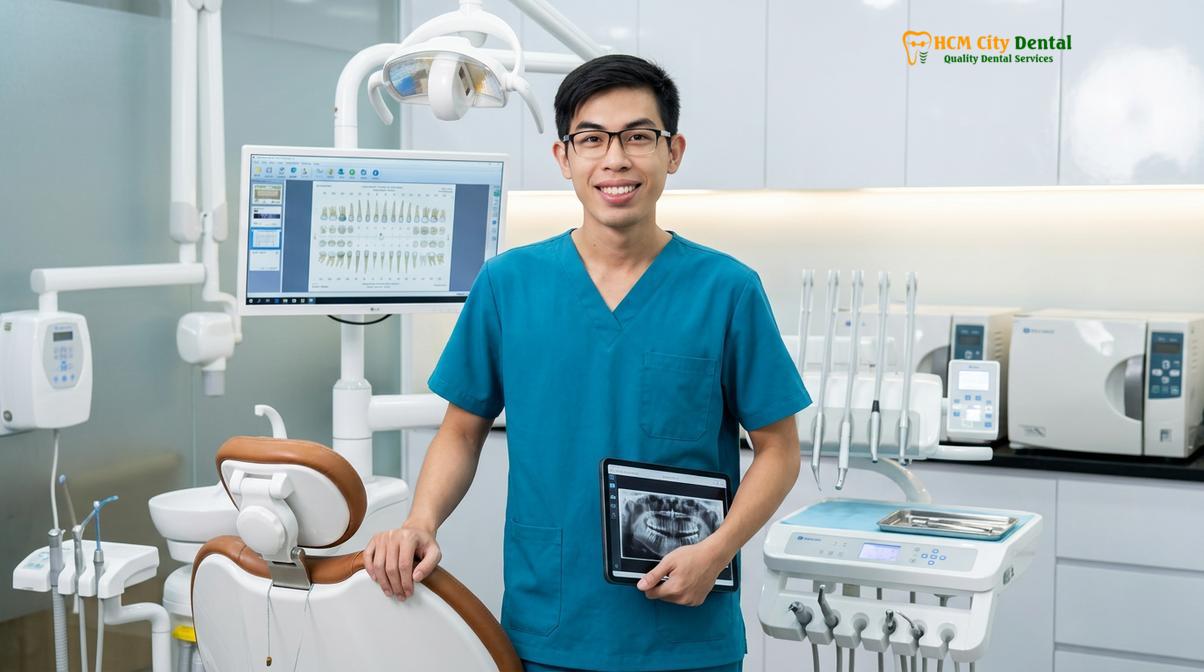
Age alone is rarely a contraindication for implant surgery. Many older adults successfully undergo treatment to improve their quality of life. If you are wondering about dental implants for seniors, the primary determining factors are adequate bone volume and the absence of uncontrolled systemic conditions (such as unmanaged diabetes or active periodontal disease). A thorough medical history review and 3D radiographic imaging are mandatory steps in determining your candidacy.
Every patient’s anatomical and physiological presentation is unique. Therefore, a personalized consultation is essential to accurately diagnose your condition and formulate an evidence-based treatment plan. If you are ready to explore permanent solutions for missing teeth, contact the specialized team at HCMC Dental Clinic to schedule your comprehensive implant assessment.
Frequently Asked Questions
Can I replace my old denture with dental implants?
Yes, you can replace an old denture with dental implants, provided you have sufficient jawbone density and good oral health. The transition typically involves a comprehensive 3D CBCT scan to evaluate bone volume, followed by the strategic placement of titanium posts to support either a fixed bridge or a removable overdenture. If significant bone loss has occurred due to long-term denture use, pre-prosthetic bone grafting may be required to build a stable foundation for the implants.
How much chewing power do you lose with dentures?
Patients typically lose between 70% to 80% of their natural chewing power when wearing traditional removable dentures. Because dentures rest solely on the soft mucosal tissue rather than being anchored in the jawbone, the maximum bite force is significantly reduced to prevent severe gum compression and pain. This drastic reduction often forces patients to alter their diets, avoiding tough proteins and raw vegetables, whereas dental implants can restore up to 90% of original masticatory force.
Is it worth upgrading from dentures to All-on-4?
Upgrading from traditional dentures to an All-on-4 implant system is highly worthwhile for patients seeking permanent stability and enhanced quality of life. This fixed solution restores near-natural bite force, prevents further jawbone deterioration, and eliminates the need for messy adhesives or nightly removal. By utilizing four strategically placed implants to support a full arch of teeth, the All-on-4 protocol often avoids the need for extensive bone grafting, making it an efficient and transformative clinical investment.
Are dental implants painful compared to getting dentures?
While dental implant placement involves a surgical procedure, it is performed under local anesthesia and is generally well-tolerated, with most patients reporting less post-operative discomfort than anticipated. Conversely, while getting dentures is non-surgical, the long-term friction and gum sores they cause can result in chronic daily discomfort. The acute, temporary healing phase of implant surgery ultimately leads to a lifetime of pain-free function, whereas traditional dentures often cause ongoing mucosal irritation.
How long do dental implants last compared to traditional dentures?
Dental implants are designed to be a permanent, lifelong solution when maintained with proper oral hygiene and regular clinical check-ups. In contrast, traditional removable dentures typically require relining or complete replacement every five to eight years due to continuous changes in the underlying jawbone structure. The titanium fixture of an implant fuses with the bone, preventing the atrophy that causes dentures to become loose and ill-fitting over time.
References
- Journal of Prosthetic Dentistry. Biomechanical evaluation of bite force in implant-supported prostheses vs. conventional dentures. (2021).
- International Journal of Oral and Maxillofacial Implants. Long-term alveolar bone preservation following implant placement. (2020).
- Clinical Oral Implants Research. Patient-reported outcome measures: transitioning from removable to fixed implant prosthetics. (2019).
- Journal of the American Dental Association. The physiological impact of edentulism and removable prosthetics on masticatory function. (2022).
- Journal of Periodontology. Peri-implant tissue health and maintenance protocols for full-arch restorations. (2018).