Choosing between Straumann vs Nobel Biocare depends heavily on your specific clinical needs and anatomical conditions. Straumann excels in rapid healing and narrow bone spaces, while Nobel Biocare dominates immediate loading and full-arch restorations. Both represent the pinnacle of modern implantology, offering exceptional longevity and precision for patients seeking permanent tooth replacement.
Clinical Summary:
In the landscape of restorative dentistry, Straumann and Nobel Biocare are universally recognized as the top two premium implant manufacturers globally. Straumann, rooted in Swiss precision engineering, is celebrated for its Roxolid® alloy and SLActive® surface, which significantly accelerate the biological healing process and allow for less invasive surgeries in narrow ridges. Nobel Biocare, with its Swedish heritage, pioneered the concept of osseointegration and the All-on-4® treatment protocol. Its NobelActive® line features an aggressive thread geometry designed to maximize primary stability in soft bone, making it the preferred choice for immediate extraction and loading scenarios. The decision between these two elite systems should be guided by a comprehensive 3D CBCT analysis, bone density evaluation, and the specific prosthetic goals of the patient.
Key Takeaways:
- Straumann utilizes a proprietary Titanium-Zirconium alloy (Roxolid) that offers superior tensile strength compared to pure titanium.
- Nobel Biocare is the original pioneer of the All-on-4® protocol, optimizing designs for immediate full-arch loading.
- Straumann’s SLActive surface is hydrophilic, actively drawing blood to the implant to accelerate healing times.
- Nobel Biocare’s TiUnite surface features a thickened, moderately rough oxide layer that excels at stabilizing the initial blood clot.
- Both brands provide a global warranty passport, ensuring patients can receive maintenance and support anywhere in the world.
The Heritage of Straumann and Nobel Biocare
Both manufacturers possess decades of peer-reviewed clinical data and foundational research, setting the global standard for safety, predictability, and innovation in implantology.
To truly understand the value of these two systems, one must examine their historical contributions to the field of dental medicine. The modern era of dental implants was essentially built upon the foundational research conducted by these two corporate giants. Nobel Biocare traces its lineage directly back to Professor Per-Ingvar Brånemark, the Swedish orthopedic surgeon who accidentally discovered the phenomenon of osseointegration. Brånemark observed that titanium chambers placed into the femurs of rabbits had fused irreversibly with the living bone tissue. This discovery led to the first successful placement of titanium dental implants in a human patient, laying the groundwork for what would eventually become Nobel Biocare[1].
Conversely, Straumann was founded in Waldenburg, Switzerland, initially focusing on metallic alloys for treating bone fractures before transitioning its metallurgical expertise into dental implantology. A defining moment in Straumann’s history was its exclusive partnership with the International Team for Implantology (ITI), an independent academic network of clinicians and researchers. This collaboration ensured that every Straumann product was subjected to rigorous, independent scientific scrutiny before reaching the market. Today, Straumann is synonymous with Swiss precision engineering and evidence-based clinical protocols.
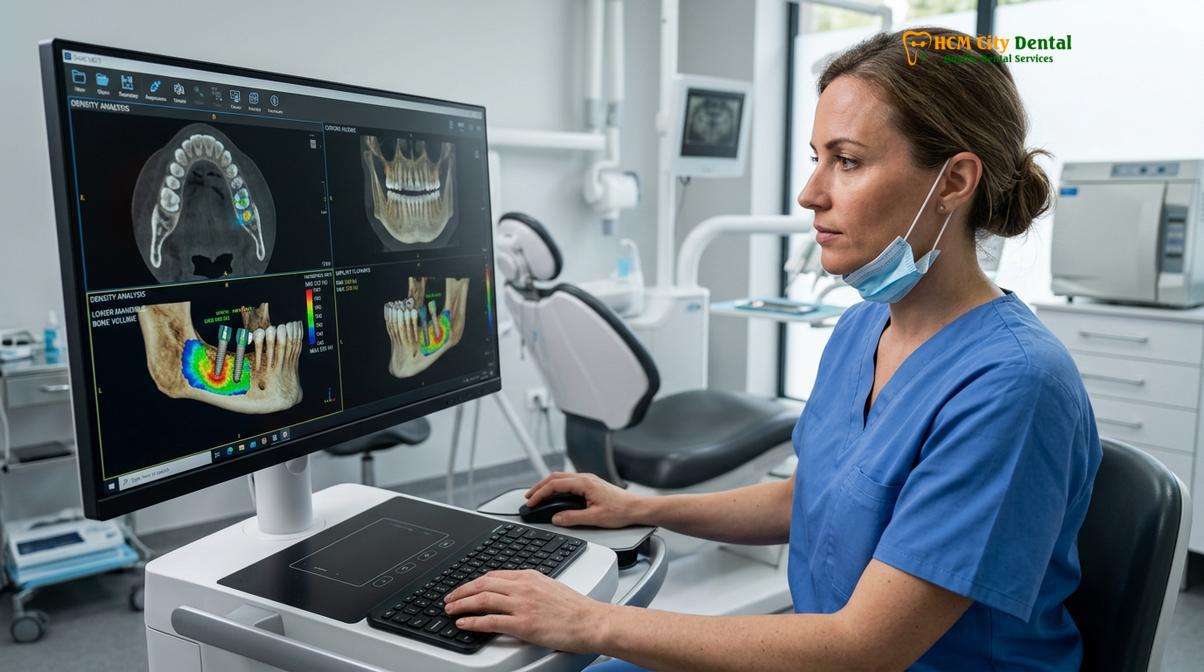
When patients present with complex anatomical challenges, relying on heritage brands becomes a critical risk-management strategy. The decades of longitudinal data behind these brands provide clinicians with the predictability needed for advanced rehabilitations. Unlike generic implants that merely copy macro-designs without replicating the proprietary surface chemistry, premium systems offer a documented history of long-term crestal bone preservation and mechanical fatigue resistance.
Surface Technologies: Straumann SLActive vs. Nobel TiUnite
Straumann utilizes a chemically active hydrophilic surface to accelerate bone fusion, whereas Nobel Biocare employs an anodized, moderately rough surface to optimize blood clot stabilization.
The interface where the titanium meets the living bone is the most critical factor in the long-term success of an implant. The micro-topography and chemical composition of the titanium implant surface dictate how quickly and robustly osteoblasts (bone-building cells) will attach to the fixture. Both companies have invested heavily in proprietary surface modifications, but they approach the biological challenge from different scientific angles[2].
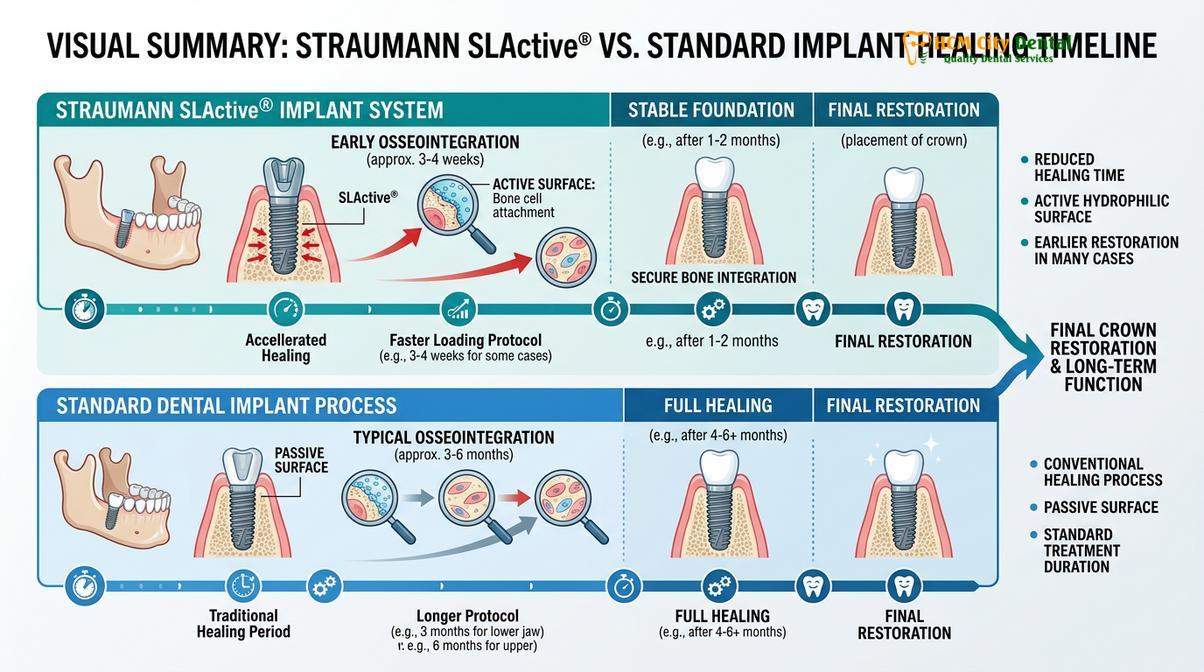
Straumann’s flagship surface technology is SLActive®. The manufacturing process begins with SLA (Sandblasted, Large-grit, Acid-etched), which creates an optimal macro and micro-roughness. However, titanium naturally reacts with oxygen and carbon in the air, creating a hydrophobic (water-repelling) layer. To combat this, Straumann processes the SLActive implants in a nitrogen environment and stores them in a sterile saline solution. This preserves a highly reactive, hydrophilic surface. When the implant is placed into the jaw, it acts like a sponge, immediately drawing blood, proteins, and osteogenic cells into its microscopic pores.
“The transition from a hydrophobic to a hydrophilic implant surface represents a paradigm shift in early osseointegration, fundamentally altering the kinetics of protein adsorption and cellular attachment during the initial inflammatory phase of healing.”
Nobel Biocare utilizes its proprietary TiUnite® surface. Instead of acid etching, Nobel employs electrochemical anodization. The implant is submerged in an electrolyte fluid and subjected to an electrical current, which thickens the natural titanium oxide layer and creates a highly porous, moderately rough surface enriched with phosphorus. This osteoconductive surface is particularly effective at stabilizing the initial blood clot—a crucial first step in bone formation. Furthermore, extensive clinical evaluations comparing anodized surfaces to SLA surfaces have shown that both maintain excellent resistance to peri-implantitis when proper maintenance protocols are followed[5].
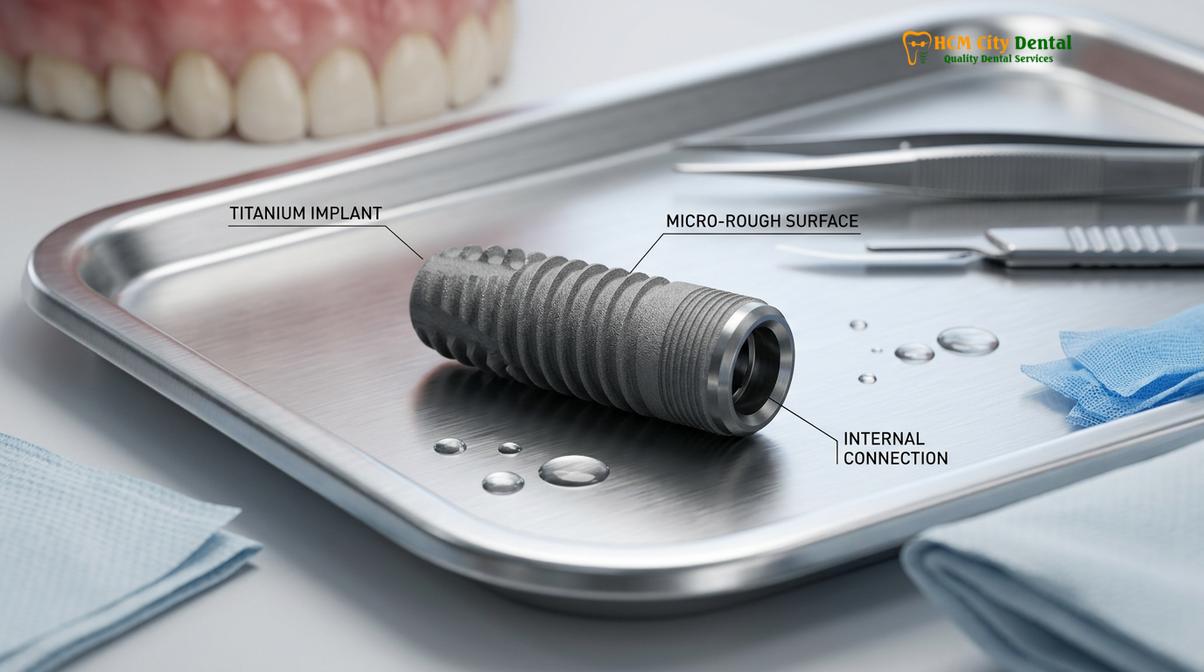
While both surfaces achieve exceptional long-term integration, the choice often depends on the patient’s systemic health. For patients with compromised healing capacities, the accelerated biochemical response of Straumann’s SLActive surface is often clinically preferred to help minimize the risk of early failure.
Design Philosophies: Bone-Level vs. Tissue-Level Implants
Straumann pioneered tissue-level implants for posterior hygiene and simplicity, while Nobel Biocare perfected bone-level designs for superior anterior aesthetics and immediate loading.
Beyond the microscopic surface, the macro-geometry—the physical shape and thread design of the implant—plays a massive role in how the implant behaves mechanically during insertion and under chewing forces. The design philosophies of these two companies reflect different clinical priorities.
Straumann is historically famous for its Tissue-Level implants. These implants feature a built-in smooth transmucosal collar that sits above the bone level, right at the gum line. This design respects the biologic width and moves the micro-gap (the connection between the implant and the abutment) away from the crestal bone. Tissue-level implants are exceptionally easy to clean and are widely considered the gold standard for replacing posterior molars where aesthetics are less critical but mechanical strength and hygiene are paramount. However, Straumann also offers a comprehensive Bone-Level line for the aesthetic zone, featuring a CrossFit® internal connection that prevents abutment rotation.
Nobel Biocare has traditionally focused on Bone-Level implants, which are placed entirely submerged beneath the gums. This allows the clinician to attach a custom-shaped abutment to sculpt the overlying gingival tissue, creating a highly natural emergence profile. This is absolutely critical when replacing front teeth, where the transition from the implant to the crown must be virtually seamless. Nobel Biocare’s crowning achievement in macro-design is the NobelActive® implant. It features an expanding tapered body with reverse-cutting flutes and variable thread designs. As the surgeon inserts the implant, it acts like a corkscrew, actively condensing the surrounding bone rather than just cutting through it. This results in incredibly high primary stability, even in compromised or soft bone[3].
| Feature | Straumann (SLActive) | Nobel Biocare (NobelActive) |
|---|---|---|
| Material Composition | Roxolid (Titanium-Zirconium Alloy) | Grade 4 Commercially Pure Titanium |
| Surface Technology | Hydrophilic, Acid-etched (SLActive) | Anodized, Phosphorus-enriched (TiUnite) |
| Primary Stability Mechanism | Biological integration speed | Mechanical bone condensation |
| Best Clinical Indication | Narrow ridges, compromised healing | Immediate extraction, soft bone, All-on-4 |
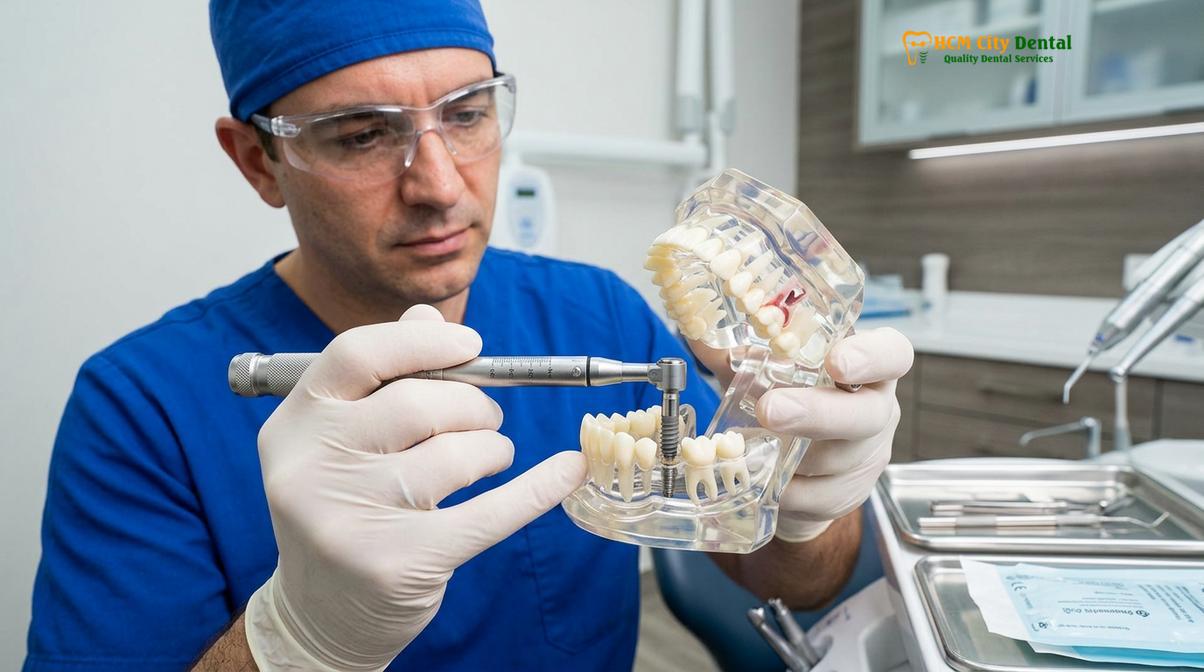
Because of this aggressive thread design, Nobel Biocare is frequently the system of choice when a patient requires full-arch immediate loading. The ability to extract failing teeth, place the implants, and attach a fixed provisional bridge on the same day relies entirely on the mechanical grip the implant achieves upon insertion.
Clinical Success Rates and Long-term Studies
Extensive longitudinal studies demonstrate that both systems achieve exceptional survival rates over long-term periods when placed by experienced clinicians.
When evaluating medical devices, anecdotal evidence is insufficient; long-term, peer-reviewed clinical data is the only reliable metric. Both Straumann and Nobel Biocare have been the subjects of thousands of independent studies, consistently demonstrating high survival rates. However, success in implantology is not merely defined by the implant staying in the bone; it also encompasses the preservation of marginal bone levels, the health of the surrounding soft tissue, and the absence of mechanical complications.
One of Straumann’s most significant contributions to clinical success is the development of Roxolid®. Traditional implants are made from Grade 4 commercially pure titanium. While highly biocompatible, pure titanium has mechanical limitations, especially in narrow diameters. Roxolid is an alloy composed of titanium and zirconium. This combination increases the tensile strength of the implant significantly without compromising biocompatibility. Clinically, this means a surgeon can place a narrow Roxolid implant in a thin ridge of bone, achieving the same mechanical strength as a standard pure titanium implant. This often allows patients to avoid invasive and costly bone grafting procedures[4].
Clinical Case Review: HCMC Dental Clinic
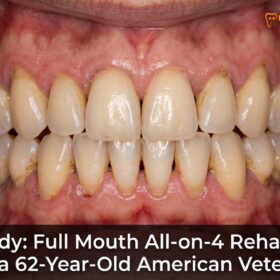
A senior patient presented to HCMC Dental Clinic in Ho Chi Minh City with severe mandibular bone resorption and a history of heavy smoking. The clinical team utilized Straumann Roxolid SLActive implants to maximize biological healing while utilizing narrow-diameter fixtures to avoid extensive block grafting. The implants achieved full osseointegration rapidly, allowing for the early delivery of a definitive implant-supported prosthesis with excellent marginal bone stability at the follow-up evaluation.
Nobel Biocare’s clinical success is heavily anchored in its pioneering work with the All-on-4® treatment concept. By tilting the posterior implants at an angle, surgeons can bypass anatomical structures like the maxillary sinus and the mandibular nerve, while simultaneously increasing the anterior-posterior spread of the prosthetic bridge.
“The biomechanical advantage of tilting posterior implants not only avoids vital anatomical structures but also significantly reduces cantilever length, thereby optimizing stress distribution across the entire prosthetic arch during mastication.”
Long-term studies on the Nobel Biocare All-on-4 protocol show remarkable success rates, providing a life-changing solution for patients who have suffered from terminal dentition. For patients exploring their options, understanding the pros and cons of dental implants is a vital step in the treatment planning phase.
When to Consult an Implant Specialist
Timely intervention by a qualified prosthodontist or oral surgeon can prevent severe bone loss and ensure the highest probability of implant success.
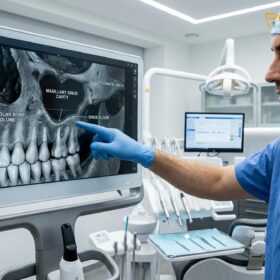
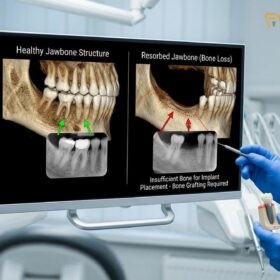
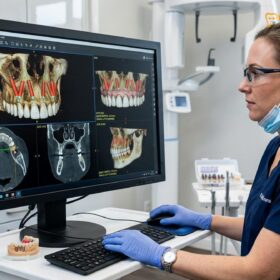
Patients should seek a professional consultation if they are experiencing failing dentition, severe periodontal disease, or the discomfort of loose, ill-fitting dentures. Delaying treatment often leads to progressive jawbone atrophy, which can complicate future implant placement and necessitate extensive bone grafting procedures. A comprehensive evaluation utilizing 3D CBCT imaging is essential to determine whether a patient’s bone density and volume are sufficient for premium fixtures like Straumann or Nobel Biocare.
Furthermore, it is crucial to select a clinical facility that adheres to strict international sterilization and surgical protocols. The Vietnam Odonto-Stomatology Association (VOSA) provides comprehensive national guidelines emphasizing the importance of using certified, premium implant systems to ensure patient safety and long-term biomechanical stability[6]. Consulting with a specialist who follows these rigorous standards helps safeguard your oral health investment.
Cost Comparison and Global Warranty Protection
While both are premium investments, their long-term value is secured by lifetime material guarantees and extensive international support networks.
It is no secret that both Straumann and Nobel Biocare belong to the highest tier of premium implant brands, and their pricing reflects this positioning. The cost of these systems is driven by massive investments in research and development, ultra-precise manufacturing tolerances, and the use of high-grade materials. When a patient pays for a premium implant, they are investing in the predictability of the outcome and the minimization of surgical risks.
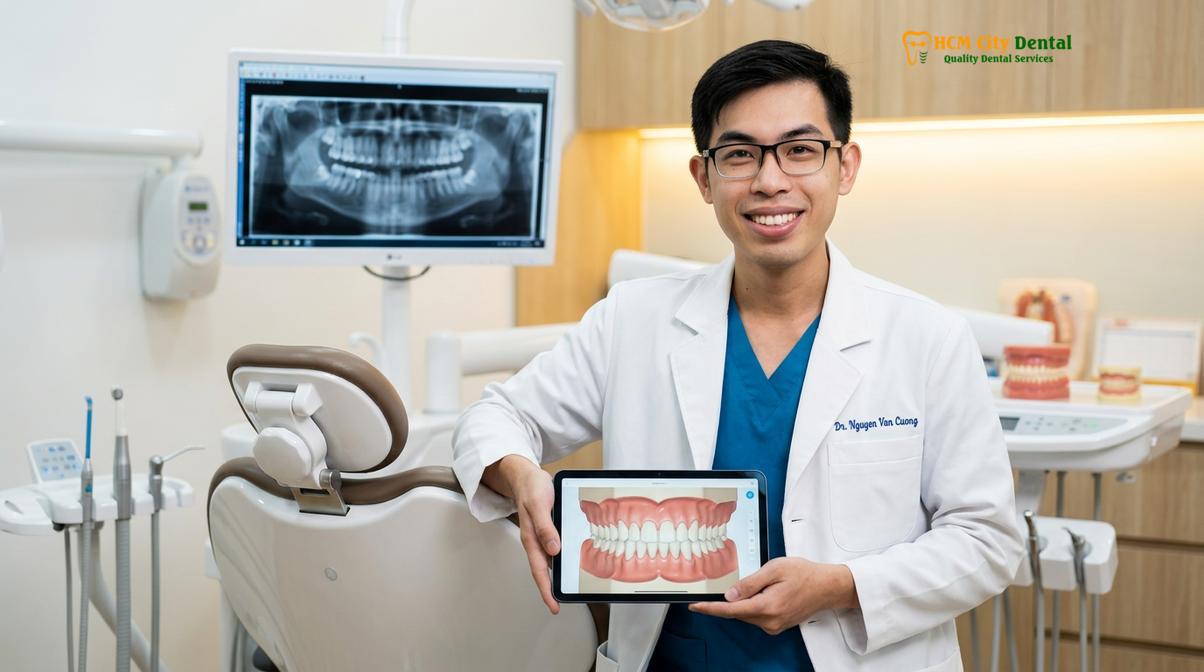
When planning complex rehabilitations, the expertise of the surgeon is just as critical as the implant brand. Dr. Nguyen Van Cuong, a highly respected implantologist, meticulously evaluates each patient’s bone architecture to select the ideal fixture. Dr. Cuong ensures that every procedure adheres to the highest international standards, maximizing the long-term success of your investment and providing personalized care tailored to your unique anatomical needs.
For international patients traveling for dental care, the concept of a global warranty passport is a crucial deciding factor. Both Straumann and Nobel Biocare provide patients with an official physical and digital passport containing the exact serial numbers, lot numbers, and dimensions of the implants and abutments used. Because these two brands hold the largest market shares globally, virtually any qualified prosthodontist or oral surgeon worldwide will recognize the components and possess the necessary proprietary screwdrivers to service them.
In regions like Southeast Asia, the cost of these premium systems is significantly more accessible due to lower clinical overhead, not a reduction in material quality. Patients seeking care at top-tier facilities can often receive genuine Straumann or Nobel Biocare implants at a fraction of the cost quoted in Western countries. For a detailed breakdown of regional pricing structures, patients should review comprehensive guides on dental implant costs in Vietnam to make informed financial decisions.
If you are considering premium tooth replacement options, schedule a consultation at HCMC Dental Clinic in Ho Chi Minh City. Our specialists will help you determine whether Straumann or Nobel Biocare is the right choice for your smile, ensuring a predictable, long-lasting result.
References
- Clinical Oral Implants Research. Long-term survival and success rates of dental implants.
- Journal of Periodontology. Osseointegration and surface technologies in modern implantology.
- International Journal of Oral & Maxillofacial Implants. Biomechanical evaluation of Roxolid vs pure titanium.
- Journal of Prosthetic Dentistry. Primary stability and thread design in immediate loading protocols.
- Clinical Implant Dentistry and Related Research. Peri-implantitis rates in anodized vs SLA surfaces.
- Vietnam Odonto-Stomatology Association (VOSA). National guidelines on premium dental implant standards and clinical protocols.
Straumann vs Nobel Biocare: Which One Should You Choose?
Both Straumann and Nobel Biocare are premium, top-tier dental implant brands with decades of clinical success. When deciding between Straumann vs Nobel Biocare, your choice should align with your specific clinical needs. Straumann is highly regarded for its SLActive surface treatment, which promotes rapid osseointegration and is ideal for immediate loading. Nobel Biocare, with its innovative TiUnite surface, excels in maintaining high primary stability in soft bone, making it an excellent choice for complex full-arch restorations.
| Feature | Straumann Implants | Nobel Biocare |
|---|---|---|
| Material Choice | Roxolid (Titanium-Zirconium alloy) | TiGrade 4 (Pure Titanium) |
| Surface Technology | SLA & SLActive (Hydrophilic) | TiUnite (Anodized phosphorus-enriched) |
| Best Suited For | Immediate loading & narrow spaces | Immediate function & full-arch (All-on-4) |