A grey tooth typically indicates underlying structural changes or pulp necrosis, often resulting from dental trauma, advanced decay, or specific medications like tetracycline. Unlike superficial surface stains, this intrinsic discoloration requires professional clinical evaluation to determine if the tooth is dead, infected, or structurally compromised.
Clinical Summary:
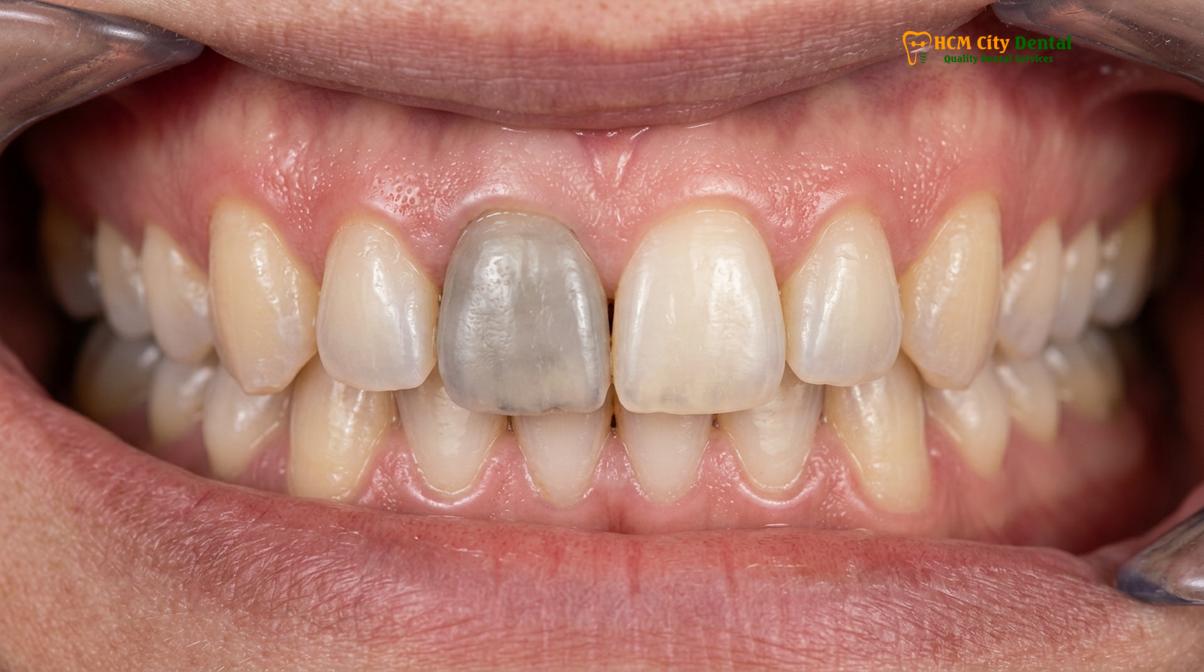
Understanding grey tooth causes requires differentiating between extrinsic surface stains and intrinsic structural alterations. The most frequent etiology is pulp necrosis secondary to dental trauma, where ruptured blood vessels release iron byproducts that stain the dentin from the inside out. Other significant causes include systemic exposure to tetracycline during tooth development, the use of specific endodontic materials or silver amalgam, and advanced carious lesions. Because a grey hue often signals a non-vital or dying tooth, immediate clinical diagnostics—including thermal vitality testing and periapical radiography—are essential. Treatment protocols are highly individualized, ranging from root canal therapy paired with internal walking bleach techniques to structural masking with porcelain veneers or crowns, ensuring both the eradication of infection and the restoration of aesthetic harmony.
Key Takeaways:
- A grey tooth is predominantly caused by intrinsic factors, meaning the discoloration originates from within the tooth’s dentin rather than the outer enamel.
- Dental trauma leading to pulp necrosis (a “dead tooth”) is the most common cause of a single tooth turning grey.
- Systemic medications, particularly tetracycline antibiotics taken during childhood, can cause permanent grey or brown banding across multiple teeth.
- Standard over-the-counter whitening products are ineffective against intrinsic grey stains; professional intervention is mandatory.
- Clinical treatments include internal bleaching, root canal therapy, and aesthetic restorations like porcelain veneers or crowns.
The Pathophysiology of Tooth Discoloration: Why Do Teeth Turn Grey?
A tooth turns grey when its internal dentin structure is altered by blood pigments, necrotic tissue, or chemical compounds, reflecting a darker hue through the translucent enamel.
To fully comprehend grey tooth causes, one must first understand the anatomical structure of a human tooth and the optical properties of dental hard tissues. A tooth is composed of three primary layers: the outer translucent enamel, the underlying porous dentin, and the innermost pulp chamber, which houses nerves, blood vessels, and connective tissue. The perceived color of a tooth is largely dictated by the shade of the dentin reflecting through the enamel.
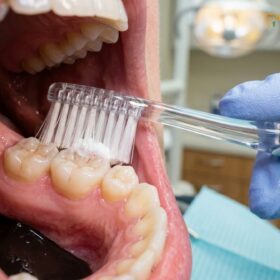
Tooth discoloration is clinically categorized into two main types: extrinsic and intrinsic. Extrinsic stains occur on the surface of the enamel and are typically caused by lifestyle factors such as smoking, coffee, tea, or poor oral hygiene. These stains usually manifest as yellow or brown deposits and can often be managed through comprehensive oral hygiene steps and professional prophylaxis.
Conversely, a grey tooth is almost exclusively the result of intrinsic discoloration. Intrinsic staining occurs when chromogenic (color-causing) materials are incorporated into the dentin or enamel during tooth development, or when pigments diffuse into the dentinal tubules after the tooth has erupted[1]. Because the enamel is semi-translucent, any darkening of the underlying dentin—whether from necrotic pulp tissue, chemical complexes, or restorative materials—will visually present as a grey, blue-grey, or dark brown hue on the surface.
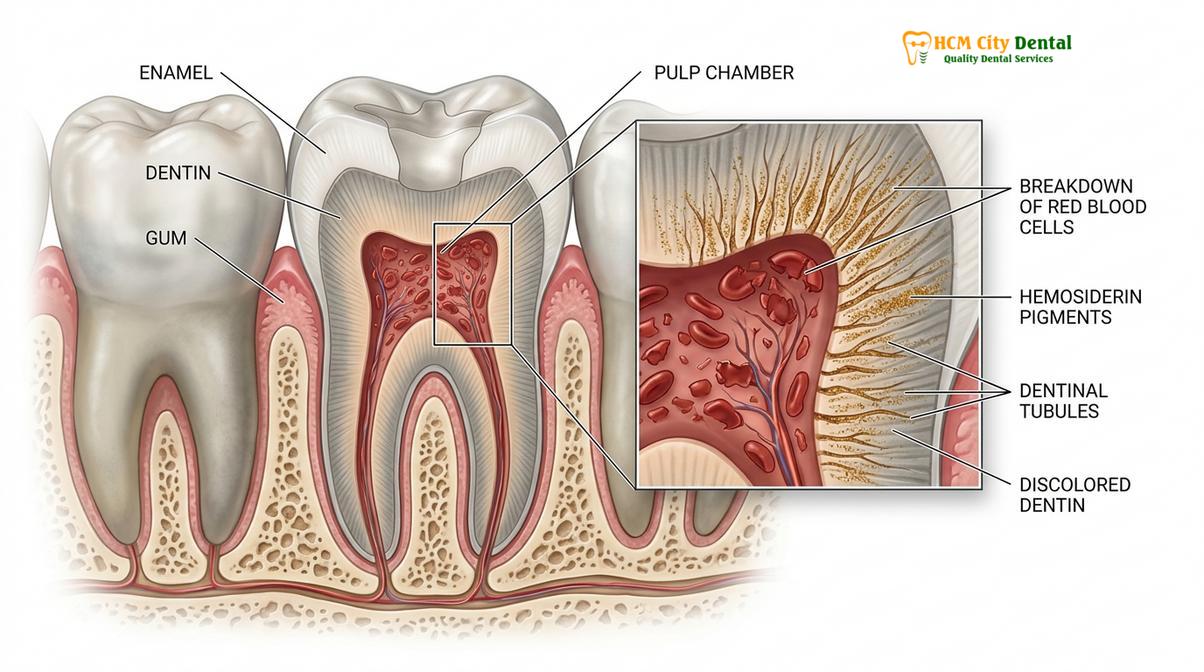
The transition to a grey color is rarely instantaneous. In cases of trauma, the process involves the hemolysis (breakdown) of red blood cells within the pulp chamber. As these cells rupture, they release hemoglobin, which further degrades into iron-containing pigments like hemosiderin. These dark pigments are then driven into the microscopic dentinal tubules by hydraulic pressure within the tooth, permanently altering the dentin’s optical properties. Understanding this pathophysiology is crucial for dental professionals when formulating an effective treatment plan, as surface-level bleaching agents cannot penetrate deeply enough to oxidize these internal pigments.
Primary Causes of a Grey Tooth in Adults and Children
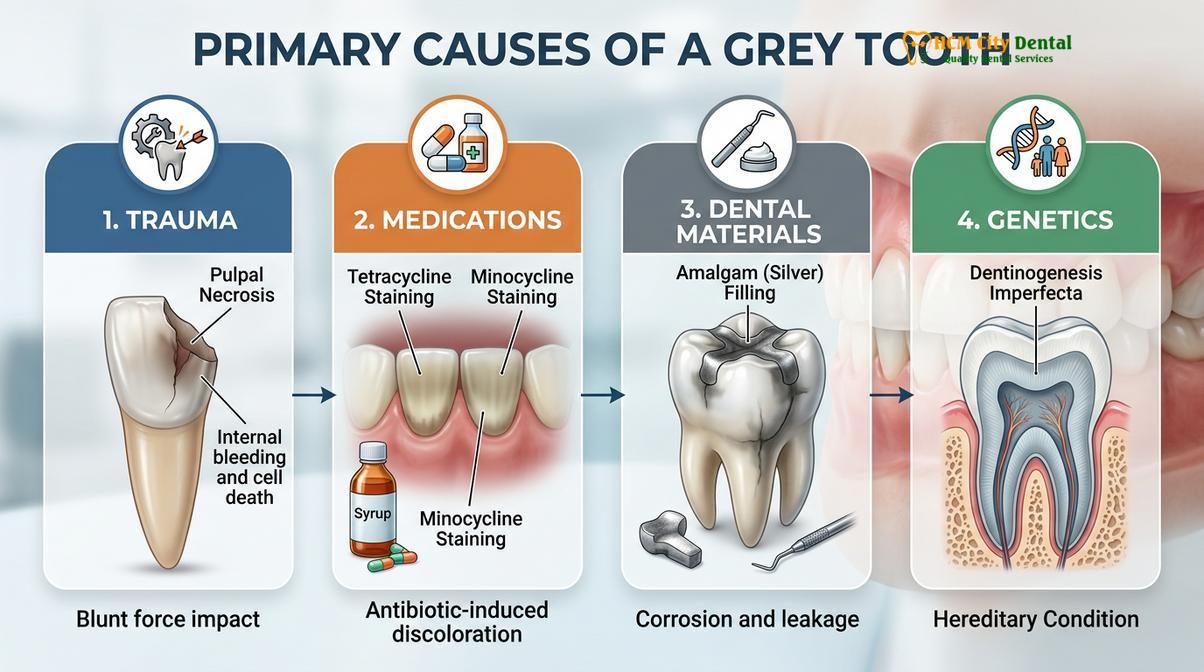
The most common culprits behind a grey tooth include traumatic pulp death, tetracycline exposure during childhood, silver amalgam restorations, and severe untreated caries.
Identifying the exact etiology of a discolored tooth is the cornerstone of effective General Dentistry. The causes can range from acute localized injuries to systemic developmental issues. Below is a detailed clinical breakdown of the primary factors that lead to a grey tooth.
Dental Trauma and Pulp Necrosis (Dead Tooth)
Dental trauma is the leading cause of a single tooth turning grey. When a tooth sustains a significant impact—such as from a sports injury, a fall, or an automobile accident—the delicate neurovascular bundle entering the tooth through the root apex can be severed or severely damaged. This cuts off the blood supply to the pulp, leading to ischemia and eventual pulp necrosis (tissue death).
As the necrotic tissue breaks down, the aforementioned process of hemolysis occurs. The resulting hemosiderin pigments seep into the dentin, causing the tooth to gradually shift from its natural white or ivory color to a distinct grey or bluish-black. It is important to note that this discoloration may not appear immediately; it can take weeks, months, or even years for a traumatized tooth to visibly change color. In pediatric patients, trauma to primary (baby) teeth can also cause them to turn grey, which requires careful monitoring to ensure the underlying permanent tooth is not adversely affected.
Medication-Induced Discoloration (Tetracycline)
Systemic medications can profoundly impact tooth development. The most well-documented pharmacological cause of grey teeth is the administration of tetracycline antibiotics. If a mother takes tetracycline during the second or third trimester of pregnancy, or if a child ingests the antibiotic during the years of active tooth formation (typically under the age of 8), the drug can become incorporated into the developing dental tissues[2].
Tetracycline molecules chelate with calcium ions to form a stable tetracycline-calcium orthophosphate complex within the dentin and enamel. When these teeth erupt and are exposed to sunlight (specifically ultraviolet light), a photo-oxidation reaction occurs, causing the teeth to turn a dark grey, blue-grey, or brown. Unlike trauma, which usually affects a single tooth, tetracycline staining typically presents as horizontal bands of grey discoloration across multiple teeth, corresponding to the specific developmental stage when the drug was administered.
Restorative Materials and Root Canal Pastes
Iatrogenic causes—those resulting from medical or dental treatments—are also significant contributors to grey tooth discoloration. Historically, silver amalgam was the material of choice for filling posterior cavities. Over time, the metallic components of the amalgam, particularly silver and tin, can undergo corrosion and oxidation. The resulting silver sulfide compounds can leach into the surrounding dentinal tubules, imparting a dark grey or black shadow to the tooth structure.
Furthermore, certain materials used during endodontic (root canal) therapy can cause intrinsic staining. Root canal sealers containing bismuth oxide, silver cones, or antibiotic pastes like Ledermix (which contains demeclocycline, a tetracycline derivative) are known to cause a greyish-brown discoloration if they are not completely cleaned from the coronal pulp chamber before the final restoration is placed[3].
Advanced Tooth Decay and Infection
While early-stage tooth decay typically presents as white, chalky spots or brown cavities, advanced, untreated caries can lead to a grey tooth. When bacterial infection penetrates deep into the tooth and reaches the pulp chamber, it causes irreversible pulpitis followed by pulp necrosis. The combination of bacterial byproducts, decaying organic matter, and stagnant blood within the tooth creates a dark mass that reflects through the remaining enamel. In these cases, the grey color is a clinical warning sign of a severe, active infection that may soon progress to a periapical abscess.
Genetic and Developmental Conditions
Rare genetic disorders can also alter the structural integrity and color of teeth. Dentinogenesis imperfecta is an autosomal dominant condition that affects the formation of dentin. Teeth afflicted with this disorder often have an opalescent, blue-grey, or amber appearance. Because the underlying dentin is structurally abnormal and soft, the overlying enamel frequently chips away, leaving the teeth highly susceptible to rapid wear and further discoloration. Other developmental anomalies, including certain pediatric dental anomalies like natal teeth or severe enamel hypoplasia, can also present with atypical greyish hues.
| Etiology | Typical Presentation | Onset Timeline | Pulp Vitality |
|---|---|---|---|
| Dental Trauma | Single tooth, localized grey/dark hue | Weeks to years post-injury | Usually Non-Vital (Necrotic) |
| Tetracycline Staining | Multiple teeth, horizontal grey/brown bands | Upon tooth eruption | Vital (Healthy Pulp) |
| Amalgam/Material Stain | Localized grey shadow near the restoration | Gradual over years | Vital or Non-Vital |
| Advanced Decay | Grey hue accompanied by visible cavitation | Progressive with infection | Non-Vital (Infected) |
| Dentinogenesis Imperfecta | All teeth, opalescent blue-grey appearance | Upon tooth eruption | Vital (Structurally weak) |
Clinical Diagnostics: How Dentists Evaluate a Discolored Tooth
Dentists utilize thermal vitality tests, electric pulp testing, and periapical radiographs to assess the internal health of a grey tooth and rule out asymptomatic infections.
When a patient presents with a grey tooth, a visual examination alone is insufficient to determine the appropriate course of action. A comprehensive clinical diagnostic protocol is required to assess the vitality of the pulp, the structural integrity of the tooth, and the presence of any underlying periapical pathology. At our advanced facilities in Ho Chi Minh City, the team at HCMC Dental Clinic utilizes a multi-tiered diagnostic approach to ensure accurate treatment planning.
The first step in the diagnostic workflow is a thorough medical and dental history review. The clinician will inquire about past dental trauma, previous orthodontic treatments, childhood medication use, and any history of pain or swelling associated with the discolored tooth. This historical context provides vital clues; for instance, a history of a sports injury ten years prior strongly points toward delayed pulp necrosis.
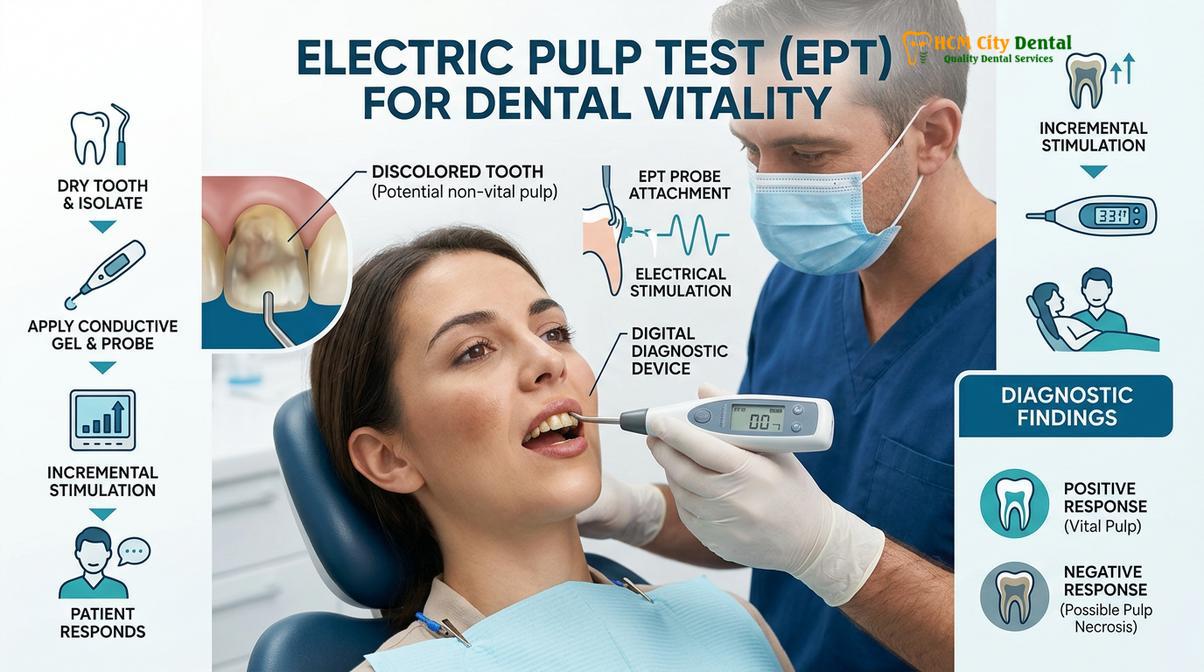
Following the history, vitality testing is performed to determine if the nerve tissue inside the tooth is still alive and functioning. Thermal testing, specifically the cold test using a refrigerant spray like Endo-Ice (dichlorodifluoromethane), is highly reliable. A vital tooth will register a brief, sharp sensation that dissipates quickly when the cold stimulus is removed. A non-vital (dead) grey tooth will typically yield no response to the cold stimulus.
In addition to thermal testing, an Electric Pulp Tester (EPT) may be utilized. The EPT delivers a gradually increasing electrical current to the tooth. If the sensory fibers within the pulp are intact, the patient will feel a tingling sensation. A lack of response confirms pulp necrosis[4]. According to Dr. Nguyen Van Cuong, a leading specialist in restorative dentistry, combining both thermal and electric tests significantly increases diagnostic accuracy and prevents unnecessary endodontic interventions on teeth that may be discolored but remain vital.
“A grey tooth is a clinical symptom, not a diagnosis in itself. We must look beyond the enamel. Relying solely on the visual color without confirming pulp vitality and radiographic health can lead to catastrophic treatment failures. Our goal is always to preserve the biological foundation of the tooth before addressing its aesthetic appearance.”
— Dr. Nguyen Van Cuong, Clinical Director
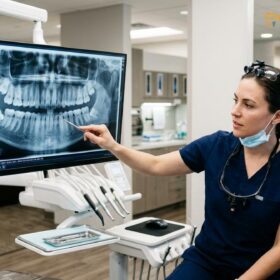
Radiographic examination is the final, indispensable component of the diagnostic process. High-resolution digital periapical X-rays or Cone Beam Computed Tomography (CBCT) scans are taken to visualize the root structure, the size of the pulp chamber, and the surrounding alveolar bone. In cases of a necrotic grey tooth, the radiograph will often reveal a periapical radiolucency—a dark shadow at the tip of the root indicating bone loss due to chronic infection. Radiographs also help identify internal resorption, calcific metamorphosis (where the pulp chamber shrinks and fills with secondary dentin following trauma), or remnants of old root canal filling materials that may be causing the discoloration.
Evidence-Based Treatment Workflows for Grey Teeth
Treatment for a grey tooth ranges from endodontic therapy combined with internal bleaching to structural restorations like porcelain veneers or crowns, depending on pulp vitality.
Once the exact cause and vitality status of the grey tooth have been established, a targeted treatment plan can be formulated. Because the discoloration is intrinsic, standard external whitening procedures are generally insufficient. The treatment must address both the biological health of the tooth and its aesthetic integration with the surrounding smile.
Root Canal Therapy and Internal Bleaching
If diagnostic testing confirms that the grey tooth is non-vital or infected, the first line of treatment is root canal therapy (endodontics). The clinician accesses the pulp chamber, meticulously cleans and shapes the root canal system to remove all necrotic tissue, bacteria, and blood byproducts, and then seals the space with an inert material like gutta-percha. This eliminates the source of the infection and prevents further internal staining.
Following successful root canal therapy, the aesthetic issue of the grey discoloration is addressed using the “walking bleach” technique. Unlike external whitening, internal bleaching works from the inside out. The dentist places a potent bleaching agent—typically a paste made of sodium perborate and hydrogen peroxide—directly into the empty pulp chamber. The access hole is sealed with a temporary filling, and the patient “walks” around with the bleach inside the tooth for several days. The oxidizing agent breaks down the dark hemosiderin pigments within the dentinal tubules. This process may be repeated over 2 to 3 visits until the desired shade is achieved, after which a permanent composite restoration is placed to seal the tooth.
Dental Veneers and Crowns for Structural Restoration
In cases where internal bleaching is insufficient, or if the tooth is structurally compromised due to large existing fillings, advanced decay, or genetic conditions like dentinogenesis imperfecta, restorative masking is required. Porcelain veneers are thin, custom-fabricated ceramic shells bonded to the front surface of the teeth. They are highly effective at masking severe intrinsic stains, including deep tetracycline banding, while preserving the majority of the natural tooth structure[5].
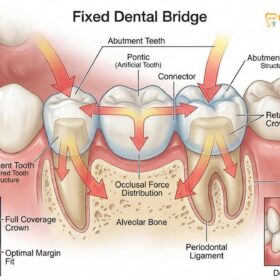
For a severely darkened grey tooth, the clinician must use specialized opaque ceramic materials or masking resins to prevent the dark underlying dentin from showing through the translucent veneer. If the tooth has suffered extensive structural loss, a full-coverage porcelain or zirconia crown is indicated. A crown completely encases the tooth, providing maximum aesthetic masking and restoring its biomechanical strength, which is particularly crucial for posterior teeth subjected to heavy chewing forces.
Clinical Case Study: Trauma-Induced Discoloration
A 34-year-old patient presented to HCMC Dental Clinic in Ho Chi Minh City complaining of a single dark grey upper central incisor. The patient reported a history of a sports injury to the mouth 12 years prior. Clinical diagnostics revealed no response to cold or EPT, and radiographs showed a chronic periapical lesion. The treatment workflow involved single-visit root canal therapy to eradicate the asymptomatic infection, followed by two sessions of internal walking bleach. The tooth’s natural luminosity was fully restored, eliminating the need for an invasive prosthetic crown and preserving the patient’s natural dentition.
External Whitening (Limitations and Scope)
While professional in-office external whitening (using high-concentration hydrogen peroxide and light activation) is highly effective for yellowing and extrinsic stains, its efficacy on grey teeth is limited. It may provide a slight improvement in cases of mild, age-related greyish thinning of the enamel, but it cannot reverse the deep intrinsic stains caused by trauma or tetracycline. Patients are often advised to undergo a comprehensive dental cleaning—and may wonder how often you should have your teeth cleaned—to remove surface stains before evaluating the true baseline color of an intrinsically stained tooth.
When to See a Doctor for a Grey Tooth
A tooth changing color is a definitive biological signal that should never be ignored. While a grey tooth may remain asymptomatic for years, it often harbors a silent, chronic infection that can suddenly flare up into an acute dental abscess. Dr. Nguyen Van Cuong strongly advises that any patient noticing a shift in tooth color seek professional evaluation promptly, rather than attempting to mask the issue with over-the-counter whitening products.
Urgent Clinical Warning Signs
Seek immediate dental care if your grey tooth is accompanied by any of the following symptoms:
- Spontaneous, throbbing pain that worsens when lying down.
- Swelling, redness, or a pimple-like bump (fistula) on the gums above the tooth.
- Extreme sensitivity to hot temperatures that lingers after the stimulus is removed.
- The tooth feeling loose or elevated in its socket.
- Facial swelling or a low-grade fever, indicating a spreading systemic infection.
Early intervention not only increases the likelihood of saving the natural tooth through endodontic therapy but also prevents the infection from degrading the surrounding jawbone. Furthermore, discussing lifestyle and dietary impacts such as whether milk is bad for your teeth, or evaluating if fluoride is bad for your teeth, can help patients understand the broader context of enamel health and structural integrity, ensuring long-term success after the grey tooth is treated.

“Patient education is paramount. Many individuals assume a grey tooth is merely a cosmetic annoyance. In reality, it is often a necrotic organ sitting within the jawbone. Timely diagnostics allow us to intervene conservatively, preventing the need for complex extractions and implant therapies down the line.”
— Dr. Nguyen Van Cuong, Clinical Director
Frequently Asked Questions
Can a grey tooth turn white again naturally?
No, a grey tooth cannot turn white again naturally. Because the discoloration stems from internal structural changes or necrotic tissue within the dentin, professional dental intervention such as internal bleaching or restorative veneers is required to restore its original color. The body cannot clear the trapped hemosiderin pigments from the dentinal tubules on its own.
Is a grey tooth always a dead tooth?
A grey tooth is not always a dead tooth, though pulp necrosis is a leading cause. Other factors, such as tetracycline staining, silver amalgam fillings, or genetic conditions like dentinogenesis imperfecta, can cause a vital, living tooth to appear grey. Comprehensive vitality testing is necessary to determine the true health of the pulp.
How long does it take for a traumatized tooth to turn grey?
A traumatized tooth can turn grey within a few weeks to several months, or even years after the initial injury. The timeline depends on the severity of the vascular damage and how quickly blood byproducts permeate the dentinal tubules. In some cases, calcific metamorphosis occurs, causing a slow, gradual darkening over a decade.
Can regular teeth whitening strips fix a grey tooth?
Regular over-the-counter whitening strips are generally ineffective for a grey tooth. These products only target extrinsic surface stains on the enamel, whereas grey discoloration is intrinsic, requiring specialized treatments like internal bleaching or porcelain restorations. Attempting to bleach a necrotic tooth externally will yield no significant aesthetic improvement.
Does a grey baby tooth need to be extracted?
A grey baby tooth does not always need to be extracted unless it shows signs of acute infection, abscess, or risks damaging the underlying permanent tooth. A pediatric dentist must evaluate the tooth radiographically to determine the safest clinical approach. Often, an asymptomatic grey primary tooth can be monitored until it falls out naturally.
References
- Journal of Endodontics. Pathogenesis and management of intrinsic tooth discoloration. (2021).
- Pediatric Dentistry. Mechanisms of tetracycline-induced tooth discoloration in developing dentition. (2019).
- Dental Materials. Discoloration potential of endodontic sealers and restorative materials. (2020).
- International Endodontic Journal. Diagnostic accuracy of thermal and electric pulp vitality tests. (2022).
- Journal of Prosthetic Dentistry. Clinical protocols for masking severely discolored teeth with ceramic veneers. (2018).