Understanding dental sterilization standards Vietnam is critical for international patients seeking safe, high-quality care. A compliant clinic utilizes Class-B vacuum autoclaves, strict biological monitoring, and single-use barriers to minimize cross-contamination risks, ensuring your treatment in Ho Chi Minh City meets rigorous international infection control protocols.
Clinical Summary:
Dental sterilization standards in Vietnam vary significantly between minimum regulatory compliance and international best practices. Top-tier facilities like HCMC Dental Clinic implement a rigorous, multi-step infection control protocol centered around European-standard Class-B autoclaves, ultrasonic cleaning, and continuous biological validation. This comprehensive approach neutralizes bloodborne pathogens and helps prevent cross-contamination during invasive procedures such as implant surgery or root canals. For individuals engaging in dental tourism in Vietnam, verifying a clinic’s adherence to these advanced sterilization loops, air purification systems, and single-use barrier policies is essential for ensuring patient safety and optimal clinical outcomes.
Key Takeaways:
- Class-B vacuum autoclaves are highly recommended for safely sterilizing hollow dental instruments and surgical handpieces.
- Biological indicator testing is the definitive method to validate that an autoclave cycle successfully neutralized microbial life.
- Comprehensive infection control extends beyond instruments to include dental chair waterlines and clinical air purification.
- International patients should actively request to see a clinic’s sterilization room and validation logs before undergoing treatment.
- Choosing a verified facility protects against cross-contamination and provides a secure environment for complex oral surgeries.
Why Sterilization is the Non-Negotiable Standard
Rigorous sterilization is the primary defense against the transmission of bloodborne pathogens, ensuring that every instrument used during your procedure is properly processed.
In the realm of modern dentistry, the margin for error regarding infection control is incredibly narrow. The oral cavity is a highly vascular environment, and routine dental procedures—ranging from deep periodontal scaling to surgical implant placement—invariably involve exposure to blood, saliva, and gingival crevicular fluid. Consequently, the instruments utilized during these procedures become contaminated with the patient’s unique microbial flora. Without a flawless sterilization protocol, these instruments can act as vectors for the transmission of severe bloodborne pathogens, including Hepatitis B (HBV), Hepatitis C (HCV), and the Human Immunodeficiency Virus (HIV)[1].
It is crucial to distinguish between the concepts of “cleaning,” “disinfection,” and “sterilization.” Cleaning merely removes visible debris and organic matter. Disinfection eliminates a significant portion of pathogenic microorganisms but may fail to destroy highly resistant bacterial spores. Sterilization, however, is a definitive state. It is defined as the complete destruction or removal of all forms of microbial life, including resilient bacterial endospores. In a clinical setting, achieving true sterility is the only acceptable standard for critical instruments that penetrate soft tissue or bone, aligning with the strict guidelines set forth by the Vietnam Ministry of Health (MOH) for dental establishments[6].
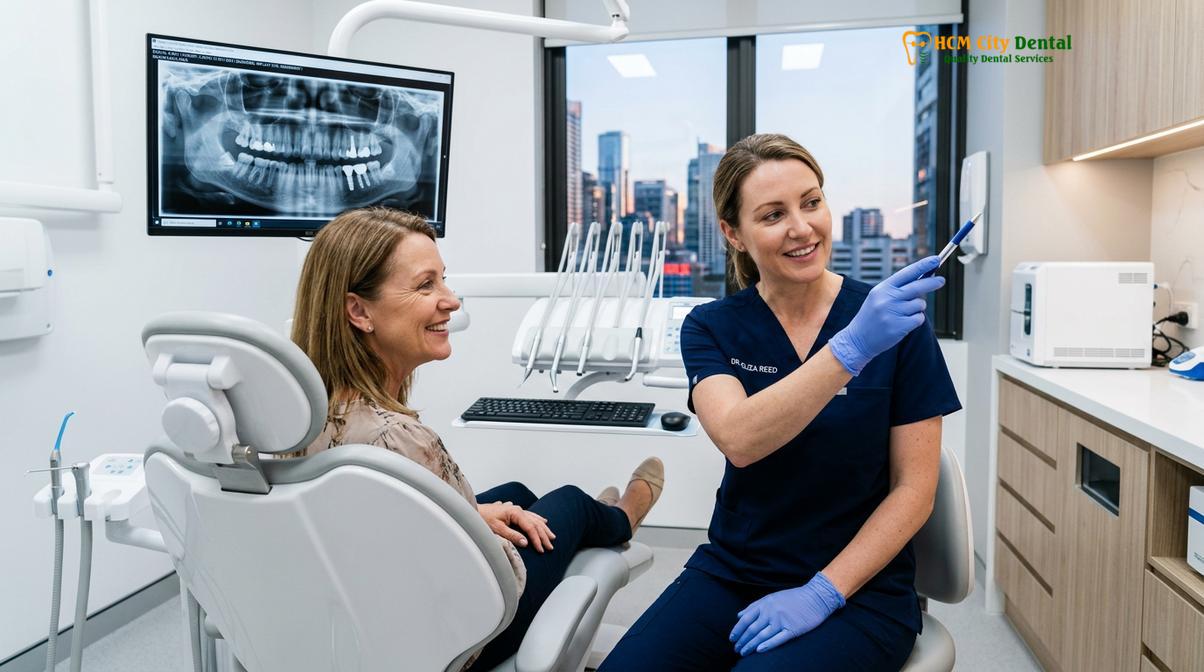
When evaluating dental sterilization standards Vietnam, international patients must be aware of the compliance gap that can exist within the industry. Minimum regulatory compliance often requires only basic sterilization equipment, such as a Class N autoclave. Class N (Naked) sterilizers operate via thermodynamic air displacement and are only suitable for solid, unwrapped instruments. They are fundamentally incapable of forcing steam into the narrow lumens of hollow dental handpieces (drills) or effectively penetrating porous packaging materials. Relying on a Class N autoclave for complex dental tools presents a severe breach in infection control.
Conversely, full recommended international compliance mandates the use of Class-B (Big Small) vacuum autoclaves. These advanced machines utilize a fractionated pre-vacuum system to actively extract ambient air from the sterilization chamber and from within the hollow cavities of the instruments. Once the air is removed, pressurized steam is injected, ensuring complete thermal penetration. This level of rigorous processing is what separates standard clinics from world-class facilities.
The 6-Step Instrument Sterilization Loop at HCMC Dental
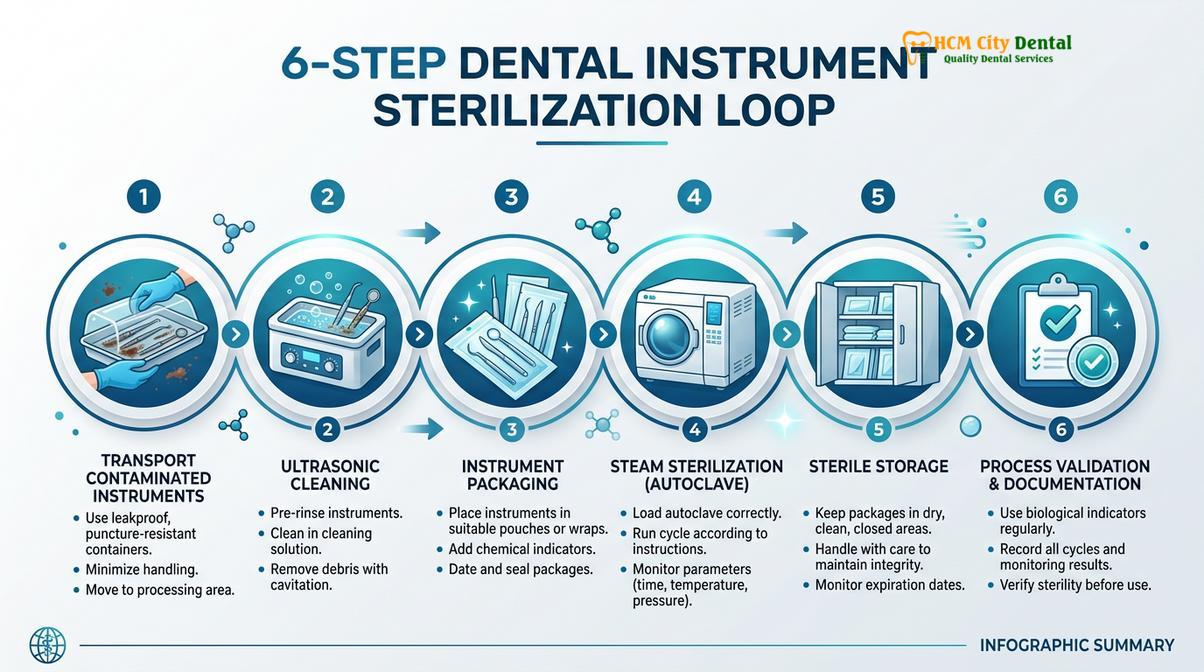
Our clinical workflow utilizes a strict six-step protocol—from ultrasonic decontamination to Class-B steam sterilization—guaranteeing that all reusable instruments are safely processed for patient care.
Achieving absolute sterility is not merely about owning an autoclave; it requires a meticulously managed, closed-loop workflow. The sterile protocol is designed to eliminate human error and ensure that every instrument is systematically processed, validated, and safely stored until the exact moment it is needed for patient care. This workflow is particularly vital for international patients planning a dental trip to Vietnam, as it provides the necessary peace of mind required for complex treatments.
Step 1: Safe Transport and Classification
Immediately following a procedure, contaminated instruments are carefully transported from the clinical operatory to a dedicated, physically separated sterilization room. This prevents any cross-contamination with clean areas. Instruments are then classified according to Spaulding’s Classification system: critical (penetrating bone/tissue), semi-critical (contacting mucous membranes), and non-critical (contacting intact skin). This classification dictates the specific reprocessing pathway for each item.
Step 2: Ultrasonic Cleaning and Enzymatic Decontamination
Manual scrubbing of sharp dental instruments poses a significant puncture risk to clinical staff and is often ineffective at removing microscopic debris from hinges and serrations. Instead, instruments are submerged in an ultrasonic cleaner filled with a medical-grade enzymatic solution. The ultrasonic device generates high-frequency sound waves that create microscopic cavitation bubbles. When these bubbles implode, they produce a powerful scrubbing action that safely and thoroughly removes blood, saliva, and dental materials from the most intricate crevices of the instruments.
Step 3: Rinsing, Drying, and Inspection
Following ultrasonic decontamination, the instruments are thoroughly rinsed with purified water to remove any residual enzymatic detergent. They are then meticulously dried. Moisture control is a critical, often overlooked step; any residual water left on an instrument can interfere with the steam penetration during the autoclave cycle and compromise the integrity of the sterilization pouch. Each instrument is then visually inspected under magnification to ensure absolute cleanliness and structural integrity before packaging.
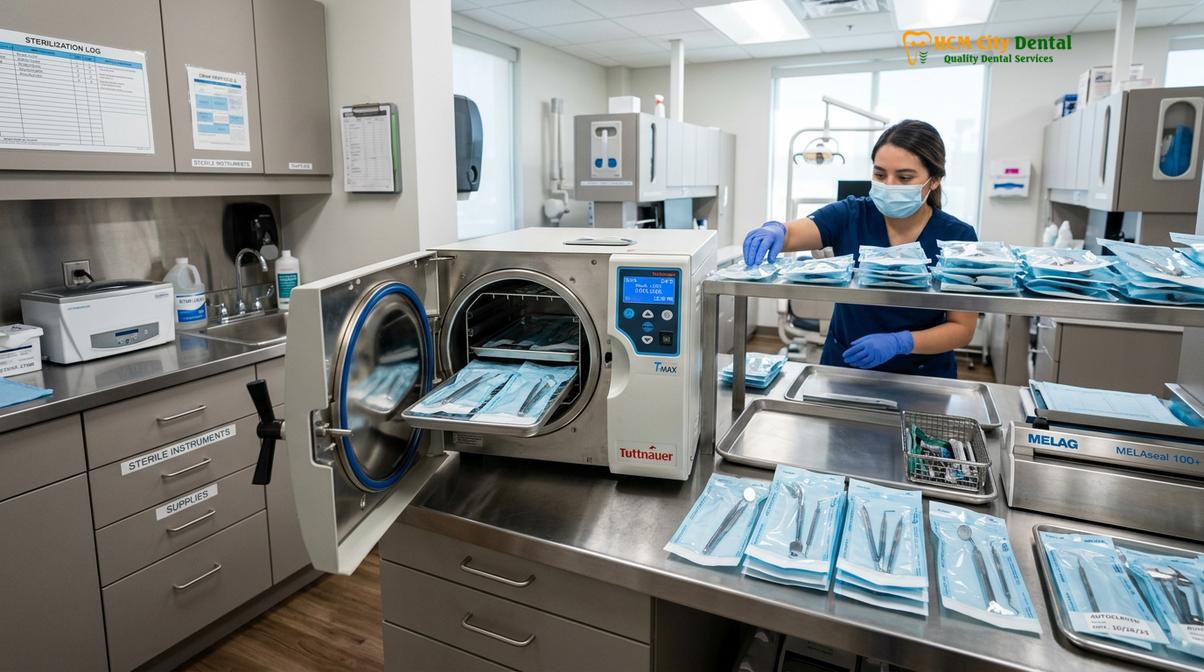
Step 4: Packaging and Chemical Indicators
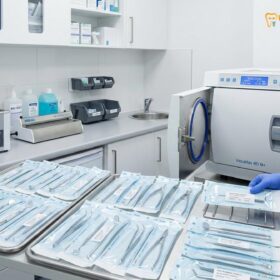
Clean, dry instruments are placed into medical-grade sterilization pouches composed of a combination of heavy-duty paper and transparent polypropylene film. Crucially, a multi-parameter chemical indicator strip is placed inside every single pouch. The pouch is then hermetically sealed using a specialized thermal sealing machine. The chemical indicator is designed to change color only when exposed to the specific combination of time, temperature, and steam pressure required for sterilization, providing immediate visual confirmation that the parameters were met inside the package.
Step 5: Steam Sterilization (Class-B Autoclave)
The sealed pouches are loaded into a Class-B vacuum autoclave, which complies with strict international standards for small steam sterilizers[4]. The machine initiates a fractionated pre-vacuum cycle, drawing out all air to create a deep vacuum. Steam heated to 134°C (273°F) at a pressure of 2.1 bar is then forcefully injected into the chamber. This extreme environment is maintained for a specific holding time, effectively denaturing the proteins of any remaining microorganisms and neutralizing highly resistant bacterial spores. A final post-vacuum drying phase ensures the pouches emerge completely dry, maintaining the sterile barrier[2].
Step 6: Storage and Biological Validation
Upon completion of the cycle, the sterilized pouches are stored in dedicated, enclosed, and climate-controlled cabinetry. To ensure the autoclave is functioning flawlessly, routine biological indicator testing (spore testing) is conducted. This involves running a cycle with a vial containing highly resistant Geobacillus stearothermophilus spores. The vial is then incubated; if no bacterial growth occurs, the sterilization process is definitively validated.
| Autoclave Class | Mechanism of Action | Suitable Instrument Types | Clinical Safety Level |
|---|---|---|---|
| Class N (Naked) | Thermodynamic air displacement (gravity) | Solid, unwrapped instruments only (e.g., solid scalers) | Low. Unsafe for hollow drills or packaged surgical kits. |
| Class S (Specified) | Single-stage pre-vacuum | Specific instruments as defined by the manufacturer | Moderate. Limited versatility for complex surgical tools. |
| Class B (Big Small) | Fractionated multi-stage vacuum | All instruments: hollow, porous, wrapped, and surgical handpieces | Highest. The international gold standard for dental surgery. |
Disinfection of Treatment Rooms and Dental Chairs
Between every patient, treatment rooms undergo comprehensive chemical disinfection and barrier replacement to eliminate surface-level pathogens and maintain a pristine clinical environment.
While instrument sterilization is paramount, the clinical environment itself must be rigorously managed to prevent indirect transmission of pathogens. During a dental procedure, the clinician’s gloved hands frequently move between the patient’s oral cavity and various surfaces within the operatory, such as the dental chair controls, the overhead operating light handles, the instrument delivery tray, and the computer keyboard. If these high-touch surfaces are not properly managed, they become reservoirs for infectious agents[3].
To combat this, top-tier clinics employ a dual-strategy approach: the use of single-use surface barriers and the application of hospital-grade chemical disinfectants. Before a patient enters the room, all high-touch areas are covered with disposable, impervious plastic barriers. These barriers act as a physical shield, preventing contaminants from ever reaching the underlying equipment. Immediately after the procedure concludes, these barriers are carefully removed and discarded as clinical waste.
“The true measure of a clinic’s dedication to patient safety is observed in the meticulous turnaround of the operatory between appointments. Infection control is not just about the instruments in the patient’s mouth; it is about securing every square inch of the clinical environment to ensure zero cross-contamination.”
Following the removal of the barriers, the entire dental chair and surrounding clinical surfaces are subjected to a rigorous wipe-down protocol using EPA-registered, intermediate-level chemical disinfectants. These specialized solutions are formulated with active ingredients such as quaternary ammonium compounds or accelerated hydrogen peroxide, designed to rapidly neutralize a broad spectrum of bacteria, viruses, and fungi. The clinical staff is trained to respect the specific “dwell time” or “contact time” of the disinfectant—the mandatory duration the surface must remain visibly wet to ensure complete microbial destruction[5].
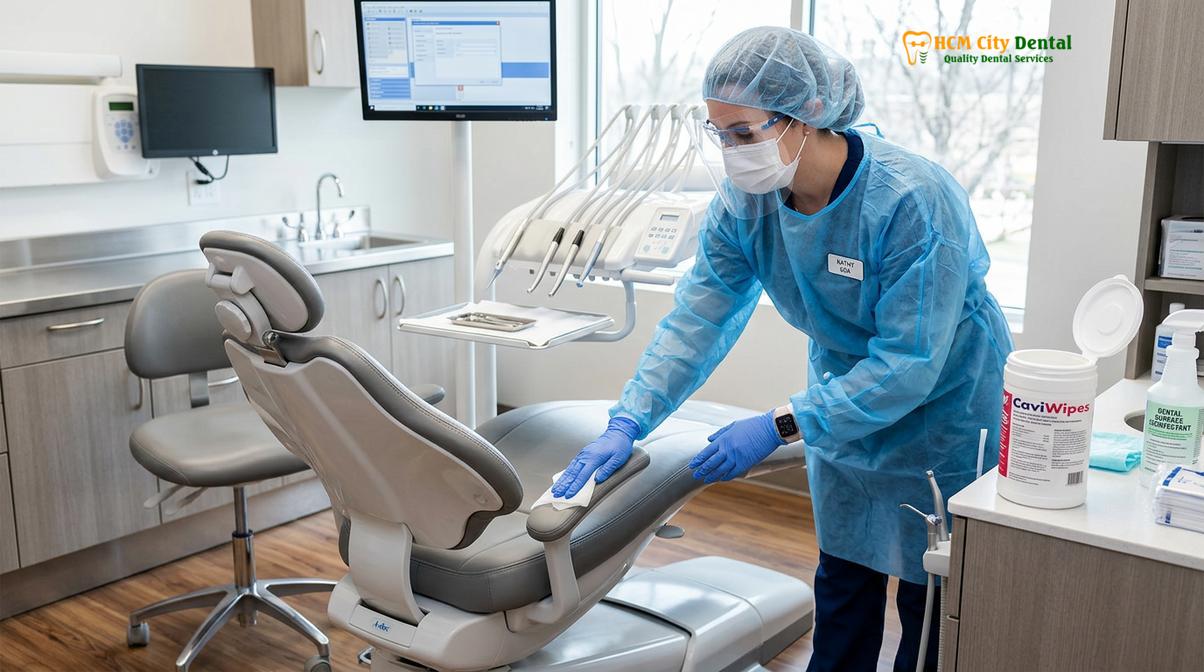
For international patients getting dental implants on holiday, this meticulous attention to environmental disinfection is a critical factor in preventing post-operative complications. A clinician dedicated to preventing cross-contamination will never rush the operatory turnaround process, recognizing that a pristine environment is just as important as a sterile surgical drill.
Air Purification and Clean Water Systems
Advanced HEPA filtration and independent, anti-retraction waterline systems are utilized to control infectious aerosols and prevent bacterial biofilm buildup during dental procedures.
Modern dentistry relies heavily on rotary instruments, such as high-speed handpieces and ultrasonic scalers, which require a continuous flow of water for cooling and irrigation. The interaction of this water with the patient’s saliva and the rapidly spinning instruments generates a fine mist known as dental aerosols. These aerosols can remain suspended in the clinical air for extended periods and may carry microscopic pathogens. Managing air quality and water purity is therefore a critical component of comprehensive infection control.
To mitigate the risk of airborne transmission, advanced clinics integrate high-efficiency particulate air (HEPA) filtration systems within their HVAC infrastructure, supplemented by standalone medical-grade air purifiers in each operatory. Furthermore, the use of High-Volume Evacuators (HVE) during procedures captures the vast majority of aerosols directly at the source—inside the patient’s mouth—before they can disperse into the room.
Clinical Case Focus: Waterline Purity in Implant Surgery
An international patient visiting HCMC Dental Clinic in Ho Chi Minh City presented for full-arch implant rehabilitation. Given the patient’s systemic profile, the risk of opportunistic infection was carefully managed. The surgical team utilized an independent, sterile saline irrigation system specifically designed for implantology, bypassing the standard dental chair waterlines entirely. Combined with the clinic’s routine anti-retraction valve protocols and chemical waterline shock treatments, the surgical site remained completely uncontaminated, resulting in flawless osseointegration and a smooth recovery.
Equally important is the management of Dental Unit Waterlines (DUWLs). The narrow plastic tubing that supplies water to the dental handpieces is highly susceptible to the formation of bacterial biofilms—complex communities of microorganisms that adhere to the inner walls of the tubes. If left untreated, these biofilms can harbor opportunistic pathogens which are then sprayed directly into the patient’s mouth during treatment.
To ensure water safety, a reputable clinic will utilize independent water reservoir bottles rather than relying on municipal water supplies. These reservoirs are filled with purified, distilled water and treated with specialized waterline disinfectants. Additionally, modern dental chairs are equipped with anti-retraction valves. These crucial mechanical components prevent the “suck-back” of patient saliva and blood into the waterlines when the handpiece stops spinning, thereby preserving the integrity of the internal fluid system.
Auditing a Clinic’s Sterile Room During Your Visit
Patients are encouraged to visually inspect the sterilization area and request biological validation logs to independently verify the clinic’s adherence to international safety standards.
When finding a trustworthy dentist in Ho Chi Minh City, patients must transition from passive recipients of care to active participants in their health and safety. You have the right to ask questions about the clinic’s infection control protocols before agreeing to any treatment. A facility that adheres to high standards will be transparent and proud to showcase its sterilization workflow.
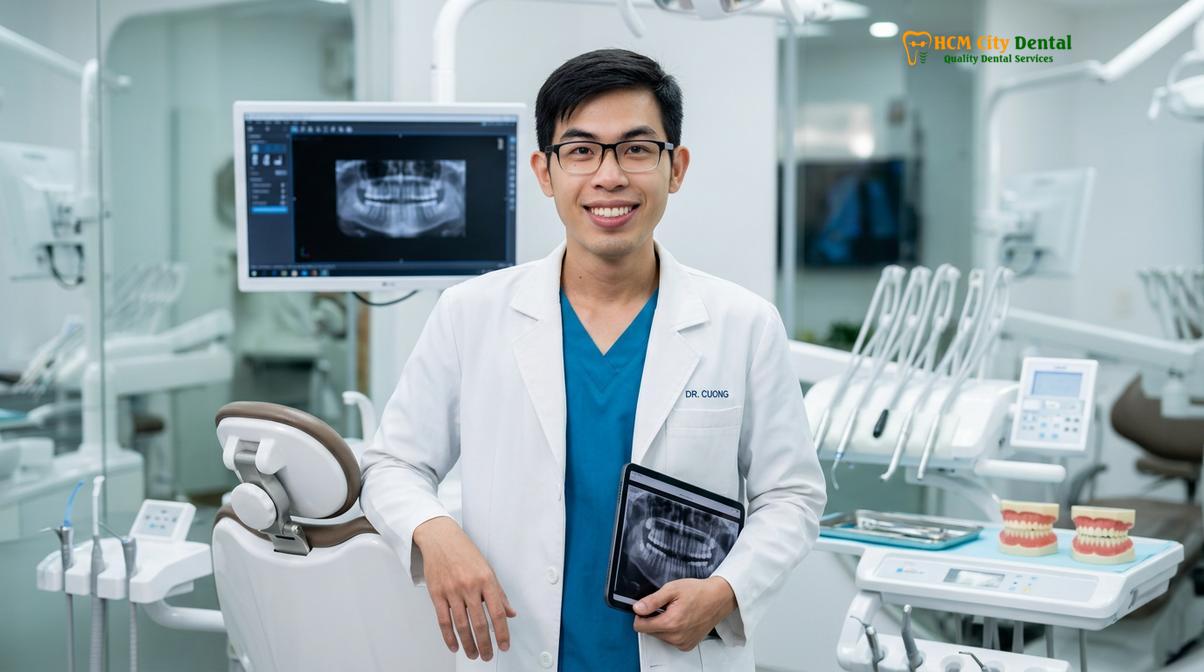
Dr. Nguyen Van Cuong, a leading clinical director, frequently emphasizes that the utilization of Class-B autoclaves is the cornerstone of any reputable practice. As a dedicated specialist, Dr. Cuong ensures that every surgical kit processed at HCMC Dental Clinic undergoes this rigorous vacuum sterilization phase. This unwavering commitment provides patients with an uncompromising shield against cross-contamination during complex procedures.
“Transparency in infection control is a patient’s fundamental right. Never hesitate to ask your provider to explain their sterilization workflow before beginning treatment.”
During your initial consultation, ask to see the sterilization room. Look for a clear separation between the “dirty” receiving area and the “clean” packaging and storage areas. Observe whether the staff is wearing appropriate personal protective equipment (PPE) while handling contaminated instruments. Finally, inquire about their biological monitoring practices; a clinic that routinely spore-tests its autoclaves is demonstrating a profound commitment to patient safety.
Important Considerations for Dental Tourists
Understanding when to consult your dentist about safety protocols is vital for ensuring a secure and successful treatment experience abroad.
For patients traveling internationally for care, evaluating a clinic’s safety standards should be done well before booking a flight. If you are comparing dental implants in Vietnam vs Thailand, make infection control a primary metric in your decision-making process. Do not rely solely on marketing materials; instead, ask specific questions during your virtual consultation. Inquire about the exact make and model of their autoclaves, their policies on single-use items, and how they manage waterline purity.
You should immediately consult with the clinical director or seek an alternative provider if you notice red flags upon arrival. These warning signs include a cluttered or visibly dirty operatory, the reuse of disposable items like suction tips or anesthetic carpules, or a reluctance from the staff to discuss their sterilization procedures. An English-speaking dentist in Ho Chi Minh City who prioritizes international standards will always take the time to address your safety concerns comprehensively, ensuring you feel completely secure before any clinical work begins.
References
- Centers for Disease Control and Prevention (CDC). Guidelines for Infection Control in Dental Health-Care Settings. (2003).
- World Health Organization (WHO). Decontamination and Reprocessing of Medical Devices for Health-care Facilities. (2016).
- FDI World Dental Federation. Infection Prevention and Control in Dental Practice. (2022).
- International Organization for Standardization (ISO). ISO 13060: Small steam sterilizers. (2014).
- Journal of Hospital Infection. The role of surface disinfection in preventing healthcare-associated infections. (2019).
- Vietnam Ministry of Health (MOH). National Guidelines on Infection Control in Dental Establishments. (2020).
If you are planning your medical journey and want to ensure your treatment meets the highest international safety standards, explore our complete guide for international patients. Contact HCMC Dental Clinic in Ho Chi Minh City today to schedule a consultation and learn more about our uncompromising commitment to infection control and patient safety.