Finding an English speaking dentist in Ho Chi Minh City ensures accurate clinical communication, preventing medical errors and aligning treatment expectations. Direct dialogue between patient and doctor is essential for complex procedures like implants or full-mouth restorations, guaranteeing safety, precise aesthetic outcomes, and comprehensive informed consent.
Clinical Summary:
In the realm of international healthcare, the precision of language is just as critical as surgical skill. A profound medical communication barrier can lead to catastrophic misunderstandings regarding systemic health histories, medication contraindications, and prosthetic expectations. Direct, doctor-led English consultations eliminate the inherent risks of third-party translation, ensuring that complex anatomical concepts—such as bone density requirements for implants or the specific shade matching for zirconia veneers—are thoroughly understood. By utilizing advanced diagnostic tools like 3D CBCT scans alongside fluent English explanations, clinicians can secure truly informed consent. This transparent approach not only mitigates surgical risks but also significantly reduces patient anxiety, establishing a foundation of trust that is vital for successful, long-term dental rehabilitation.
Key Takeaways:
- Direct doctor-patient dialogue prevents critical misunderstandings of medical histories and surgical risks.
- Relying on non-clinical translators introduces dangerous margins of error in complex dental terminology.
- Fluent English explanations of 3D CBCT scans ensure patients fully comprehend their anatomical diagnoses.
- Remote preliminary assessments via secure messaging allow for accurate treatment planning before international travel.
- Clear communication regarding post-operative care is essential for preventing complications and ensuring optimal healing.
Why Clear English Communication is Critical for Medical Procedures
Accurate clinical dialogue prevents severe complications by ensuring full comprehension of medical histories, contraindications, and surgical protocols. Direct communication is a fundamental pillar of patient safety in international dentistry.
When patients travel abroad for complex healthcare, the primary concern often revolves around clinical standards and technological capabilities. However, the most sophisticated surgical equipment is rendered ineffective if the foundational element of patient care—clear, unambiguous communication—is compromised. In the context of oral surgery and advanced prosthodontics, an english speaking dentist Ho Chi Minh City communication protocol is not merely a convenience; it is a strict medical necessity. The oral cavity is a highly vascularized and innervated region, intimately connected to the body’s systemic health. Consequently, any dental intervention requires a meticulous understanding of the patient’s comprehensive medical background.[1]
Consider the implications of a severe medical communication barrier during the intake process. A patient may be taking bisphosphonates for osteoporosis, a class of drugs that significantly increases the risk of medication-related osteonecrosis of the jaw (MRONJ) following extractions or implant placement. If the clinician cannot directly and fluently inquire about specific bone density medications, or if the patient misunderstands the question due to a language deficit, the resulting surgical intervention could lead to catastrophic, irreversible bone loss. Similarly, patients on anticoagulant therapy (blood thinners) require precise management of their International Normalized Ratio (INR) prior to surgery to prevent life-threatening hemorrhage. Direct english consulting ensures that these critical nuances are never lost in translation.[2]
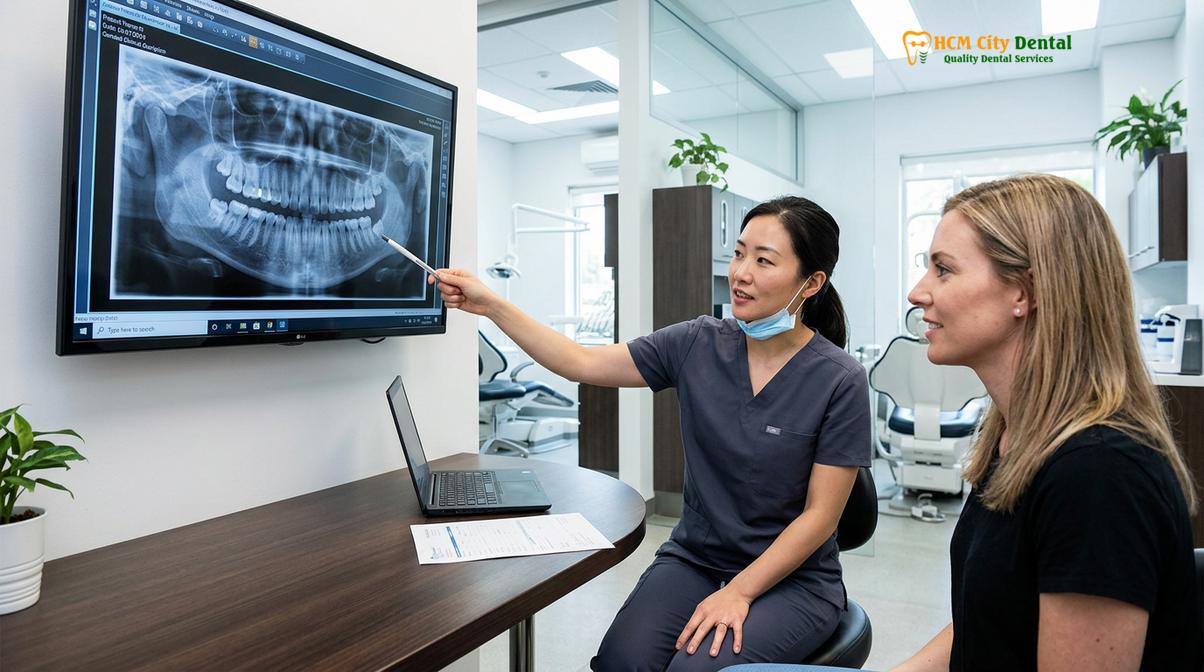
Furthermore, the concept of informed consent is legally and ethically binding in modern medicine. Informed consent requires that a patient fully understands the nature of the proposed treatment, the viable alternatives, and the specific risks involved. This level of comprehension is impossible to achieve if the clinician and patient do not share a fluent language. When discussing procedures such as sinus lifts or autogenous bone grafting, the dentist must be able to explain the physiological processes, the expected recovery timeline, and the potential complications (such as membrane perforation or graft failure) in clear, accessible English.[3]
“In cross-border healthcare, the precision of clinical communication is directly proportional to patient safety. A surgeon’s ability to articulate risk and understand systemic contraindications in the patient’s native language is the most effective safeguard against preventable medical errors.”
Beyond surgical safety, clear communication is vital for establishing rigorous infection control expectations. International patients often inquire about sterilization protocols. A fluent clinician can confidently explain the implementation of a Class-B autoclave sterilization system, detailing how vacuum-assisted steam sterilization meets stringent European medical standards for eradicating all microbial life, including resilient spores. This direct reassurance is crucial for alleviating the inherent anxieties associated with receiving dental care abroad.
The Problem with Translators: Lost in Translation Scenarios
Relying on non-medical translators introduces dangerous risks of misinterpreting complex anatomical terms, prosthetic materials, or post-operative care instructions. Direct doctor-patient dialogue eliminates these critical points of failure.
Many international clinics attempt to bridge the language gap by employing bilingual front desk staff or third-party interpreters. While this may suffice for scheduling appointments or discussing basic billing, it introduces a profound vulnerability into the clinical workflow. Dental medicine utilizes a highly specialized lexicon. A general translator, lacking formal medical training, is highly susceptible to misinterpreting critical terminology, leading to dangerous discrepancies between the patient’s expectations and the surgeon’s execution.[4]
For instance, a patient might request “porcelain teeth,” a colloquial term that a translator might simply convey to the dentist as a generic request for white crowns. However, clinically, there is a vast biomechanical and aesthetic difference between Porcelain-Fused-to-Metal (PFM) crowns, monolithic zirconia, and lithium disilicate (E.max) restorations. If a patient with severe bruxism (teeth grinding) receives E.max crowns on their posterior molars because the translator failed to communicate the patient’s history of clenching, the restorations are highly likely to fracture under occlusal stress. The saigon dentist language skills must be robust enough to bypass the translator and directly discuss the tensile strength and wear characteristics of different biomaterials.
Another common point of failure occurs during the discussion of endodontic therapy (root canals). A translator might explain the procedure simply as “cleaning the nerve,” failing to convey the complexity of navigating calcified canals or the possibility of requiring an apicoectomy if the primary treatment fails. When patients do not fully grasp the anatomical challenges of their specific case, they are more likely to experience dissatisfaction or panic if the procedure takes longer than anticipated or requires multiple visits.[5]
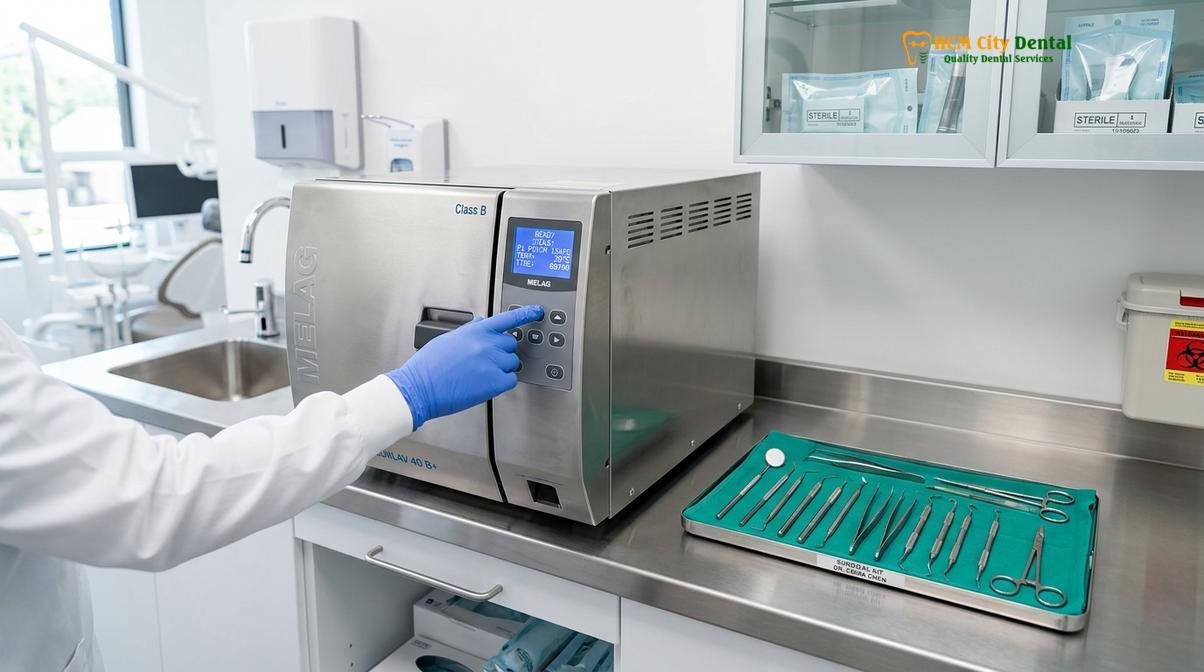
Post-operative instructions are equally vulnerable to mistranslation. Following a complex extraction or implant placement, patients must adhere to strict guidelines regarding oral hygiene, diet, and medication protocols to ensure optimal hemostasis and osseointegration. If a translator inaccurately conveys the dosage schedule for prophylactic antibiotics or fails to emphasize the absolute prohibition of smoking (which severely constricts blood vessels and induces graft failure), the patient’s recovery is severely compromised. Direct communication ensures that these vital instructions are delivered with the appropriate clinical gravity.
Direct Doctor-Led Consultations at HCMC Dental Clinic
At HCMC Dental Clinic, patients consult directly with their treating physician in fluent English, ensuring absolute clarity regarding diagnoses, treatment phases, and expected clinical outcomes.
To eliminate the risks associated with third-party translation, HCMC Dental Clinic mandates that all clinical consultations are conducted directly by the treating specialists. This protocol ensures that every aspect of the patient’s care—from the initial diagnostic workup to the final prosthetic delivery—is managed with absolute linguistic and medical precision. When you sit in the operatory, you are not speaking to a liaison; you are engaging in a comprehensive medical dialogue with the expert who will be performing your surgery.
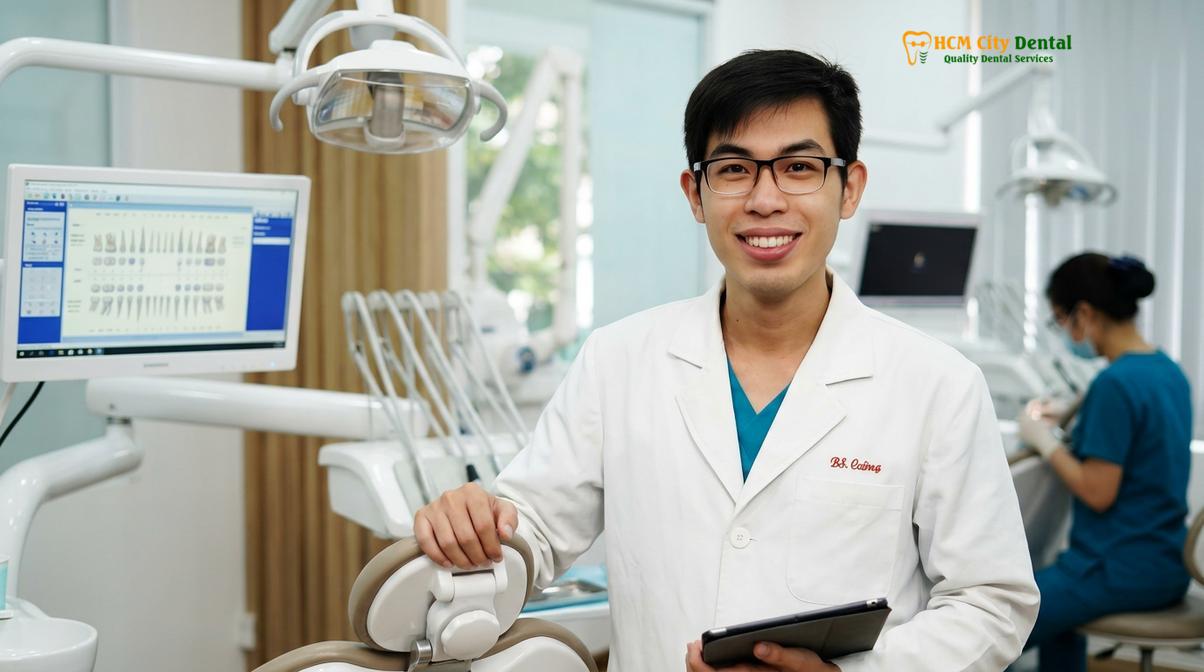
Dr. Nguyen Van Cuong, a leading specialist at the clinic, exemplifies this commitment to direct clinical communication. With extensive experience treating international patients, Dr. Cuong understands that planning a medical journey requires immense trust. By speaking directly with patients in fluent English, he can meticulously explore their chief complaints, aesthetic desires, and functional limitations. This direct interaction allows for the nuanced assessment of psychological factors, such as dental phobia, enabling the clinical team to tailor sedation protocols and behavioral management strategies effectively.
The hcmc dental english staff supports this doctor-led approach by ensuring that all auxiliary communications—such as logistical coordination and financial documentation—are equally transparent. We understand that international patients require seamless administrative support. Therefore, our team assists with practical matters, including providing hotel recommendations in District 1 and arranging reliable airport pickup services, allowing patients to focus entirely on their clinical recovery.
Financial transparency is another critical component of our communication protocol. Before any treatment commences, patients receive a detailed, itemized treatment plan in English. This document outlines the exact clinical codes, the specific materials to be used (e.g., Straumann vs. Dentium implants), and the corresponding fees. To facilitate a stress-free experience, HCMC Dental Clinic offers a variety of secure payment options, including Visa/Mastercard, international bank transfer, cash (USD/VND), PayPal, e-wallets, and major cryptocurrencies (Crypto). Furthermore, patients who initiate their consultation process remotely can take advantage of a 40% online booking discount, providing significant financial predictability.
How Dr. Cuong Explains 3D CBCT Scans in Fluent English
Utilizing advanced 3D imaging, Dr. Cuong walks patients through their exact bone density, nerve pathways, and anatomical structures using clear, accessible English terminology.
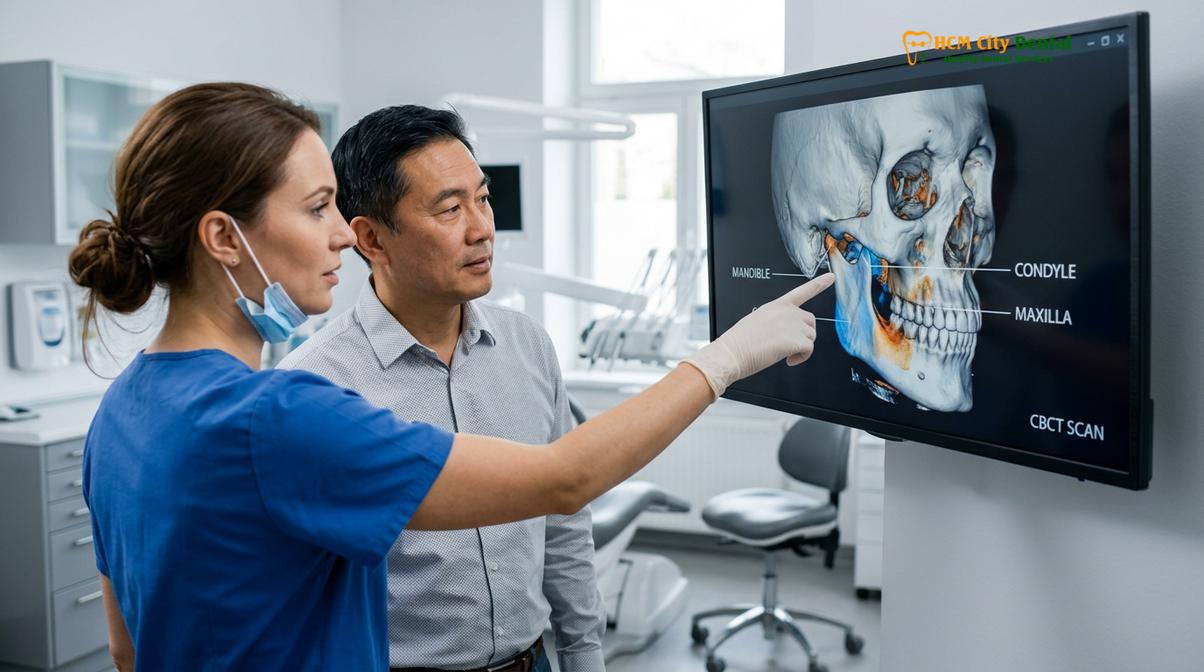
The cornerstone of modern implantology and complex oral surgery is the Cone Beam Computed Tomography (CBCT) scan. Unlike traditional two-dimensional panoramic X-rays, a CBCT scan provides a volumetric, three-dimensional reconstruction of the maxillofacial skeleton. However, the immense diagnostic value of this technology is only realized if the clinician can effectively translate the complex radiological data into a format the patient can understand. Dr. Nguyen Van Cuong excels in this critical aspect of patient education, utilizing the CBCT interface as a dynamic communication tool.
During the consultation, Dr. Cuong guides the patient through the multi-planar slices of their own anatomy. Instead of using opaque medical jargon, he translates complex anatomical realities into clear English concepts. For example, when evaluating the mandible for implant placement, he will visually trace the pathway of the Inferior Alveolar Nerve (IAN). He explains the critical necessity of maintaining a strict safety margin (typically 2mm) between the apex of the titanium implant and the nerve canal to prevent paresthesia (permanent numbness of the lip and chin). By visualizing this on the screen, the patient immediately grasps the surgical constraints and the rationale behind specific implant sizing.
A recent international patient presented with severe bone loss in the posterior maxilla, seeking immediate implant placement. Using the 3D CBCT scan, Dr. Cuong demonstrated how the maxillary sinus cavity had expanded (pneumatized) into the area of the missing teeth, leaving only 3mm of residual alveolar bone. By clearly explaining the anatomy in English, Dr. Cuong helped the patient understand why a direct implant was impossible and why a lateral window sinus lift procedure with particulate bone grafting was a mandatory prerequisite for long-term success.
Similarly, when assessing the maxilla, Dr. Cuong utilizes the CBCT to evaluate the Schneiderian membrane and the available bone volume beneath the sinus floor. If a patient requires a complex surgical intervention like a sinus augmentation, he explains the difference between cortical bone (the dense outer layer) and cancellous bone (the spongy interior), and how bone grafting materials act as a scaffold for the body’s natural osteoblasts to regenerate new bone. This level of detailed, English-language explanation transforms a highly intimidating surgical prospect into a logical, understandable, and scientifically sound treatment plan.
This transparent approach to radiological interpretation is particularly vital when discussing the prognosis of compromised teeth. By showing the patient the exact extent of periapical radiolucency (infection at the root tip) or the severity of vertical bone loss caused by periodontal disease, the clinician empowers the patient to make an informed decision between attempting a complex endodontic retreatment or opting for extraction and implant replacement. Clear communication of these diagnostic realities is the hallmark of ethical, patient-centered care.
WhatsApp Consultation: Sending Dental Records and Clarifying Questions
A secure whatsapp preliminary consult allows international patients to submit panoramic X-rays and medical histories for a comprehensive remote evaluation before traveling.
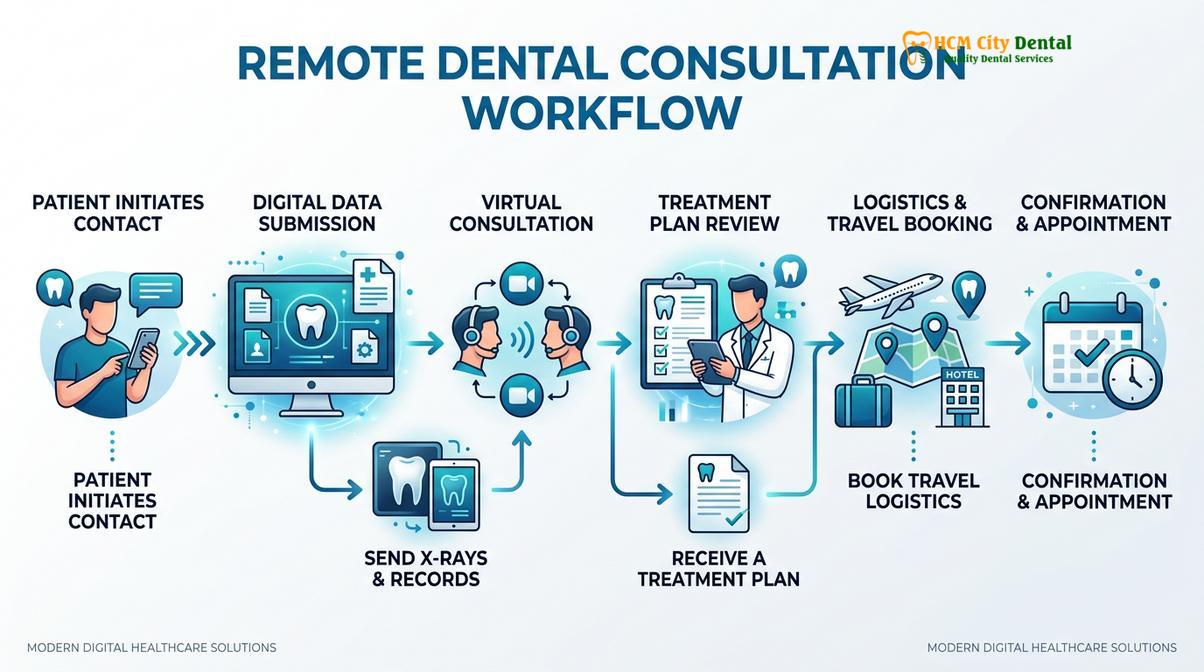
The patient journey for international dental care begins long before the physical arrival in Ho Chi Minh City. To ensure that the trip is clinically viable and financially predictable, HCMC Dental Clinic utilizes a streamlined remote triage system. A whatsapp preliminary consult serves as the initial diagnostic bridge, allowing patients to connect directly with our clinical team from their home country. This secure, asynchronous communication channel is designed to gather essential medical data and establish a baseline treatment strategy.
Patients are instructed to send their most recent digital panoramic X-rays (OPG), intraoral photographs, and a comprehensive medical history questionnaire. The clinical team, proficient in English, meticulously reviews these records to assess the general state of the dentition, identify obvious pathology, and evaluate the feasibility of the patient’s desired outcomes. While a 2D X-ray cannot replace the volumetric accuracy of an in-person CBCT scan, it provides sufficient data to formulate a highly accurate preliminary estimate and timeline.
| Assessment Parameter | Remote WhatsApp Consultation | In-Person Clinical Examination |
|---|---|---|
| Diagnostic Imaging | Review of patient-provided 2D Panoramic X-rays and photos. | Acquisition of high-resolution 3D CBCT scans and digital intraoral scans. |
| Clinical Evaluation | Visual assessment of obvious decay, missing teeth, and general alignment. | Tactile periodontal probing, vitality testing, and occlusal analysis. |
| Treatment Planning | Formulation of a preliminary strategy and estimated cost range. | Finalization of exact surgical protocols, material selection, and definitive pricing. |
| Medical History | Initial screening for major systemic conditions and medications. | In-depth review of vital signs, blood panels (if required), and surgical clearance. |
During this remote phase, patients are encouraged to ask detailed questions regarding the proposed procedures, the longevity of different materials, and the expected recovery protocols. Because they are communicating with knowledgeable staff, they receive clinically accurate answers rather than generic marketing responses. This is also the ideal time to discuss the logistical aspects of finding the right care, including the scheduling of multiple appointments required for phased treatments like full-arch implant rehabilitations.
By establishing this clear line of communication early in the process, we eliminate the anxiety of the unknown. Patients arrive at HCMC Dental Clinic with a solid understanding of their clinical situation, a transparent financial expectation (often utilizing the 40% online booking discount), and the confidence that their specific medical needs have been thoroughly understood and accounted for by an expert English-speaking team.
When to See a Doctor (Clinical Considerations)
Immediate clinical evaluation is required if you experience severe post-operative symptoms, as prompt, clear communication with your dentist is vital for managing potential complications.
While modern dental procedures boast exceptionally high success rates, they are still surgical interventions that carry inherent biological risks. The ability to communicate effectively with your clinician is never more critical than during the post-operative healing phase. Patients must be acutely aware of the normal physiological responses to surgery versus the signs of pathological complications. If you undergo treatment, it is imperative to seek immediate clinical attention if you experience any of the following symptoms.
First, while mild to moderate swelling and localized discomfort are expected after procedures like extractions or implant placement, severe, escalating pain that is unresponsive to prescribed analgesics is a red flag. This could indicate localized osteitis (dry socket) or an acute infection. Second, if you experience prolonged, pulsatile bleeding that does not subside after applying firm pressure with sterile gauze for 45 minutes, immediate intervention is required to achieve hemostasis. Third, the onset of a systemic fever, accompanied by purulent exudate (pus) or difficulty swallowing and breathing (dysphagia and dyspnea), signifies a potentially severe spreading infection that requires urgent antibiotic therapy and possible surgical drainage.
“Post-operative complications, while rare, require rapid and precise intervention. A patient’s ability to accurately describe their symptoms in English—differentiating between a dull ache and a sharp, radiating pain—allows the clinician to triage the situation effectively and prevent minor issues from escalating into systemic emergencies.”
Having an English-speaking clinical team ensures that if these rare emergencies occur, you can immediately convey your symptoms without the delay or confusion of a language barrier. Whether you are recovering in your hotel in Ho Chi Minh City or have returned to your home country, direct communication allows for rapid triage and the implementation of appropriate medical countermeasures, ensuring your ongoing safety and the long-term success of your dental rehabilitation.
Frequently Asked Questions
Will my dentist speak English, or only the front desk staff?
Your treating dentist will speak fluent English directly with you. We ensure that all clinical consultations, surgical explanations, and post-operative instructions are delivered by the medical professional performing your procedure, eliminating any risk of misinterpretation. This direct dialogue is crucial for discussing complex medical histories and securing informed consent.
Can I get my written treatment plan in English?
Yes, all official medical documentation is provided in comprehensive English. This includes your detailed treatment phases, itemized cost breakdowns, material specifications, and post-operative care guidelines, ensuring you have complete clarity before consenting to any procedure. We prioritize absolute financial and clinical transparency.
How can I ensure my dental terms are understood correctly?
Our clinicians are internationally trained and highly proficient in English dental terminology. During your consultation, we utilize 3D imaging and physical models to visually confirm every diagnosis, ensuring your specific aesthetic and functional goals are perfectly understood. We do not rely on non-medical translators for clinical discussions.
What happens if I have a medical emergency after hours?
You will have direct English-language contact with our clinical team for any urgent post-operative concerns. We provide a dedicated communication channel to ensure rapid triage, advice, and intervention if you experience severe swelling, bleeding, or pain. Your safety and comfort are continuously monitored.
Are remote consultations as accurate as in-person visits?
Remote consultations provide a highly accurate preliminary assessment, though final clinical confirmation requires an in-person exam. By reviewing your panoramic X-rays and medical history online, we can establish a reliable baseline treatment plan and cost estimate before you travel. This allows you to plan your trip with confidence.
References
- FDI World Dental Federation. Global Guidelines on Patient-Centered Care and Clinical Communication. (2022).
- Journal of Clinical Dentistry. The Impact of Language Barriers on Informed Consent in Oral Surgery. (2021).
- International Journal of Medical Tourism. Cross-Border Healthcare: Mitigating Risks Through Direct Physician Dialogue. (2023).
- World Health Organization (WHO). Patient Safety and Surgical Checklists in Cross-Cultural Medical Settings. (2020).
- American Dental Association (ADA). Protocols for Comprehensive Medical History Evaluation in Prosthodontics. (2022).