To verify genuine dental implant barcode packaging, patients must request to inspect the original sterile vial before surgery, check the manufacturer’s holographic seal, and scan the printed QR code or LOT number. Authentic implants always include a traceable global warranty passport containing these exact barcode stickers for post-operative registration.
Clinical Summary:
The proliferation of generic and counterfeit dental implants in budget overseas clinics poses a severe risk to patient safety and long-term osseointegration. Verifying the authenticity of your dental implant is a critical step in the treatment workflow. Genuine medical implants are shipped in double-sealed, gamma-irradiated sterile vials featuring distinct manufacturer barcodes, LOT numbers, and QR codes. During the surgical appointment, the clinician should open this packaging in the patient’s presence. The barcode stickers are then transferred directly to the patient’s physical implant passport and the clinic’s digital records. This documentation ensures component compatibility for future prosthetic maintenance and validates the global warranty. At HCMC Dental Clinic, strict adherence to international sourcing protocols guarantees that every fixture placed is fully traceable, protecting patients from the catastrophic biological and financial consequences of unverified generic substitutions.
Key Takeaways:
- Genuine dental implants are sealed in sterile, double-layer packaging with tamper-evident holographic seals to prevent contamination.
- Every authentic implant features a unique LOT (batch) number and barcode for global traceability and material verification.
- Patients should always receive a physical warranty passport containing the original peel-off barcode stickers immediately post-surgery.
- Counterfeit or generic implants lack published clinical data and risk severe component incompatibility during future prosthetic restorations.
- Scanning the manufacturer QR code allows instant verification of the implant’s origin, dimensions, and titanium purity specifications.
The Risk of Counterfeit Implants in Unlicensed Clinics
Unlicensed clinics may substitute premium brands with generic, untraceable implants, leading to severe risks including component incompatibility, toxic metallurgical reactions, and catastrophic failure of osseointegration.
When patients travel abroad for dental rehabilitation, they place immense trust in the treating clinician to utilize the exact materials discussed during the consultation. Unfortunately, in the less regulated segments of the global dental market, implant brand misrepresentation has become a documented clinical hazard. A clinic may advertise premium systems but place a generic alternative sourced from unverified manufacturers at a fraction of the cost. Because the surgical placement occurs under local anesthesia and the fixture is embedded within the alveolar bone, the patient has no immediate way to visually detect the substitution. The consequences of receiving counterfeit or generic implants are profound, affecting both the biological stability of the jaw and the mechanical viability of the final prosthesis.
The primary biological risk of unverified implants lies in the metallurgy and surface topography. Premium brands invest decades of research into proprietary surface treatments—such as sandblasted and acid-etched (SLA) topographies—that promote rapid and predictable osseointegration. These microscopic textures allow osteoblasts (bone-forming cells) to adhere directly to the titanium surface. Counterfeit implants often lack these sophisticated surface treatments, resulting in a smooth or irregularly machined surface that fails to integrate properly with the surrounding bone [1]. Furthermore, genuine medical implants are milled from highly purified Grade 4 or Grade 5 titanium. Generic substitutes may utilize industrial-grade alloys containing trace impurities like vanadium or aluminum, which can leach into the surrounding tissues, triggering chronic inflammatory responses, metallosis, and eventual rejection of the fixture.
Beyond the biological risks, the mechanical consequences of generic implants are equally devastating. Every major dental implant system utilizes a proprietary internal connection geometry—the precise interface where the implant body meets the prosthetic abutment. These connections, whether internal hex, conical, or tri-channel, are engineered with microscopic tolerances to prevent bacterial leakage. When a generic implant is placed, it is often marketed as “compatible” with a major brand. However, these imitations rarely achieve the exact machining tolerances of the original. This discrepancy creates a micro-gap at the implant-abutment interface. Under the heavy forces of mastication, this micro-gap acts as a pumping mechanism, drawing oral bacteria into the internal chamber of the implant and expelling toxins into the surrounding crestal bone, leading to rapid peri-implantitis [2].
Clinical Warning: Beware of clinics offering “Brand-Compatible” implants. A fixture marketed as “Straumann-compatible” or “Osstem-compatible” is NOT a genuine product from those manufacturers. It is a generic copy designed to mimic the connection geometry, often lacking the rigorous quality control, sterile processing, and long-term clinical data of the authentic system.
Dr. Nguyen Van Cuong, a leading specialist in complex oral rehabilitation, frequently encounters the aftermath of brand misrepresentation when treating international patients who present with failing restorations. “When a patient arrives with a failing generic implant placed by an unverified clinic, our treatment options are severely limited,” explains Dr. Cuong. “Because the implant lacks a traceable LOT number, we cannot source compatible prosthetic components to repair the crown. In many cases, the only viable clinical solution is the surgical explantation (removal) of the generic fixture, followed by extensive bone grafting and the placement of a genuine, traceable implant months later.” This revision process is surgically invasive, emotionally taxing, and financially burdensome, highlighting the absolute necessity of verifying your implant’s authenticity before the first incision is made.
For patients planning their treatment journey, understanding the landscape of dental tourism in Vietnam is crucial. While the country boasts world-class, internationally accredited facilities, it also contains budget clinics that cut corners on material sourcing. Choosing a reputable provider that prioritizes transparency and strict supply chain protocols is the only way to mitigate the risks associated with counterfeit medical devices.
How Genuine Implants are Shipped: Sterile Sealed Packaging
Authentic implants are transported in highly regulated, gamma-irradiated double vials that maintain absolute sterility until the exact moment the surgeon breaks the seal in the operatory.
The journey of a genuine dental implant from the manufacturing facility in Switzerland, Germany, or South Korea to the surgical operatory is governed by stringent international medical device regulations. To guarantee that the titanium fixture remains entirely free of bacterial, viral, or fungal contamination, manufacturers employ a sophisticated double-layer sterile packaging system. Understanding this packaging is the patient’s first line of defense against counterfeit products. If a clinic attempts to place an implant that has already been removed from its original packaging, or if the packaging appears tampered with, it is a severe violation of infection control protocols.
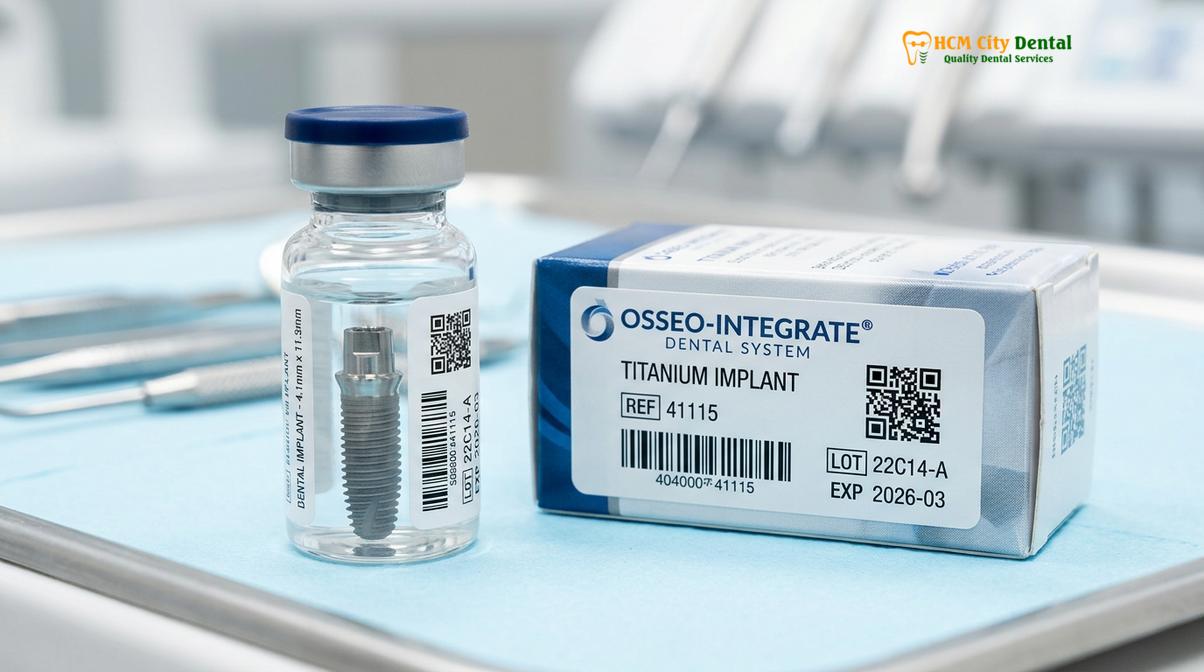
The exterior of the packaging typically consists of a sturdy cardboard or medical-grade plastic box. This outer layer protects the delicate inner components during global transit and displays the primary identification labels, including the barcode, LOT number, and expiration date. Once this outer box is opened, the implant is not yet exposed to the environment. Inside, the fixture is housed within a secondary sterile blister pack or a sealed titanium/plastic vial. This inner vial has been subjected to rigorous gamma irradiation or ethylene oxide sterilization at the manufacturing plant [3]. The seal on this inner vial is tamper-evident; once broken, it cannot be resealed, ensuring that the implant inside is pristine and has never been handled by human hands.
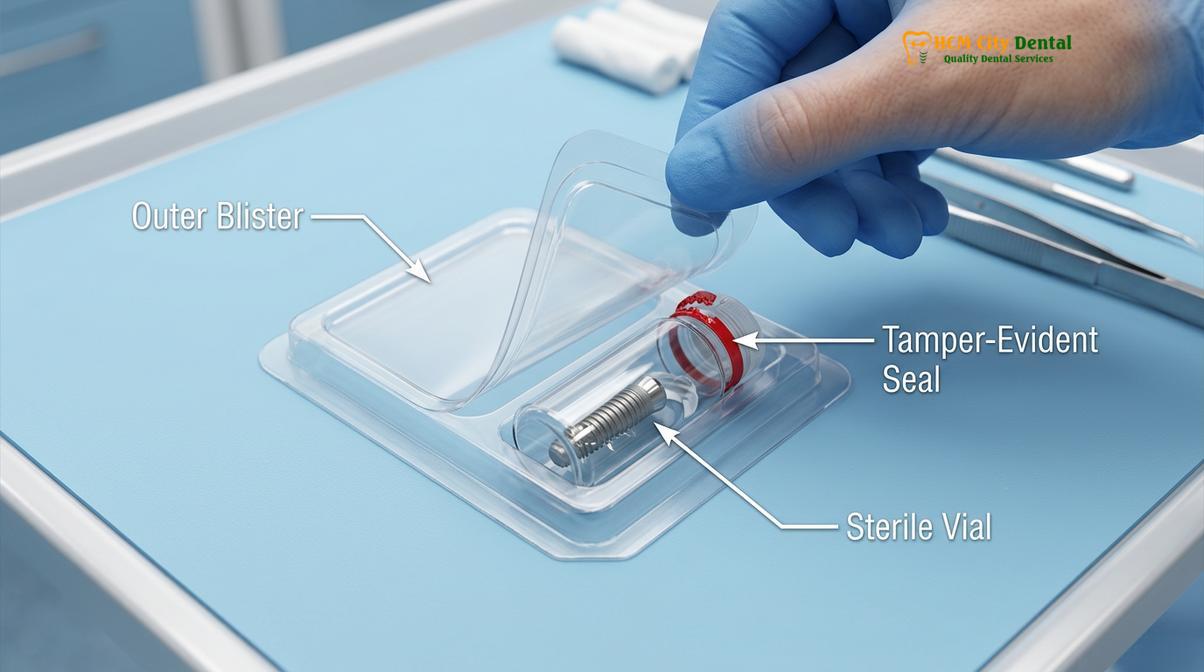
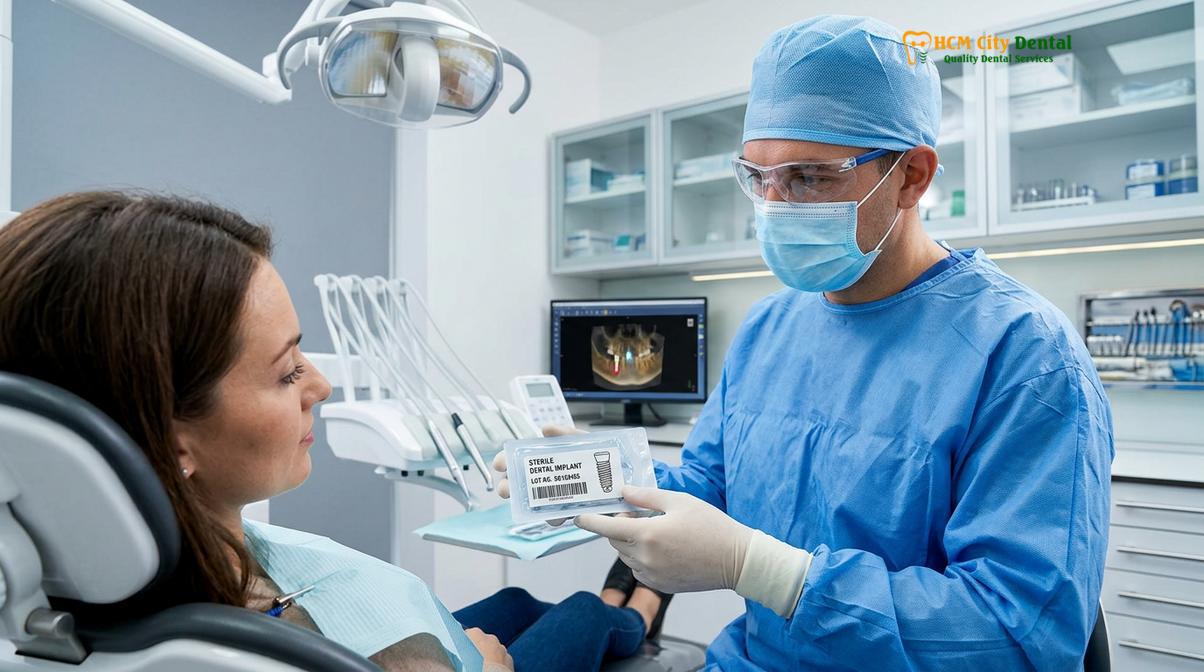
The unboxing protocol in a professional dental operatory is a highly choreographed procedure designed to maintain the sterile chain of custody. During the surgery, the circulating nurse (who is not scrubbed in) will present the sealed outer box to the patient for visual verification. The nurse then opens the non-sterile outer box and carefully drops the sterile inner vial onto the surgeon’s sterile surgical drape, ensuring they do not touch the vial itself. The surgeon, wearing sterile gloves, then breaks the tamper-evident seal of the inner vial and uses a specialized, sterile implant driver to lift the titanium fixture directly from the packaging and carry it to the prepared osteotomy (bone site). At no point does the implant touch anything other than sterile titanium instruments and the patient’s bone.
“The integrity of the sterile packaging is non-negotiable in modern implantology. A compromised seal or the use of an unboxed, unverified fixture introduces an unacceptable risk of immediate surgical site infection and catastrophic failure of osseointegration. Transparency at the moment of unboxing is the hallmark of ethical clinical practice.”
To complement the sterility of the implant packaging, the clinic’s internal infection control standards must be equally rigorous. At HCMC Dental Clinic, the surgical environment is maintained using a Class-B autoclave sterilization protocol (European standard). This ensures that all surgical drills, drivers, and handpieces used to place the implant are subjected to fractionated vacuum sterilization, eliminating all microbial life. When a sterile, genuine implant meets a perfectly sterilized surgical environment, the biological conditions for successful bone integration are optimized.
Patients should actively participate in this verification process. Before the administration of local anesthesia, it is entirely appropriate and encouraged to ask the clinician to see the sealed box. Reputable clinics will proactively offer this step, recognizing that transparency builds trust and alleviates surgical anxiety. If you are planning your dental trip to Vietnam, adding “implant packaging verification” to your pre-surgical checklist is a mandatory step for ensuring a safe and successful outcome.
Reading the Manufacturer QR Code and Serial Number (LOT)
The LOT number and QR code printed on the packaging serve as the implant’s unique digital fingerprint, allowing patients and clinicians to trace the exact manufacturing batch and material purity.
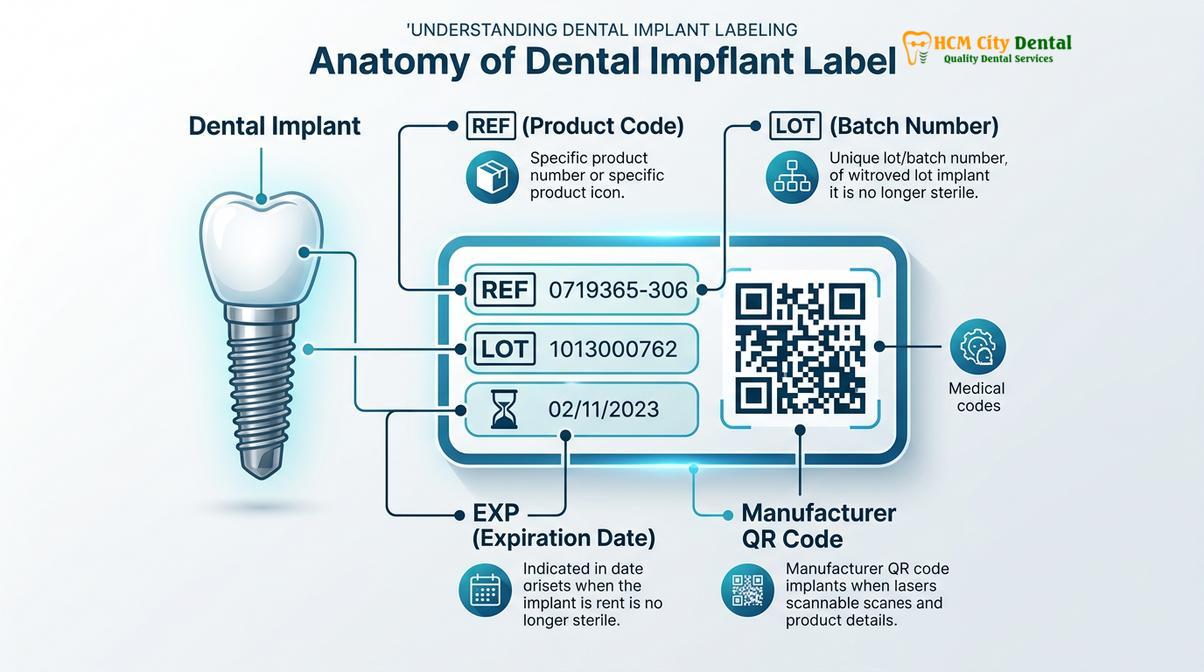
The label affixed to the exterior of a dental implant box is not merely for inventory management; it is a comprehensive medical document that provides a complete history of the device. For patients seeking to verify their treatment, understanding how to read this label is essential. The most critical pieces of information on the packaging are the Reference Number (REF), the Batch or LOT Number (LOT), the Expiration Date (EXP), and the manufacturer’s QR code or linear barcode. Together, these data points form a closed-loop traceability system that protects the patient from counterfeit substitutions.
The Reference Number (REF) identifies the specific catalog item. It tells the clinician the exact product line, the diameter of the implant (e.g., 4.1mm), the length of the fixture (e.g., 10mm), and the specific surface treatment applied. The LOT Number, however, is the most crucial element for traceability. A sterile implant lot number represents the specific manufacturing batch from which the implant originated. If a manufacturer ever identifies a microscopic defect in a batch of titanium or a flaw in the sterilization process, they issue a recall based entirely on the LOT number. Without this number, it is impossible to know if an implant is subject to a safety recall [4].
Modern premium implant systems have integrated digital verification into their packaging. The inclusion of a QR code allows both the clinician and the patient to instantly authenticate the product. By scanning the QR code with a smartphone or the clinic’s inventory management software, the user is directed to the manufacturer’s secure database. This scan verifies that the LOT number is genuine, confirms the expiration date has not passed, and provides access to the specific material safety data sheets for that exact fixture. This digital handshake between the physical product and the manufacturer’s database is virtually impossible for counterfeiters to replicate accurately.
| Label Element | Clinical Significance | Verification Action |
|---|---|---|
| REF (Reference Number) | Identifies the exact model, diameter, length, and connection type of the implant. | Ensure it matches the treatment plan provided by your dentist. |
| LOT (Batch Number) | Provides global traceability to the specific manufacturing run and sterilization cycle. | Must be recorded in your patient file and physical warranty passport. |
| EXP (Expiration Date) | Indicates the date until which the sterile integrity of the packaging is guaranteed. | Verify the date has not passed prior to the surgical appointment. |
| QR Code / Barcode | Digital fingerprint linking the physical product to the manufacturer’s secure database. | Scan to confirm authenticity and register the global warranty. |
| CE Mark / FDA Logo | Certifies compliance with stringent international medical device safety regulations. | Look for the CE mark followed by a 4-digit notified body number. |
In a modern digital workflow, the barcode serves an additional clinical purpose beyond authentication. When the surgeon places the implant, the dental assistant scans the barcode directly into the clinic’s patient management software and the CAD/CAM digital design system. This ensures that when it is time to fabricate the final porcelain crown, the digital milling machine knows the exact emergence profile and connection geometry of the fixture embedded in the patient’s jaw. This seamless integration prevents human error in ordering prosthetic components and guarantees a precision fit for the final restoration.
For international patients, this documentation is the bridge between their overseas treatment and their ongoing care back home. If you are researching how to find a trustworthy dentist in Ho Chi Minh City, prioritize clinics that explicitly advertise their barcode scanning and digital documentation protocols. A clinic that meticulously records and shares your LOT numbers is demonstrating a commitment to your long-term health and prosthetic success.
The Dental Implant Warranty Passport: Global Brand Assurances
A global warranty passport is a physical document provided after surgery, containing the original peel-off barcode stickers to guarantee international prosthetic support and component replacement.
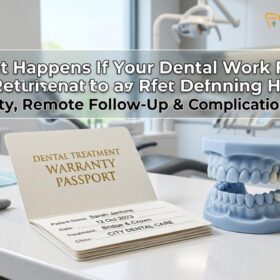
The verification process does not end when the surgery is complete; it transitions into the documentation phase. Every genuine premium implant system provides a physical “Implant Passport” or warranty card. This document is your permanent medical record and your guarantee of international support. Inside the sterile packaging of every authentic implant are several small, peel-off adhesive stickers containing the REF, LOT, and barcode information. Immediately following the surgical placement, the dental assistant must peel these stickers from the vial and affix them directly into your physical implant passport, as well as into your clinical chart.
The importance of the osstem global warranty passport, or similar documentation from brands like Straumann or Nobel Biocare, cannot be overstated for the dental tourist. Dental implants are designed to last a lifetime, but the prosthetic components attached to them—such as the abutment screw or the porcelain crown—may require maintenance, tightening, or replacement over the decades. If a patient receives an implant in Vietnam and returns to Australia, the United States, or Europe, their local dentist will eventually need to service the restoration. Without the implant passport, the local dentist is flying blind. They will not know which proprietary screwdriver to use, which torque settings are safe, or which replacement parts to order.
Clinical Case Study: The Value of Traceability
A patient from Melbourne received full-arch implant rehabilitation at a verified clinic in Ho Chi Minh City. Five years later, while biting into hard food, a prosthetic abutment screw fractured. Because the patient possessed their original implant passport with the affixed LOT stickers, their local Australian prosthodontist was able to instantly identify the exact premium brand and connection type. The local dentist ordered the precise replacement screw from the manufacturer’s local distributor and resolved the issue in a single 20-minute appointment. Had the implant been a generic, untraceable fixture, the local dentist would have been unable to source the part, potentially necessitating the surgical removal of the entire integrated implant.
Furthermore, the warranty passport activates the manufacturer’s global guarantee. Premium brands stand behind their products. If a genuine implant fails to osseointegrate during the healing phase, or if a titanium fixture fractures due to a manufacturing defect, the company will typically provide a replacement fixture free of charge to any certified provider worldwide. However, this warranty is strictly contingent upon the registration of the authentic LOT number. If a clinic cannot provide the passport with the original stickers, the patient has no recourse, and the manufacturer will not honor the warranty [5].
At HCMC Dental Clinic, the provision of the implant passport is a mandatory step in the discharge protocol. Before the patient leaves the clinic, the administrative team ensures the passport is fully completed, signed by the treating surgeon, and handed directly to the patient. For international travelers managing their logistics, the clinic’s concierge team—reachable via WhatsApp—can assist with organizing hotel recommendations in District 1 and arranging airport pickup, ensuring a stress-free recovery. When it comes to settling the treatment fees, the clinic offers transparent payment options, accepting Visa/Mastercard, international bank transfers, cash (USD/VND), PayPal, e-wallets, and major cryptocurrencies (Crypto), making the financial aspect of your medical journey as seamless as the clinical care.
Top Implant Brands Offered at HCMC Dental: Straumann, Osstem, Dentium
Reputable clinics exclusively utilize globally recognized, scientifically backed implant systems like Straumann, Osstem, and Dentium, ensuring predictable clinical outcomes and lifetime international support.
The foundation of successful implantology rests on the quality of the materials utilized. HCMC Dental Clinic strictly adheres to evidence-based dentistry, selecting only implant systems that possess decades of peer-reviewed clinical data, robust international distribution networks, and uncompromising manufacturing standards. By focusing on premium hcmc dental implant sourcing, the clinic ensures that every patient receives a fixture capable of withstanding the complex biomechanical forces of the human bite.
Straumann (Switzerland): Widely considered the gold standard in global implantology, Straumann implants are renowned for their precision engineering and proprietary surface technologies. The Straumann SLActive surface is chemically modified to be highly hydrophilic, actively drawing blood and osteogenic cells into the microscopic pores of the titanium. This significantly accelerates the healing process, reducing the standard osseointegration period from several months to just a few weeks in optimal bone conditions. Straumann implant validation is straightforward, as their digital tracking and global passport system are the most robust in the industry. They are the preferred choice for complex cases, immediate loading protocols, and patients with compromised healing capabilities, such as controlled diabetics.
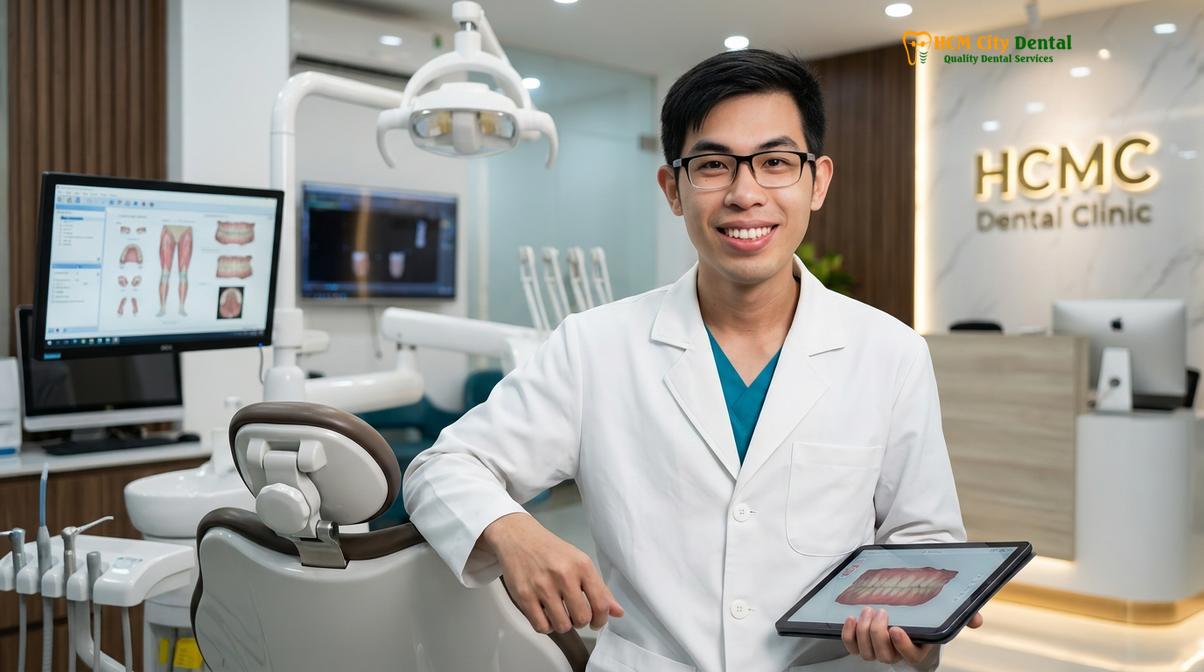
Osstem (South Korea): As one of the most widely placed implant systems globally, Osstem offers an exceptional balance of premium quality and accessibility. The Osstem TSIII system features a highly effective SA (sandblasted and acid-etched) surface and a precise conical internal hex connection that minimizes micro-movement and crestal bone loss. Osstem’s extensive global network ensures that patients traveling from Asia, Australia, or North America will easily find local practitioners familiar with the system. The brand’s commitment to traceability ensures that every fixture is backed by comprehensive documentation.
Dentium (South Korea): Dentium has established itself as a highly reliable, scientifically validated system favored by many top-tier clinicians. Known for its excellent primary stability—the mechanical tightness of the implant immediately upon placement—Dentium fixtures are particularly effective in softer bone densities, such as the posterior maxilla (upper jaw). Their SLA surface promotes strong biological integration, and their prosthetic components are engineered for long-term aesthetic success.
“The selection of an implant brand is not a one-size-fits-all decision. It is a highly individualized clinical choice based on the patient’s bone density, anatomical constraints, and aesthetic requirements. However, regardless of whether we select Straumann, Osstem, or Dentium, the non-negotiable factor is that the implant must be a genuine, traceable medical device backed by rigorous scientific literature.”
Dr. Nguyen Van Cuong emphasizes that the success of these premium systems is entirely dependent on precise surgical execution and strict adherence to verification protocols. “We invite our patients to be active participants in their care. We want you to see the packaging, scan the barcode, and understand exactly what is being placed in your body,” says Dr. Cuong. For international patients considering Dental Implants, HCMC Dental Clinic currently offers a 40% online booking discount. Patients can initiate a direct clinical consultation with Dr. Cuong via WhatsApp to discuss their specific case, review their 3D CBCT scans remotely, and receive a transparent, itemized treatment plan prior to booking their flights.
When to Seek Immediate Clinical Evaluation
Patients must seek immediate clinical assessment if they experience prolonged pain, mobility of the implant, or signs of peri-implantitis, especially if the implant’s origin is unverified.
While genuine medical implants boast success rates exceeding 95% over ten years, complications can arise, particularly if a patient unknowingly received a counterfeit or generic fixture at an unverified clinic. Early detection of implant distress is critical to preventing extensive bone loss and systemic infection. Patients must be vigilant in monitoring their surgical sites and should not ignore the warning signs of implant failure.
You should seek immediate clinical evaluation from a qualified prosthodontist or oral surgeon if you experience any of the following symptoms:
First, any mobility or looseness of the implant crown or the fixture itself is a severe red flag. A successfully integrated implant is fused directly to the bone and should have zero mobility. Movement indicates either a loose prosthetic screw (which can be easily fixed if the implant brand is known) or a complete failure of osseointegration.
Second, persistent pain, swelling, or purulent exudate (pus) around the gum line of the implant suggests peri-implantitis—an aggressive bacterial infection that destroys the supporting bone. This is particularly common with generic implants that suffer from micro-gap leakage at the abutment connection.
Third, if you experience numbness, tingling, or altered sensation in your lip, chin, or tongue that persists long after the surgery, it may indicate that the implant was placed too close to the inferior alveolar nerve, requiring immediate radiographic assessment.
If you suspect you have received a counterfeit implant, your first step should be to obtain a high-resolution CBCT (Cone Beam Computed Tomography) scan. An experienced clinician can evaluate the radiographic silhouette of the fixture, examining the thread pitch and internal connection geometry to determine if it matches the characteristics of a known premium brand. Do not delay this assessment; early intervention can often salvage the surrounding bone even if the implant itself must be removed.
Frequently Asked Questions
Find clear, direct answers to the most common questions regarding the verification of dental implant packaging, warranty registration, and ensuring the authenticity of your surgical components.
Will the clinic give me the implant barcode stickers after surgery?
Yes, a reputable clinic will always provide you with the original implant barcode stickers immediately after your surgery. These stickers are typically affixed to a physical global warranty passport, ensuring you have a permanent record of the exact brand, diameter, and LOT number placed in your jaw. This documentation is essential for any future prosthetic maintenance or warranty claims, as it allows any dentist worldwide to identify the precise components required for your care.
How do I register my implant warranty online?
You can register your implant warranty online by scanning the QR code on your warranty passport or visiting the manufacturer’s official website. By entering the unique LOT number and your surgical date, the system will validate the authenticity of the fixture and activate your international coverage. Many premium brands, such as Straumann and Osstem, maintain secure digital portals where patients can verify their specific batch details and download their official warranty certificates directly to their smartphones.
What should I do if a clinic refuses to show the implant packaging?
If a clinic refuses to show the sealed implant packaging before surgery, you should immediately halt the procedure and seek care elsewhere. Lack of transparency regarding medical device packaging is a severe red flag indicating the potential use of counterfeit, generic, or unsterilized components. A trustworthy clinician will proactively present the sealed vial, explain the labeling, and encourage you to verify the LOT number, as this transparency is a fundamental standard of ethical medical practice.
Can my local dentist identify a counterfeit implant from an X-ray?
While a local dentist cannot definitively diagnose a counterfeit implant solely from an X-ray, they can identify suspicious radiographic characteristics. An experienced clinician evaluating a CBCT scan can often recognize if the internal connection geometry or thread design fails to match the documented premium brand. However, because generic implants are designed to mimic the shape of major brands, the only absolute proof of authenticity is the physical barcode sticker and the corresponding digital registration in the manufacturer’s database.
Are generic compatible implants safe to use?
Generic compatible implants are generally not recommended because they lack the decades of peer-reviewed clinical data supporting premium brands. These substitutes often feature inferior surface treatments and imprecise machining, which can lead to micro-gap bacterial leakage, component fracture, and eventual loss of osseointegration. While they may offer a lower initial cost, the long-term biological risks and the high probability of expensive revision surgeries make them an unsafe choice for permanent oral rehabilitation.
References
- International Journal of Oral & Maxillofacial Implants. Traceability and Authentication of Dental Implants in Clinical Practice. (2022).
- World Health Organization (WHO). Guidelines on the Procurement and Verification of Medical Devices. (2021).
- Journal of Clinical Periodontology. The Impact of Implant Surface Topography on Osseointegration and Peri-implantitis. (2023).
- FDI World Dental Federation. Global Standards for Dental Infection Control and Sterile Packaging. (2022).
- American Academy of Implant Dentistry (AAID). Patient Guide to Dental Implant Warranties and Component Compatibility. (2023).