Traveling to Ho Chi Minh City for dental care offers international patients the opportunity to receive world-class treatments—such as full-arch implants and cosmetic veneers—at a fraction of the cost in the US, UK, or Australia. However, the booming medical travel industry has also given rise to predatory practices. Understanding the dental tourism vietnam red flags to avoid is the single most important step in protecting your health, your smile, and your investment [4].
While top-tier clinics in Saigon operate at standards that rival or exceed Western practices, lower-tier facilities often cut dangerous corners. From counterfeit implant materials to aggressive, irreversible tooth preparation, the consequences of choosing the wrong provider can be devastating. This comprehensive clinical guide will equip you with the knowledge to distinguish between a world-class medical facility and a high-risk dental trap.
Clinical Summary:
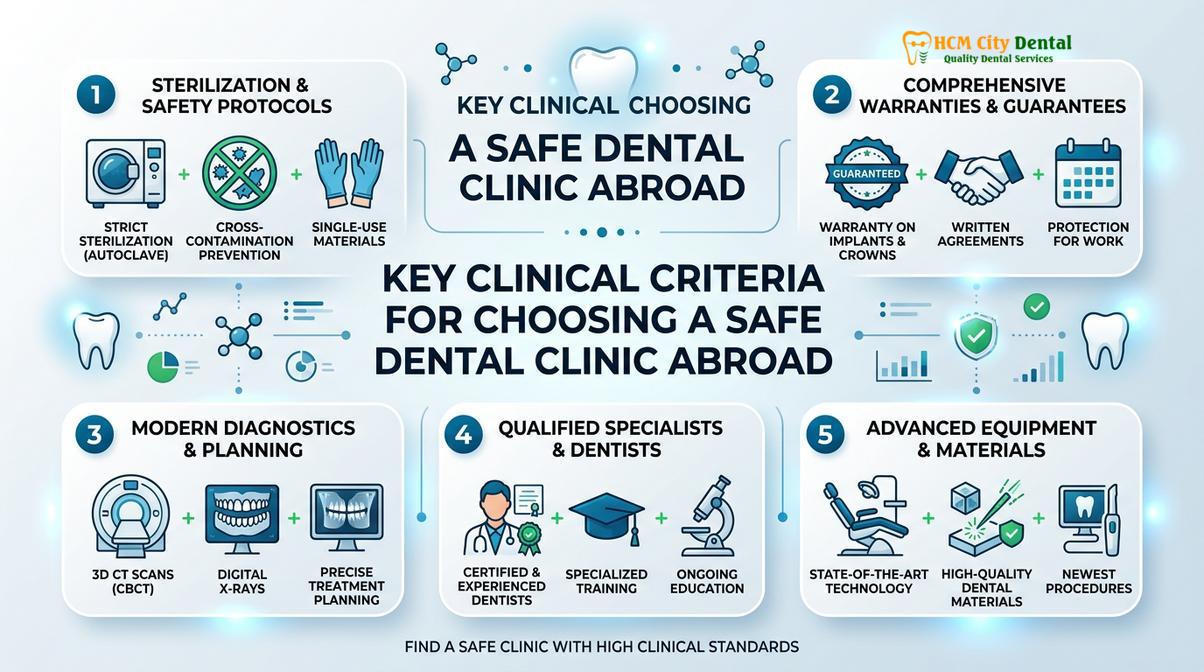
Navigating dental tourism requires strict clinical vetting. International patients must be vigilant against 15 critical warning signs, including heavily discounted implant fixtures (under $400), lack of in-house 3D CBCT diagnostics, aggressive “Turkey Teeth” veneer preparations, and the absence of verifiable material serial numbers. A safe dental journey relies on choosing a clinic with transparent digital quoting, strict ISO sterilization protocols, and treatment plans diagnosed by licensed specialists rather than sales coordinators. Revision dentistry for failed overseas work often costs significantly more than the initial procedure, highlighting the importance of getting it right the first time.
Key Takeaways:
- Material Authenticity: Always demand the physical “implant passport” or serial number card for implants and crowns to verify genuine European or American origins.
- Diagnostic Standards: Never proceed with oral surgery or implants without an in-house 3D CBCT scan to map bone density and nerve pathways.
- Beware of “Turkey Teeth”: Legitimate cosmetic dentists preserve enamel using minimal-prep veneers (0.3mm-0.5mm), whereas low-quality clinics aggressively shave teeth into pegs.
- Sales vs. Science: Treatment plans should be formulated and presented by a licensed DDS, not a high-pressure sales coordinator.
- Hidden Costs: Extremely low advertised prices often hide the cost of abutments, temporary crowns, and surgical guides, leading to bait-and-switch pricing upon arrival.
Red Flag 1-5: Unrealistic Pricing & Fake Implant Brands
When evaluating the debate of a cheap vs high quality dentist vietnam, the most immediate warning signs are found in the clinic’s pricing structure and material selection. High-quality dentistry requires premium, biocompatible materials. If a price seems too good to be true, it is generally subsidized by compromised clinical standards.
Red Flag 1: The $300 “Premium” Implant Myth
A genuine, research-backed dental implant from top-tier brands like Straumann, Nobel Biocare, or MIS requires decades of clinical trials, precision engineering, and specialized surface treatments to ensure rapid osseointegration and high long-term survival rates [1]. These fixtures cost clinics a significant amount to purchase. If a clinic advertises a “premium” implant for $300 to $400, they are likely using non-traceable clone brands, counterfeit fixtures, or outdated Grade 4 titanium that carries a higher risk of fracture and peri-implantitis.
Red Flag 2: Refusal to Provide Material Serial Numbers
Every legitimate dental implant, abutment, and premium zirconia block comes with a manufacturer’s traceability code. One of the most common dental scams in vietnam involves clinics claiming to use Swiss or German materials but refusing to provide the physical authenticity card. A reputable clinic will hand you your “implant passport” containing the exact lot number, allowing you to verify its authenticity globally.
Clinical Warning: Never accept a dental implant treatment without receiving the physical manufacturer’s authenticity card. Counterfeit implants lack proper surface treatments, significantly increasing the risk of biological rejection, severe bone loss, and systemic infection.
Red Flag 3: Bait-and-Switch Pricing Tactics
Predatory clinics often advertise an incredibly low price for an “implant,” but this price only covers the titanium screw placed in the bone. Once you are in the chair, you are suddenly hit with additional fees for the surgical guide, the abutment (the connector), the healing cap, and the final porcelain crown. A trustworthy clinic provides a comprehensive, itemized quote that includes all components from start to finish.
Red Flag 4: “One-Size-Fits-All” Stock Abutments
The abutment connects the implant to the crown. High-quality clinics utilize CAD/CAM custom-milled abutments designed specifically for your unique gum tissue architecture. Low-quality clinics use cheap, pre-manufactured “stock” abutments. Stock abutments often fail to support the gums properly, leading to food impaction, chronic inflammation, and eventual bone loss around the implant.
Red Flag 5: Unbranded or “In-House” Zirconia Crowns
Not all zirconia is created equal. Premium brands offer exceptional flexural strength and lifelike translucency. Clinics cutting corners may use cheap, unbranded zirconia blocks imported without medical regulation. These materials are often opaque, unnaturally white, and prone to catastrophic chipping under biting forces.
| Clinical Aspect | High-Quality Clinic Standard | Low-Quality Clinic Red Flag |
|---|---|---|
| Implant Materials | Traceable serial numbers, global brands (e.g., Straumann, Nobel) | Unbranded clones, refusal to provide authenticity cards |
| Pricing Structure | Transparent, itemized digital quotes covering all phases | Hidden fees for abutments, temporary crowns, and surgical guides |
| Abutment Type | Custom-milled CAD/CAM abutments for optimal gum health | Cheap, pre-manufactured stock abutments |
| Crown Material | Regulated, high-translucency premium zirconia | Opaque, unregulated “in-house” blocks prone to chipping |
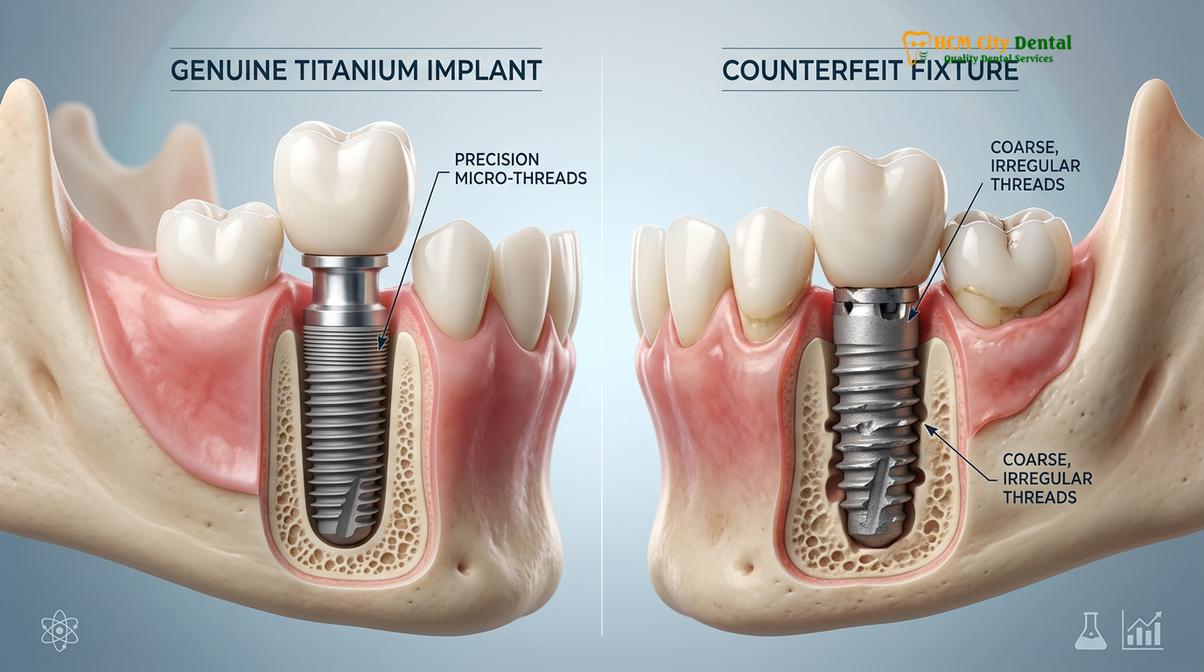
“The biological cost of a failed, counterfeit implant is far greater than the financial cost. When an untraceable implant fails, it often takes a significant amount of the patient’s jawbone with it, turning a straightforward procedure into a complex reconstructive nightmare.”
Red Flag 6-10: Rushed Timelines & No 3D Diagnostics
Dental tourism inherently involves tight travel schedules, but biology cannot be rushed. Clinics that prioritize your flight departure over proper healing protocols are committing severe dental tourism mistakes Vietnam visitors must avoid.
Red Flag 6: Promising Full Mouth Implants in 3 Days
While immediate loading is a valid clinical protocol for specific cases like All-on-4 full arch rehabilitation [2], it requires strict criteria regarding primary bone stability. Low-quality clinics promise immediate permanent teeth to every patient to secure the booking. Placing permanent heavy zirconia bridges on freshly placed implants before osseointegration is a primary cause of catastrophic implant failure.
Red Flag 7: Aggressive “Turkey Teeth” Veneer Preps
True cosmetic dentistry is minimally invasive. Legitimate porcelain veneers require only 0.3mm to 0.5mm of enamel reduction to ensure long-term longevity [3]. A massive red flag is a clinic that shaves healthy teeth down to tiny pegs but sells them as “veneers.” This aggressive reduction traumatizes the dental pulp, often leading to severe pain, root canals, and the eventual loss of the teeth. Patients wondering do veneers ruin your teeth should know that proper, conservative preparation preserves the natural tooth structure.
Red Flag 8: Lack of In-House CBCT 3D Scanners
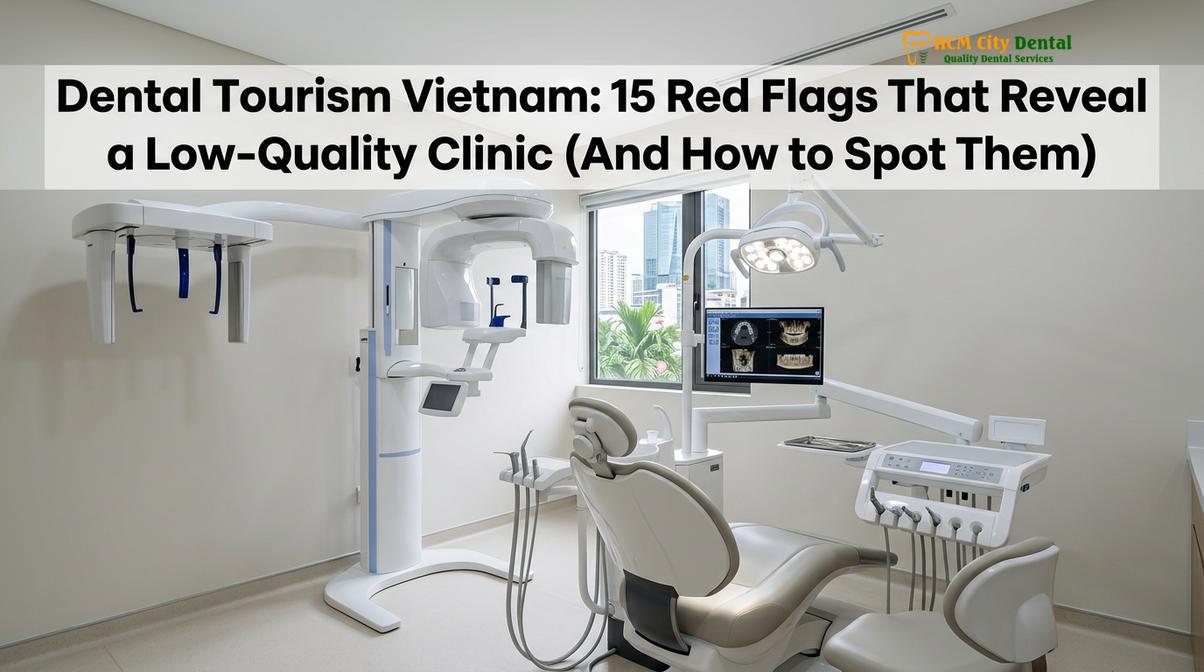
Attempting to place dental implants using only a standard 2D panoramic X-ray is highly dangerous in modern dentistry. 2D X-rays cannot show the exact width of the jawbone or the precise location of the inferior alveolar nerve and maxillary sinus. If a clinic does not have an in-house Cone Beam Computed Tomography (CBCT) scanner, walk away immediately.
Red Flag 9: Skipping Necessary Bone Grafting for Speed
When a tooth has been missing for years, the jawbone naturally atrophies. Placing an implant into inadequate bone without performing a guided bone regeneration (grafting) procedure leaves the implant threads exposed. Unethical clinics will skip the graft to keep the price low and the timeline short, virtually guaranteeing the implant will fail within a few years.
Red Flag 10: Ignoring National Infection Control Standards
Infection control is paramount. A high-quality clinic will proudly display their sterilization center and adhere strictly to the Vietnam Ministry of Health (MoH) guidelines on infection control in dental establishments [5]. Look for Class B autoclaves, ultrasonic cleaners, and individually sealed, color-changing sterilization pouches. If instruments are sitting out in the open or the clinic smells musty rather than clinical, you are at risk for cross-contamination of bloodborne pathogens.
Red Flag 11-15: Aggressive Sales Tactics & Zero Warranty
The patient experience and administrative transparency are just as critical as the clinical work. Finding a no hidden fees dental clinic ho chi minh requires looking closely at how the clinic communicates before you ever board a plane.
Red Flag 11: Consultations Led by Sales Coordinators, Not Dentists
If your primary point of contact is a high-pressure “treatment coordinator” who pushes you to sign contracts before you have had a comprehensive examination with a licensed dentist, you are in a sales mill. Only a qualified DDS can diagnose your condition, assess your bone density, and recommend a safe treatment plan.
Red Flag 12: Pressure to Pay 100% Upfront Before Seeing a Doctor
Ethical dental clinics operate on a phased payment structure. You should only pay for the surgical phase once it is completed, and the restorative phase when the final crowns are placed. Demanding full payment upfront for complex, multi-stage procedures is a major warning sign.
Red Flag 13: Vague or Non-Existent Written Warranties
A reputable clinic stands behind its work. If a clinic refuses to provide a written, legally binding warranty certificate detailing what happens in the event of material fracture or biological failure, they do not trust their own clinical outcomes. Ensure the warranty covers both the implant fixture and the restorative crown.
Red Flag 14: No Emergency Hospital Transfer Protocols
While rare, medical emergencies such as severe allergic reactions or uncontrolled bleeding can occur during oral surgery. Top-tier clinics maintain strict emergency protocols, possess emergency crash carts, and have established transfer agreements with nearby international hospitals in Ho Chi Minh City.
Red Flag 15: Refusal to Provide a Binding Digital Quote
Before traveling, you should receive a detailed digital treatment plan based on your local X-rays or photos. While clinical realities may necessitate minor adjustments upon physical examination, the core pricing structure should be binding. Clinics that say “just fly here and we will give you a price” are setting a trap.
How Fake Reviews Mislead Overseas Patients
In the digital age, online reputation can be easily manipulated. When researching clinics, international patients must learn to spot the difference between genuine patient gratitude and fabricated marketing.
Many low-quality clinics employ marketing agencies to flood platforms with five-star reviews. These fake reviews often share common traits: they are posted in sudden bursts, they use generic language, and they lack specific clinical details. Furthermore, they rarely mention the treating doctor by name.
To find authentic experiences, look for detailed reviews where patients discuss their specific procedures. Seek out unedited video testimonials where patients speak naturally about their recovery process. Additionally, check independent expat forums and dental tourism groups for unfiltered recommendations.
The Real Cost of Fixing Cheap Dental Work
The most dangerous misconception in dental tourism is that a failed procedure simply means losing the money you paid. In reality, revision dentistry is exponentially more expensive, painful, and time-consuming than getting it done correctly the first time. This is one of the most critical warning signs bad dental clinic saigon visitors ignore at their peril.
When a cheap implant fails due to poor placement or counterfeit materials, it causes severe bone destruction. To fix this, a specialist must surgically remove the failed implant, clean the infected site, perform extensive block bone grafting, wait several months for healing, and then place a new, genuine implant.
Clinical Case Study: The Danger of “Turkey Teeth”
A 32-year-old patient traveled abroad for “cheap veneers” advertised at a fraction of the standard cost. Upon returning home, she experienced excruciating sensitivity and bleeding gums. She eventually visited HCMC Dental Clinic in Ho Chi Minh City for a comprehensive revision. Clinical examination revealed that the previous overseas clinic had aggressively shaved her healthy teeth into pegs and cemented bulky, unbranded crowns that violated her biological width. The revision required root canal therapy, crown lengthening surgery to heal the gums, and the fabrication of new, custom-milled restorations. The total cost to save her smile was extensive—far more than if she had chosen a reputable clinic initially.
When to Consult a Dental Professional & Clinical Red Flags
If you have recently returned from a dental tourism trip and are experiencing complications, do not wait for the issue to resolve on its own. You should seek immediate professional evaluation if you notice any of the following symptoms:
- Severe, throbbing pain that is not relieved by over-the-counter medication.
- Prolonged bleeding or swelling around a newly placed implant or fixed dental bridge.
- A foul odor or taste coming from the surgical site, which often indicates an active infection.
- Mobility or looseness in your new crowns, veneers, or implant restorations.
Early intervention can often save a failing restoration and prevent further bone loss or systemic infection.
How HCMC Dental Guarantees Safety & Authentic Materials
At HCMC Dental Clinic, we understand the anxiety that comes with traveling abroad for medical care. Our facility is built on a foundation of uncompromising safety, transparency, and clinical excellence, ensuring that every patient receives world-class general and preventive dentistry alongside advanced surgical care.
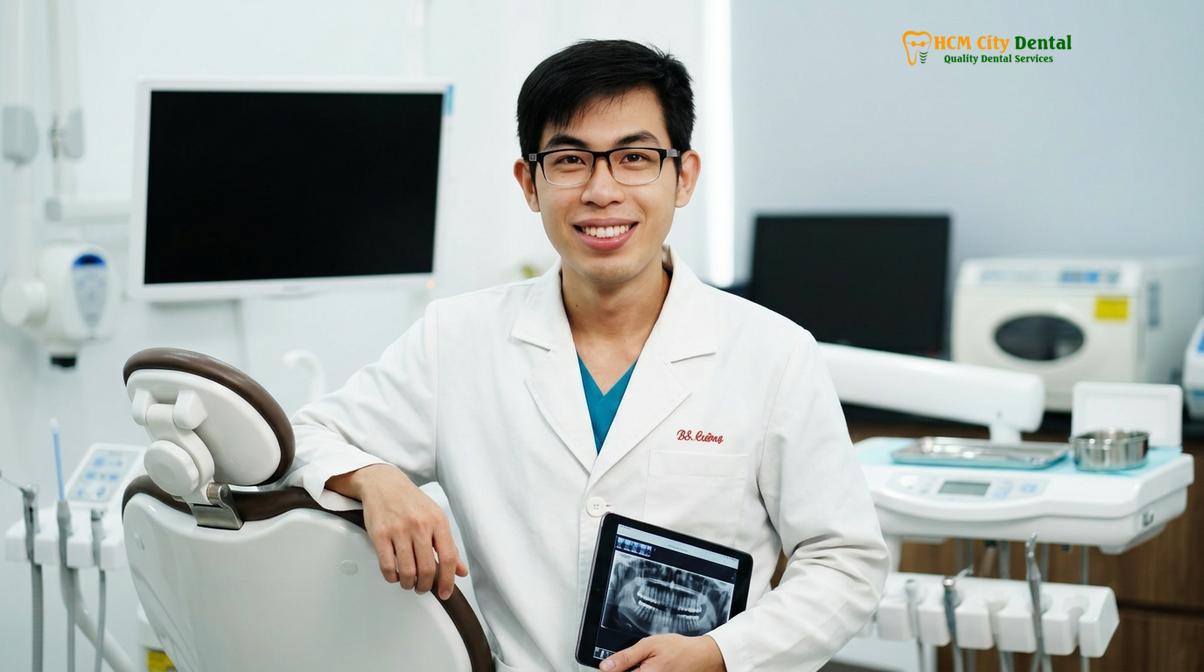
At the forefront of safe international care is Dr. Nguyen Van Cuong. As a leading specialist recognized among the top English-speaking dentists in Ho Chi Minh City, Dr. Cuong ensures that every treatment plan adheres to strict global standards. His clinical approach prioritizes long-term biological health over rushed cosmetic fixes, providing peace of mind for traveling patients.
We actively combat the risks of dental tourism by implementing strict, verifiable protocols:
- 100% Material Transparency: Whether you are receiving a complex full-arch restoration or pediatric zirconia crowns for a family member, we provide the physical manufacturer’s authenticity card with traceable serial numbers for every component used.
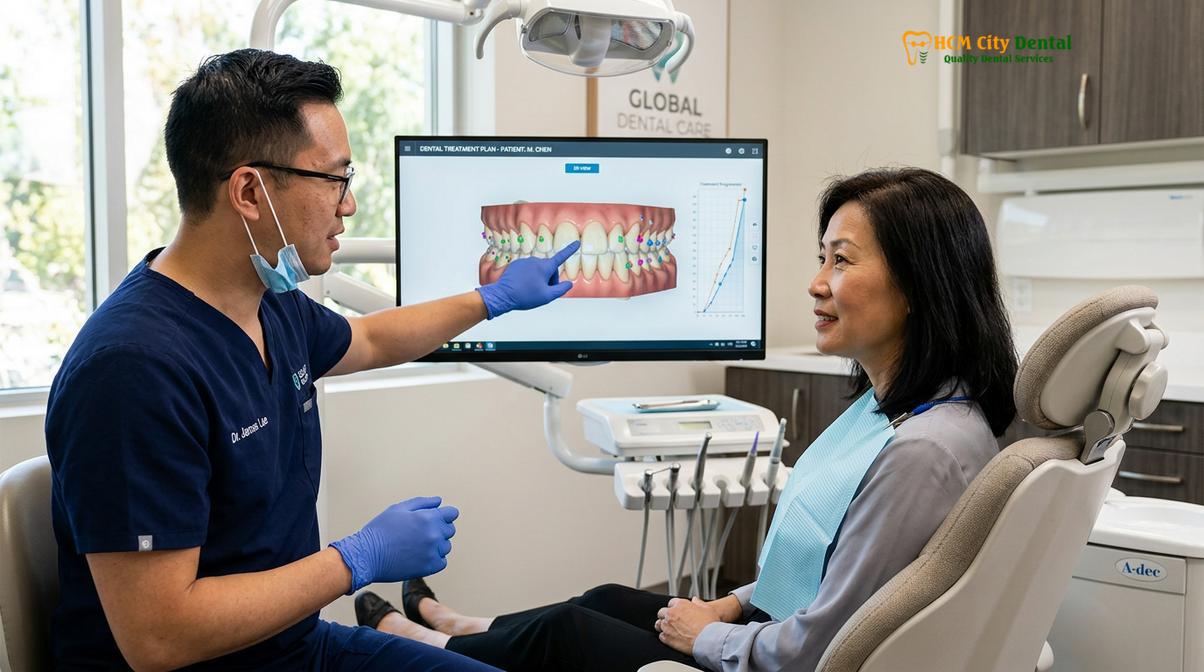
- Advanced Diagnostics: Every surgical patient undergoes a comprehensive 3D CBCT scan in-house. We utilize digital surgical guides to ensure implants are placed with sub-millimeter accuracy.
- Conservative Dentistry: We prioritize the preservation of your natural tooth structure. From addressing black stains on teeth to planning orthodontic timelines like how long does invisalign take, our approach is always minimally invasive.
- No Hidden Fees: Our international patient coordinators provide binding, itemized digital quotes before you book your flight. The price you are quoted is the price you pay.
“Our philosophy is simple: Treat every international patient with the exact same standard of care, premium materials, and ethical transparency that we would demand for our own families. We do not compete on being the cheapest; we compete on being the safest.”
Frequently Asked Questions
What is the biggest red flag when booking a dental clinic in Vietnam?
The biggest red flag is a clinic that refuses to provide a binding, itemized digital quote before you travel. This often indicates hidden fees or bait-and-switch tactics upon arrival.
Why are some clinics offering dental implants for under $400?
Implants priced under $400 are typically counterfeit, non-traceable clone brands, or the price only covers the titanium screw while hiding the cost of the abutment and crown. Genuine, research-backed European implants cost significantly more to manufacture.
How can I prove if my porcelain crown or implant is genuine European-made?
You should always request the physical ‘implant passport’ or the manufacturer’s authenticity card, which contains a unique, traceable serial number and lot code. Reputable clinics will provide this without hesitation.
What happens if my treatment fails after I return home?
If you chose a clinic without a written international warranty, you will bear the full cost of revision surgery in your home country. High-quality clinics provide binding warranties that cover the cost of replacement materials if biological failure occurs within a specified timeframe.
How do I distinguish between genuine patient reviews and fake agency marketing?
Genuine reviews often include detailed clinical experiences, mention specific doctors by name, and feature unedited video testimonials. Fake agency reviews tend to be vague, posted in sudden bursts, and focus solely on ‘cheap prices’ or ‘friendly staff’ without mentioning the actual dental work.
References
- Journal of the American Dental Association. Implant survival rates in digital dentistry. (2022).
- International Journal of Oral and Maxillofacial Implants. All-on-4 full arch rehabilitation. (2021).
- Journal of Esthetic and Restorative Dentistry. Minimal prep porcelain veneer longevity. (2020).
- British Dental Journal. Dental tourism safety protocols and material traceability. (2023).
- Vietnam Ministry of Health (MoH). National Guidelines on Infection Control in Dental Establishments. (2020).
If you are planning a dental trip and want to ensure you are receiving authentic, world-class care without hidden risks, contact HCMC Dental Clinic in Ho Chi Minh City today for a transparent, digital consultation.