For international commercial pilots, dedicated cabin crew, and passionate scuba divers, the oral cavity is subjected to extreme environmental stressors that the average patient never experiences. The phenomenon of experiencing sudden, excruciating tooth pain during a flight ascent or a deep-sea dive is clinically known as barodontalgia. Often referred to colloquially as “flyer’s toothache” or “diver’s toothache,” this condition is not a primary disease itself, but rather a severe symptomatic flare-up of a pre-existing, often subclinical, dental pathology triggered by rapid barometric pressure changes. Whether you are navigating a Boeing 777 at 35,000 feet, exploring the vibrant coral reefs of Nha Trang, or simply an expatriate traveling frequently across Southeast Asia, understanding the physics of dental barotrauma is critical for your medical safety. At HCMC Dental Clinic in District 1, Ho Chi Minh City, our clinical protocols are specifically engineered to diagnose, treat, and prevent these pressure-induced dental emergencies, ensuring that your restorations remain void-free and structurally sound under any atmospheric condition.
Clinical Summary:
Barodontalgia is a pressure-induced dental pain caused by the expansion or contraction of trapped gases within the tooth structure (such as beneath a faulty filling or inside a necrotic pulp) during altitude changes in aviation or depth changes in scuba diving. Driven by Boyle’s Law, these volumetric gas changes compress sensitive pulpal nerves, leading to acute pain that often resolves immediately upon returning to sea level. Effective prevention requires void-free restorative techniques, microscopic endodontics, and strict adherence to post-operative grounding timelines. HCMC Dental Clinic provides specialized, rapid-turnaround CAD/CAM and 3D CBCT diagnostics tailored for flight crews and divers on layovers in Ho Chi Minh City.
Key Takeaways:
- The Physics of Pain: Barodontalgia is governed by Boyle’s Law; as ambient pressure decreases (e.g., flying), trapped gas volume increases, compressing the dental pulp.
- Direct vs. Indirect Pain: True barodontalgia originates from the tooth (pulpitis, leaky fillings), whereas barosinusitis is referred pain from maxillary sinus pressure pressing on upper molar roots.
- Odontocrexis Risk: Scuba divers face the risk of crowns and fillings physically dislodging or shattering due to the implosion and rapid expansion of micro-porosities in older cements.
- Void-Free Protocol: Utilizing heated injection-molded composites and Carl Zeiss microscopic endodontics eliminates the trapped air voids that trigger pressure-induced pain.
- Strict Grounding Timelines: Aviation safety requires pilots and crew to wait 24 hours after local anesthesia/endo, 48–72 hours after simple extractions, and 10–14 days after sinus lifts before flying.
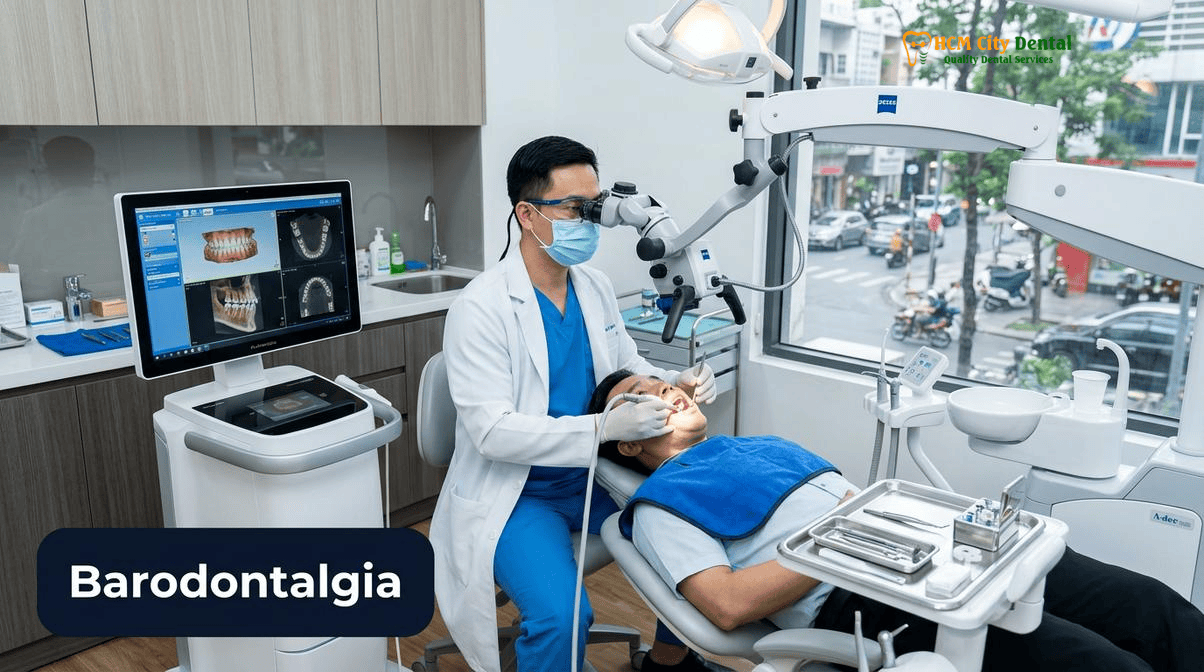
Boyle’s Law Inside a Tooth (P1V1 = P2V2): How Cabin Altitude Pressure Drops (8,000 ft / 0.75 atm) and Scuba Descent (2–4 atm) Expand or Crush Microscopic Air Voids
To comprehend why a seemingly healthy tooth can suddenly cause debilitating agony mid-flight, one must look to the fundamental principles of physics, specifically Boyle’s Law. Formulated in the 17th century, Boyle’s Law states that at a constant temperature, the volume of a given mass of a dry gas is inversely proportional to its pressure (P1V1 = P2V2). In the context of human physiology, this means that as external environmental pressure decreases, any gas trapped within a closed bodily compartment will expand. Conversely, as external pressure increases, trapped gas will compress. The human tooth, when compromised by decay or faulty restorations, acts as a rigid, unyielding closed compartment[1].
When a commercial airliner reaches a cruising altitude of 35,000 to 40,000 feet, the cabin is artificially pressurized to maintain passenger safety and comfort. However, it is not pressurized to sea level (1 atmosphere or 14.7 psi). Instead, the cabin pressure is typically maintained at an equivalent altitude of 6,000 to 8,000 feet. At 8,000 feet, the ambient atmospheric pressure drops to approximately 0.75 atmospheres (atm). If a patient has a microscopic air void trapped beneath an old composite filling, or gas-producing anaerobic bacteria within an infected root canal, this 25% drop in ambient pressure causes the trapped gas to expand significantly. Because the surrounding enamel and dentin are rigid and cannot expand, the increasing gas volume has nowhere to go but inward, exerting immense hydrostatic pressure directly onto the highly vascularized and innervated dental pulp. This results in the classic presentation of barodontalgia tooth pain when flying or scuba diving, characterized by a sharp, piercing ache that often begins during ascent and peaks at cruising altitude.
The physics reverse, but are equally punishing, for scuba divers. During a dive, ambient pressure increases by 1 atmosphere for every 10 meters (33 feet) of descent. A diver exploring a wreck at 30 meters is subjected to 4 atmospheres of pressure. Any microscopic air voids within the teeth or beneath dental restorations are violently compressed. This compression can create a localized vacuum effect, drawing pulpal fluid outward through the dentinal tubules—a mechanism explained by Brännström’s hydrodynamic theory of dentin sensitivity. Furthermore, during the diver’s ascent, the highly compressed gas rapidly expands. If the expanding gas cannot vent quickly enough through micro-leakage pathways, it can cause excruciating pain or even structural failure of the tooth. Understanding flyers toothache boyles law leaky filling root canal dynamics is the first step in preventing in-flight or underwater dental emergencies.
Direct Dental Barodontalgia vs. Indirect Barosinusitis: Distinguishing a Leaky Filling / Necrotic Pulp from Maxillary Sinus Pressure Pressing on Upper Molar Roots
When a pilot, flight attendant, or passenger reports severe oral pain during a flight, the immediate clinical challenge is achieving an accurate differential diagnosis. Not all pressure-induced oral pain originates from the teeth. It is vital to distinguish between direct dental barodontalgia and indirect barosinusitis, as the treatment protocols for these two conditions are entirely different[2].
Direct dental barodontalgia is true tooth pain caused by a specific dental pathology reacting to pressure changes. The most common culprits are faulty restorations with micro-leakage, secondary caries (decay) that has not yet reached the pulp but is close enough to cause dentinal fluid shifts, reversible or irreversible pulpitis (nerve inflammation), and necrotic (dead) pulps with periapical gas-producing infections. In these cases, the pain is usually localized to a single, specific tooth. The timing of the pain can also provide diagnostic clues: pain during ascent is typically associated with vital pulp tissue (pulpitis) reacting to gas expansion, while pain during descent is often linked to necrotic pulps where gas was forced out during ascent and fluid is drawn into the tooth during the pressure increase of descent.
Conversely, indirect barosinusitis is a form of referred pain. The maxillary sinuses are large, air-filled cavities located just above the upper jaw. The roots of the maxillary premolars and molars often extend very close to, or even protrude into, the floor of the maxillary sinus, separated only by a thin layer of bone and the Schneiderian membrane. If a patient flies with an upper respiratory infection, allergic rhinitis, or sinus congestion, the ostium (the drainage pathway of the sinus) may become blocked. As cabin pressure changes, the trapped air inside the blocked sinus expands or contracts, causing severe barotrauma to the sinus lining. This intense sinus pressure pushes downward directly onto the apical nerve endings of the upper back teeth. The patient will perceive this as a severe, throbbing toothache across multiple upper teeth simultaneously, even though the teeth themselves are perfectly healthy.
“In aviation dentistry, distinguishing between barotrauma maxillary sinusitis vs upper molar toothache is paramount. If a flight crew member presents with pain in multiple upper molars that only occurs during descent, and our 3D CBCT scan shows healthy apices but a completely opacified maxillary sinus, we know the teeth are innocent bystanders. However, if the pain is sharp, localized to a single lower molar during ascent, we are almost certainly dealing with a direct barodontalgia trigger, such as a leaky restoration or an undiagnosed micro-fracture.”
— Dr. Nguyen Van Cuong, DDS (Clinical Director, HCMC Dental Clinic)
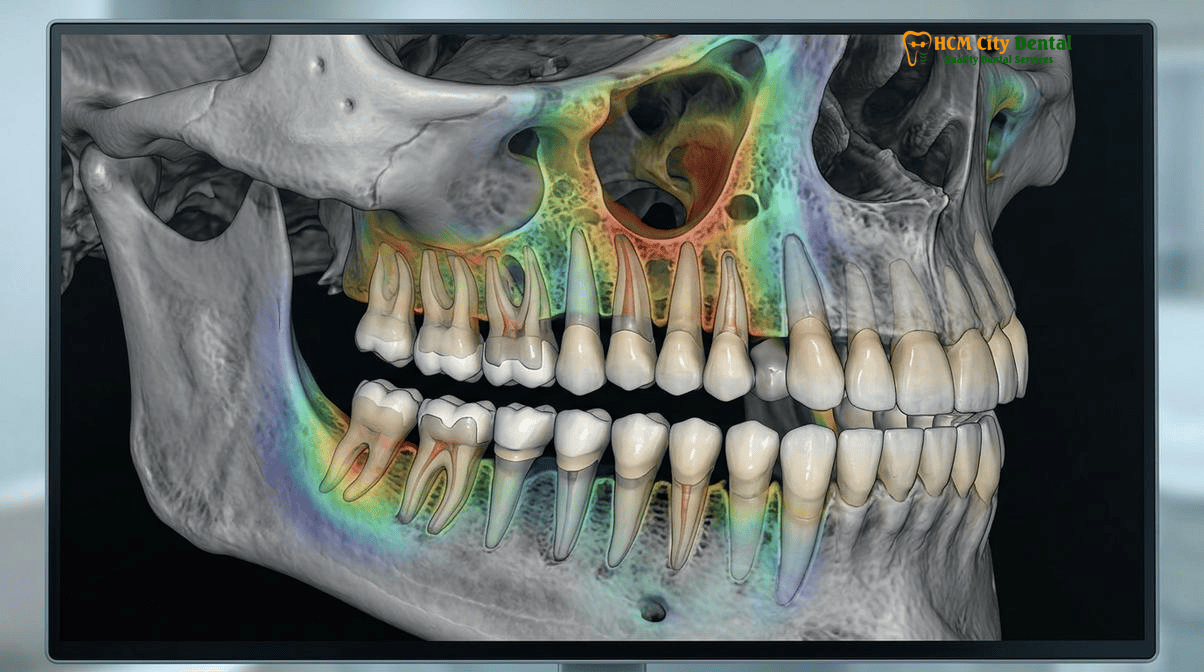
Why Scuba Divers Experience Crown & Filling Loosening (‘Odontocrexis’) When Old Zinc Phosphate Cement Micro-Porosities Implode Under Hyperbaric Pressure
While pilots and cabin crew primarily deal with the pain of barodontalgia, scuba divers face an additional, structural threat: odontocrexis, or dental barotrauma resulting in the physical destruction or dislodgment of dental restorations. It is not uncommon for a diver to surface and realize that a dental crown has popped off or a large filling has shattered. This phenomenon is deeply tied to the materials used in older dental restorations and how they behave under extreme hyperbaric conditions[3].
Historically, many dental crowns and bridges were cemented using zinc phosphate or glass ionomer cements. While effective for everyday use at sea level, these traditional cements are inherently prone to micro-porosities—tiny, microscopic bubbles of air trapped within the cement layer during the mixing and seating process. Furthermore, these cements can slowly wash out over years of exposure to saliva, creating microscopic voids at the crown margins.
When a scuba diver descends to 30 or 40 meters, the ambient pressure increases to 4 or 5 atmospheres. The microscopic air voids trapped within the old zinc phosphate cement are subjected to immense compressive forces. The gas inside these voids compresses, creating a negative pressure gradient (a vacuum) that can draw oral fluids into the micro-gaps. More critically, during the diver’s ascent, the ambient pressure rapidly decreases, and the highly compressed gas within these micro-porosities violently expands. If the expanding gas cannot vent, the internal pressure builds until it overcomes the retentive strength of the cement or the cohesive strength of the tooth. This sudden, explosive expansion literally blows the crown off the tooth or shatters the surrounding enamel.
This is why modern diving dentistry emphasizes the critical difference between resin cement vs zinc phosphate crown loosening scuba diving. Modern dual-cure resin cements, when applied under strict isolation protocols, create a virtually void-free, chemically bonded monoblock between the tooth and the ceramic restoration. Resin cements do not possess the micro-porosities of older materials, making them highly resistant to the pressure differentials experienced during deep-sea diving.
Void-Free Aviation & Diving Restorative Protocol at HCMC Dental Clinic: Heated Bulk-Fill/Injection-Molded Composite, Microscope Endodontics, and Resin-Bonded Monolithic Ceramic
To ensure the absolute safety of our aviation and diving patients, HCMC Dental Clinic has developed a specialized, void-free restorative protocol. Standard dental fillings placed hastily without proper isolation often contain microscopic air bubbles—harmless at sea level, but potential time bombs at 35,000 feet. Our approach eliminates these risks through advanced biomaterials and microscopic precision[4].
1. Heated Injection-Molded Composites: For direct restorations (fillings), we utilize the Bioclear method and heated composite resins. By warming the nanohybrid composite material in a specialized thermal dispenser, the viscosity of the resin is significantly lowered. This allows the composite to flow seamlessly into every microscopic crevice of the cavity preparation, completely eliminating trapped air bubbles. The material is then injection-molded under pressure and light-cured, resulting in a dense, void-free restoration that will not react to barometric pressure changes.
2. Carl Zeiss Microscopic Endodontics: Root canal therapy is a common source of barodontalgia if not performed perfectly. If any necrotic tissue or gas-producing bacteria are left behind in an undiscovered accessory canal (such as the notorious MB2 canal in upper molars), the trapped gas will expand during flight. At HCMC Dental Clinic, Dr. Nguyen Van Cuong, DDS, utilizes high-powered Carl Zeiss operating microscopes (up to 25x magnification) to locate, clean, and seal every millimeter of the root canal system. We use warm vertical condensation of gutta-percha and bioceramic sealers to ensure a hermetic, 3D seal that is impervious to pressure changes.
3. Resin-Bonded Monolithic Ceramics: For crowns and onlays, we have entirely phased out older, porous cements. We utilize 3D CAD/CAM technology to mill monolithic IPS E.max or Zirconia restorations. These are then bonded to the tooth structure using advanced, void-free dual-cure resin cements under strict rubber dam isolation. This creates a unified, pressure-resistant structure.
Clinical Case Study: The Grounded First Officer
Patient Profile: A 34-year-old First Officer for an international airline flying the long-haul route from Sydney to Ho Chi Minh City.
Presenting Complaint: The pilot reported severe, incapacitating pain in his lower right quadrant that began exactly 20 minutes after takeoff and persisted until the aircraft descended below 10,000 feet on approach to SGN. He was grounded by the airline’s medical examiner pending dental clearance.
Diagnostics at HCMC Dental Clinic: A 3D CBCT scan and microscopic evaluation revealed an old, failing amalgam filling on tooth #46 (lower right first molar) with significant micro-leakage and a void containing trapped air and secondary decay approaching the pulp chamber.
Treatment & Outcome: Dr. Nguyen Van Cuong, DDS, removed the defective amalgam under rubber dam isolation. The tooth was restored using a heated, injection-molded bulk-fill composite to ensure zero air entrapment. The pilot was cleared for flight duty 24 hours post-procedure and reported zero pain on his subsequent flight back to Australia.
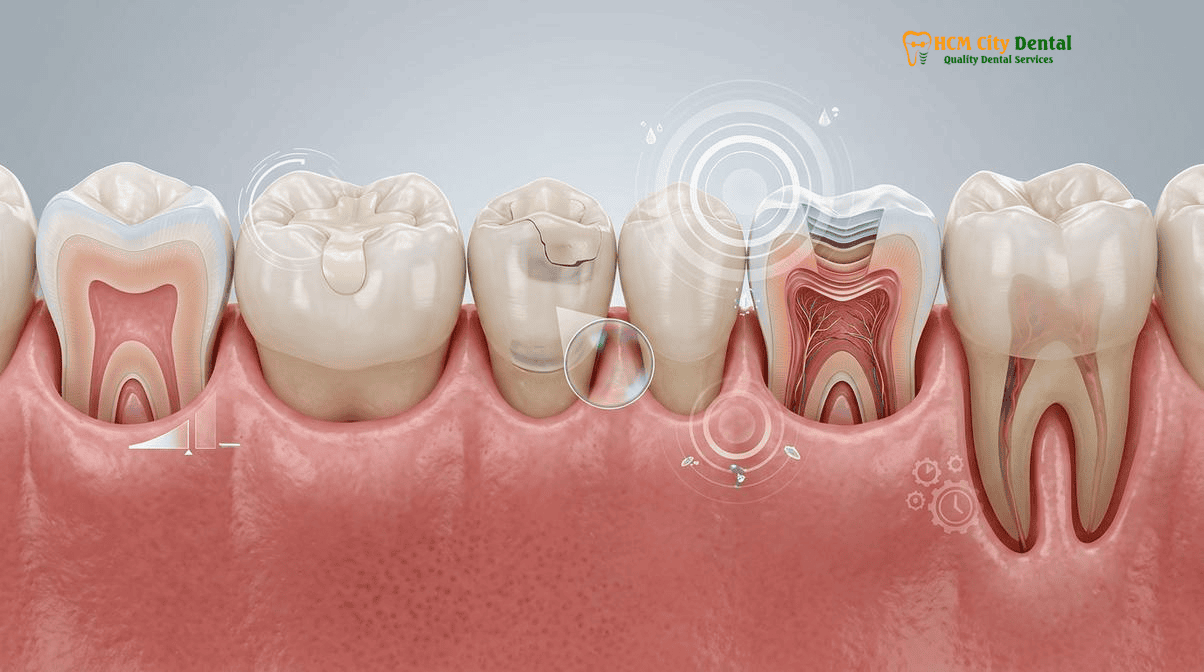
Official Flight & Diving Grounding Timelines (Pilots, Cabin Crew & Tourists): 24h Post-Anesthesia/Endo, 48–72h Post-Simple Extraction, and 10–14 Days Post-Sinus Lift/OAC
Medical safety in aviation and diving requires strict adherence to post-operative grounding timelines. Returning to the skies or the sea too soon after a dental procedure can lead to severe complications, ranging from extreme pain to life-threatening hemorrhages or infections. At HCMC Dental Clinic, we provide official medical clearance certificates based on internationally recognized aerospace medical guidelines.
1. Routine Restorations and Local Anesthesia (Minimum 24 Hours): Even for a simple filling, flight crews and divers must wait at least 24 hours before returning to duty. This allows the local anesthetic to completely wear off, ensuring that the patient can accurately perceive any abnormal sensations. Furthermore, it provides time for the dental pulp to recover from the minor trauma of the drilling procedure, reducing the risk of hyperemic barodontalgia.
2. Microscopic Endodontics / Root Canal Therapy (24 to 48 Hours): Following a root canal, the periapical tissues (the bone and ligaments at the tip of the root) are often temporarily inflamed. A grounding period of 24 to 48 hours is mandatory to allow this apical inflammation to subside and to ensure that the bioceramic sealer has fully set, preventing any pressure-induced fluid shifts.
3. Simple Tooth Extractions (48 to 72 Hours): Patients frequently ask how long to wait to fly or scuba dive after tooth extraction. The critical factor here is the stabilization of the blood clot. If a patient flies too soon, the drop in cabin pressure can cause the fragile blood clot to dislodge from the extraction socket. This exposes the underlying bone and nerves, leading to a severely painful condition known as alveolar osteitis (dry socket). A minimum of 48 to 72 hours is required for the clot to organize and begin the initial stages of mucosal healing.
4. Complex Oral Surgery, Wisdom Teeth, and Sinus Lifts (10 to 14 Days): For major surgical procedures, particularly those involving the maxillary sinus (such as sinus lift bone grafting or the repair of an oroantral communication), the grounding period is extensive. The Schneiderian membrane is delicate, and any barometric pressure changes can cause the membrane to rupture, leading to massive graft failure, severe epistaxis (nosebleeds), and acute sinusitis. Pilots and divers must be grounded for 10 to 14 days, and clearance is only granted after a follow-up 3D CBCT scan confirms stable healing.
Aviation & Diving Medical Warning: Never attempt to mask in-flight dental pain with heavy analgesics or narcotics while on duty. If you experience barodontalgia, it is a definitive sign of underlying pathology. Continuing to fly or dive without addressing the root cause can lead to acute pulpal necrosis, severe facial swelling, or in-flight incapacitation. Contact HCMC Dental Clinic immediately upon landing in Ho Chi Minh City for an emergency diagnostic evaluation.
2026 Express Layover Dental Care for International Flight Crew & Divers (25 Mins from SGN Airport) at HCMC Dental Clinic (District 1)
For international flight crews and expatriate divers, time is the most critical asset. A 24-to-48 hour layover in Ho Chi Minh City leaves little room for multiple, drawn-out dental appointments. Recognizing the unique logistical needs of aviation professionals, HCMC Dental Clinic has optimized its clinical workflow to provide express, world-class care. Located in the heart of District 1, our facility is a mere 25-minute drive from Tan Son Nhat International Airport (SGN), making us the premier pilot and cabin crew dentist near tan son nhat airport SGN.
When evaluating where to receive care during a layover, international patients must navigate the complex landscape of dental providers in Vietnam. To assist in this decision, we present an objective, medically ethical comparison of the four primary dental operating models in Ho Chi Minh City, empowering you to choose the environment that best suits your clinical needs and time constraints.
The 4-Model Objective Clinical Comparison in Ho Chi Minh City
Model 1: The 1-on-1 Doctor-Direct Specialist Boutique (HCMC Dental Clinic)
This model is defined by absolute clinical continuity. At HCMC Dental Clinic, every stage of your treatment—from the initial 3D CBCT scan to the final bonding of a CAD/CAM ceramic crown—is performed personally by Dr. Nguyen Van Cuong, DDS (Vietnam MOH License 0003265/BL-CCHN). There are no hand-offs to junior associates. This model operates with lower corporate overhead, allowing the clinic to invest heavily in advanced technology (like Carl Zeiss microscopes) while offering transparent, direct-to-patient pricing (such as the -40% online booking rates). For flight crews on tight schedules, this means rapid, decisive treatment without bureaucratic delays. For more details on our clinical director, visit Dr. Nguyen Van Cuong, DDS (Clinical Director — MOH License 0003265/BL-CCHN).
Model 2: Multi-Doctor Expat Clinics & Private Dental Hospitals
These facilities (often located in Thao Dien, District 2, or large hospital settings in District 1) cater heavily to the expatriate community. They feature large teams of specialists, luxurious waiting areas, and dedicated international patient departments. While they offer excellent, comprehensive care, the multi-doctor approach means you may see a diagnostician on day one, an endodontist on day two, and a prosthodontist on day three. Furthermore, the massive overhead required to maintain these hospital-scale operations is reflected in their premium pricing structures, which are often aligned with Western fee schedules. For a broader overview of the city’s landscape, see our Best Dentist & Dental Clinics in Ho Chi Minh City (2026 Comparison Guide).
Model 3: High-Volume Domestic Dental Chains
These large corporate chains operate dozens of branches across Vietnam. They are highly accessible and offer very competitive pricing, making them popular for routine domestic care. However, they operate on a high-volume, fast-turnover model. For complex, specialized procedures requiring meticulous void-free protocols (like treating barodontalgia for a commercial pilot), the high patient volume and frequent rotation of junior associate dentists may not provide the necessary environment for highly customized, time-intensive specialist care.
Model 4: Third-Party Medical Tourism Booking Agencies
These are not dental clinics, but rather online referral brokers (e.g., Dental Departures, WhatClinic). They aggregate clinic listings and facilitate bookings. While convenient for initial research, it is crucial to understand that these agencies charge the underlying clinics a commission of 15% to 25% for every patient referred. Booking directly with a Ministry of Health-licensed clinic eliminates the middleman, ensuring that your fees go directly toward your clinical care and biomaterials, while also establishing a direct line of warranty accountability with your treating surgeon.
“Flight crews and divers cannot afford clinical compromises. When a pilot comes to us on a 36-hour layover with severe barodontalgia, they need immediate, definitive diagnostics and a restoration that will withstand 35,000 feet of altitude the very next day. Our 1-on-1 boutique model allows us to bypass the bureaucratic delays of larger hospitals, utilizing in-house CAD/CAM to deliver a void-free ceramic crown in a single, focused session.”
— Dr. Nguyen Van Cuong, DDS
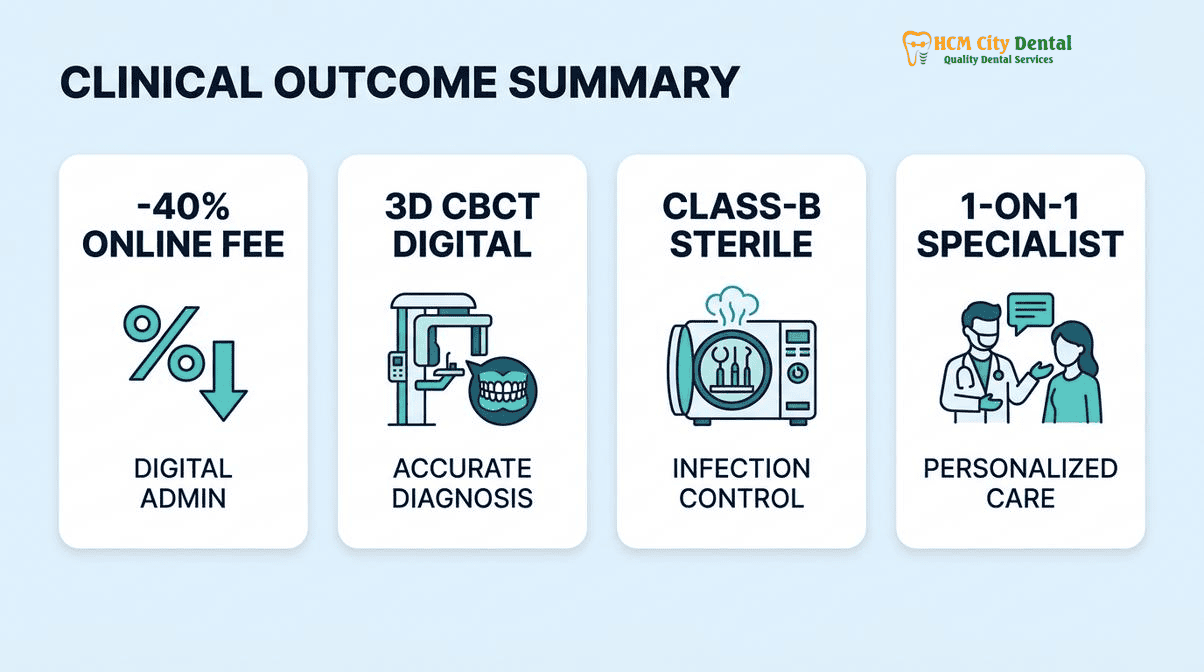
Official 2026 Dental Fee Schedule: Transparent Pricing for International Patients
HCMC Dental Clinic is committed to absolute financial transparency. By operating efficiently and eliminating third-party agency commissions, we offer our international patients a direct -40% Online Booking Pricing advantage compared to standard walk-in rates. Below is our official 2026 fee schedule, detailing the costs for procedures commonly required by flight crews and divers[5]. For the complete list, please review our Official 2026 Dental Fee Schedule (-40% Online Booking Pricing).
| Dental Procedure (Aviation & Diving Focus) | 2026 Online Booking Price (USD) | Walk-in / Standard Price (USD) | VND Equivalent (Online) |
|---|---|---|---|
| 3D CBCT Scan (Diagnostic for Barodontalgia) | $18 USD | $30 USD | 480,000 VND |
| Heated Bioclear Injection Molding (Void-Free) | $69 – $115 USD / tooth | $115 – $192 USD | 1,800,000 – 3,000,000 VND |
| Microscopic Root Canal (Anterior/Premolar) | $77 – $115 USD / tooth | $128 – $192 USD | 2,000,000 – 3,000,000 VND |
| Microscopic Root Canal (Complex Molar) | $115 – $154 USD / tooth | $192 – $256 USD | 3,000,000 – 4,000,000 VND |
| IPS E.max All-Ceramic Crown / Inlay / Onlay | $231 USD / tooth | $385 USD | 6,000,000 VND |
| Full Zirconia Crown (Cercon Standard / HT) | $154 – $192 USD / tooth | $256 – $321 USD | 4,000,000 – 5,000,000 VND |
| Surgical Wisdom Tooth Extraction (Piezotome) | $58 – $115 USD / tooth | $96 – $192 USD | 1,500,000 – 3,000,000 VND |
| Custom Night Guard / Occlusal Splint (For Divers) | $81 – $115 USD | $135 – $192 USD | 2,100,000 – 3,000,000 VND |
| Single Korean Implant (Dentis / Neo Biotech) | $462 – $654 USD | $769 – $1,090 USD | 12,000,000 – 17,000,000 VND |
| Single European Implant (Straumann BLT-SLA) | $962 – $1,346 USD | $1,603 – $2,244 USD | 25,000,000 – 35,000,000 VND |
For expatriates living in Vietnam who hold international health coverage, navigating claims for emergency dental care is essential. We provide full documentation for reimbursement. Learn more in our Expat International Dental Insurance Guide in HCMC: Cigna Global, Allianz Care, Bupa Global, Aetna & Henner Claims.
Frequently Asked Questions
Why did my tooth hurt severely only during takeoff/cruise at 35,000 feet, and then completely stop hurting as soon as the airplane landed in Ho Chi Minh City?
This is the classic presentation of barodontalgia. At a cruising altitude of 35,000 feet, the commercial aircraft cabin is pressurized to an equivalent of 8,000 feet (approximately 0.75 atmospheres). According to Boyle’s Law, as ambient pressure drops, any trapped gas inside a microscopic void beneath a leaky filling or within an infected root canal expands. This expanding gas compresses the highly sensitive pulpal nerves, causing severe, sharp pain. Once the aircraft descends and lands in Ho Chi Minh City, the ambient pressure returns to 1 atmosphere (sea level), the trapped gas contracts to its original volume, and the pressure on the nerve is instantly relieved, causing the pain to vanish.
Can a microscopic air bubble under an old filling or incomplete root canal cause a tooth to crack during deep scuba diving in Nha Trang, Phu Quoc, or Con Dao?
Yes. This phenomenon is known as odontocrexis (dental barotrauma). During a scuba descent in locations like Nha Trang or Con Dao, the ambient pressure increases by 1 atmosphere for every 10 meters (33 feet) of depth. If there is a microscopic air void under an old filling, the trapped gas compresses, creating a vacuum effect. During rapid ascent, the gas rapidly expands. If the expanding gas cannot escape through the micro-leakage pathways fast enough, the internal pressure can exceed the tensile strength of the tooth structure or the restorative material, leading to the fracturing of the tooth, the dislodgment of the filling, or the shattering of the crown.
How many hours after local dental anesthesia, a root canal, or a wisdom tooth extraction must commercial pilots and cabin crew wait before returning to flight duty?
Aviation dental safety protocols dictate strict grounding timelines to prevent in-flight incapacitation. For standard local anesthesia and simple restorative work, flight crews must wait a minimum of 24 hours before flying. Following a microscopic endodontic root canal therapy, a 24 to 48-hour grounding period is required to ensure no apical gas expansion occurs. After a simple tooth extraction, pilots and cabin crew must wait 48 to 72 hours to allow the blood clot to stabilize and prevent aviation-induced alveolar osteitis (dry socket). For complex oral surgeries, such as wisdom tooth impaction removal or sinus lifts, a grounding period of 10 to 14 days is mandatory.
Why is biting on a scuba regulator mouthpiece for 60 minutes a major trigger for TMJ disc displacement and masseter pain (‘Diver’s Mouth Syndrome’)?
‘Diver’s Mouth Syndrome’ occurs because standard scuba regulator mouthpieces require constant, active forward posturing of the mandible and sustained isometric contraction of the masseter and temporalis muscles to maintain a watertight seal. Over a 45 to 60-minute dive, this unnatural, prolonged clenching forces the temporomandibular joint (TMJ) out of its relaxed centric relation, leading to severe muscle fatigue, lactic acid buildup, and potential anterior displacement of the articular disc. Custom-fitted orthopedic mouthpieces or pre-dive occlusal splint therapy can mitigate this neuromuscular strain.
How fast can flight crew on a 24-to-48 hour Saigon layover get 3D CBCT diagnostics and single-visit CAD/CAM ceramic restoration in District 1?
At HCMC Dental Clinic in District 1, located just 25 minutes from Tan Son Nhat International Airport (SGN), flight crews on short 24-to-48 hour layovers can receive expedited, world-class care. Utilizing in-house 3D CBCT imaging and digital CAD/CAM milling technology, Dr. Nguyen Van Cuong, DDS, can diagnose hidden barodontalgia triggers and fabricate a void-free, monolithic IPS E.max ceramic crown or inlay in a single visit lasting approximately 2 to 3 hours. This allows pilots and cabin crew to receive definitive, flight-safe treatment and still enjoy their layover in Ho Chi Minh City.
References
- Zadik, Y. (2009). Aviation dentistry: current concepts and practice. British Dental Journal, 206(1), 11-16.
- Robichaud, R., & McNally, M. E. (2005). Barodontalgia as a clinical diagnostic indicator of underlying dental pathology. Journal of the Canadian Dental Association, 71(1), 39-42.
- Gunepin, M., Derache, F., & Audoual, T. (2016). Barodontalgia and aviation dentistry. International Dental Journal, 66(2), 65-71.
- Lurie, O., Zadik, Y., Einy, S., Tarnopolski, R., & Goldstein, L. (2007). Bruxism in military pilots and non-pilots: tooth wear and psychological stress. Aviation, Space, and Environmental Medicine, 78(2), 137-139.
- Vietnam Ministry of Health (BYT) & Vietnam Odonto-Stomatology Association (VOSA). National Clinical Guidelines on Specialist Dental Care, Biomaterial Traceability & EN 13060 Class B Infection Control. (2024).