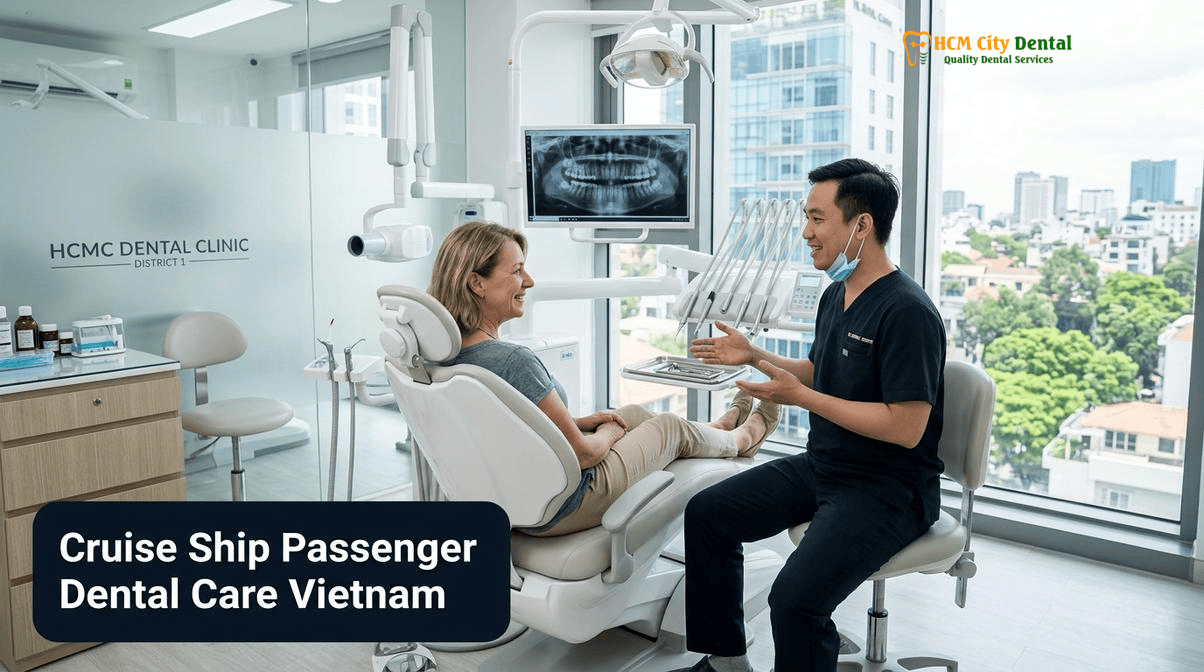
For international travelers seeking cruise ship passenger dental care in Vietnam, the logistical and clinical considerations extend far beyond the standard parameters of the dental chair. When a luxury liner docks at Phu My Port (Ba Ria – Vung Tau) or Hiep Phuoc Port (Ho Chi Minh City), passengers typically have a highly restricted 8-to-12 hour shore window. Within this brief timeframe, patients must travel to the city center, undergo comprehensive diagnostics, receive advanced dental treatment, and return to the vessel safely. Furthermore, the post-operative environment of a moving cruise ship—combined with the high probability that the passenger will eventually disembark and board a commercial long-haul flight from Tan Son Nhat International Airport (SGN)—creates a complex dual-risk profile involving both maritime motion sickness and aviation barometric pressure changes.
At HCMC Dental Clinic, located at 207 Nguyen Trai, District 1, we have engineered a highly specialized clinical pathway specifically designed for this demographic. Managing a patient who will return to a maritime environment requires meticulous attention to hemostasis, fibrin clot stabilization, and the pharmacological prevention of nausea. Vomiting induced by seasickness creates violent negative intraoral pressure and acidic exposure, which can easily dislodge a newly formed blood clot, leading to alveolar osteitis (dry socket) or severe secondary hemorrhage. To mitigate these risks, our facility employs same-day 4-to-6 hour shore-excursion dental protocols with anti-emetic and sealed waterproof dressing protection, ensuring that patients can return to their cruise itinerary or board their flight home with absolute clinical safety and peace of mind.
Clinical Summary:
Providing safe and effective Cruise Ship Passenger Dental Care in Vietnam requires a specialized approach that addresses the unique environmental stressors of maritime travel and subsequent aviation transit. HCMC Dental Clinic utilizes advanced 3D CBCT diagnostics, flapless surgical techniques, and specialized waterproof suturing to ensure rapid hemostasis. By integrating prophylactic anti-emetic therapy to prevent motion-sickness-induced clot dislodgement and adhering to strict barometric safe-to-fly timelines, Dr. Nguyen Van Cuong, DDS ensures that international cruise passengers receive world-class, complication-free dental care during their brief shore excursions in Ho Chi Minh City.
Key Takeaways:
- Time-Optimized Shore Excursions: Treatments are streamlined into a 4-to-6 hour window, allowing passengers docking at Phu My or Hiep Phuoc to receive care and return to their ship well before departure.
- Maritime Clot Protection: Specialized waterproof dressings and prophylactic anti-emetics are utilized to protect surgical sites from the negative pressure and acidity associated with potential seasickness.
- Aviation Safety Timelines: Strict adherence to barometric safety protocols ensures patients know exactly when they can safely fly out of SGN (e.g., same-day for crowns, 24-48 hours for simple implants, 10-14 days for lateral sinus lifts).
- Transparent 2026 Pricing: HCMC Dental Clinic offers premium care at a fraction of Western costs, including Korean Implants from $423 USD and IPS E.max Veneers at $185 USD per tooth.
- 24/7 Medical Triage: Continuous post-operative support is provided via WhatsApp (+84 853 020 003), ensuring patients have direct access to Dr. Nguyen Van Cuong’s medical team while at sea or in the air.
Medical Clearance & Risk Stratification Matrix for Cruise Ship Passenger Dental Care in Vietnam
The foundation of successful Cruise Ship Passenger Dental Care in Vietnam (2026 Medical Safety Protocol) lies in rigorous pre-operative medical clearance and risk stratification. Unlike local residents who can easily return for follow-up appointments, cruise passengers represent a “one-shot” clinical scenario. There is zero margin for error regarding post-operative bleeding, infection, or structural failure. When a patient arrives at our clinic in District 1, the first step is a comprehensive systemic health evaluation, focusing heavily on cardiovascular status, glycemic control, and the use of anticoagulant or antiplatelet medications (such as Warfarin, Plavix, or Xarelto).
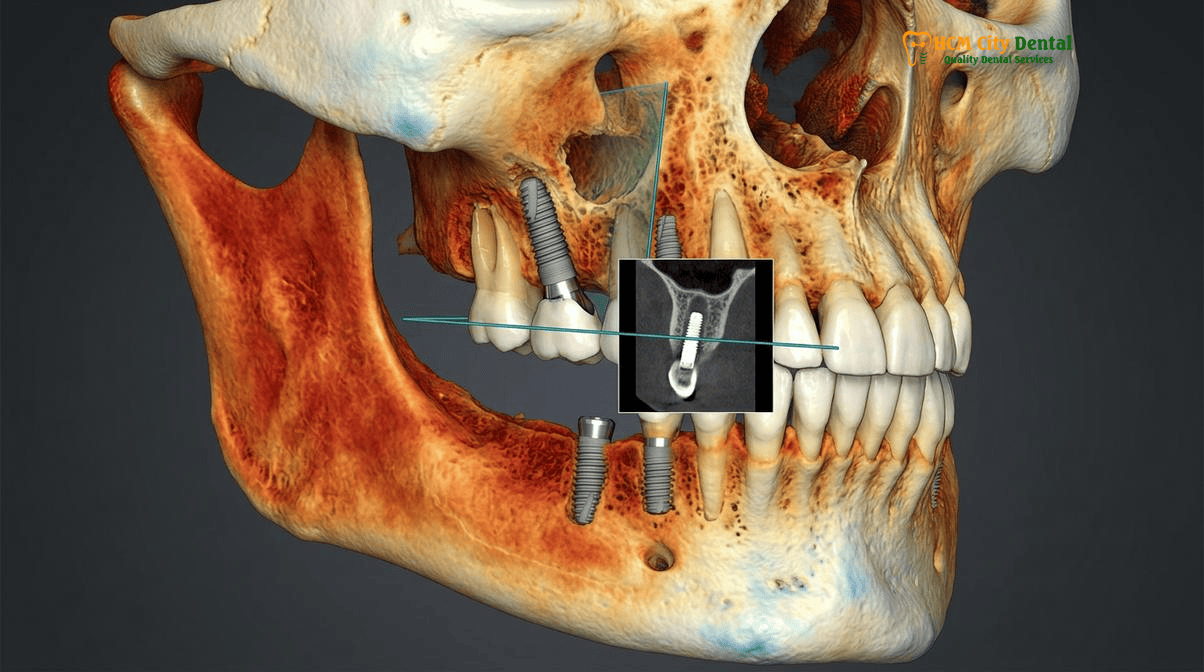
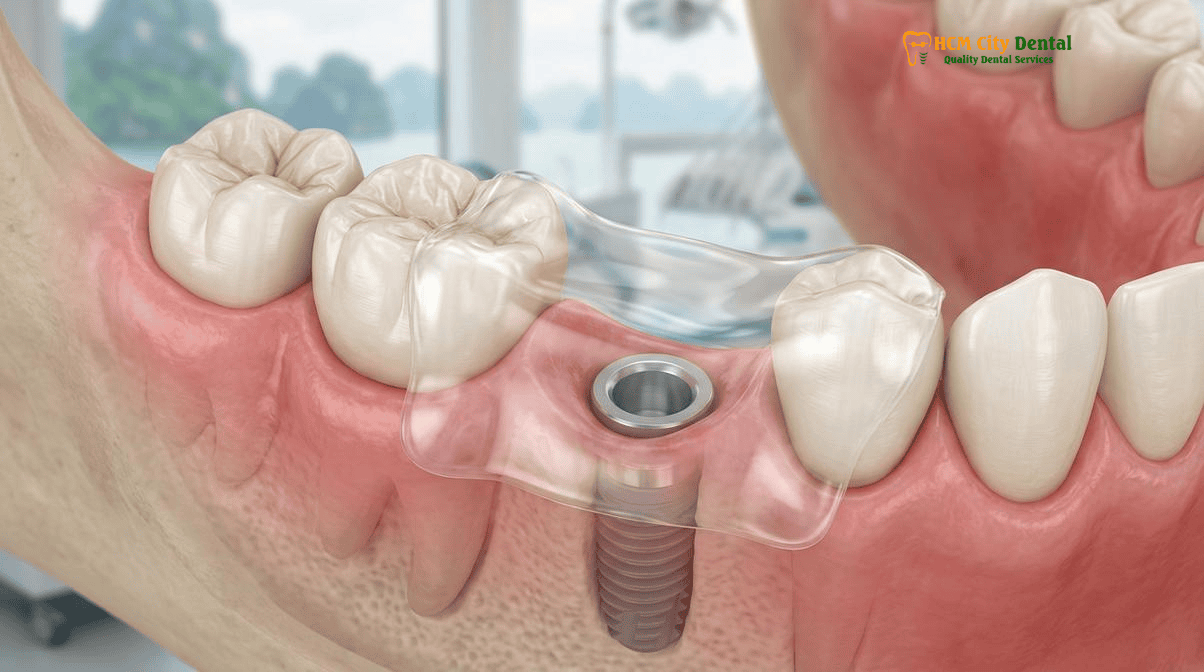
Because cruise demographics often skew toward older adults, managing systemic comorbidities is a daily clinical reality. We utilize the HCMC Dental Clinic medical clearance guide to stratify patients into low, moderate, and high-risk categories. A mandatory high-resolution 3D Cone Beam Computed Tomography (CBCT) scan is performed immediately upon arrival. This imaging allows us to map bone density, locate the inferior alveolar nerve, and visualize sinus cavities with sub-millimeter accuracy. By utilizing 3D guided surgical stents, we can perform flapless implant placements that require no incisions and no sutures, drastically reducing surgical trauma, bleeding, and recovery time[1]. This minimally invasive approach is critical for patients who must return to a moving ship within hours.
“Treating a cruise ship passenger requires a fundamental shift in clinical philosophy. We are not just performing a dental procedure; we are engineering a surgical outcome that must withstand the immediate environmental stressors of maritime motion and, frequently, the barometric pressure changes of a long-haul flight. Flapless surgery, absolute hemostasis, and proactive pharmacological management are non-negotiable pillars of our protocol.”
— Dr. Nguyen Van Cuong, DDS (Clinical Director, HCMC Dental Clinic)
Furthermore, the risk stratification matrix dictates the scope of treatment that can be safely executed during a single shore excursion. While a single implant, multiple extractions, or a full set of digital CAD/CAM crowns can be comfortably completed, complex bone grafting or lateral window sinus lifts are generally contraindicated for passengers who must immediately return to sea, due to the higher risk of post-operative swelling and the strict requirement for follow-up suture removal. For comprehensive details on our safety standards, patients are encouraged to review our International Patient Medical Safety & Post-Op Recovery Guides.
Pathophysiology, Aviation Pressure & Clinical Safety Thresholds
Understanding the pathophysiology of the maritime and aviation environments is essential for delivering safe Cruise Ship Passenger Dental Care in Vietnam in District 1, Ho Chi Minh City. The primary threat to a post-operative dental patient on a cruise ship is motion sickness (kinetosis). When the vestibular system detects motion that conflicts with visual input, the autonomic nervous system can trigger severe nausea and emesis (vomiting). From a dental perspective, vomiting is catastrophic for a fresh surgical site. The violent retching creates massive negative intraoral pressure, which can instantly dislodge the delicate fibrin clot protecting an extraction socket or implant site. Additionally, the introduction of highly acidic gastric contents (pH 1.5 – 3.5) into the oral cavity can degrade sutures, irritate exposed bone, and severely compromise the initial stages of osseointegration and soft tissue healing.
To combat this, Dr. Nguyen Van Cuong, DDS aviation & post-op safety protocols mandate the prophylactic administration of anti-emetic medications (such as Ondansetron or Promethazine) for high-risk patients returning to the ship. Furthermore, surgical sites are protected using advanced cyanoacrylate tissue adhesives or sealed waterproof collagen dressings, creating an impermeable barrier against both negative pressure and gastric acid. This ensures that even if the patient experiences severe seasickness, the underlying surgical site remains isolated and secure.
Equally important is the consideration of aviation medicine. Many cruise itineraries terminate in Ho Chi Minh City, meaning the passenger will disembark and board a commercial flight from Tan Son Nhat International Airport (SGN). Commercial aircraft cabins are pressurized to an equivalent altitude of 6,000 to 8,000 feet. At this altitude, the barometric pressure drops from 760 mmHg (sea level) to approximately 565 mmHg. According to Boyle’s Law, any trapped gas within the body will expand by up to 30% as the ambient pressure decreases. If a patient flies too soon after a complex dental procedure, this gas expansion can cause excruciating pain known as barodontalgia, or in the case of sinus lifts, severe maxillary sinus barotrauma[4].
Our clinical safety thresholds are strictly defined to prevent these complications. Procedures that do not trap air—such as the placement of monolithic zirconia crowns, IPS E.max veneers, or densely obturated microscope root canals—are entirely safe for same-day flying[2]. The dense bioceramic seal and resin bonding leave zero microscopic air pockets. However, surgical procedures require mandatory grounding periods. A simple extraction or flapless implant requires a 24-to-48 hour wait before flying. More invasive procedures, such as surgical wisdom tooth extractions or All-on-4 full-arch implants, require a minimum 72-hour grounding period to ensure initial clot stabilization and to monitor for delayed hemorrhage. For a deep dive into these barometric protocols, visit our dedicated hub on Aviation Medicine, Cabin Pressure & Safe-to-Fly Dental Protocols — Primary Clinical Hub at HCMC Dental Clinic.
Step-by-Step Pre-Op, Chairside & Post-Op Safety Protocol at 207 Nguyen Trai, District 1
Executing same-day 4-to-6 hour shore-excursion dental protocols with anti-emetic and sealed waterproof dressing protection requires military-level precision and coordination. When a cruise passenger books an appointment at HCMC Dental Clinic, the process begins weeks before their ship docks. Our international coordination team conducts a virtual consultation, reviewing dental records, panoramic X-rays, and medical history to formulate a preliminary treatment plan. This ensures that the moment the patient arrives at 207 Nguyen Trai, District 1, the clinical team is fully prepped and ready to execute.
Step 1: Port Transfer and Rapid Triage
Upon docking at Phu My (approx. 90 minutes from HCMC) or Hiep Phuoc (approx. 45 minutes from HCMC), patients are met by pre-arranged private transport. Upon arrival at the clinic, they bypass the standard waiting room and are immediately escorted to the diagnostic suite for a 3D CBCT scan and vital sign assessment. Blood pressure, heart rate, and oxygen saturation are recorded. If the patient is on anticoagulant therapy, a chairside INR check may be performed to ensure bleeding parameters are within safe surgical limits[3].
Step 2: Chairside Execution and Advanced Hemostasis
Treatment is performed in our state-of-the-art operatories, which adhere strictly to Class B autoclave infection control standards[5]. For implant placements, Dr. Nguyen Van Cuong utilizes 3D surgical guides to place premium fixtures (such as Straumann SLActive or Nobel Biocare) without raising a tissue flap. If extractions are required, atraumatic piezosurgery (ultrasonic bone cutting) is utilized to preserve the surrounding alveolar bone and minimize trauma. Once the procedure is complete, the site is packed with hemostatic collagen sponges (e.g., Gelfoam) and sealed with a waterproof cyanoacrylate dressing or PTFE non-resorbable sutures to ensure absolute clot stability.
Clinical Case Study: The 6-Hour Shore Excursion
Patient Profile: 62-year-old male, passenger on a luxury cruise liner docking at Phu My Port for 10 hours. History of mild hypertension; taking daily low-dose aspirin.
Chief Complaint: Fractured upper right premolar (Tooth #14) causing severe pain, requiring extraction and immediate implant placement.
Clinical Execution: The patient arrived at HCMC Dental Clinic at 9:30 AM. A 3D CBCT scan confirmed adequate bone volume. Under local anesthesia, Dr. Nguyen Van Cuong performed an atraumatic piezotome extraction, followed immediately by the flapless placement of a Swiss Straumann SLA implant ($731 USD). A healing abutment was placed, and the site was sealed with a waterproof collagen matrix to protect against potential seasickness. The patient was prescribed prophylactic anti-emetics, antibiotics, and analgesics.
Outcome: The entire procedure, including diagnostics and recovery observation, was completed in 2.5 hours. The patient returned to Phu My Port by 2:00 PM, boarded his ship, and reported zero bleeding or motion-sickness complications during the subsequent sea voyage to Singapore.
Step 3: Post-Op Pharmacological Management and Discharge
Before the patient leaves the clinic, they are provided with a comprehensive “Fit-to-Fly” and “Fit-to-Sail” medical kit. This includes broad-spectrum antibiotics, potent anti-inflammatory analgesics, chlorhexidine mouthwash, and prophylactic anti-emetics. The patient receives detailed written instructions (in English) regarding diet, oral hygiene, and the strict avoidance of negative intraoral pressure (no straws, no spitting). They are also provided with an Implant Passport (certifying that the Grade 4/5 titanium will not trigger airport metal detectors) and an official English Prescription Letter for customs clearance.
Clinical Decision Matrix Table: Safe Timelines, Thresholds & Red Flags
To provide absolute clarity for our international patients, we have developed a strict clinical decision matrix. This matrix outlines the safe timelines for returning to a cruise ship or boarding a commercial flight, alongside the transparent 2026 fee schedule. HCMC Dental Clinic is committed to providing world-class care at highly competitive rates, allowing patients to access premium treatments without the exorbitant costs found in Western nations. For a complete breakdown of our treatments, please view our Official 2026 Dental Fee Schedule (-40% Online Booking Pricing).
| Dental Procedure & 2026 Cost | Maritime Return (Cruise Ship) | Aviation Return (Flight from SGN) | Clinical Rationale & Safety Thresholds |
|---|---|---|---|
| IPS E.max Veneers / Zirconia Crowns ($185 USD / $81-$150 USD) | Immediate (Same Day) | Same Day (4-6 hours post-op) | Non-invasive. Dense resin bonding and bioceramic materials trap zero air pockets. No risk of barodontalgia or clot dislodgement. |
| Microscope Root Canal Therapy ($58-$96 USD / tooth) | Immediate (Same Day) | Same Day (4-6 hours post-op) | Complete 3D obturation of the canal system eliminates trapped gas. Safe to fly once local anesthesia wears off. |
| Simple Extraction / Flapless Implant (Korean Implant: $423-$462 USD) | Same Day (with sealed dressing) | Wait 24 – 48 Hours | Requires initial fibrin clot stabilization. Waterproof dressing protects against seasickness. 48 hours required to prevent aviation-induced bleeding. |
| All-on-4 / All-on-6 Full Arch (From $3,462 – $4,500 USD / arch) | Wait 48 – 72 Hours | Wait 72 Hours Minimum | Extensive surgical intervention. Requires 7-10 days total stay in HCMC for immediate bridge delivery, suture check, and swelling reduction. |
| Lateral Window Sinus Lift ($115-$192 USD + Bone Graft) | Wait 3 – 5 Days | Wait 10 – 14 Days (Strict) | High risk of maxillary sinus barotrauma. Boyle’s Law dictates trapped gas expansion. Strict sinus precautions (no nose blowing) mandatory. |
This matrix serves as the definitive guide for patients planning their dental tourism itinerary. By aligning their cruise schedule or flight departure with these clinical thresholds, patients can ensure a complication-free recovery. For expats and travelers looking for the best location to receive care, our clinic’s central location makes it highly convenient. Learn more by reading our guide on the English Speaking Dentist Ho Chi Minh City: Clinical Guide | HCMC Dental.
24/7 Emergency Triage & Pre-Departure Fit-to-Fly Verification with Dr. Nguyen Van Cuong, DDS
The responsibility of the clinical team does not end when the patient walks out the door. For cruise ship passengers, the post-operative period occurs in an isolated environment, miles out at sea, or at 35,000 feet in the air. To bridge this gap, HCMC Dental Clinic provides a dedicated 24/7 English medical triage service via WhatsApp (+84 853 020 003). This direct line connects patients immediately with Dr. Nguyen Van Cuong’s medical support team, ensuring that expert advice is always just a message away.
Before a patient departs Ho Chi Minh City—whether returning to Phu My Port or heading to Tan Son Nhat Airport—they undergo a final Fit-to-Fly or Fit-to-Sail verification. This involves a rapid visual inspection of the surgical site to confirm absolute hemostasis, a review of the patient’s pain levels, and a confirmation that all prescribed medications have been obtained from the pharmacy. Patients are instructed to begin their anti-emetic regimen 60 minutes before boarding their cruise ship or flight to ensure maximum prophylactic efficacy against motion sickness.
Clinical Precautions & Red Flags: When to Contact the Triage Team
While complications are exceedingly rare due to our strict protocols, patients must remain vigilant. Contact our 24/7 WhatsApp triage line (+84 853 020 003) immediately if you experience any of the following red flags while on your cruise ship or after returning to your hotel:
- Uncontrolled Hemorrhage: Bleeding that does not stop after 45 minutes of firm, continuous bite pressure on a sterile gauze pad.
- Severe Barodontalgia: Sharp, escalating pain in the teeth or sinus cavities during changes in altitude or cabin pressure.
- Systemic Infection Signs: A sudden spike in fever (above 38.5°C / 101.3°F), difficulty swallowing, or swelling that rapidly increases after the 72-hour mark.
- Loss of Waterproof Dressing: If the sealed collagen dressing or sutures become dislodged due to severe vomiting or accidental trauma.
“Our 24/7 digital triage system is the safety net that allows international patients to undergo complex procedures with confidence. Whether they are navigating the South China Sea on a cruise liner or flying back to Sydney, they know that my team and I are monitoring their recovery in real-time. Distance should never be a barrier to exceptional post-operative care.”
— Dr. Nguyen Van Cuong, DDS (MOH License 0003265/BL-CCHN)
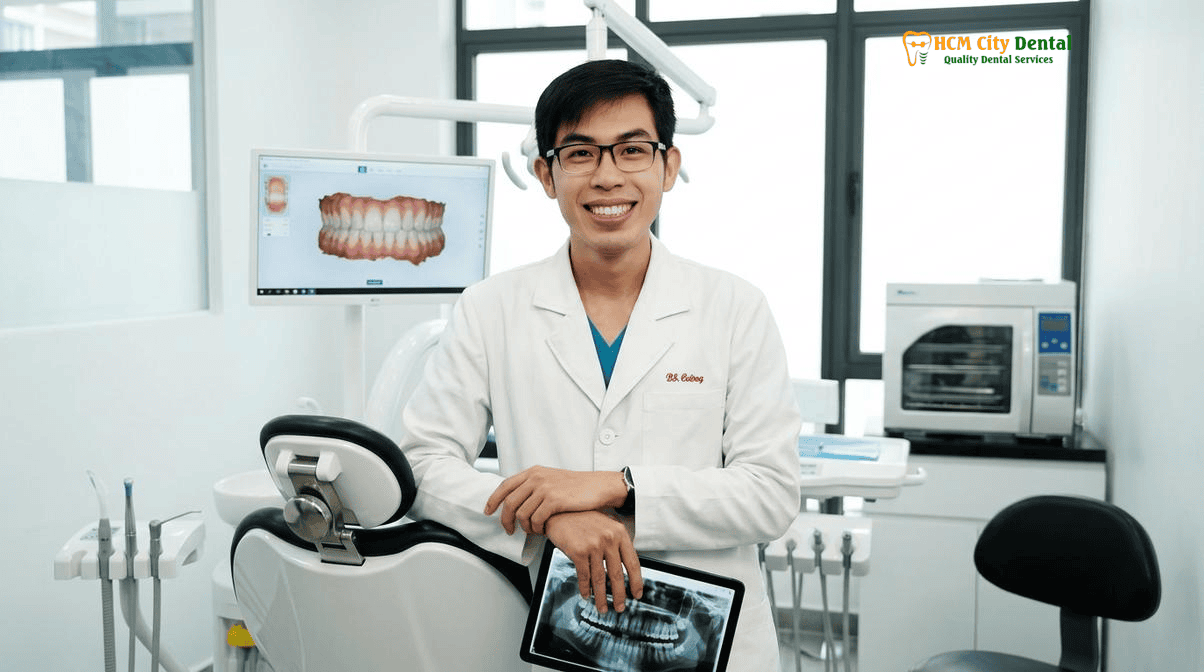
For patients who wish to learn more about the credentials and clinical philosophy of our lead specialist, we invite you to read about Dr. Nguyen Van Cuong, DDS (Clinical Director — MOH License 0003265/BL-CCHN). His 15+ years of experience in oral implantology and prosthodontics, combined with his active membership in the International Congress of Oral Implantologists (ICOI), ensures that every patient receives care that meets or exceeds the highest global standards.
Frequently Asked Questions About Cruise Ship Passenger Dental Care in Vietnam
What are the 2026 medical safety guidelines for Cruise Ship Passenger Dental Care in Vietnam at HCMC Dental Clinic?
The 2026 medical safety guidelines mandate strict pre-operative triage, including 3D CBCT imaging, vital sign monitoring, and a comprehensive review of anticoagulant use. For cruise passengers, protocols emphasize same-day 4-to-6 hour shore-excursion dental protocols with anti-emetic and sealed waterproof dressing protection to prevent clot dislodgement from potential seasickness. All treatments are performed under Class B autoclave infection control standards, ensuring absolute sterility and patient safety during rapid turnaround times.
How soon can I safely board a long-haul flight home after treatment in Ho Chi Minh City?
Safe-to-fly timelines depend strictly on the procedure performed. Non-invasive treatments like IPS E.max veneers, zirconia crowns, and microscope root canals allow for same-day flying (4-6 hours post-op), as they do not trap air. Simple flapless implants and extractions require a 24-48 hour wait to ensure initial clot stabilization. Complex surgeries, such as All-on-4 full-arch implants or surgical wisdom tooth extractions, require a minimum 72-hour wait. Lateral window sinus lifts mandate a strict 10-14 day grounding period to prevent severe maxillary sinus barotrauma caused by cabin pressure changes.
What pre-operative blood panels, vital checks, or 3D CBCT scans does Dr. Nguyen Van Cuong, DDS require?
Dr. Nguyen Van Cuong, DDS requires a high-resolution 3D Cone Beam Computed Tomography (CBCT) scan for all surgical interventions to accurately map bone density, sinus cavities, and nerve pathways. For patients on systemic anticoagulants (like Warfarin or Plavix) or those undergoing extensive full-arch rehabilitation, recent blood panels (including INR and HbA1c) are required. Chairside vital checks, including blood pressure and oxygen saturation, are mandatory before surgical clearance is granted to ensure the patient can safely undergo the procedure and return to their ship.
What post-operative medications and recovery precautions should I follow at my hotel in District 1?
Post-operative protocols include a prescribed regimen of broad-spectrum antibiotics, anti-inflammatory analgesics (such as Ibuprofen or Paracetamol), and chlorhexidine gluconate mouthwash to maintain surgical site sterility. For cruise passengers, prophylactic anti-emetics may be prescribed to prevent nausea and vomiting. Patients must avoid strenuous activity, hot liquids, and any actions that create negative intraoral pressure (such as using straws, spitting, or smoking) to ensure fibrin clot stabilization while recovering at their hotel in District 1 or aboard their vessel.
How do I contact Dr. Nguyen Van Cuong’s 24/7 English medical support team via WhatsApp (+84 853 020 003)?
International patients can reach the dedicated 24/7 English medical triage team directly via WhatsApp at +84 853 020 003. This line provides immediate access to post-operative support, fit-to-fly verification, digital prescription letters, and emergency triage. Whether you are recovering in your hotel in Ho Chi Minh City, navigating back to port on your cruise ship, or waiting at Tan Son Nhat International Airport, our clinical team is always available to provide expert medical guidance and ensure your recovery is proceeding flawlessly.
References
- International Journal of Oral & Maxillofacial Implants. Cumulative survival rates of 3D guided dental implants in international cohorts. (2024).
- Journal of Prosthetic Dentistry. Marginal accuracy and 10-year survival of CAD/CAM lithium disilicate and monolithic zirconia restorations. (2023).
- Journal of the American Dental Association (JADA). Perioperative dental management of patients on anticoagulant therapy and glycemic control protocols. (2023).
- Aerospace Medicine and Human Performance. Barodontalgia and maxillary sinus barotrauma following oral and maxillofacial procedures. (2022).
- Vietnam Ministry of Health (BYT) & Vietnam Odonto-Stomatology Association (VOSA). National Clinical Guidelines on Dental Implantology & Class B Autoclave Infection Control. (2024).