To verify dentist credentials license Vietnam regulations require patients to request the practitioner’s official “Chứng Chỉ Hành Nghề” (Practice Certificate) and cross-reference the registration number with the provincial Department of Health database. Ensuring your chosen specialist holds active, unrestricted medical clearance is the foundational step for safe clinical outcomes.
Navigating a foreign healthcare system can seem daunting, but the regulatory framework governing dental practice in Vietnam is highly structured. By understanding how to authenticate a surgeon’s educational background, postgraduate certifications, and facility accreditations, international patients can confidently secure world-class dental care while mitigating the risks associated with unverified practitioners.
Clinical Summary:
Verifying a dentist’s credentials in Vietnam involves confirming their basic medical degree (Odonto-Stomatology), their active practice license issued by the Ministry of Health, and any specialized postgraduate certifications required for complex procedures like implantology. Patients should actively request to see the “Chứng Chỉ Hành Nghề” (Practice Certificate) and ensure the clinic itself holds a valid operating license. Cross-referencing these documents with provincial health department registries guarantees that the practitioner operates under strict regulatory oversight, adheres to international sterilization protocols, and possesses the clinical competency necessary for safe, effective treatment.
Key Takeaways:
- Always request the “Chứng Chỉ Hành Nghề” (Practice Certificate) before agreeing to invasive dental procedures.
- Complex surgeries like dental implants require specific postgraduate certifications beyond a general dental degree.
- The Ministry of Health and provincial health departments maintain registries to confirm active medical licenses.
- Reputable clinics transparently display their facility operating licenses and adhere to Class-B autoclave sterilization standards.
- International board memberships (e.g., ICOI, ITI) serve as excellent secondary indicators of a surgeon’s advanced clinical expertise.
The Importance of Verifying Dental Licenses in Vietnam
Verifying a dentist’s license ensures they meet national medical standards, possess valid clinical training, and operate under strict regulatory oversight to prevent malpractice.
When traveling abroad for medical care, the allure of cost-effective treatments must always be balanced with rigorous safety checks. The primary mechanism for ensuring patient safety is the strict enforcement of dental regulation vietnam. A valid practice license is not merely a bureaucratic formality; it is a clinical guarantee that the practitioner has undergone extensive anatomical, physiological, and surgical training. Without this verification, patients expose themselves to significant clinical risks, including iatrogenic trauma, severe postoperative infections, and the failure of complex restorative work.
In the realm of advanced dentistry, particularly procedures involving the maxillofacial region, the margin for error is exceptionally narrow. For instance, the placement of titanium endosseous implants requires a profound understanding of bone density, sinus cavity proximity, and the trajectory of the inferior alveolar nerve. An uncredentialed or under-qualified practitioner lacks the rigorous peer-reviewed training necessary to navigate these anatomical complexities safely. By taking the time to verify a practitioner’s legal standing, patients actively protect their systemic health and ensure the longevity of their dental investments [1].
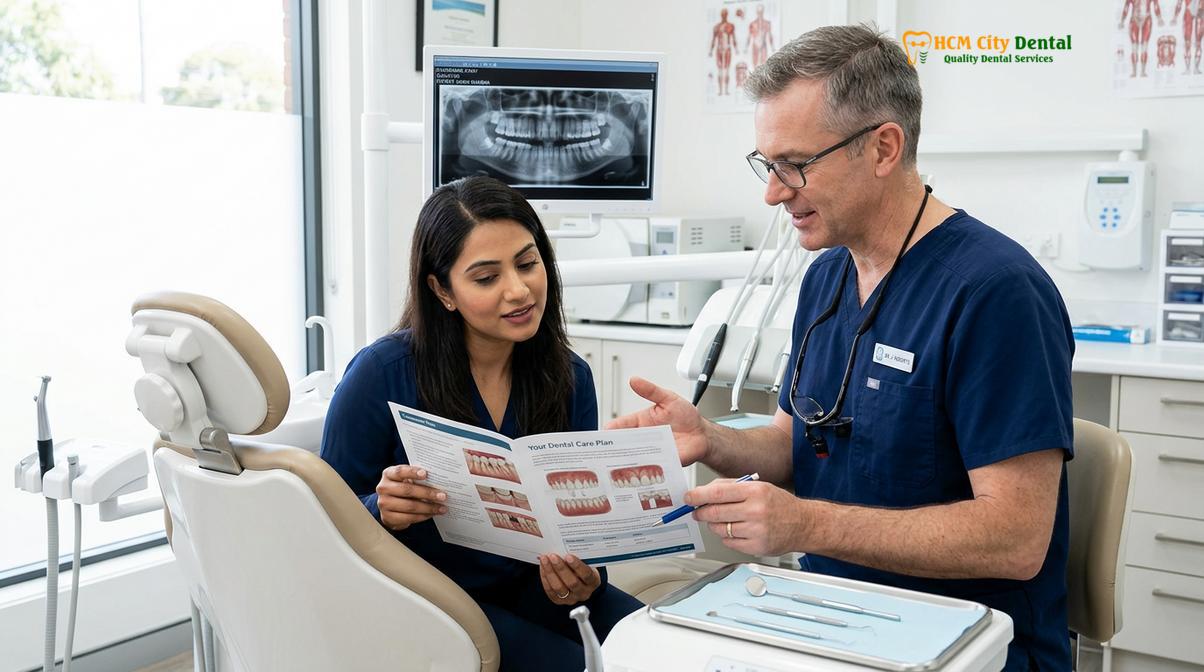
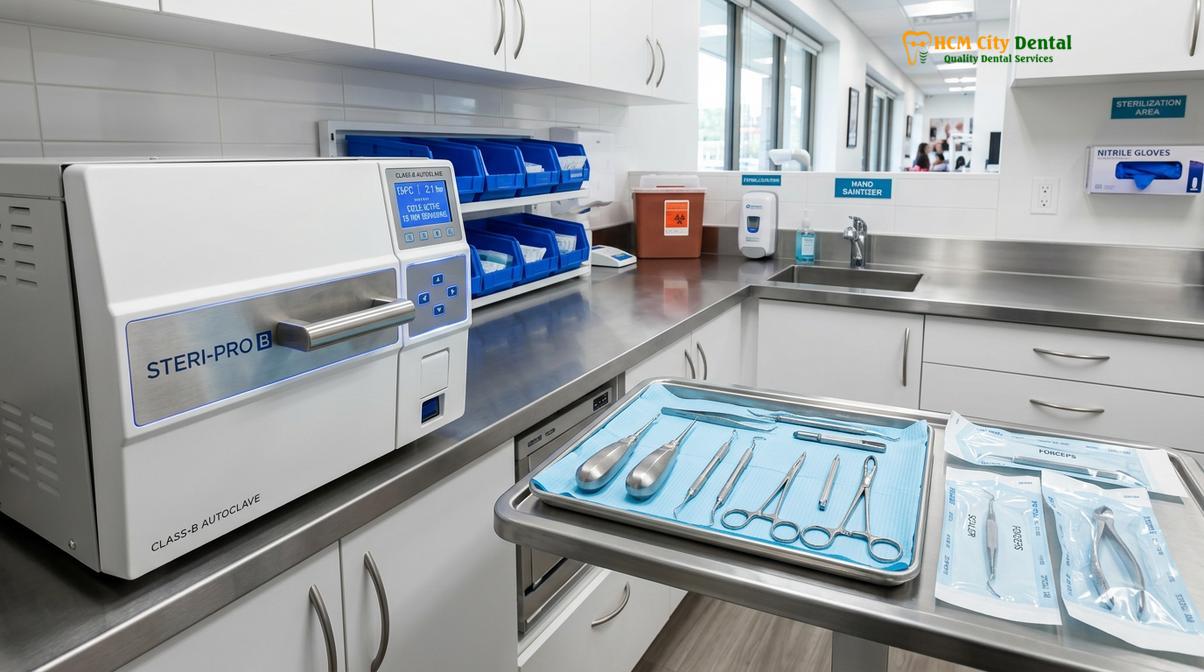
Furthermore, a verified license indicates that the dentist is legally bound to adhere to strict infection control protocols. Reputable, licensed facilities in Ho Chi Minh City are mandated to utilize advanced sterilization techniques, such as the Class-B autoclave sterilization protocol, which meets European standards for eradicating bloodborne pathogens. This level of infection control is non-negotiable in surgical environments and is closely monitored by health authorities during routine clinic inspections.
“The verification of a medical practitioner’s license is the most critical step in cross-border healthcare. It transitions the patient’s experience from a leap of faith into a calculated, evidence-based clinical decision, ensuring that surgical interventions are performed by legally recognized specialists.”
For international patients planning their medical journey, understanding the broader context of Dental Tourism is essential. The most successful clinical outcomes are achieved when patients combine thorough credential verification with comprehensive logistical planning, ensuring a stress-free environment conducive to optimal healing.
Understanding the Ministry of Health (MOH) Licensing Registry
The Vietnamese Ministry of Health maintains a centralized database where patients can cross-reference a practitioner’s registration number to confirm their active legal status.
The regulatory hierarchy for healthcare in Vietnam is governed at the highest level by the ministry of health vietnam (MOH). However, the actual issuance and monitoring of individual dental licenses are typically managed by the provincial or municipal Departments of Health (Sở Y Tế – SYT). For example, a dentist practicing in Saigon will have their credentials vetted and approved by the Ho Chi Minh City Department of Health. This decentralized approach allows for closer monitoring of clinical facilities and faster response times to regulatory inquiries.
It is crucial to distinguish between the two primary types of licenses required for a dental practice to operate legally. First is the Clinic Operating License (Giấy Phép Hoạt Động), which certifies that the physical facility meets all structural, hygienic, and equipment standards required for medical treatments. Second is the individual Practice Certificate (Chứng Chỉ Hành Nghề) held by the attending physician. Both must be active and valid. A clinic may have a valid operating license, but if the specific doctor treating you does not hold an individual practice certificate for the procedure being performed, it constitutes a severe regulatory violation [2].
To assist patients in understanding the different tiers of clinical qualification, the following table outlines the standard educational and licensing requirements for dental professionals in Vietnam:
| Practitioner Level | Educational Requirement | Clinical Scope of Practice | Licensing Authority |
|---|---|---|---|
| General Dentist (Bác Sĩ Răng Hàm Mặt) | 6-Year University Degree in Odonto-Stomatology + 18 months clinical practicum | Routine exams, fillings, simple extractions, basic prosthodontics, scaling. | Provincial Department of Health (SYT) |
| Dental Specialist (Chuyên Khoa I / II) | General Degree + 2-4 years of formal postgraduate residency | Complex root canals, advanced orthodontics, surgical extractions. | Ministry of Health / SYT |
| Implantologist / Maxillofacial Surgeon | Specialist Degree + Specific MOH-approved Implantology Certification | Bone grafting, sinus lifts, full-arch implant rehabilitation, orthognathic surgery. | Ministry of Health / SYT |
When you plan your dental trip to Vietnam, requesting these specific details should be part of your initial communication with the clinic. Reputable establishments will proactively share their registration numbers, allowing you to verify their standing through official provincial health portals or by directly contacting the regulatory bodies.
Key Qualifications to Look For in a Vietnamese Dental Surgeon
Beyond basic licensing, patients should verify specialized postgraduate degrees, international board certifications, and continuous medical education credits for complex procedures.
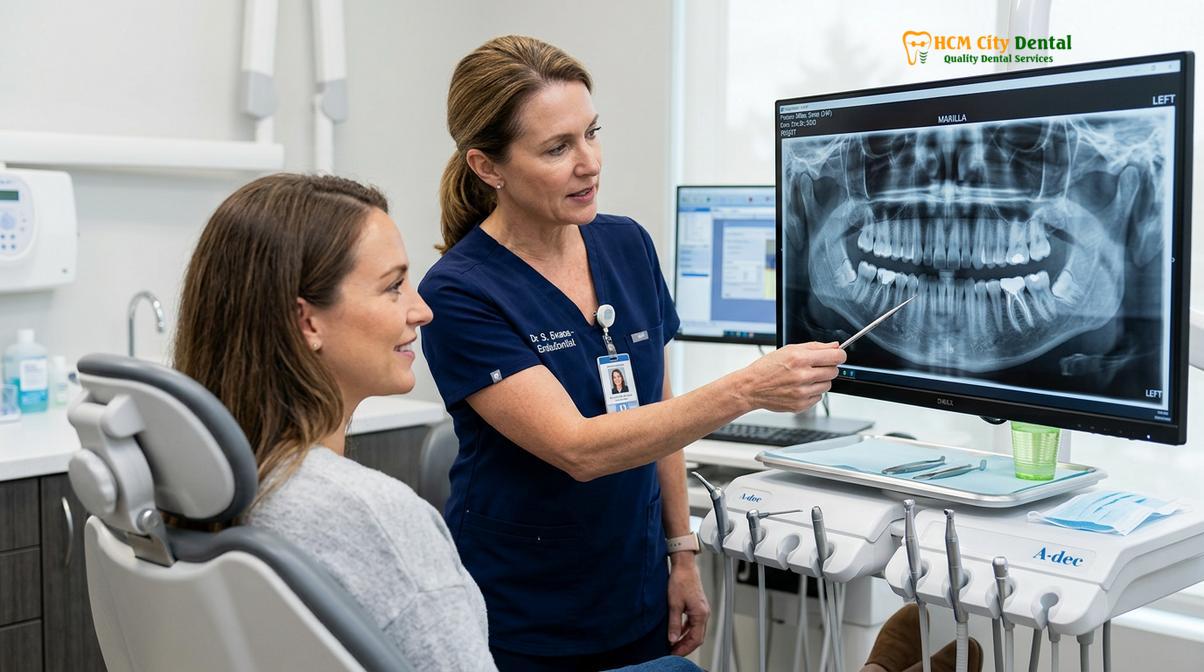
While a basic medical practitioner license grants a dentist the legal right to perform general dentistry, complex restorative and surgical procedures demand a higher echelon of expertise. When you seek to verify dentist qualifications saigon offers a highly competitive medical landscape where top-tier surgeons continuously upgrade their skills through international accreditations. Patients should look beyond the foundational degree and inquire about the surgeon’s specific postgraduate training.
For instance, implant dentistry is not a subject taught exhaustively in standard undergraduate dental programs. A highly qualified implantologist in Vietnam will possess a dedicated certification in oral implantology, often requiring hundreds of hours of specialized surgical training and supervised clinical cases. Furthermore, membership in prestigious global organizations, such as the International Congress of Oral Implantologists (ICOI) or the International Team for Implantology (ITI), serves as a strong indicator that the surgeon adheres to global best practices and engages in rigorous Continuing Medical Education (CME) [3].
Clinical Warning: Never assume that a general dentist is qualified to perform complex bone grafting or full-arch implant surgeries. Always request to see specific postgraduate certifications related to implantology or maxillofacial surgery before consenting to invasive procedures. Proceeding without this verification significantly increases the risk of implant failure and nerve damage.
Language proficiency is another critical qualification for international patients. Effective medical treatment relies heavily on clear communication regarding medical history, informed consent, and postoperative care instructions. A highly qualified surgeon catering to dental tourists will possess fluent English skills, ensuring that nuanced clinical explanations are accurately conveyed without the risk of translation errors. This direct line of communication builds trust and significantly reduces patient anxiety.
When comparing regional options, such as evaluating dental implants in Vietnam vs Thailand, the depth of a surgeon’s specialized qualifications and their commitment to international standards often become the deciding factors for discerning patients seeking uncompromising quality.
How to Read a Dentist’s Practice License Certificate (Chung Chi Hanh Nghe)
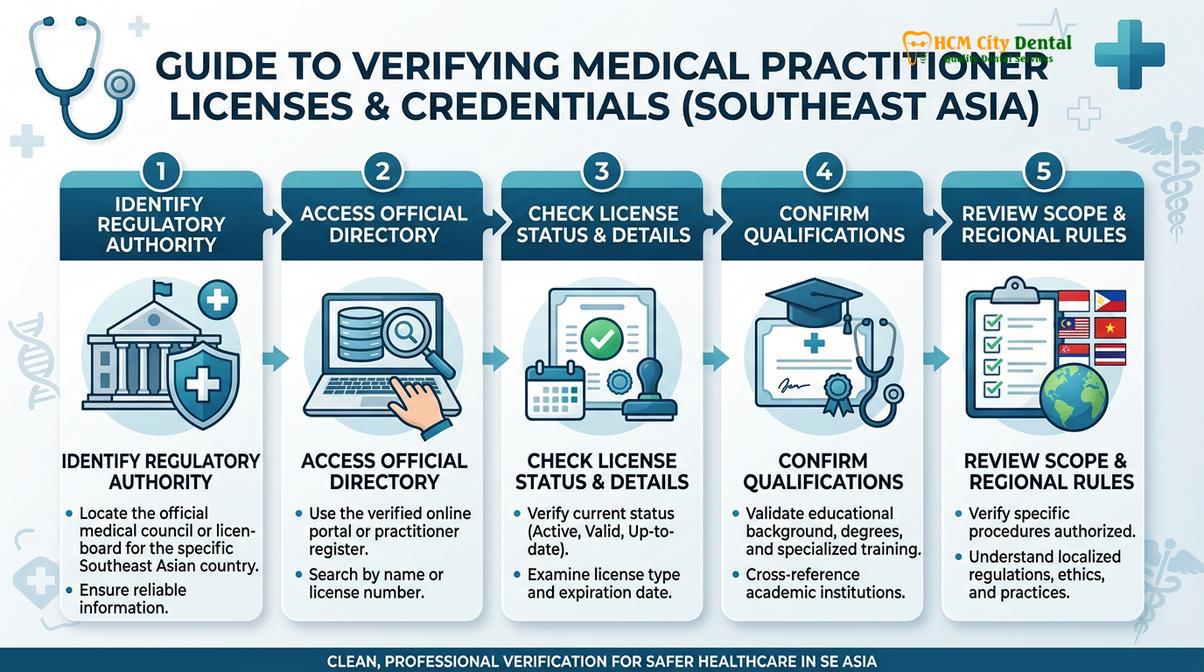
A valid Vietnamese practice license contains the doctor’s full name, registered specialty scope, unique identification number, and the official provincial health department seal.
For an international patient, being presented with a Vietnamese medical document can be confusing. However, understanding the key components of the “Chứng Chỉ Hành Nghề” (Practice Certificate) empowers you to independently verify your surgeon’s credentials. This document is the definitive proof of a practitioner’s legal right to treat patients and is standardized across the country.
The certificate will prominently display the doctor’s full legal name and their date of birth, which should match their professional identification. Crucially, it will list the “Phạm vi hoạt động chuyên môn” (Scope of Professional Practice). This section dictates exactly what procedures the doctor is legally permitted to perform. If a doctor is only licensed for general dentistry, this section will reflect that limitation, and they are legally prohibited from performing advanced maxillofacial surgeries unless they hold additional, documented certifications [4].
Credential Verification Example: An international patient required a complex sinus lift and bilateral implant placement. Upon requesting the surgeon’s credentials, the clinic provided the “Chứng Chỉ Hành Nghề” which clearly stated “Răng Hàm Mặt” (Odonto-Stomatology) alongside a supplementary MOH-issued certificate specifically for “Cấy Ghép Implant” (Dental Implantology). This transparent documentation provided the patient with the clinical confidence to proceed, resulting in a highly successful, complication-free surgical outcome.
Additionally, the certificate features a unique registration number (Số Chứng Chỉ). This is the exact number you would use if you wished to query the provincial health department’s database. The document must also bear the official red stamp and signature of the Director of the provincial Department of Health (e.g., Giám đốc Sở Y Tế). If a clinic hesitates to provide a clear copy of this document, it should be treated as a significant red flag.
Knowing how to read and request these documents is a vital part of learning how to find a trustworthy dentist in Ho Chi Minh City. Transparency is the hallmark of a reputable medical institution, and top clinics will often display these licenses prominently in their reception areas or provide them digitally upon request.
Dr. Nguyen Van Cuong: Verifying Clinical Education and Accreditations
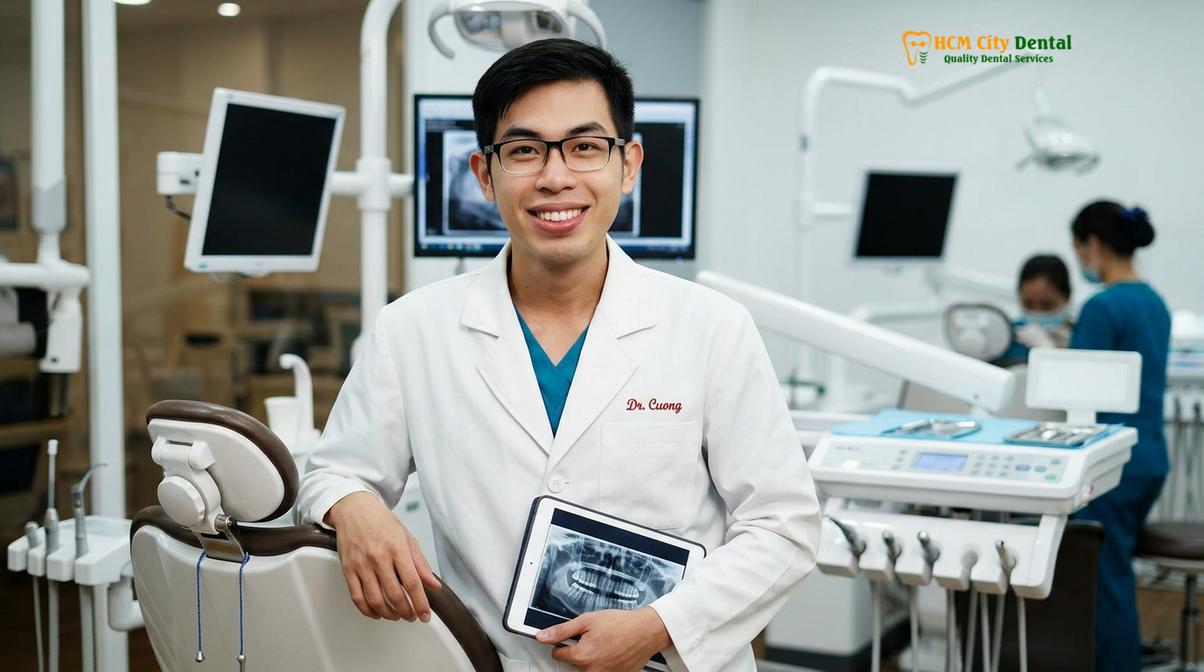
Dr. Nguyen Van Cuong exemplifies top-tier credentialing through his extensive postgraduate surgical training, active international board memberships, and transparent licensing records.
When evaluating the pinnacle of dental expertise in Vietnam, Dr. Nguyen Van Cuong stands as a prime example of rigorous clinical credentialing. As a leading specialist at HCMC Dental Clinic, Ho Chi Minh City, Dr. Cuong’s educational background and professional accreditations are fully transparent and verifiable. His foundational degree in Odonto-Stomatology is augmented by extensive postgraduate training in advanced implantology and complex restorative dentistry, ensuring that his clinical scope of practice covers the most demanding surgical interventions.
Patients utilizing the dr cuong licensing registry checks will find an impeccable record of continuous medical education and adherence to the highest regulatory standards. Dr. Cuong is not only fully licensed by the Vietnamese Ministry of Health but also maintains active affiliations with prestigious international dental organizations. This dual layer of local regulatory compliance and global peer recognition provides international patients with the ultimate assurance of safety and clinical excellence [5].
“Clinical excellence is not achieved through basic licensing alone; it is forged through decades of specialized surgical training, a commitment to continuous education, and an unwavering dedication to patient safety and transparent medical practices.”
At HCMC Dental Clinic, the patient experience is designed to be as seamless as the clinical outcomes. International visitors can take advantage of a 40% online booking discount and initiate a direct clinical consult with Dr. Cuong via WhatsApp prior to their arrival. This allows for preliminary treatment planning and credential verification from the comfort of your home. To further support your journey, the clinic’s concierge team can provide WhatsApp recommendations for comfortable hotel accommodations in District 1 and arrange reliable airport pickup options.
Understanding the financial logistics is also crucial for international patients. HCMC Dental Clinic offers highly flexible payment options to accommodate global travelers. Patients can settle their treatment fees using Visa/Mastercard, international bank transfer, cash (in both USD and VND), PayPal, various e-wallets, and even major cryptocurrencies (Crypto). This financial flexibility, combined with uncompromising medical standards, makes consulting an English-speaking dentist in Ho Chi Minh City like Dr. Cuong a highly secure and rewarding decision.
When to Seek Immediate Clinical Consultation
While verifying credentials prior to treatment is the best preventative measure, patients must also be aware of clinical red flags during their consultation or treatment phase that warrant seeking an immediate second opinion or alternative care. You should halt treatment and consult a verified medical professional if you experience any of the following:
- Refusal to Provide Documentation: If a clinic or practitioner becomes defensive or outright refuses to show their operating license or individual practice certificate upon request.
- Poor Sterilization Practices: If you observe a lack of basic hygiene, such as the reuse of disposable items, failure to open sterilized instrument pouches in front of you, or the absence of a Class-B autoclave system.
- Severe Postoperative Complications: If you experience unmanageable pain, excessive bleeding, severe swelling that worsens after 48 hours, or signs of systemic infection (fever, chills) following a procedure, seek immediate emergency medical attention.
- Lack of Informed Consent: If a practitioner attempts to rush you into an invasive surgery without thoroughly explaining the risks, benefits, alternative options, and providing a clear, written treatment plan in English.
Always remember that as a patient, you have the absolute right to pause or decline treatment at any time if you feel your safety or the clinical standards are compromised. Based on clinical diagnostics, a personalized examination by a verified, highly credentialed specialist is the only way to ensure optimal oral health outcomes.
Frequently Asked Questions
How do I check if a Vietnamese dentist has an active practice license?
You can check a Vietnamese dentist’s active practice license by requesting their unique registration number and cross-referencing it with the provincial Department of Health database. Patients can also ask the clinic directly to provide a physical or digital copy of the practitioner’s “Chứng Chỉ Hành Nghề” before commencing any clinical treatment. Reputable clinics will always comply with this request transparently.
Do dentists in Vietnam speak fluent English for medical consultations?
Many dentists in major metropolitan areas like Ho Chi Minh City speak fluent English, especially those catering to international patients. Top-tier clinics prioritize bilingual communication to ensure accurate medical history taking, informed consent, and clear explanations of complex surgical procedures without the need for a third-party translator, thereby minimizing the risk of miscommunication.
What is the difference between a general dentist and a dental specialist in Vietnam?
A general dentist in Vietnam holds a basic Odonto-Stomatology degree for routine care, while a dental specialist has completed additional years of postgraduate residency. Specialists are legally certified by the Ministry of Health to perform complex procedures such as advanced implantology, orthodontics, or maxillofacial surgery, ensuring a higher level of clinical competency for invasive treatments.
Can a foreign patient request to see sterilization protocols before treatment?
Yes, international patients have the right to request information regarding a clinic’s infection control and sterilization protocols. Reputable facilities will transparently demonstrate their adherence to international standards, such as utilizing Class-B autoclaves, to ensure maximum patient safety and prevent cross-contamination during surgical interventions.
What should I do if a clinic refuses to show their operating license?
If a dental facility refuses to provide their official operating license or the attending physician’s credentials, you should immediately decline treatment and seek care elsewhere. Transparency in medical licensing is a strict legal requirement, and withholding this information is a significant clinical red flag indicating potential regulatory non-compliance or substandard care.
References
- FDI World Dental Federation. Global Standards for Dental Practice and Patient Safety. (2021).
- Ministry of Health (MOH) Vietnam. Regulations on Medical Examination and Treatment Licensing. (2022).
- International Congress of Oral Implantologists (ICOI). Credentialing and Certification Guidelines. (2023).
- World Health Organization (WHO). Infection Prevention and Control in Health Care Facilities. (2020).
- Journal of Clinical Dentistry. The Impact of Continuing Medical Education on Surgical Outcomes. (2022).