Finding cheap dental crowns without compromising clinical quality is entirely possible through modern dental tourism. By leveraging advanced CAD/CAM technology and international clinical standards, patients can access highly durable, aesthetically pleasing restorations at a fraction of the cost typically found in Western countries. Understanding the materials, workflows, and economic factors involved allows patients to make informed decisions about their restorative care.
Clinical Summary:
Affordable dental crowns provide a structurally sound and aesthetically natural solution for restoring damaged, decayed, or endodontically treated teeth. Utilizing premium materials such as monolithic Zirconia and lithium disilicate (E.max), modern clinics in destinations like Ho Chi Minh City offer these restorations at significantly reduced prices due to lower operational overhead. The clinical workflow integrates advanced intraoral scanning to eliminate traditional molds, ensuring precise marginal adaptation. For the expat community and international travelers, comprehensive care often includes direct billing insurance partnerships, multilingual communication, and robust warranty protocols, making high-quality restorative dentistry both accessible and reliable.
Key Takeaways:
- Affordable crowns utilize premium, globally recognized materials like Zirconia and E.max.
- Advanced digital scanning ensures precise fit and eliminates uncomfortable traditional impressions.
- Direct billing with major international insurers provides a seamless experience for expats.
- Significant cost savings are achieved through lower regional overhead, not compromised clinical standards.
- Comprehensive warranties and remote follow-up support help ensure long-term clinical success.
Understanding Affordable Dental Crown Materials and Clinical Workflows
Affordable dental crowns utilize advanced materials like Zirconia and E.max, combined with digital CAD/CAM workflows, to deliver precise, durable, and aesthetically natural restorations at a lower cost.
When patients search for an affordable dental crown, there is often a misconception that lower costs equate to inferior materials. In reality, the global standardization of dental manufacturing means that reputable clinics worldwide utilize the exact same premium materials. The primary materials used in modern restorative dentistry include Porcelain-Fused-to-Metal (PFM), monolithic Zirconia, and lithium disilicate (commonly known as E.max) [1]. Each material possesses distinct biomechanical properties suited for different clinical indications. Furthermore, top-tier clinics in Vietnam strictly adhere to the material safety and infection control standards outlined by the Vietnam Odonto-Stomatology Association (VOSA), ensuring that all restorations meet rigorous national and international benchmarks [6].
Porcelain-Fused-to-Metal (PFM) crowns have been a staple in dentistry for decades. They offer a strong metal substructure overlaid with tooth-colored porcelain. While they are often the most economical option, they present certain aesthetic limitations, such as the potential for a dark line to appear at the gingival margin over time if gum recession occurs. Consequently, PFM crowns are typically recommended for posterior teeth where occlusal forces are high and aesthetics are less critical.
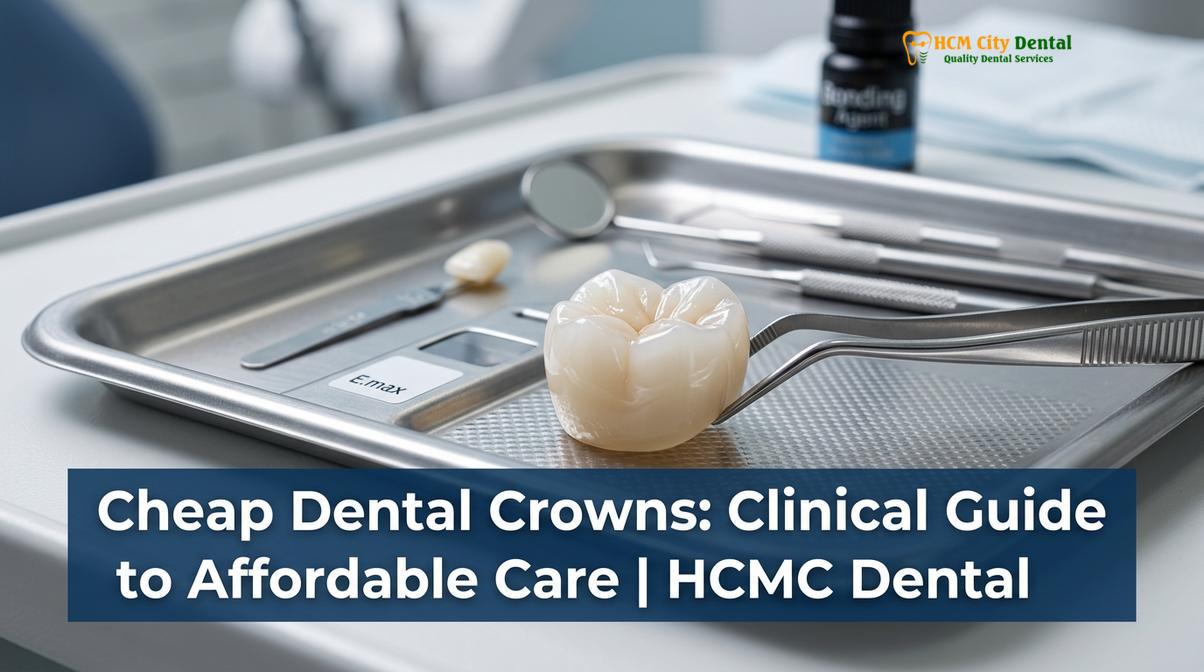
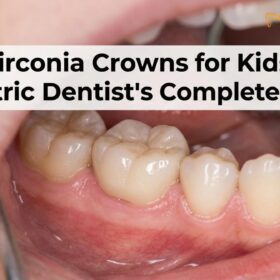
For patients seeking a low-cost porcelain crown that does not compromise on aesthetics, monolithic Zirconia and E.max are the preferred choices. Zirconia is renowned for its exceptional flexural strength and fracture toughness, making it ideal for both anterior and posterior restorations, particularly in patients who exhibit signs of bruxism (teeth grinding). E.max, on the other hand, offers unparalleled translucency that closely mimics natural enamel, making it the gold standard for anterior (front teeth) restorations where cosmetic outcomes are paramount.
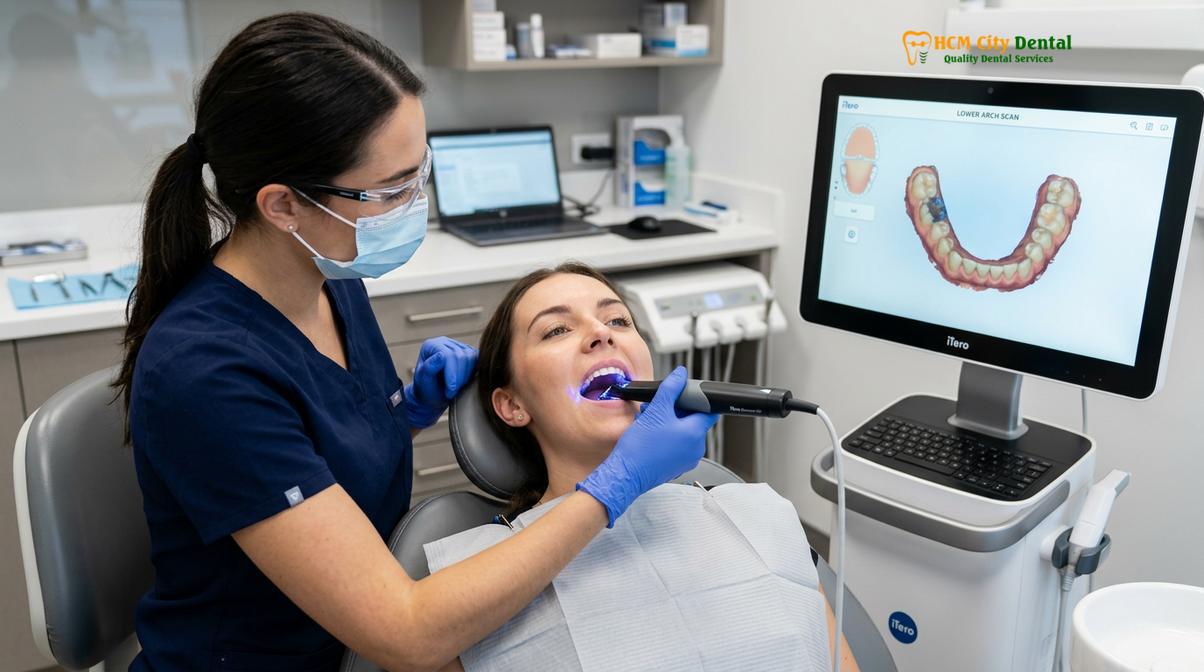
The integration of digital dentistry has revolutionized the fabrication process. Modern clinics utilize advanced intraoral scanning technologies, such as the iTero Element 5D and Medit i700 scanners. These devices capture highly accurate 3D visualizations of the patient’s dentition, completely eliminating the need for messy, uncomfortable traditional alginate or silicone molds [2]. This digital data is then seamlessly transferred to CAD/CAM (Computer-Aided Design and Computer-Aided Manufacturing) milling machines, which sculpt the crown from a solid block of ceramic with microscopic precision.
Cost Breakdown and Pricing Structure for Expat Patients
Dental tourism destinations offer transparent, highly competitive pricing structures, often enhanced by pre-arrival booking discounts and seamless direct billing with international insurance providers.
The economic advantage of seeking restorative treatment in Southeast Asia is substantial. The cost reduction is driven by lower regional operational overhead, favorable exchange rates, and highly efficient clinic management, rather than any reduction in clinical standards or material quality. Economic analyses of cross-border dental care consistently highlight that patients can save up to 60% on major restorative procedures without sacrificing clinical outcomes [5]. For the expat community and international travelers, understanding the pricing structure is crucial for effective treatment planning.
Many top-tier facilities offer transparent pricing models designed to accommodate both local residents and international visitors. To further enhance affordability, clinics often provide significant incentives for patients who coordinate their care prior to arrival. For instance, utilizing digital communication channels for pre-booking can unlock substantial discounts across a range of general and cosmetic procedures.
Below is an overview of a typical pricing structure, highlighting the significant savings available through pre-arrival booking discounts:
| Dental Procedure | Standard Walk-in Price | Pre-Arrival Booking Discount |
|---|---|---|
| Scaling & Polishing (Deep Teeth Cleaning) | ~$40 (1.0M VND) | From $24 (600k VND) |
| Family / Pediatric Dental Exam & Consultation | ~$30 (750k VND) | From $18 (450k VND) |
| Custom Nightguard (Bruxism) | ~$160 (4.0M VND) | From $96 (2.4M VND) |
| In-Office Teeth Whitening (Laser) | ~$140 (3.5M VND) | From $84 (2.1M VND) |
| E.max Ceramic Crown / Veneer | ~$320 (8.0M VND) | From $192 (4.8M VND) |
Beyond out-of-pocket affordability, navigating healthcare costs is greatly simplified through Direct Billing Insurance Partners. Reputable clinics maintain established relationships with major international insurers, including Allianz, Bupa, Cigna, Liberty, Generali, Aetna, and InterGlobal. This infrastructure allows expat families to enjoy cashless checkups, routine teeth cleaning, and even complex pediatric treatments, provided the procedures fall within their policy coverage [3]. The administrative team handles the pre-authorization and claims process directly with the insurer, removing the financial friction typically associated with cross-border healthcare.
For patients exploring various payment methods, clinics accept all major international credit cards, ensuring that settling any remaining co-pays or out-of-pocket expenses is secure and straightforward.
The Clinical Procedure: From Diagnosis to Final Placement
The crown placement workflow involves comprehensive diagnostics, precise tooth preparation, digital impression scanning, and meticulous adhesive bonding to ensure long-term functional success.
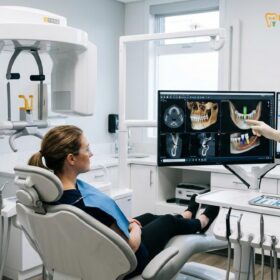
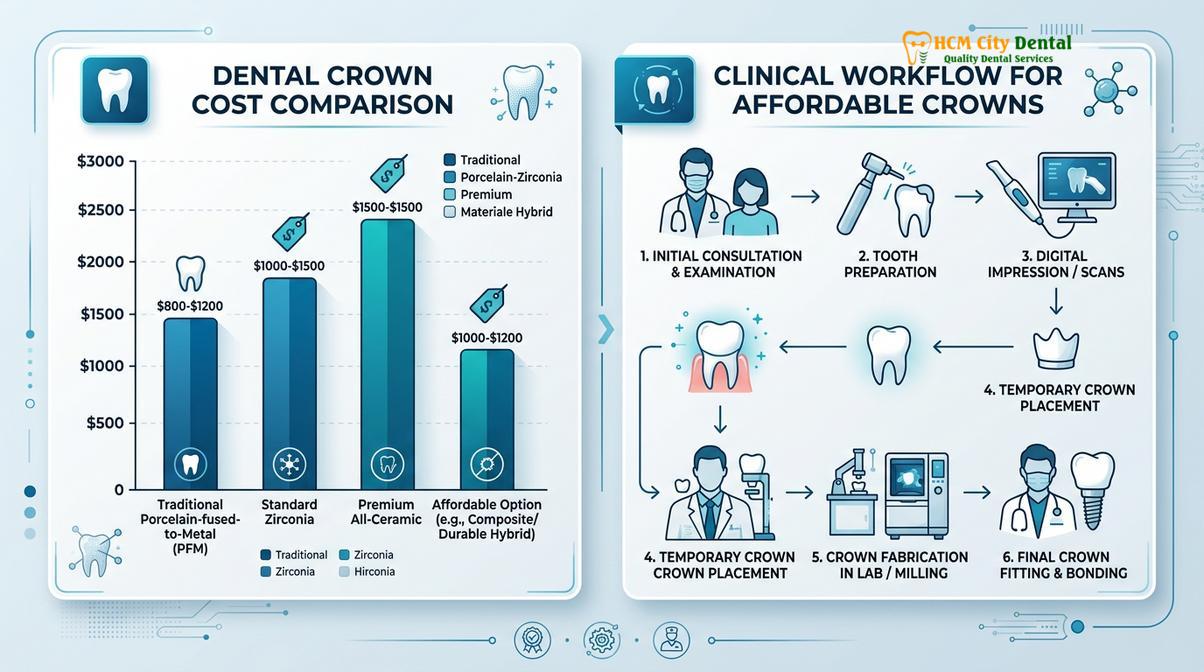
The journey to restoring a tooth with a high-quality crown follows a strict, evidence-based clinical protocol. The process begins with a comprehensive diagnostic evaluation. The attending dentist will conduct a thorough clinical examination, supported by digital radiography (X-rays) and 3D imaging, to assess the structural integrity of the tooth, the health of the surrounding periodontal tissues, and the status of the dental pulp. If the tooth exhibits signs of irreversible pulpitis or deep infection, endodontic therapy (root canal treatment) must be completed prior to crown fabrication to ensure a healthy foundation.
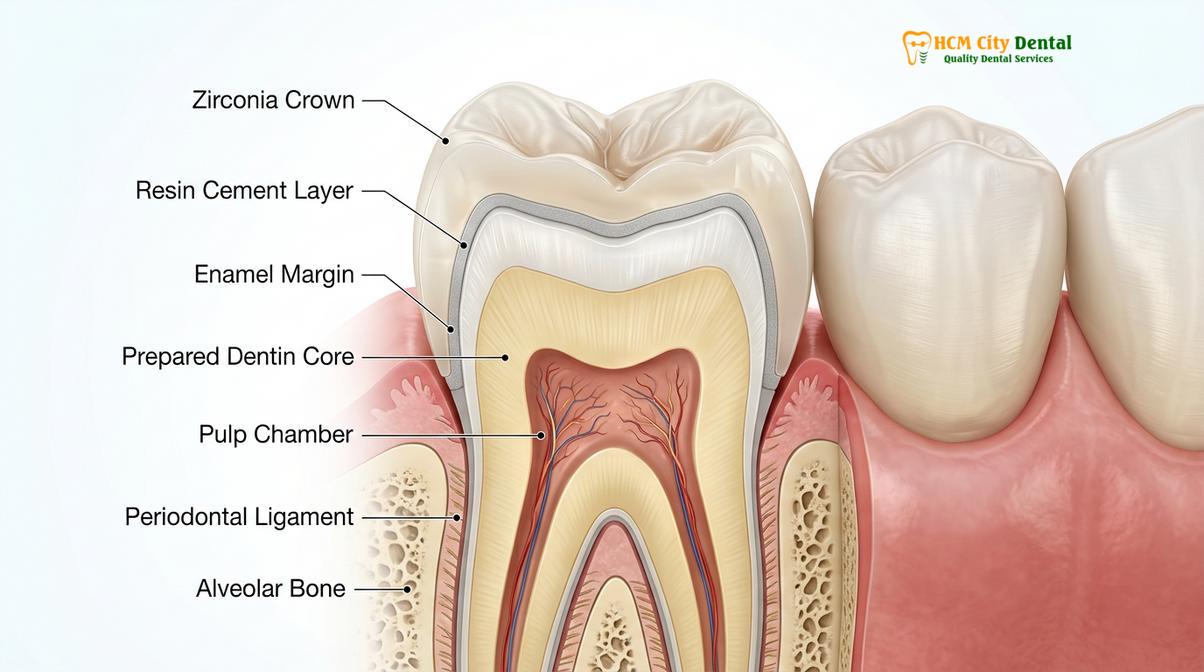
Once the tooth is deemed structurally sound and free of active infection, the preparation phase commences. Under profound local anesthesia, the dentist carefully reshapes the tooth. This involves reducing the occlusal (chewing) surface and the axial walls to create sufficient restorative space for the crown material. The exact amount of reduction depends on the chosen material; for instance, monolithic Zirconia requires less aggressive preparation compared to traditional PFM crowns, allowing for greater preservation of healthy tooth structure.
“The integration of intraoral scanning has fundamentally shifted restorative dentistry. By capturing digital impressions at a microscopic level, we eliminate the dimensional distortion inherent in traditional impression materials, resulting in crowns that seat passively and seal margins perfectly.”
Following preparation, the clinician utilizes an intraoral scanner to capture a highly detailed 3D digital impression of the prepared tooth, the adjacent teeth, and the opposing arch. This digital file is instantly transmitted to the dental laboratory. This digital precision is paramount for achieving optimal occlusal harmony and preventing premature wear on the opposing dentition. Furthermore, the digital workflow is highly beneficial for patients undergoing concurrent treatments, such as planning for dental implants, as the 3D data can be integrated into comprehensive treatment planning software.
While the permanent crown is being milled, a temporary crown is fabricated using a bis-acryl composite material and cemented with temporary cement. This provisional restoration protects the prepared dentin from thermal sensitivity, maintains the position of the gingival tissues, and prevents the adjacent teeth from shifting. During the final insertion appointment, the temporary crown is carefully removed, and the prepared tooth is meticulously cleaned. The permanent crown is then tried in to verify the marginal fit, interproximal contacts, and occlusal alignment. Once both the clinician and the patient are satisfied with the fit and aesthetics, the crown is permanently bonded using advanced dual-cure resin cements.
Dental Tourism and Expat Family Dentistry in Ho Chi Minh City
Ho Chi Minh City offers a comprehensive dental ecosystem, combining world-class restorative care with specialized pediatric services and seamless logistical convenience for international patients.
The rise of dental tourism has transformed how patients approach major restorative work. Ho Chi Minh City has emerged as a premier destination, offering an exceptional blend of clinical excellence and cultural vibrancy. For those seeking cheap crown options, the city provides access to state-of-the-art facilities that rival, and often exceed, the technological capabilities of clinics in North America, Europe, or Australia.
Beyond individual restorative needs, there is a strong focus on comprehensive family dentistry. The expat community in Vietnam relies heavily on clinics that can provide a full spectrum of care for all ages. Expat pediatric dentistry is a specialized field that requires a highly welcoming, kid-friendly environment. Clinicians are trained in behavior management techniques to ensure that children feel safe and comfortable during their visits. Preventive treatments, such as the application of dental sealants, fluoride varnishes, and gentle pulpotomy procedures, are routinely performed to safeguard the oral health of younger patients [4].
Clinical Case Highlight: Expat Family Care
An expatriate family recently visited HCMC Dental Clinic in Ho Chi Minh City for comprehensive care. The father required a replacement for a fractured PFM crown, while his two young children needed routine checkups and preventive sealants. Utilizing the clinic’s direct billing insurance network, the pediatric preventive care was fully covered. The father opted for a highly aesthetic E.max crown, benefiting from the pre-arrival booking discount. The entire family’s treatment was completed efficiently over two visits, demonstrating the convenience and high clinical standards available to international residents.
Logistical convenience is another significant factor driving the popularity of dental care in this region. Navigating the city is remarkably straightforward. Major clinics are strategically located near central business districts and popular expat neighborhoods. Travel parameters are highly favorable, with ride-hailing applications providing inexpensive, reliable transit from local landmarks and international hotels directly to the clinic doors.
When to Seek Immediate Clinical Attention
While restorative procedures are highly predictable, certain post-operative symptoms require prompt evaluation by a dental professional to prevent complications.
Although the process of receiving a dental crown is generally smooth, patients should be aware of signs that indicate a need for urgent care. If you experience severe, throbbing pain that disrupts sleep, significant facial swelling, or if a temporary crown completely dislodges, it is crucial to seek an emergency dentist immediately. Addressing these issues promptly prevents bacterial contamination of the exposed dentin, manages acute discomfort, and ensures that the final restoration can be placed on a healthy, stable foundation.
Warranty, Follow-up, and Long-Term Care
Reputable clinics provide robust warranties and structured remote follow-up support to ensure the long-term success and durability of dental restorations.
Investing in a dental crown, even an affordable one, is an investment in your long-term oral health. To protect this investment, leading clinics provide comprehensive warranty policies. Patients typically receive official clinic warranty cards that outline the specific guarantees associated with their treatment. For instance, it is standard practice to offer a multi-year bonding guarantee for ceramic crowns and veneers, ensuring that any issues related to the cementation or structural integrity of the restoration are promptly addressed. Additionally, guarantees are often provided for standard restorative work, such as BPA-free composite fillings.
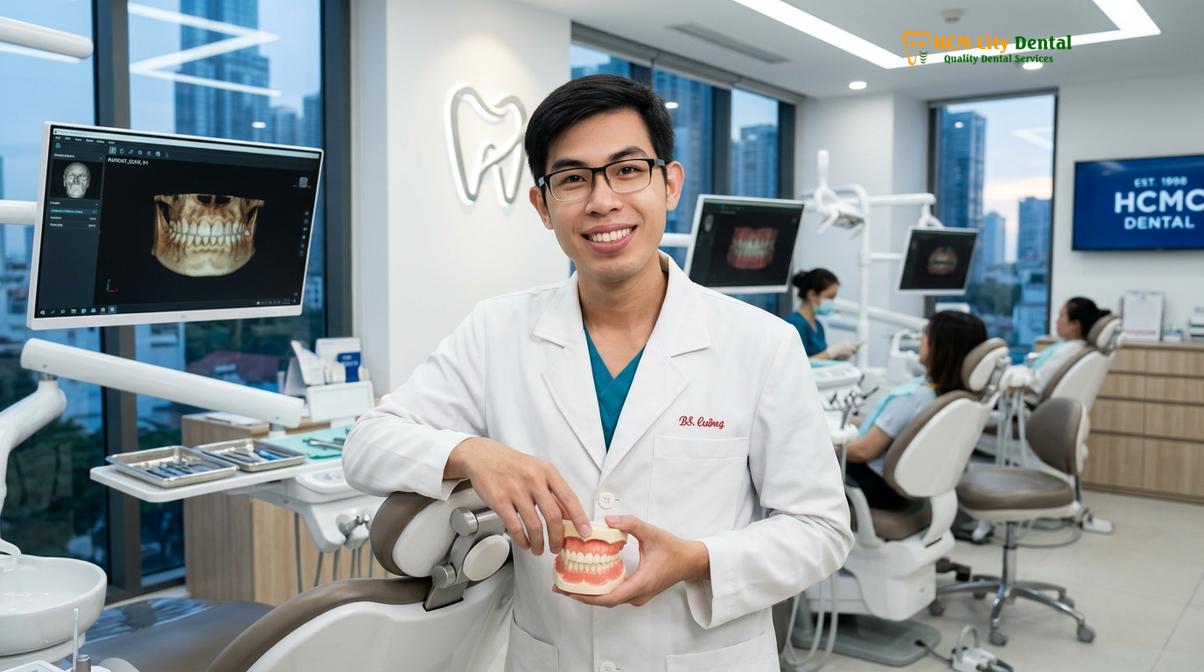
Dr. Nguyen Van Cuong, a leading restorative specialist, emphasizes that successful outcomes depend on both advanced technology and meticulous clinical technique. At our practice, Dr. Cuong ensures that every patient receives personalized care, integrating comprehensive general and preventive dentistry protocols to maintain the health of the underlying tooth structure before any permanent crown is bonded.
“The longevity of a dental restoration is a partnership between the clinician’s precision and the patient’s daily maintenance. A perfectly executed crown can fail if the surrounding periodontal environment is neglected. Regular professional cleanings are the cornerstone of protecting your restorative investment.”
For patients who exhibit signs of bruxism, the fabrication of a custom nightguard is highly recommended. Unconscious clenching and grinding exert immense occlusal forces that can chip or fracture even the strongest Zirconia restorations. Wearing a nightguard acts as a protective shock absorber, significantly extending the lifespan of the crown.
Recognizing that many patients travel internationally for their care, modern clinics have implemented robust remote follow-up protocols. Through secure messaging platforms, patients can easily communicate with their clinical team, share photos if they have concerns, and receive professional guidance long after they have returned home.
References
- Journal of Prosthetic Dentistry. Clinical evaluation of monolithic zirconia crowns. (2021).
- Clinical Oral Investigations. Accuracy of intraoral scanners in fixed prosthodontics. (2022).
- American Dental Association. Guidelines on direct billing and international insurance coordination. (2023).
- Journal of Clinical Pediatric Dentistry. Preventive protocols in expat pediatric populations. (2019).
- International Dental Journal. Economic analysis of cross-border dental care and restorative pricing. (2020).
- Vietnam Odonto-Stomatology Association (VOSA). National guidelines on restorative materials and clinical infection control. (2022).
If you are considering restorative treatment and want to explore affordable, high-quality options, contact HCMC Dental Clinic in Ho Chi Minh City today. Our international team is ready to assist you with comprehensive treatment planning, transparent pricing, and seamless travel coordination to ensure your dental journey is a resounding success.