Dental clinic quality certifications in Vietnam, such as ISO and AACI, guarantee that facilities meet rigorous global standards for infection control, patient safety, and clinical outcomes. These accreditations transform dental tourism by providing international patients with verifiable proof of medical excellence and standardized treatment protocols.
Clinical Summary:
The landscape of international healthcare is defined by stringent regulatory frameworks that ensure patient safety and procedural predictability. For international patients seeking complex restorative work, understanding dental clinic quality certifications Vietnam ISO AACI is paramount. The American Accreditation Commission International (AACI) and the International Organization for Standardization (ISO) provide comprehensive benchmarks for clinical governance. These frameworks mandate rigorous infection control, utilizing Class-B autoclave sterilization, and require the exclusive use of FDA-approved and CE-marked biomaterials. By subjecting themselves to independent clinical audits, top-tier facilities in Ho Chi Minh City demonstrate an uncompromising commitment to medical excellence. This standardized approach minimizes surgical risks, enhances the longevity of dental implants, and provides a secure, predictable environment for global patients navigating their healthcare options abroad.
Key Takeaways:
- International accreditations like AACI and ISO 9001:2015 provide objective verification of a clinic’s commitment to global safety standards.
- AACI dental standards encompass 52 rigorous criteria focusing on clinical quality, governance, and facility infrastructure.
- Standardized quality management systems (QMS) significantly reduce human error and ensure consistent, reproducible clinical outcomes.
- Accredited facilities mandate the use of CE-marked and FDA-approved biomaterials, ensuring superior biocompatibility and mechanical strength.
- Independent clinical audits enforce continuous improvement, maintaining strict adherence to European-standard sterilization protocols.
The Role of International Quality Standards in Healthcare
International quality standards establish a universal benchmark for patient safety, ensuring that clinical workflows, sterilization protocols, and diagnostic accuracy remain consistent regardless of geographic location.
In the rapidly expanding field of global healthcare, the reliance on standardized clinical protocols has never been more critical. When patients travel across borders for medical care, they require objective assurance that the facility they choose operates at a level commensurate with, or exceeding, the standards of their home country. International quality standards serve as this vital bridge, translating the promise of “high-quality care” into measurable, verifiable, and strictly audited clinical realities. These frameworks are not merely administrative accolades; they are comprehensive systems designed to safeguard patient health at every touchpoint of the clinical journey[1].
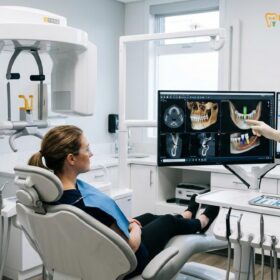
The integration of these standards into dental practice fundamentally alters how a clinic operates. It shifts the paradigm from individual practitioner reliance to a robust, systems-based approach. In a standardized environment, every procedure—from the initial radiographic diagnosis using CBCT imaging to the final torque application on a dental implant—is governed by evidence-based protocols. This systematic approach is particularly crucial for international patients planning dental travel to Southeast Asia, as it mitigates the inherent anxieties associated with receiving complex medical treatments in a foreign setting.
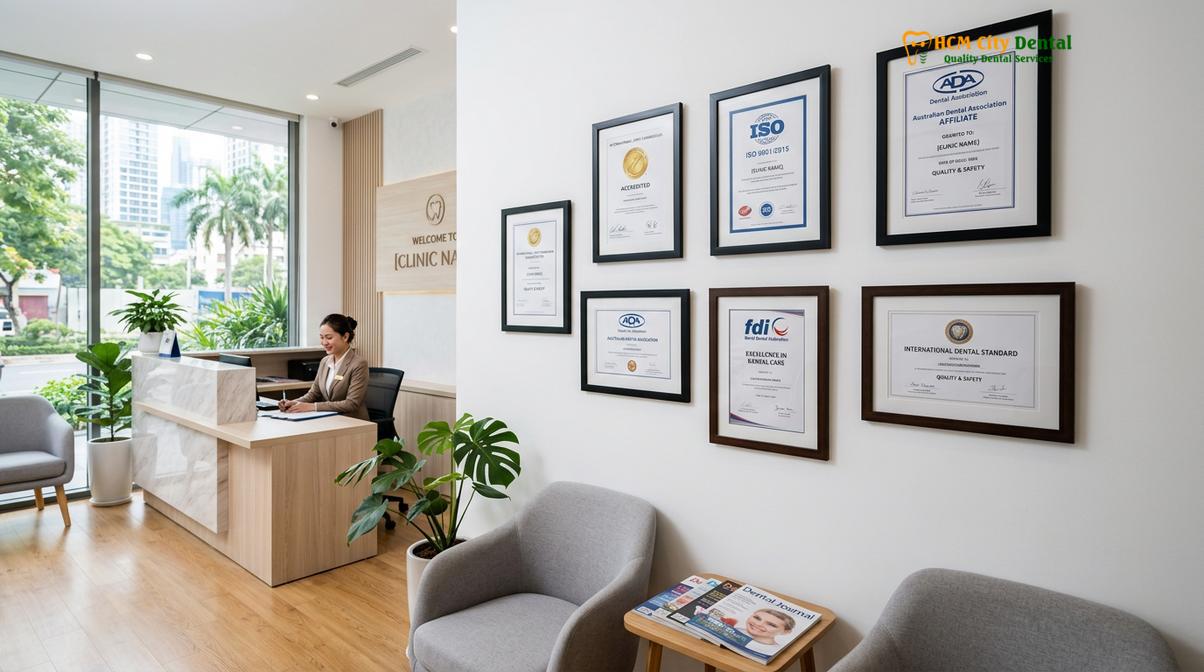
Furthermore, these healthcare safety credentials align local practices with the rigorous guidelines set forth by global health authorities, including the World Health Organization (WHO)[3]. For instance, WHO guidelines on surgical site infections dictate specific environmental controls and sterilization parameters. When a facility in Ho Chi Minh City adopts international standards, it inherently integrates these global directives into its daily operations. This ensures that cross-contamination risks are virtually eliminated, emergency response protocols are meticulously rehearsed, and patient data is handled with the utmost confidentiality and security.
At HCMC Dental Clinic, the pursuit of international standardization is viewed as a foundational clinical imperative. By aligning with global benchmarks, the clinic ensures that every international patient receives care that is not only highly effective but also fundamentally safe, predictable, and transparently documented.
What is the AACI Healthcare Certification?
The American Accreditation Commission International (AACI) certification is a comprehensive clinical framework that evaluates dental facilities on governance, infection control, and emergency readiness.
The American Accreditation Commission International (AACI) represents one of the most rigorous and specialized accreditation bodies in the global healthcare sector. Unlike generalized hospital accreditations that may overlook the nuanced requirements of specialized outpatient care, the AACI has developed a distinct framework tailored specifically for dental facilities. This specialized approach ensures that the unique clinical challenges of dentistry—such as aerosol management, precise instrument sterilization, and the handling of specialized biomaterials—are meticulously addressed and regulated[1].
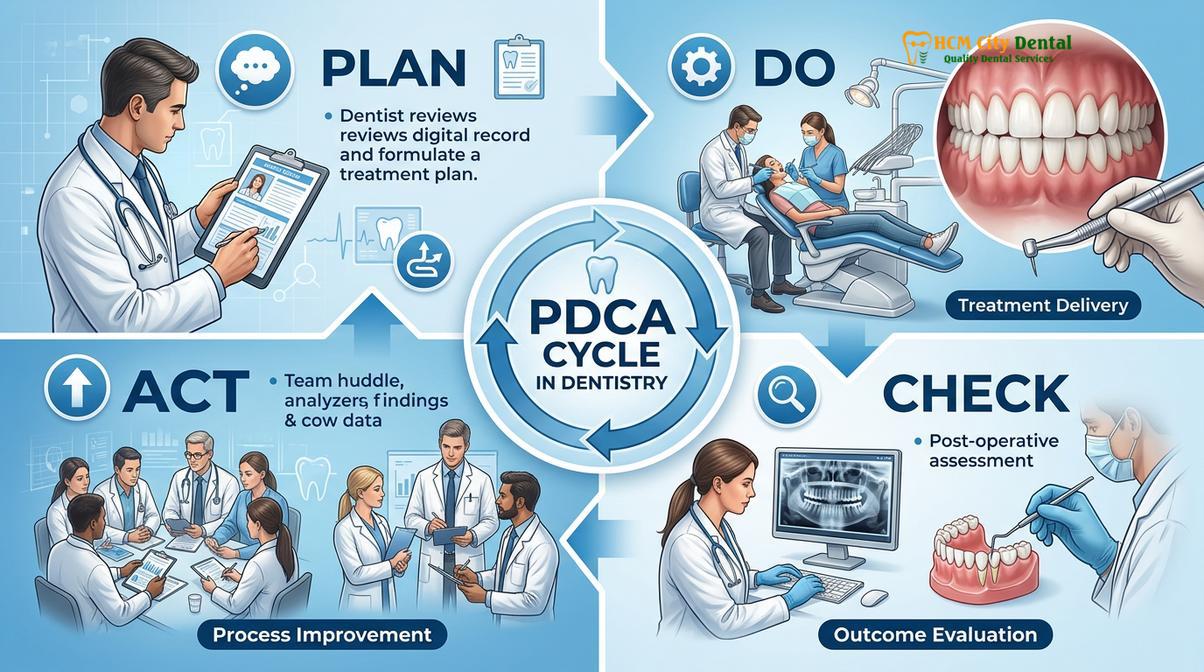
Achieving an aaci dental clinic accreditation requires a facility to demonstrate absolute compliance with a comprehensive set of standards. The AACI v2.1 dental framework encompasses 52 stringent criteria divided into core domains: quality governance, clinical quality, and facility infrastructure. These criteria are not static checklists but dynamic systems based on the PDCA (Plan-Do-Check-Act) cycle. This methodology ensures that a clinic not only establishes safe protocols but continuously monitors their effectiveness, analyzes clinical data, and implements ongoing improvements.
“AACI accreditation fundamentally transforms a clinic’s operational DNA. It demands that every clinical decision, from the selection of an anesthetic to the sterilization of a handpiece, is backed by documented, evidence-based protocols, ensuring absolute predictability for our international patients.”
— Dr. Nguyen Van Cuong, Lead Clinician
Within the clinical quality domain, the AACI standards delve deeply into the specifics of dental practice. They mandate rigorous protocols for radiation safety during X-ray and CBCT imaging, ensuring patient exposure is minimized according to the ALARA (As Low As Reasonably Achievable) principle. Furthermore, the standards dictate precise requirements for clinical photography, dental record management, and informed consent processes, ensuring that patients are fully educated about their treatment options and potential risks before any procedure commences.
Emergency readiness is another critical pillar of the AACI framework. Accredited clinics must maintain fully equipped emergency resuscitation kits, and the clinical staff must undergo regular, documented training in advanced life support and medical emergency management. This level of preparedness is essential for providing a secure environment, particularly when administering local anesthesia or performing complex oral surgeries on patients with varying medical histories.
ISO 9001:2015 in Dentistry: Standardizing Patient Care and Admin
ISO 9001:2015 provides a robust quality management system that standardizes administrative efficiency and clinical care pathways, minimizing human error and enhancing the patient experience.
The International Organization for Standardization (ISO) 9001:2015 is a globally recognized standard that specifies requirements for a quality management system (QMS). While often associated with manufacturing and corporate sectors, its application in healthcare—specifically dentistry—is profoundly impactful. An iso quality management system provides the structural backbone necessary to ensure that a dental clinic operates with maximum efficiency, consistency, and patient-centric focus[2].
In a clinical setting, ISO 9001:2015 mandates the meticulous documentation of all operational procedures. This means that every aspect of the patient journey, from the initial inquiry and appointment scheduling to post-operative follow-up, is governed by standardized workflows. This administrative standardization is crucial for international patients planning your dental itinerary, as it ensures clear communication, transparent pricing, and seamless coordination of complex treatment plans across multiple appointments.
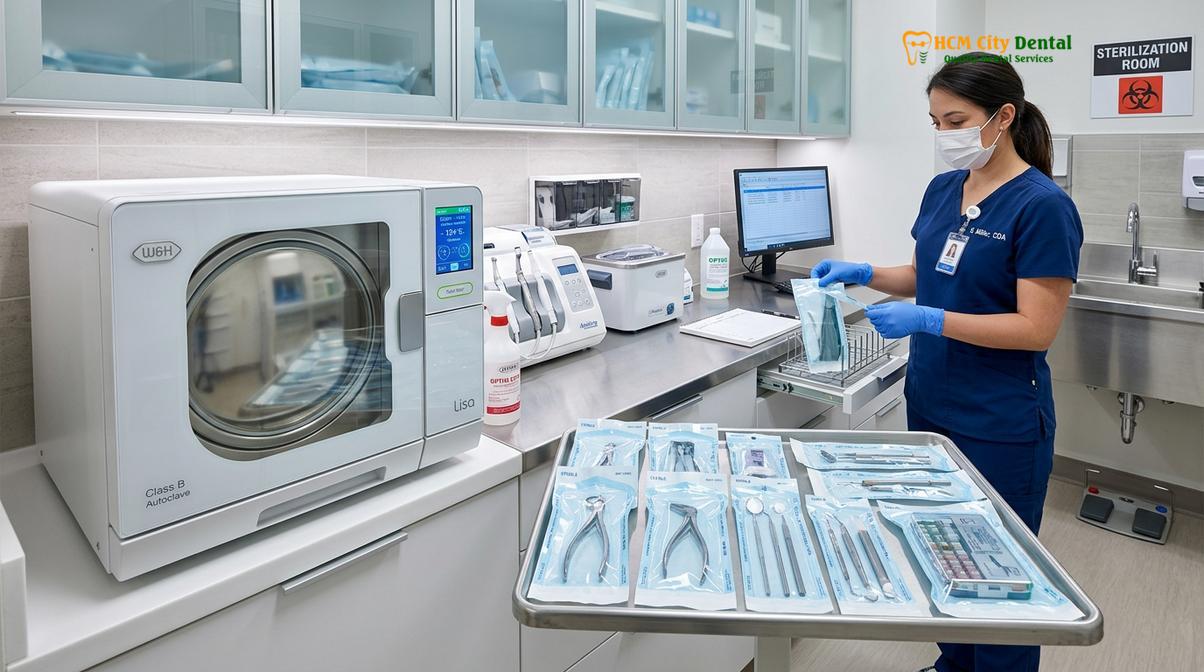
Beyond administration, ISO 9001:2015 heavily influences clinical safety, particularly in the realm of infection control. The standard requires strict traceability and validation of sterilization processes. At HCMC Dental Clinic, this translates to the implementation of a Class-B autoclave sterilization protocol—the highest European standard for infection control. Every sterilization cycle is monitored, logged, and validated using biological and chemical indicators, ensuring that all surgical instruments are absolutely sterile before they reach the operatory.
| Clinical Parameter | Standard Dental Clinic | ISO 9001:2015 Accredited Clinic |
|---|---|---|
| Sterilization Protocol | Basic autoclaving, manual logging | Class-B vacuum autoclaving, digital traceability, biological indicators |
| Patient Records | Fragmented, paper-based or basic digital | Centralized, encrypted digital QMS, comprehensive clinical history |
| Error Management | Reactive, addressed post-incident | Proactive, PDCA cycle, continuous risk assessment and mitigation |
| Material Sourcing | Variable suppliers, limited tracking | Strict vendor qualification, batch traceability for all biomaterials |
The implementation of ISO standards also fosters a culture of continuous feedback and improvement. Clinics are required to systematically collect and analyze patient feedback, clinical outcomes, and internal audit results. This data-driven approach allows the clinical team to identify areas for enhancement, refine surgical techniques, and continuously elevate the standard of care provided to every patient walking through the doors in Saigon.
How Clinics Achieve and Maintain Clinical Accreditation
Achieving accreditation requires rigorous internal preparation, standardized protocol implementation, and passing comprehensive third-party audits that evaluate every aspect of clinical and operational performance.
The journey to achieving international accreditation is a demanding and resource-intensive process that requires unwavering commitment from the entire clinical and administrative staff. It is not a mere paperwork exercise but a fundamental transformation of the clinic’s operational culture. The process typically begins with a comprehensive gap analysis, where current practices are meticulously compared against the stringent requirements of the target standard, whether it be ISO or AACI.
Following the gap analysis, the clinic enters a prolonged phase of protocol development and implementation. This involves drafting detailed standard operating procedures (SOPs) for every conceivable clinical and administrative scenario. Staff members undergo extensive training to ensure they not only understand the new protocols but can execute them flawlessly under pressure. This phase is critical for establishing the foundational habits that will sustain the accreditation over the long term.
Clinical Implementation: The Audit Journey
The Challenge: Transitioning a high-volume dental facility to meet the exacting standards of AACI v2.1, requiring the standardization of over 50 distinct clinical and administrative protocols.
The Process: The clinic initiated a 9-month preparation phase, implementing a digital QMS, upgrading to Class-B sterilization, and conducting rigorous staff training on emergency response and radiation safety.
The Outcome: Following a successful mock survey, the facility underwent a comprehensive 3-day on-site evaluation by international assessors, achieving a near-perfect compliance score and securing formal accreditation, thereby validating its commitment to global patient safety.
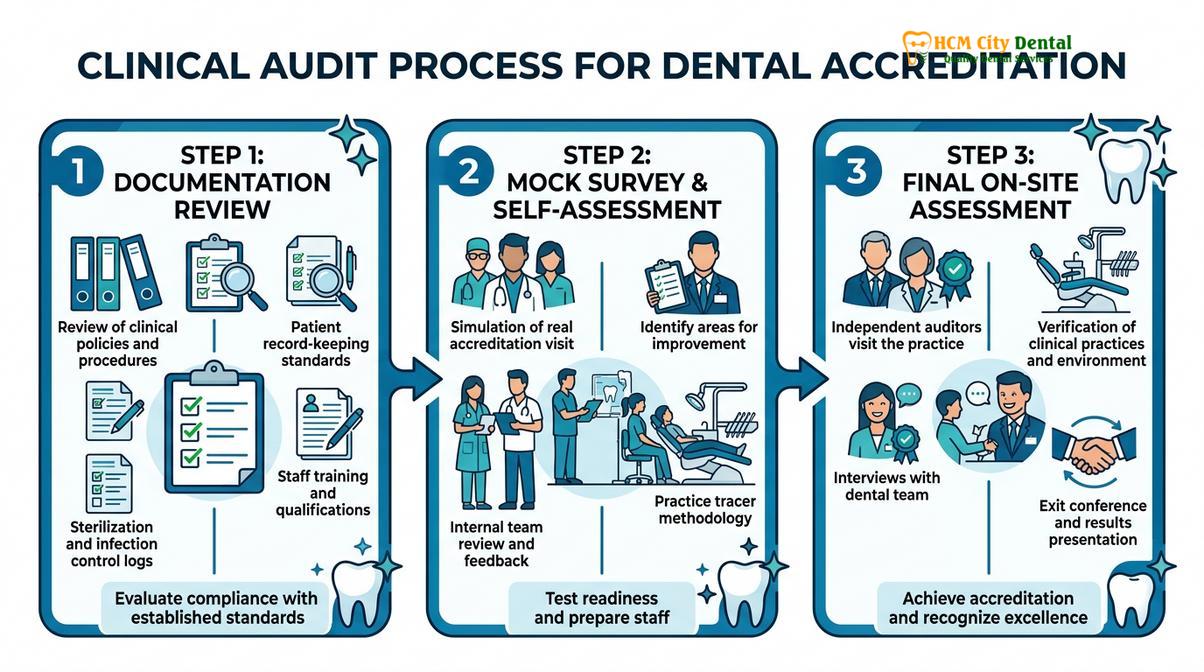
The culmination of the preparation phase is the official on-site survey, conducted by independent, highly trained assessors. A clinical audit vietnam dentist evaluation utilizes a “tracer methodology.” Assessors trace the entire journey of a patient—from admission to discharge—evaluating compliance at every step. They review sterilization logs, inspect emergency equipment, interview clinical staff, and observe live procedures to ensure that the documented protocols are actively practiced in reality.
However, achieving accreditation is only the beginning; maintaining it requires continuous vigilance. Accredited clinics are subject to periodic surveillance audits to ensure ongoing compliance. This necessitates a dedicated quality assurance team responsible for conducting regular internal audits, managing the PDCA cycle, and ensuring that the clinic remains at the forefront of global best practices. This continuous scrutiny is what makes these certifications so valuable for patients selecting a reputable dental provider in Saigon.
Quality Sourcing: Sourcing Materials Certified by CE and FDA
Utilizing materials certified by the CE mark and the FDA ensures that dental implants, prosthetics, and biomaterials meet stringent biocompatibility and mechanical durability standards.
The success of any complex dental procedure, particularly implantology and advanced prosthodontics, is inextricably linked to the quality of the biomaterials utilized. International accreditations mandate strict supply chain management, ensuring that clinics only source materials that have been rigorously tested and certified by leading global regulatory bodies, such as the European CE mark and the U.S. Food and Drug Administration (FDA)[4].
When a clinic utilizes fda approved dental materials, it provides patients with the assurance that the implants, bone graft substitutes, and restorative ceramics have undergone exhaustive clinical trials to verify their safety and efficacy. For dental implants, this means utilizing high-grade, commercially pure titanium or advanced titanium alloys that possess optimal surface topographies for rapid and stable osseointegration. The certification process ensures that these materials are free from cytotoxic impurities and possess the mechanical strength necessary to withstand the immense forces of human mastication.
“The biological integration of an implant is highly dependent on the purity and surface characteristics of the titanium. By strictly utilizing FDA-cleared and CE-marked materials, we eliminate material-related variables, ensuring a predictable and robust foundation for the final restoration.”
— Dr. Nguyen Van Cuong, Lead Clinician
Furthermore, quality sourcing extends to the restorative materials used for crowns, bridges, and veneers. Certified zirconia and lithium disilicate ceramics offer superior aesthetics, mimicking the natural translucency of human enamel, while providing exceptional fracture resistance. The traceability of these materials is a core component of accredited quality management systems. Every implant fixture and prosthetic component is tracked via a unique batch number, ensuring complete transparency and accountability throughout the patient’s lifetime.
Clinical Warning: The Risks of Uncertified Materials
Utilizing non-certified or counterfeit dental materials poses severe risks, including localized tissue toxicity, implant fracture, and catastrophic failure of osseointegration. Patients must always verify that their chosen clinic exclusively utilizes biomaterials cleared by reputable regulatory bodies like the FDA or CE to ensure long-term clinical safety.
For international patients comparing implant treatments across Southeast Asian hubs, the assurance of certified materials is a critical deciding factor. It guarantees that the treatment received abroad utilizes the exact same high-quality components that would be used in top-tier clinics in North America, Europe, or Australia, thereby ensuring the longevity and success of the dental investment.
When to Consult a Clinical Specialist (Important Clinical Considerations)
While international accreditations and certified materials provide a robust framework for safety and predictability, they do not replace the necessity for individualized clinical diagnostics. Every patient presents with a unique anatomical and medical profile that must be carefully evaluated before any treatment plan is finalized. Dental procedures, particularly surgical interventions like implant placement, carry inherent biological variables, and outcomes cannot be universally guaranteed.
Patients considering complex restorative work should seek a comprehensive consultation that includes advanced 3D CBCT imaging. This allows the specialist to assess bone density, identify vital anatomical structures (such as the inferior alveolar nerve and maxillary sinus), and determine the precise candidacy for specific procedures. Certain systemic conditions, such as uncontrolled diabetes, severe osteoporosis, or active periodontal disease, may serve as contraindications for immediate surgery and require prior medical management.
If you are experiencing acute oral pain, significant tooth mobility, or signs of active infection, it is imperative to consult a qualified dental professional promptly. For international patients seeking expert guidance, Dr. Nguyen Van Cuong offers direct clinical consultations via WhatsApp, providing preliminary assessments and personalized advice based on your specific diagnostic records before you travel.
Frequently Asked Questions
What is the most prestigious accreditation for a dental clinic in Vietnam?
The AACI (American Accreditation Commission International) and ISO 9001:2015 are currently the most prestigious accreditations for dental clinics in Vietnam. These frameworks rigorously evaluate clinical governance, infection control, and patient safety, ensuring the facility operates at a globally recognized standard of medical excellence. Achieving these certifications requires a clinic to pass exhaustive third-party audits, demonstrating absolute compliance with international best practices.
Are clinics in Vietnam audited by international medical boards?
Yes, top-tier clinics in Vietnam undergo rigorous audits by international medical boards and third-party organizations. Assessors from bodies like AACI conduct comprehensive on-site evaluations, reviewing everything from sterilization logs to emergency response protocols to verify strict compliance with global healthcare standards. These audits utilize tracer methodologies to ensure that documented protocols are actively and consistently applied in daily clinical practice.
Why does clinical standardization lead to better implant success rates?
Clinical standardization minimizes procedural variables and human error, directly contributing to better implant success rates. By strictly adhering to standardized surgical protocols, utilizing certified biocompatible materials, and maintaining absolute sterility, clinics create the optimal biological environment for successful osseointegration and long-term stability. This systematic approach ensures that every step of the implant process is executed with precision and predictability[5].
How can international patients verify a clinic’s ISO or AACI status?
International patients can verify a clinic’s accreditation status by requesting to see their official certification documents or checking the accrediting body’s official registry. Reputable clinics transparently display their ISO or AACI certificates, complete with registration numbers, on their websites and within their physical facilities. Patients can also cross-reference these credentials directly with the issuing organizations for added peace of mind.
Do accredited clinics charge more for dental treatments?
While accredited clinics invest heavily in advanced technology, certified materials, and continuous staff training, their treatment fees remain highly competitive globally. The slight premium reflects the uncompromising commitment to safety, utilizing Class-B sterilization and FDA-approved materials, which ultimately prevents costly complications. The long-term value of receiving predictable, high-quality care far outweighs the initial cost difference compared to non-accredited facilities.
Ensuring your dental health requires a commitment to uncompromising quality and international safety standards. At HCMC Dental Clinic in Ho Chi Minh City, we adhere to rigorous global protocols to provide predictable, world-class care. International patients can take advantage of a 40% online booking discount for comprehensive treatment plans. For seamless logistics, our team can assist with airport pickup and recommend convenient hotels in District 1. We offer flexible payment options, including Visa/Mastercard, international bank transfer, cash (USD/VND), PayPal, e-wallets, and major cryptocurrencies. Contact us today via WhatsApp for a direct clinical consultation with our specialists and start communicating with bilingual dental professionals to plan your journey.
References
- American Accreditation Commission International (AACI). Dental Standards and Clinical Governance Framework v2.1. (2021).
- International Organization for Standardization (ISO). ISO 9001:2015 Quality management systems — Requirements. (2015).
- World Health Organization (WHO). Global Guidelines for the Prevention of Surgical Site Infection. (2018).
- U.S. Food and Drug Administration (FDA). Dental Devices and Premarket Notification 510(k) Clearances. (2022).
- Journal of International Dental and Medical Research. The Impact of Quality Management Systems on Dental Implant Outcomes. (2020).