Self ligating Damon braces in Vietnam offer an advanced orthodontic solution utilizing passive slide mechanisms to align teeth with minimal friction. This system reduces clinical adjustment visits, enhances patient comfort, and provides highly predictable aesthetic outcomes for both simple and complex malocclusions.
Clinical Summary:
The Damon System represents a significant paradigm shift in orthodontic biomechanics, moving away from high-friction elastic ligation toward passive self-ligation. By utilizing a specialized sliding door mechanism to secure the archwire, these braces allow for light, continuous forces that respect the biological limits of the periodontal ligament. In Vietnam, particularly at specialized centers in Ho Chi Minh City, this technology is combined with advanced digital diagnostics to treat a wide spectrum of malocclusions. The approach often minimizes the need for rapid palatal expanders or premolar extractions by encouraging natural arch development. Patients benefit from extended intervals between adjustment appointments, improved oral hygiene due to the absence of plaque-retentive elastic ties, and a streamlined clinical workflow that delivers precise, functional, and aesthetically balanced occlusal outcomes.
Key Takeaways:
- Friction Reduction: Passive self-ligation eliminates elastic ties, significantly reducing binding and friction during tooth movement.
- Biological Forces: Utilizes light, continuous forces that promote optimal blood flow within the periodontal ligament, enhancing patient comfort.
- Fewer Clinical Visits: The advanced wire technology and bracket design allow for longer intervals (8-10 weeks) between adjustment appointments.
- Arch Expansion: The system’s biomechanics often facilitate natural arch development, potentially reducing the need for tooth extractions in borderline cases.
- Hygiene Advantages: The absence of elastomeric ligatures removes a primary trap for plaque and bacteria, supporting better gingival health during treatment.
The Clinical Mechanics of Self-Ligating Damon Braces
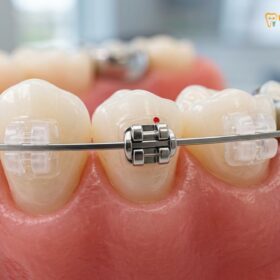
Damon braces utilize a specialized sliding door mechanism to secure the archwire, eliminating traditional elastic ties and significantly reducing friction during orthodontic tooth movement.
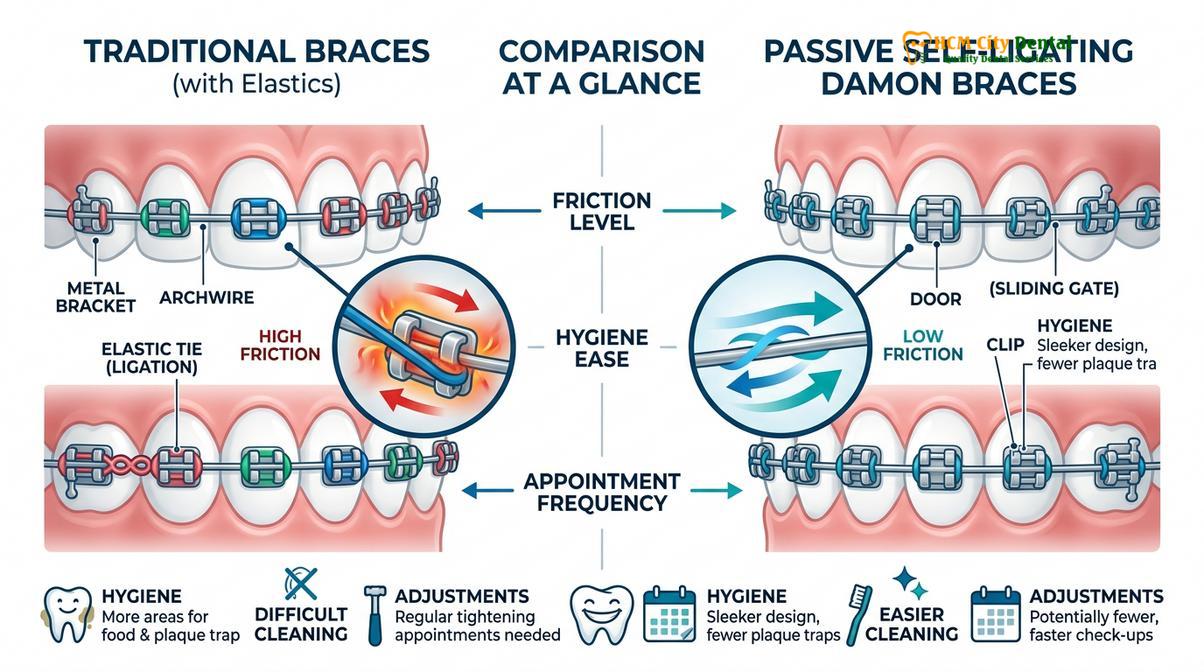
To fully appreciate the clinical advantages of the Damon System, it is essential to understand the fundamental biomechanics of orthodontic tooth movement. Traditional braces rely on elastomeric (rubber) ties or stainless steel ligatures to actively bind the archwire into the bracket slot. While effective, this active ligation creates substantial friction. When the wire attempts to slide through the bracket as the teeth align, the elastic tie acts as a brake, requiring the orthodontist to apply heavier forces to overcome this resistance. These heavier forces can temporarily compress the blood vessels within the periodontal ligament (PDL), leading to localized ischemia, cellular hyalinization, and increased patient discomfort [1].
In contrast, passive self ligating braces employ a built-in sliding door or clip that closes over the bracket slot. This creates a rigid tube through which the archwire can glide freely. Because the wire is not actively pressed against the base of the slot by an elastic tie, the friction and binding are dramatically reduced. This low-friction environment allows the orthodontist to utilize extremely light, continuous forces to move the teeth. Biologically, light forces are vastly superior because they maintain capillary blood pressure within the PDL, allowing for continuous osteoclastic (bone-resorbing) and osteoblastic (bone-forming) cellular activity without the lag phases associated with heavy, interrupted forces.
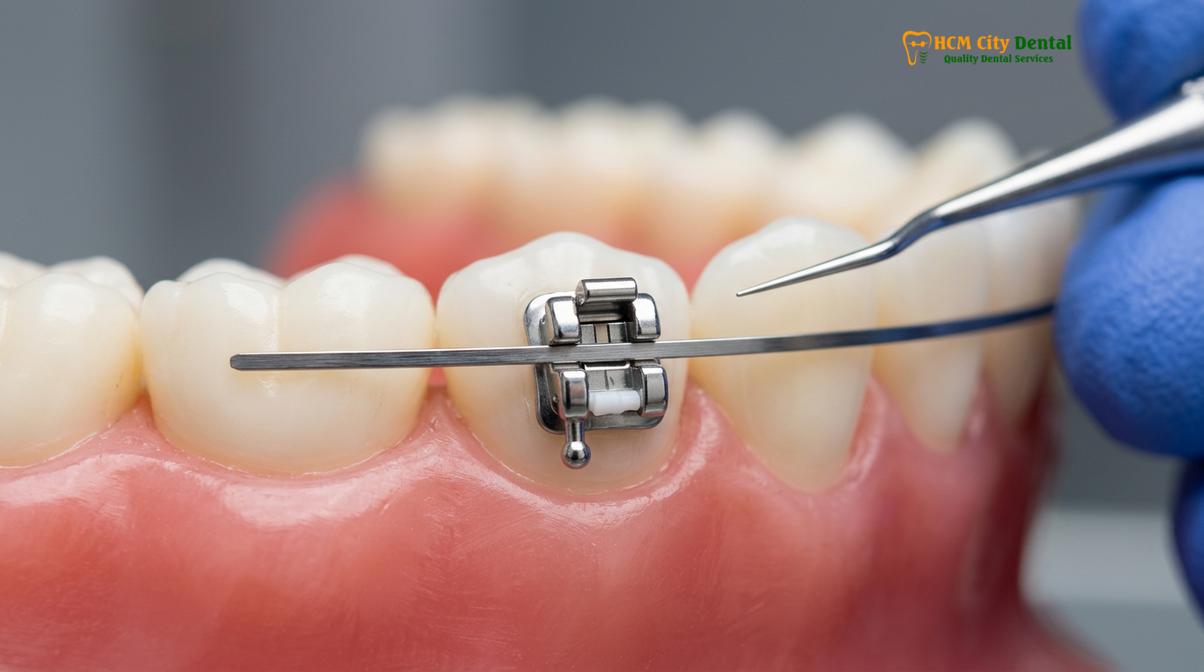
A critical component of this low-friction system is the use of technologically advanced archwires. During the initial phases of treatment, orthodontists utilize heat activated braces wires, typically composed of Copper-Nickel-Titanium (CuNiTi) alloys. These shape-memory alloys are highly flexible at room temperature but become active and attempt to return to their pre-formed ideal arch shape when exposed to the natural heat of the oral cavity. Combined with the passive brackets, these wires deliver a gentle, continuous sweeping force that begins leveling and aligning the dentition immediately, with minimal discomfort to the patient.
“The transition from active ligation to passive self-ligation represents a shift from force-driven orthodontics to biologically driven orthodontics. By minimizing friction, we allow the perioral musculature—the lips, cheeks, and tongue—to work in harmony with the archwires, promoting natural arch development and stable occlusal outcomes.”
Furthermore, the physical design of the Damon bracket is optimized for clinical efficiency. The smooth contours and absence of tie-wings (which are necessary on traditional brackets to hold the elastics) result in a lower profile appliance. This not only enhances patient comfort by reducing mucosal irritation but also eliminates the primary retention sites for dental plaque. Elastomeric ties are notorious for absorbing moisture, degrading over time, and harboring cariogenic bacteria. By removing them from the equation, the Damon system inherently supports better oral hygiene and reduces the risk of enamel decalcification (white spot lesions) during the course of treatment.
Why Choose Vietnam for Damon System Orthodontics?
Vietnam has emerged as a premier destination for orthodontic care, combining internationally trained specialists, state-of-the-art clinical technology, and highly competitive treatment fees.
The landscape of dental care in Southeast Asia has evolved rapidly, with Vietnam positioning itself at the forefront of advanced orthodontic treatments. Patients seeking comprehensive bite correction are increasingly turning to clinics in major urban centers like Ho Chi Minh City. The appeal lies not merely in cost-effectiveness, but in the uncompromising standard of clinical excellence available. Leading facilities, such as HCMC Dental Clinic, have heavily invested in the digital infrastructure required to maximize the potential of the Damon System [2].
Modern orthodontic diagnosis in Vietnam relies on a fully digital workflow. Before a single bracket is placed, patients undergo comprehensive imaging, including Cone Beam Computed Tomography (CBCT) and digital cephalometric radiography. These three-dimensional imaging modalities allow the orthodontist to evaluate the exact volume of alveolar bone, the position of the tooth roots, the health of the temporomandibular joint (TMJ), and the patient’s airway. This level of diagnostic precision is crucial when planning complex movements, ensuring that the teeth are moved safely within the biological envelope of the supporting bone.
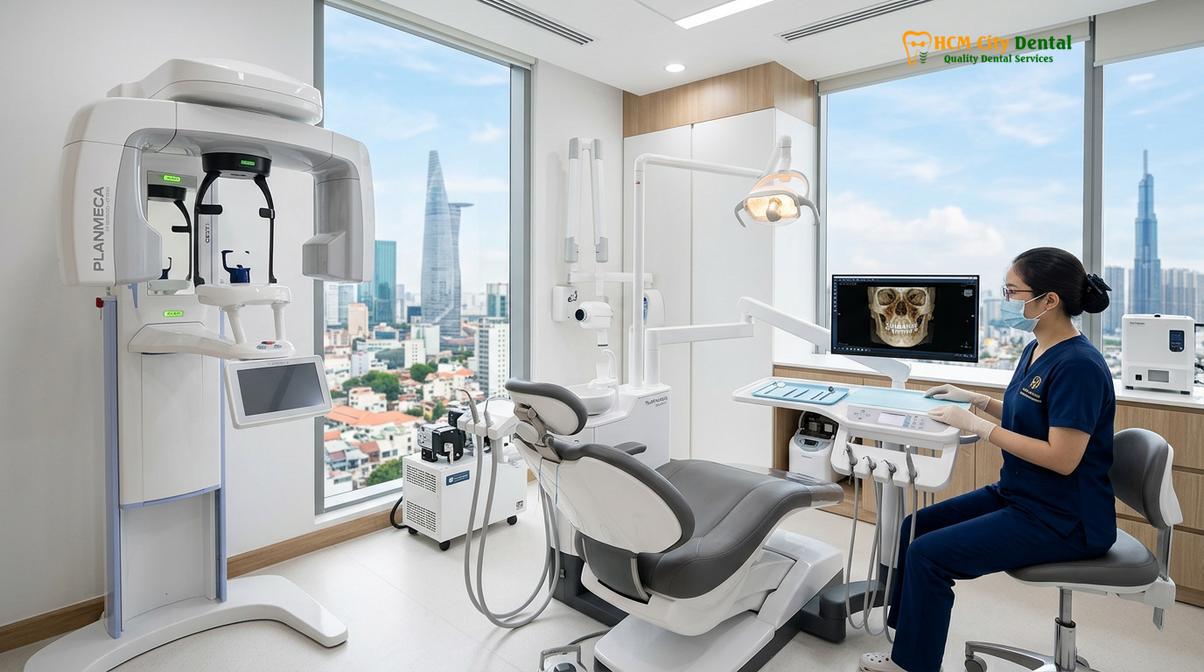
In addition to advanced imaging, the integration of intraoral 3D scanners has revolutionized the patient experience. Instead of uncomfortable, gag-inducing alginate impressions, a digital wand captures a highly accurate topographical map of the dentition in minutes. This digital model is then used to meticulously plan the exact placement of each Damon bracket. Bracket positioning is arguably the most critical step in fixed appliance therapy; a bracket placed even half a millimeter off its ideal axis will express incorrect torque or angulation, prolonging treatment. By utilizing digital planning and indirect bonding techniques, orthodontists in Vietnam ensure that the prescription built into the Damon brackets is expressed perfectly.
Beyond the technology, the clinical environment itself is designed to provide elegant dental care. The focus is on creating a stress-free, highly professional atmosphere where patients receive individualized attention. The cost advantage of seeking treatment in Vietnam does not come at the expense of quality; rather, it reflects differences in regional operational costs. Patients receive authentic, manufacturer-direct Damon brackets and wires, placed by specialists who frequently participate in international orthodontic symposiums to stay abreast of the latest biomechanical protocols. For those exploring various orthodontic bracket systems, the combination of top-tier materials and expert application makes Vietnam a highly compelling choice.
Treatment Workflows and Clinical Phases
The orthodontic journey involves precise digital diagnostics, strategic bracket placement, periodic wire progressions, and a dedicated retention phase to ensure long-term occlusal stability.
Orthodontic treatment with the Damon System is a highly structured, multi-phase process. Each phase is designed to achieve specific biomechanical objectives, gradually transitioning the dentition from a state of malocclusion to a harmonious, functional bite. Understanding these phases helps patients set realistic expectations and underscores the importance of clinical compliance.
Phase 1: Leveling and Aligning
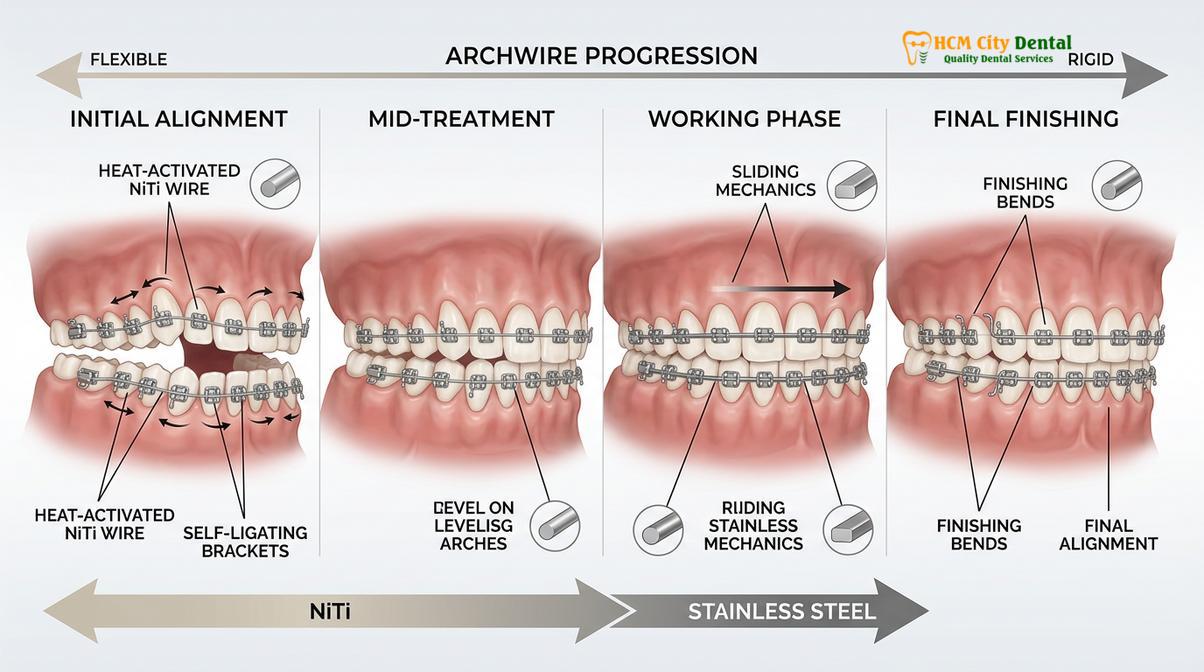
The initial phase focuses on untangling crowded teeth, correcting rotations, and leveling the Curve of Spee (the natural upward curve of the lower teeth). During this stage, the orthodontist utilizes highly flexible, small-diameter CuNiTi wires. Because the Damon brackets are passive, these light wires can slide freely, allowing the teeth to move along the path of least resistance. Patients typically experience rapid visible changes during this phase as the crowns of the teeth align. The low-friction environment minimizes the heavy pressure traditionally felt after a bonding appointment.
Phase 2: Working Phase and Space Closure
Once the teeth are leveled and aligned, the orthodontist transitions to stiffer, rectangular stainless steel or TMA (Titanium Molybdenum Alloy) wires. These wires fill the bracket slot more completely, allowing the orthodontist to control the torque (the bucco-lingual inclination of the roots) and angulation of the teeth. This is the phase where major bite corrections occur. If spaces need to be closed, or if the relationship between the upper and lower jaws needs adjustment, specific biomechanical forces are applied. It is during this critical working phase that damon braces elastics are frequently introduced. While the brackets themselves do not use elastic ties to hold the wire, patients must wear interarch rubber bands (connecting the upper and lower braces) to correct overjets, underbites, or midline deviations [3].
Phase 3: Finishing and Detailing
The final active phase of treatment is dedicated to micro-adjustments. The orthodontist evaluates the intercuspation—how the upper and lower teeth fit together like gears. Custom bends may be placed in the archwire to adjust the position of individual teeth, ensuring optimal function and aesthetics. The goal is to establish a mutually protected occlusion, where the back teeth protect the front teeth during chewing, and the front teeth protect the back teeth during lateral jaw movements.
Phase 4: Retention
The day the braces are removed is not the end of the orthodontic journey; it is the beginning of the retention phase. Teeth have a natural tendency to relapse toward their original positions due to the elastic memory of the gingival fibers and ongoing facial growth. To maintain the beautiful results achieved, patients are fitted with custom retainers. These may include fixed lingual retainers (a thin wire bonded to the back of the front teeth) and removable clear Essix retainers worn at night. Strict adherence to the retention protocol is absolute paramount for long-term success.
Addressing Complex Malocclusions with Damon Braces
The Damon system is highly effective for severe crowding, deep bites, and complex skeletal discrepancies, often minimizing the need for premolar extractions or rapid palatal expanders.
One of the most significant clinical advantages of the Damon System is its robust capability to handle severe and complex malocclusions. Traditional orthodontic philosophies often dictated that if a patient presented with moderate to severe crowding, the only way to create space was to extract healthy premolars or use bulky, uncomfortable rapid palatal expanders. While extractions are still clinically necessary in certain cases (such as severe bimaxillary protrusion where the teeth are flared too far forward), the Damon System has shifted the paradigm toward non-extraction therapy whenever biologically possible.
The passive self-ligating mechanics, combined with broad-arch wire forms, encourage posterior arch expansion. As the light forces are applied, the alveolar bone remodels, allowing the dental arches to widen naturally. This expansion creates the necessary space to unravel crowded anterior teeth without extractions. The result is often a broader, more aesthetically pleasing “12-tooth smile,” which provides better facial support and can enhance the patient’s profile as they age.
Clinical Case Review: Severe Crowding and Crossbite
A 24-year-old patient presented to HCMC Dental Clinic in Ho Chi Minh City with severe maxillary crowding, a narrow upper arch, and a unilateral posterior crossbite. Traditional treatment plans from other providers had recommended the extraction of four premolars. Dr. Nguyen Van Cuong conducted a comprehensive CBCT analysis and determined that the patient’s alveolar bone volume could support expansion. Utilizing the Damon System with standard torque brackets and a sequence of broad CuNiTi wires, Dr. Cuong achieved full arch development and crossbite correction without a single extraction. The total treatment time was 22 months, resulting in a broad, stable, and highly aesthetic smile.
Beyond crowding, the system is highly adept at managing vertical and anteroposterior discrepancies. For patients with deep overbites (where the upper front teeth excessively cover the lower front teeth), the mechanics allow for efficient intrusion of the anterior teeth and extrusion of the posterior teeth, leveling the bite effectively. For those seeking correcting severe overbites, the rigid rectangular wires provide the necessary torque control to upright the incisors properly.
Similarly, the system is utilized effectively in Class III malocclusions (underbites). When designing a treatment plan for class 3 braces, the orthodontist must carefully manage the inclination of the lower incisors, which are often naturally retroclined (tipped backward) as a compensation for the prominent lower jaw. By selecting specific bracket torques (e.g., high torque brackets for the upper incisors and low torque brackets for the lower incisors) and utilizing strategic interarch elastics, the orthodontist can camouflage mild to moderate skeletal Class III discrepancies, achieving a positive overjet and a functional bite without the need for orthognathic jaw surgery [4].
Comparing Damon Braces to Clear Aligners
While Damon braces offer robust biomechanical control for complex root movements, clear aligners provide a removable, highly aesthetic alternative for patients prioritizing discretion.
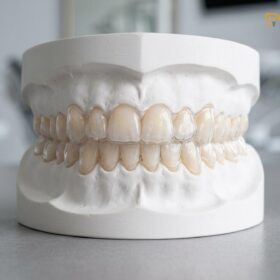
In modern orthodontics, patients frequently weigh the benefits of fixed appliances against clear aligner systems. Both modalities are highly effective, but they operate on fundamentally different biomechanical principles. The Damon System uses “pulling” forces via the archwire engaged in the bracket slot, whereas clear aligners use “pushing” forces, wrapping around the clinical crown to guide the tooth into position.
For patients requiring significant root torquing, severe rotation of cylindrical teeth (like canines or premolars), or massive bodily translation of teeth (such as closing large extraction spaces), fixed appliances like Damon braces often provide superior, more predictable control. The rigid bracket-wire interface leaves little room for the tooth to deviate from the prescribed path. Conversely, clear aligners are exceptionally adept at leveling, aligning, and expanding arches, and they offer the unparalleled advantage of being removable for eating and oral hygiene. For a deeper understanding of how these systems contrast, patients often review literature on comparing fixed braces to clear aligners.
To assist in clinical decision-making, the following table outlines the primary differences between Damon Metal, Damon Clear (ceramic), and premium clear aligner therapy:
| Clinical Feature | Damon Metal Braces | Damon Clear (Ceramic) | Clear Aligners (e.g., Invisalign) |
|---|---|---|---|
| Aesthetics | Highly visible metallic brackets and wires. | Discreet; clear brackets blend with natural tooth enamel. | Virtually invisible; clear thermoplastic trays. |
| Biomechanical Control | Maximum control for complex root torquing and bodily movement. | Excellent control, though ceramic brackets can be slightly more brittle. | High control for most movements; relies on composite attachments. |
| Patient Compliance | Passive compliance; appliance is fixed to the teeth. | Passive compliance; appliance is fixed to the teeth. | Active compliance required; must wear trays 22 hours/day. |
| Oral Hygiene | Requires specialized flossing tools and interdental brushes. | Requires specialized flossing tools; clear brackets resist staining. | Normal brushing and flossing; trays are removed during meals. |
| Dietary Restrictions | Must avoid hard, sticky, or excessively crunchy foods. | Must avoid hard, sticky foods to prevent bracket fracture. | No restrictions; trays are removed prior to eating. |
Ultimately, the choice between these systems should be based on a comprehensive clinical evaluation. Dr. Nguyen Van Cuong emphasizes that the appliance is merely a tool; the success of the treatment relies entirely on the accurate diagnosis and the biomechanical expertise of the treating orthodontist [5]. Whether utilizing fixed brackets or exploring removable orthodontic appliances, the goal remains the same: a healthy, stable, and beautiful smile.
Periodontal Considerations and Oral Hygiene
Maintaining pristine oral hygiene during orthodontic treatment is critical to prevent gingival inflammation, periodontal bone loss, and permanent enamel decalcification.
The introduction of any fixed appliance into the oral cavity alters the local microbiome and creates numerous retention areas for dental plaque. While the tie-less design of the Damon System significantly reduces plaque accumulation compared to traditional braces with elastomeric ligatures, meticulous oral hygiene remains an absolute necessity. Failure to remove plaque effectively can lead to a cascade of periodontal complications that may compromise the orthodontic outcome.
When plaque is allowed to accumulate around the bracket base and along the gingival margin, the bacteria release toxins that trigger an inflammatory response in the gum tissue. This condition, known as gingivitis, causes the gums to become red, swollen, and prone to bleeding. In severe cases, the gingival tissue can undergo hyperplasia (overgrowth), engulfing the brackets and making hygiene even more difficult. If the inflammation progresses to the underlying alveolar bone (periodontitis), the bone supporting the teeth may begin to resorb. Because orthodontic movement already involves bone remodeling, active periodontal disease during treatment can lead to rapid and irreversible bone loss, potentially resulting in tooth mobility or loss.
“Orthodontic forces must only be applied to a healthy periodontium. Moving teeth through inflamed or infected bone is a recipe for disaster. We require all patients to demonstrate excellent plaque control and undergo professional prophylaxis before initiating any active tooth movement.”
Furthermore, the acidic byproducts of cariogenic bacteria can rapidly demineralize the tooth enamel surrounding the brackets. This demineralization manifests as opaque, chalky white spots on the teeth, known as White Spot Lesions (WSLs). These lesions are early cavities and, unfortunately, they are permanent scars on the enamel that become glaringly obvious once the braces are removed. To prevent WSLs and periodontal issues, patients must adopt a rigorous daily hygiene protocol. This includes brushing after every meal with a soft-bristled orthodontic toothbrush, using interdental brushes to clean beneath the archwire, and utilizing a water flosser to flush out debris from hard-to-reach areas. Regular professional cleanings every 3 to 4 months are also highly recommended for patients undergoing cost-effective adult orthodontics to ensure the supporting tissues remain healthy throughout the journey.
When to See a Doctor for Orthodontic Evaluation
Orthodontic treatment is not merely a cosmetic endeavor; it is a medical intervention designed to restore proper oral function and prevent long-term dental complications. The American Association of Orthodontists recommends that children receive their first orthodontic evaluation by age 7 to intercept developing skeletal issues. However, adults of any age can benefit from treatment provided their periodontal health is stable.
You should schedule a clinical consultation if you experience any of the following signs or symptoms:
- Difficulty Chewing or Biting: Inability to incise food properly or pain during mastication.
- Chronic Jaw Pain: Discomfort in the temporomandibular joint (TMJ), frequent headaches, or clicking/popping sounds when opening the mouth.
- Severe Crowding or Spacing: Teeth that are severely overlapped, making them impossible to clean, or large gaps that trap food.
- Traumatic Bite: Upper teeth biting directly into the lower gums, or lower teeth biting into the roof of the mouth.
- Abnormal Wear: Noticeable flattening or chipping of the tooth enamel due to an unbalanced bite.
Important Clinical Warning
Orthodontic treatment must never be initiated in the presence of active periodontal disease, untreated dental caries, or unresolved endodontic infections. Applying orthodontic forces to compromised teeth can accelerate bone loss, lead to root resorption, and result in permanent tooth loss. A comprehensive dental examination, including periodontal probing and radiographic assessment, is a mandatory prerequisite before bonding any orthodontic appliance.
Frequently Asked Questions
How do self-ligating Damon braces differ from traditional braces?
Damon braces use a passive slide mechanism to hold the archwire, eliminating the need for elastic ties. This design significantly reduces friction and binding, allowing teeth to move more freely and comfortably while making oral hygiene easier to maintain throughout the treatment process. Traditional braces require rubber ties that create friction and trap plaque.
Are Damon braces faster than traditional orthodontic treatments?
Treatment times can be shorter in certain clinical scenarios due to the efficient biomechanics of passive self-ligation. However, the exact duration depends entirely on the complexity of the malocclusion, the patient’s biological response to orthodontic forces, and strict compliance with clinical instructions. There is no guaranteed timeline for any medical procedure.
Do I still need to wear elastics with the Damon system?
Yes, interarch elastics are frequently required to correct bite discrepancies such as overbites or underbites. While the brackets themselves do not require elastic ties to hold the wire, rubber bands connecting the upper and lower jaws are essential for achieving proper occlusal alignment and a functional bite.
Is tooth extraction necessary when using Damon braces?
The Damon system’s ability to promote arch expansion often reduces the need for premolar extractions in borderline crowding cases. Nevertheless, severe crowding or significant skeletal protrusions may still necessitate strategic extractions to achieve a stable, functional, and aesthetically pleasing facial profile. The decision is based on a thorough cephalometric analysis.
How often are adjustment appointments required in Vietnam?
Patients typically require adjustment visits every 8 to 10 weeks, which is less frequent than the 4 to 6-week intervals common with traditional braces. This extended interval is highly beneficial for international patients or those with demanding schedules seeking treatment in Ho Chi Minh City, as it reduces the overall number of clinical visits.
References
- American Journal of Orthodontics and Dentofacial Orthopedics. Biomechanical evaluation of passive self-ligating brackets. (2021).
- Journal of Clinical Orthodontics. Arch dimensional changes with the Damon System: A retrospective analysis. (2020).
- European Journal of Orthodontics. Friction and binding in self-ligating vs conventional bracket systems. (2019).
- Angle Orthodontist. Periodontal response to light continuous orthodontic forces. (2022).
- International Journal of Dentistry. Comparative efficacy of clear aligners and fixed appliances in complex malocclusions. (2018).