Does Invisalign work as well as braces? Yes, for mild to moderate orthodontic issues, Invisalign is highly effective and clinically comparable to traditional braces. However, for severe malocclusions, complex root movements, or significant bite corrections, traditional fixed braces remain the superior biomechanical choice for predictable outcomes.
Clinical Summary:
Clear aligner therapy has revolutionized modern orthodontics, offering a highly discreet and comfortable alternative to traditional fixed appliances. Extensive clinical studies demonstrate that Invisalign works just as well as braces for resolving crowding, spacing, and mild to moderate bite discrepancies. The fundamental difference lies in the mechanism of force delivery: braces pull teeth using continuous tension from archwires, while Invisalign pushes teeth using programmed plastic aligners and strategically placed composite attachments. Success with clear aligners is heavily dependent on strict patient compliance, whereas braces operate independently of patient discipline. For highly complex cases involving severe rotations, significant vertical discrepancies, or skeletal malocclusions, orthodontists frequently recommend traditional braces to achieve optimal functional occlusion and precise root control.
Key Takeaways:
- Invisalign is clinically proven to be as effective as traditional braces for mild to moderate orthodontic corrections.
- Traditional braces provide superior biomechanical control for complex root movements, severe rotations, and skeletal malocclusions.
- Clear aligners require strict patient compliance of 20 to 22 hours of daily wear to achieve the digitally predicted results.
- Treatment times are often comparable, though aligners can sometimes be faster for minor aesthetic adjustments.
- A comprehensive clinical assessment, including 3D imaging, is necessary to determine the most appropriate appliance for your specific dental anatomy.
Biomechanical Principles: How Invisalign and Braces Move Teeth
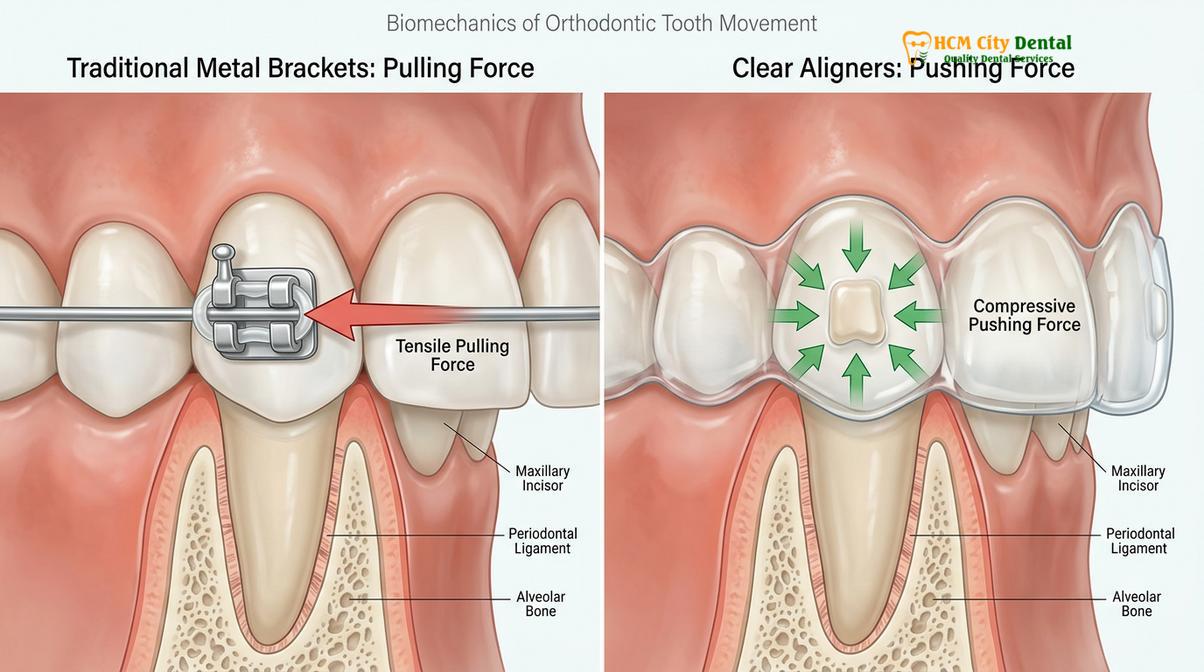
Braces use continuous tension from archwires to pull teeth into alignment, whereas Invisalign uses customized plastic trays to apply controlled pushing forces.
To understand whether clear aligners can match the efficacy of traditional fixed appliances, it is essential to examine the biomechanical principles of orthodontic tooth movement. Teeth move through the alveolar bone in response to sustained, controlled forces. This force triggers a biological response within the periodontal ligament (PDL), leading to bone resorption on the pressure side and bone apposition (formation) on the tension side. Both Invisalign and traditional braces harness this exact biological mechanism, but they deliver the necessary forces in fundamentally different ways.
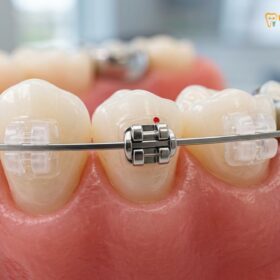
Traditional braces consist of brackets bonded directly to the enamel and an archwire that connects them. The archwire, often made of shape-memory alloys like Nickel-Titanium (NiTi), naturally wants to return to its original U-shape. As it does, it exerts continuous tension, effectively pulling the teeth into their correct positions. This continuous force is highly efficient for complex three-dimensional movements, including tipping, torquing, and bodily movement of the entire tooth root[1]. For many patients, this continuous, unyielding force is the primary reason why fixed appliances are so effective for severe misalignments.
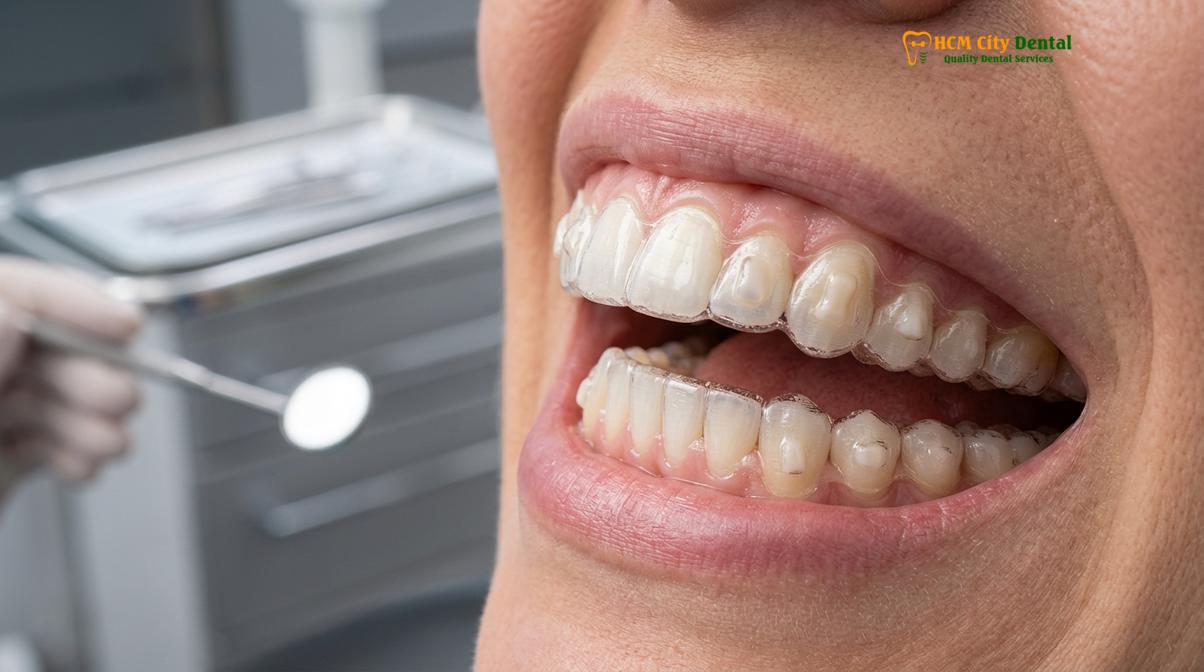
Invisalign, conversely, relies on a series of custom-fabricated, clear thermoplastic trays. Instead of pulling, aligners work by pushing the teeth. Each aligner in the series is manufactured to be slightly different from the current position of the teeth. When the patient seats the aligner, the plastic flexes and applies pressure to specific areas of the tooth crown. To achieve more complex movements—such as rotating a cylindrical tooth or extruding a tooth downward—orthodontists place small, tooth-colored composite resin bumps called “attachments” on the teeth. These attachments act as handles, allowing the aligner to grip the tooth and apply precise directional force.
Clinical Efficacy: When Does Invisalign Work as Well as Braces?
Invisalign performs exceptionally well for resolving mild to moderate crowding, diastemas (spacing), and straightforward alignment issues, often matching or exceeding the efficiency of braces.
In the realm of mild to moderate orthodontic corrections, Invisalign is not just an alternative; it is often considered a co-equal or even preferred treatment modality. Clinical data supports that for specific types of malocclusions, clear aligners can achieve results that are indistinguishable from those achieved by fixed braces.
One of the areas where clear aligner therapy excels is in the treatment of mild to moderate crowding and spacing. Because the aligners encapsulate the entire clinical crown of the tooth, they are highly efficient at controlling the tipping of teeth to close gaps or expand the dental arch slightly to relieve crowding. Furthermore, the digital planning software allows the orthodontist to stage the movements meticulously. This means that only certain teeth are moved at specific times, optimizing the anchorage and reducing unwanted side effects on adjacent teeth.
“For patients presenting with mild to moderate crowding or spacing, clear aligners offer a highly predictable and aesthetically pleasing solution, demonstrating clinical outcomes that are entirely comparable to traditional fixed appliances when worn as directed.”
Invisalign is also highly effective for patients who have previously undergone orthodontic treatment but experienced relapse due to not wearing their retainers. These cases usually involve minor shifting that can be swiftly corrected with a short series of aligners. When evaluating which patients suit braces versus aligners, orthodontists look closely at the required root movements. If the roots are generally in a good position and only the crowns need to be tipped or rotated slightly, Invisalign is an outstanding choice[2].
Treatment times for these straightforward cases are often comparable between the two methods. In fact, because aligners apply forces to the entire tooth surface simultaneously, some minor aesthetic alignments can be completed faster with Invisalign than with traditional braces. For patients interested in braces for overcrowding, a thorough clinical evaluation will determine if the degree of crowding falls within the predictable scope of aligner therapy.
Complex Orthodontic Cases: Where Traditional braces Excel
For severe rotations, significant vertical movements, and complex skeletal discrepancies, traditional fixed braces offer superior mechanical control and predictability.
While clear aligner technology has advanced significantly, there remain specific clinical scenarios where traditional braces are the undisputed gold standard. The limitations of invisalign primarily stem from the physical properties of the plastic and the mechanics of pushing versus pulling.
Severe derotation of rounded teeth (such as canines and premolars) is notoriously difficult with aligners. Because these teeth are cylindrical, the plastic aligner struggles to gain sufficient purchase to twist the tooth, even with the use of composite attachments. Traditional braces, with a bracket firmly bonded to the center of the tooth and a wire providing continuous rotational force, can resolve these issues much more predictably. Similarly, significant extrusion (pulling a tooth further out of the gum line) is challenging for aligners because the plastic tends to slip off the tooth. Braces can easily achieve extrusion by placing a bracket slightly higher on the tooth and allowing the wire to pull it down into alignment.
Complex bite corrections also frequently require the robust mechanics of fixed appliances. While aligners can treat mild overbites and underbites, severe skeletal discrepancies often necessitate heavy elastic wear, functional appliances, or even orthognathic surgery in conjunction with orthodontics. For instance, treating an anterior open bite—where the front teeth do not touch when the back teeth are closed—can be highly complex. While some mild open bites can be treated with aligners by intruding the posterior teeth, severe cases often require the precise vertical control of traditional appliances to achieve a stable, functional occlusion. Patients exploring options for fixing overjet with braces will find that fixed appliances offer unparalleled precision for significant anterior-posterior corrections[3].
Furthermore, traditional braces are often the preferred choice for impacted teeth (teeth stuck in the jawbone). An orthodontist can surgically expose the impacted tooth, bond a bracket to it, and use a gold chain attached to the archwire to slowly guide the tooth into the dental arch. This level of targeted, heavy force application is currently beyond the capabilities of clear aligner therapy alone.
Patient Experience, Compliance, and Lifestyle Considerations
Invisalign offers superior comfort and easier oral hygiene, but requires strict discipline, whereas braces work continuously without relying on patient compliance.
Beyond biomechanics and clinical efficacy, the choice between Invisalign and braces is heavily influenced by the patient’s lifestyle, tolerance for discomfort, and ability to comply with treatment protocols. The day-to-day experience of wearing these appliances differs significantly.
Aesthetics is often the primary driver for patients choosing Invisalign. The clear thermoplastic material is virtually invisible at a conversational distance, making it highly appealing for adults in professional settings and self-conscious teenagers. Traditional braces, even ceramic ones, are more noticeable. However, aesthetics must be weighed against the absolute necessity of compliance. Invisalign trays must be worn for 20 to 22 hours every single day. They should only be removed for eating, drinking anything other than plain water, and performing oral hygiene. If a patient lacks the discipline to wear the aligners consistently, the teeth will not move as predicted, leading to prolonged treatment times and compromised results.
Traditional braces eliminate the compliance variable regarding appliance wear. Once they are bonded to the teeth, they are working around the clock. This makes them an excellent option for patients who might struggle with the responsibility of removable trays. However, braces require a different type of compliance: dietary restrictions. Patients with braces must avoid hard, sticky, or crunchy foods that can dislodge brackets or bend archwires. Invisalign patients have no dietary restrictions since the aligners are removed during meals.
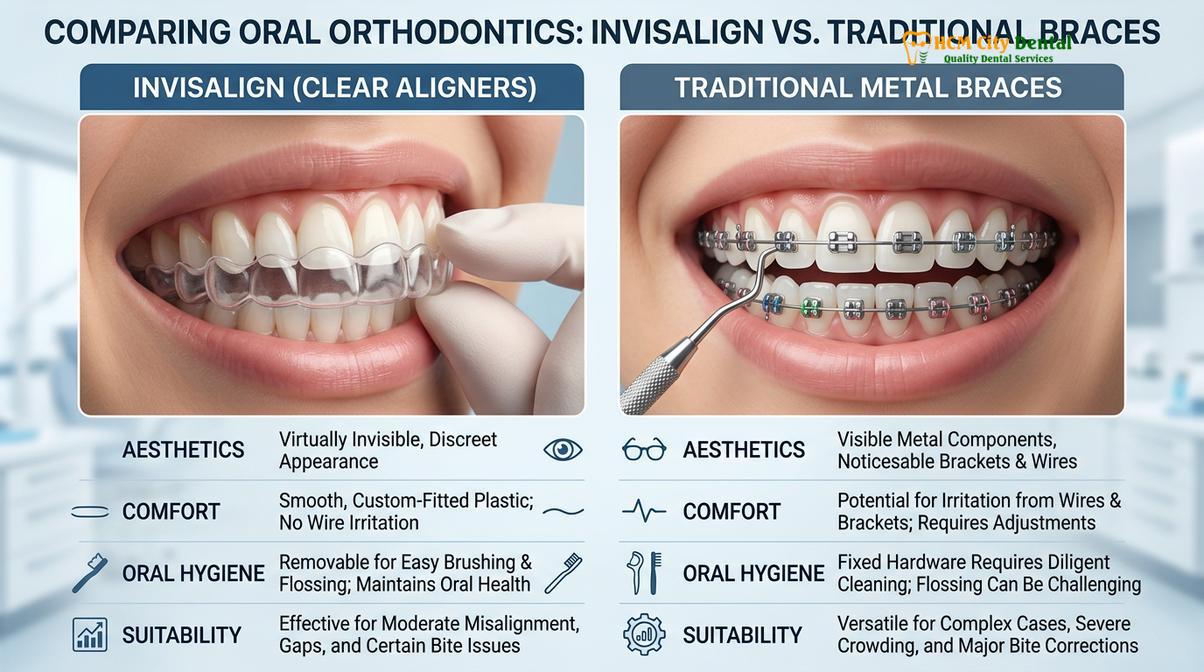
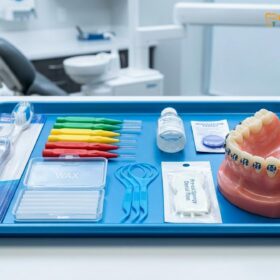
Oral hygiene is significantly easier with Invisalign. Patients can brush and floss normally, reducing the risk of decalcification (white spots) and gingivitis. Braces create numerous plaque traps around the brackets and under the wires, requiring meticulous cleaning with specialized tools like interdental brushes and water flossers. Maintaining excellent hygiene is crucial to prevent complications, as detailed in clinical guides about braces before and after transformations[4].
| Parameter | Invisalign (Clear Aligners) | Traditional Fixed Braces |
|---|---|---|
| Aesthetics | Virtually invisible; highly discreet. | Visible (metal or ceramic brackets). |
| Compliance | Requires strict discipline (20-22 hours/day). | Works continuously; no wear-time discipline needed. |
| Oral Hygiene | Removable; normal brushing and flossing. | Challenging; requires specialized cleaning tools. |
| Dietary Restrictions | None (aligners removed for eating). | Must avoid hard, sticky, and crunchy foods. |
| Complex Movements | Limited in severe rotations and extrusions. | Superior control for complex root movements. |
When to Consult an Orthodontist: Important Clinical Considerations
Seeking professional orthodontic evaluation early ensures that underlying skeletal or periodontal issues are addressed before selecting an appliance.
Choosing between clear aligners and fixed braces is not merely an aesthetic decision; it is a medical one that requires professional oversight. Patients should consult a qualified orthodontist if they experience difficulty chewing, chronic jaw pain, speech impediments related to tooth position, or noticeable facial asymmetry. Early intervention is particularly important for adolescents, as guiding jaw growth can prevent the need for more invasive treatments later in life.
In Vietnam, the Ministry of Health and the Vietnam Association of Orthodontists (VAO) emphasize the importance of comprehensive diagnostic imaging before initiating any tooth movement. Moving teeth without understanding the underlying bone structure can lead to severe complications, including root resorption (shortening of the tooth roots) and irreversible bone loss[5]. A certified specialist will evaluate the periodontal health, ensuring the gums and bone are robust enough to withstand orthodontic forces, regardless of whether aligners or brackets are used.
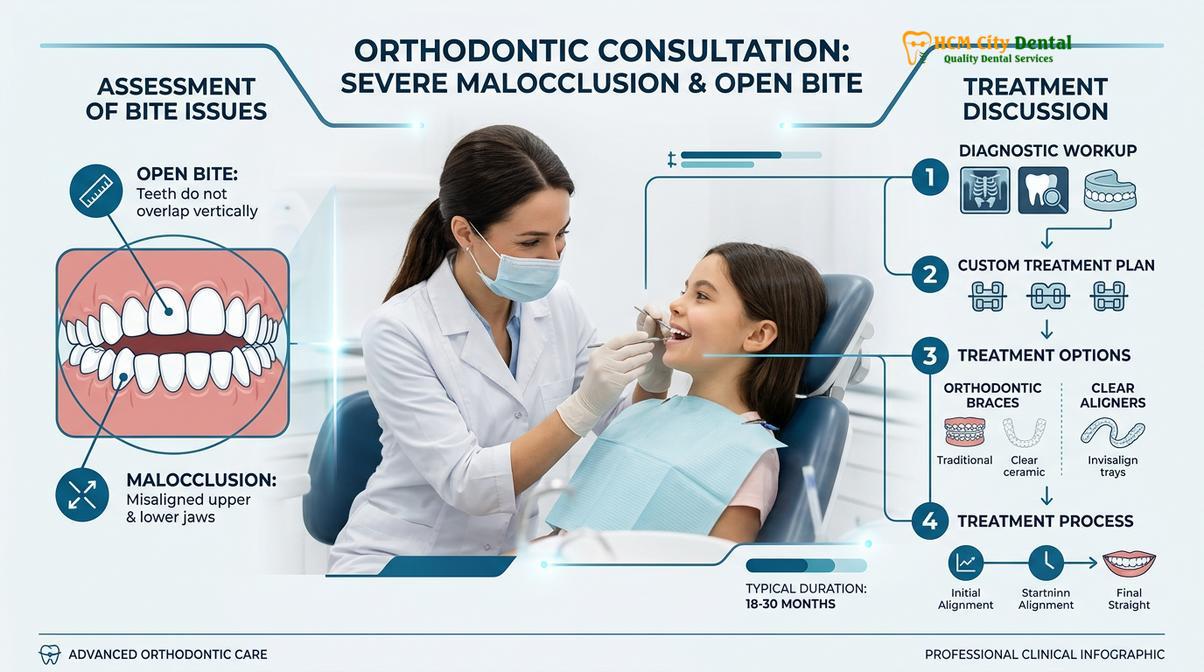
Patients with active periodontal disease, severe temporomandibular joint (TMJ) disorders, or multiple missing teeth require specialized treatment plans. In these complex scenarios, the orthodontist will carefully weigh the biomechanical advantages of traditional braces against the hygienic benefits of clear aligners to formulate a safe and effective clinical pathway.
Treatment Workflows and Case Study at HCMC Dental Clinic
A successful orthodontic outcome begins with precise digital diagnostics, customized treatment planning, and regular clinical monitoring to ensure teeth track properly.
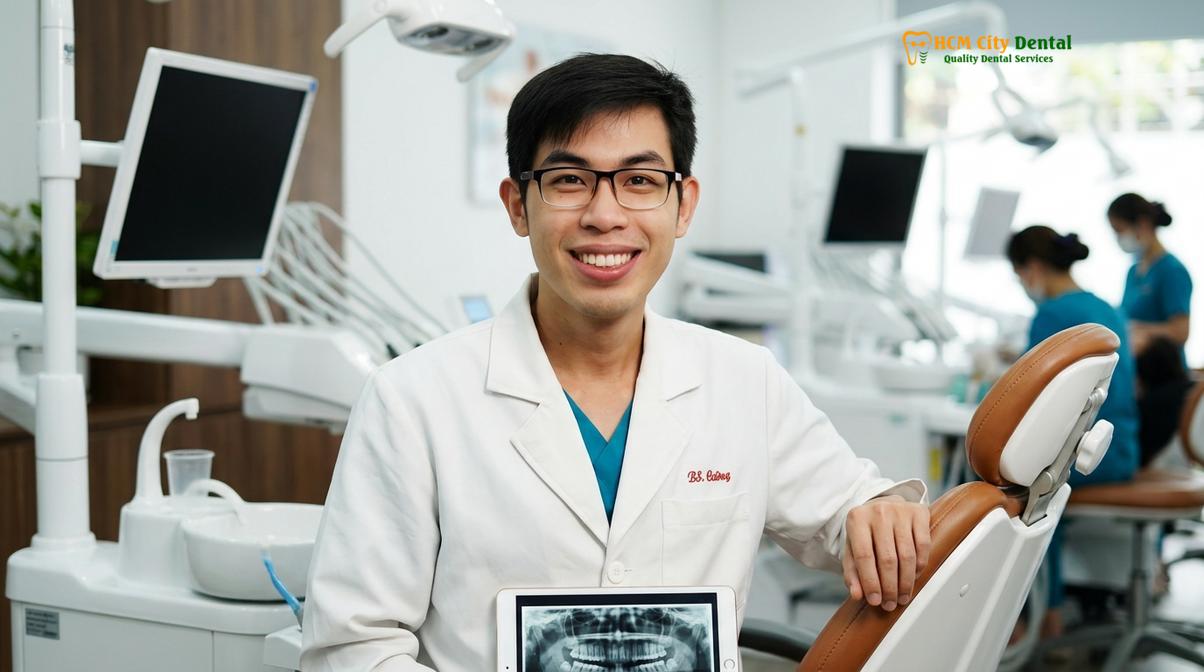
The success of any orthodontic treatment relies heavily on the expertise of the clinician and the thoroughness of the diagnostic phase. Dr. Nguyen Van Cuong, a leading specialist at HCMC Dental Clinic, emphasizes that precise digital diagnostics are the foundation of any successful orthodontic treatment. He routinely utilizes advanced 3D intraoral scanning to evaluate bone density and root positioning before recommending an appliance. According to Dr. Cuong, matching the right biomechanical tool to the patient’s specific anatomical needs is crucial for long-term stability and optimal aesthetic results.
Consider a recent case study of a 28-year-old patient who visited HCMC Dental Clinic in Ho Chi Minh City. The patient presented with moderate lower anterior crowding and a mild overbite. After a comprehensive digital assessment, the clinical team determined that the patient was an excellent candidate for clear aligner therapy. By utilizing precise composite attachments and a disciplined wear schedule, the patient achieved ideal alignment in just 14 months, avoiding the need for traditional metal brackets.
“The integration of 3D digital scanning and predictive software allows us to visualize the entire treatment journey before it begins, ensuring that whether we use aligners or fixed braces, the biological response is carefully managed for maximum safety and efficacy.”
For patients requiring more complex interventions, such as severe skeletal discrepancies, the clinic’s workflow seamlessly integrates traditional fixed appliances. Understanding the braces cost in Vietnam and the associated clinical steps helps patients make informed decisions about their oral health investments.
If you are considering orthodontic treatment and wondering which option is best for your smile, schedule a consultation at HCMC Dental Clinic in Ho Chi Minh City. Our specialists will provide a comprehensive evaluation to determine the ideal clinical pathway for your needs. Learn more about our comprehensive Orthodontics tại HCMC Dental Clinic services today to begin your journey toward a healthier, more confident smile.
References
- American Journal of Orthodontics and Dentofacial Orthopedics. Biomechanical principles of clear aligner therapy vs fixed appliances.
- Journal of Clinical Orthodontics. Efficacy of clear aligners in controlling orthodontic tooth movement: A systematic review.
- European Journal of Orthodontics. Periodontal health during orthodontic treatment with clear aligners and fixed appliances.
- Angle Orthodontist. Patient compliance and clinical outcomes in removable vs fixed orthodontic therapies.
- International Journal of Dentistry. Root resorption and alveolar bone remodeling in clear aligner therapy.