Yes, you can seamlessly continue your orthodontic treatment when moving abroad. By utilizing Align Technology’s global case transfer system, your new orthodontist can access your digital records, order remaining trays, and monitor your progress without restarting the entire clinical process.
Clinical Summary:
Moving abroad during Invisalign treatment requires structured coordination between your originating provider and your new international clinic. Because Align Technology maintains a centralized digital database (ClinCheck), patients relocating internationally can transfer their orthodontic records securely. The process involves signing a release form, transferring the digital file via the Invisalign Doctor Site (IDS), and conducting a baseline clinical assessment at the new destination. Dr. Nguyen Van Cuong emphasizes that a successful transfer depends on accurate digital handoffs and a comprehensive intraoral evaluation upon arrival to ensure the current aligner fit matches the projected 3D treatment plan. Patients should anticipate potential transfer fees and the necessity of a new iTero scan to verify occlusal tracking and attachment integrity.
Key Takeaways:
- Align Technology’s global network allows for secure digital case transfers between certified providers worldwide.
- Patients must sign a formal release document with their original orthodontist to initiate the digital case share.
- A comprehensive clinical evaluation and a new 3D iTero scan are required upon arriving at your new clinic to verify tracking.
- Financial structures vary; patients typically pay a transfer fee and a prorated amount for the remaining treatment phases.
- Maintaining strict aligner wear compliance during the relocation period is critical to prevent orthodontic relapse.
Moving Abroad: Can You Keep Your Invisalign Progress?
Relocating internationally does not mean abandoning your orthodontic progress; your treatment can be seamlessly transferred to a certified provider in your new country using standardized digital protocols.
One of the most significant advantages of modern clear aligner therapy is its inherent portability. Unlike traditional fixed appliances, which require the physical removal and re-bonding of brackets if a patient switches to a provider using a different bracket system, clear aligners rely on a centralized digital ecosystem. When you are moving abroad during Invisalign treatment, the primary concern is maintaining the continuous biomechanical forces required for predictable tooth movement. Interrupting these forces can lead to rapid orthodontic relapse, where the periodontal ligaments pull the teeth back toward their original malocclusion[1].
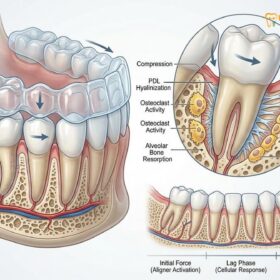
The concept of an Invisalign case transfer is built upon the premise that the biological response to orthodontic force does not change based on geography. As long as the patient continues to wear the prescribed thermoplastic trays for the recommended 20 to 22 hours per day, the cellular remodeling of the alveolar bone will proceed as planned. However, the clinical oversight must be officially handed over to a new certified provider to ensure that any necessary mid-course corrections, interproximal reduction (IPR), or attachment replacements are managed professionally.
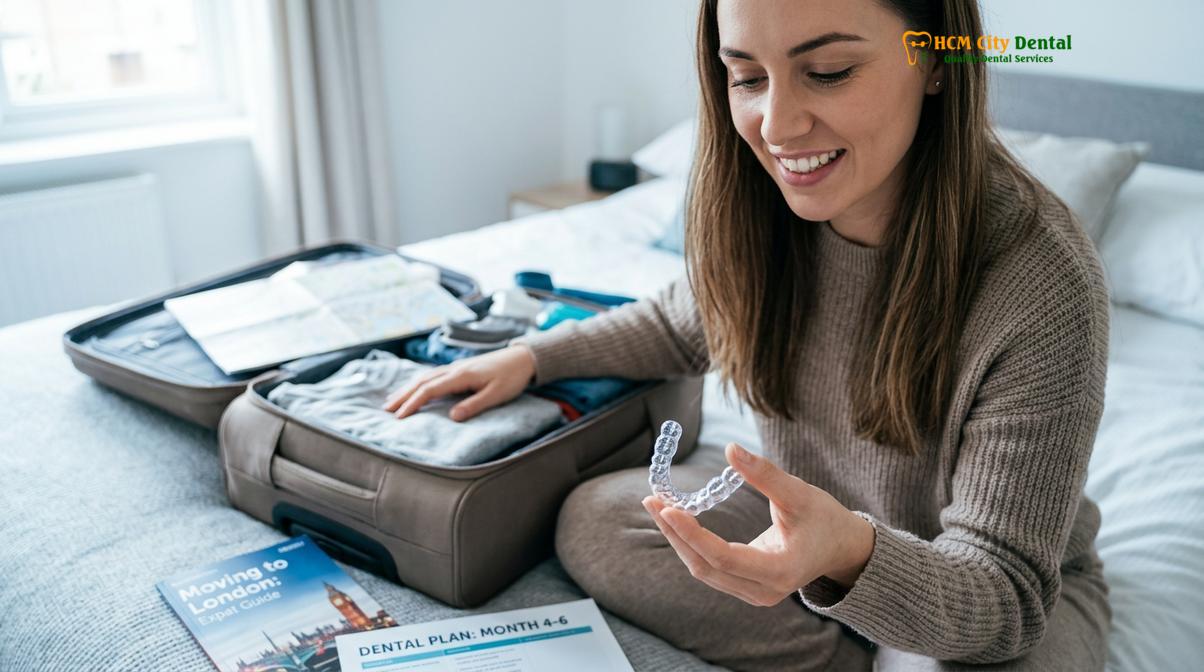
When transferring clear aligners internationally, patients often worry that their new dentist will not understand the original treatment goals. This is a misconception. Because the entire treatment sequence is mapped out digitally before the first tray is even manufactured, the receiving doctor does not have to guess what the previous doctor intended. The digital file contains the exact staging, the precise degree of torque and rotation programmed into each aligner, and the specific locations of all composite attachments.
“Orthodontic continuity relies on the uninterrupted application of controlled forces. During international relocation, patient compliance with aligner wear becomes the single most critical factor in preventing occlusal regression while clinical oversight is temporarily suspended.”
Dr. Nguyen Van Cuong frequently advises expatriates that the physical move itself is the most vulnerable period for treatment tracking. Long-haul flights, changes in daily routines, and the stress of relocation often lead to decreased wear time. If a patient leaves their trays out for extended periods during transit, the subsequent trays may not seat properly, leading to a loss of tracking. Therefore, maintaining strict adherence to the wear schedule is paramount until you can establish care with your new provider.
The Case Transfer Process: Align Technology Digital Portability
The transfer relies on Align Technology’s centralized digital platform, allowing your new orthodontist to import your exact ClinCheck 3D treatment plan and continue care without requiring new initial impressions.
The logistical backbone of relocating with Invisalign is the Invisalign Doctor Site (IDS). This secure, cloud-based portal is accessible to all certified providers globally. When a patient requests a transfer, the process is entirely digital, eliminating the need to physically mail plaster models or paper charts across international borders. This digital portability is a cornerstone of modern Orthodontics, ensuring that clinical data is preserved with zero degradation in quality[2].
To initiate an Align Technology case share, the patient must first identify a receiving provider in their new city. Once the new clinic is selected, the patient signs a formal transfer release form provided by their original orthodontist. This document legally authorizes the release of medical records and transfers the financial and clinical liability of the case to the new doctor. The original doctor then logs into the IDS, locates the patient’s file, and initiates a transfer request using the receiving doctor’s specific provider identification number.
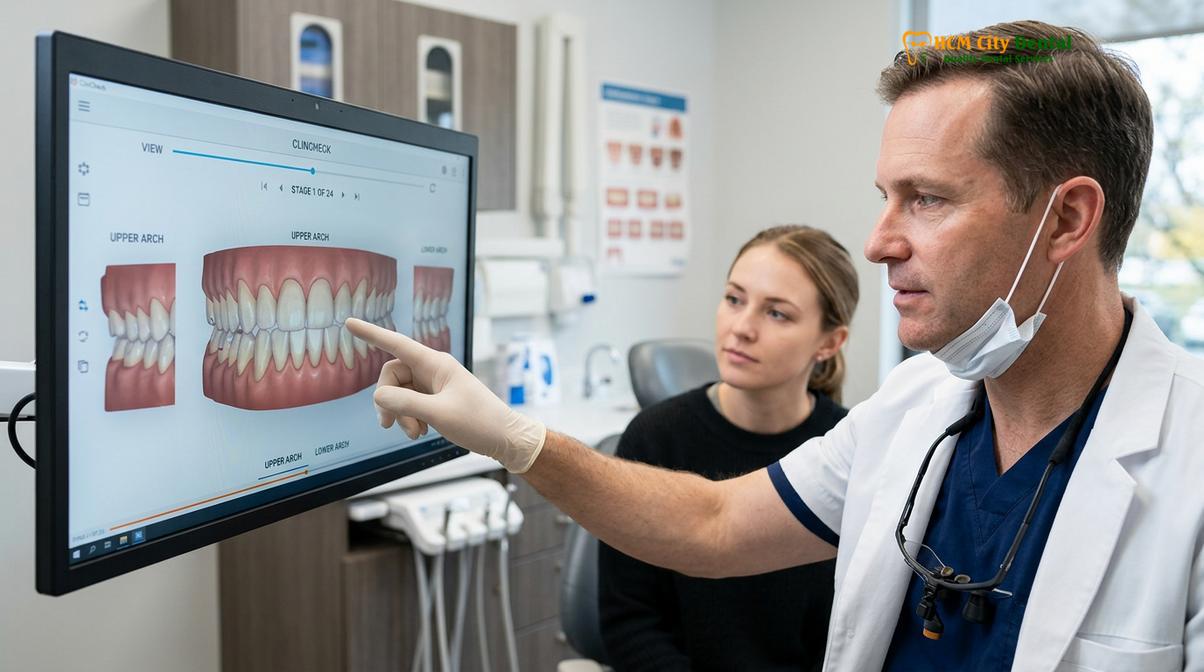
Once the receiving doctor accepts the transfer in their portal, they gain full administrative access to the patient’s ClinCheck file. This file is a comprehensive 3D simulation of the entire treatment plan. It details the initial malocclusion, the current projected stage of the teeth, and the final desired outcome. Furthermore, it includes critical clinical instructions, such as exactly which teeth require interproximal reduction (IPR) and at what stage, as well as the precise morphology and placement of all composite attachments[3].
| Feature | Traditional Fixed Braces Transfer | Digital Clear Aligner Transfer |
|---|---|---|
| Record Portability | Requires physical mailing of plaster models and printed cephalometric radiographs. | Instantaneous cloud-based transfer of 3D ClinCheck files and digital radiographs. |
| Hardware Compatibility | High risk of incompatibility; new doctor may use a different bracket system (e.g., Roth vs. MBT). | Universal compatibility; all certified providers use the same Align Technology portal. |
| Treatment Continuity | Often requires complete removal of old brackets and re-bonding of new ones, delaying progress. | Seamless continuation; patient continues wearing current trays while the new doctor reviews the file. |
| Clinical Guesswork | New doctor must reverse-engineer the previous doctor’s biomechanical strategy. | Zero guesswork; the exact force vectors and staging are explicitly detailed in the software. |
This seamless digital handshake ensures that the new provider can immediately assess whether the patient’s current clinical presentation matches the software’s projections. If the teeth are tracking perfectly, the new doctor can simply order the next sequence of trays or hand over the remaining trays if they were shipped to the new clinic. If there are discrepancies, the doctor has the baseline data required to order a refinement scan without starting the entire diagnostic process from scratch.
Coordinating Between Your Old Orthodontist and HCMC Dental
Successful continuity of care requires proactive communication between your originating clinic and your new provider, ensuring all digital records and physical trays are secured before your international flight.
The transition period between leaving your home country and arriving at your new destination requires careful logistical planning. Patients should ideally notify their current orthodontist at least four to six weeks before their departure date. This window allows sufficient time to process the transfer paperwork, ensure all financial balances are settled, and physically collect any aligner trays that have already been manufactured and delivered to the original clinic.
If you are moving to Vietnam, finding a reputable District 1 Invisalign transfer clinic is a priority for many expatriates due to the concentration of international standards of care in the city center. When coordinating with HCMC Dental Clinic in Ho Chi Minh City, the administrative team will guide you through the exact information needed from your previous provider. This typically includes your patient ID number, the email address associated with your Align account, and the specific stage (tray number) you will be on when you arrive.
Clinical Case Example: International Relocation
Patient Profile: A 28-year-old expatriate relocating from London to Ho Chi Minh City during tray 14 of a 30-tray comprehensive treatment plan.
Clinical Challenge: The patient experienced a delay in the digital transfer process due to a missing signature on the release form, risking a gap in clinical oversight.
Resolution: The patient was instructed to remain in tray 14, wearing it as a passive retainer at night, until the transfer was finalized. Upon arrival at HCMC Dental Clinic, a new iTero scan confirmed that the teeth had not relapsed. The digital file was successfully imported, and trays 15-30 were ordered directly to the Saigon clinic, resulting in zero loss of clinical progress.
During the physical move, it is highly recommended to carry your current aligner, your previous aligner, and your next aligner in your carry-on luggage. Checked baggage can be lost or delayed, and losing your aligners during transit is a significant clinical setback. If you happen to lose your trays or your final retainers during the chaos of moving, establishing immediate contact with your new clinic is vital. Similar to the protocols for Lost Retainer Replacement in Saigon, the clinic can use your transferred digital file to expedite the manufacturing of replacement trays, minimizing the time your teeth are left without retentive forces.
Clear communication regarding the physical location of your unissued trays is also crucial. Sometimes, a patient’s entire series of trays has already been manufactured and is sitting in the original doctor’s office. In this scenario, the patient should collect all physical boxes before flying. If the trays have not yet been manufactured, the new clinic will assume responsibility for ordering the remaining stages once the digital transfer is complete.
Financial Logistics: Transfer Fees, New Trays, and Monthly Costs
Transferring your case involves settling the balance with your original provider and establishing a new prorated fee structure with your receiving clinic to cover clinical monitoring and potential new scans.
One of the most common anxieties regarding an international case transfer is the fear of paying for the entire treatment twice. Fortunately, the financial structure of clear aligner therapy is designed to prevent this. The total cost of treatment is generally divided into two main components: the laboratory fee paid directly to Align Technology for the manufacturing of the trays, and the clinical fee paid to the orthodontist for their diagnostic expertise, chair time, and ongoing monitoring[4].
When you initiate a transfer, your original orthodontist will typically calculate a prorated refund or final balance based on the percentage of treatment completed. Because the laboratory fee has usually already been paid in full to Align Technology at the start of the case, this fee does not need to be paid again. The new receiving clinic will not charge you a new laboratory fee for the original set of trays, provided the case is transferred within the active treatment window (usually 3 to 5 years depending on the specific product tier).
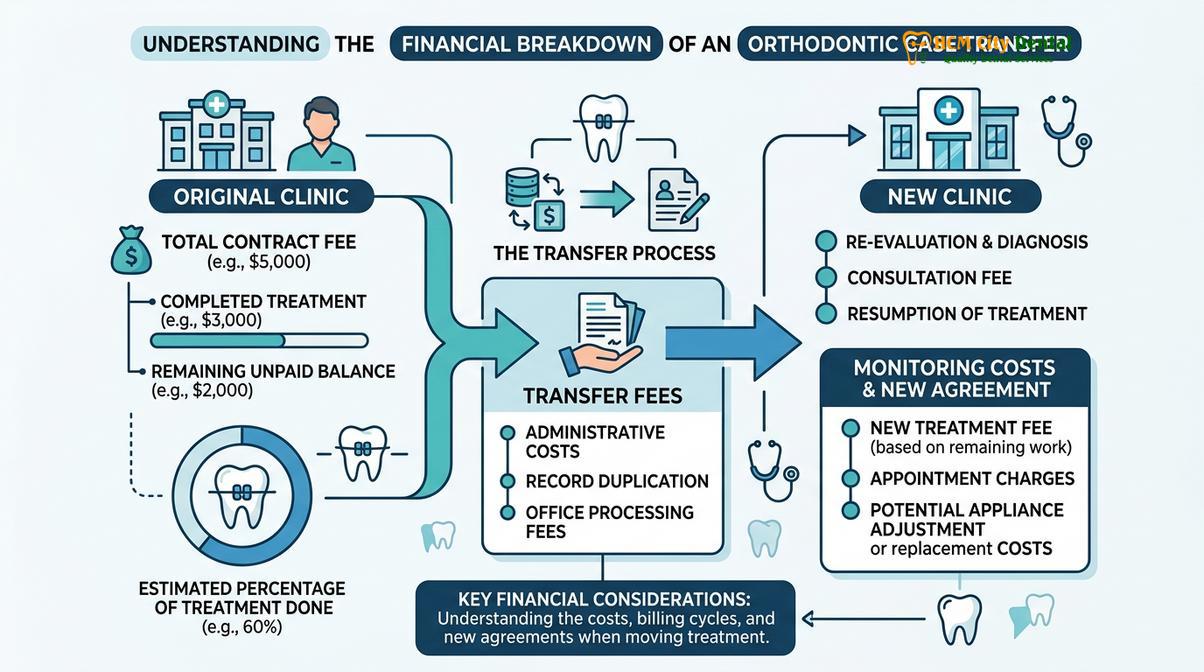
However, you will be responsible for the clinical fees at your new destination. When you resume braces Vietnam, the new clinic will assess a transfer fee. This fee covers the administrative cost of importing and reviewing your digital file, the clinical time required for your initial intake examination, a new 3D scan, and the ongoing monthly or bi-monthly monitoring appointments for the remainder of your treatment. The exact cost will depend on how many stages are left in your plan and whether any complex mid-course corrections are required.
It is important to note that dental costs vary significantly by region. Expatriates often find that the clinical fees in Vietnam are highly competitive compared to their home countries. For context on regional pricing differences in orthodontic retention and care, patients can review comparisons such as Retainer Cost Vietnam vs Korea, Retainer Cost Vietnam vs Japan, Retainer Cost Vietnam vs Canada, and Retainer Cost Vietnam vs New Zealand. Understanding these international fee structures helps patients budget accurately for the continuation of their care without unexpected financial surprises.
Resuming Care: Your First Consultation and iTero Scan in Saigon
Your initial visit at the new clinic involves a comprehensive clinical assessment, a fresh 3D iTero scan, and a review of your current occlusal tracking to establish a baseline for remaining treatment.
The most critical appointment in the transfer process is your initial clinical intake at the new facility. Once the digital file has been successfully imported, your new orthodontist must verify that the physical reality in your mouth matches the digital simulation on the screen. This appointment is comprehensive and serves as the foundation for the remainder of your orthodontic journey.
Upon arriving at HCMC Dental Clinic, the first step is a thorough intraoral examination. Dr. Nguyen Van Cuong emphasizes that this visual inspection is necessary to check the integrity of all existing composite attachments. Attachments can wear down, chip, or debond entirely during the months of treatment. If an attachment is missing, the aligner cannot deliver the precise rotational or extrusive forces required for that specific tooth. Any compromised attachments will be carefully removed and re-bonded using the template provided in your transferred digital file.
Clinical Warning:
Do not advance to your next aligner tray until your new orthodontist has officially evaluated your tracking. If your teeth have stopped tracking properly during the move, forcing a new tray onto the teeth can cause severe root resorption, periodontal trauma, and further deviation from the treatment plan.
Following the visual inspection, a new digital impression will be taken using an iTero 3D scanner. This scan is not necessarily to order new trays immediately, but rather to perform a progress assessment. The software overlays your current scan onto the original ClinCheck projection to identify any discrepancies. If the teeth are tracking perfectly, you will be cleared to continue with your current sequence of trays. If there are minor tracking issues, the doctor may recommend specific chewing exercises or slight modifications to your wear schedule.
In cases where the teeth have significantly deviated from the plan—often due to poor compliance during the relocation—a mid-course correction or refinement will be necessary. The new iTero scan will be submitted to Align Technology to manufacture a new series of trays that bridge the gap between your current reality and the final goal. Additionally, the doctor will evaluate the health of your periodontium and any fixed retention devices you may have from previous treatments, similar to the protocols used in Broken Fixed Retainer Repair Vietnam, ensuring your entire oral environment is stable for continued tooth movement.
“The initial intake scan after an international transfer is the ultimate diagnostic truth. It reveals exactly how the biological tissues have responded to the biomechanical forces during the transition, dictating the precise clinical steps required to achieve the final aesthetic and functional goals.”
Important Clinical Considerations
While the digital transfer process is highly efficient, patients must remain vigilant regarding their oral health during the transition period. If you experience severe, localized pain that does not subside within a few days of changing a tray, or if you notice significant gingival recession or mobility in a specific tooth, you must seek immediate clinical evaluation, even if your official transfer is not yet complete. These symptoms can indicate occlusal trauma or periodontal distress that requires prompt intervention[5].
Furthermore, if an aligner cracks or breaks while you are in transit, do not attempt to repair it with household adhesives, as these are toxic and will alter the fit of the tray. Instead, revert to your previous aligner to maintain the current space and prevent relapse, and contact your new provider immediately. Continuous, passive retention is always preferable to leaving the teeth completely unguided. Your new orthodontist will rely on clinical diagnostics to determine whether to order a replacement tray or simply advance you to the next stage slightly early, depending on the specific biomechanical requirements of your case.
Frequently Asked Questions
How do I transfer my Invisalign case to a dentist in Vietnam?
You must sign a patient release form with your original provider, who will then initiate a digital transfer via the Invisalign Doctor Site to your new clinic in Vietnam. Once accepted, your new orthodontist gains full access to your 3D treatment plan and manufacturing records. This digital handshake ensures that all clinical data, including attachment templates and staging, is preserved without the need for physical models.
Will I have to pay the full treatment price again after transferring?
No, you will not pay the full initial fee again. You will typically pay a case transfer fee and a prorated amount covering the clinical monitoring, new scans, and any additional aligner trays required for the remainder of your treatment. Because the initial laboratory fee was already paid to the manufacturer, your new clinic only charges for their direct clinical time and expertise.
Can HCMC Dental order replacement trays for a foreign case?
Yes, once the digital case transfer is officially completed and accepted in the Align Technology system, HCMC Dental can order replacement trays, refinement aligners, or retainers directly from the manufacturer using your original clinical profile. The new trays will be shipped directly to the clinic in Ho Chi Minh City for your subsequent appointments.
What happens if my current aligner breaks while I am moving abroad?
If an aligner breaks during transit, you should immediately revert to your previous aligner to prevent orthodontic relapse and contact your new clinic to expedite an emergency appointment. Maintaining continuous pressure on the teeth is critical during this transition. Never attempt to glue or modify a broken aligner yourself.
How long does the digital transfer process take on the Invisalign portal?
The digital transfer process typically takes between 48 to 72 hours once the originating doctor submits the request. However, international coordination and time zone differences may slightly extend the time before the receiving clinic can fully access the files. It is highly recommended to initiate this process several weeks before your actual departure date.
References
- Journal of Clinical Orthodontics. Digital workflow and portability in clear aligner therapy. (2021).
- American Journal of Orthodontics and Dentofacial Orthopedics. Biomechanical considerations in interrupted orthodontic treatment. (2020).
- International Journal of Computerized Dentistry. Accuracy of intraoral scanners in cross-border orthodontic case transfers. (2019).
- Angle Orthodontist. Patient compliance and clinical outcomes in clear aligner therapy during relocation. (2022).
- Journal of Orthodontic Science. Management of composite attachments and interproximal reduction in transferred aligner cases. (2018).