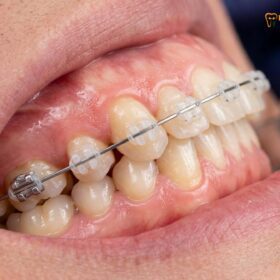
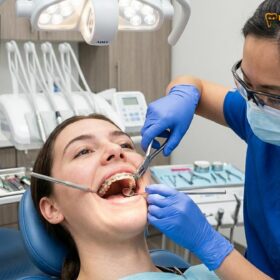
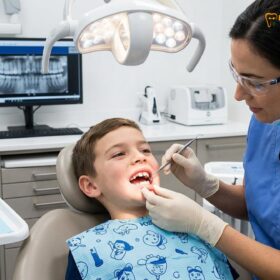
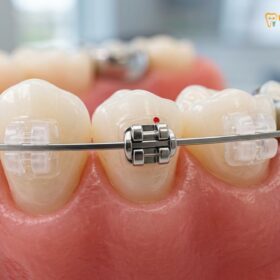
Patients comparing the retainer cost vietnam vs new zealand will find significant savings in Southeast Asia. While New Zealand clinics charge premium rates for custom retention devices, top-tier facilities in Vietnam offer identical medical-grade materials, such as Essix and Hawley retainers, at a fraction of the price.
Clinical Summary:
Orthodontic retention is a critical phase requiring precise, custom-fabricated appliances to prevent occlusal relapse. The structural cost differences between New Zealand and Vietnam allow patients to access premium clear aligner retainers and fixed lingual wires at highly reduced rates without compromising clinical standards. By utilizing digital intraoral scanning and CAD/CAM technology, specialized clinics in Ho Chi Minh City deliver exact-fit retainers identical to those prescribed by private orthodontists in Auckland or Wellington. Understanding the biological necessity of retention and the available material options ensures long-term stability of orthodontic outcomes.
Key Takeaways:
- Custom retainers in Vietnam cost significantly less than equivalent devices in New Zealand due to lower operational overhead.
- Patients receive the exact same medical-grade materials, including Essix clear plastics and stainless steel Hawley wires.
- Digital 3D scanning ensures precise fit and immediate fabrication for international patients.
- Fixed lingual retainers require professional bonding and meticulous plaque management to maintain periodontal health.
- Combining retainer replacement with routine dental care maximizes the value of medical travel to Southeast Asia.
Retainer Cost: Vietnam vs New Zealand (Clinical & Economic Overview)
The price discrepancy for orthodontic retainers between Vietnam and New Zealand is driven by clinical overhead, not material quality, allowing patients to save substantially on identical custom devices.
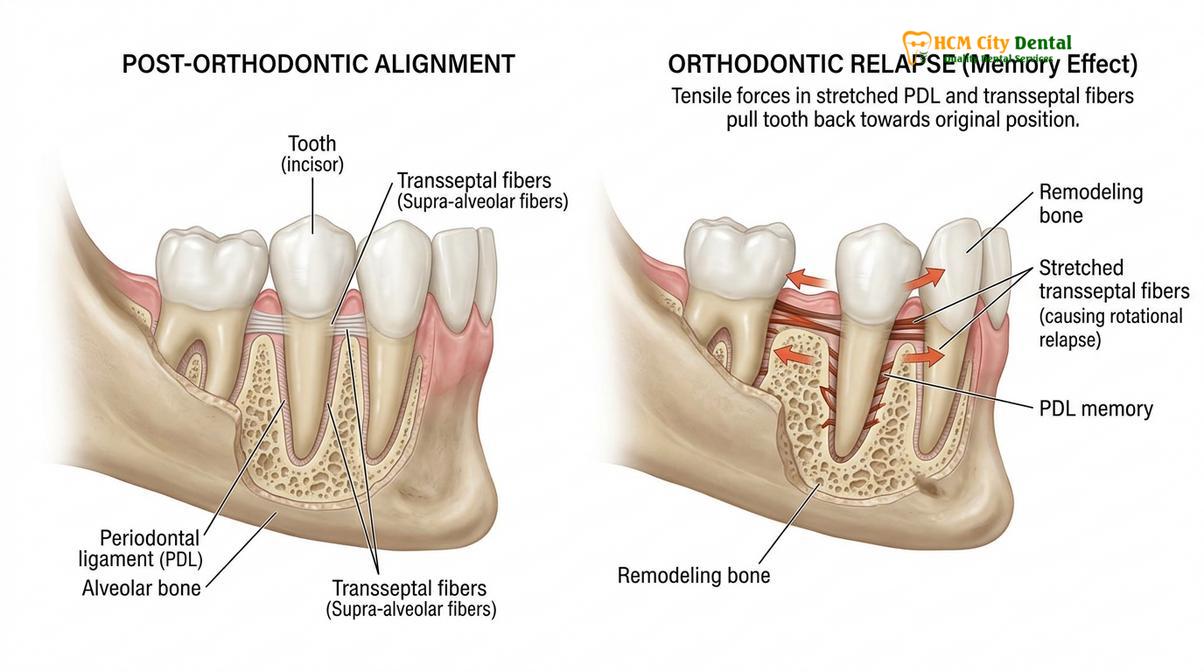
The final phase of any orthodontic treatment—whether traditional braces or clear aligners—is the retention phase. Without adequate retention, the periodontal ligaments and gingival fibers will naturally pull the teeth back toward their original, misaligned positions. When analyzing the retainer cost nz, patients often experience sticker shock, particularly if they require multiple sets of clear retainers or need to replace a broken fixed wire. The high cost of living, strict import tariffs on dental materials, and elevated laboratory fees in New Zealand contribute to these premium prices.
In contrast, the economic landscape in Southeast Asia allows for a different pricing model. Clinics in Vietnam can procure the exact same internationally certified materials—such as Zendura or Essix plastics—while operating with significantly lower overhead costs. This structural economic difference means that the savings are passed directly to the patient. For individuals seeking Orthodontics and post-treatment care, the financial benefits of traveling for dental work are substantial.
Furthermore, the dynamic of a public vs private dentist NZ plays a crucial role in patient expenses. In New Zealand, adult orthodontics and subsequent retention protocols are almost exclusively handled within the private sector. Public dental funding is generally reserved for children and adolescents or severe medical emergencies, leaving adults to bear the full out-of-pocket cost for their orthodontic maintenance. This privatization of orthodontic care ensures that prices remain high across major New Zealand cities.
🇳🇿 Cost Comparison: Vietnam vs New Zealand (Per Arch)
Save up to 70% - 80% on high-quality custom dental retainers. Below is a detailed cost breakdown comparing local rates in New Zealand with HCMC Dental Clinic.
| Retainer Type | New Zealand Avg. Cost | HCMC Dental Cost | Your Savings |
|---|---|---|---|
| Essix (Clear Aligner) | $300 - $500 NZD | $72 USD (~$120 NZD) | Save ~80% |
| Hawley (Acrylic & Wire) | $350 - $600 NZD | $120 USD (~$200 NZD) | Save ~75% |
| Fixed Bonded (Wire behind teeth) | $300 - $550 NZD | $60 USD (~$100 NZD) | Save ~80% |
By choosing a reputable facility like HCMC Dental Clinic, patients can access world-class retention devices without the inflated price tag. The cost efficiency does not imply a reduction in clinical rigor; rather, it reflects a more favorable economic environment for healthcare delivery.
Types of Retainers and Material Specifications
Orthodontic retention utilizes clear thermoplastic trays, traditional acrylic-and-wire appliances, or fixed lingual wires, each selected based on the patient’s specific occlusal stability requirements.
Selecting the appropriate retention device is a critical clinical decision based on the patient’s original malocclusion, oral hygiene compliance, and lifestyle factors. There are three primary categories of orthodontic retainers utilized globally, and all are readily available at top-tier clinics in Vietnam.
Clear Thermoplastic Retainers (Essix/Vivera style)
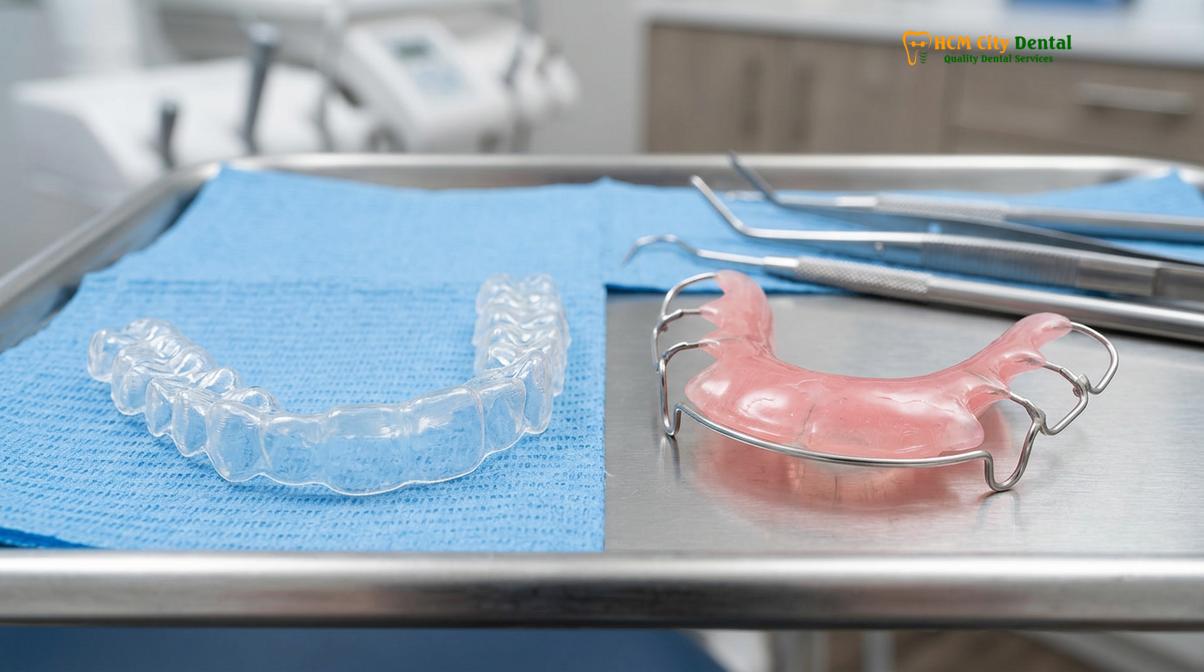
Clear retainers are currently the most popular choice for adult patients due to their aesthetic appeal and comfort. These appliances are vacuum-formed or thermoformed over a 3D-printed model of the patient’s newly aligned teeth. They encapsulate the entire clinical crown, providing excellent control against rotational relapse. However, the clear retainer price Auckland can be prohibitive, especially since these plastic trays naturally wear down over time and typically require replacement every one to two years depending on the patient’s bruxism (teeth grinding) habits [1]. The success of removable retainers heavily depends on patient compliance, as failure to wear them as prescribed is the leading cause of orthodontic relapse [5].
For a deeper understanding of how these materials compare to traditional options, patients can review our Plastic Aligner Retainer vs Wire Retainer: Clinical Guide | HCMC Dental.
Hawley Retainers
The Hawley retainer is the traditional standard in orthodontics. It consists of an acrylic base plate that rests against the palate (or lingual mucosa of the lower jaw) and a heavy stainless steel labial bow that wraps around the anterior teeth. Adams clasps on the molars provide retention. While less aesthetic than clear trays, Hawley retainers are highly durable, adjustable, and allow the posterior teeth to settle into a natural occlusion over time [2]. They are particularly useful for patients who require minor occlusal adjustments post-treatment.
Fixed (Bonded) Lingual Retainers
A fixed retainer consists of a multi-stranded stainless steel or gold-braided wire bonded directly to the lingual (tongue-facing) surfaces of the anterior teeth, typically from canine to canine. This method is highly effective because it removes the factor of patient compliance—the retainer is always working. It is often prescribed for patients who had severe anterior crowding or significant diastemas (gaps) prior to treatment [3]. However, fixed retainers are notorious for accumulating plaque and tartar, which can lead to gingival inflammation and bone loss if not professionally managed [4].
“The choice of retention protocol must balance the biological demand for occlusal stability with the patient’s ability to maintain optimal periodontal health. Fixed retainers offer superior compliance but demand rigorous interproximal cleaning.”
The Clinical Workflow for Custom Retainers
Modern retainer fabrication relies on high-resolution intraoral scanning and 3D printing to create highly accurate, comfortable appliances that prevent orthodontic relapse.
The precision of a retainer dictates its efficacy. If a retainer does not fit intimately against the tooth surfaces, micro-movements can occur, leading to gradual orthodontic relapse. The clinical workflow for fabricating these devices has evolved significantly, moving away from uncomfortable traditional impressions toward fully digital pathways.
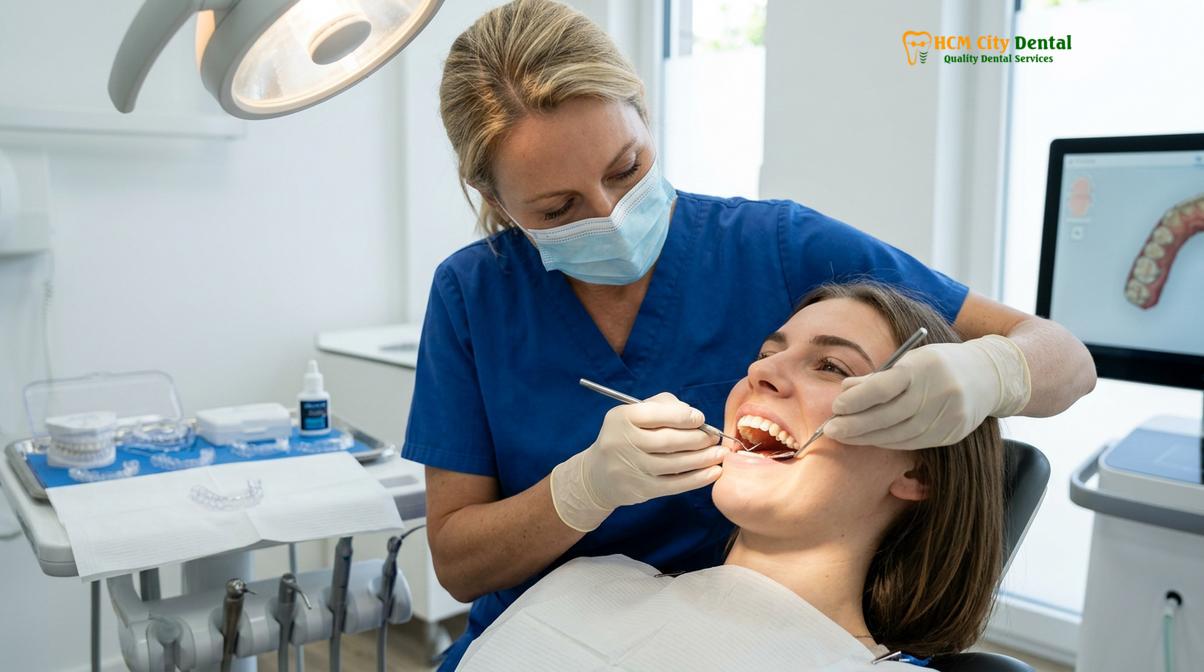
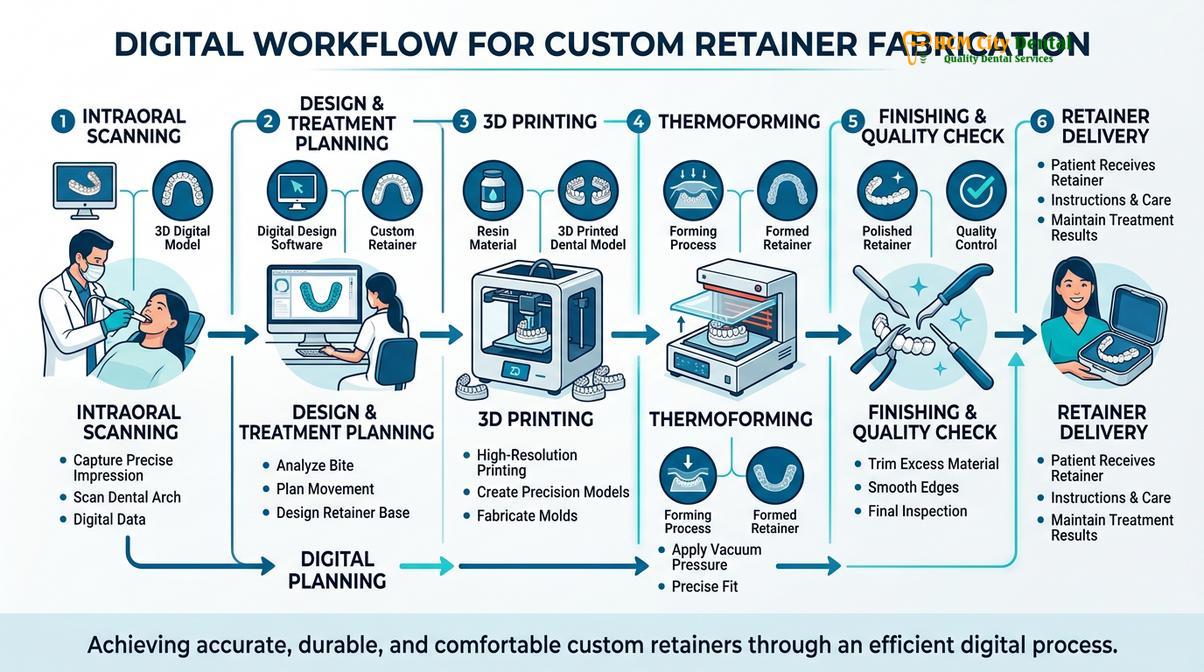
At advanced facilities, the process begins with a digital intraoral scan. Using devices like the 3Shape TRIOS or iTero scanner, the dentist captures a highly accurate, high-resolution 3D map of the patient’s dental arches. This process is entirely painless, takes only a few minutes, and eliminates the gag reflex associated with traditional alginate or polyvinyl siloxane (PVS) impression materials.
Dr. Nguyen Van Cuong, a leading specialist at HCMC Dental Clinic, emphasizes that the accuracy of this initial digital impression is the most critical factor in ensuring the long-term success of the retention phase. He regularly consults with international patients to design custom retention protocols that fit their travel schedules and clinical needs. For patients interested in the specific protocols utilized by leading specialists, our Dr Cuong Dentist Custom Retainers: Clinical Guide | HCMC Dental provides comprehensive insights into the fabrication standards maintained at our facility.
Once the digital scan is acquired, the data is processed using specialized CAD (Computer-Aided Design) software. For clear retainers, a physical model of the teeth is 3D printed using biocompatible resin. A sheet of medical-grade thermoplastic (such as polyurethane or PETG) is then heated and vacuum-formed over this model. The excess material is meticulously trimmed and polished to ensure it does not impinge on the marginal gingiva, which could cause irritation or recession.
When bonding a fixed retainer, the clinical workflow requires strict moisture control. The lingual surfaces of the teeth are cleaned with pumice, acid-etched, and treated with a bonding agent. The custom-contoured wire is then passively seated against the teeth, and small increments of flowable composite resin are applied over the wire on each tooth and light-cured. The dentist must ensure that the composite is smooth to prevent tongue irritation and that the wire does not interfere with the patient’s bite.
Managing Retainer Replacement and Dental Travel
International patients can seamlessly replace lost or damaged retainers during a short trip to Vietnam, utilizing expedited digital workflows for rapid turnaround.
Retainers are frequently lost, accidentally thrown away in napkins, or damaged by pets. When this occurs, time is of the essence. The periodontal ligament retains a “memory” of the tooth’s original position, and without the retainer, teeth can begin shifting within a matter of days. Securing a replacement retainer is a highly streamlined process designed to accommodate the tight schedules of international visitors.
The concept of dental travel has become increasingly popular for exactly this reason. Patients can fly into Ho Chi Minh City, attend a brief clinical appointment for a digital scan on their first day, and often pick up their newly fabricated clear retainers within 24 to 48 hours. This rapid turnaround is made possible by in-house 3D printing laboratories that eliminate the need to ship models to external facilities.
Clinical Case Example: Rapid Retainer Replacement
A patient visiting from Wellington lost their upper clear retainer while on holiday. Facing a high replacement cost back home and fearing immediate orthodontic relapse, they visited HCMC Dental Clinic in Ho Chi Minh City. A digital intraoral scan was performed, and a new, perfectly fitting Essix retainer was fabricated and delivered within 24 hours, allowing the patient to continue their travels with their smile securely maintained.
For patients who require assistance in English and need immediate attention, our guide on English Speaking Dentist Retainer Replacement | HCMC Dental outlines the exact steps to take when an appliance is lost or broken abroad.
Insurance and Healthcare Coverage Considerations
Orthodontic retainers are typically classified as elective post-treatment care, meaning most public health schemes and standard insurance policies do not cover their fabrication or replacement.
Navigating the financial aspects of dental care requires an understanding of how insurance providers classify different treatments. In New Zealand, the public healthcare system provides limited dental benefits for adults. While ACC dental cover provides excellent support for accidental dental trauma (such as a tooth fractured during a sporting event), it strictly excludes routine orthodontic retention and the replacement of lost appliances.
Even within private health insurance policies, orthodontic coverage is often capped at a lifetime maximum or restricted to active treatment phases (the braces or aligners themselves), leaving the retention phase entirely out-of-pocket. This lack of coverage is a primary driver for patients seeking more affordable, high-quality alternatives overseas.
When traveling to Vietnam for dental care, patients should be aware that while the upfront costs are significantly lower, they will generally be paying out-of-pocket. Some premium international travel insurance policies or specialized medical tourism insurance may offer partial reimbursement, but patients must verify this with their specific provider prior to treatment. The clinic will provide all necessary itemized receipts and clinical documentation required for any potential insurance claims.
When to See a Doctor (Important Clinical Considerations)
While retainers are passive devices, their maintenance and the health of the underlying dentition require ongoing professional supervision. Patients must remain vigilant for signs of appliance failure or biological complications, adhering to guidelines set forth by organizations such as the Vietnam Association of Orthodontists (VAO) [6].
You should schedule a clinical examination if you experience any of the following:
- Tightness or Discomfort: If a removable retainer feels excessively tight when inserted, it indicates that the teeth have begun to shift. The retainer should be worn full-time until it fits passively again. If it cannot be fully seated, a new scan and appliance may be required.
- Debonded Fixed Retainer: If the composite resin holding a fixed lingual wire breaks, the wire can become loose. This not only allows the specific tooth to relapse rapidly but can also cause severe lacerations to the tongue.
- Excessive Calculus Buildup: Fixed retainers require regular professional scaling to prevent localized gingivitis and periodontal attachment loss.
- Cracked or Perforated Plastic: Clear retainers that develop cracks or holes lose their structural integrity and can no longer provide adequate retention forces.
Clinical Warning: Never attempt to repair a broken fixed retainer wire or cracked clear aligner with household adhesives. These chemicals are highly toxic and not biocompatible. A broken fixed wire requires immediate professional removal and rebonding to prevent soft tissue injury and occlusal relapse.
For detailed instructions on maintaining periodontal health around bonded appliances, patients should review our Permanent Retainer Plaque Removal: Clinical Guide | HCMC Dental. Specialists advise that patients with fixed retainers should utilize specialized floss threaders or interdental brushes daily to prevent the onset of periodontal disease.
“The success of orthodontic treatment is not judged on the day the braces are removed, but years later. Retention is a lifelong commitment, and the integrity of the retaining appliance is paramount to preserving the clinical result.”
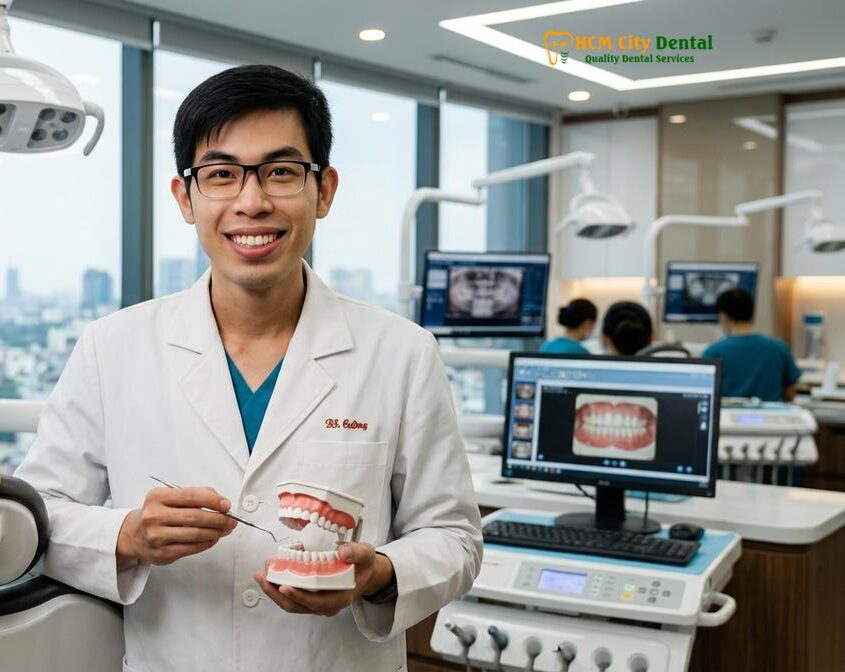
If you are experiencing appliance failure or simply need a backup set of clear aligners, scheduling a consultation at HCMC Dental Clinic in Ho Chi Minh City ensures you receive prompt, professional care. Explore our comprehensive Orthodontics services to learn more about our digital fabrication process and secure your smile’s long-term stability.
Frequently Asked Questions
How much does a replacement retainer cost in Vietnam compared to New Zealand?
A replacement retainer in Vietnam typically costs significantly less than in New Zealand, often saving patients a substantial amount per arch. This price difference is due to lower clinical overhead, even though identical medical-grade materials like Essix plastics and stainless steel wires are utilized.
Are the materials used for retainers in Vietnam the same as those in New Zealand?
Yes, reputable clinics in Vietnam use the exact same internationally recognized materials as New Zealand practices. This includes premium thermoformed plastics for clear retainers and high-grade stainless steel for fixed lingual wires and Hawley appliances.
How long does it take to get a custom retainer made in Ho Chi Minh City?
Custom clear retainers can often be fabricated within 24 to 48 hours in Ho Chi Minh City. Clinics utilizing digital intraoral scanners and in-house 3D printing labs can expedite the process, making it highly convenient for international travelers.
Will my New Zealand insurance cover the cost of a retainer in Vietnam?
Most standard New Zealand health insurance policies and public coverage schemes do not cover elective orthodontic retention, whether performed domestically or internationally. Patients should consult their specific private insurance provider regarding out-of-network international claims.
What should I do if my fixed permanent retainer breaks while traveling?
If a fixed retainer debonds or breaks, you should seek immediate clinical attention to prevent orthodontic relapse and soft tissue irritation. A dentist can safely remove the broken wire, polish the residual composite resin, and bond a new fixed retainer.
References
- Journal of Prosthodontic Research. Orthodontic retainer wear and stability. (2021).
- American Journal of Orthodontics. Relapse rates and retention protocols. (2019).
- European Journal of Orthodontics. Essix vs Hawley retainers clinical trial. (2020).
- Journal of Clinical Orthodontics. Plaque accumulation on fixed retainers. (2022).
- Australian Dental Journal. Patient compliance with dental retainers. (2018).
- Vietnam Association of Orthodontists (VAO). Guidelines on post-orthodontic retention and appliance maintenance. (2023).