Comparing the retainer cost Vietnam vs Australia reveals significant financial advantages for patients seeking post-orthodontic care. While Australian clinics charge premium fees, Vietnam offers identical clinical-grade retainers at a fraction of the price, utilizing advanced digital scanning and fabrication technologies to ensure optimal dental stability.
Clinical Summary:
Orthodontic retention is a critical phase required to prevent occlusal relapse after braces or aligner therapy. Patients analyzing retainer costs between Vietnam and Australia consistently find that Ho Chi Minh City clinics provide high-quality Essix, Hawley, and fixed retainers at highly competitive rates. By leveraging modern digital dentistry, Vietnamese specialists deliver precise, custom-fitted retention devices that meet stringent international standards, making cross-border dental care a highly viable and cost-effective option for long-term smile maintenance.
Key Takeaways:
- Custom clear retainers in Vietnam cost significantly less than the standard fee schedules found in Western countries.
- Australian public health systems typically do not cover routine orthodontic retainers for adult patients.
- Digital intraoral scanning ensures highly accurate, comfortable fits for both removable and fixed retention devices.
- Fixed bonded retainers require precise clinical placement to prevent plaque accumulation and periodontal inflammation.
- Combining travel with dental care allows patients to efficiently obtain affordable, rapid retainer replacements.
Understanding Orthodontic Retention: Why It Matters
Orthodontic retention is the mandatory final phase of braces or aligner therapy, designed to stabilize teeth in their new positions while the surrounding periodontal ligaments and alveolar bone remodel.
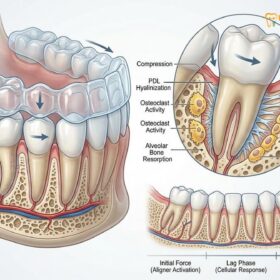
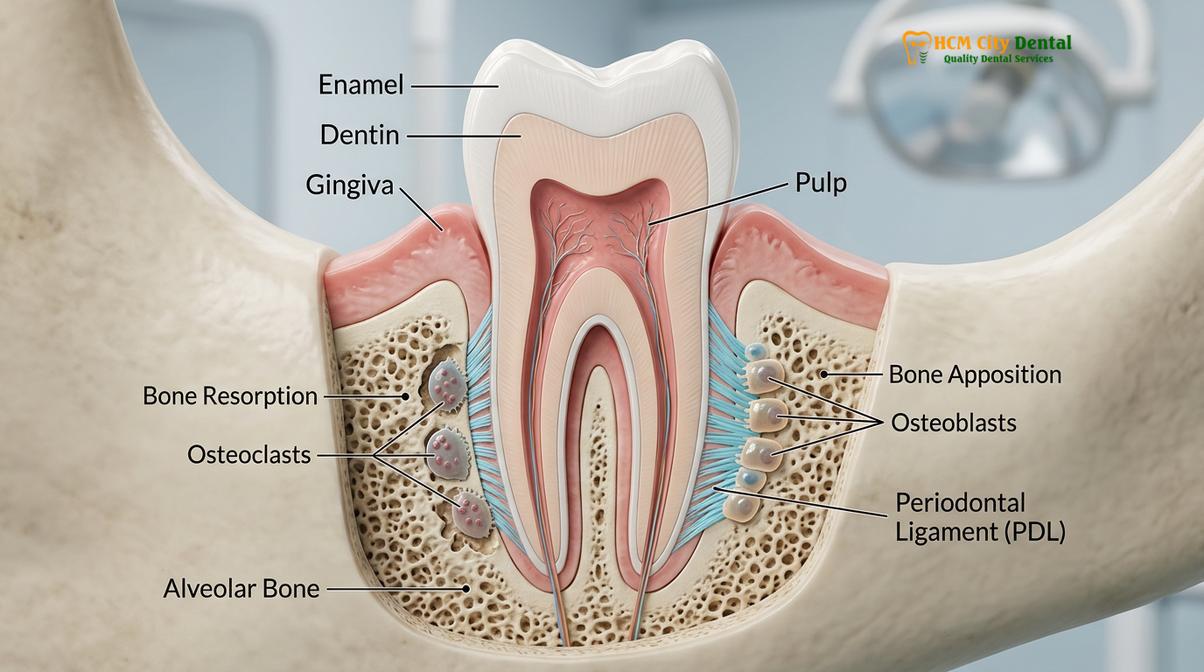
The completion of active Orthodontics marks a significant milestone in a patient’s dental journey. However, the removal of braces or the final clear aligner does not mean the teeth are permanently fixed in place. The human dentition is dynamic, and teeth have a natural tendency to drift back toward their original, pre-treatment positions—a phenomenon clinically known as orthodontic relapse [1]. This occurs because the periodontal ligaments (PDL), which anchor the teeth to the alveolar bone, contain elastic fibers that are stretched during treatment. These fibers require considerable time to reorganize and stabilize.
During active tooth movement, osteoclasts break down bone on the pressure side of the tooth root, while osteoblasts build new bone on the tension side. Once the active force is removed, the newly formed osteoid tissue is still relatively soft and uncalcified. Without a mechanical barrier to hold the teeth in place, the residual tension in the gingival and transseptal fibers will rapidly pull the teeth out of alignment. This makes the immediate and consistent use of a retainer absolutely non-negotiable for long-term success.
“The transseptal fiber network possesses a ‘memory’ that can persist for months or even years after orthodontic treatment. Continuous mechanical retention is the only evidence-based method to counteract this physiological pull and maintain occlusal harmony.”
Clinical studies indicate that the highest risk of relapse occurs within the first six to twelve months following the cessation of active orthodontic forces [2]. During this critical window, full-time retainer wear is often prescribed, eventually tapering to nighttime-only wear as the bone fully mineralizes and the periodontal architecture adapts to the new occlusal scheme. Failure to adhere to retention protocols inevitably leads to shifting, which may necessitate a secondary round of orthodontic treatment to correct.
Retainer Cost Vietnam vs Australia: A Clinical and Financial Breakdown
The financial disparity between the two countries is driven by operational overhead rather than material quality, allowing patients in Vietnam to access premium retainers at highly accessible price points.
When evaluating the overall investment in post-orthodontic care, the retainer cost australia presents a significant financial hurdle for many patients. In Australia, dental fees are heavily influenced by high commercial rent, stringent labor costs, and expensive domestic laboratory fees. Furthermore, the standard ADA fee schedule reflects these high overheads, resulting in premium pricing for even basic removable appliances. Patients often assume that higher costs equate to superior clinical outcomes, but in the realm of modern digital dentistry, this correlation is increasingly obsolete.
Another critical factor is the lack of public funding for cosmetic and orthodontic maintenance. A standard Medicare rebate does not apply to routine adult orthodontic retainers, leaving patients entirely dependent on out-of-pocket payments or private health insurance extras, which frequently impose strict annual limits and waiting periods. Consequently, replacing a lost or broken retainer in Australia can be an unexpected and stressful financial burden.
🇦🇺 Cost Comparison: Vietnam vs Australia (Per Arch)
Save up to 70% - 80% on high-quality custom dental retainers. Below is a detailed cost breakdown comparing local rates in Australia with HCMC Dental Clinic.
| Retainer Type | Australia Avg. Cost | HCMC Dental Cost | Your Savings |
|---|---|---|---|
| Essix (Clear Aligner) | $350 - $600 AUD | $72 USD (~$110 AUD) | Save ~80% |
| Hawley (Acrylic & Wire) | $400 - $700 AUD | $120 USD (~$180 AUD) | Save ~75% |
| Fixed Bonded (Wire behind teeth) | $350 - $650 AUD | $60 USD (~$90 AUD) | Save ~80% |
Conversely, the orthodontic retainer price in Vietnam is remarkably lower. Clinics in Ho Chi Minh City operate with significantly reduced overhead costs, allowing them to pass these savings directly to the patient. It is crucial to understand that this price reduction does not imply a compromise in material safety or clinical efficacy. Top-tier Vietnamese clinics utilize the exact same imported, biocompatible materials—such as PETG (polyethylene terephthalate glycol) for clear aligners and medical-grade stainless steel for fixed wires—as their Australian counterparts [3]. The diagnostic equipment, including 3D intraoral scanners and CAD/CAM milling machines, are sourced from the same global manufacturers, ensuring that the final appliance meets rigorous international standards.
Types of Retainers Available in Ho Chi Minh City
Patients can choose from clear removable aligners, traditional wire-and-acrylic devices, or permanent bonded wires, each offering distinct clinical advantages for long-term stability.
Selecting the appropriate retention device is a clinical decision based on the patient’s original malocclusion, oral hygiene habits, and lifestyle. At HCMC Dental Clinic, specialists offer a comprehensive range of retention solutions, ensuring that every patient receives an appliance tailored to their specific anatomical and behavioral needs. When seeking a custom retainer saigon, patients generally choose between three primary modalities.
1. Essix (Clear Thermoplastic) Retainers
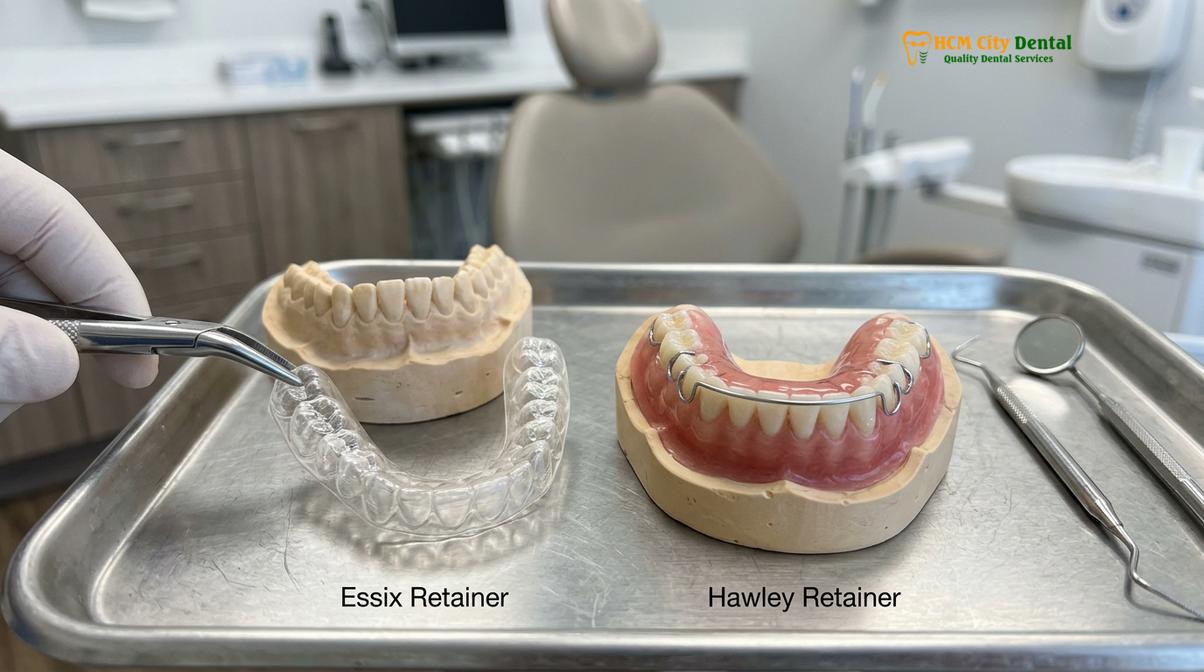
Essix retainers are vacuum-formed or pressure-thermoformed clear plastic trays that intimately encase the entire dental arch. They are highly favored for their aesthetic appeal, as they are virtually invisible during wear. Clinically, Essix retainers provide excellent full-arch stabilization, preventing both rotational and vertical relapse. Because they cover the occlusal surfaces of the teeth, they also offer a degree of protection against mild bruxism (teeth grinding). However, they require strict compliance and must be removed during meals and consumption of hot or pigmented beverages to prevent warping and staining. For more details on their safety and material composition, patients can review clinical facts regarding clear retainers.
2. Hawley (Wire and Acrylic) Retainers
The Hawley retainer is the traditional gold standard in orthodontic retention. It consists of a custom-molded acrylic base plate that rests against the palate or lingual mucosa, combined with a heavy stainless steel labial bow that spans the anterior teeth. Adams clasps on the molars provide retention. While less aesthetic than clear aligners, Hawley retainers are incredibly durable and allow the posterior teeth to settle into a natural intercuspation over time. Furthermore, the labial bow can be slightly adjusted by a clinician to close minor spaces that may open post-treatment.
3. Fixed (Bonded Lingual) Retainers
A fixed retainer consists of a multi-strand, dead-soft stainless steel or titanium wire bonded directly to the lingual (tongue-facing) surfaces of the anterior teeth, typically from canine to canine. This method eliminates the variable of patient compliance, providing continuous, 24/7 retention. It is particularly indicated for patients who presented with severe anterior crowding or large diastemas prior to treatment. However, fixed retainers demand meticulous oral hygiene.
“While fixed retainers offer unparalleled compliance-free stability, they act as a nidus for plaque and calculus accumulation. Patients must commit to rigorous interdental cleaning using floss threaders or interdental brushes to prevent localized periodontal breakdown.”
Patients often weigh the benefits of a plastic aligner retainer vs wire retainer based on their daily routines and aesthetic preferences. A thorough clinical consultation is necessary to determine the most appropriate retention strategy.
The Clinical Workflow for Custom Retainers at HCMC Dental Clinic
Modern retainer fabrication relies on precision digital intraoral scanning and 3D printing to create highly accurate, comfortable appliances that ensure predictable occlusal retention.
The process of obtaining a replacement retainer has evolved significantly from the days of messy, uncomfortable alginate impressions. At HCMC Dental Clinic in Ho Chi Minh City, the workflow is entirely digitized, ensuring maximum patient comfort and microscopic accuracy. Dr. Nguyen Van Cuong emphasizes that the fit of a retainer must be exact; even a discrepancy of a fraction of a millimeter can introduce unwanted orthodontic forces, leading to discomfort or unintended tooth movement.
The clinical workflow begins with a comprehensive oral examination. The dentist assesses the current stability of the dentition, checks for any signs of relapse, and evaluates the health of the gingival tissues. If a fixed retainer is being replaced, the old composite resin is carefully polished away without damaging the underlying enamel. Next, a high-resolution intraoral scanner is used to capture a 3D digital model of the patient’s arches. This optical impression is highly accurate and eliminates the gag reflex commonly associated with traditional putty materials.
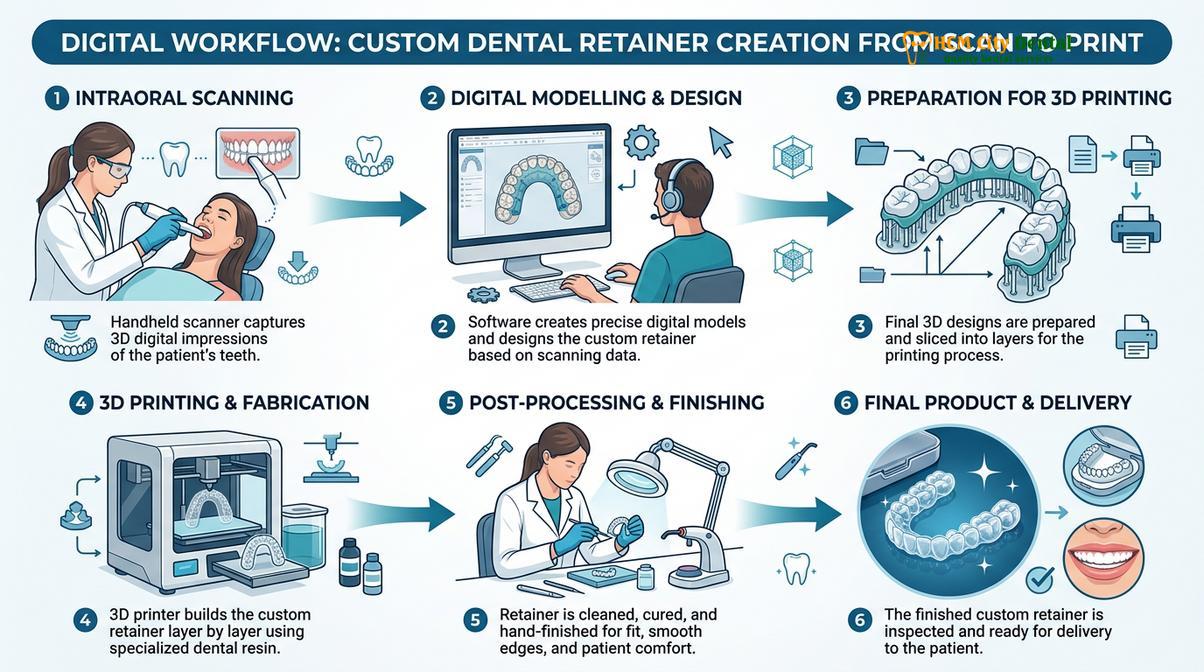
Once the digital model is acquired, it is processed using specialized CAD (Computer-Aided Design) software. For clear retainers, a physical resin model is 3D printed, over which a biocompatible thermoplastic sheet is thermoformed under high pressure. The appliance is then meticulously trimmed and polished to ensure it does not impinge on the marginal gingiva. For fixed retainers, the wire is custom-bent to passively adapt to the lingual anatomy of the teeth before being bonded in place using a moisture-tolerant orthodontic composite resin [4].
Clinical Case Example: An international patient visiting Ho Chi Minh City presented at HCMC Dental Clinic after losing their upper Essix retainer during transit. Utilizing digital intraoral scanning, the clinical team captured the arch dimensions within minutes. A new, precision-fit clear retainer was fabricated in the in-house laboratory and delivered within 24 hours, successfully preventing any anterior relapse and allowing the patient to continue their vacation without anxiety.
Upon delivery, the clinician verifies the fit, ensuring there is no excessive pressure on individual teeth and that the appliance is easily insertable and removable by the patient. Detailed instructions regarding wear time, cleaning protocols, and maintenance are provided to ensure the longevity of the appliance.
Dental Tourism Vietnam: Maximizing Your Orthodontic Investment
Combining a holiday with dental care allows international patients to efficiently replace lost or broken retainers while enjoying the cultural and travel benefits of Southeast Asia.
The concept of dental tourism Vietnam has gained immense traction, particularly among patients from Australia, New Zealand, and North America. The primary driver is the ability to access world-class dental care at a fraction of domestic prices, effectively offsetting the cost of flights and accommodation. For orthodontic patients, this presents a unique opportunity to manage their long-term retention needs economically.
Replacing a lost or damaged retainer is a time-sensitive issue. In many Western countries, booking an appointment with a specialist and waiting for a commercial lab to fabricate the appliance can take weeks. In contrast, clinics catering to international patients in Vietnam are structured for efficiency. With in-house laboratories and digital workflows, an English speaking dentist for retainer replacement can often deliver a new appliance within a single day. This rapid turnaround is crucial for preventing relapse.
Clinical Warning: If a retainer is lost or broken, time is of the essence. Teeth can begin to shift within 48 to 72 hours, particularly if the braces were recently removed. Delaying replacement increases the risk that a new retainer will not fit, potentially requiring a new phase of active orthodontic treatment to correct the relapse.
Beyond the clinical efficiency, patients benefit from the high standard of customer service and the modern, hygienic environments of top-tier Vietnamese clinics. By integrating a dental appointment into a broader travel itinerary, patients can maintain their orthodontic investment without the financial stress typically associated with domestic dental fees. For a deeper understanding of how to plan such a trip, patients can explore comprehensive guides on dental tourism and orthodontic retention.
When to See a Doctor (Important Clinical Considerations)
While retainers are designed to be durable, they are subjected to significant mechanical forces and environmental factors within the oral cavity. Patients must remain vigilant and seek professional clinical evaluation if they experience any of the following issues:
- Visible Damage or Distortion: If a clear retainer develops cracks, tears, or perforations, it loses its structural integrity and can no longer hold the teeth effectively. Similarly, if the wire of a Hawley retainer becomes bent or distorted, it may apply active, unwanted orthodontic forces to the teeth.
- Tightness or Pain: A retainer should feel snug but not painful. If the appliance becomes exceedingly tight or difficult to seat, it is a clinical indicator that the teeth have begun to shift. Forcing a tight retainer onto shifted teeth can cause trauma to the periodontal ligament and root resorption.
- Debonding of Fixed Retainers: If the composite resin holding a fixed lingual wire chips or detaches from a single tooth, that specific tooth is free to migrate. Dr. Cuong advises that patients should not attempt to remove the wire themselves; instead, they should seek immediate professional repair to prevent further detachment or soft tissue injury.
- Excessive Calculus Buildup: Fixed retainers require excellent oral hygiene. If a patient notices hard, calcified deposits (tartar) accumulating around the wire, or if the gums become red, swollen, and bleed easily (gingivitis), a professional scaling and root planing is required to prevent localized periodontitis [5].
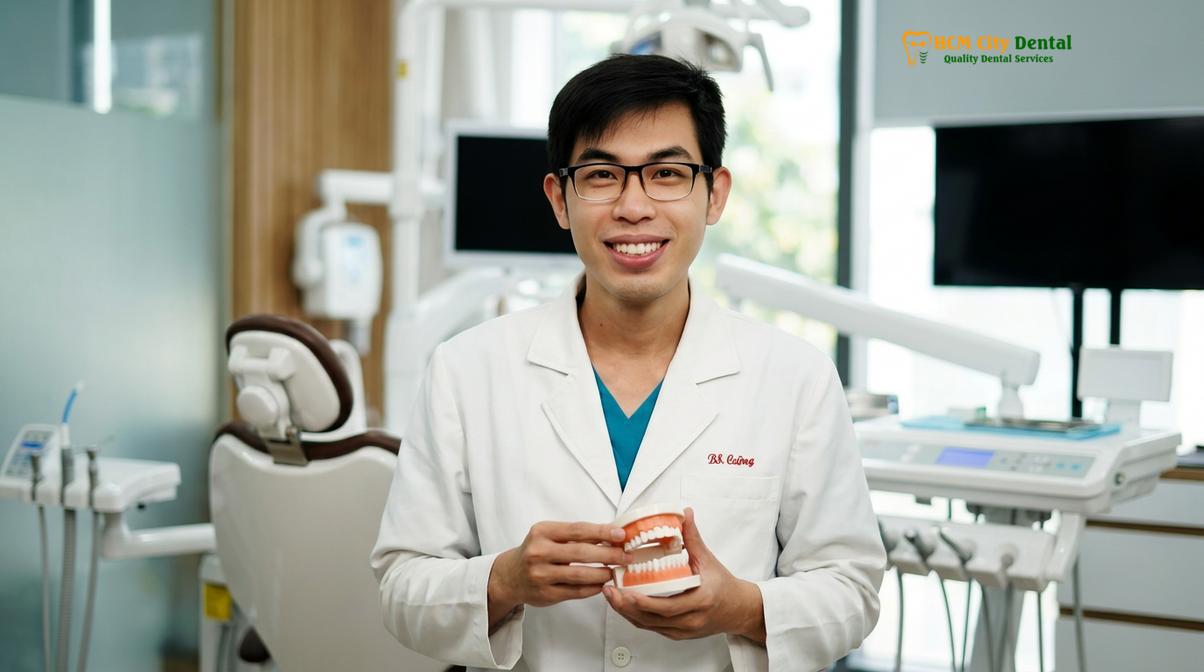
Regular dental check-ups, typically every six months, are essential for monitoring the condition of both the teeth and the retention appliances. A proactive approach to retainer maintenance ensures the longevity of the orthodontic result and protects the patient’s overall oral health.
Frequently Asked Questions
How much does a custom retainer cost in Vietnam compared to Australia?
A custom retainer in Vietnam typically costs between $50 and $150 USD per arch, whereas the same appliance in Australia often ranges from $300 to $600 AUD. This significant price difference is primarily due to lower operational overhead in Vietnam, even though clinics use identical imported dental materials and digital scanning technologies.
Can I claim a Medicare rebate for orthodontic retainers in Australia?
No, the Australian Medicare system generally does not provide a rebate for routine orthodontic retainers or post-braces care for adults. Patients must rely on private health insurance extras cover, which may offset a portion of the cost depending on their specific policy limits and waiting periods.
How long does it take to get a replacement retainer in Ho Chi Minh City?
In Ho Chi Minh City, a replacement clear retainer can usually be fabricated within 24 to 48 hours. Clinics utilizing in-house 3D printing and digital intraoral scanners can expedite the thermoforming process, making it highly convenient for international patients on a tight travel schedule.
Are fixed bonded retainers better than removable clear aligners?
Neither is universally better; the choice depends on clinical needs and patient compliance. Fixed retainers provide continuous retention without relying on patient memory, but require meticulous oral hygiene, whereas removable clear retainers are easier to clean but must be worn diligently as prescribed to prevent relapse.
What should I do if my retainer breaks while traveling?
If your retainer breaks, you should seek a replacement from a local dental professional as soon as possible to prevent your teeth from shifting. Bring the broken pieces with you, as the dentist may be able to temporarily repair it or immediately scan your teeth for a new custom appliance.
References
- Journal of Prosthodontic Research. Orthodontic retainer wear and stability. (2021).
- American Journal of Orthodontics. Relapse rates and retention protocols. (2019).
- European Journal of Orthodontics. Essix vs Hawley retainers clinical trial. (2020).
- Journal of Clinical Orthodontics. Plaque accumulation on fixed retainers. (2022).
- Australian Dental Journal. Patient compliance with dental retainers. (2018).