The average Essix retainer replacement cost ranges from $150 to $500 per arch, depending on the dental clinic, geographic location, and fabrication methods. Replacing these clear thermoplastic appliances promptly is essential to prevent orthodontic relapse and maintain your newly aligned smile.
Clinical Summary:
Essix retainers are transparent, removable orthodontic appliances crucial for maintaining tooth alignment after active treatment. The cost of replacing these retainers varies widely based on clinical overhead, the quality of the thermoplastic material, and the technology used for impressions (digital vs. traditional). While direct-to-consumer options exist, professional fabrication by a qualified dentist ensures accurate fit and prevents unwanted occlusal shifting. Regular clinical evaluation is recommended to monitor appliance wear, structural integrity, and overall retention success.
Key Takeaways:
- Replacement costs typically range from $150 to $500 per arch in a clinical setting.
- Professional fabrication utilizes advanced digital scanning for superior accuracy.
- Clear retainers generally require replacement every one to three years due to material fatigue.
- Delaying replacement of a lost or damaged retainer significantly increases the risk of orthodontic relapse.
- Proper daily maintenance can extend the lifespan of thermoplastic appliances.
Understanding the Biomechanics of Essix Retainers
Essix retainers are custom-molded, clear thermoplastic appliances designed to hold teeth in their corrected positions after orthodontic treatment. They require periodic replacement due to natural material fatigue and daily occlusal forces.
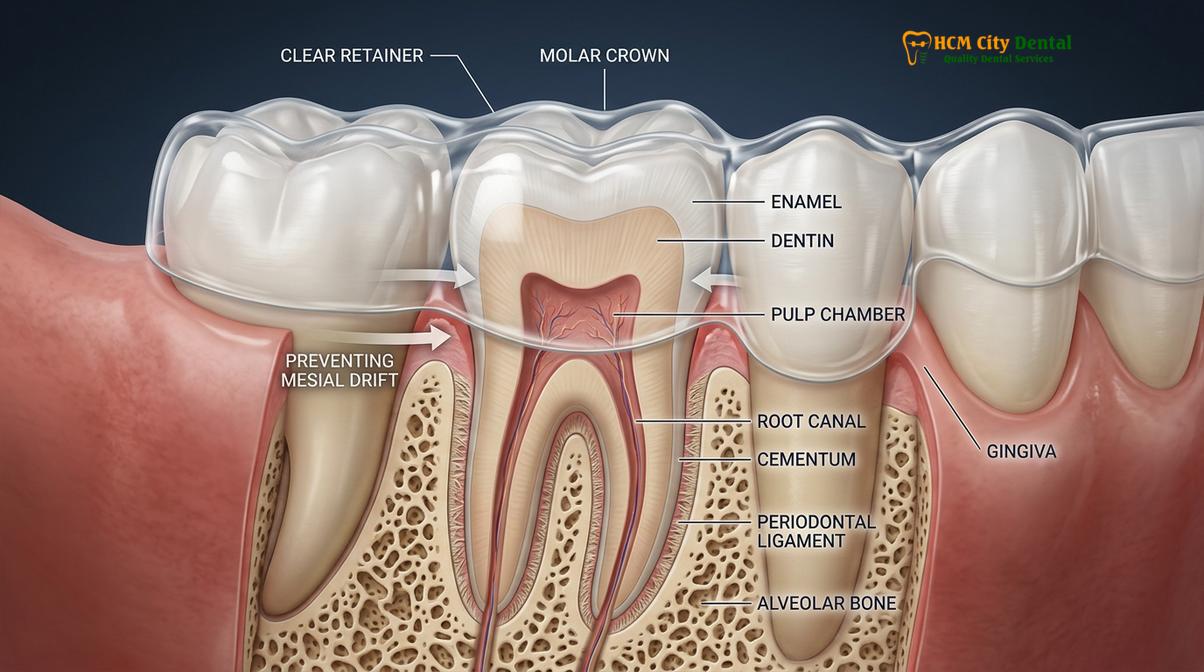
To fully appreciate the value and necessity of a replacement retainer, one must first understand the complex biological environment of the human mouth following Orthodontics. When braces or clear aligners are removed, the teeth are in their optimal aesthetic and functional positions. However, the supporting structures—specifically the alveolar bone and the periodontal ligament (PDL)—require significant time to reorganize and stabilize around the new tooth positions. The transseptal fibers, which connect adjacent teeth, possess a “memory” and exert a continuous elastic pull that attempts to drag the teeth back to their original, misaligned state.
This physiological phenomenon is known as orthodontic relapse. To counteract this, clinicians prescribe retainers. The Essix retainer, introduced in the 1990s, revolutionized retention by offering a highly aesthetic, transparent alternative to traditional wire-and-acrylic appliances. Made from advanced copolyester or polyurethane materials (such as PETG), these retainers encapsulate the entire clinical crown of the teeth, providing rigid stabilization across the entire arch[1].
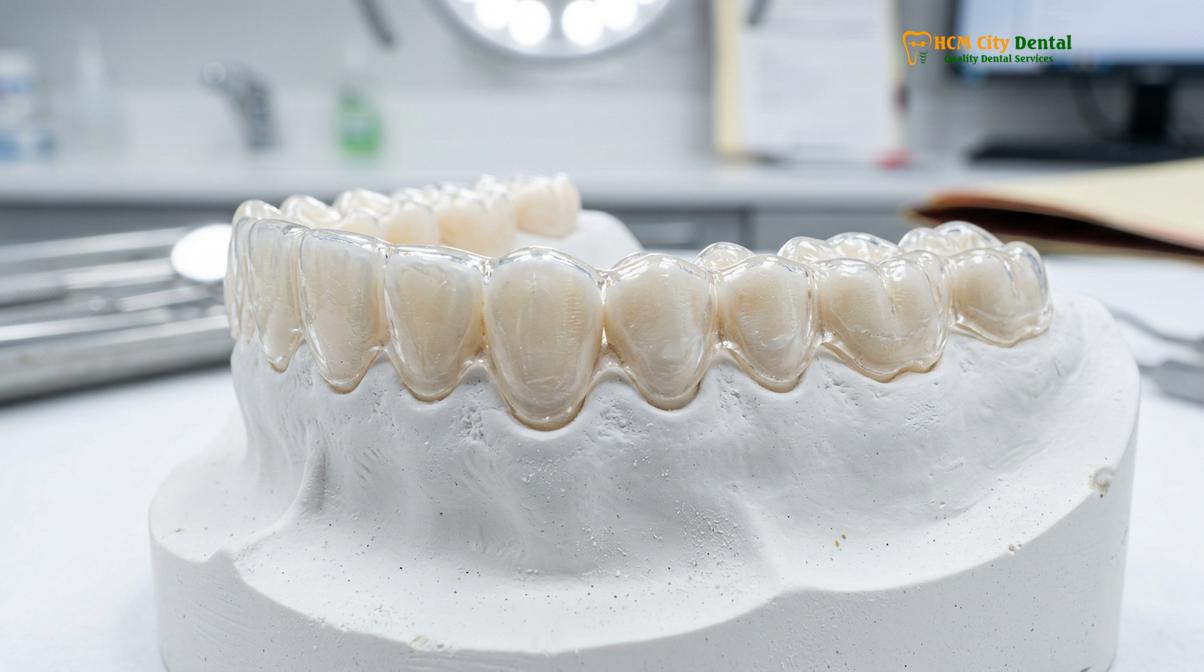
Despite their effectiveness, the materials used in clear retainers are inherently susceptible to degradation. The oral cavity is a harsh environment characterized by constant temperature fluctuations, acidic dietary challenges, and immense occlusal (biting) forces. Over time, the thermoplastic material absorbs trace amounts of water, leading to a loss of rigidity. Furthermore, patients who suffer from bruxism (teeth grinding) subject their retainers to extreme mechanical stress, accelerating the formation of micro-cracks and occlusal wear.
It is crucial for patients to understand that not all clear retainers are created equal. The market is flooded with cheap thermoplastic retainers that utilize inferior, thin plastics. While these may seem cost-effective initially, they often lack the structural integrity required to hold teeth firmly in place, leading to micro-movements and eventual relapse. High-quality clinical retainers are fabricated from specialized, medical-grade polymers designed to balance flexibility for insertion with the rigidity necessary for absolute retention.
Comprehensive Breakdown of the Essix Retainer Replacement Cost
The total expense for replacing clear retainers depends on clinical fees, laboratory fabrication methods, and whether you are replacing a single arch or a complete set.
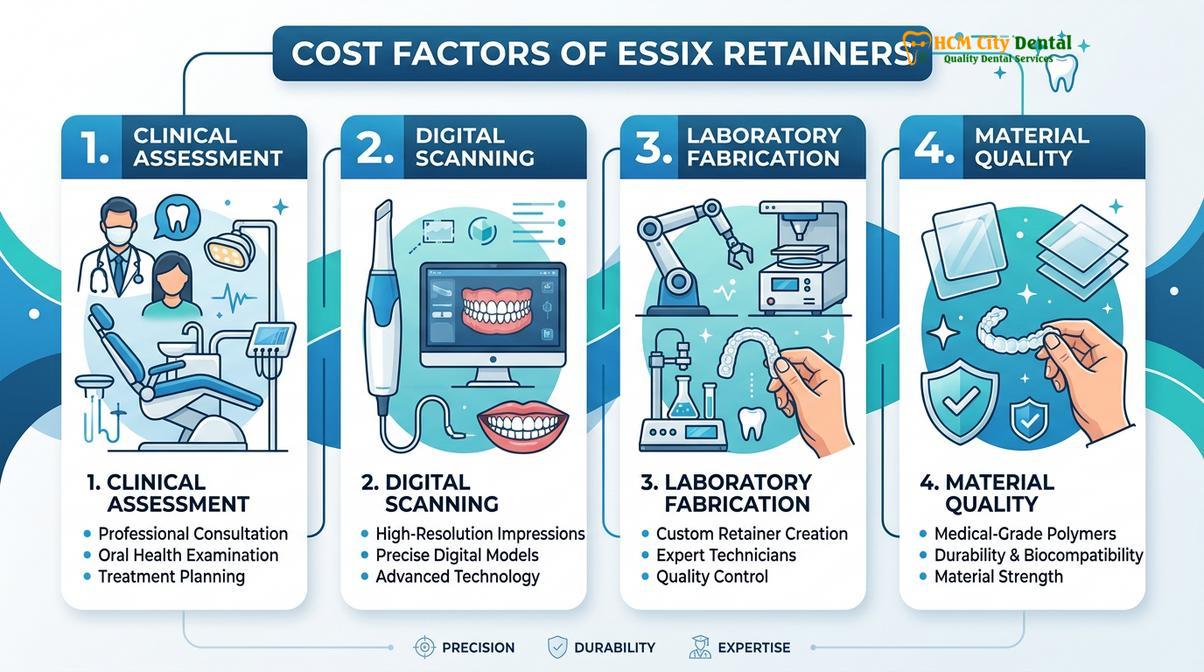
When a patient loses or damages their retainer, the immediate concern is often the financial implication of replacement. The replacement clear retainer price is not a single, arbitrary number; rather, it is the culmination of several distinct clinical and laboratory factors. Understanding these components helps patients make informed decisions regarding their ongoing orthodontic care.
First and foremost is the clinical chair time. When you visit a dental professional for a replacement, you are paying for the expertise of the clinician to assess your current dental alignment. The dentist must verify that no unwanted shifting has occurred since the last appliance was worn. If a patient has gone several weeks without a retainer, their teeth may have moved slightly, meaning the old digital file or physical mold is no longer accurate. In such cases, forcing a new retainer made from an old mold onto shifted teeth can cause severe pain and potential damage to the periodontal ligament.
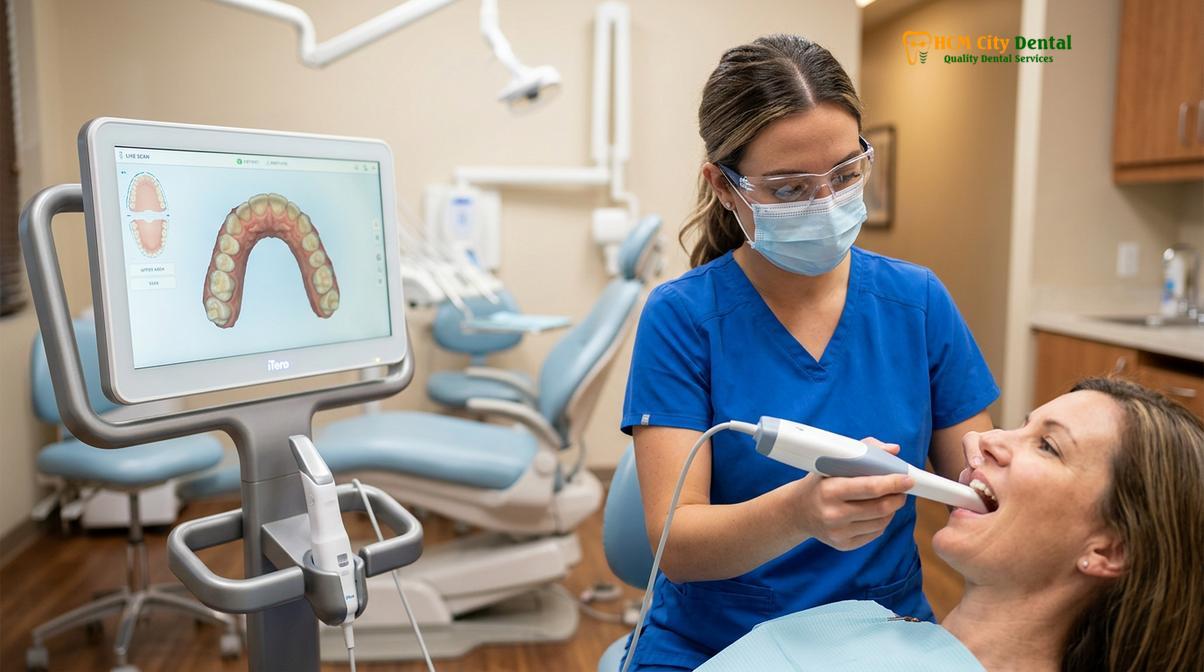
The orthodontist retainer cost also encompasses the technology utilized during the appointment. Modern dental clinics employ highly advanced intraoral digital scanners. These devices capture thousands of images per second to create a flawless 3D model of the dental arches. The maintenance, software licensing, and operational costs of these scanners are factored into the overall price of the appliance. Following the scan, the data is either sent to an external dental laboratory or processed in-house using specialized 3D printers and thermoforming machines.
Another significant variable is whether the patient requires a single arch (upper or lower) or a complete set. Naturally, the cost of Essix per pair will be higher than a single unit, though many clinics offer a slight discount when both arches are fabricated simultaneously. Below is a comparative breakdown of estimated costs associated with different replacement avenues.
| Replacement Method | Estimated Cost (Single Arch) | Estimated Cost (Pair) | Clinical Oversight | Risk of Inaccuracy |
|---|---|---|---|---|
| In-Office (General Dentist) | $150 – $300 | $300 – $500 | High | Low |
| In-Office (Orthodontist) | $200 – $400 | $400 – $700 | Very High | Very Low |
| Direct-to-Consumer (Online) | $90 – $150 | $150 – $250 | None | High (Patient Impressions) |
While direct-to-consumer online companies offer lower prices by mailing putty impression kits directly to the patient, this method carries inherent clinical risks. Taking an accurate dental impression is a highly technique-sensitive procedure. If the patient distorts the putty, captures insufficient gingival margins, or pulls the tray out prematurely, the resulting retainer will fit poorly. A poorly fitting retainer not only fails to prevent relapse but can actively introduce traumatic forces to the teeth[2].
The Clinical Workflow for Fabricating a Replacement Retainer
Replacing a retainer involves a comprehensive clinical assessment, precise digital or physical impressions, laboratory fabrication, and a final fitting to ensure optimal retention without excessive pressure.
The process of obtaining a replacement Essix retainer is a meticulously orchestrated clinical workflow designed to ensure absolute precision. When a patient presents to a facility like HCMC Dental Clinic in Ho Chi Minh City with a lost or broken retainer, the clinical team initiates a standardized protocol to secure the patient’s smile.
The appointment begins with a thorough examination of the oral cavity. The dentist evaluates the current occlusion (bite) and checks for any signs of relapse, such as minor crowding of the lower incisors or spacing between the upper anteriors. If the patient has been without their retainer for an extended period, the clinician must determine if a new retainer can safely recapture the original alignment or if a brief phase of active Invisalign in Vietnam or traditional braces is required to correct the relapse.
Once the patient is cleared for a new retainer, the impression phase begins. Historically, this involved filling a metal or plastic tray with a viscous alginate or polyvinyl siloxane (PVS) material and holding it in the patient’s mouth until it set. Today, the standard of care has shifted dramatically toward digital dentistry.
“The advent of digital intraoral scanning has fundamentally transformed orthodontic retention. We can now capture the exact micro-anatomy of the teeth without the distortion inherent in traditional impression materials, ensuring the replacement retainer fits with absolute, passive precision.”
— Dr. Nguyen Van Cuong
Using a wand-like intraoral scanner, the clinician captures a high-resolution 3D map of the patient’s teeth and gingival tissues. This digital file is then processed by specialized software. If the clinic utilizes an in-house laboratory, the 3D file is sent directly to a high-resolution 3D printer, which fabricates a solid resin model of the patient’s arches.
The actual Essix retainer is created using a thermoforming process. A sheet of medical-grade thermoplastic is heated until it reaches a pliable, semi-molten state. It is then vacuum-formed or pressure-formed over the 3D-printed resin model, adapting perfectly to every contour of the teeth. Once cooled, the appliance is carefully removed from the model and trimmed. The trimming process is critical; the clinician must ensure the edges are smooth and follow the scalloped contour of the gingival margin to prevent soft tissue irritation[3].
The final step is the delivery and fitting. The dentist places the new retainer in the patient’s mouth, checking for adequate retention, ease of insertion and removal, and ensuring there are no premature occlusal contacts that could cause discomfort or muscle fatigue.
Material Durability and Signs You Need a Replacement
Most clear retainers last between one to three years before showing signs of structural fatigue, such as micro-cracks, loss of rigidity, or significant discoloration that compromises their clinical efficacy.
Understanding Hawley vs Essix retainer durability is essential for managing long-term orthodontic expectations. While Hawley retainers (made of acrylic and metal wire) can often last a decade or more, clear Essix retainers have a finite lifespan. The exact longevity of the appliance depends heavily on patient compliance, maintenance routines, and individual physiological factors.
The most common reason for replacement is mechanical fatigue. Every time a patient inserts or removes their retainer, the thermoplastic material undergoes microscopic flexing. Over hundreds of cycles, this flexing leads to the development of micro-cracks, typically originating near the canine eminences or the interproximal spaces where the material is stretched the most. Once a crack propagates through the material, the retainer loses its structural integrity and can no longer exert the rigid force required to prevent tooth movement.
Another significant factor is thermal distortion. Thermoplastic materials are, by definition, sensitive to heat. Patients who attempt to clean their retainers in boiling water or leave them in a hot car will invariably warp the appliance. A warped retainer is a severe clinical hazard.
Clinical Warning: Never wear a retainer that has been exposed to high heat or shows visible signs of warping. A distorted appliance will act like an active orthodontic aligner, applying uncontrolled and unpredictable forces to your teeth, potentially causing severe misalignment and damage to the dental roots.
Discoloration and plaque accumulation also necessitate replacement. Despite rigorous cleaning, the porous nature of the plastic can eventually harbor bacterial biofilms and absorb pigments from coffee, tea, or turmeric. When a retainer becomes cloudy or develops a persistent odor, it is no longer hygienic to wear, as it can contribute to dental caries and gingival inflammation.
Clinical Case Review: A 24-year-old patient presented to HCMC Dental Clinic in Ho Chi Minh City reporting that her clear retainer felt “loose” and her lower front teeth were beginning to overlap. Upon examination, Dr. Nguyen Van Cuong noted that the patient had been wearing the same Essix retainer for over four years. The material had lost its rigidity and was no longer providing adequate retention. Because the patient sought care promptly, new digital scans were taken, and a fresh, rigid retainer was fabricated, successfully halting further relapse without the need for retreatment.
To maximize the lifespan of your retainer, clinicians recommend a strict orthodontic care guide protocol. This includes brushing the appliance daily with a soft-bristled brush and non-abrasive liquid soap (avoiding harsh toothpastes that scratch the plastic), storing it in a hard protective case when not in use, and utilizing specialized effervescent retainer cleaning tablets weekly to dissolve microscopic plaque deposits[4].
“Patient compliance is the cornerstone of orthodontic retention. A beautifully finished orthodontic case can unravel in a matter of months if the patient neglects their retention protocol or fails to replace a compromised appliance.”
— Dr. Nguyen Van Cuong
When to See a Doctor for Orthodontic Retention Issues
Orthodontic retention is a lifelong commitment, and patients must remain vigilant about the condition of their appliances and the alignment of their teeth. Knowing when to seek professional clinical intervention can mean the difference between a simple retainer replacement and the need for comprehensive orthodontic retreatment.
You should schedule an immediate appointment with your dental provider if you experience any of the following clinical scenarios:
- Loss or Severe Damage: If you have lost my retainer or it has snapped in half, time is of the essence. Teeth can begin to shift within a matter of days, particularly in the first year following the removal of braces. Prompt replacement is critical.
- Visible Tooth Movement: If you notice spaces opening between your teeth, or if your lower incisors begin to crowd and overlap, your current retainer is failing. This indicates that the appliance has lost its rigidity or that you are not wearing it for the prescribed number of hours per day.
- Pain or Discomfort: A properly fitting retainer should feel snug but never painful. If inserting your retainer causes sharp pain, throbbing, or significant pressure that does not subside after a few minutes, it is likely that your teeth have shifted, and the retainer no longer fits. Forcing it can cause trauma to the periodontal ligament.
- Gingival Irritation: If the edges of the retainer are digging into your gums, causing redness, bleeding, or ulcerations, the appliance needs to be professionally adjusted or replaced. Chronic irritation of the gingival tissues can lead to localized recession.
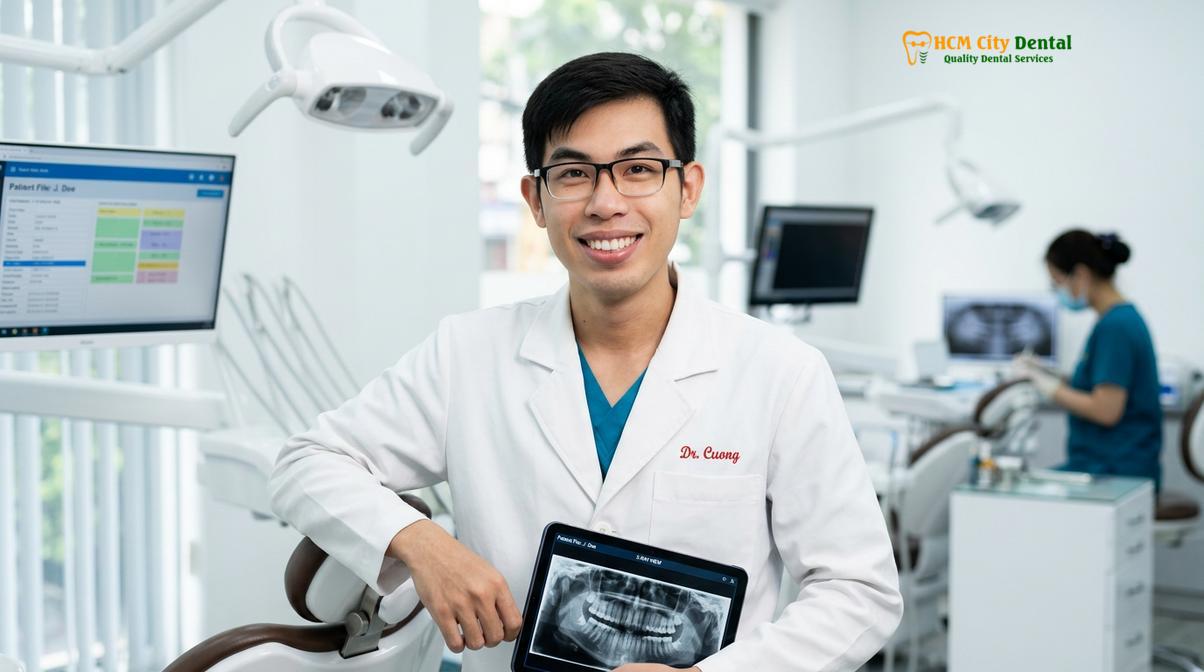
During a consultation for retention issues, your clinician will perform a comprehensive evaluation of your bite, the health of your supporting bone and gums, and the condition of your appliance. Based on this diagnostic assessment, they will recommend the most appropriate and conservative course of action to protect your smile[5].
Frequently Asked Questions
How much does it cost to replace an Essix retainer?
The cost to replace an Essix retainer typically ranges from $150 to $500 per arch. This price variation depends on the dental clinic’s location, the specific thermoplastic material used, and whether digital scanning technology is required for fabrication. Clinics utilizing advanced in-house 3D printing may have different fee structures compared to those outsourcing to external dental laboratories.
Can I use my old dental molds to make a new retainer?
Yes, if your old dental molds are undamaged and your teeth have not shifted, they can be used. However, many modern clinics prefer taking new digital scans to ensure the replacement retainer fits your current dental alignment perfectly. Relying on old physical molds carries the risk of fabricating an appliance that no longer matches your exact occlusal anatomy.
Why are clear retainers from an orthodontist more expensive than online options?
Orthodontist fees include professional clinical assessment, precise intraoral scanning, and custom fitting adjustments. Direct-to-consumer online options lack this medical oversight, which increases the risk of poorly fitting appliances that could cause unwanted tooth movement. The professional fee ensures that the appliance is biologically safe and mechanically effective for your specific dental anatomy.
How long should an Essix retainer last before needing replacement?
With proper care, an Essix retainer generally lasts between one to three years. Patients who grind their teeth (bruxism) or fail to clean the appliance properly may need to replace their retainers more frequently due to premature wear. Regular clinical inspections can help determine when the material has fatigued beyond its useful clinical life.
Does dental insurance cover the cost of a replacement retainer?
Most standard dental insurance plans do not cover the cost of replacement retainers, viewing them as a maintenance expense. However, it is always advisable to check your specific orthodontic coverage policy, as some premium plans offer partial reimbursement. Clinic coordinators can often assist in verifying your benefits and exploring flexible payment options.
References
- American Journal of Orthodontics and Dentofacial Orthopedics. Retention protocols and material efficacy in clear retainers. (2021).
- Journal of Clinical Orthodontics. Cost analysis and patient compliance with removable thermoplastic retainers. (2020).
- European Journal of Orthodontics. Biomechanical degradation of PETG retainer materials over time. (2019).
- Angle Orthodontist. Digital vs. traditional impression techniques for Essix retainer fabrication. (2022).
- Journal of Prosthodontic Research. The effects of bruxism on the longevity of clear orthodontic appliances. (2018).