Invisalign for crowding and gaps utilizes advanced clear aligner biomechanics to resolve complex spatial discrepancies within the dental arch. By applying controlled, continuous forces through proprietary materials and precision attachments, orthodontists can predictably expand arches, close diastemas, and align overlapping teeth without traditional metal brackets.
Clinical Summary:
Invisalign effectively treats both dental crowding and spacing issues by leveraging digital ClinCheck planning and proprietary SmartTrack aligner materials. For crowding, the system creates necessary arch space via controlled expansion, distalization, or interproximal reduction (IPR). For gaps, it utilizes power ridges and optimized attachments to ensure the bodily movement of the tooth root, preventing undesirable tipping. Long-term success and stability depend heavily on precise initial diagnosis, strict patient compliance with wear schedules, and expert biomechanical control by the attending clinician.
Key Takeaways:
- Invisalign uses proprietary SmartTrack material to deliver gentle, constant force for highly predictable tooth movement.
- Severe dental crowding is frequently resolved through a strategic combination of arch expansion and conservative IPR.
- Closing a diastema requires controlling root angulation to prevent the teeth from simply tipping toward each other.
- Treatment success relies on wearing the clear aligners for a minimum of 20 to 22 hours daily.
- Complex spatial corrections may require optimized composite attachments to provide the necessary grip for rotational and extrusive movements.
The Limits of Alignment: Invisalign Capabilities
Invisalign can predictably treat mild to moderate crowding and spacing, but severe skeletal discrepancies or massive gaps may require hybrid orthodontic approaches.
The evolution of clear aligner therapy has dramatically expanded the scope of malocclusions that can be treated without traditional fixed appliances. Historically, clear aligners were primarily utilized for minor aesthetic relapse or very mild spacing. Today, advanced digital planning software and highly engineered thermoplastic materials allow clinicians to tackle complex spatial discrepancies. However, understanding the biomechanical “envelope of discrepancy” is crucial for determining whether a patient is an ideal candidate for aligner therapy.
Orthodontic tooth movement relies on the application of sustained, light forces that trigger a biological response within the periodontal ligament (PDL) [1]. On the pressure side of the tooth root, osteoclasts break down alveolar bone, while on the tension side, osteoblasts build new bone. Clear aligners achieve this by encapsulating the clinical crown and pushing the tooth into the desired position. Because aligners push rather than pull (as a wire and bracket system does), certain movements are inherently more predictable than others.
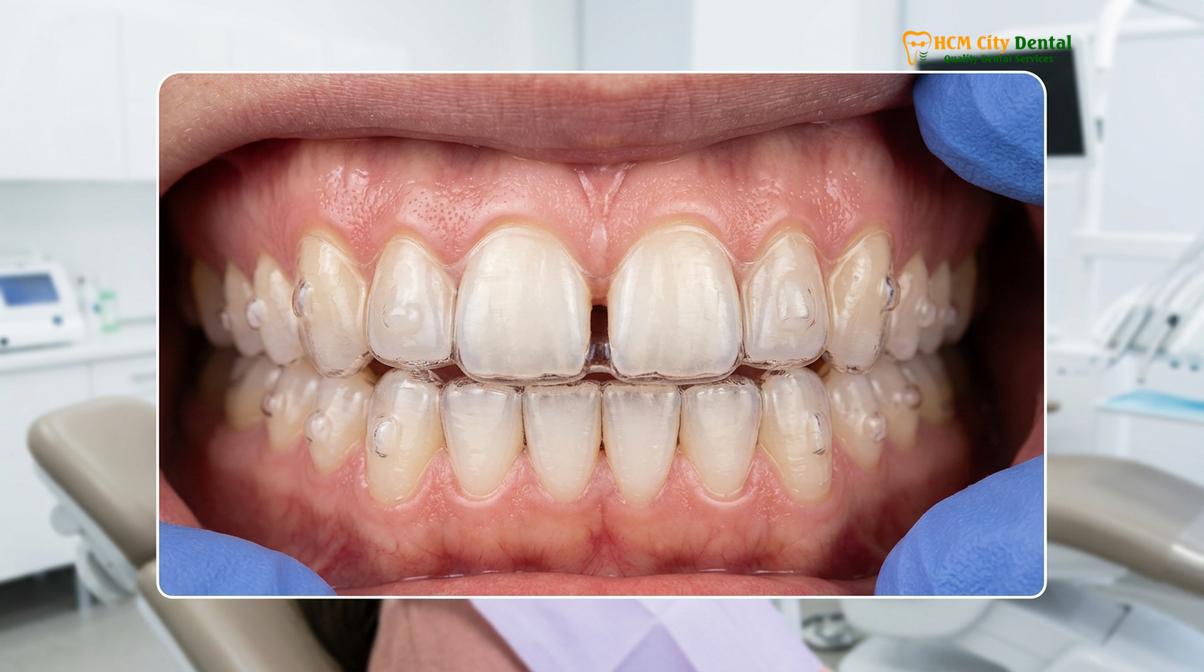
According to Dr. Nguyen Van Cuong, a leading expert in Orthodontics, the clear aligner success rate is highest when treating mild to moderate crowding (1mm to 5mm) and generalized spacing. When evaluating a patient’s candidacy, the clinician must assess not only the position of the crowns but the volume of the underlying bone and the health of the gingival tissues. Attempting to expand an arch beyond the biological limits of the alveolar housing can lead to gingival recession, bone loss, or fenestrations.
“The predictability of clear aligner therapy is directly proportional to the clinician’s understanding of biomechanics. Software can simulate any movement, but the biological reality of bone remodeling dictates what is actually achievable in the patient’s mouth.”
For cases involving severe skeletal discrepancies—such as a massive overjet, severe deep bites, or gaps exceeding 6mm—aligners alone may struggle to achieve ideal root paralleling. In these instances, a hybrid approach utilizing partial fixed braces, temporary anchorage devices (TADs), or orthognathic surgery may be required to achieve optimal functional and aesthetic outcomes.
Resolving Severe Crowding: SmartTrack Force and Attachments
To correct severe crowding, Invisalign employs arch expansion, sequential distalization, and optimized attachments to guide complex derotations and root uprighting.
Dental crowding occurs when there is a discrepancy between the size of the teeth and the size of the jaw, leaving insufficient room for the teeth to align properly. Left untreated, severe dental crowding can impede proper oral hygiene, leading to localized periodontal disease, uneven enamel wear, and occlusal trauma. Resolving this lack of space is the primary objective of the initial treatment phases.
Invisalign addresses crowding through three primary mechanisms of space creation: arch expansion, distalization, and interproximal reduction. Arch expansion involves widening the dental arch, typically in the premolar and molar regions, to increase the overall perimeter. Distalization involves moving the posterior teeth backward, one by one, to create space for the anterior teeth to unravel. Both movements require a material capable of delivering consistent, low-level forces over an extended period [2].
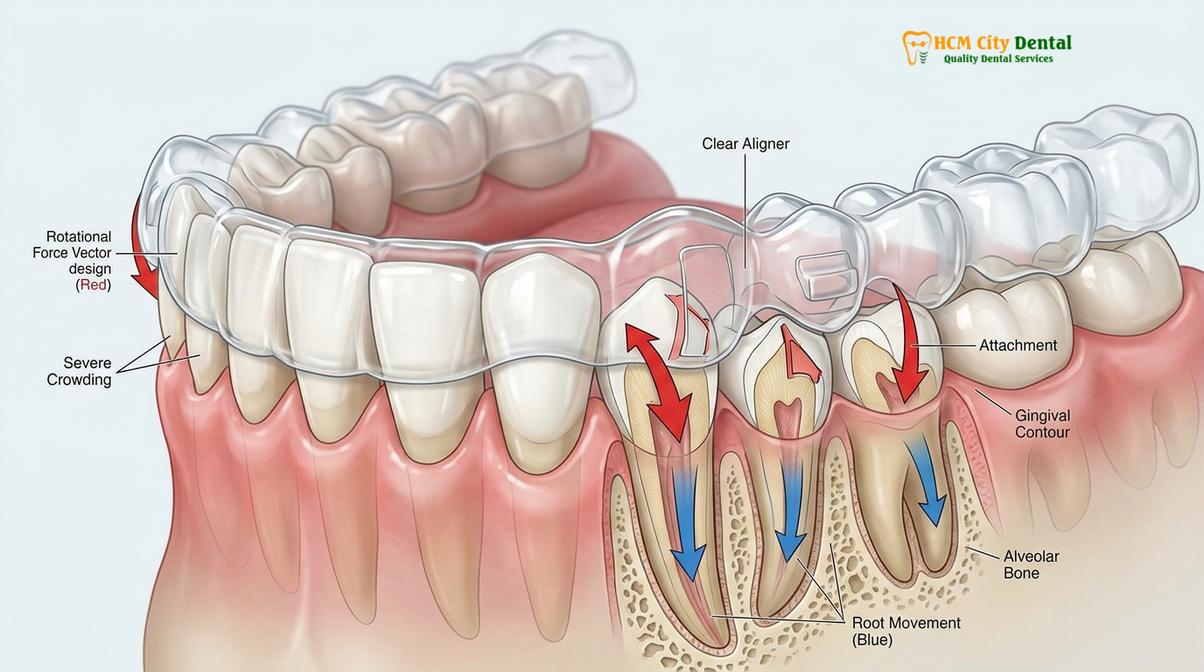
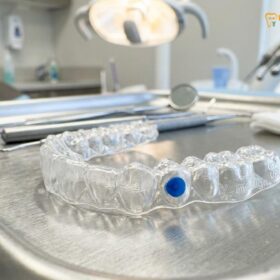
The proprietary SmartTrack material used in modern Invisalign aligners is a multi-layer polyurethane elastomer designed specifically to provide a more constant force delivery compared to older, single-layer plastics. This elasticity allows the aligner to stretch over crowded, malpositioned teeth while maintaining a gentle, active grip that slowly guides them into alignment.
However, plastic alone cannot execute complex movements like severe rotations or extrusions. Teeth are naturally smooth and bulbous, meaning an aligner can easily slip off a tooth that requires significant twisting. To solve this, orthodontists bond small, tooth-colored composite resin bumps—known as attachments—onto specific teeth. These attachments act as handles, providing a flat surface for the aligner to push against, thereby directing the force vectors precisely where they are needed.
| Movement Type | Clinical Definition | Invisalign Predictability | Attachment Requirement |
|---|---|---|---|
| Tipping | Tilting the crown of the tooth while the root remains relatively stationary. | Highly Predictable | Rarely required for simple tipping. |
| Rotation | Twisting a tooth around its long axis (common in crowded incisors). | Moderately Predictable | Optimized rotation attachments are essential. |
| Extrusion | Pulling a tooth vertically out of the bone. | Low to Moderate | Requires horizontal beveled attachments for grip. |
| Translation | Bodily movement of the entire tooth (crown and root moving together). | Moderately Predictable | Requires complex attachment design and slow staging. |
When treating severe crowding, the sequence of movements is meticulously planned. The software stages the treatment so that space is created before crowded teeth are pushed into alignment. Attempting to unravel crowded teeth without first securing adequate space can result in unwanted flaring of the front teeth, pushing them out of the protective envelope of the jawbone.
Closing Large Gaps (Diastema): Managing Root Angulation
Closing a diastema effectively requires bodily movement of the entire tooth, utilizing power ridges and attachments to ensure the root moves alongside the crown.
While crowding is characterized by a lack of space, spacing issues—such as a midline diastema—present the opposite challenge. Gaps can occur due to microdontia (abnormally small teeth), missing teeth, tongue thrusting habits, or a prominent labial frenum that inserts deeply between the central incisors. While closing a gap might seem simpler than unraveling a crowded arch, it presents unique biomechanical challenges that require precise clinical management.
The most significant risk when using diastema gap aligners is the tendency for the teeth to tip rather than move bodily. If an aligner simply pushes the crowns of two spaced teeth together, the crowns will meet, but the roots will remain divergent. This creates a V-shaped defect in the bone and a highly unstable result that is prone to rapid relapse once treatment concludes [3].
To achieve true bodily movement (translation), the aligner must apply a counter-moment to the root. Invisalign achieves this through the use of optimized attachments and “power ridges.” Power ridges are small indentations built directly into the aligner plastic near the gingival margin. These ridges apply pressure near the neck of the tooth, creating a force vector that drives the root in the same direction as the crown, ensuring the tooth remains upright as it moves through the bone.
“Effective diastema closure is not merely about eliminating the visible space; it is about paralleling the roots within the alveolar bone to ensure long-term stability and optimal periodontal health.”
In cases where a gap is caused by a thick, fibrous frenum, orthodontic closure alone may not be sufficient. The frenum tissue can act like a rubber band, constantly pulling the teeth apart. In such instances, a minor surgical procedure called a frenectomy may be recommended either during or immediately after the orthodontic closure to remove the fibrous tissue and prevent relapse. Following the successful closure of gaps, robust retention is absolutely critical. Patients often require a combination of removable Vivera retainers and a bonded lingual wire to maintain the new positions, and understanding retainer costs compared to Korea or other regions can help patients plan for this essential final phase.
Interproximal Reduction (IPR): Creating Space Painlessly
IPR is a conservative technique used to resolve crowding by polishing microscopic amounts of enamel, creating necessary space without extracting teeth.
When arch expansion and distalization are insufficient to resolve crowding, or when expanding the arch would compromise the patient’s facial profile, clinicians turn to Interproximal Reduction (IPR). IPR is a highly controlled, conservative procedure that involves polishing away microscopic amounts of the outer enamel layer between adjacent teeth. This technique not only creates vital space for alignment but also helps flatten the contact points between teeth, which can significantly enhance the long-term stability of the orthodontic result.
The anatomy of a tooth consists of an inner pulp chamber containing nerves, a middle layer of dentin, and an outer protective layer of enamel. Enamel is the hardest substance in the human body and contains no nerve endings. Because IPR only removes a fraction of a millimeter of this outer enamel—typically between 0.2mm and 0.5mm per contact point—the procedure is entirely painless and does not require local anesthesia [4].
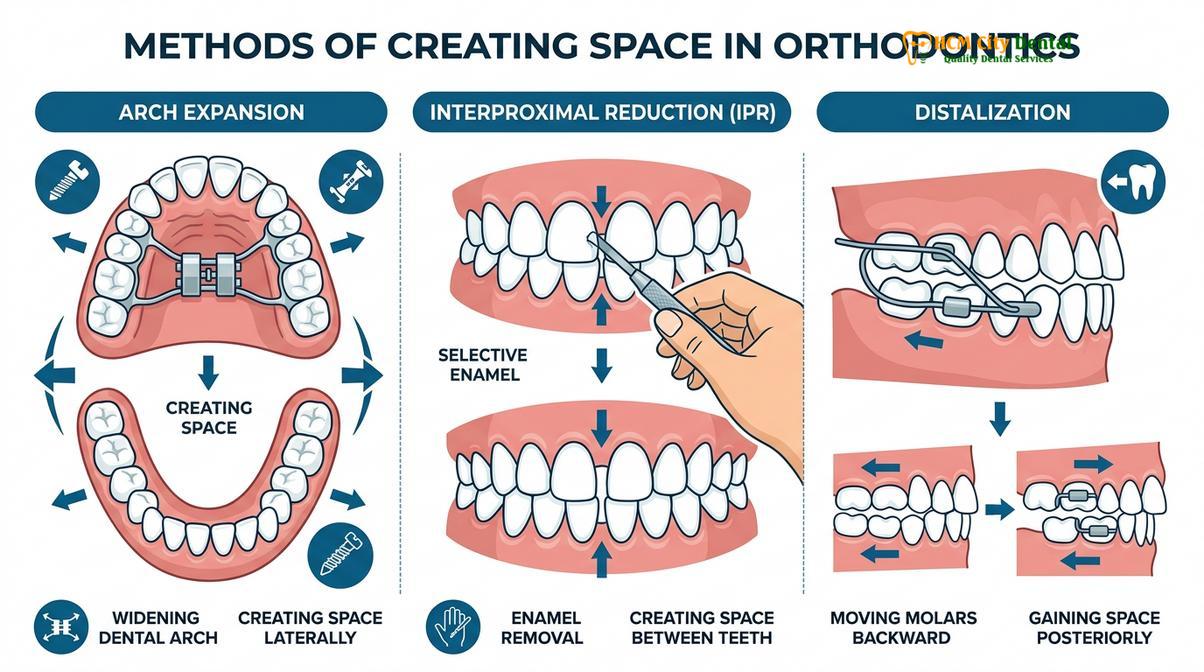
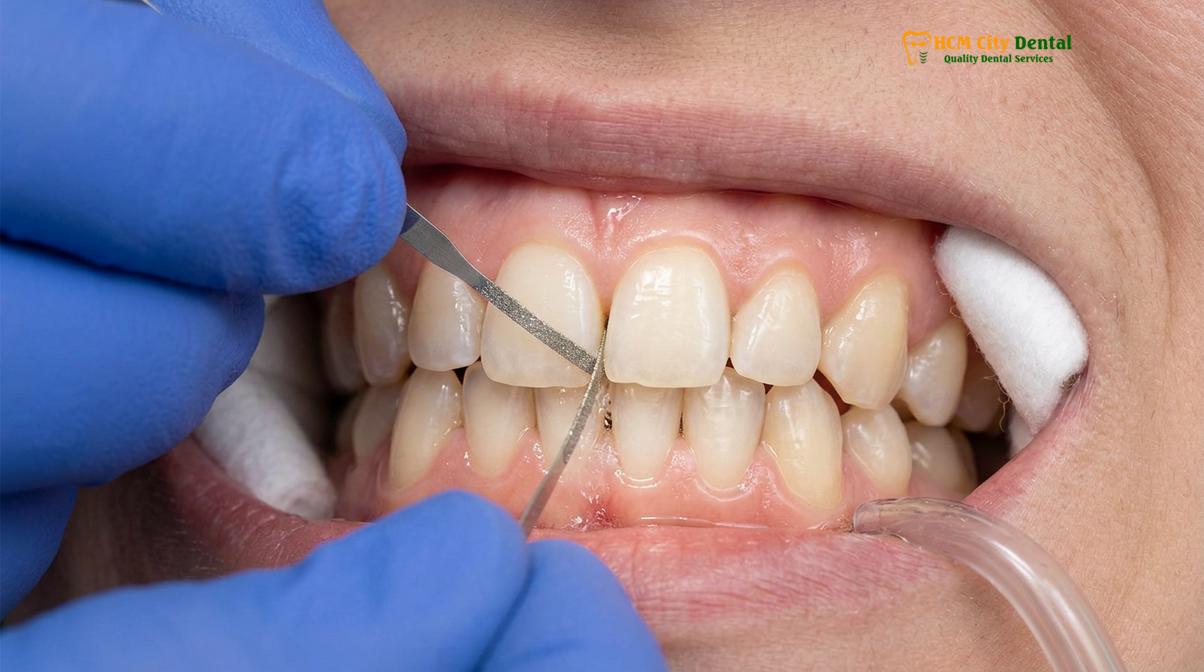
Clinicians perform IPR using specialized flexible diamond strips, oscillating discs, or fine dental burs. The amount of enamel removed is meticulously calculated during the digital ClinCheck planning phase. By removing 0.5mm of enamel across several anterior teeth, an orthodontist can generate several millimeters of space, often enough to resolve moderate crowding without the need for premolar extractions.
Clinical Precaution: While IPR is safe, it is contraindicated in patients with poor oral hygiene, active rampant caries, or naturally thin enamel. A thorough radiographic and clinical evaluation must be performed prior to prescribing IPR to ensure the remaining enamel thickness is sufficient to protect the tooth.
Beyond space creation, IPR is the primary solution for preventing “black triangles.” When severely crowded, overlapping teeth are straightened, the gum tissue (papilla) between them may not fully fill the newly created embrasure space, leaving a dark, triangular gap near the gumline. By performing IPR to broaden the contact area between the teeth, the clinician can bring the teeth closer together, effectively squeezing the papilla upward and eliminating the aesthetic defect.
Before and After Studies: Crowding and Gaps at HCMC Dental
Clinical outcomes at HCMC Dental Clinic demonstrate that precise digital planning and patient compliance yield highly predictable bite alignment results for both spacing and crowding.
The efficacy of clear aligner therapy is best illustrated through documented clinical outcomes. At HCMC Dental Clinic, the integration of 3D intraoral scanning, cone-beam computed tomography (CBCT), and advanced biomechanical planning has elevated the standard of Saigon aesthetic dentistry. By analyzing the root positions in three dimensions, clinicians can design aligner staging that respects the biological limits of the patient’s anatomy.
Consider the complexity of treating a patient presenting with both issues simultaneously: severe anterior crowding in the mandibular arch and a prominent diastema in the maxillary arch. Such cases require a dual-arch strategy where the biomechanical goals for the upper and lower jaws are entirely different, yet must culminate in a perfectly coordinated bite.
Clinical Case Review: Mixed Spatial Discrepancy
A 28-year-old patient visited HCMC Dental Clinic in Ho Chi Minh City presenting with a 3mm maxillary midline diastema and 5mm of mandibular anterior crowding. Dr. Nguyen Van Cuong utilized digital ClinCheck software to design a treatment plan that avoided extractions. The upper arch utilized power ridges to bodily translate the central incisors, closing the gap over 14 weeks. Simultaneously, the lower arch underwent 0.3mm of IPR across the incisors, combined with mild arch expansion, to unravel the crowding. The patient achieved optimal bite alignment results in 11 months, followed by the placement of a fixed lingual retainer to ensure long-term stability.
The success of such cases underscores the importance of the retention phase. Teeth have a strong “memory” and a natural tendency to drift back toward their original positions, especially in cases involving severe rotations or large gaps. Patients must commit to wearing retainers indefinitely. Should a retention device fail, seeking immediate care for repairing a broken fixed retainer or arranging for a lost retainer replacement is critical to preventing relapse and protecting the investment made in orthodontic therapy.
When to See a Doctor
While clear aligners offer a discreet and comfortable path to a straighter smile, they are medical devices that require professional oversight. You should schedule a comprehensive orthodontic consultation if you experience any of the following:
- Severe Crowding Impeding Hygiene: If your teeth overlap to the point where you cannot effectively floss, you are at a high risk for interproximal decay and periodontal disease.
- Traumatic Bite Relationships: If your crowding or spacing is accompanied by a deep overbite, underbite, or crossbite that causes uneven wear on your enamel or trauma to your gums.
- Jaw Pain or TMJ Dysfunction: Misaligned teeth can contribute to temporomandibular joint (TMJ) disorders, manifesting as clicking, popping, or chronic jaw pain.
- Progressive Spacing: If you notice gaps between your teeth widening over time, this may be a sign of underlying periodontal bone loss that requires immediate periodontal intervention before orthodontics can be considered [5].
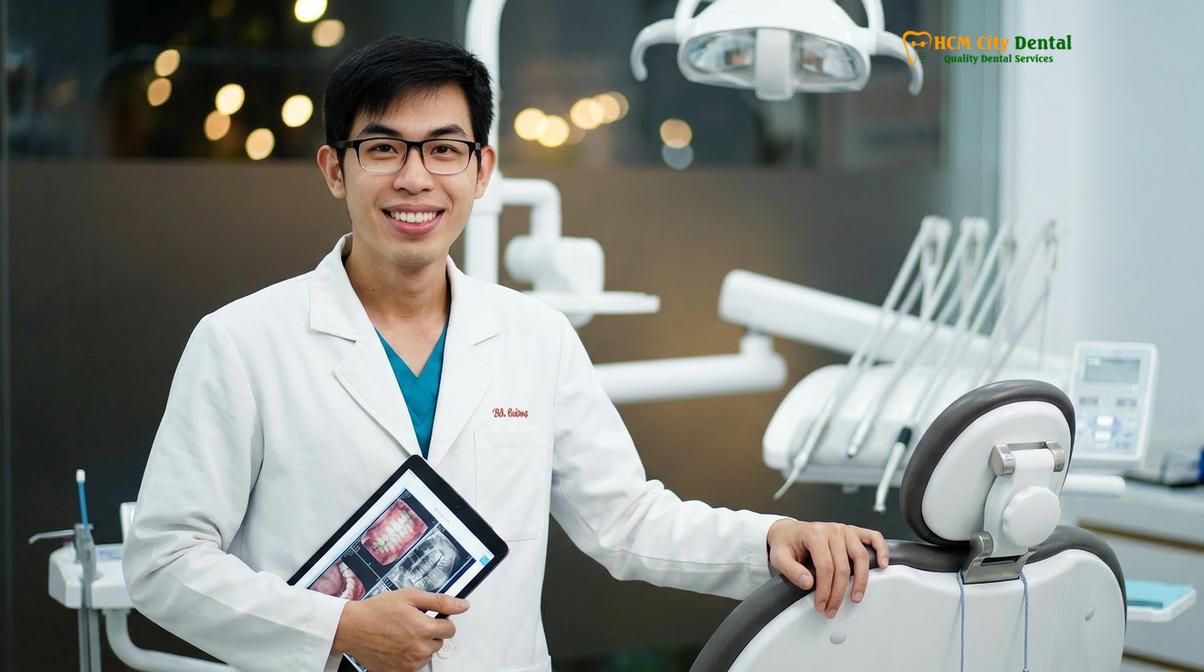
A thorough clinical examination, including digital scans and radiographs, is essential to determine if you are a suitable candidate for aligner therapy. For patients exploring international treatment options, understanding the global landscape of orthodontic care, such as orthodontic retention expenses globally or international retainer cost comparisons, can provide valuable context for long-term maintenance planning.
Frequently Asked Questions
Is IPR (slimming down teeth) painful or unsafe for enamel?
Interproximal reduction (IPR) is not painful and is clinically safe for your enamel when performed correctly. Because the procedure only removes microscopic amounts of the outer enamel layer—which contains no nerve endings—patients typically feel only mild vibration. Orthodontists strictly adhere to safe limits, usually removing no more than 0.2mm to 0.5mm per contact point, leaving ample enamel to protect the tooth from decay and sensitivity. Fluoride treatments are often applied afterward to promote remineralization.
Can Invisalign fix a gap wider than 6mm?
Invisalign can address gaps wider than 6mm, but it often requires a multidisciplinary approach or extended treatment time. While clear aligners are highly effective at closing mild to moderate spacing, massive diastemas may necessitate specialized attachments, elastics, or even hybrid therapy combining aligners with partial fixed appliances to ensure the roots move bodily rather than simply tipping the crowns together. A thorough CBCT scan is required to assess bone volume before attempting massive closures.
How do I prevent black triangles after crowding is resolved?
Preventing black triangles involves careful digital planning, conservative IPR, and maintaining excellent periodontal health. When severely overlapped teeth are straightened, the gum papilla may not fully fill the new space. By utilizing interproximal reduction to flatten the contact points between teeth, orthodontists can bring the teeth closer together, effectively squeezing the gum tissue upward to minimize or eliminate the appearance of dark triangular spaces.
How long does it take to close a small gap with Invisalign?
Closing a small gap of 1mm to 2mm typically takes between three to six months of consistent aligner wear. Because spacing often requires less complex bone remodeling than severe crowding, the visual results can manifest rapidly. However, patients must wear their aligners for the recommended 20 to 22 hours daily and strictly follow retention protocols afterward, as spaced teeth have a high tendency to relapse.
Will my speech be affected while treating severe crowding?
You may experience a slight lisp for the first few days of treatment as your tongue adapts to the presence of the aligners. Because the clear trays add a fraction of a millimeter of thickness to the lingual surfaces of your teeth, phonetic adaptation is required. However, the vast majority of patients find that their speech returns to completely normal within a week of continuous wear as the oral musculature adjusts.
References
- American Journal of Orthodontics and Dentofacial Orthopedics. Efficacy of clear aligners in controlling orthodontic tooth movement. (2020).
- Journal of Clinical Orthodontics. Biomechanical considerations in closing diastemas with clear aligners. (2019).
- Angle Orthodontist. Enamel reduction and interproximal space creation in aligner therapy. (2021).
- European Journal of Orthodontics. Root control and bodily movement using optimized attachments. (2022).
- Periodontology 2000. Periodontal responses to orthodontic forces in crowded dentitions. (2018).