Completing your active orthodontic journey is a major milestone, but maintaining your newly aligned smile requires dedicated, lifelong retention. Utilizing Invisalign Vivera retainers after treatment provides a highly durable, custom-fit solution designed to prevent teeth from shifting back to their original positions, ensuring your clinical results are permanently protected.
Clinical Summary:
Vivera retainers represent the premium post-orthodontic retention system developed by Align Technology. Utilizing the same advanced 3D-imaging and proprietary thermoplastic materials as Invisalign aligners, Vivera offers superior durability, crack resistance, and precise gingival fit compared to traditional vacuum-formed retainers. Clinical protocols dictate full-time wear immediately following active treatment, gradually tapering to a nightly schedule. Dr. Nguyen Van Cuong emphasizes that the periodontal ligaments require significant time to stabilize within the newly remodeled alveolar bone, making strict adherence to retention protocols critical. Patients typically receive multiple sets per order, providing a reliable backup system. For international patients or expatriates, cloud-based digital impressions allow for seamless ordering of replacements at specialized centers like HCMC Dental Clinic in Ho Chi Minh City, ensuring uninterrupted retention regardless of geographic location.
Key Takeaways:
- Vivera retainers are crafted from a proprietary thermoplastic material that is up to 30% stronger than standard clear retainer plastics.
- Strict post-orthodontic retention is biologically mandatory to counteract the natural elastic memory of the periodontal ligaments.
- A standard Vivera prescription includes multiple identical sets, ensuring patients have immediate backups if a retainer is lost or damaged.
- The clinical wear schedule transitions from 20-22 hours daily for the first few months to indefinite nightly wear.
- Digital intraoral scans are securely stored in the cloud, allowing patients to order precise replacements globally without needing new physical impressions.
Why Retention is Crucial After Invisalign Treatment
Retention is biologically necessary because the periodontal ligaments and alveolar bone require several months to fully mineralize and stabilize around the newly positioned teeth.
The completion of your final Invisalign tray marks the end of active tooth movement, but it is only the beginning of the stabilization phase. To understand why Orthodontics requires a dedicated retention phase, one must look at the underlying biology of the periodontium. Teeth are not rigidly fused to the jawbone; rather, they are suspended in the alveolar bone socket by a complex network of fibers known as the periodontal ligament (PDL). During orthodontic treatment, sustained pressure causes osteoclasts to break down bone on one side of the tooth, while osteoblasts build new bone on the opposite side.
Once the active pressure is removed, the newly formed bone is still relatively soft and unmineralized. Furthermore, the gingival and periodontal fibers—particularly the transseptal fibers—possess an elastic memory. These fibers have been stretched and twisted during treatment, and they naturally attempt to pull the teeth back toward their original, pre-treatment positions. This phenomenon is clinically referred to as orthodontic relapse. Without immediate and consistent post-orthodontic retention, relapse can occur rapidly, sometimes within a matter of weeks, compromising months or years of clinical progress[1].
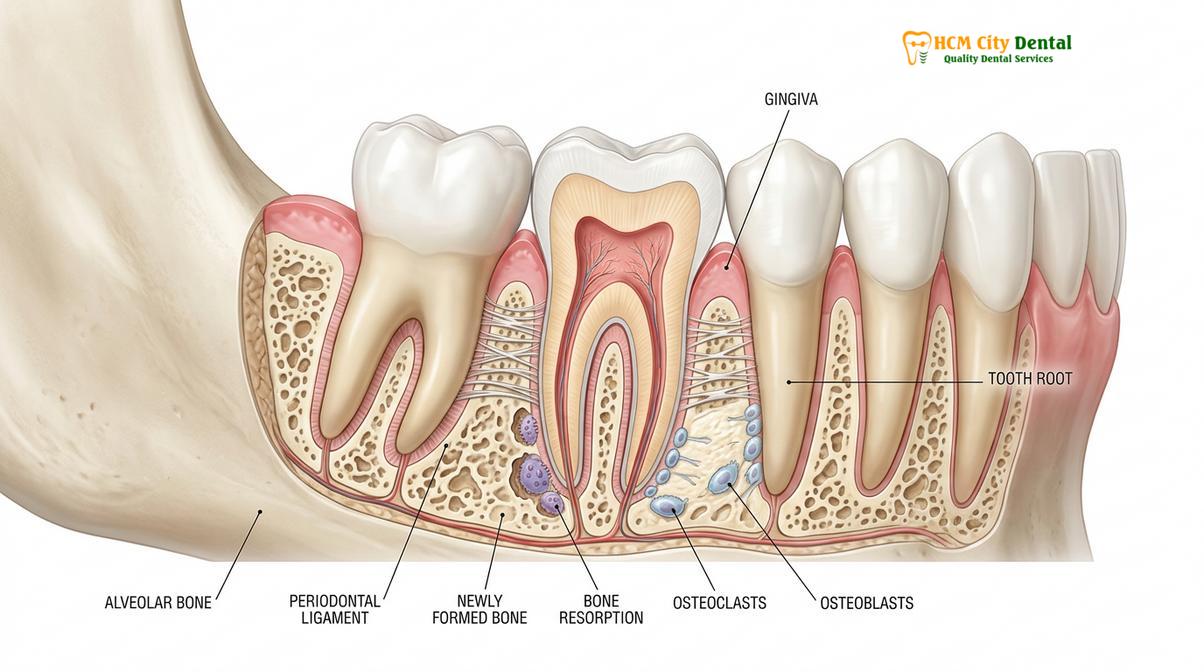
Dr. Nguyen Van Cuong frequently educates patients on the physiological timeline of bone remodeling. While the initial stabilization of the alveolar bone may take three to six months, the complete reorganization of the collagenous fibers within the gums can take up to a year. Even after this initial critical period, the natural aging process and the continuous forces of mastication (chewing) cause teeth to shift gradually over a lifetime. Therefore, retention is not merely a temporary post-treatment phase; it is a lifelong commitment to preserving your oral health and aesthetic investment.
“The biological reality of orthodontics is that teeth remain dynamic throughout a patient’s life. The periodontal ligaments retain a memory of their original orientation, making a robust retention protocol the only definitive method to prevent relapse and maintain precise occlusal alignment.”
Implementing a high-quality retention system immediately after the final active aligner is removed is non-negotiable. Patients who neglect their retainers often find themselves needing secondary orthodontic interventions, which incurs additional biological and financial costs. By utilizing advanced retention devices, patients can secure their bite alignment, ensuring optimal masticatory function and long-term periodontal health.
Vivera Retainers: The Premium Standard by Align Technology
Vivera retainers utilize Align Technology’s proprietary thermoplastic material, offering exceptional tensile strength, precise gingival contouring, and superior resistance to occlusal wear.
When evaluating options for maintaining a newly aligned smile, Vivera clear retainers stand out as the premium standard in the dental industry. Manufactured by Align Technology—the same pioneering company behind the Invisalign system—Vivera retainers are engineered using advanced polymer science and state-of-the-art digital fabrication techniques. Unlike generic retainers that are manually thermoformed over physical stone models, Vivera retainers are produced using a fully digital workflow. This begins with a highly accurate 3D intraoral scan (such as an iTero scan), which captures the exact micro-anatomy of the patient’s dentition immediately following treatment.
The material composition of Vivera is one of its most significant clinical advantages. The retainers are fabricated from a proprietary thermoplastic polyurethane blend that is specifically formulated for long-term retention rather than active movement. Clinical laboratory testing demonstrates that the Vivera material is up to 30% stronger and twice as durable as other leading clear retainer materials[2]. This enhanced tensile strength is crucial for resisting the repetitive occlusal forces generated during sleep, particularly for patients who exhibit mild bruxism (teeth grinding or clenching).
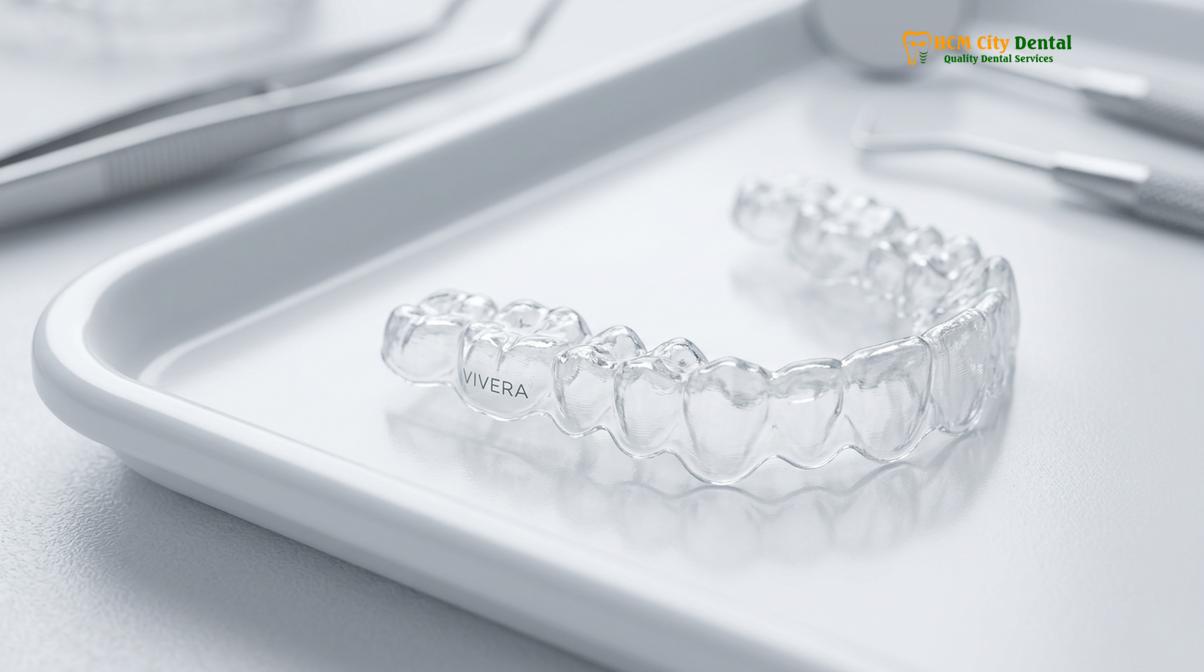
Another critical feature of Vivera retainers is their precise gingival contouring. Just like premium active aligners, Vivera retainers are laser-trimmed to follow the exact scalloped margin of the patient’s gums. This custom trimming prevents the plastic from impinging on the delicate gingival tissues, significantly enhancing patient comfort and compliance. Retainers that extend too far over the gums can cause irritation, inflammation, and localized periodontal issues. Furthermore, the precise fit ensures that the retainer applies uniform, passive pressure across all dental surfaces, effectively locking the teeth in their corrected positions.
A unique aspect of the Vivera system is its packaging and delivery model. Recognizing that retainers are subject to wear, loss, and accidental damage, Align Technology supplies Vivera retainers in multiples—typically four identical sets per order. This built-in redundancy is a massive advantage for patients. If a retainer is misplaced during travel or accidentally damaged, the patient can immediately switch to a fresh, identical backup set without experiencing any lapse in retention. This system drastically reduces the risk of relapse while waiting for a replacement retainer to be fabricated.
Comparing Vivera vs. Standard Essix and Hawley Retainers
While Hawley retainers use acrylic and wire, and standard Essix retainers use basic thermoformed plastics, Vivera provides a digitally milled, highly durable, and aesthetically invisible alternative.
Patients transitioning into the retention phase often face a choice between several types of devices. The three most common removable options are Hawley retainers, standard Essix retainers, and Vivera retainers. Understanding the clinical distinctions between these devices is essential for making an informed decision regarding lifelong teeth retention.
The Hawley retainer is the traditional standard, consisting of a rigid acrylic baseplate that sits against the palate (or lingual mucosa of the lower jaw) and a metal wire that wraps around the anterior teeth. While Hawley retainers are highly durable, adjustable, and allow the upper and lower teeth to settle into a natural occlusion, they are highly visible. The metal wire across the front teeth is often aesthetically undesirable for adult patients who have just completed a discreet clear aligner treatment. Additionally, the bulky acrylic palate can temporarily affect speech and requires a period of adaptation.
Standard Essix retainers are clear, vacuum-formed thermoplastic trays. They are typically fabricated in-house at a dental laboratory using a physical impression or a 3D-printed model. While Essix retainers offer excellent aesthetics, the manufacturing process can result in slight variations in thickness. The standard plastics used for Essix retainers are generally thinner and more prone to cracking, stretching, or discoloration over time compared to premium alternatives. When evaluating Vivera vs Essix cost, Essix is usually less expensive upfront for a single set, but the frequent need for replacements due to wear and tear can make them more costly in the long run[3].
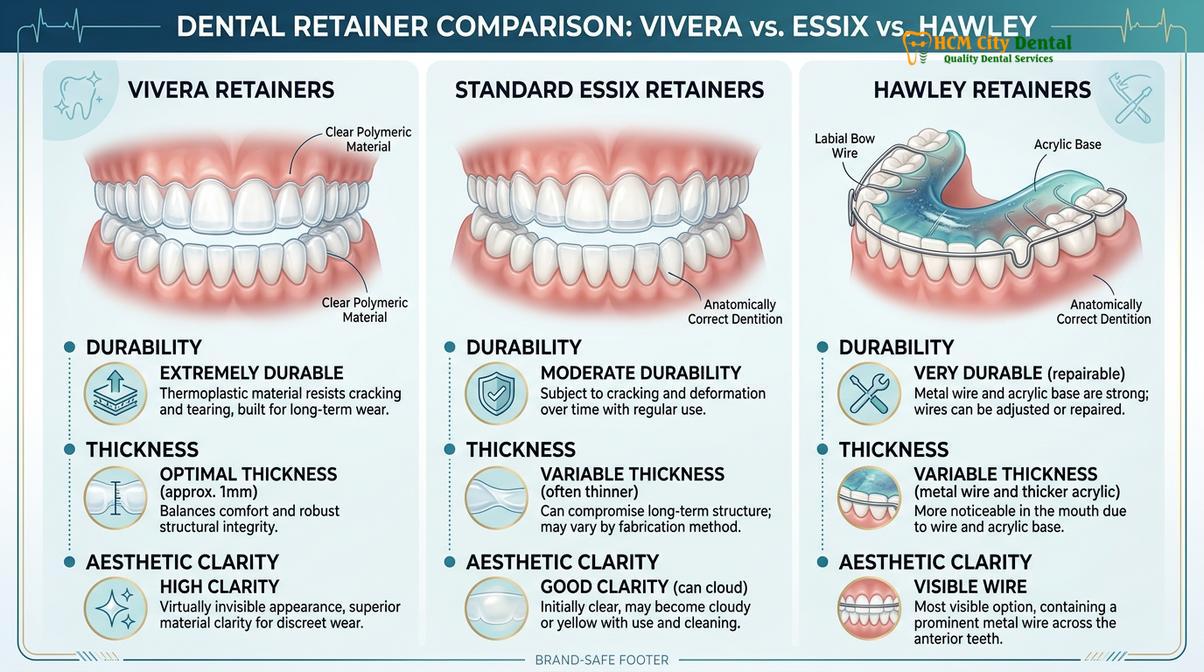
Vivera retainers bridge the gap by combining the aesthetic invisibility of Essix with superior material strength. Because they are digitally manufactured by Align Technology, the consistency and precision of Vivera are unmatched. The table below outlines the primary clinical differences between these three retention modalities:
| Feature | Vivera Retainers | Standard Essix Retainers | Hawley Retainers |
|---|---|---|---|
| Material | Proprietary high-strength thermoplastic | Standard thermoformed plastic (PETG/Polyurethane) | Acrylic baseplate with stainless steel wire |
| Aesthetics | Virtually invisible, clear | Clear, but may cloud over time | Highly visible metal wire |
| Durability | High (30% stronger than standard clear) | Moderate (prone to cracking/stretching) | Very High (can last for many years) |
| Fabrication | Fully digital, laser-trimmed | Vacuum-formed over physical models | Hand-crafted by a dental technician |
| Delivery | Supplied in multiple identical sets | Usually supplied as a single set | Supplied as a single set |
For patients who prioritize aesthetics, comfort, and the convenience of having backup sets readily available, Vivera is clinically superior. However, the choice of retainer should always be made in consultation with an orthodontic specialist, taking into account the patient’s specific bite mechanics, oral hygiene habits, and history of bruxism.
Wear Schedule: From Full-Time to Nightly Wear Protection
Patients must wear their retainers for 20 to 22 hours a day for the first three to six months, eventually transitioning to lifelong nightly wear to prevent relapse.
The success of any post-orthodontic retention protocol relies entirely on patient compliance. Even the most advanced retainer cannot prevent relapse if it remains in its case. The clinical wear schedule for Vivera retainers is carefully designed to match the biological timeline of bone remodeling and periodontal ligament stabilization.
Immediately following the removal of the final active aligner or braces, the teeth are at their most vulnerable state. The surrounding bone is still soft, and the periodontal fibers are actively trying to pull the teeth back. During this initial phase—typically lasting three to six months—patients are instructed to wear their Vivera retainers full-time. This means wearing the retainers for 20 to 22 hours a day, removing them only for eating, drinking anything other than cool water, and performing oral hygiene routines. This full-time wear acts as a rigid splint, holding the teeth perfectly still while the osteoblasts lay down new, dense bone to secure the roots[4].
Clinical Warning: Prematurely reducing retainer wear time during the initial stabilization phase is the leading cause of orthodontic relapse. If your retainers feel excessively tight when inserted, it indicates that your teeth have begun to shift, and you must increase your daily wear time immediately to recapture the alignment.
After the initial stabilization period, and following a clinical evaluation by your dentist, the wear schedule can usually be tapered. The transition typically moves from full-time wear to a “home and sleep” schedule (approximately 12 to 14 hours a day), and eventually to strictly nightly wear (8 hours during sleep). It is crucial to understand that nightly wear is a lifelong commitment. As long as you want your teeth to remain straight, you must wear your retainers while you sleep.
To maintain the integrity of the Vivera retainers during this lifelong journey, proper care is essential. Retainers should be cleaned daily with a soft toothbrush and lukewarm water. Avoid using hot water, which can warp the thermoplastic, and avoid abrasive toothpastes that can create micro-scratches, making the retainer appear cloudy and harboring bacteria. If a retainer becomes lost or damaged, it is imperative to seek a lost retainer replacement immediately to prevent any shifting.
Ordering Replacements: How to Order Vivera Abroad or in Saigon
Patients can easily order replacement Vivera retainers anywhere in the world by having a certified provider access their digital Invisalign records or perform a new 3D scan.
One of the most significant advantages of the Invisalign and Vivera ecosystem is its global, cloud-based digital infrastructure. Because your dental anatomy is captured via a digital intraoral scan rather than a physical alginate impression, your records are stored securely in the cloud. This means that if you relocate, travel extensively, or become an expatriate, you are not tethered to your original treating orthodontist for replacement retainers.
For individuals living in or traveling to Vietnam, securing transparent retainers Saigon is a streamlined process. If you have previously completed Invisalign treatment and your digital ClinCheck records are still valid (typically within a few years of your final scan, provided no major dental work has altered your tooth shape), a certified Invisalign provider can access your file with your permission. They can then submit an order directly to Align Technology for a new set of Vivera retainers to be manufactured and shipped to the local clinic.
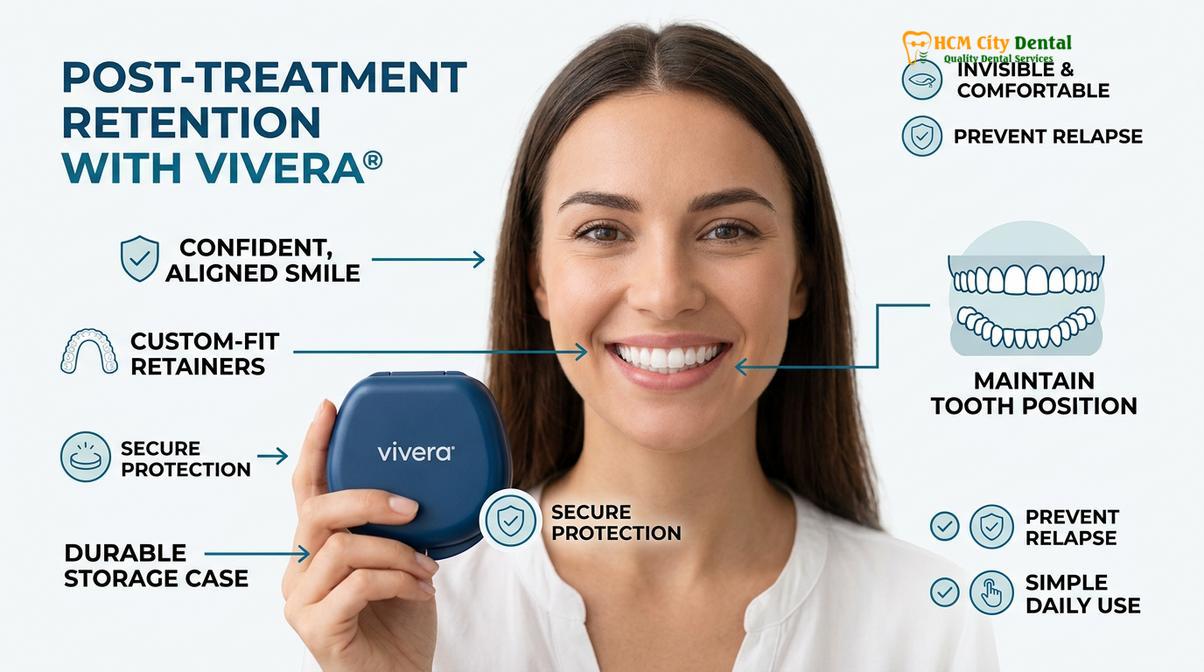
Clinical Case Example: An expatriate patient relocated to Vietnam and accidentally discarded her final set of clear retainers. She visited HCMC Dental Clinic in Ho Chi Minh City for an urgent consultation. Because her teeth had not yet shifted significantly, the clinical team was able to access her original digital Invisalign file via the Align Technology portal. A new order of four Vivera retainers was processed immediately. The patient received her precise replacements without needing new physical impressions, successfully preventing any orthodontic relapse.
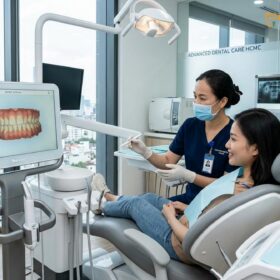
If your original digital scan is outdated, or if you have had restorative dental work (such as new crowns or large fillings) since your last scan, a new 3D intraoral scan will be required. Modern clinics utilize advanced scanners like the iTero Element to capture a highly accurate, radiation-free digital impression in just a few minutes. This new data is then used to fabricate your custom Vivera retainers. When considering the Vivera replacement price, patients often find that ordering through highly equipped international clinics offers excellent value while maintaining the exact same premium quality standards dictated by Align Technology[5]. For a broader perspective on international pricing, patients can review comparisons such as retainer cost comparisons to understand the economic benefits of seeking care in specialized hubs.
When to See a Doctor (Clinical Considerations)
While Vivera retainers are designed for durability and ease of use, professional clinical oversight remains a critical component of long-term oral health. Patients should schedule an evaluation with their dental provider if they experience any of the following issues:
- Excessive Tightness or Pain: If your retainer feels unusually tight or causes pain upon insertion, it is a strong clinical indicator that your teeth have shifted. Forcing a retainer onto shifted teeth can cause damage to the roots or the retainer itself.
- Visible Wear, Cracks, or Warping: Inspect your retainers regularly. If you notice deep occlusal wear patterns, cracks, or if the retainer has warped due to heat exposure, it will no longer provide the precise passive force required to hold your teeth in place.
- Changes in Dental Anatomy: If you require significant restorative work, such as a new dental crown, a bridge, or a large composite restoration, your existing retainer will likely no longer fit. A new digital scan and a replacement retainer will be necessary to accommodate the altered tooth shape.
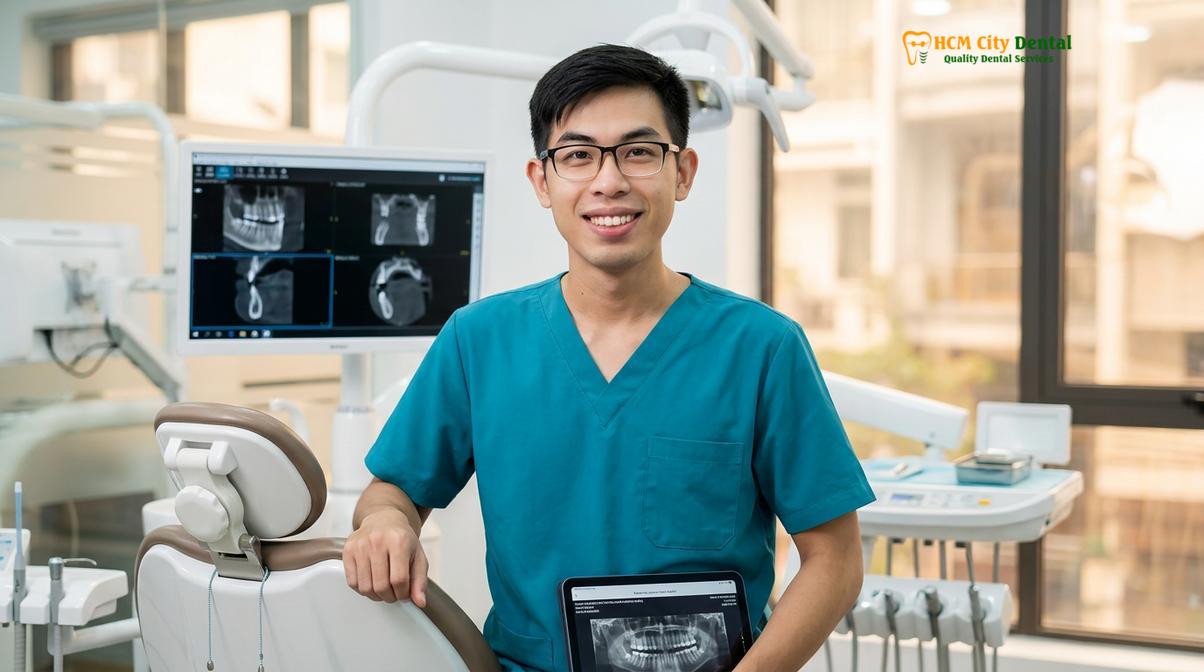
“Post-orthodontic retention is not a passive phase; it requires active monitoring. Regular clinical check-ups ensure that the retainers are functioning correctly, the periodontium remains healthy, and any signs of occlusal wear or bruxism are addressed before they compromise the patient’s smile.”
Dr. Nguyen Van Cuong advises that patients bring their retainers to every routine dental cleaning and check-up. This allows the clinical team to professionally clean the devices in an ultrasonic bath, inspect them for micro-fractures, and verify that the fit remains optimal. If you suspect your retainer is compromised, do not delay in seeking an assessment. Prompt intervention is the most effective way to protect your orthodontic investment. For patients evaluating their options globally, understanding the logistics and international retainer costs can help facilitate timely replacements.
Frequently Asked Questions
Frequently Asked Questions
How long do Vivera retainers last before replacement?
A single set of Vivera retainers typically lasts between nine months to a few years, depending on your bite force and maintenance routine. Because they are supplied in multiples, a complete order can provide several years of reliable retention before a new scan is required. Patients who suffer from bruxism (teeth grinding) may wear through the thermoplastic material more quickly and should be monitored by their dentist.
How much does a set of 3 Vivera retainers cost in HCMC?
While Align Technology traditionally packages Vivera in sets of four, the estimated cost for a complete Vivera package in HCMC ranges based on current clinical fee schedules and exchange rates. Contacting a certified provider directly ensures you receive the most accurate, personalized pricing. Clinics in Ho Chi Minh City often provide highly competitive rates for premium Align Technology products compared to Western markets.
Can I use my final Invisalign tray as a permanent retainer?
No, your final active Invisalign aligner is not designed for long-term retention and will degrade rapidly if used permanently. Active aligners are engineered to move teeth, whereas dedicated retainers are fabricated from thicker, more durable materials specifically designed to hold teeth in place. Relying on an active aligner for retention will eventually lead to material failure and orthodontic relapse.
How do I clean my Vivera retainers properly?
Clean your Vivera retainers daily using a soft-bristled toothbrush and lukewarm water, supplemented by specialized retainer cleaning crystals. Avoid using hot water, harsh abrasive toothpastes, or alcohol-based mouthwashes, as these can warp the thermoplastic material or cause micro-abrasions that harbor bacteria. Proper hygiene prevents the retainers from becoming cloudy or developing unpleasant odors.
What happens if I lose my Vivera retainers while traveling?
If you lose your retainers while traveling, immediately switch to one of your backup sets provided in your original Vivera order. If you have exhausted your backups, contact your orthodontist to order a replacement set using your digital records stored in the cloud. Many international clinics, including HCMC Dental Clinic, can facilitate the ordering process if your digital ClinCheck file is accessible.
References
- American Journal of Orthodontics and Dentofacial Orthopedics. Relapse and retention protocols in modern orthodontics. (2021).
- Journal of Clinical Orthodontics. Material properties of thermoplastic retainers: A comparative in vitro study. (2020).
- European Journal of Orthodontics. Long-term stability of orthodontic treatment outcomes with clear retainers. (2019).
- Angle Orthodontist. Periodontal ligament remodeling and its implications for post-treatment retention. (2022).
- International Journal of Computerized Dentistry. Digital workflows in the fabrication of post-orthodontic retention devices. (2018).