Losing a retainer requires immediate replacement to prevent orthodontic relapse. In Saigon, patients can access rapid, digitally fabricated replacement retainers within 24 to 48 hours. Seeking prompt clinical care ensures your teeth remain in their corrected positions without compromising your long-term orthodontic investment.
Clinical Summary:
A lost orthodontic retainer constitutes a time-sensitive clinical situation due to the natural tendency of teeth to drift back to their pre-treatment positions. In Ho Chi Minh City, modern dental facilities utilize intraoral digital scanning and 3D printing to fabricate precise replacement retainers rapidly. Patients can choose between clear thermoplastic (Essix), traditional wire-and-acrylic (Hawley), or fixed bonded retainers based on their specific retention needs, lifestyle, and budget. Immediate intervention minimizes the risk of requiring comprehensive orthodontic retreatment and preserves the structural integrity of the bite.
Key Takeaways:
- Teeth can begin shifting within 24 to 48 hours of losing a retainer due to periodontal ligament memory.
- Digital intraoral scans provide a faster, more comfortable alternative to traditional putty impressions.
- Clear Essix retainers are the most popular choice for rapid, aesthetic replacement.
- Fixed bonded retainers offer continuous, compliance-free retention for the anterior teeth.
- Prompt replacement in Ho Chi Minh City is highly cost-effective compared to Western dental markets.
The Clinical Urgency of Replacing a Lost Retainer
Replacing a lost retainer immediately is critical to halt the periodontal ligaments from pulling teeth back into their original, misaligned positions.
Orthodontic treatment involves moving teeth through alveolar bone by applying controlled forces. Once the active phase of moving teeth (via braces or clear aligners) is complete, the bone and surrounding periodontal tissues require significant time to reorganize and stabilize around the new tooth positions. When a patient requires a lost retainer replacement, time is of the essence. The gingival and periodontal tissues contain elastic fibers—specifically the supracrestal and transseptal fibers—that stretch during orthodontic movement. These fibers act much like microscopic rubber bands, retaining a “memory” of the original malocclusion.
According to Dr. Nguyen Van Cuong, a leading specialist at HCMC Dental Clinic, the risk of orthodontic relapse is highest in the first twelve months following the removal of braces. However, even patients who have been out of braces for a decade can experience shifting if retention is abruptly discontinued. The physiological process of relapse can begin within 24 to 48 hours of losing the appliance[1]. The anterior teeth, particularly the lower incisors, are highly susceptible to crowding due to the natural mesial drift of teeth as we age.
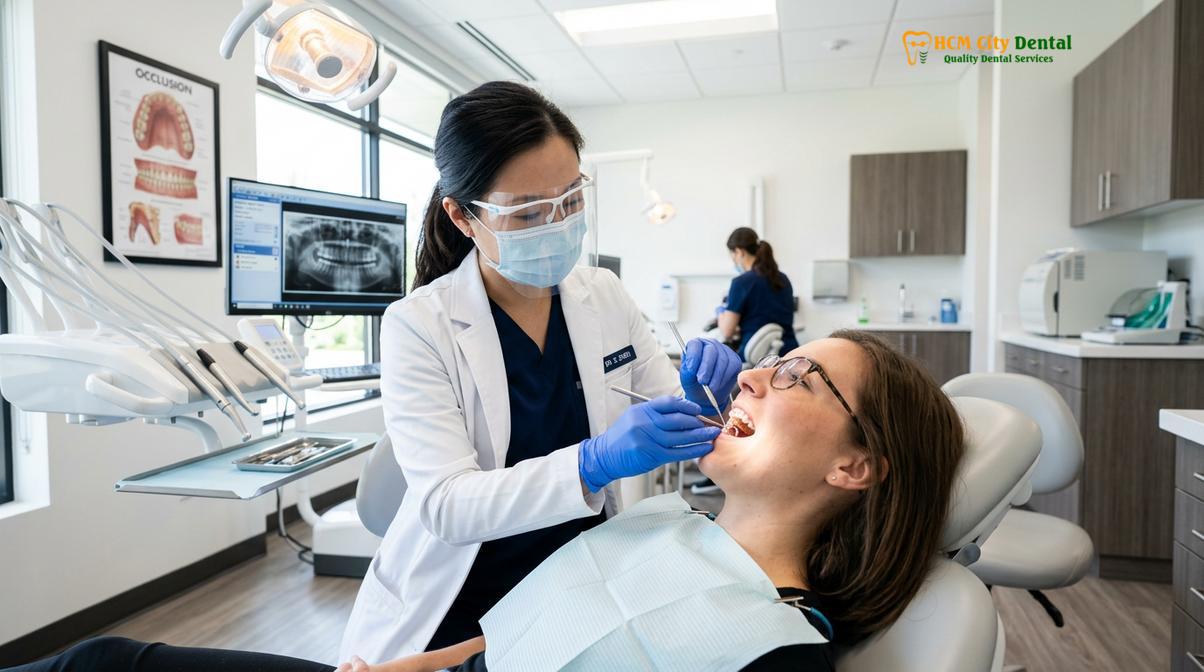
If a retainer is lost, the immediate clinical objective is to capture the current alignment before significant movement occurs. Waiting weeks or months to address the issue often results in minor to moderate shifting. In such cases, a standard passive retainer will no longer fit, and the patient may require an active “spring” retainer or a short course of clear aligner therapy to recapture the ideal alignment. Therefore, securing a prompt replacement is not just a matter of convenience; it is a necessary medical intervention to protect the biological and financial investment of comprehensive orthodontic retention.
Types of Replacement Retainers Available in Saigon
Patients can select from clear thermoplastic trays, traditional acrylic-and-wire appliances, or permanent bonded wires based on their clinical requirements.
When seeking a custom retainer saigon, patients have access to the full spectrum of modern retention appliances. The choice of material depends on the patient’s original malocclusion, their compliance levels, and their aesthetic preferences. A thorough clinical evaluation will determine which appliance offers the highest probability of long-term stability.
Clear Thermoplastic (Essix) Retainers
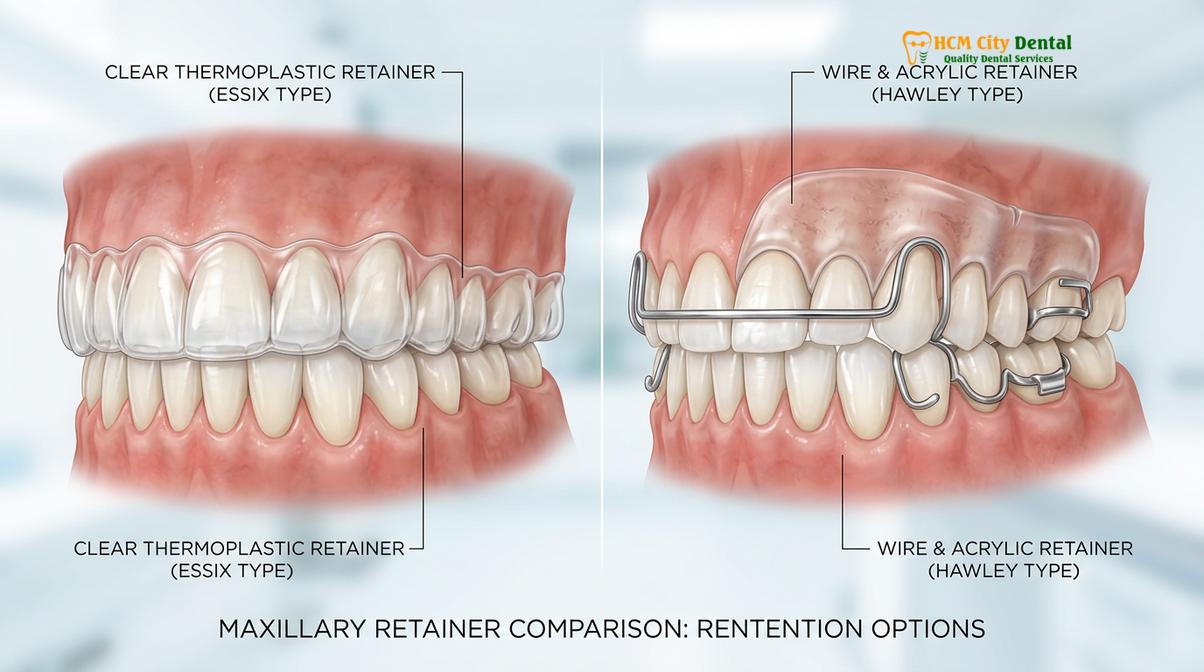
Clear retainers, commonly referred to as Essix retainers, are vacuum-formed or pressure-thermoformed from specialized medical-grade plastics such as polyethylene terephthalate glycol (PETG) or polyurethane. These appliances cover the entire dental arch, providing excellent control over all teeth, including the molars. Because they are virtually invisible, they are highly favored by adult patients.
From a clinical perspective, clear retainers are highly effective at maintaining the exact position of the teeth as captured in the digital scan. However, they do not allow the upper and lower teeth to settle naturally into occlusion because the plastic covers the occlusal (biting) surfaces. Furthermore, thermoplastic materials are subject to wear and tear, particularly in patients who exhibit bruxism (teeth grinding). A standard clear retainer typically requires replacement every 12 to 24 months[2].
Traditional Hawley Retainers
The Hawley retainer is the traditional standard in orthodontic retention. It consists of an acrylic base that sits against the palate (for the upper arch) or along the lingual mucosa (for the lower arch), combined with a labial bow made of stainless steel wire that wraps around the anterior teeth.
“Retention is not merely the final phase of orthodontics; it is a lifelong commitment to preserving the structural integrity of the bite and the health of the periodontium.”
The primary clinical advantage of a Hawley retainer is its durability and adjustability. The acrylic is robust, and the wire can be subtly adjusted by a dentist to close minor gaps or correct slight rotations that may have occurred while the previous retainer was lost. Additionally, because the occlusal surfaces are left uncovered, the posterior teeth can settle into a more natural, interdigitated bite. While less aesthetic than clear retainers, Hawley appliances can last 5 to 10 years with proper care[3].
Fixed (Bonded) Retainers
For patients who struggle with compliance or who have a high risk of anterior crowding relapse, a fixed retainer is often recommended. This involves bonding a custom-adapted, multi-strand stainless steel or gold wire to the lingual (tongue) side of the anterior teeth—typically from canine to canine.
Fixed retainers provide continuous, 24/7 retention without relying on patient memory. However, they only protect the teeth to which they are bonded; the premolars and molars remain unprotected. Therefore, a fixed retainer is frequently paired with a removable clear retainer worn at night. Clinically, fixed retainers require meticulous oral hygiene, as the wire can accumulate plaque and calculus, potentially leading to localized gingivitis if not maintained properly[4].
The Digital Workflow for Retainer Fabrication
Modern clinics utilize high-resolution intraoral scanners and 3D printing to create highly accurate, comfortable retainers without messy traditional impressions.
The landscape of dental manufacturing has been revolutionized by digital technology. In the past, replacing a lost retainer required sitting through uncomfortable alginate or polyvinyl siloxane (PVS) impressions, which could trigger the gag reflex and were prone to dimensional distortion. Today, obtaining a digital dental scan Vietnam offers a vastly superior clinical experience.
Intraoral Scanning Technology
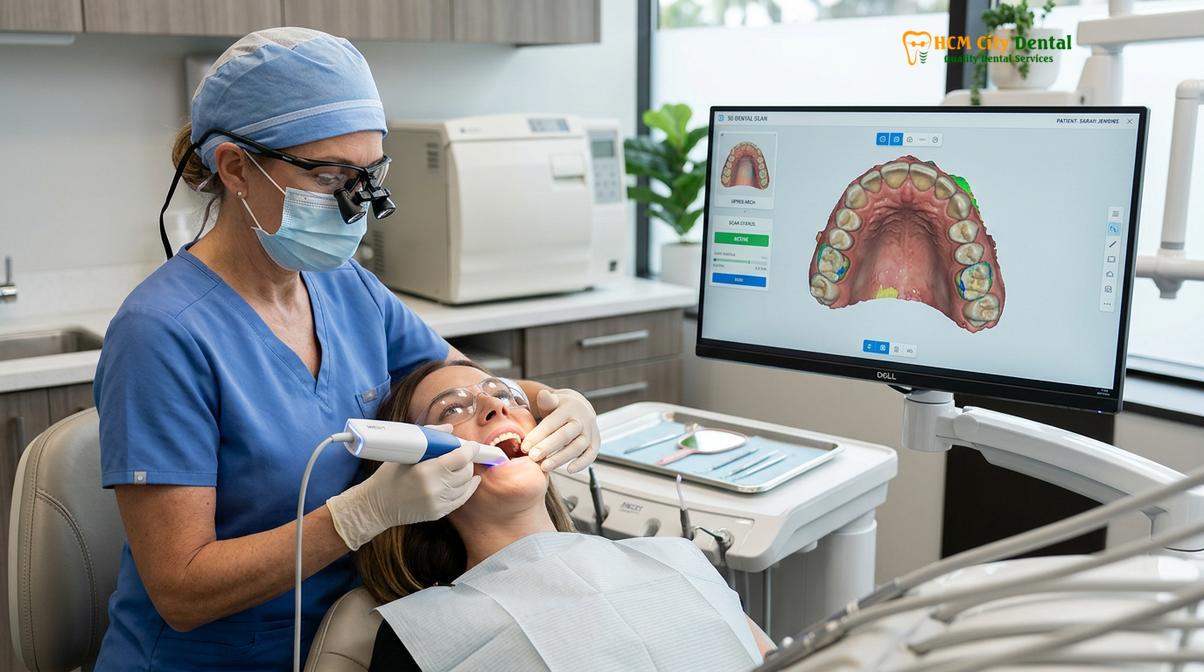
The process begins with an intraoral scanner, a wand-like device that captures thousands of images per second using confocal microscopy principles. These images are stitched together in real-time to create a highly accurate, full-color 3D model of the patient’s dentition and gingival architecture. This digital impression is accurate to the micron level, ensuring that the resulting retainer will fit intimately against the tooth surfaces without impinging on the delicate gum tissues.
CAD/CAM and 3D Printing
Once the digital scan is complete, the STL (Standard Tessellation Language) file is exported to dental CAD (Computer-Aided Design) software. If the patient has experienced minor shifting since losing their retainer, the dentist can sometimes perform minor digital adjustments to create an active retainer that gently guides the teeth back into alignment.
The digital model is then sent to a high-resolution 3D printer, which fabricates a physical resin model of the teeth. Finally, a thermoforming machine uses heat and positive pressure to adapt the thermoplastic material tightly over the printed model. This digital workflow not only increases the precision of the appliance but drastically reduces turnaround time, allowing patients to receive their replacement retainers swiftly.
Cost Expectations and Clinical Value
The financial investment for a replacement retainer in Vietnam is highly competitive, offering premium materials at a fraction of international prices.
Understanding the teeth retainer cost is an important factor for patients seeking replacement services. Ho Chi Minh City has emerged as a premier destination for dental care due to its combination of advanced clinical technology and accessible pricing. The cost of replacing a retainer depends primarily on the type of appliance chosen and the complexity of the fabrication process.
Currently, according to standard clinic fee schedules, clear Essix retainers are generally the most affordable option, while custom-milled Hawley retainers and fixed bonded retainers require a slightly higher investment due to the specialized laboratory work and clinical chair time involved.
| Retainer Type | Clinical Application | Estimated Lifespan | Relative Cost Profile |
|---|---|---|---|
| Clear (Essix) Thermoplastic | Full arch retention, highly aesthetic, prevents occlusal wear. | 12 – 24 months | Most Affordable |
| Traditional Hawley | Durable, allows bite settling, adjustable for minor corrections. | 5 – 10 years | Moderate |
| Fixed (Bonded) Wire | Continuous anterior retention, compliance-free. | 5 – 15+ years | Moderate to High |
| Vivera (by Invisalign) | Premium thermoplastic, comes in sets of 3 or 4 for backup. | 3 – 5 years (per set) | Premium |
For international patients and expatriates, the value proposition is significant. When evaluating savings compared to American orthodontic providers, or looking at UK dental fee comparisons, the cost in Vietnam is often 50% to 70% lower for the exact same medical-grade materials. Similar financial advantages are evident when comparing retention expenses with New Zealand, assessing cost differences for Canadian patients, or analyzing regional pricing compared to Singapore and the financial advantages over Japanese dental clinics.
Emergency Dental Care Protocol for Lost Retainers
If you lose your retainer, contact a dental professional immediately to schedule a scan before significant tooth movement occurs.
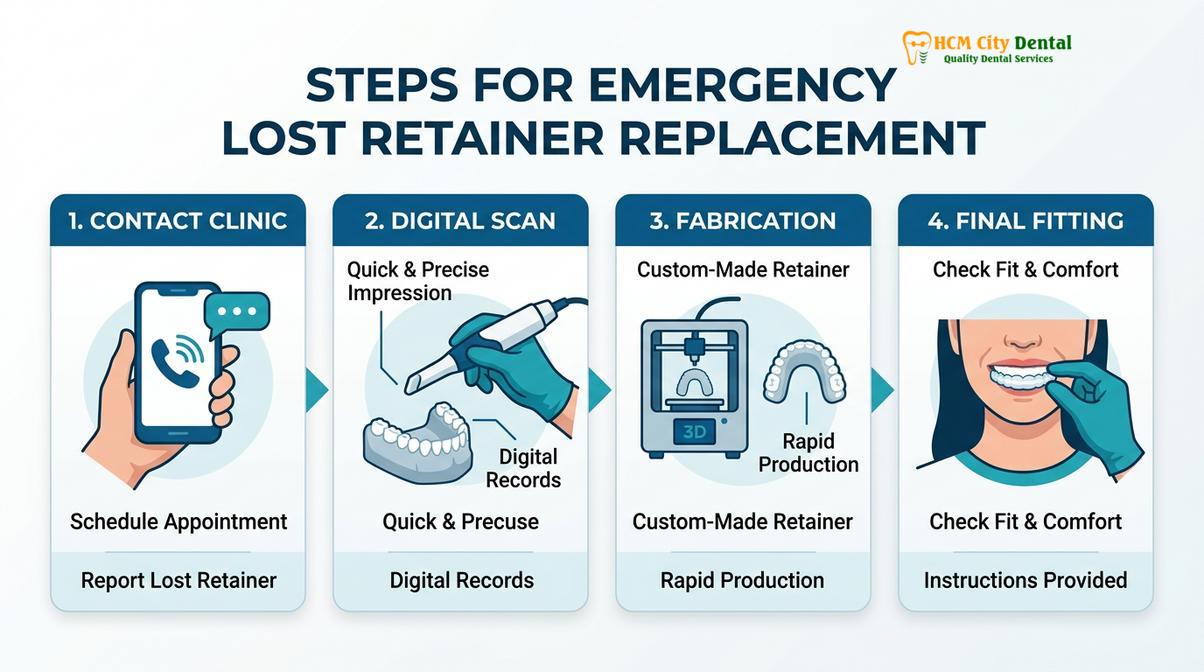
Losing a retainer should be treated as a mild dental urgency. The protocol for emergency dental care HCMC involves acting swiftly to minimize relapse. As soon as you realize the appliance is lost or irreparably broken, contact your dental provider to schedule an intraoral scan.
Clinical Warning: Never attempt to force an old, extremely tight retainer onto your teeth if significant shifting has occurred. Applying excessive, uncontrolled force can cause severe periodontal pain, damage the root structure (root resorption), and compromise the vitality of the tooth. Always consult a dentist for a properly fitting replacement.
While waiting for your appointment, maintain excellent oral hygiene. If you have a backup retainer from a previous stage of treatment, try it on gently. If it fits without requiring excessive force, wear it temporarily to hold the teeth in place. However, if it causes sharp pain or does not seat fully, remove it immediately. The dentist will evaluate the current position of your teeth and determine if a standard passive retainer is sufficient or if minor active corrections are necessary before fabricating the final appliance[5].
Case Study: Rapid Retainer Replacement at HCMC Dental Clinic
A streamlined digital workflow allows international patients and locals alike to receive perfectly fitted retainers with minimal disruption to their schedules.
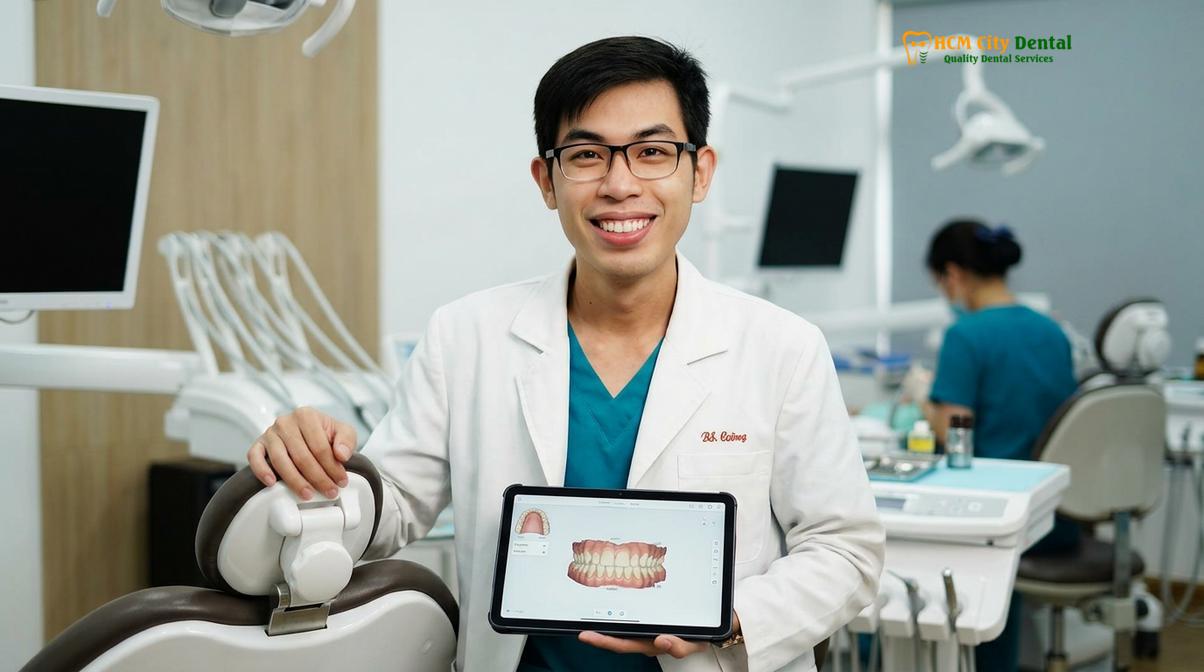
The efficiency of modern digital dentistry is best illustrated through clinical application. At HCMC Dental Clinic in Ho Chi Minh City, the integration of intraoral scanning and in-house 3D printing allows for rapid response to retention emergencies.
Patient Profile: A 28-year-old expatriate who had completed clear aligner therapy two years prior.
Clinical Presentation: The patient accidentally discarded their upper and lower Essix retainers at a restaurant. They presented to the clinic 48 hours later, expressing concern over a perceived slight shifting of the lower incisors.
Treatment Protocol: Dr. Nguyen Van Cuong conducted a comprehensive clinical examination, noting very mild mesial drift on tooth #24 (lower left central incisor). An intraoral digital scan was performed immediately. Because the shifting was minimal, Dr. Cuong utilized CAD software to digitally realign the single incisor by 0.2mm before printing the model.
Outcome: Within 24 hours, the patient received a new set of clear thermoplastic retainers. The slight digital adjustment acted as an active retainer, gently guiding the incisor back into its perfect position within three days of wear. The rapid intervention prevented the need for a costly retreatment phase.
“The integration of digital scanning and 3D printing has transformed retainer replacement from a multi-week ordeal into a seamless, rapid procedure that protects the patient’s smile.”
When to See a Doctor
While losing a removable retainer requires prompt replacement, there are specific clinical scenarios involving retention that necessitate immediate professional intervention. You should schedule an urgent dental consultation if you experience any of the following:
- Debonded Fixed Retainer: If the composite glue holding your permanent wire retainer breaks, or if the wire itself snaps. A loose wire can lacerate the tongue or gingiva, and the unbonded teeth will begin to shift rapidly.
- Visible Shifting or Crowding: If you notice that your teeth have visibly moved, overlapped, or if your bite feels uneven (malocclusion) after a period without your retainer.
- Pain or Tissue Trauma: If an existing retainer cracks and causes irritation to the mucosal tissues, or if wearing a tight retainer causes persistent, throbbing pain in the teeth or jaws.
- Severe Bruxism Damage: If you have ground through the plastic of your clear retainer, exposing the occlusal surfaces of your teeth to wear.
Maintaining the results of your orthodontic treatment is a lifelong endeavor. By understanding the clinical importance of retention, the types of appliances available, and the efficiency of digital workflows, patients can confidently manage the replacement of a lost retainer. If you require immediate assistance, the team at HCMC Dental Clinic in Ho Chi Minh City is equipped to provide precise, comfortable, and highly effective retention solutions tailored to your unique dental anatomy.
Frequently Asked Questions
How quickly do teeth shift after losing a retainer?
Teeth can begin shifting within 24 to 48 hours after losing a retainer. The periodontal ligaments retain memory of their original positions, making prompt replacement essential to prevent noticeable orthodontic relapse.
Can a new retainer be made without my original dental molds?
Yes, modern clinics use intraoral digital scanners to capture your current tooth alignment. This eliminates the need for your original physical molds and ensures the new appliance fits your exact current dental anatomy.
What is the fastest type of retainer to replace?
Clear thermoplastic (Essix) retainers are the fastest to replace. Utilizing digital scans and in-house 3D printing or thermoforming, these can often be fabricated and delivered within 24 to 48 hours.
Should I try to wear an old retainer if I lose my current one?
You should only wear an old retainer if it fits comfortably without excessive force. Forcing a tight, ill-fitting retainer onto shifted teeth can cause severe pain, root resorption, or damage to the periodontal tissues.
How long do replacement clear retainers typically last?
Clear retainers generally last between 12 to 24 months with proper care. Their lifespan depends on your bite force, whether you grind your teeth at night, and your daily cleaning protocols.
References
- Journal of Prosthodontic Research. Orthodontic retainer wear and stability. (2021).
- American Journal of Orthodontics. Relapse rates and retention protocols. (2019).
- European Journal of Orthodontics. Essix vs Hawley retainers clinical trial. (2020).
- Journal of Clinical Orthodontics. Plaque accumulation on fixed retainers. (2022).
- Australian Dental Journal. Patient compliance with dental retainers. (2018).