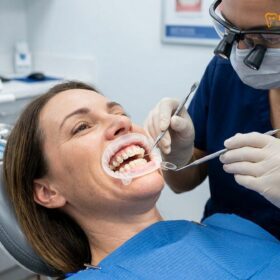
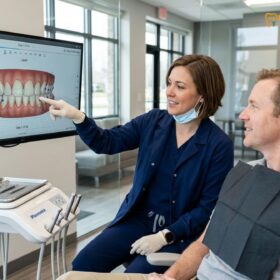
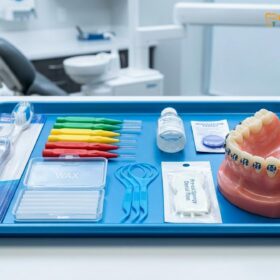
When participating in athletic activities, balancing orthodontic retention with dental safety is a critical clinical priority. Patients are generally advised to remove their removable retainers and wear a custom athletic mouthguard during contact sports. Wearing a rigid retainer during high-impact activities significantly increases the risk of appliance fracture and severe maxillofacial trauma.
Clinical Summary:
The intersection of orthodontic retention and athletic participation requires careful clinical management to prevent both tooth relapse and traumatic injury. Orthodontic retainers—whether clear thermoplastic trays or traditional wire-and-acrylic models—are engineered exclusively to hold teeth in their corrected positions. They lack the elastomeric properties necessary to absorb or dissipate kinetic energy from physical impacts. Consequently, wearing a retainer during contact sports poses significant risks, including appliance shattering, soft tissue laceration, and concentrated force transmission to the dental roots. Clinical best practices dictate the removal of removable retainers in favor of custom-fabricated ethylene vinyl acetate (EVA) mouthguards during any activity with a risk of facial collision. For athletes with fixed lingual retainers, specialized mouthguards must be fabricated with internal block-outs to protect both the dentition and the bonded wire. Understanding the distinct material sciences and biomechanical purposes of these devices ensures optimal oral health and sustained orthodontic success.
Key Takeaways:
- Removable retainers should always be taken out before participating in contact sports to prevent appliance damage and oral injury.
- Custom athletic mouthguards are made of shock-absorbing materials, whereas retainers are made of rigid plastics that can shatter upon impact.
- Leaving a retainer out for the duration of a sports game or practice will not cause irreversible orthodontic relapse.
- Athletes with fixed permanent retainers require custom mouthguards designed to fit over the bonded wire without causing it to debond.
- Clear retainers may be worn during strictly non-contact sports, but athletes must be cautious of heavy clenching which can crack the material.
The Clinical Reality of Wearing a Retainer During Sports
Orthodontic retainers are designed strictly to maintain tooth alignment using rigid materials, making them inherently unsuitable for absorbing the high-impact forces encountered during athletic activities.
The completion of active orthodontic treatment marks the beginning of the retention phase, a critical period where the periodontal ligament (PDL) and surrounding alveolar bone reorganize and stabilize around the new tooth positions. Patients are often instructed to wear their retainers diligently, leading to a common clinical dilemma: how to manage sports with retainer wear. The anxiety of orthodontic relapse often compels athletes to keep their retainers in their mouths during physical activities, a decision that contradicts fundamental principles of dental traumatology.
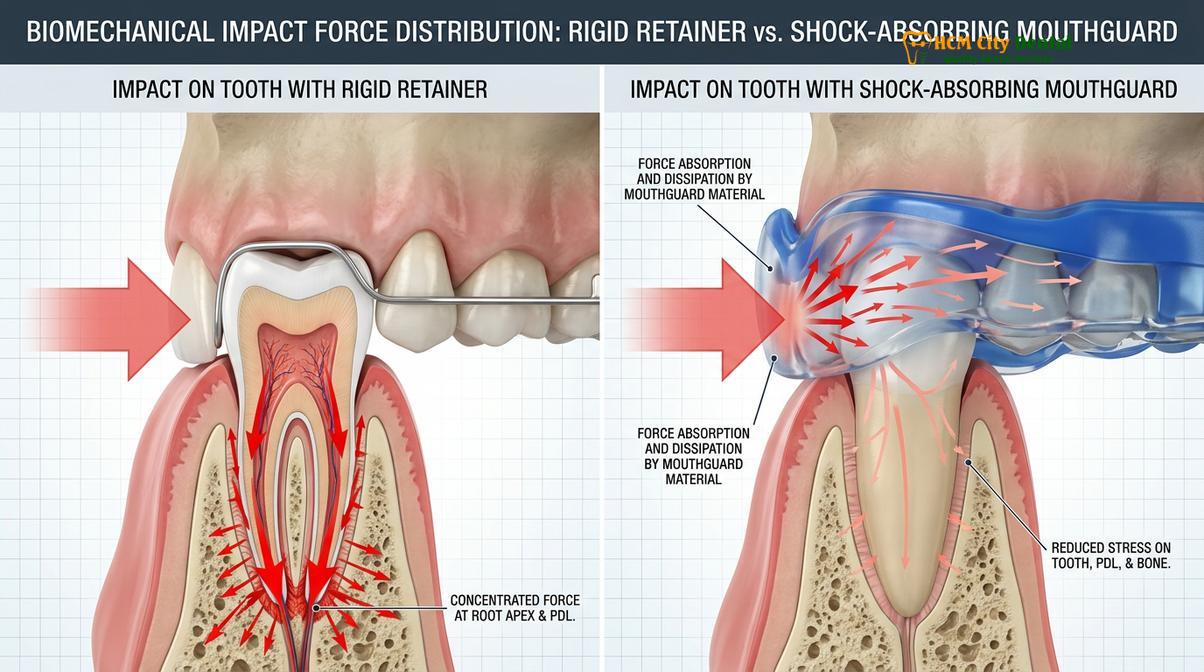
To understand why retainers and sports are a dangerous combination, one must examine the biomechanics of facial trauma. When a projectile—such as a ball, puck, or an opponent’s elbow—strikes the orofacial region, kinetic energy is transferred to the teeth and jaws. A healthy periodontium can absorb minor forces, but high-velocity impacts require external dissipation. Rigid orthodontic appliances, such as clear thermoplastic trays or acrylic baseplates, do not possess shock-absorbing qualities. Instead of dispersing the energy, a rigid retainer acts as a conduit, transmitting the traumatic force directly to the clinical crowns and roots of the teeth.[1]
Dr. Nguyen Van Cuong, a leading specialist in restorative and preventive dentistry, frequently educates patients on the dangers of combining athletic impact with rigid dental appliances. Through his extensive clinical work providing Dr Cuong Dentist Custom Retainers, he emphasizes that rigid polymers cannot absorb kinetic energy, making them a liability during physical collisions. His protocols at HCMC Dental Clinic prioritize transitioning athletes to proper elastomeric mouthguards to prevent catastrophic root fractures and soft tissue avulsions.
Contact vs. Non-Contact Sports
The clinical guidelines for retainer wear vary depending on the classification of the sport. Contact sports—defined as activities where physical collision with other players or objects is expected or highly probable—include football, rugby, hockey, martial arts, basketball, and soccer. In these environments, the removal of any removable orthodontic appliance is an absolute clinical necessity. The risk of maxillofacial trauma is simply too high to justify the presence of a non-protective, rigid device in the oral cavity.
Conversely, non-contact sports such as track and field, swimming, gymnastics, and cycling present a lower baseline risk of facial trauma. However, “low risk” does not equate to “no risk.” A gymnast may suffer a fall, or a cyclist may experience a collision. While some patients choose to wear their clear retainers during these activities, they must understand that the appliance offers zero protective benefit.
Risks of Orthodontic Relapse vs. Dental Trauma
The primary reason patients hesitate to remove their retainers during sports is the fear of orthodontic relapse—the tendency of teeth to migrate back toward their original pre-treatment positions. It is essential to address this concern with evidence-based physiological facts. The periodontal ligament is a complex network of collagen fibers that requires sustained, continuous force to facilitate osteoclastic (bone-resorbing) and osteoblastic (bone-forming) activity. Tooth movement is not an instantaneous process.
Removing a retainer for two to three hours to participate in a sports practice or game will not result in irreversible relapse. While the teeth may exhibit microscopic mobility—a natural physiological phenomenon—they will not visibly shift out of alignment within such a short timeframe. Once the athletic activity is concluded, the immediate reinsertion of the retainer will gently guide the teeth back into their perfectly stabilized positions.
Mouthguard vs Retainer: Understanding the Difference
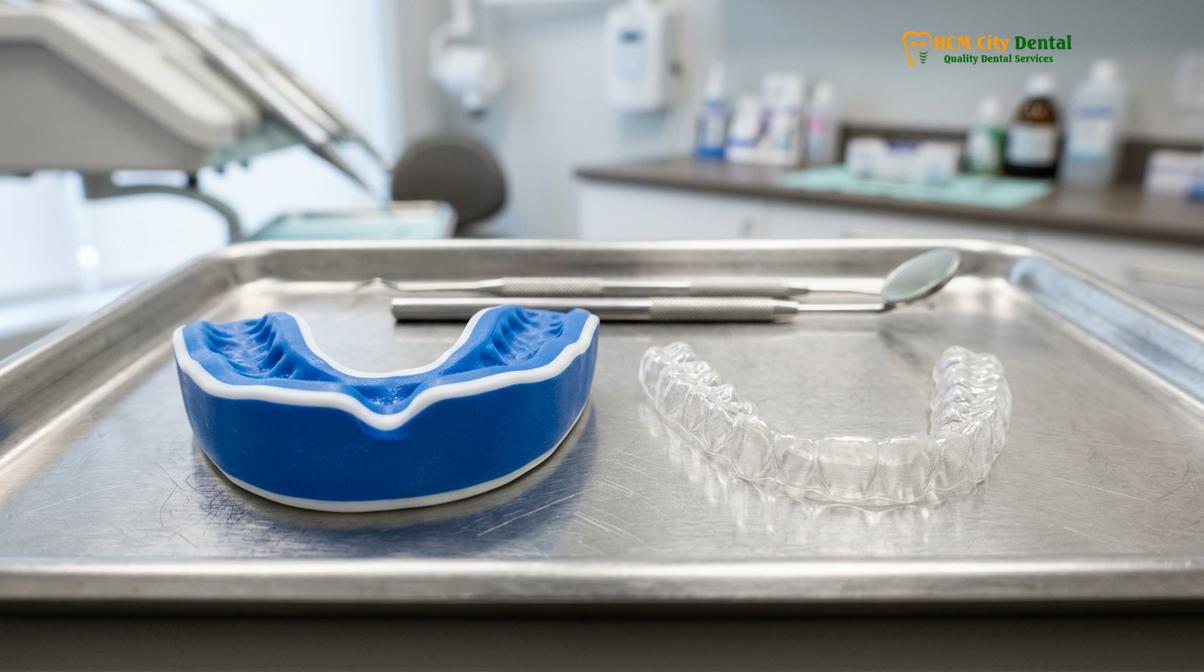
While retainers utilize thin, rigid polymers to prevent tooth movement, athletic mouthguards are fabricated from thick, elastomeric materials designed specifically to absorb and dissipate traumatic kinetic energy.
A frequent point of confusion among patients is the distinction between a mouthguard and a clear retainer. Because both appliances are worn over the teeth and can be made of transparent materials, patients sometimes assume they serve interchangeable functions. This misconception can lead to severe injuries. A comprehensive clinical comparison of mouthguards versus retainers reveals fundamental differences in material science, fabrication thickness, and biomechanical purpose.[2]
Orthodontic retainers are precision instruments. Whether discussing Essix clear retainers or traditional wire appliances, their primary function is micromovement control. Clear retainers are typically vacuum-formed or pressure-thermoformed from sheets of PETG or polyurethane that are only 0.75mm to 1.0mm thick. This ultra-thin profile is necessary for patient comfort, speech articulation, and precise adaptation to the dental anatomy. However, this thinness provides absolutely no cushioning effect against blunt force.
In stark contrast, athletic mouthguards are engineered for macrotrauma protection. Professional custom mouthguards are typically fabricated from ethylene vinyl acetate (EVA), an elastomeric polymer known for its exceptional shock-absorbing properties. A properly designed mouthguard features varying thicknesses across different regions of the dental arch. The labial (front) surface is usually 3.0mm to 4.0mm thick to absorb direct anterior impacts, while the occlusal (biting) surface is calibrated to cushion the temporomandibular joint (TMJ) against upward forces directed from the mandible to the skull base.
Material Composition and Force Distribution
The protective mechanism of an EVA mouthguard relies on its ability to undergo elastic deformation. When a force strikes the mouthguard, the elastomeric material compresses, absorbing a significant portion of the kinetic energy. The remaining energy is then distributed laterally across the entire dental arch, preventing any single tooth from bearing the full brunt of the impact. This dispersion mechanism is critical in preventing root fractures and alveolar bone trauma.
| Feature | Orthodontic Retainer (Clear) | Custom Athletic Mouthguard |
|---|---|---|
| Primary Material | Rigid PETG or Polyurethane | Elastomeric Ethylene Vinyl Acetate (EVA) |
| Average Thickness | 0.75mm – 1.0mm | 3.0mm – 4.0mm (Labial surface) |
| Biomechanical Purpose | Prevent tooth movement; maintain alignment | Absorb impact; dissipate kinetic energy |
| Impact Resistance | None (Prone to shattering) | High (Elastic deformation) |
| TMJ Protection | Minimal to none | High (Cushions mandibular upward force) |
Why Retainers Fail as Athletic Protection
Attempting to use a retainer as a substitute for a mouthguard is a dangerous clinical error. The rigid plastics used in retainers have a low threshold for impact resistance. When subjected to a sudden, high-velocity force, the material undergoes brittle fracture. The resulting sharp edges can cause deep lacerations to the highly vascularized tissues of the lips and cheeks, requiring surgical suturing and increasing the risk of infection.[5]
“The biomechanical design of an orthodontic retainer is fundamentally opposed to the requirements of athletic dental protection. A retainer locks teeth into a rigid matrix, whereas a mouthguard provides a flexible buffer that allows the periodontium to safely absorb and deflect traumatic forces.”
Additionally, traditional Hawley retainers—which consist of an acrylic palatal vault and a labial bow made of stainless steel wire—present unique hazards. If an athlete is struck in the mouth while wearing a Hawley retainer, the metal wire can be driven forcefully into the labial mucosa or the gingival tissues, causing severe soft tissue avulsion.
Retainer Sports Safety Protocols and Best Practices
Maintaining optimal oral health during athletic participation requires strict protocols for the safe removal, hygienic storage, and timely reinsertion of orthodontic appliances.
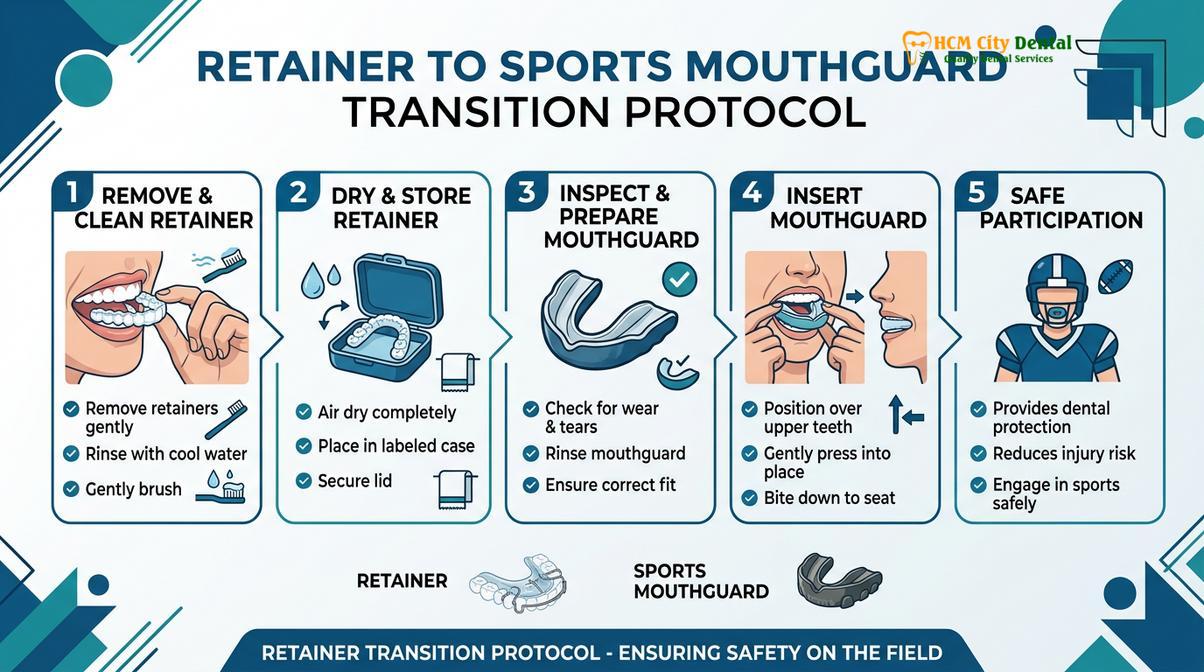
Understanding that retainers must be removed during sports is only the first step; athletes must also implement proper retainer sports safety protocols to protect their appliances from damage, loss, and bacterial contamination. The transition from the locker room to the playing field presents several logistical challenges for orthodontic patients. Improper handling of a retainer during this period is a leading cause of appliance replacement, which can be both costly and disruptive to the retention phase.[3]
At HCMC Dental Clinic in Ho Chi Minh City, clinical teams frequently encounter patients who have damaged their retainers not during the sport itself, but due to improper storage while the sport was being played. The environment of a gym bag, a locker, or a sports bench is highly unsuitable for delicate dental polymers. Implementing a structured routine ensures that the appliance remains intact and hygienic.
Transitioning Between Appliances
The protocol for transitioning between a retainer and a mouthguard should be deliberate and hygienic. Athletes should never remove their retainers with unwashed hands, especially in a gym environment where surfaces are teeming with pathogens. Before removing the retainer, hands should be thoroughly washed with soap and water or sanitized with an alcohol-based gel.
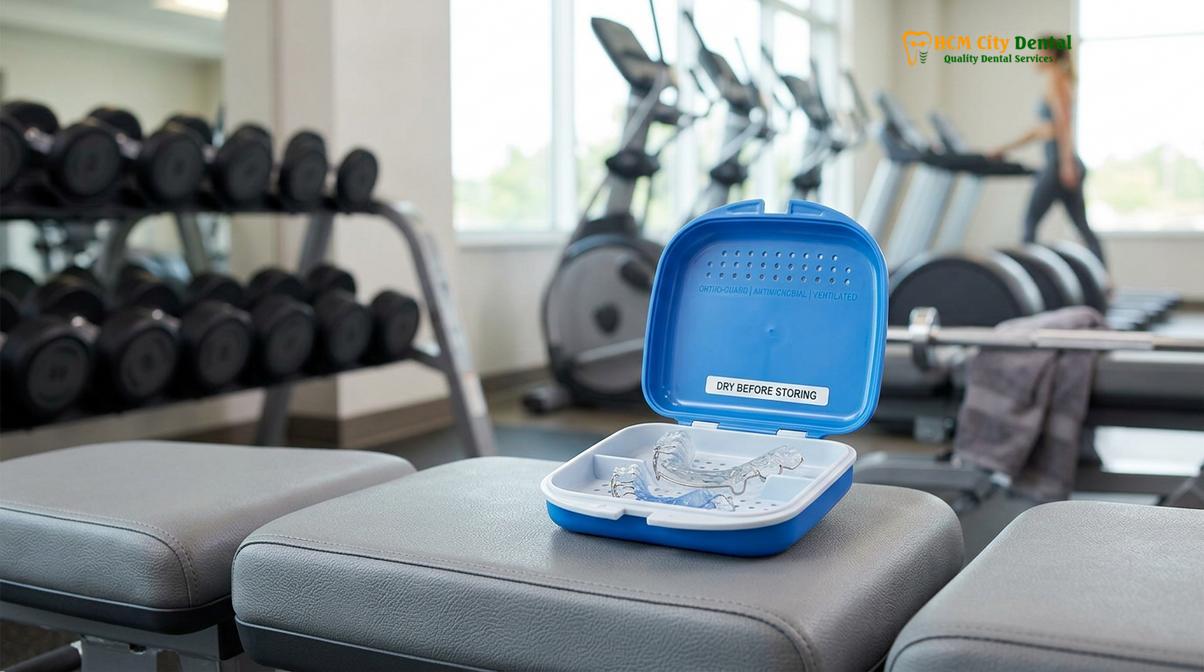
Once removed, the retainer must be immediately placed into a dedicated, rigid storage case. The case should be well-ventilated to allow moisture to evaporate, preventing the proliferation of anaerobic bacteria and fungal organisms. After securing the retainer, the athlete can then insert their custom athletic mouthguard.
Clinical Warning: Never wrap your retainer in a tissue or napkin while playing sports. This is the most common cause of appliance loss, as wrapped retainers are frequently mistaken for trash and discarded. Always use a brightly colored, rigid plastic case for storage.
Storing Your Retainer Safely at the Gym or Field
Environmental factors play a significant role in retainer safety. Thermoplastic materials are highly susceptible to thermal distortion. Leaving a retainer case in a gym bag inside a car parked in the sun can subject the appliance to temperatures that activate the polymer memory of the plastic, causing the retainer to warp and lose its precise adaptation to the teeth.
To prevent thermal damage, the retainer case should be kept in a temperature-controlled environment whenever possible. If the sport is played outdoors in extreme heat, the case should be stored in a shaded area or an insulated bag. Furthermore, the storage case itself must be cleaned regularly to prevent cross-contamination.
Can You Play Sports with a Clear Retainer?
While clear retainers may be worn during strictly non-contact activities, athletes must remain vigilant about the risks of appliance fracture due to exercise-induced clenching and bruxism.
The question of whether one can play sports with a clear retainer is nuanced and depends entirely on the nature of the physical activity. As previously established, contact sports strictly prohibit the use of any retainer. However, many adults and adolescents participate in non-contact fitness regimens, such as long-distance running, yoga, pilates, or stationary cycling. In these controlled environments, the risk of external facial trauma is minimal, and wearing a clear retainer is generally considered safe from an impact perspective.
The Danger of Exercise-Induced Bruxism
Despite the lack of impact risk in non-contact sports, there is an internal biomechanical threat: exercise-induced bruxism. Activities that induce heavy physiological strain, such as competitive weightlifting or high-intensity interval training (HIIT), often trigger involuntary teeth grinding and clenching. The extreme occlusal forces generated by the masseter and temporalis muscles during a heavy lift can easily exceed the structural integrity of a clear retainer.
Patients who clench their teeth while wearing a clear retainer during heavy exertion risk creating micro-cracks in the thermoplastic material. Over time, these micro-cracks propagate, leading to premature wear and eventual appliance failure. If an athlete knows they have a tendency to clench during exertion, it is clinically advisable to remove the clear retainer and use a specialized weightlifting bite guard, which is designed to withstand heavy occlusal loading without damaging the dentition.
Fixed Permanent Retainers and Athletic Mouthguards
Athletes with bonded lingual retainers require specialized custom mouthguards designed to protect the dentition without placing debonding stress on the fixed wire.
Patients who have a fixed permanent retainer face a different set of clinical challenges during athletic participation. Because the braided stainless steel wire is bonded directly to the lingual surfaces of the anterior teeth using composite resin, it cannot be removed prior to a game. Therefore, the athlete must wear a mouthguard over the fixed appliance.[4]
The primary risk in this scenario is not the impact itself, but the fit and removal of the mouthguard. Standard over-the-counter “boil-and-bite” mouthguards are highly contraindicated for patients with fixed retainers. During the molding process, the softened thermoplastic material of a boil-and-bite guard can flow into the undercuts around the bonded wire and the composite pads. When the material cools and hardens, it locks onto the retainer.
“Athletes with bonded lingual wires must utilize custom-fabricated mouthguards with internal block-outs to prevent accidental debonding during removal. A locked-on mouthguard can easily rip the composite pads from the enamel, requiring immediate orthodontic repair.”
To safely accommodate a fixed retainer, a dental professional must fabricate a custom EVA mouthguard. During the laboratory process, the technician applies a block-out material over the representation of the fixed wire on the dental model. This creates a microscopic relief space within the final mouthguard, ensuring that the elastomeric material rests passively over the wire without gripping it. This allows the athlete to insert and remove the mouthguard safely while still receiving maximum impact protection.
Clinical Case Study: Managing Sports Retention in Ho Chi Minh City
A recent case at HCMC Dental Clinic in Ho Chi Minh City highlights the importance of proper athletic dental protection. A 19-year-old amateur rugby player presented to the clinic with concerns about maintaining his newly aligned smile during the competitive season. He had recently completed clear aligner therapy and was issued standard Essix retainers for nighttime wear.
During his consultation, the clinical team discovered he had been wearing his clear retainers during rugby practice, mistakenly believing they offered a layer of protection. The clinical staff immediately intervened, educating the patient on the severe risks of thermoplastic shattering upon impact. The patient’s clear retainers were strictly relegated to nighttime and non-contact wear.
To ensure his safety on the field, the clinic took digital impressions and fabricated a dual-laminated, 4mm thick custom EVA mouthguard. The mouthguard was engineered to fit precisely over his current dental alignment, providing superior shock absorption without compromising his airway or speech. By separating his retention protocol from his athletic protection protocol, the patient successfully completed his rugby season with zero dental trauma and zero orthodontic relapse.
When to Consult a Clinical Orthodontist
Recognizing the signs of appliance damage or dental trauma is crucial for preventing long-term complications and maintaining orthodontic stability.
Athletes should be proactive about their dental health and seek immediate clinical evaluation if certain events occur. According to guidelines aligned with the Vietnam Odonto-Stomatology Association (VOSA) regarding sports dental trauma, any direct blow to the face that results in bleeding, tooth mobility, or altered occlusion requires an urgent dental assessment, regardless of whether a mouthguard was worn.
Furthermore, you should schedule an appointment with your orthodontist if you notice any of the following regarding your retainers:
- Visible cracks, sharp edges, or perforations in your clear retainer.
- A fixed lingual wire that feels loose, sharp, or has detached from one or more teeth.
- A retainer that suddenly feels excessively tight or fails to seat completely, indicating potential warping from heat exposure or significant tooth shifting.
- Difficulty fitting your custom mouthguard over your teeth, which may suggest that your dental alignment has changed.
References
- American Journal of Orthodontics and Dentofacial Orthopedics. Biomechanics of dental trauma and orthodontic retention.
- Journal of Sports Dentistry. Material properties of athletic mouthguards versus orthodontic retainers.
- International Journal of Paediatric Dentistry. Incidence of sports-related dental injuries in orthodontic patients.
- Journal of Clinical Orthodontics. Management of fixed retention devices during athletic participation.
- Dental Traumatology. Soft tissue lacerations associated with removable orthodontic appliances during sports.
For personalized advice on balancing your active lifestyle with orthodontic retention, schedule a consultation at HCMC Dental Clinic in Ho Chi Minh City. Explore our comprehensive Orthodontics services to ensure your smile remains protected and perfectly aligned during every game.