The cost of a fixed permanent retainer in Vietnam typically ranges from $40 to $150 per arch. This orthodontic solution involves bonding a thin wire behind the teeth to help prevent post-treatment relapse, offering a highly cost-effective and clinically reliable option for international patients seeking quality dental care.
Clinical Summary:
Fixed permanent retainers, also known as bonded lingual retainers, are essential orthodontic appliances designed to maintain tooth alignment after the removal of braces or clear aligners. By utilizing a specialized wire bonded to the lingual (tongue-facing) surfaces of the anterior teeth, these retainers counteract the natural biological tendency of teeth to shift back to their original positions. Vietnam has emerged as a premier destination for this procedure, offering international-standard materials and expert clinical application at a fraction of the cost found in Western nations. The procedure is non-invasive, highly effective for long-term stability, and requires specific oral hygiene protocols to manage calculus accumulation.
Key Takeaways:
- Cost Efficiency: Prices in Vietnam are generally lower than in the US or Australia, utilizing international-grade materials.
- Biological Function: Bonded retainers help neutralize periodontal ligament memory, reducing the risk of rapid post-treatment relapse.
- Material Composition: Typically constructed from braided stainless steel or dead-soft titanium wire secured with dental composite.
- Hygiene Requirements: Requires specialized cleaning tools like floss threaders to manage plaque around the bonded areas.
- Clinical Supervision: Regular professional cleanings and structural checks are recommended to support long-term success.
Understanding Fixed Permanent Retainers
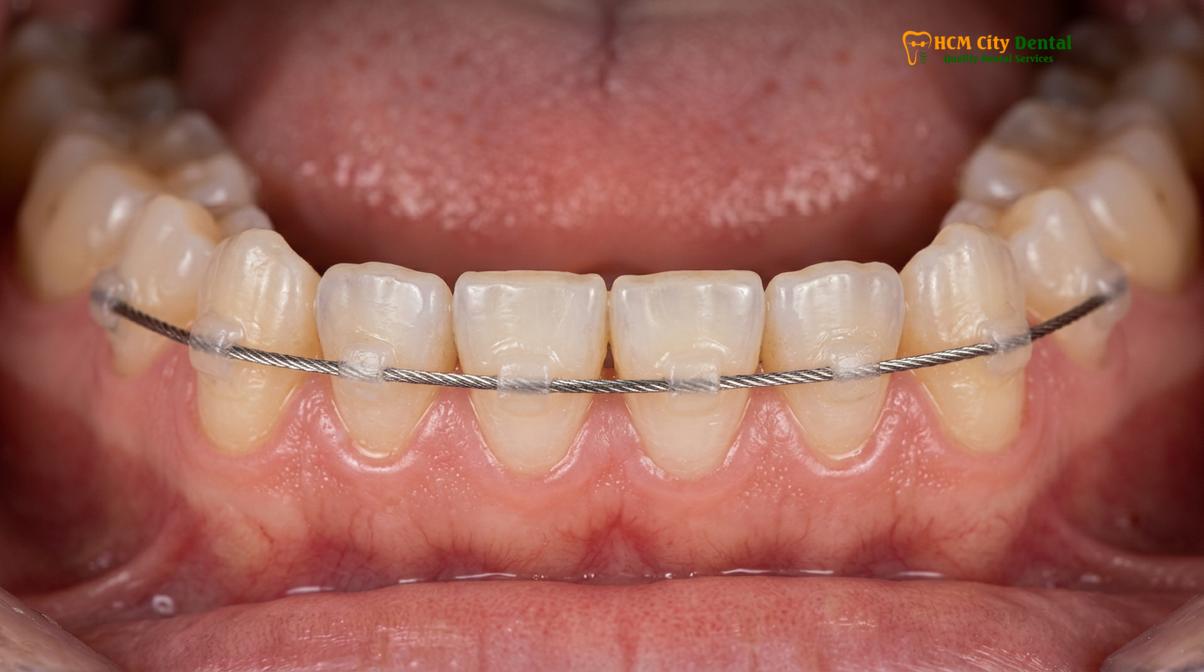
Fixed retainers are custom-fitted wires bonded to the lingual surfaces of anterior teeth to provide continuous stabilization after active orthodontic treatment.
The completion of active Orthodontics marks the beginning of a critical new phase: retention. When braces or clear aligners are removed, the teeth are in their optimal aesthetic and functional positions. However, the surrounding bone and periodontal tissues require significant time to reorganize and stabilize around these new positions. This biological vulnerability makes the retention phase absolutely vital.
A fixed permanent retainer is a passive orthodontic appliance. Unlike active appliances that exert force to move teeth, a retainer’s primary purpose is to hold teeth exactly where they are. The appliance typically consists of a thin, custom-contoured wire that is attached to the lingual (back) surfaces of the front teeth—usually spanning from canine to canine on the lower arch, and sometimes on the upper arch as well. Because it is bonded directly to the enamel, it operates continuously without requiring daily compliance from the patient.[1]
The Biology of Orthodontic Relapse
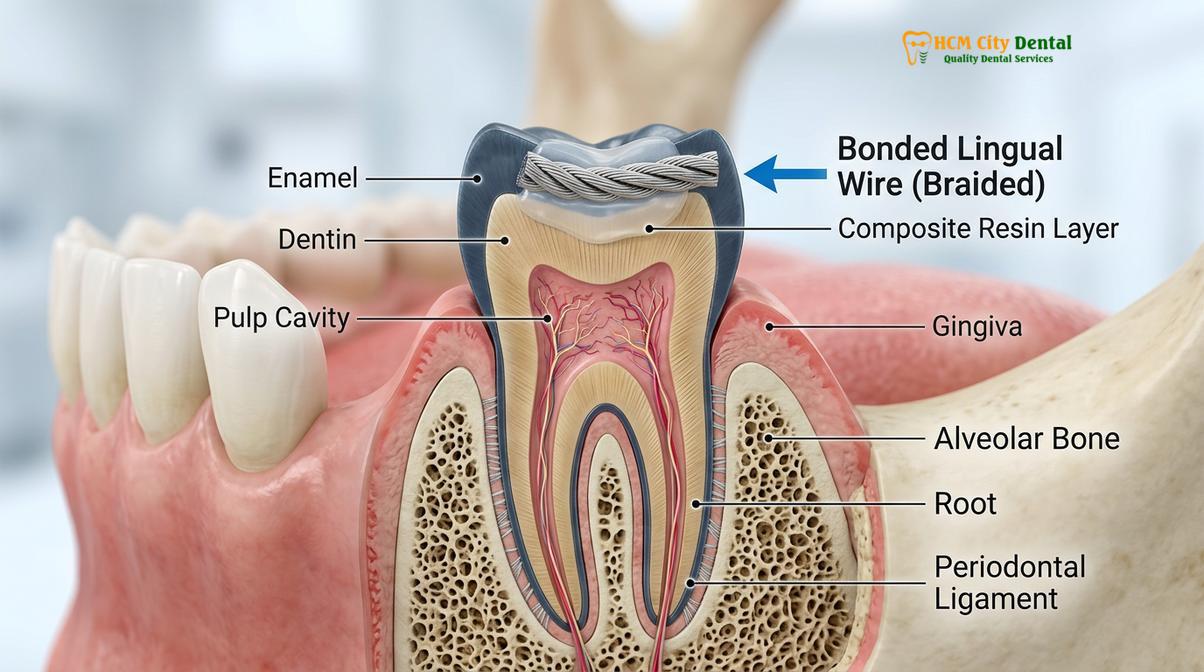
To understand why permanent retention is so highly recommended by specialists, one must understand the biology of tooth movement. Each tooth is suspended in its bony socket by the periodontal ligament (PDL), a complex network of elastic fibers. During orthodontic treatment, these fibers are stretched and compressed. Once the active force is removed, the elastic memory of the PDL fibers attempts to pull the teeth back toward their original, pre-treatment positions. This phenomenon is known as post-orthodontic relapse.
Furthermore, the alveolar bone surrounding the roots takes several months to fully calcify and harden after teeth have been moved. During this consolidation period, teeth are highly susceptible to shifting. Even years after treatment, natural physiological changes, such as late mandibular growth or the mesial drift of teeth with age, can cause crowding in the anterior segments. A fixed retainer acts as a permanent splint, effectively neutralizing these biological forces.[2]
“The lower anterior teeth are notoriously prone to relapse. A bonded lingual retainer is often the most reliable defense mechanism we have, as it removes the variable of patient compliance entirely. It is a passive guardian of the orthodontic investment.”
— Dr. Nguyen Van Cuong, Lead Orthodontist
Fixed Permanent Retainer Price in Vietnam
Patients can expect to pay significantly less for permanent retention in Vietnam compared to Western countries, benefiting from lower operational costs while receiving international-grade materials.
For dental tourists and expatriates, the financial aspect of orthodontic maintenance is a major consideration. The cost of dental care in Western countries has driven many to seek high-quality alternatives in Southeast Asia. Vietnam, and particularly Ho Chi Minh City, has developed a robust infrastructure for advanced dental tourism, offering state-of-the-art clinics equipped with modern technologies.
When evaluating the bonded wire cost per arch, patients will find that clinics in Vietnam offer highly competitive rates. The lower cost is not a reflection of inferior materials—reputable clinics use premium dental composites and wires from global manufacturers. Instead, the savings are primarily due to lower local labor costs, reduced administrative overhead, and favorable exchange rates.
Cost Breakdown and Global Comparison
The permanent retention price is generally structured per arch (upper or lower). The fee typically includes the clinical examination, the custom contouring of the wire, the bonding procedure, and the final polishing. If a patient requires removal of an old, broken retainer before placing a new one, a small additional fee may apply.
| Location | Estimated Cost (Single Arch) | Estimated Cost (Both Arches) | Material Quality Standard |
|---|---|---|---|
| Vietnam (HCMC) | $40 – $80 USD | $80 – $150 USD | International (FDA/CE Approved) |
| United States | $250 – $500 USD | $500 – $1,000 USD | International (FDA Approved) |
| Australia | $300 – $600 AUD | $600 – $1,200 AUD | International (TGA Approved) |
| United Kingdom | £150 – £350 GBP | £300 – £700 GBP | International (CE Approved) |
This stark price difference makes it highly advantageous for international patients to schedule their retainer maintenance, repairs, or initial placements while visiting Vietnam. At HCMC Dental Clinic in Ho Chi Minh City, we frequently treat patients who are traveling through Southeast Asia and require immediate, cost-effective solutions for debonded or broken retainers.
The Clinical Workflow: Bonding the Retainer
The bonding process requires meticulous moisture control, precise wire adaptation, and high-quality composite resin to ensure long-term durability and patient comfort.
The application of a fixed retainer is a highly technique-sensitive procedure. The longevity of the appliance depends entirely on the quality of the bond between the enamel, the composite resin, and the wire. The procedure is completely painless and does not require local anesthesia, but it does require the patient to remain still to ensure a dry working field.
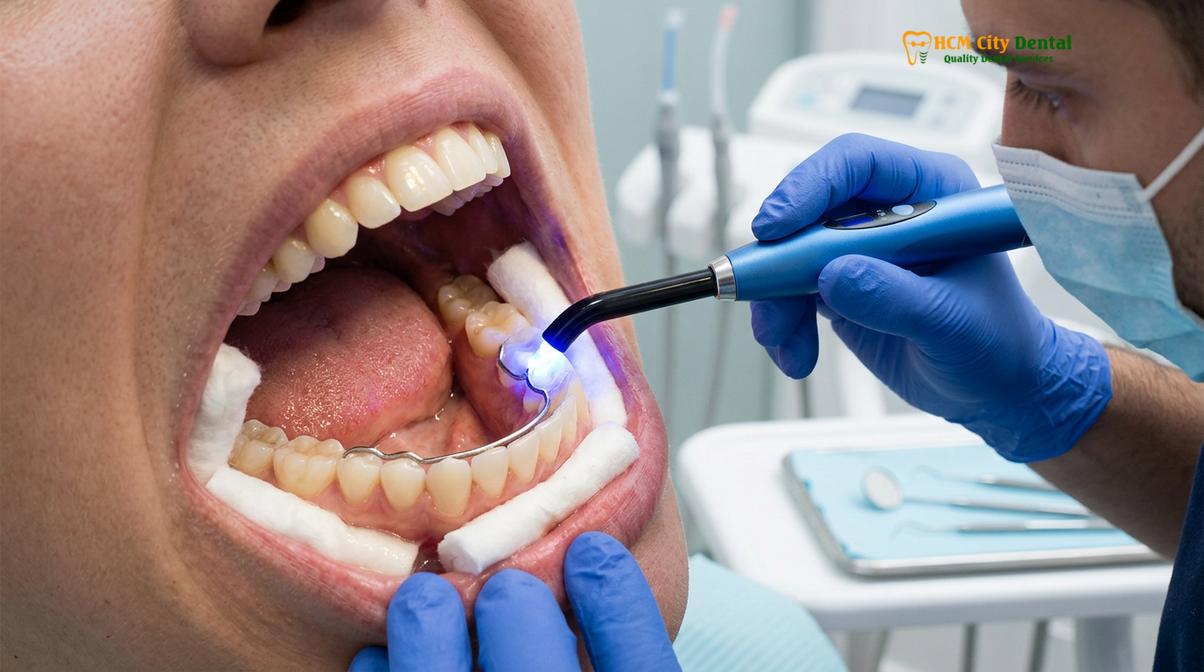
Step-by-Step Bonding Protocol
The clinical workflow for placing a dental cement wire involves several precise steps to help guarantee maximum adhesion and minimal interference with the patient’s bite or speech:
- Prophylaxis and Preparation: The lingual surfaces of the target teeth are thoroughly cleaned using a pumice paste to remove any pellicle, plaque, or residual adhesive from previous orthodontic brackets. A clean enamel surface is the foundation of a strong bond.
- Wire Adaptation: The orthodontist selects the appropriate wire. The most common choice is a multi-stranded (braided) stainless steel wire. This type of wire is preferred because its braided texture provides mechanical retention for the composite resin, and it possesses a “dead-soft” quality, meaning it can be precisely contoured to the unique anatomy of the patient’s teeth without exerting active orthodontic forces.
- Isolation: Moisture control is critical. The teeth are isolated using cotton rolls, dry angles, or a rubber dam. Saliva contamination during the bonding process is a leading cause of premature retainer failure.
- Etching and Priming: A 37% phosphoric acid etching gel is applied to the specific spots on the enamel where the composite will be placed. This creates microscopic pores in the enamel. After rinsing and drying, a bonding agent (primer) is applied and light-cured.
- Bonding the Wire: The custom-contoured wire is positioned against the teeth. Small increments of flowable dental composite resin are placed over the wire on each tooth. The orthodontist carefully shapes the composite to ensure it is smooth and does not create bulky ledges that could trap food.
- Polymerization and Polishing: A specialized dental curing light is used to harden the composite resin instantly. Finally, the bonded areas are polished with specialized burs and rubber cups to ensure a smooth finish that is comfortable against the tongue.[3]
Following the procedure, the orthodontist will check the patient’s occlusion (bite) to ensure that the lower teeth do not strike the upper retainer wire, which could cause the wire to debond or wear down the opposing enamel.
Comparing Fixed vs. Removable Retention Strategies
While fixed retainers offer compliance-free stability for anterior teeth, they are often combined with removable clear aligners to ensure comprehensive full-arch retention.
In modern orthodontic practice, a dual-retention strategy is frequently employed. A fixed retainer is excellent at preventing the lower incisors from crowding—the most common site of relapse—but it only covers the front six teeth. The posterior teeth (premolars and molars) are left unsupported by a fixed wire.
To address this, orthodontists often prescribe a removable clear retainer (such as an Essix retainer) to be worn over the fixed wire at night. This ensures that the entire dental arch remains stable. Removable retainers also help protect the teeth from the wear and tear associated with bruxism and retention challenges during sleep.
However, removable retainers come with their own set of challenges. They require strict patient compliance. If a patient forgets to wear their clear retainer, they may experience tightness in the morning when they finally put it back on, indicating that the teeth have begun to shift. Furthermore, clear retainers can suffer from discoloration of clear aligners if not cleaned properly, and require proper storage protocols to prevent warping or loss.
Maintenance and Plaque Management
Proper oral hygiene is critical for patients with bonded retainers, as the wire creates a retentive area for plaque and calculus accumulation that can lead to periodontal issues.
The primary drawback of a fixed permanent retainer is the challenge it presents to daily oral hygiene. The wire acts as a physical barrier, preventing traditional dental floss from passing between the contact points of the teeth and reaching the gumline. If plaque is not effectively removed, it rapidly mineralizes into calculus (tartar), leading to gingival inflammation, bleeding, and eventually periodontal disease.[4]
Clinical Warning: Neglecting oral hygiene around a fixed retainer can lead to severe calculus buildup, gingivitis, and bone loss. The presence of the wire makes the area highly susceptible to bacterial colonization if specialized cleaning techniques are not employed daily.
Specialized Cleaning Techniques
Patients with bonded retainers must adopt specific tools and techniques to maintain periodontal health:
- Floss Threaders: These flexible plastic loops allow the patient to thread standard dental floss under the retainer wire, enabling them to clean the interproximal spaces and the gingival sulcus.
- Super Floss: A specialized type of floss that features a stiffened end for threading, a spongy middle section for cleaning around the wire, and regular floss for the gumline.
- Interdental Brushes: Small, cone-shaped brushes that can be inserted between the teeth, below the contact point and the wire, to physically disrupt plaque biofilms.
- Water Flossers: Oral irrigators use a pulsating stream of water to flush out food debris and bacterial accumulation from around the wire and below the gumline. While highly effective, they should be used as an adjunct to, not a replacement for, mechanical flossing.
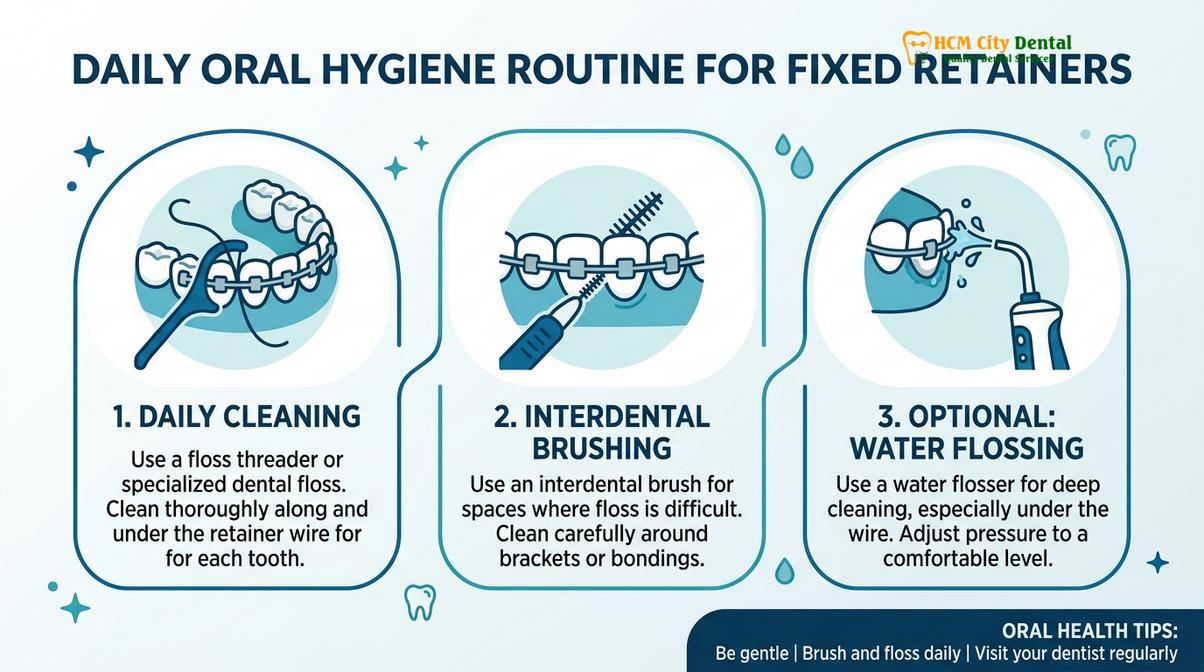
Because of these hygiene challenges, regular professional dental cleanings are highly recommended. The plaque cleaning cost in local clinics is generally very affordable, making it easy for patients to maintain a schedule of professional scaling and polishing every 6 months. During these visits, the dentist will use ultrasonic scalers to safely remove calculus from around the delicate wire without compromising the composite bonds.
“I always tell my patients that a fixed retainer is a commitment to excellent oral hygiene. The wire protects your alignment, but you must protect your gums. Taking an extra two minutes a day to thread floss under that wire is a small price to pay for a lifetime of straight, healthy teeth.”
— Dr. Nguyen Van Cuong, Lead Orthodontist
When to See a Doctor for Retainer Issues
While fixed retainers are designed to be durable, they are not indestructible. The composite resin can wear down over time, and the wire can bend or break if subjected to excessive force. Biting into hard foods like ice, hard candies, or un-cut apples using the front teeth can cause the adhesive pads to debond from the enamel. According to guidelines from the Vietnam Odonto-Stomatology Association (VOSA), immediate clinical evaluation is required if a bonded retainer debonds, to prevent rapid anterior crowding.[5]
You should schedule an immediate clinical evaluation if you experience any of the following:
- A Loose Wire: If you feel the wire moving or notice that one of the composite pads has detached from a tooth, it requires immediate rebonding. A partially detached wire can act as an active orthodontic appliance, applying unwanted torque and rapidly moving the affected tooth out of alignment.
- Sharp Edges: If the wire breaks or the composite chips, it can create a sharp edge that lacerates the tongue or oral mucosa.
- Noticeable Tooth Movement: If you observe any crowding, spacing, or rotation of the teeth despite the retainer being in place, the appliance may have failed structurally.
- Severe Gum Inflammation: Persistent bleeding, swelling, or pain in the gums around the retainer indicates a localized periodontal infection that requires professional intervention.
Clinical Case Example: A 28-year-old patient visited HCMC Dental Clinic in Ho Chi Minh City complaining of a sharp sensation on her tongue and slight shifting of her lower right incisor. Clinical examination revealed that the composite bond on tooth #42 had failed due to biting on a hard object, allowing the tooth to rotate slightly over three weeks. The clinical team removed the damaged segment, performed localized scaling to remove accumulated calculus, and bonded a new multi-stranded wire. The patient was also fitted with a temporary clear aligner to gently guide the shifted tooth back into its optimal position before finalizing the new permanent retention.
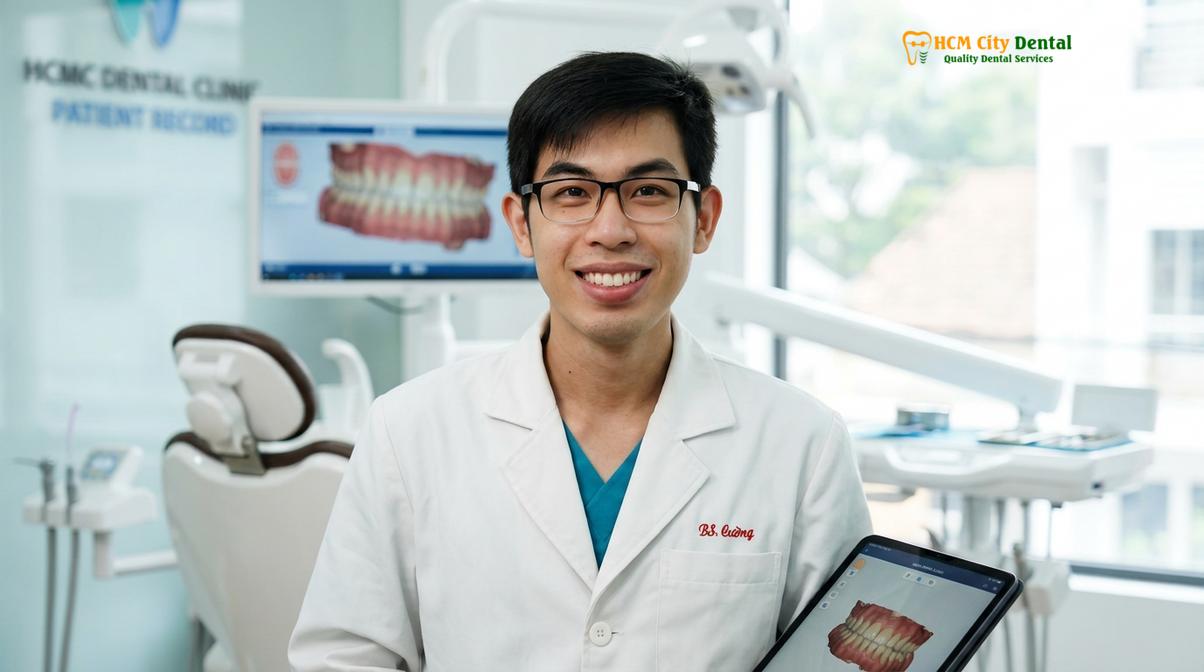
Dr. Nguyen Van Cuong, a leading specialist at HCMC Dental Clinic, emphasizes that successful orthodontic outcomes rely heavily on the retention phase. Dr. Cuong and his clinical team utilize advanced bonding protocols to ensure that permanent retainers are both comfortable and highly durable, minimizing the risk of relapse while prioritizing periodontal health.
References
- American Journal of Orthodontics and Dentofacial Orthopedics. Long-term stability of mandibular incisors following fixed retention.
- Journal of Clinical Orthodontics. Periodontal health and plaque accumulation in patients with bonded lingual retainers.
- European Journal of Orthodontics. Comparison of multistranded wire and fiber-reinforced composite retainers.
- Angle Orthodontist. Relapse rates in orthodontic patients: A systematic review of retention protocols.
- Vietnam Odonto-Stomatology Association (VOSA). Guidelines on post-orthodontic retention and periodontal maintenance.
Maintaining your orthodontic results is a lifelong endeavor. By understanding the mechanics of permanent retention, adhering to strict oral hygiene protocols, and taking advantage of the high-quality, cost-effective dental care available, you can preserve your smile for decades. If you are experiencing issues with your current appliance or need a new bonded wire, contact HCMC Dental Clinic in Ho Chi Minh City to schedule a comprehensive orthodontic evaluation.