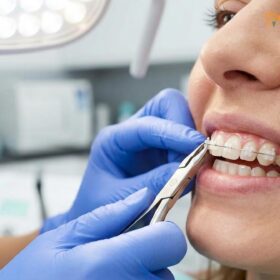
Losing or breaking your orthodontic appliance requires immediate intervention to prevent teeth from shifting. A same day retainer service Saigon, offered in District 1, Ho Chi Minh City, utilizes advanced digital scanning and in-house fabrication to provide custom-fit replacements within hours, ensuring your smile remains perfectly aligned without disrupting your schedule.
Clinical Summary:
Same-day retainer fabrication represents a critical orthodontic intervention for patients experiencing appliance loss or damage. Utilizing intraoral digital scanners and an on-site laboratory, clinicians can bypass traditional multi-day workflows. This rapid protocol minimizes the risk of orthodontic relapse, particularly for patients in the active retention phase. The process involves precise digital impressions, rapid thermoforming or 3D printing, and immediate clinical delivery, ensuring optimal fit and continuous retention of the periodontal architecture.
Key Takeaways:
- Immediate replacement prevents rapid orthodontic relapse, which can begin within the first 48 hours of appliance loss.
- Digital intraoral scanning eliminates the need for uncomfortable traditional putty impressions and improves volumetric accuracy.
- In-house laboratories enable the fabrication of clear thermoplastic appliances in under a few hours.
- Bonded lingual wire repairs can be executed safely and efficiently in a single clinical visit.
- Prompt intervention is essential for traveling patients experiencing unexpected appliance emergencies.
| Retainer Type | Price Per Pair (Saigon) | Turnaround Time |
|---|---|---|
| Essix Clear Retainers | $100 USD (2,500,000 VND) | 24h – 48h |
| Hawley Wire Retainers | $120 USD (3,000,000 VND) | 24h – 48h |
| Fixed Permanent Retainer | $100 USD / arch (2,500,000 VND) | Same Day |
The Clinical Need for Emergency Dental Retainers in HCMC
Orthodontic relapse can begin within hours of losing an appliance, making emergency dental retainers HCMC a medical necessity. Prompt replacement stabilizes the periodontal ligaments and prevents unwanted tooth movement.
The biological foundation of Orthodontics relies on the continuous remodeling of alveolar bone and periodontal ligaments. When braces or clear aligners are removed, the teeth are inherently unstable. The supracrestal and transeptal gingival fibers, which connect the teeth to the surrounding bone and to each other, possess a “memory” and exert a continuous pulling force, attempting to drag the teeth back to their original, misaligned positions[1]. This physiological phenomenon is known as orthodontic relapse.
Relapse is most aggressive during the first six to twelve months following active treatment, a period known as the active retention phase. However, even patients who have been out of braces for years can experience micro-shifts if they discontinue appliance wear. When a patient experiences a lost retainer vacation scenario—misplacing their appliance while traveling—the biological clock immediately starts ticking. Within 48 hours, the periodontal ligaments begin to contract, and the teeth can shift enough to make the original appliance, if found, feel painfully tight or completely unseatable.
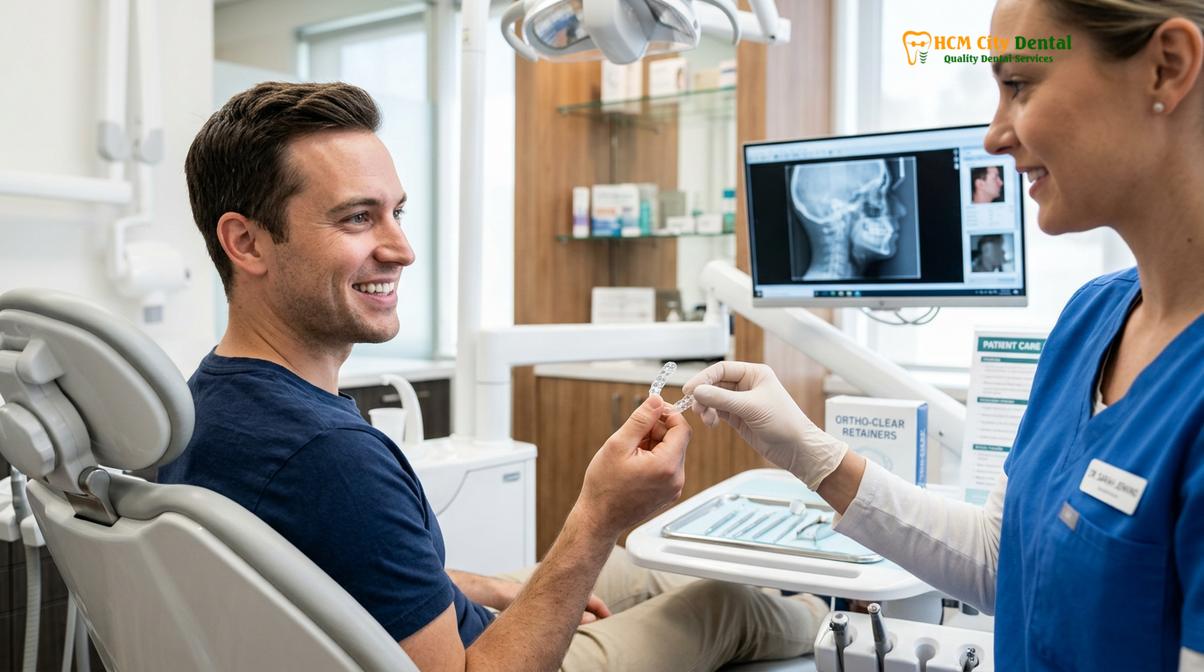
Dr. Nguyen Van Cuong, a leading specialist at HCMC Dental Clinic, emphasizes the urgency of the situation: “We frequently see patients who wait until they return to their home country to replace a lost appliance. By the time they sit in the chair, significant relapse has occurred, sometimes necessitating a brief retreatment with clear aligners. Immediate stabilization is the only way to protect the patient’s orthodontic investment.”
Providing emergency dental retainers HCMC requires a clinic to have both the clinical availability to accommodate walk-in or short-notice appointments and the technological infrastructure to bypass the traditional external laboratory delays. The goal is to capture the current position of the dentition before any clinically significant movement occurs, fabricating a rigid barrier that holds the teeth exactly where they are[2].
Workflow of a Quick Turnaround Dental Lab
A quick turnaround dental lab integrates digital intraoral scanning with rapid thermoforming technology to produce precise orthodontic appliances. This streamlined workflow reduces fabrication time from weeks to mere hours.
The traditional method of fabricating an orthodontic appliance involved mixing alginate or polyvinyl siloxane (PVS) putty, placing it in a bulky metal tray, and holding it in the patient’s mouth until it set. This process was not only uncomfortable, often triggering the gag reflex, but it also introduced multiple variables for error, such as material shrinkage, air bubbles, and distortion during shipping to an external laboratory. The turnaround time was typically one to two weeks.
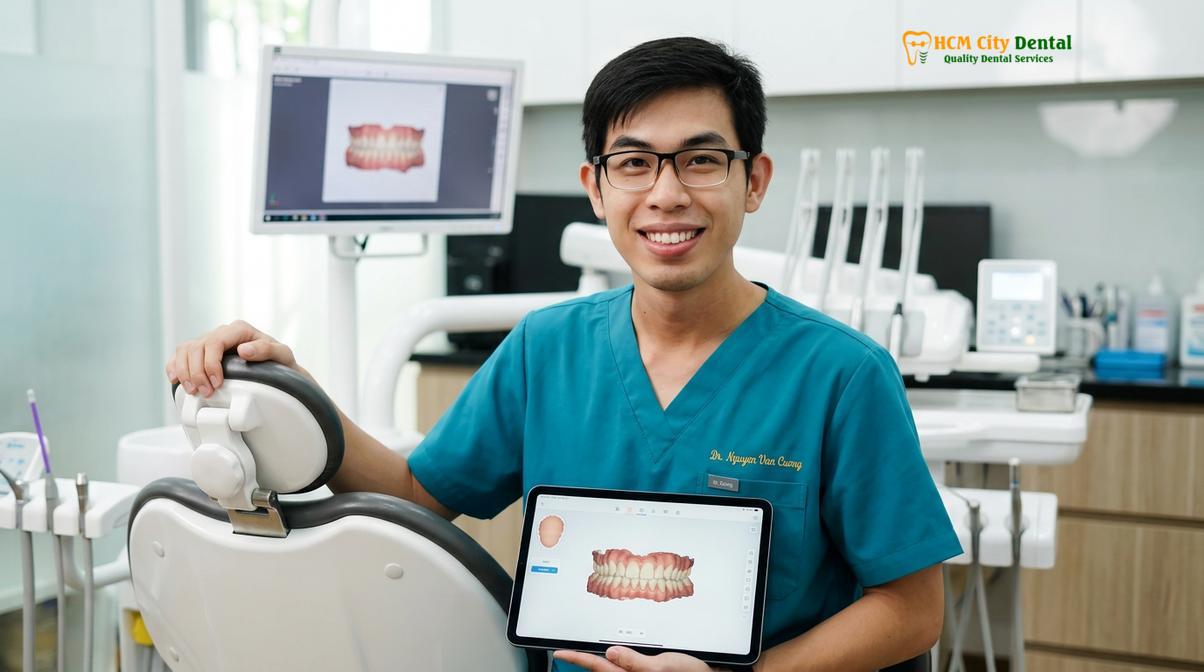
Today, a quick turnaround dental lab relies entirely on a digital workflow. The process begins with fast impressions and fitting utilizing an intraoral scanner. This wand-like device captures thousands of images per second, stitching them together to create a highly accurate, full-color 3D model of the patient’s dental arches and gingival contours. The digital impression is completely painless, takes less than five minutes, and eliminates the inaccuracies associated with physical impression materials.
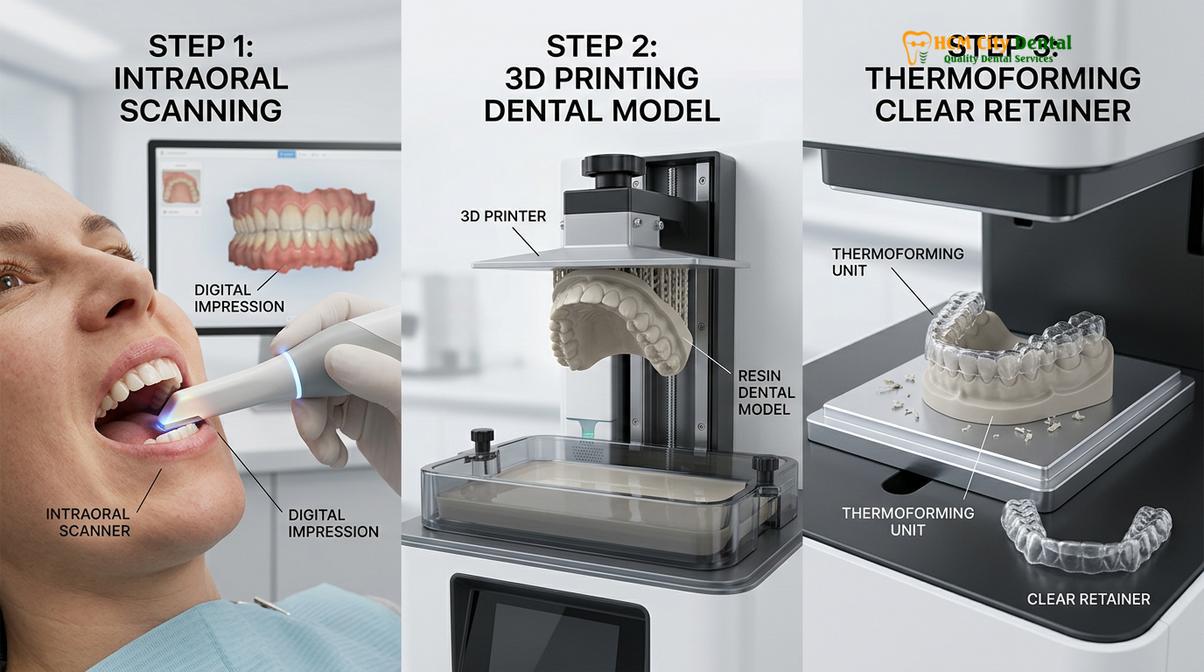
Once the digital scan is complete, the data is instantly transmitted to the clinic’s in-house laboratory. A high-resolution 3D printer uses biocompatible liquid resin to print a physical model of the patient’s teeth. This printing process typically takes 30 to 60 minutes. After the resin model is washed and cured under ultraviolet light, it is placed into a pressure thermoforming machine.
A sheet of clinical-grade thermoplastic material (usually a copolyester or polyurethane blend) is heated until pliable and then vacuum-formed or pressure-formed over the 3D-printed model. The machine ensures uniform thickness and precise adaptation to the interproximal spaces (the areas between the teeth), which is crucial for effective retention. Finally, the appliance is carefully trimmed, polished to remove any sharp edges that could irritate the gingiva, and delivered to the patient.
| Workflow Stage | Traditional Method | Same-Day Digital Method |
|---|---|---|
| Impression Technique | Alginate or PVS Putty (Uncomfortable) | Intraoral Digital Scanner (Comfortable) |
| Model Creation | Pouring stone plaster (Prone to bubbles) | 3D Printing resin (High precision) |
| Fabrication Location | External commercial laboratory | In-house clinical laboratory |
| Turnaround Time | 7 to 14 days | 2 to 4 hours |
| Data Storage | Physical models (Require physical space) | Cloud storage (Instant retrieval) |
Types of Retainers Available for Same-Day Fabrication
Clear thermoplastic appliances are the primary choice for same-day fabrication due to their rapid manufacturing process. While wire-based appliances offer durability, their complex construction typically requires longer laboratory processing times.
When seeking a same day retainer service Saigon, patients must understand that not all types of orthodontic appliances can be manufactured within a few hours. The feasibility of same-day delivery depends entirely on the materials and the manufacturing techniques required.
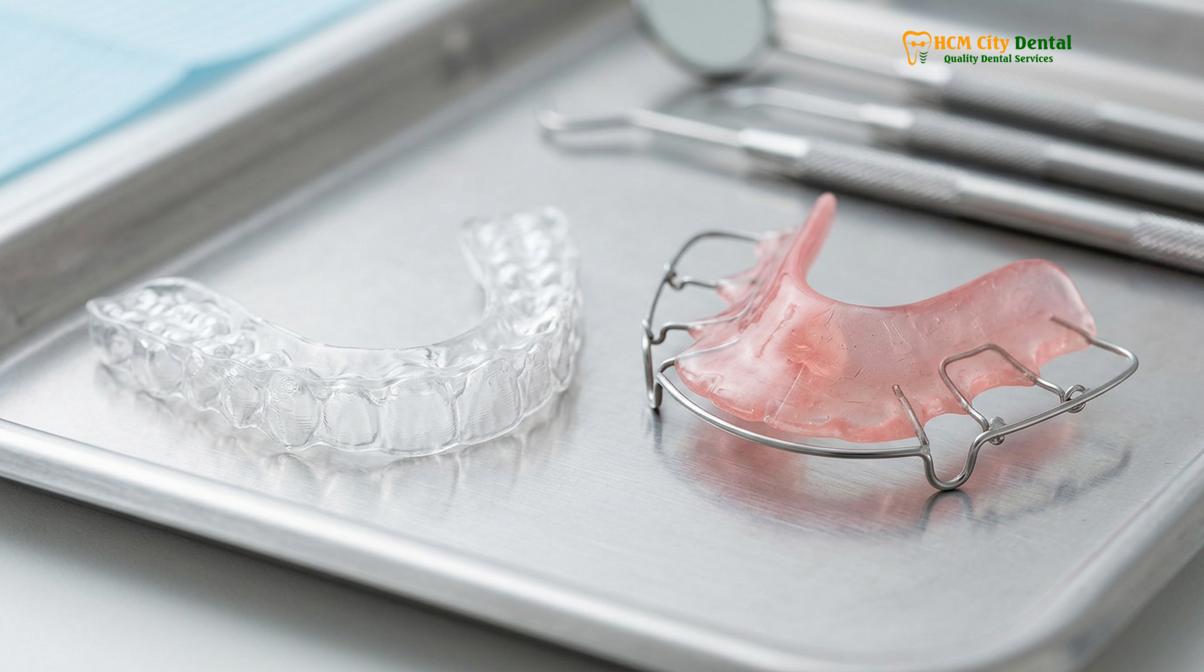
The most common appliance provided in an emergency setting is the Essix-style clear thermoplastic retainer. These are virtually invisible, cover the entire dental arch, and provide excellent stabilization. Because they are fabricated using the rapid thermoforming process over a 3D-printed model, they are the ideal solution for fast impressions and fitting. They are highly effective at preventing relapse and are generally the preferred choice for immediate post-treatment retention[3].
“The immediate delivery of a thermoplastic appliance provides critical stabilization, acting as a biological splint for the periodontium during the vulnerable post-treatment phase. It is the gold standard for emergency retention.”
Conversely, traditional Hawley appliances, which consist of an acrylic palatal or lingual base and a metal labial bow, are rarely available for same-day delivery. The fabrication of a Hawley appliance requires a technician to manually bend the stainless steel wire to match the precise contours of the patient’s teeth, followed by the application and curing of acrylic resin. This labor-intensive process usually necessitates sending the case to an external lab, taking several days. Patients interested in the differences in longevity between these options can review our Hawley vs Essix Retainer Durability guide.
Another popular option is the Vivera system by Invisalign. While Vivera appliances are renowned for their proprietary SmartTrack material and exceptional durability, they cannot be fabricated in-house. The digital scans must be sent to Align Technology’s centralized manufacturing facilities, meaning delivery takes several weeks. For patients who specifically want Vivera but need immediate stabilization, the clinic will often fabricate an in-house Essix appliance to hold the teeth in place while the official Invisalign Vivera order is processed and shipped.
Managing a Broken Wire on Permanent Retainer
A fractured bonded retainer compromises tooth stability and poses a laceration risk to the oral mucosa. Immediate clinical repair involves removing the damaged composite, preparing the enamel, and bonding a new customized wire.
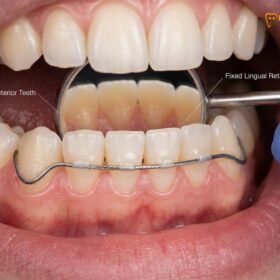
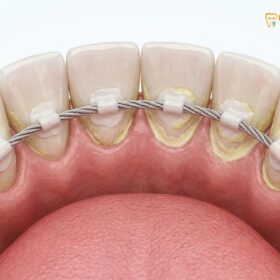
In addition to removable appliances, many patients rely on fixed lingual retainers—a thin, braided stainless steel or gold wire bonded to the tongue-side surfaces of the anterior teeth (usually the lower six front teeth). These fixed appliances provide continuous, compliance-free retention. However, they are susceptible to damage from biting into hard foods, trauma, or natural composite wear over time.
A broken wire on permanent retainer is a clinical emergency. Not only does the loss of the wire allow the anterior teeth to shift rapidly, but the sharp, exposed ends of the fractured wire can cause severe lacerations to the tongue and gingival tissues. Furthermore, debonded composite pads create plaque traps, increasing the risk of localized periodontal inflammation and dental caries[4].
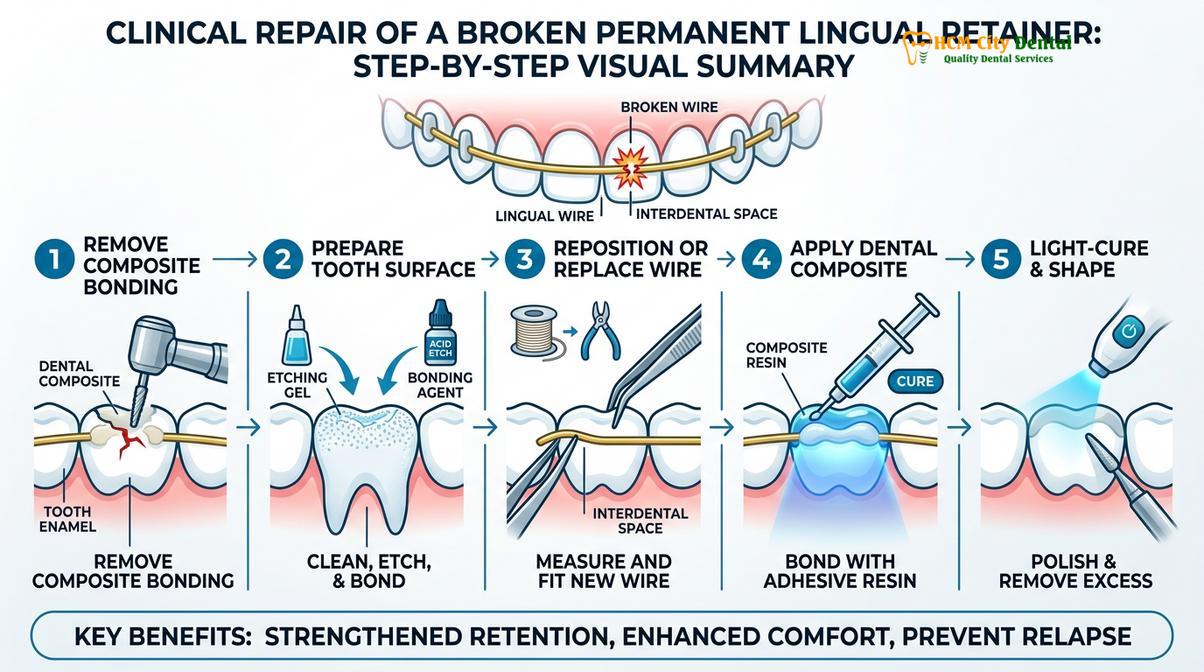
Repairing a fixed lingual wire is a precise clinical procedure that can easily be completed in a single visit. The dentist first isolates the area to ensure a completely dry field, which is critical for composite bonding. Using a specialized tungsten carbide bur, the clinician carefully removes the remnants of the old composite resin without damaging the underlying enamel. The lingual surfaces of the teeth are then etched with phosphoric acid, rinsed, and dried.
A new, custom-adapted braided wire is passively seated against the teeth. It is crucial that the wire is entirely passive; if it exerts any active force, it will cause unwanted orthodontic movement. A bonding agent is applied, followed by small pads of flowable composite resin over each tooth. The resin is then polymerized using a high-intensity LED curing light. Finally, the dentist checks the patient’s occlusion (bite) to ensure the lower incisors do not strike the upper wire during normal jaw movements.
Case Study: Rapid Intervention for a Traveling Patient
Unanticipated appliance loss during travel requires swift clinical action to prevent relapse. This case demonstrates the efficacy of an integrated digital workflow in delivering immediate orthodontic stabilization for an international visitor.
Ho Chi Minh City is a major hub for international tourism and business. Consequently, local clinics frequently encounter patients who experience a lost retainer vacation scenario. The stress of losing a medical device in a foreign country is compounded by the fear of ruining years of expensive orthodontic work.
Intervention: Dr. Cuong immediately performed a digital intraoral scan. The data was sent to the in-house laboratory, where a resin model was 3D printed. A 1.0mm copolyester thermoplastic sheet was pressure-thermoformed over the model.
Outcome: Within three hours of her arrival, the patient was fitted with a new, perfectly adapted upper appliance. The rapid intervention halted the micro-shifting, and the patient was able to continue her travels with complete peace of mind and stabilized dentition.
This case highlights the critical importance of a quick turnaround dental lab. Without the ability to scan, print, and thermoform on-site, the patient would have been forced to wait days for an external lab, during which time significant, irreversible shifting would have occurred, potentially requiring a new round of orthodontic aligners.
When to See a Doctor for Retainer Replacement
Understanding when an appliance has reached the end of its clinical lifespan is vital for maintaining orthodontic results. Patients should not wait for a catastrophic failure, such as a complete fracture or loss, to seek a replacement. Regular inspection of the appliance is a necessary component of long-term Orthodontic Care.
You should schedule a clinical evaluation for a replacement if you observe any of the following signs:
- Visible Cracks or Perforations: Even a hairline fracture compromises the structural integrity of a thermoplastic appliance, reducing its ability to hold teeth in place. Perforations, often caused by bruxism (teeth grinding), indicate the material has worn too thin to be effective.
- Loss of Rigidity: Over time, the plastic can become fatigued and overly flexible. If the appliance feels “soft” or no longer “snaps” securely onto the teeth, it is no longer providing adequate retention.
- Warping from Heat: Cleaning the appliance in hot water or leaving it in a hot car can cause the thermoplastic to warp. A warped appliance will not fit correctly and can actually apply incorrect forces to the teeth.
- Calcium Buildup: Severe calculus (tartar) buildup that cannot be removed with standard cleaning tablets can harbor bacteria and alter the fit of the appliance.
“Patients must understand that an ill-fitting appliance is often worse than no appliance at all, as it can actively apply detrimental orthodontic forces to the dentition, causing the teeth to shift in unpredictable directions,” notes Dr. Nguyen Van Cuong.
If you experience any of these issues, or if you have simply lost your device, contacting a clinic that offers a same day retainer service Saigon is the safest clinical decision. Prompt evaluation ensures that your teeth remain in their optimal, healthy positions[5]. For comprehensive consultations and rapid appliance fabrication, patients can rely on the advanced digital workflows available at HCMC Dental Clinic.
Frequently Asked Questions
How long does it take to fabricate a replacement retainer?
A replacement clear thermoplastic appliance can typically be fabricated within two to four hours. This rapid turnaround utilizes digital intraoral scanning and in-house thermoforming to ensure immediate delivery and prevent orthodontic relapse.
The exact timeframe depends on the clinic’s laboratory capacity and the specific material chosen. While clear Essix-style appliances are suitable for same-day delivery, traditional wire-and-acrylic Hawley appliances require complex manual bending and curing, which generally extends the fabrication timeline to several days.
Is a digital scan more accurate than traditional putty impressions?
Yes, digital intraoral scanning provides superior volumetric accuracy compared to traditional alginate or PVS impressions. It eliminates material distortion, reduces patient discomfort, and allows for immediate data transfer to the laboratory.
Furthermore, digital files can be archived indefinitely. If a patient loses their appliance in the future, the clinic can simply 3D print a new model from the saved data without requiring the patient to undergo another scanning procedure, provided no significant dental shifting has occurred.
Can a broken permanent wire be fixed on the same day?
Yes, a fractured or debonded permanent lingual wire can be repaired in a single clinical visit. The dentist will remove the compromised composite, prepare the enamel, and bond a new customized wire.
It is critical to address a broken bonded wire immediately, as the sharp edges can lacerate the tongue or gingival tissues. Additionally, the unsupported teeth are highly susceptible to rapid shifting, which could compromise years of prior orthodontic treatment.
What should I do if my current retainer feels too tight?
If your appliance feels excessively tight, it indicates that your teeth have begun to shift. You should wear it continuously if it seats fully without severe pain, and consult your orthodontist promptly.
However, if the appliance cannot be fully seated or causes excruciating pain, do not force it. Forcing an ill-fitting appliance can damage the periodontal ligaments or fracture the plastic. A clinical evaluation is necessary to determine if a new appliance or minor orthodontic retreatment is required.
Are same-day retainers as durable as those made in external labs?
Yes, appliances fabricated in an in-house laboratory use the exact same clinical-grade thermoplastic materials as external facilities. Their durability depends on the material thickness and the patient’s bruxism habits, not the fabrication location.
Clinics equipped with advanced pressure-thermoforming machines can achieve precise adaptation and material density. Proper maintenance, including avoiding hot water and using non-abrasive cleaning agents, is the primary factor in extending the lifespan of any clear orthodontic appliance.
References
- Journal of Prosthodontic Research. Orthodontic retainer wear and stability. (2021).
- American Journal of Orthodontics. Relapse rates and retention protocols. (2019).
- European Journal of Orthodontics. Essix vs Hawley retainers clinical trial. (2020).
- Journal of Clinical Orthodontics. Plaque accumulation on fixed retainers. (2022).
- Australian Dental Journal. Patient compliance with dental retainers. (2018).