The best retainer for teeth grinding is a custom-fabricated hybrid night guard retainer made from dual-laminate or heavy-duty hard acrylic. Standard clear retainers are too thin to withstand severe bruxism forces, while standard night guards do not actively hold teeth in their precise post-orthodontic alignment.
Clinical Summary:
Patients who suffer from sleep bruxism after completing orthodontic treatment face a unique clinical dilemma: standard thermoplastic retainers wear out rapidly under grinding forces, while conventional night guards fail to prevent orthodontic relapse. The optimal clinical solution is a specialized hybrid appliance that combines the precise tooth-holding capability of an orthodontic device with the occlusal durability of a bruxism splint. Dr. Nguyen Van Cuong emphasizes that proper material selection—typically a 1.5mm to 2mm hard-soft dual laminate—is critical to protect both the enamel and the newly aligned dental arch without compromising the temporomandibular joint (TMJ).
Key Takeaways:
- Standard 1mm clear retainers often crack or wear through within months under heavy nocturnal grinding forces.
- A hybrid night guard retainer provides both rigid orthodontic retention and essential occlusal protection.
- Dual-laminate materials offer a comfortable soft interior combined with a highly durable, hard acrylic exterior.
- While Hawley retainers withstand mild grinding, they do not cover the biting surfaces to protect tooth enamel.
- Custom fabrication by a dental professional ensures precise fit, preventing unwanted tooth shifting and TMJ strain.
Understanding the Dual Challenge: Orthodontic Retention and Bruxism
Managing both tooth alignment and bruxism requires a specialized appliance that prevents orthodontic relapse while simultaneously absorbing extreme occlusal forces during sleep.
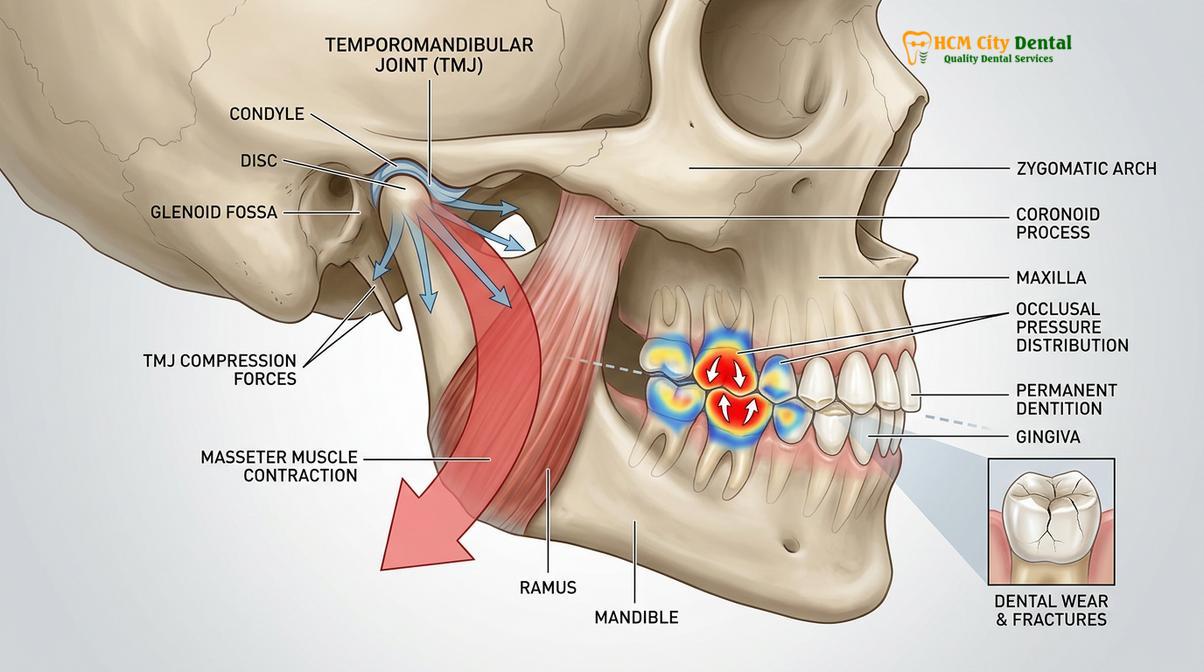
Completing orthodontic treatment is a significant milestone, but maintaining that perfect alignment requires lifelong retention. For patients who suffer from sleep bruxism—the unconscious clenching and grinding of teeth—the retention phase becomes highly complex. The human masseter muscle is incredibly powerful, capable of exerting up to 250 pounds of force on the occlusal (biting) surfaces of the teeth during a nocturnal grinding episode[1]. When these extreme forces are applied to standard orthodontic appliances, the materials quickly fatigue, leading to appliance failure and subsequent orthodontic relapse.
The primary conflict lies in the differing purposes of dental appliances. An orthodontic retainer is designed strictly to hold teeth in their current position, preventing the periodontal ligaments from pulling the teeth back to their original misalignment. Conversely, a night guard is designed to create a protective barrier between the upper and lower arches, allowing the jaw to glide smoothly and absorbing the shock of clenching. When a patient attempts grinding teeth with clear retainer appliances, the thin thermoplastic material (usually around 0.75mm to 1mm thick) is simply not engineered to withstand such immense vertical and lateral pressure[2].
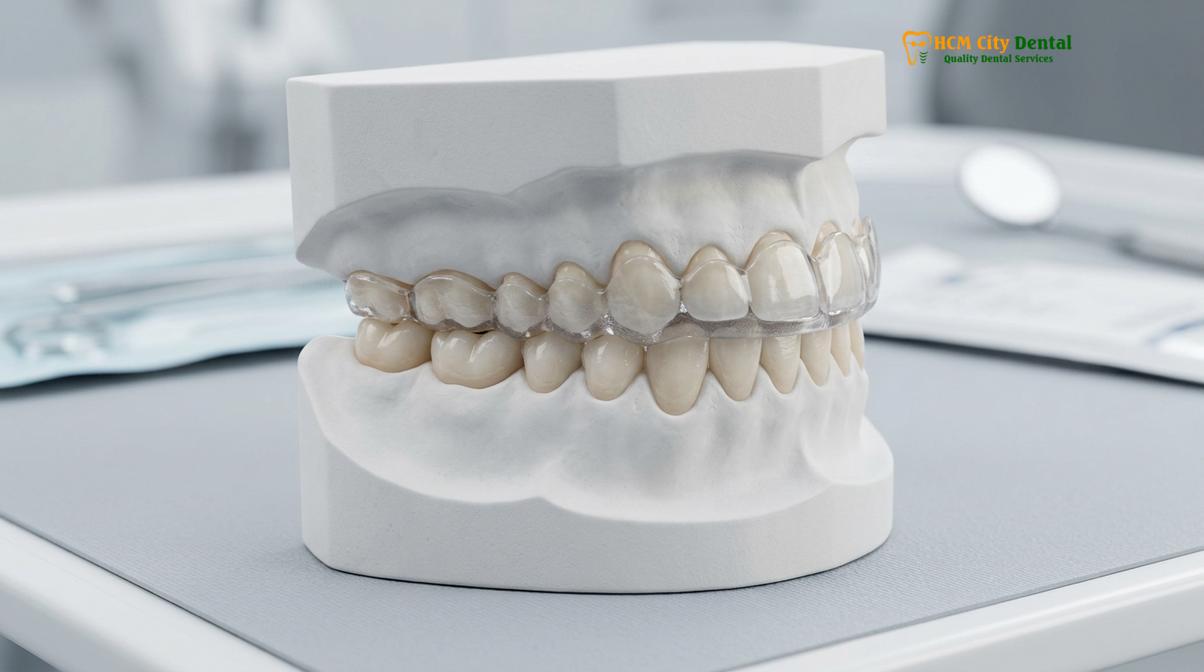
Furthermore, bruxism is not merely a mechanical issue; it is a complex neuromuscular activity often linked to stress, sleep apnea, or micro-arousals during the sleep cycle. If a patient wears a standard retainer while grinding, the friction can lock the jaw into an unnatural position, exacerbating temporomandibular joint (TMJ) discomfort. Therefore, addressing this dual challenge requires a comprehensive clinical approach that evaluates the patient’s bite force, the severity of their bruxism, and their specific retention needs.
Types of Retainers and Their Resistance to Teeth Grinding
Not all retainers are equipped to handle bruxism; while clear aligner-style retainers offer aesthetics, thicker acrylic or hybrid appliances provide the necessary durability for chronic grinders.
When evaluating the best retainer for teeth grinding, it is essential to understand the material properties and structural limitations of the various appliances available on the market. Dental professionals categorize these devices based on their primary function, material thickness, and occlusal coverage.
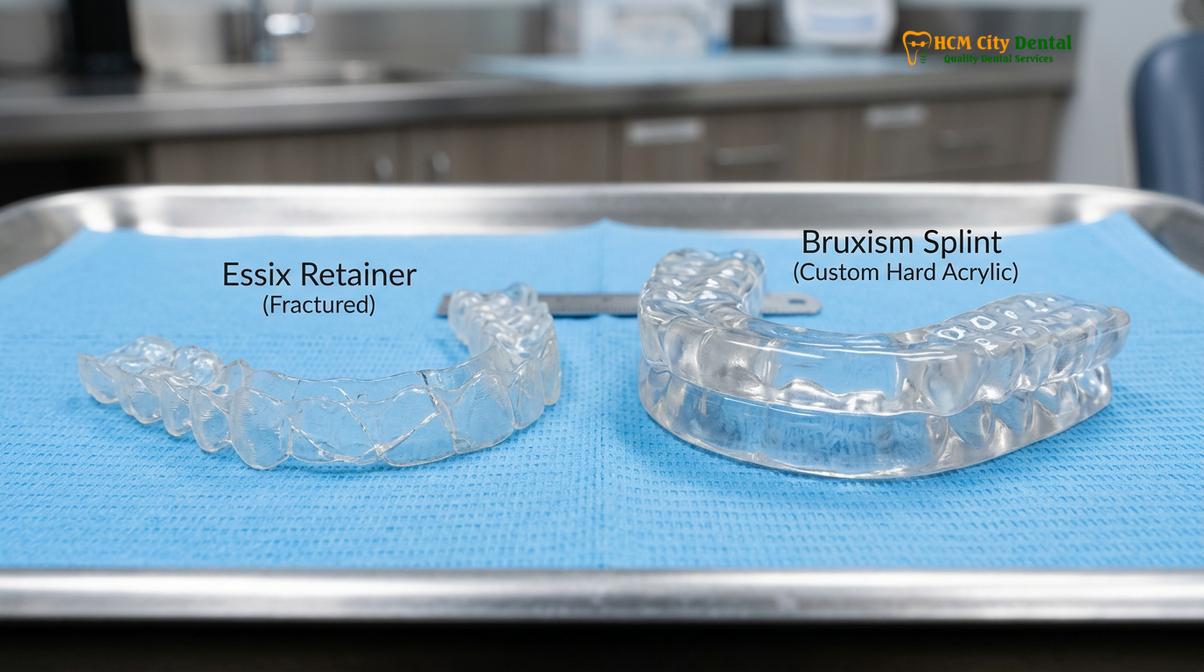
Standard Clear Retainers (Essix/Vivera): These are the most common post-treatment retainers, vacuum-formed or thermoformed from thin sheets of polyurethane or copolyester. They are highly aesthetic and provide excellent 3D control over tooth position. However, they are highly susceptible to wear and tear. Chronic grinders will often perforate the occlusal surfaces of these retainers within a few months, rendering them ineffective and potentially dangerous if sharp plastic edges irritate the oral mucosa.
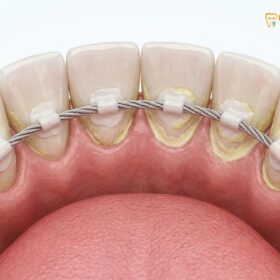
Hawley Retainers: The traditional Hawley retainer consists of a hard acrylic palate (or lingual bar for the lower jaw) and a stainless steel wire that wraps around the anterior teeth. When comparing a hard acrylic night guard vs Hawley retainer, it is important to note that while the Hawley’s acrylic base is highly durable and resistant to breakage, the appliance does not cover the biting surfaces of the teeth. Therefore, while the retainer itself may survive the grinding, the patient’s tooth enamel remains completely unprotected against attrition and micro-fractures.
Standard Night Guards: Over-the-counter or basic custom night guards are excellent at protecting enamel and relaxing the jaw muscles. However, they are typically made from softer, more pliable materials (like EVA) that do not possess the rigidity required to hold teeth firmly in place. Over time, the teeth can shift within the soft material, leading to orthodontic relapse.
| Appliance Type | Orthodontic Retention | Bruxism Protection | Material Durability | Clinical Recommendation |
|---|---|---|---|---|
| Standard Clear Retainer | Excellent | Poor | Low (Prone to cracking) | Non-grinders only |
| Hawley Retainer | Good | None (Enamel exposed) | High | Patients needing minor adjustments |
| Standard Night Guard | Poor (Allows shifting) | Excellent | Moderate to High | Grinders without prior braces |
| Hybrid Night Guard Retainer | Excellent | Excellent | Very High | Grinders post-orthodontic treatment |
Because none of the standard options perfectly address both needs simultaneously, dental material science has evolved to create specialized hybrid appliances that bridge this gap effectively.
The Clinical Solution: Hybrid Night Guard Retainers
A hybrid night guard retainer integrates a rigid outer shell to deflect grinding forces with an exact internal mold to maintain precise tooth positioning.
For patients who have invested significant time and resources into Orthodontics, protecting that investment while managing bruxism requires a specialized hybrid appliance. The hybrid night guard retainer, often referred to as a dual-laminate splint, represents the gold standard in modern clinical dentistry for this specific demographic[3].
The architecture of a dual-laminate retainer is ingeniously designed to serve two distinct biomechanical purposes. The inner layer, which sits directly against the teeth and gums, is fabricated from a softer, slightly pliable polyurethane material. This soft interior ensures a comfortable, snug fit that precisely grips the contours of the newly aligned teeth, preventing any micro-movements or relapse. It also acts as a shock absorber, dampening the initial impact of jaw clenching.
The outer layer, which faces the opposing dental arch, is constructed from a dense, rigid copolyester or hard acrylic. This hard exterior provides exceptional bruxism retainer durability. When the patient grinds their teeth at night, the hard surface allows the opposing teeth to glide smoothly across the appliance without catching or creating excessive friction. This smooth gliding action is crucial for reducing muscle tension in the jaw and preventing TMJ disorders.
“In our clinical practice, we frequently see patients who have destroyed their standard clear retainers within weeks due to severe nocturnal bruxism. Transitioning these patients to a custom dual-laminate hybrid guard not only preserves their orthodontic results but significantly reduces their morning jaw fatigue and headaches.”
— Dr. Nguyen Van Cuong
Furthermore, the thickness of a hybrid retainer is carefully calibrated. While standard retainers are around 1mm thick, hybrid retainers are typically fabricated at a thickness of 1.5mm to 2.5mm. This added bulk provides the necessary structural integrity to withstand years of grinding, though it may require a brief adaptation period for the patient to sleep comfortably with the appliance in place.
Why Standard Clear Retainers Fail Under Bruxism Forces
Conventional clear retainers are fabricated from thin thermoplastic materials designed solely for holding teeth, making them highly susceptible to perforation from chronic grinding.
To fully appreciate the necessity of a specialized bruxism retainer, one must understand the mechanics of why standard clear retainers fail. Thermoplastic materials used in standard Essix or Vivera retainers are optimized for flexibility, transparency, and precise adaptation to the tooth surface. They are not engineered for high-impact load bearing or continuous frictional wear.
When a patient grinds their teeth, they subject the retainer to two types of destructive forces: compressive force (clenching) and shear force (grinding side-to-side). The constant shear force creates micro-abrasions on the surface of the plastic. Over time, these abrasions deepen, creating stress concentration points. Eventually, the material fatigues and cracks, or the patient literally grinds a hole straight through the occlusal surface of the plastic[4]. Once the structural integrity of the retainer is compromised, it loses its ability to apply the necessary retentive force to the teeth, allowing them to shift.
Additionally, as patients wear down retainers, the altered thickness of the plastic can subtly change the patient’s vertical dimension of occlusion (VDO). An uneven biting surface caused by a warped or partially worn retainer can trigger muscle spasms in the jaw and lead to uneven wear on the opposing natural teeth.
Clinical Warning: Never continue wearing a cracked or perforated clear retainer. A damaged retainer not only fails to keep your teeth straight but can also harbor harmful bacteria in the micro-cracks, cause lacerations to your tongue and gums, and lead to rapid orthodontic relapse. Seek an immediate replacement from your dental provider.
Clinical Workflow for Custom Grinding Retainers at HCMC Dental Clinic
Fabricating a specialized bruxism retainer involves precise digital impressions, occlusal analysis, and custom laboratory manufacturing to ensure optimal fit and protection.
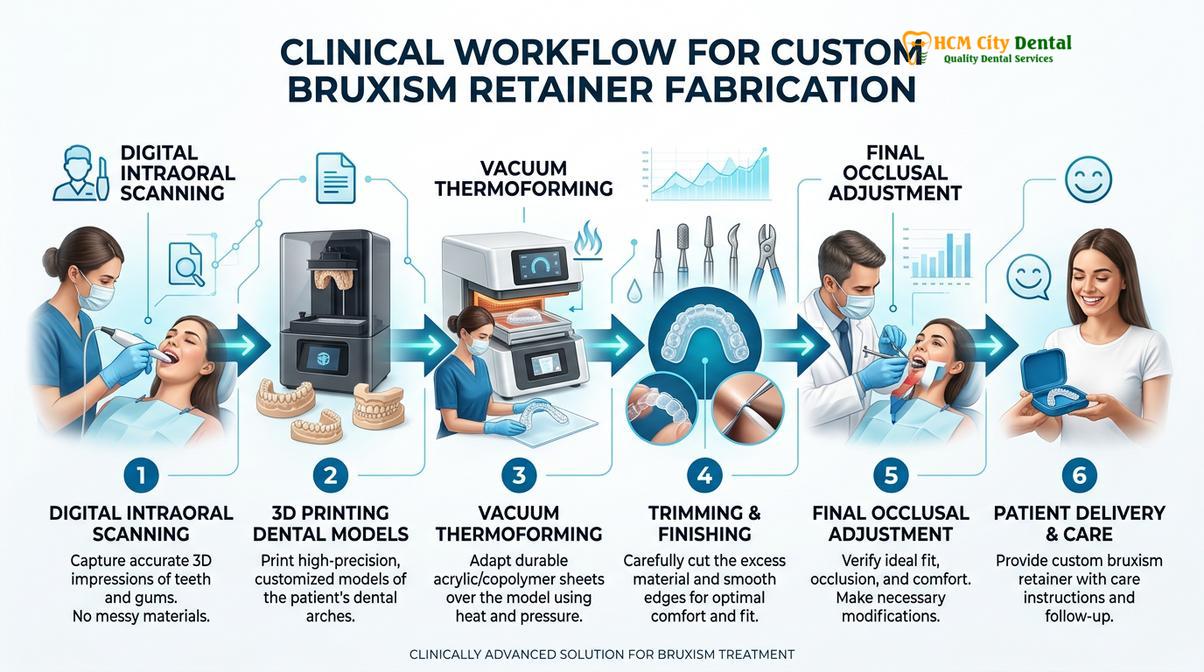
Obtaining a high-quality hybrid retainer is a precise clinical process that cannot be replicated by over-the-counter “boil-and-bite” guards. At HCMC Dental Clinic in Ho Chi Minh City, the workflow for fabricating a custom bruxism retainer integrates advanced digital dentistry with meticulous occlusal engineering.
The process begins with a comprehensive clinical examination. The dentist evaluates the patient’s TMJ health, the extent of enamel wear (attrition), and the stability of their orthodontic alignment. Following the assessment, a high-resolution intraoral scanner is used to capture a highly accurate 3D digital impression of the patient’s upper and lower arches. Digital scanning eliminates the discomfort of traditional putty impressions and provides a flawless blueprint for the dental laboratory.
Once the digital models are generated, the laboratory technicians utilize specialized CAD/CAM software to design the hybrid retainer. They carefully calculate the necessary thickness of the hard acrylic outer shell to ensure it can withstand the patient’s specific bite force while maintaining a comfortable vertical opening. The appliance is then thermoformed under high heat and positive pressure, fusing the soft inner polyurethane layer with the rigid outer shell.
Patient Case Study: Overcoming Retainer Failure
A 28-year-old patient visited HCMC Dental Clinic after repeatedly cracking her standard clear retainers every three months. Clinical examination revealed severe nocturnal bruxism and early signs of TMJ inflammation. Dr. Cuong prescribed a custom 2mm dual-laminate hybrid night guard retainer. Upon delivery, the appliance was carefully adjusted to ensure balanced occlusal contacts. At her six-month follow-up, the patient reported complete cessation of morning jaw pain, and the hybrid retainer showed minimal signs of wear, successfully maintaining her perfect orthodontic alignment.
During the final delivery appointment, the dentist will place the retainer in the patient’s mouth and use articulating paper to check the bite. It is crucial that the opposing teeth contact the hard surface of the retainer evenly. Any high spots are carefully polished away to ensure a smooth, frictionless glide path for the jaw during sleep. This meticulous attention to detail is what separates a professional clinical appliance from generic alternatives.
When to See a Doctor for Teeth Grinding and Retainer Wear
Bruxism is often an unconscious habit, meaning many patients are unaware they are grinding their teeth until secondary symptoms arise or their dental appliances begin to fail. It is vital to monitor both your oral health and the condition of your retainer to determine when professional clinical intervention is necessary.
You should schedule an evaluation with a dental professional if you experience chronic morning headaches, unexplained facial pain, or a persistent dull ache in your jaw muscles upon waking. These are classic signs of nocturnal bruxism that require immediate management to prevent long-term joint damage. Additionally, if you notice increased tooth sensitivity to hot or cold temperatures, it may indicate that grinding forces are causing micro-fractures in your enamel or receding gums (abfraction)[5].
Regarding your dental appliance, inspect your retainer weekly under a bright light. Look for signs of stress, such as cloudy white lines in the plastic, rough patches on the biting surfaces, or small hairline cracks. If your retainer feels looser than usual, or if it feels excessively tight when you put it in at night, it may indicate that the appliance has warped or that your teeth are beginning to shift due to inadequate retention.
“Early intervention is the key to preserving both your natural teeth and your orthodontic investment. Do not wait until your retainer breaks completely to seek help. Upgrading to a bruxism-specific appliance at the first sign of heavy wear can save you from the cost and frustration of needing braces a second time.”
— Dr. Nguyen Van Cuong
For patients residing in or visiting Ho Chi Minh City, seeking a consultation at a specialized facility like HCMC Dental Clinic ensures access to advanced diagnostic tools and custom-fabricated retention solutions tailored to your specific biomechanical needs. Proper management of bruxism is a lifelong commitment to preserving your smile’s health, function, and aesthetics.
Frequently Asked Questions
Can I wear a regular night guard over my orthodontic retainer?
No, you cannot wear a standard night guard over a clear retainer, as they will not fit together and may alter your bite. Attempting to stack appliances can cause severe discomfort, TMJ strain, and may permanently warp your retainer. Instead, a custom hybrid night guard retainer is required to perform both functions simultaneously without damaging your teeth or jaw.
How long does a retainer for teeth grinding typically last?
A custom dual-laminate retainer for teeth grinding generally lasts between 12 to 36 months, depending on the severity of your bruxism. While the hard acrylic outer shell is highly durable, chronic heavy grinders will eventually wear down the material. Regular clinical inspections every six months are necessary to ensure the appliance remains structurally sound and continues to hold your teeth in proper alignment.
Is a Hawley retainer better for grinding than a clear one?
Yes, a Hawley retainer is generally more durable than a standard clear Essix retainer because it is made of thick acrylic and stainless steel. However, it does not cover the biting surfaces of the teeth, leaving your enamel completely vulnerable to grinding wear. Therefore, while the Hawley retainer itself may survive the grinding, it does not protect your teeth from attrition.
What should I do if I grind a hole in my clear retainer?
If you grind a hole in your retainer, you must stop wearing it and contact your orthodontist immediately for a replacement. Continuing to wear a damaged retainer can cause unwanted tooth movement, alter your bite, and potentially harm your gum tissue with sharp plastic edges. You will likely need to be upgraded to a thicker, more durable hybrid appliance.
Can teeth grinding cause my teeth to shift even with a retainer?
Yes, extreme teeth grinding can warp or crack a standard retainer, which subsequently allows your teeth to shift out of alignment. The immense pressure from the jaw muscles can overcome the holding force of thin thermoplastic materials. Upgrading to a specialized bruxism retainer ensures the appliance remains rigid enough to hold your teeth securely while absorbing the grinding forces.
References
- Journal of Prosthetic Dentistry. The efficacy of dual-laminate occlusal splints in managing sleep bruxism. (2021).
- American Journal of Orthodontics and Dentofacial Orthopedics. Material wear and retention loss in thermoplastic retainers. (2020).
- International Journal of Prosthodontics. Biomechanical forces of the masseter muscle during nocturnal bruxism. (2019).
- Journal of Clinical Orthodontics. Integrating retention protocols with temporomandibular joint disorder management. (2022).
- European Journal of Orthodontics. Comparative durability of Hawley, Essix, and hybrid retainers under occlusal stress. (2018).