Securing affordable dental retainers in Vietnam offers international patients high-quality, custom-fitted orthodontic retention at a fraction of Western prices. Utilizing advanced digital scanning and premium materials, top clinics in Ho Chi Minh City provide durable fixed and removable retainers to permanently safeguard your newly aligned smile.
Clinical Summary:
Post-orthodontic retention is a critical phase requiring precise, durable appliances to prevent occlusal relapse. Vietnam has emerged as a premier destination for dental tourism, offering state-of-the-art fixed lingual wires, clear Essix aligners, and traditional Hawley retainers. By leveraging CAD/CAM technology and internationally certified materials, clinics provide exceptional clinical outcomes while significantly reducing the financial burden for international patients seeking reliable, long-term smile preservation.
Key Takeaways:
- Custom retainers in Vietnam cost up to 70% less than in Australia, the US, or the UK.
- Options include clear plastic (Essix/Vivera), traditional wire (Hawley), and bonded lingual retainers.
- Digital intraoral scanning ensures a precise, comfortable fit without messy traditional impressions.
- Rapid fabrication allows international patients to receive replacements within 24 to 48 hours.
- Consistent nighttime wear is clinically mandated to prevent orthodontic relapse.
Types of Dental Retainers Available in Vietnam
Patients can choose between fixed lingual wires for permanent retention and removable options like clear Essix or traditional Hawley appliances, depending on their clinical needs.
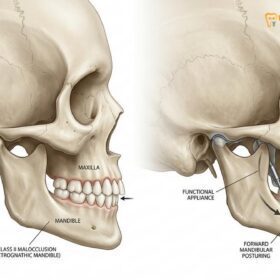
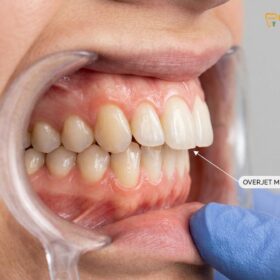
The retention phase is arguably as important as the active movement phase of Orthodontics. Once braces or aligners are removed, the periodontal ligaments and surrounding alveolar bone require time to reorganize and stabilize around the new tooth positions. Without proper retention, the natural memory of the periodontal fibers will inevitably pull the teeth back toward their original misalignment—a process known as orthodontic relapse[1]. To combat this, clinics in Vietnam offer a comprehensive range of retention appliances tailored to individual anatomical requirements and lifestyle preferences.
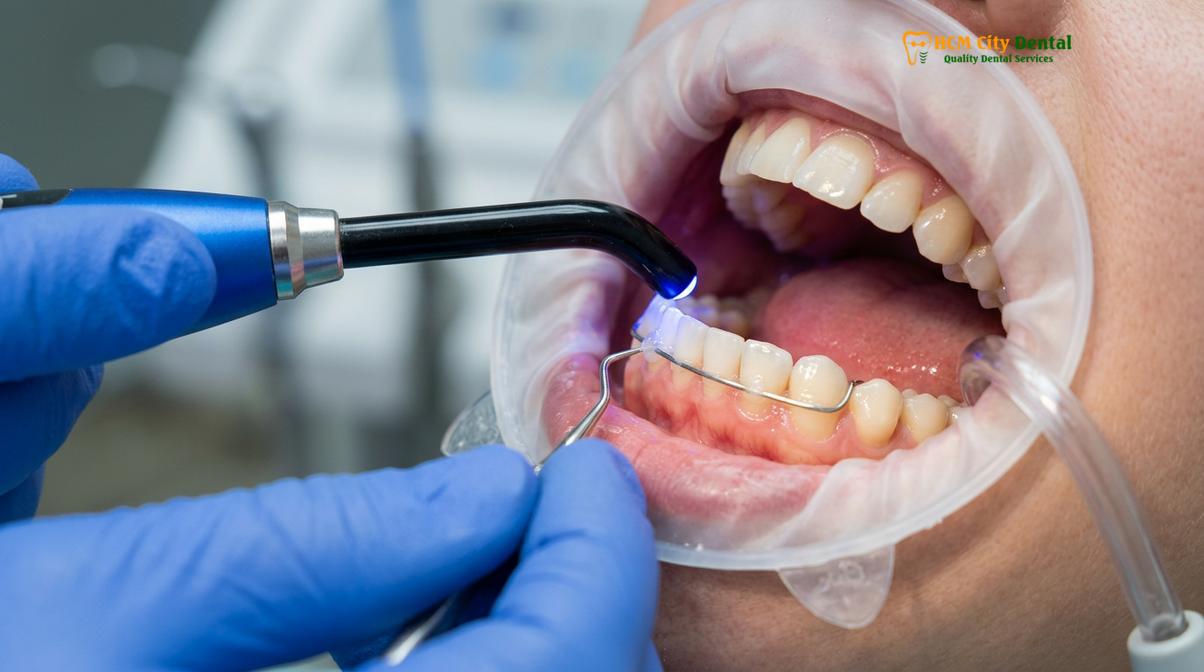
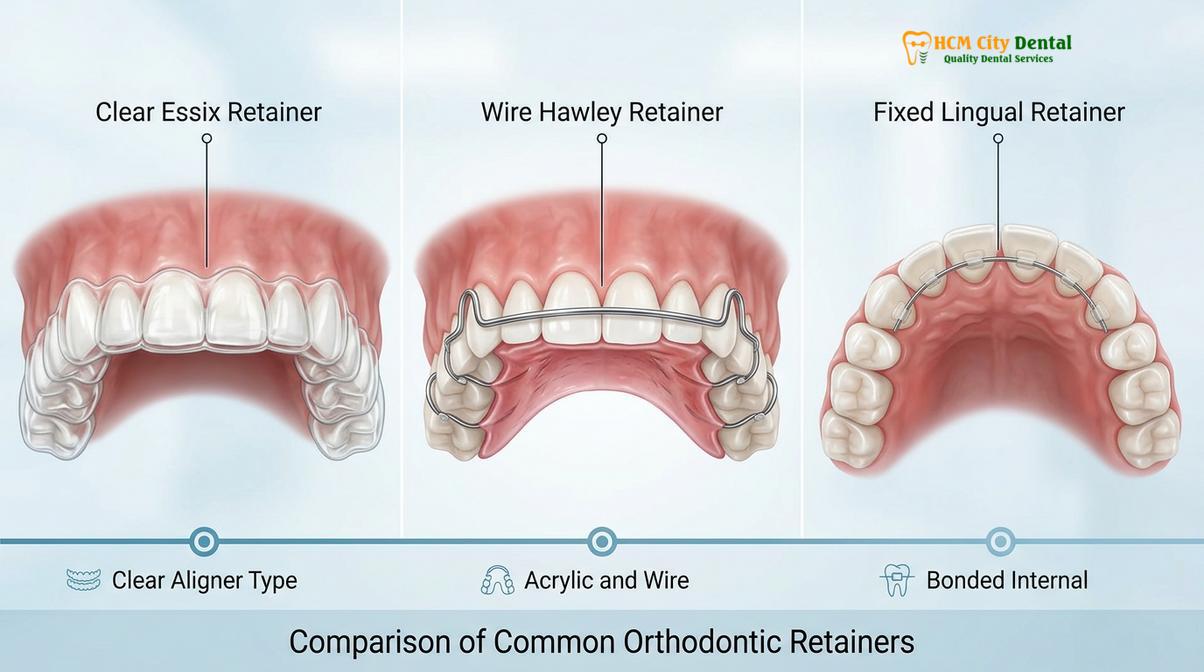
Fixed Lingual Retainers: A fixed retainer consists of a custom-contoured, multi-strand stainless steel or titanium wire bonded to the lingual (tongue-facing) surfaces of the anterior teeth, typically from canine to canine. This option is highly recommended for patients with a high risk of relapse, such as those who previously had severe crowding or significant diastemas (gaps). Because it is permanently bonded using dental composite, patient compliance is not an issue. However, it requires meticulous oral hygiene, including the use of floss threaders or interdental brushes, to prevent calculus buildup around the wire.
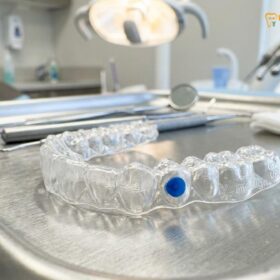
Clear Removable Retainers (Essix/Vivera): Clear retainers are vacuum-formed or 3D-printed thermoplastic trays that encase the entire dental arch. They are highly aesthetic, virtually invisible, and provide excellent retention by holding every tooth precisely in place. Many patients wonder, can clear retainers move teeth back? While they can correct very minor micro-shifts if worn immediately after a brief lapse, they are designed for maintenance, not active orthodontic movement. The quality lab retainers cost in Vietnam for these clear trays is exceptionally reasonable, allowing patients to easily afford multiple backup sets.
Hawley Retainers: The traditional Hawley retainer consists of an acrylic base that rests against the palate or lingual mucosa, combined with a labial metal bow that wraps around the front teeth. While less aesthetic than clear trays, Hawley retainers are incredibly durable, adjustable, and allow for natural occlusal settling. The acrylic can also be customized with various colors and patterns.
Why Choose Vietnam for Post-Orthodontic Care?
Vietnam combines internationally trained specialists, cutting-edge dental technology, and highly competitive pricing, making it an ideal hub for post-orthodontic maintenance.
The rise of cheap dental tourism Vietnam is not merely a result of low costs; it is driven by the remarkable elevation in clinical standards across the country’s major urban centers. Clinics in Ho Chi Minh City and Hanoi have invested heavily in the same state-of-the-art diagnostic and fabrication equipment found in top-tier Western practices. This includes CBCT scanners, intraoral digital scanners (such as 3Shape and iTero), and in-house 3D printing laboratories.
When international patients seek affordable dental retainers Vietnam, they are often surprised by the meticulous attention to detail and the premium materials utilized. The thermoplastic sheets used for clear retainers and the bonding agents used for fixed wires are imported from leading global dental manufacturers in the US, Germany, and Japan. This ensures that the biocompatibility, durability, and safety of the appliances meet rigorous international ISO standards.
“The globalization of dental technology means that the geographic location of a clinic no longer dictates the quality of care. By utilizing identical digital workflows and imported materials, we achieve clinical outcomes that rival any premier practice globally, but at a fraction of the operational overhead.”
Furthermore, the efficiency of the dental laboratories in Vietnam is a significant advantage. Because many top clinics, such as HCMC Dental Clinic in Ho Chi Minh City, operate their own in-house labs or partner with exclusive local technicians, the turnaround time for custom appliances is drastically reduced. A process that might take two weeks in Australia or the UK can often be completed in 24 to 48 hours in Vietnam, perfectly accommodating the tight schedules of traveling patients.
Comprehensive Comparison: Retainer Cost and Value
A detailed comparison reveals that patients can save significantly on premium retainers in Vietnam without compromising on material safety or clinical precision.
Understanding the comparison retainer cost is crucial for patients planning their post-orthodontic care. In Western countries, the high cost of retainers is largely driven by exorbitant laboratory fees, high clinical overhead, and multiple mandatory consultation charges. In contrast, the economic structure in Vietnam allows clinics to offer the best price orthodontics while maintaining elite clinical standards.
Below is an estimated cost comparison highlighting the financial advantages of obtaining retention appliances in Vietnam. Please note that these are average estimates and actual fees may vary based on the complexity of the case and the specific materials chosen.
| Type of Retainer | Average Cost (US/Australia) | Estimated Cost (Vietnam) | Clinical Lifespan |
|---|---|---|---|
| Clear Essix Retainer (Per Arch) | $150 – $300 | $40 – $80 | 1 – 3 Years |
| Vivera by Invisalign (Set of 3) | $600 – $1,000 | $300 – $500 | 3 – 5 Years |
| Fixed Lingual Wire (Per Arch) | $250 – $500 | $50 – $100 | 3 – 10+ Years |
| Traditional Hawley (Per Arch) | $200 – $400 | $60 – $120 | 5 – 10 Years |
When factoring in the cost of a routine dental check-up, scaling, and the fabrication of multiple backup retainers, the savings become substantial. Many international patients choose to have a fixed retainer bonded and simultaneously order two sets of clear removable retainers to take home. This dual-retention strategy provides the ultimate safeguard against relapse and is highly cost-effective when performed in Vietnam[2].
Clinical Workflow for Custom Retainer Fabrication
The fabrication process utilizes 3D intraoral scanners and CAD/CAM technology to design highly accurate retainers that ensure optimal occlusal stability.
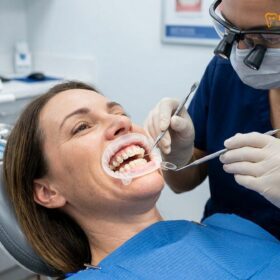
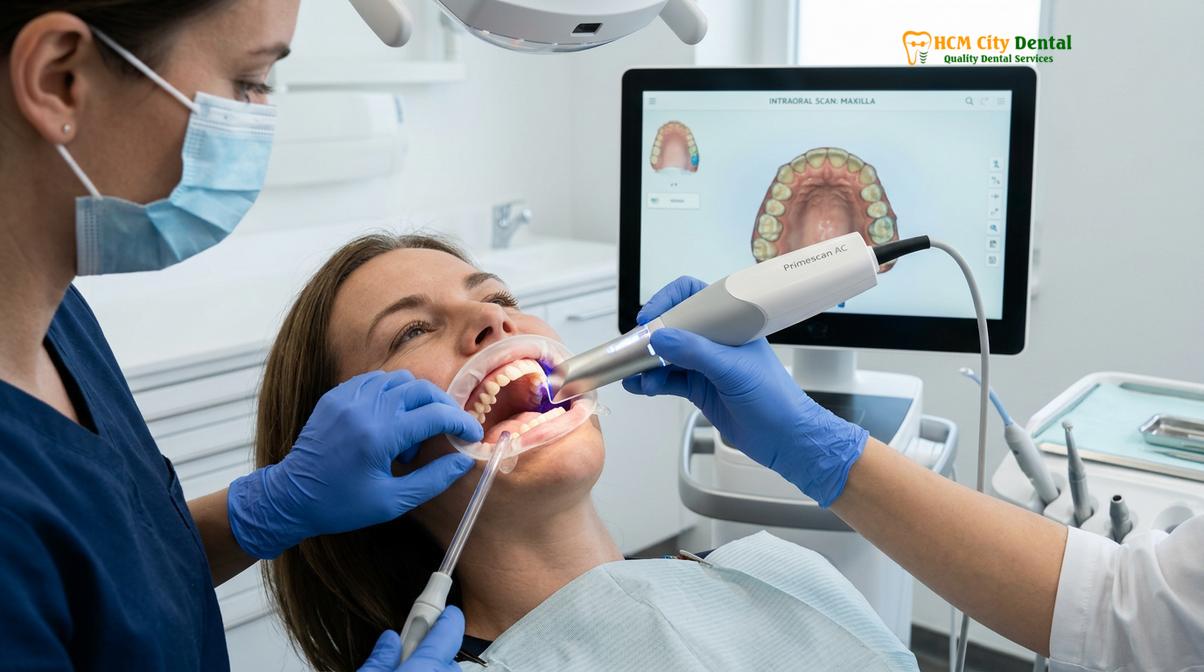
The clinical workflow for creating custom retainers has evolved significantly from the days of uncomfortable, gag-inducing alginate impressions. Today, the process is entirely digitized, ensuring a superior fit and a much more comfortable patient experience.
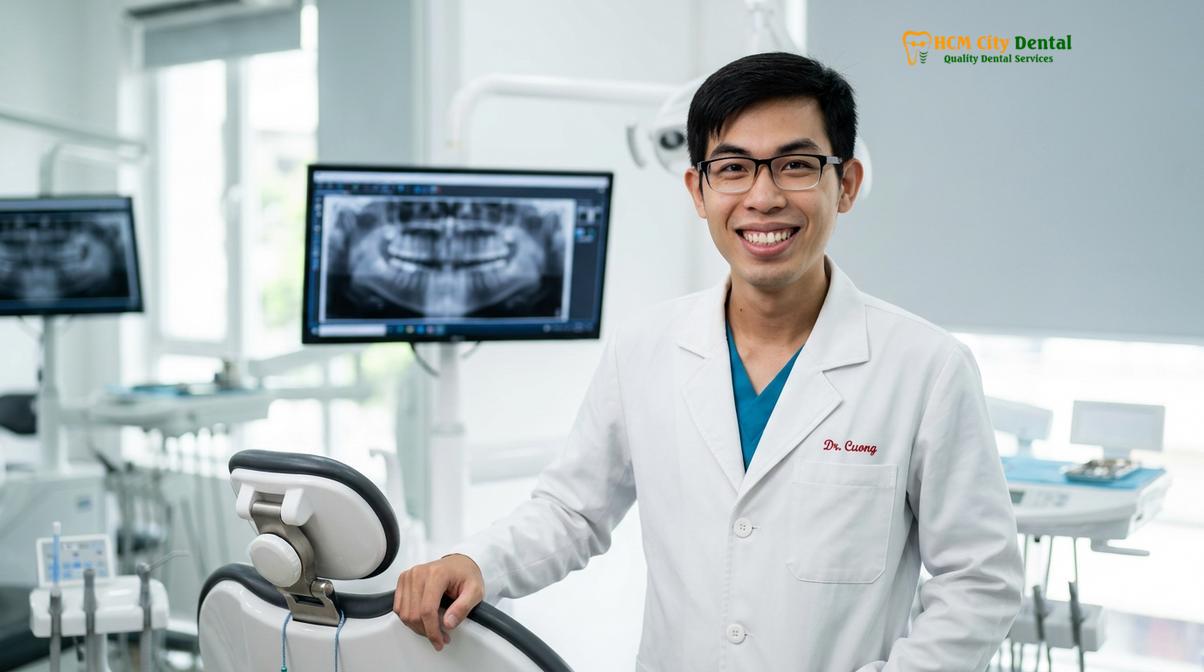
Dr. Nguyen Van Cuong, a leading specialist at HCMC Dental Clinic, emphasizes the importance of digital precision: “Digital intraoral scanning eliminates the dimensional distortion risks associated with traditional impression materials. We capture a micron-level 3D map of the patient’s dentition, ensuring the resulting retainer fits with absolute precision, which is critical for preventing micro-relapses.”
The standard workflow involves the following clinical steps:
- Comprehensive Examination: The dentist evaluates the current occlusal stability, checks for any signs of relapse, and ensures the teeth are free of calculus before scanning.
- Digital Intraoral Scanning: A wand-like scanner captures thousands of images per second, stitching them together to create a highly accurate 3D model of the dental arches.
- CAD/CAM Design and Printing: The digital file is sent to the laboratory where a physical resin model is 3D printed.
- Thermoforming: For clear retainers, a biocompatible thermoplastic sheet is heated and vacuum-formed over the 3D-printed model to create a snug, custom-fit tray.
- Clinical Delivery and Adjustment: The dentist fits the retainer in the patient’s mouth, checking for proper seating, patient comfort, and ensuring there are no sharp edges impinging on the gingival tissues.
If a patient experiences discomfort, such as wondering why is my retainer tight in the morning?, it is usually an indication that the teeth are attempting to shift during the day when the retainer is not worn. The precise fit of digitally fabricated retainers ensures that the teeth are gently guided back into their correct positions each night.
Solutions for Lost or Broken Retainers
Rapid replacement and repair services in Vietnam prevent unwanted tooth movement, offering fast-tracked lab processing for international travelers.
Losing or breaking a retainer is a dental urgency. The periodontal ligaments retain a “memory” of their previous positions, and without the physical barrier of a retainer, teeth can begin to shift within a matter of days. For dental tourists, finding a fast and reliable solution is paramount.
Clinics in Vietnam are well-equipped to handle these situations swiftly. If a clear retainer is lost, a new digital scan can be taken, and a replacement can often be fabricated within 24 hours. If a fixed lingual retainer breaks or debonds, it is crucial to have it repaired immediately to prevent the wire from irritating the tongue or the teeth from shifting.
Clinical Case Example: Rapid Retainer Replacement
An international patient visiting Ho Chi Minh City accidentally discarded their clear Essix retainer at a restaurant. Concerned about rapid anterior crowding, they visited HCMC Dental Clinic the following morning. An immediate digital intraoral scan was performed. Because the clinic utilizes an in-house 3D printing laboratory, a new set of premium clear retainers was fabricated and delivered to the patient by that afternoon, entirely halting any potential orthodontic relapse and allowing the patient to enjoy the rest of their holiday stress-free.
For patients who suffer from bruxism (nighttime teeth grinding), standard clear retainers may wear down or crack prematurely. In such cases, the dentist may recommend a thicker thermoplastic material or a dual-purpose appliance. Understanding the best retainer for teeth grinding is essential; often, a heavier-gauge Essix or a custom occlusal splint is prescribed to protect both the alignment of the teeth and the enamel from excessive occlusal forces[3].
When to See a Doctor
While retainers are generally low-maintenance, certain clinical signs indicate the need for professional evaluation. Ignoring these signs can lead to orthodontic relapse, soft tissue irritation, or dental decay.
Important Clinical Considerations: Seek immediate dental attention if you experience any of the following:
- Visible Tooth Movement: If you notice gaps reopening or teeth overlapping despite wearing your retainer.
- Severe Pain or Extreme Tightness: While slight pressure is normal after leaving the retainer out for a few days, severe pain indicates significant shifting that may require a new appliance or minor orthodontic retreatment.
- Broken or Debonded Fixed Wire: A loose fixed retainer wire can trap plaque, cause decay, and allow teeth to shift rapidly. Do not attempt to pull the wire off yourself.
- Cracked or Warped Removable Retainer: A damaged clear retainer loses its structural integrity and cannot hold teeth securely.
Regular dental check-ups every six months are recommended to evaluate the condition of your retainers and ensure your teeth remain perfectly aligned.
Maximizing the Lifespan of Your Retainer
Proper daily hygiene, safe storage, and routine clinical inspections are essential to maintain the structural integrity and hygiene of your orthodontic appliance.
Investing in affordable dental retainers Vietnam is only the first step; maintaining them properly ensures they last for years. The oral cavity is a harsh environment, and retainers are subjected to saliva, bacteria, and occlusal forces daily. Without meticulous care, clear retainers can become cloudy, malodorous, and unhygienic.
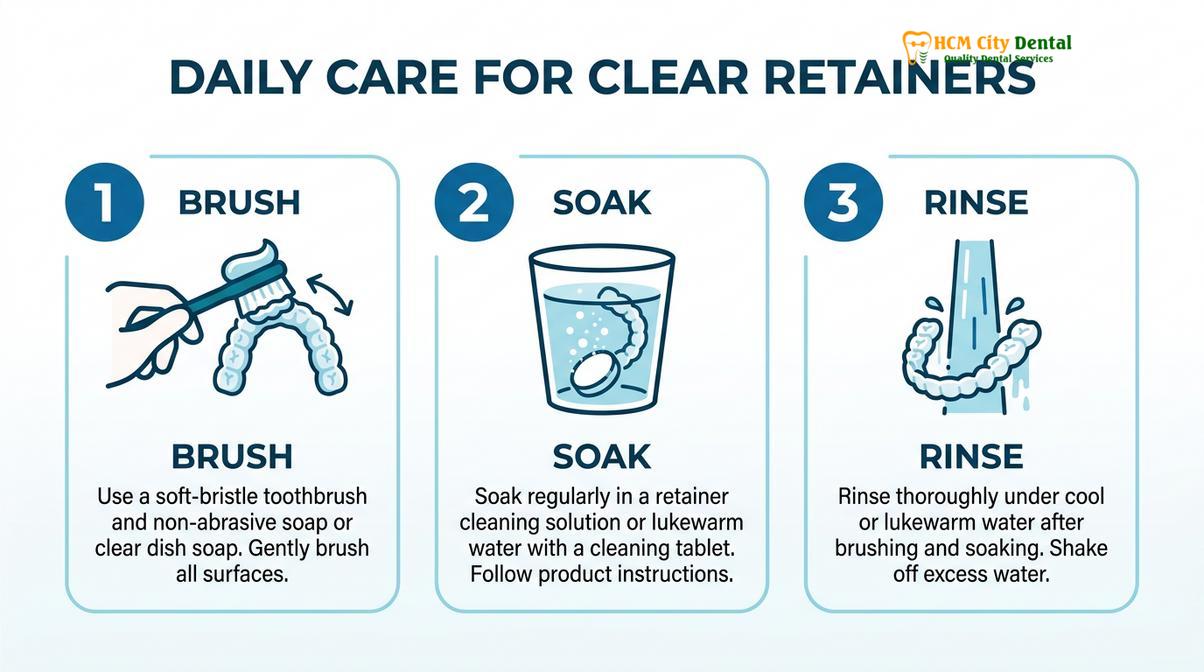
Dr. Nguyen Van Cuong advises patients on strict maintenance protocols: “Thermoplastic retainers are highly susceptible to heat distortion and bacterial colonization. Patients must avoid using hot water for cleaning and should incorporate a dedicated non-abrasive cleaning agent to prevent micro-scratches where plaque can accumulate.”
If you notice an unpleasant odor, it is usually due to anaerobic bacteria trapped in the microscopic pores of the plastic. Following a clinical guide on a smelly clear retainer fix involves using specialized effervescent retainer tablets or a mild antibacterial soap. Never use regular toothpaste on clear retainers, as the abrasives will scratch the material, making it cloudy and more prone to plaque buildup[4].
Similarly, discoloration is a common issue for patients who consume highly pigmented beverages or fail to clean their retainers immediately upon removal. Learning how to remove yellow stains on clear retainer safely is vital; soaking the appliance in a diluted mixture of white vinegar and lukewarm water can help dissolve mineral deposits and lift stains without degrading the plastic.
“Patient compliance with retainer wear and hygiene directly correlates with long-term orthodontic stability. A well-maintained retainer not only protects the financial investment of braces but also supports overall periodontal health by preventing plaque-retentive crowding.”
Finally, proper storage is non-negotiable. Retainers should never be wrapped in a napkin or left exposed on a counter, as they are easily lost, accidentally discarded, or damaged by pets. Understanding how to store dental retainer safely involves keeping the appliance in a hard, ventilated protective case whenever it is not in the mouth[5].
For international patients seeking to preserve their smiles with high-quality, cost-effective solutions, booking a consultation at HCMC Dental Clinic ensures access to premium retention care tailored to your specific clinical needs.
Frequently Asked Questions
How much does a clear retainer cost in Vietnam?
A custom clear retainer in Vietnam typically ranges from $40 to $100 per arch. This highly competitive pricing includes digital scanning, laboratory fabrication, and the final clinical fitting, offering substantial savings compared to Western dental clinics while maintaining strict international quality standards.
How long does it take to get a replacement retainer in Ho Chi Minh City?
Most top-tier clinics can fabricate a replacement retainer within 24 to 48 hours. By utilizing in-house 3D printing and digital intraoral scanners, the turnaround time is significantly accelerated for international patients and dental tourists who require fast, reliable service before flying home.
Are the materials used for retainers in Vietnam safe and certified?
Yes, reputable clinics use globally recognized, biocompatible materials. Thermoplastic sheets for clear retainers and medical-grade stainless steel for fixed wires are sourced from leading international dental suppliers, ensuring safety, durability, and strict clinical compliance with global health regulations.
Can I get a fixed retainer repaired while on holiday in Vietnam?
Absolutely. If your bonded wire breaks or detaches, a dentist can remove the residual composite, prepare the enamel, and bond a new multi-strand wire in a single appointment, preventing any unwanted orthodontic relapse and ensuring your smile remains perfectly aligned.
Do I need to wear my removable retainer forever?
Yes, lifelong nighttime wear is clinically recommended to maintain your alignment. Because teeth naturally shift over time due to age and occlusal forces, consistent retainer use is the only reliable method to preserve your orthodontic results and prevent the need for future retreatment.
References
- Journal of Prosthodontic Research. Orthodontic retainer wear and stability. (2021).
- American Journal of Orthodontics. Relapse rates and retention protocols. (2019).
- European Journal of Orthodontics. Essix vs Hawley retainers clinical trial. (2020).
- Journal of Clinical Orthodontics. Plaque accumulation on fixed retainers. (2022).
- Australian Dental Journal. Patient compliance with dental retainers. (2018).