Having exactly 28 teeth as an adult is completely normal and highly common. A full adult dentition typically consists of 32 teeth, but the absence of the four third molars—commonly known as wisdom teeth—leaves a perfectly functional, healthy, and structurally sound 28-tooth bite.
Clinical Summary:
An adult mouth containing 28 teeth is a standard clinical presentation, typically indicating the congenital absence or surgical removal of the four third molars (wisdom teeth). From a functional and orthodontic standpoint, 28 teeth provide complete masticatory efficiency and structural support. Modern dental diagnostics confirm that a 28-tooth arch often aligns better within the contemporary human jaw, reducing the risk of crowding, impaction, and periodontal complications associated with retained wisdom teeth. Routine radiographic evaluation is recommended to ensure that the missing teeth are truly absent rather than impacted beneath the alveolar bone.
Key Takeaways:
- Having 28 teeth is a normal adult dental configuration, usually meaning the four wisdom teeth are absent.
- Evolutionary changes in human jaw size have made the 28-tooth arch highly efficient and less prone to crowding.
- Missing third molars does not negatively impact chewing capacity, speech, or facial aesthetics.
- Routine radiographic imaging is essential to confirm whether the remaining four teeth are congenitally missing or impacted beneath the gums.
- Orthodontic treatments are frequently optimized for a 28-tooth arch to ensure stable bite alignment.
The Anatomy of Adult Dentition: Why 28 Teeth is Perfectly Normal
A 28-tooth dentition consists of incisors, canines, premolars, and first and second molars, providing complete functional capacity without the need for third molars.
When patients count their teeth and realize they have 28 instead of the often-cited 32, it frequently leads to questions about dental health and developmental normalcy. In clinical dentistry, a 28-tooth arch is considered a complete and highly functional adult dentition. To understand why this is the case, it is essential to break down the anatomical structure of the human mouth. A standard 28-tooth configuration includes 8 incisors (used for cutting and shearing food), 4 canines (designed for tearing), 8 premolars (utilized for crushing), and 8 molars (the primary engines for grinding) [1]. This precise arrangement allows for optimal masticatory function, speech articulation, and facial support.
The concept of a 32-tooth dentition includes the four third molars, colloquially known as wisdom teeth. These teeth typically erupt between the ages of 17 and 25. However, human anatomy has undergone significant evolutionary shifts over millennia. Our ancestors required larger jaws and more teeth to process a coarse, unrefined diet of raw meats, roots, and fibrous plants. As human diets evolved to include softer, cooked foods, the biological necessity for a massive jaw and a third set of molars diminished. Consequently, the modern human jaw has become progressively smaller, often lacking the physical space required to accommodate 32 teeth comfortably.
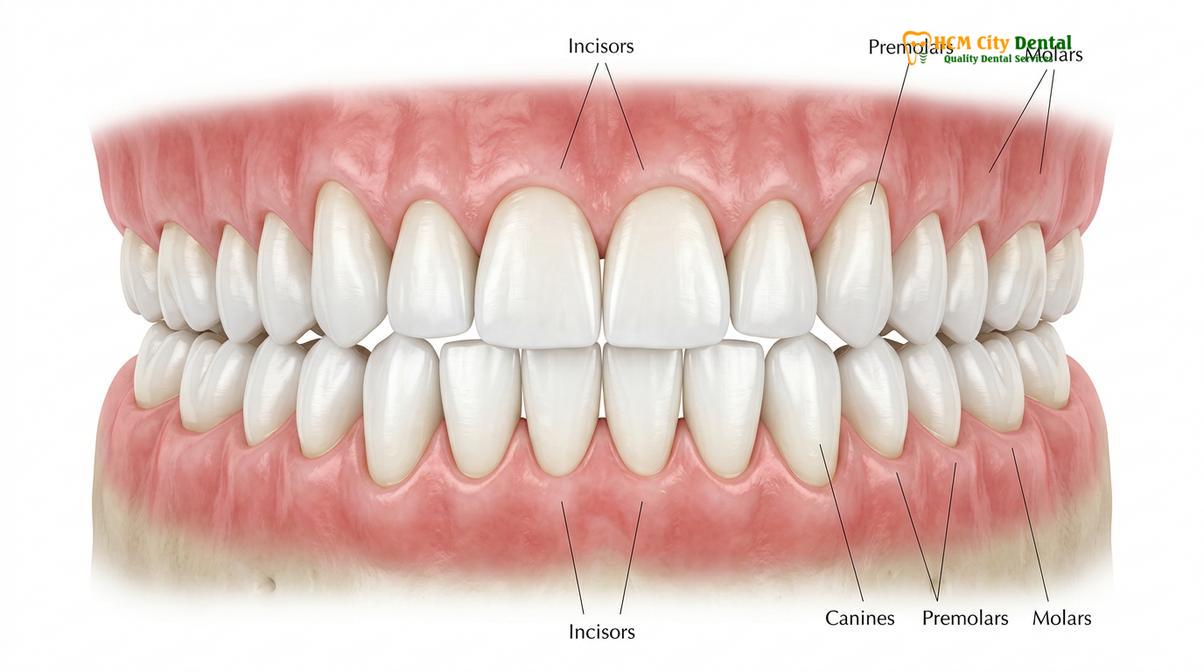
Because of this evolutionary trajectory, projecting a General Dentistry perspective reveals that maintaining a healthy image dental relies entirely on the alignment, periodontal health, and structural integrity of these 28 functional teeth rather than the presence of wisdom teeth. The first and second molars are perfectly capable of handling the terminal chewing load. In fact, the first molar is often referred to in orthodontics as the “key to occlusion,” dictating the spatial relationship of the entire bite. When the 28 teeth interlock correctly (a state known as Class I occlusion), the masticatory system operates at peak efficiency, distributing occlusal forces evenly across the periodontal ligaments and alveolar bone.
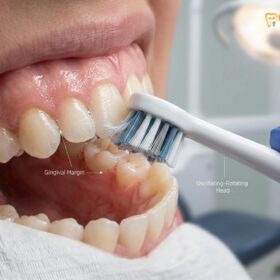
Furthermore, the absence of third molars in a 28-tooth arch often simplifies oral hygiene. The posterior regions of the mouth are notoriously difficult to clean. When wisdom teeth erupt, they frequently create deep periodontal pockets and food traps that are highly susceptible to bacterial accumulation. By naturally possessing or surgically achieving a 28-tooth dentition, patients significantly reduce their risk of posterior caries and localized periodontitis, making daily brushing and flossing far more effective.
28 vs. 32 Teeth: Understanding the Missing Third Molars
The difference between 28 and 32 teeth comes down to the four wisdom teeth, which are often extracted due to impaction or are congenitally absent.
If you are an adult with 28 teeth, there are generally two clinical explanations for the missing four: congenital agenesis (hypodontia) or previous surgical extraction. Hypodontia refers to the developmental absence of one or more teeth, and the third molars are the most commonly missing teeth in the human population. Studies indicate that up to 25% to 35% of individuals are born without one or more wisdom teeth [2]. This genetic variation is a prime example of human evolution in action. For these individuals, the dental lamina simply never forms the tooth buds for the third molars, resulting in a naturally occurring 28-tooth arch.
The second, and perhaps more common, reason for having 28 teeth is the surgical removal of the wisdom teeth during late adolescence or early adulthood. Because the modern jaw is often too small to accommodate 32 teeth, erupting wisdom teeth frequently become impacted. Impaction occurs when a tooth is blocked from fully erupting through the gum tissue, either by overlying bone, dense soft tissue, or the adjacent second molar. Impacted wisdom teeth can grow at horizontal angles, push against the roots of neighboring teeth, and cause significant pain, swelling, and structural damage.
“The evolutionary reduction in human jaw size has made the third molar largely obsolete. A well-aligned 28-tooth dentition is not a deficiency; rather, it is often the most biomechanically stable configuration for the modern human skull.”
As Dr. Nguyen Van Cuong frequently notes during clinical consultations, the human jaw has evolved to be smaller, making a 28-tooth arch much more stable and less prone to late-stage crowding. When wisdom teeth attempt to force their way into a crowded arch, they can exert pressure on the anterior teeth, potentially disrupting previous orthodontic work. This is why prophylactic extraction of wisdom teeth is a standard recommendation in preventive dental care. For a deeper understanding of this surgical process and recovery, patients can refer to the Ultimate Guide to Wisdom Teeth Removal & Care.
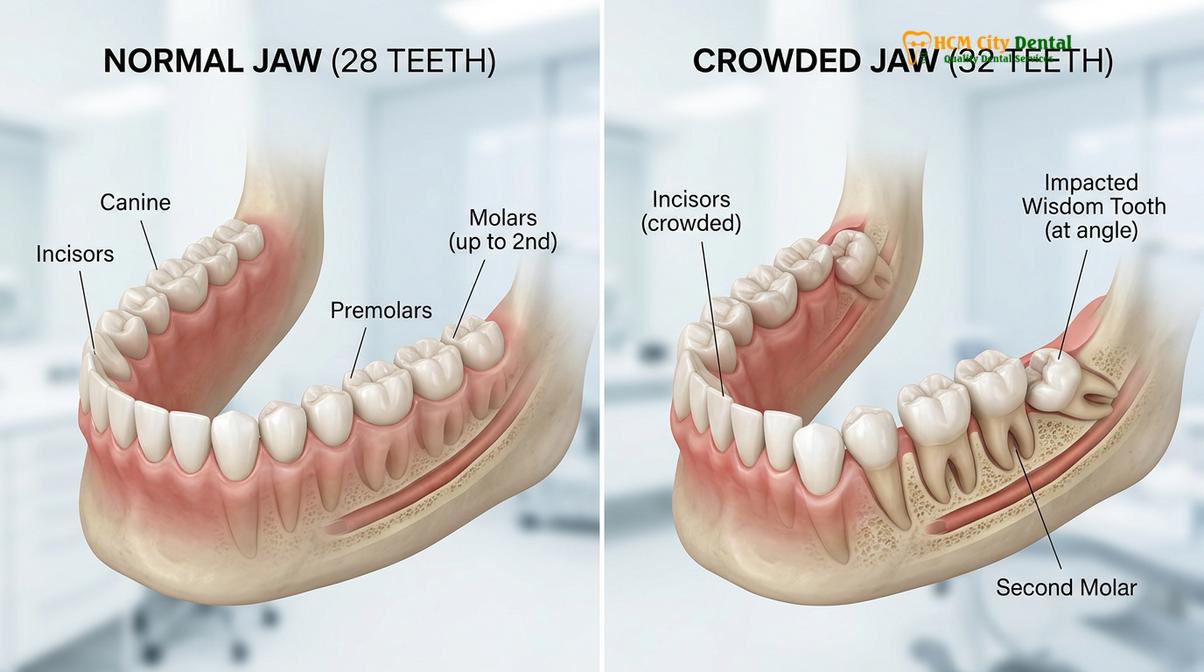
It is also crucial to differentiate between a healthy 28-tooth arch and a compromised dentition where other essential teeth are missing. If a patient has 28 teeth because their wisdom teeth are absent, this is optimal. However, if a patient has their wisdom teeth but is missing first molars or premolars due to decay or trauma, this constitutes a compromised arch that requires restorative intervention. The specific location of the missing teeth dictates the clinical response. Losing a first molar, for instance, can lead to the shifting of adjacent teeth, supra-eruption of opposing teeth, and a collapse of the vertical dimension of occlusion.
Functional and Aesthetic Implications of Having 28 Teeth
A 28-tooth bite offers optimal chewing efficiency and aesthetic harmony, often requiring less complex orthodontic intervention than a crowded 32-tooth arch.
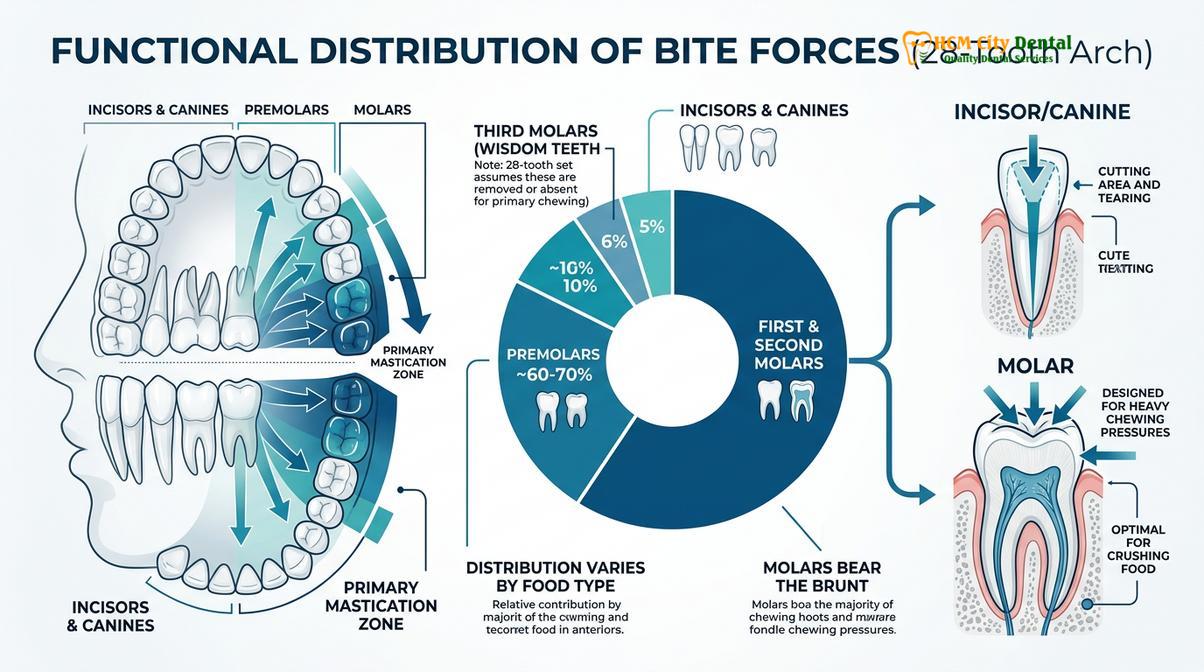
From a functional standpoint, the human masticatory system does not require 32 teeth to process food effectively. The anterior teeth (incisors and canines) are responsible for the initial incision and tearing of food, while the posterior teeth (premolars and molars) handle the trituration, or grinding, of the food bolus. Clinical studies measuring bite force and chewing efficiency have consistently demonstrated that a shortened dental arch—specifically one containing 28 teeth—performs identically to a 32-tooth arch in terms of masticatory capability [3]. The second molars provide ample surface area to complete the digestive breakdown of food before swallowing.
Aesthetically, having 28 teeth has absolutely no negative impact on facial structure. A common misconception among patients is that missing wisdom teeth will cause the cheeks to sink in or alter the jawline. This is anatomically incorrect. The structural support for the cheeks and lower face is provided by the basal bone of the maxilla and mandible, the anterior dentition, and the first and second molars. The third molars are located so far posteriorly in the oral cavity that their presence or absence does not influence the soft tissue drape of the face.
When it comes to orthodontics, a 28-tooth arch is often the ideal canvas for a clinician. Tooth size-arch length discrepancies are the primary cause of dental crowding. When a patient has 32 teeth, the discrepancy is often severe, requiring the extraction of premolars to create space for alignment. Conversely, a patient naturally possessing 28 teeth often has a more favorable ratio of tooth mass to jaw bone. This makes treatments utilizing traditional teeth alignment braces highly predictable and stable. The orthodontist can focus on leveling, aligning, and coordinating the arches without battling the posterior spatial constraints caused by developing wisdom teeth.
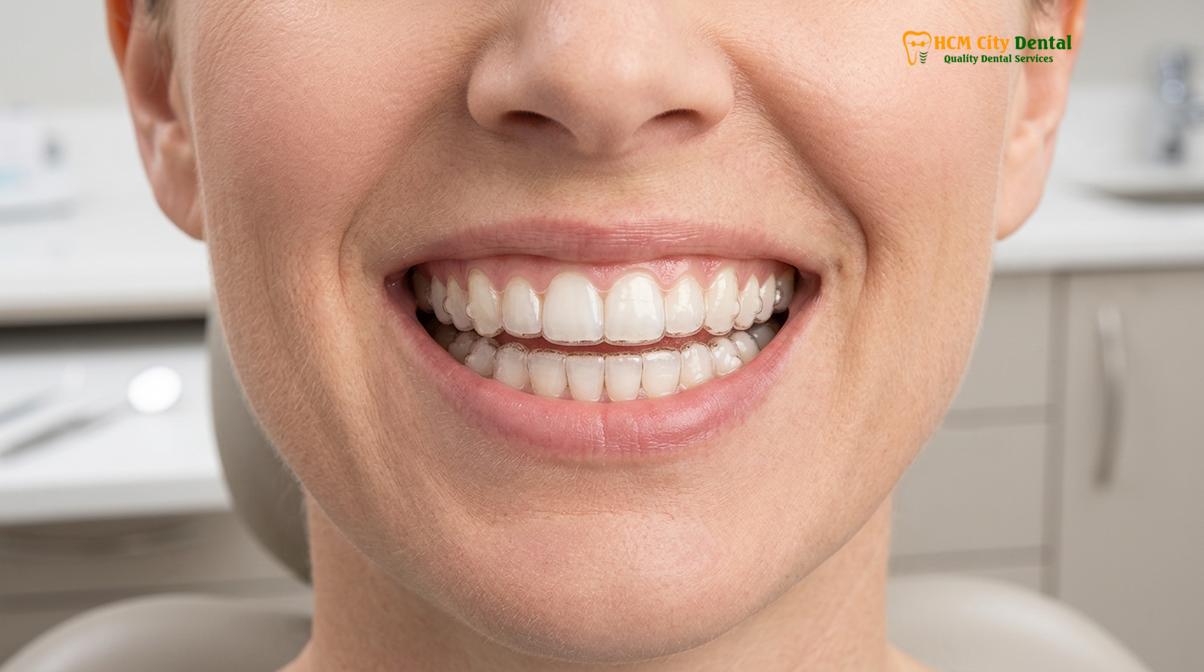
Furthermore, modern orthodontic techniques, including clear aligner therapy (often referred to as teeth alignment without braces), rely heavily on the ability to move teeth predictably. In cases where mild crowding exists in a 28-tooth arch, clinicians can employ techniques like interproximal reduction (IPR) or posterior distalization to create space. Distalization—moving the molars backward—is significantly easier when there are no third molars blocking the path. Dentists seeking to expand their knowledge on these biomechanics often explore advanced Orthodontic Courses for General Dentists to master the management of 28-tooth occlusions.
| Clinical Factor | 28-Tooth Dentition (No Wisdom Teeth) | 32-Tooth Dentition (With Wisdom Teeth) |
|---|---|---|
| Masticatory Efficiency | 100% functional; optimal grinding capacity. | 100% functional, but posterior teeth may be hard to use. |
| Risk of Crowding | Low; arch length is generally sufficient. | High; late-stage anterior crowding is common. |
| Oral Hygiene | Easier to maintain; second molars are accessible. | Difficult; third molars often trap plaque and debris. |
| Risk of Impaction | None (if third molars are congenitally absent). | High; frequently requires surgical extraction. |
| Orthodontic Stability | High; less posterior pressure on the dental arch. | Variable; erupting wisdom teeth can disrupt alignment. |
Clinical Diagnostics in the Digital Age Dental Practice
Modern digital imaging allows dentists to accurately assess a 28-tooth arch, confirming whether missing teeth are truly absent or hidden beneath the bone.
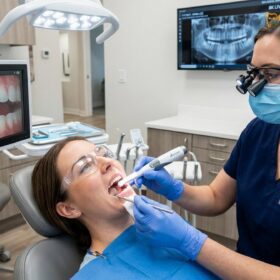
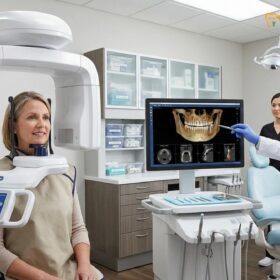
While counting 28 teeth in the mouth is a simple visual exercise, it does not provide a complete clinical picture. A tooth that is not visible in the oral cavity is not necessarily absent; it may simply be unerupted or impacted. This is where advanced diagnostics in the digital age dental practice become indispensable. To accurately evaluate a patient’s dentition, clinicians rely on comprehensive radiographic imaging to visualize the structures beneath the gingival tissue and within the alveolar bone [4].
The standard diagnostic tool for evaluating the full dentition is the panoramic radiograph, also known as an OPG (Orthopantomogram). This two-dimensional X-ray captures the entire maxilla and mandible, the temporomandibular joints (TMJ), and all erupted and unerupted teeth in a single image. When a patient presents with 28 visible teeth, a panoramic X-ray will immediately reveal whether the four wisdom teeth are congenitally missing (agenesis) or if they are developing beneath the bone. If the tooth buds are entirely absent on the radiograph, the patient truly has a 28-tooth anatomy.
In cases where the wisdom teeth are present but impacted, more advanced imaging may be required. Cone Beam Computed Tomography (CBCT) provides a high-resolution, three-dimensional view of the maxillofacial region. CBCT is particularly crucial when an impacted wisdom tooth is positioned close to vital anatomical structures, such as the inferior alveolar nerve in the lower jaw or the maxillary sinus in the upper jaw. By utilizing 3D imaging, the dental surgeon can precisely map the root morphology and plan a safe extraction protocol, minimizing the risk of nerve paresthesia or sinus communication.
Clinical Case Study: Diagnostic Confirmation
A 24-year-old patient visited HCMC Dental Clinic in Ho Chi Minh City for a routine check-up, noting that she only had 28 teeth and had never undergone extractions. Visually, her dental arch was perfectly aligned and healthy. However, a digital panoramic X-ray revealed two horizontally impacted lower wisdom teeth completely submerged in the jawbone, pressing against the roots of her second molars. Thanks to early digital detection, the surgical team was able to extract the impacted teeth before they caused irreversible root resorption to the adjacent healthy teeth.
Diagnostic imaging is also vital for identifying other reasons for a 28-tooth count. Occasionally, a patient may have their wisdom teeth but be missing other teeth, such as the upper lateral incisors or lower second premolars, which are also prone to congenital agenesis. If essential functional teeth are missing, the clinical approach shifts from observation to restoration. In such scenarios, treatments like dental implants or a Full Dental Bridge may be recommended to restore the integrity of the arch and prevent the shifting of adjacent teeth.
When to See a Doctor: Signs Your 28-Tooth Bite Needs Attention
Having 28 visible teeth is generally a sign of a healthy, standard adult mouth. However, because the absence of visible wisdom teeth does not guarantee their physical absence from the jawbone, it is crucial to remain vigilant for signs of hidden dental pathology. If your third molars are impacted beneath the gums, they can silently cause significant damage to the surrounding bone and adjacent teeth over time [5].
Important Clinical Considerations
You should schedule a comprehensive dental examination if you experience any of the following symptoms in the back of your mouth, even if you only see 28 teeth:
- Dull, throbbing pain or pressure at the angle of the jaw.
- Swelling, redness, or tenderness in the gums behind your last visible molar.
- Difficulty opening your mouth fully (trismus) or pain when chewing.
- A persistent bad taste or odor originating from the back of the mouth, which may indicate an infection (pericoronitis).
- Unexplained shifting or crowding of your lower front teeth.
One of the most common complications associated with unerupted wisdom teeth is pericoronitis. This occurs when a wisdom tooth partially erupts, breaking the surface of the gum but failing to fully emerge. A flap of gum tissue, known as an operculum, remains over the tooth, creating a deep pocket where food debris and anaerobic bacteria accumulate. This can lead to a severe, localized infection. If you experience sudden, sharp pain in this region, it is highly recommended to consult a Comprehensive Guide to Tooth Pain and seek immediate clinical evaluation.
Furthermore, impacted wisdom teeth can exert continuous pressure on the roots of the adjacent second molars. Over time, this pressure can trigger osteoclastic activity, leading to root resorption—a process where the root of the healthy second molar is slowly dissolved away. Additionally, the tight space between an impacted wisdom tooth and a second molar is highly susceptible to decay, as it is impossible to clean with a toothbrush or floss. This hidden decay can rapidly progress, necessitating complex restorative work as outlined in the clinical protocols for Dental Caries.
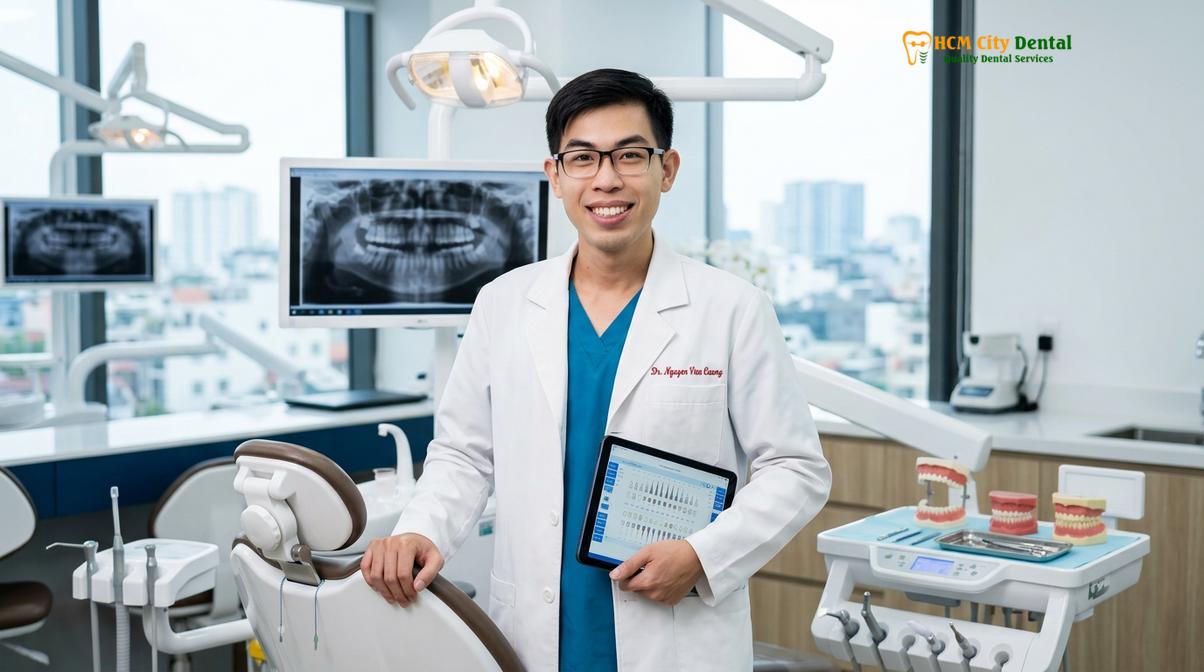
As Dr. Nguyen Van Cuong advises, the best approach to managing a 28-tooth dentition is proactive diagnostic monitoring. Even if you are completely asymptomatic, a baseline panoramic X-ray should be taken during late adolescence or early adulthood to map the status of your third molars. If the imaging confirms that you are congenitally missing your wisdom teeth, you can proceed with the confidence that your 28-tooth arch is naturally complete. If impacted teeth are discovered, a personalized surgical plan can be developed based on clinical diagnostics to protect your long-term oral health.
For patients seeking a thorough evaluation of their dental anatomy, bite alignment, or missing teeth, scheduling a consultation at HCMC Dental Clinic ensures access to state-of-the-art digital imaging and expert clinical guidance. Whether you require routine maintenance for your 28 teeth or complex surgical intervention, our team is dedicated to preserving the health and function of your smile.
Frequently Asked Questions
Is it normal for an adult to only have 28 teeth?
Yes, having exactly 28 teeth is completely normal and highly common among adults. This typically indicates that your four third molars (wisdom teeth) are either congenitally absent or have been previously extracted. A 28-tooth arch provides full masticatory function and aesthetic harmony without any negative impact on your oral health.
Does having 28 teeth affect my ability to chew food?
No, having 28 teeth does not negatively affect your chewing capacity. The first and second molars are responsible for the vast majority of grinding and crushing forces during mastication. The absence of third molars does not diminish functional efficiency and often prevents food impaction issues at the back of the mouth.
Can I get braces if I only have 28 teeth?
Yes, orthodontic treatment is highly effective for patients with 28 teeth. In fact, a 28-tooth dentition often provides a more stable foundation for alignment, as there is less risk of posterior crowding. Orthodontists frequently design treatment plans specifically optimized for this standard dental configuration.
How do I know if my missing 4 teeth are impacted in my jaw?
The only definitive way to confirm if your missing teeth are impacted is through dental imaging, such as a panoramic X-ray or CBCT scan. If you cannot see your wisdom teeth but experience jaw pain, swelling, or pressure at the back of your mouth, they may be trapped beneath the gum line.
Will my face shape change because I only have 28 teeth?
No, having 28 teeth will not alter your facial structure or cause your cheeks to sink in. The structural support for your lower face and cheeks is primarily provided by the jawbone, the anterior teeth, and the first and second molars. Wisdom teeth do not significantly contribute to facial aesthetics.
References
- Journal of the American Dental Association. Evolutionary trends in human dentition and third molar agenesis. (2021).
- International Journal of Oral and Maxillofacial Surgery. Clinical outcomes of third molar impaction and extraction protocols. (2020).
- American Journal of Orthodontics and Dentofacial Orthopedics. Arch length discrepancy and stability in 28-tooth dentitions. (2019).
- Journal of Dental Research. Masticatory efficiency and occlusal forces in shortened dental arches. (2022).
- Clinical Oral Investigations. Diagnostic accuracy of CBCT in evaluating unerupted mandibular third molars. (2018).