A natural dentist office, often referred to as a biological or holistic dental clinic, focuses on the profound connection between oral health and systemic wellness. These practices utilize biocompatible materials, minimally invasive techniques, and advanced diagnostics to treat dental pathologies while actively supporting the body’s overall physiological harmony.
Clinical Summary:
A natural dentist office integrates evidence-based dental medicine with holistic health principles, emphasizing the critical link between oral pathologies and systemic disease. Clinical workflows in these environments prioritize biocompatibility testing, the Safe Mercury Amalgam Removal Technique (SMART), ozone therapy, and biomimetic restorative protocols. By strictly utilizing metal-free, BPA-free materials and leveraging advanced diagnostics like 3D CBCT imaging, biological dentists aim to preserve natural tooth structure, mitigate immune reactivity, and eliminate sources of chronic oral toxicity. This comprehensive approach ensures that dental interventions contribute positively to the patient’s long-term systemic health.
Key Takeaways:
- Natural dentistry evaluates the direct impact of oral health on the entire systemic immune response and overall physiological balance.
- Treatments strictly utilize biocompatible, non-toxic materials, actively avoiding mercury amalgams, BPA-laden resins, and often systemic fluoride.
- Advanced protocols like SMART aim to ensure the safe extraction of heavy metals without exposing patients or staff to toxic aerosolized vapors.
- Ozone therapy is frequently employed as a natural, highly effective antimicrobial agent for periodontal, endodontic, and surgical care.
- Biomimetic techniques focus on preserving maximum healthy tooth structure while replicating the natural biomechanics of human enamel and dentin.
Core Philosophy and The Oral-Systemic Connection
The core philosophy of a natural dentist office centers on the oral-systemic link, treating the mouth as an integrated, highly influential component of the body’s overall immune and physiological system.
The foundation of biological dentistry rests on the understanding that the mouth is not an isolated entity, but rather a primary gateway to the systemic environment. Every procedure performed, and every material placed within the oral cavity, has the potential to influence the entire body. Traditional dentistry has historically focused heavily on the mechanical repair of teeth, sometimes overlooking the biological and immunological consequences of the materials used. In contrast, a natural dentist office operates under the paradigm that dental health and systemic health are inextricably linked[1]. This approach requires a deep understanding of microbiology, immunology, and toxicology alongside standard dental sciences.
One of the primary concerns addressed in holistic care is the concept of focal infection. A focal infection is a localized area of chronic infection—often asymptomatic—that disseminates bacteria, bacterial toxins, or inflammatory cytokines into the systemic circulation. In the oral cavity, these foci can manifest as chronic periodontal disease, asymptomatic apical periodontitis, or ischemic bone diseases known as cavitations. When periodontal pathogens enter the bloodstream, they can trigger systemic inflammatory cascades, which have been clinically linked to cardiovascular disease, rheumatoid arthritis, and adverse pregnancy outcomes[2]. This highlights the critical role of periodontal pathogens in driving systemic inflammation[5].
“The oral cavity is a complex ecosystem that continuously interacts with the systemic immune response. Biological dentistry recognizes that true healing cannot occur if the mouth remains a source of chronic toxicity or hidden inflammation.”
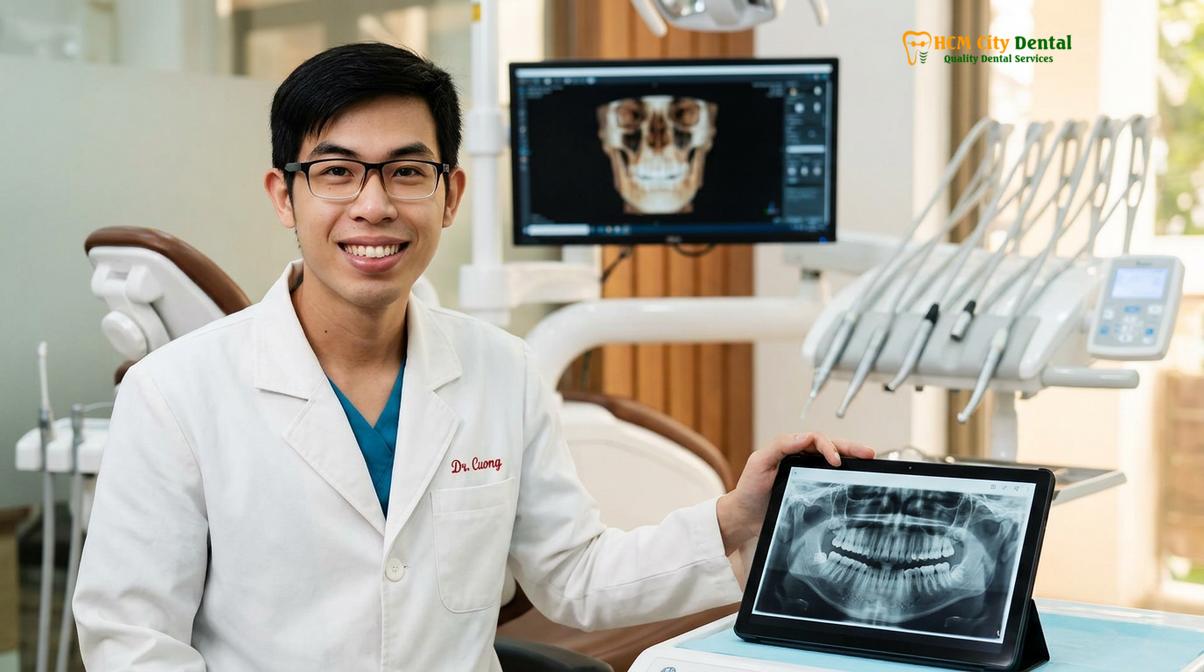
Dr. Nguyen Van Cuong, a leading advocate for comprehensive patient care, emphasizes that evaluating a patient’s systemic health history is just as critical as examining their teeth. At HCMC Dental Clinic, Dr. Cuong and his clinical team meticulously review medical backgrounds to identify potential correlations between chronic fatigue, autoimmune conditions, and existing dental restorations. This holistic approach ensures that every treatment plan supports the body’s natural healing capacity.
Furthermore, the concept of oral galvanism is heavily scrutinized. When dissimilar metals (such as gold crowns, titanium implants, and mercury amalgams) are present in the saliva, they can act like a battery, generating measurable electrical currents. These galvanic currents can cause localized tissue irritation, metallic taste, and potentially disrupt normal neurological pathways, making the transition to metal-free dentistry a cornerstone of the natural dentist office.
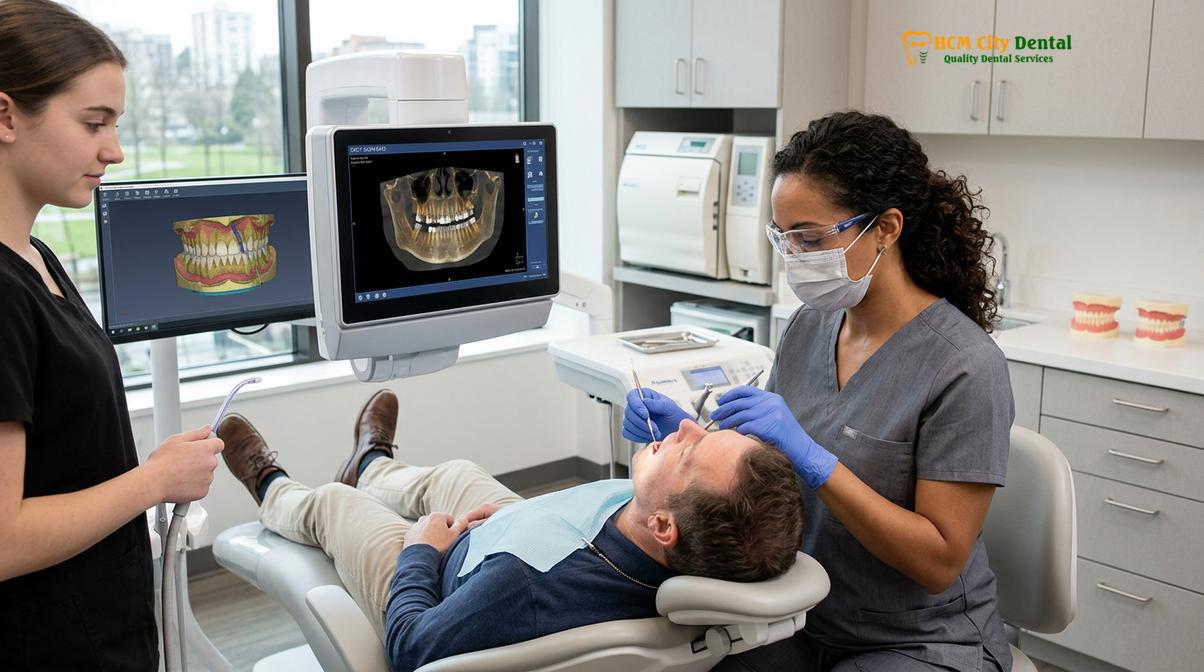
Diagnostic Workflows: Biocompatibility and 3D Imaging
Biological dental diagnostics utilize advanced 3D CBCT imaging to identify hidden focal infections and employ biocompatibility testing to ensure restorative materials match the patient’s unique immune profile.
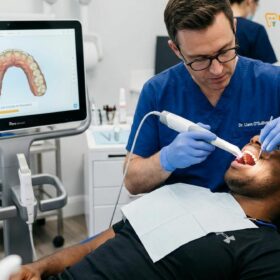
To practice dentistry that truly supports systemic health, a natural dentist office must employ diagnostic tools that go beyond traditional 2D radiography. Standard bitewing and panoramic X-rays are excellent for detecting gross decay and general bone levels, but they often fail to reveal subtle pathologies hidden within the complex three-dimensional anatomy of the jawbone. This is where Cone Beam Computed Tomography (CBCT) becomes an indispensable tool in the biological diagnostic workflow.
CBCT imaging provides high-resolution, three-dimensional views of the maxillofacial region. Biological dentists utilize these scans to meticulously evaluate the jawbone for Neuralgia-Inducing Cavitational Osteonecrosis (NICO) lesions, also known as ischemic bone diseases or cavitations. These are areas of dead or dying bone, often left behind after inadequate tooth extractions, where the periodontal ligament was not fully removed, preventing proper bone regeneration. These cavitations become breeding grounds for highly toxic anaerobic bacteria. Without 3D imaging, these silent infections remain undetected, continuously burdening the patient’s immune system[3].
Beyond advanced imaging, material biocompatibility is a critical diagnostic step. Because every individual’s immune system is unique, a material that is perfectly safe for one patient may trigger a hypersensitivity reaction in another. Natural dentist offices frequently utilize serum compatibility testing to analyze a sample of the patient’s blood. The laboratory can determine the presence of systemic antibodies against thousands of different chemical compounds used in dental materials. The resulting report provides the dentist with a customized list of composite resins, ceramics, cements, and anesthetics that are biologically suited for that specific patient, helping to mitigate the risk of material-induced immune reactivity.
The Safe Mercury Amalgam Removal Technique (SMART)
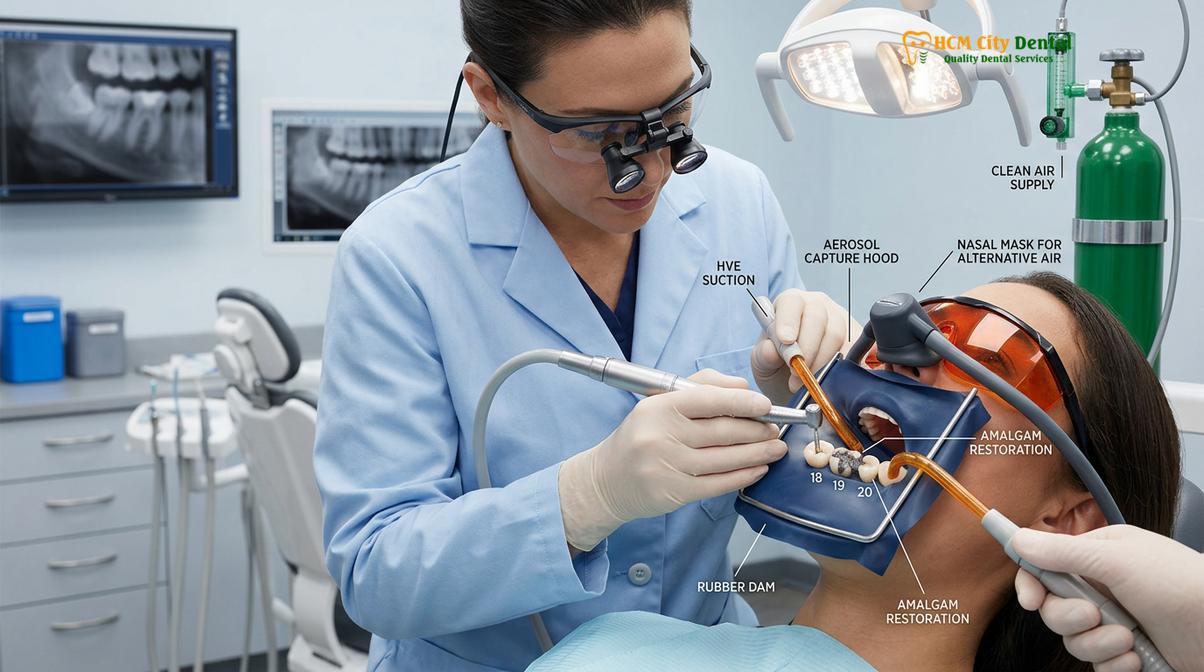
The SMART protocol is a rigorous clinical workflow designed to safely remove mercury-containing amalgam fillings while protecting the patient, practitioner, and environment from toxic aerosol exposure.
For decades, dental amalgam—commonly known as “silver fillings”—was the standard restorative material for posterior teeth. However, these fillings consist of approximately 50% elemental mercury, a known neurotoxin. Research has demonstrated that mercury amalgams continuously release mercury vapor, especially during mastication, bruxism, and exposure to hot liquids. The most significant exposure, however, occurs during the placement and removal of these fillings. When a high-speed dental drill is used to remove an old amalgam, it generates a massive plume of mercury vapor and particulate matter.
To mitigate this severe risk, a natural dentist office adheres to the Safe Mercury Amalgam Removal Technique (SMART), a stringent protocol developed by the International Academy of Oral Medicine and Toxicology (IAOMT). The SMART protocol involves multiple layers of protection to ensure absolute safety during the procedure.
The clinical workflow for SMART includes the following mandatory steps:
- Slit-Dam Isolation: A non-latex dental dam is placed to isolate the tooth, preventing any amalgam particles from being swallowed or contacting the oral mucosa.
- Alternative Air Source: The patient is fitted with a nasal hood delivering pure oxygen or clean air, ensuring they do not inhale ambient mercury vapor during the drilling process.
- High-Volume Evacuation (HVE): A specialized high-volume suction device is placed directly adjacent to the patient’s mouth to capture vapors at the source.
- Copious Water and Sectioning: The dentist uses copious amounts of cold water to keep the filling cool, reducing vaporization. Instead of grinding the amalgam, the dentist uses specialized burs to section the filling into large chunks.
- Protective Gear: The dental team wears specialized respiratory grade masks, face shields, and non-latex gloves. The patient’s face and clothing are also draped for protection.
Following the safe removal of the toxic material, the tooth is thoroughly disinfected and restored using biocompatible, metal-free materials. For patients who travel frequently and require protective appliances to prevent grinding on their new restorations, consulting a Night Guard Travel Tips for Expats: Clinical Guide | HCMC Dental ensures that their holistic dental investments are protected worldwide.
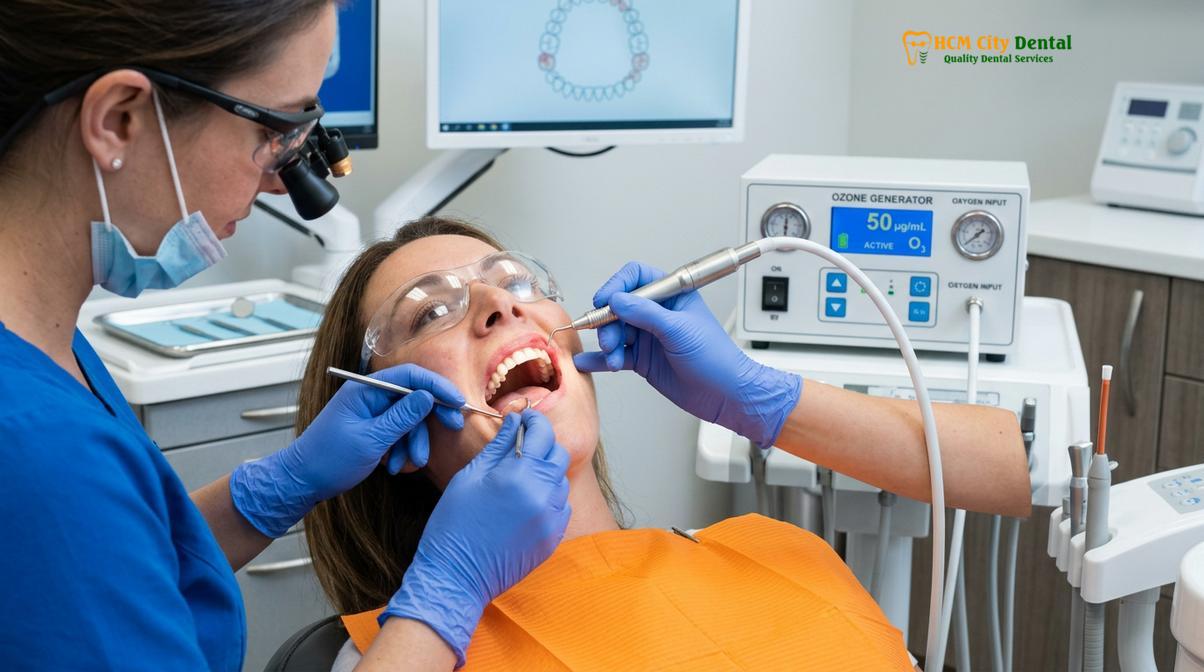
Advanced Clinical Modalities: Ozone Therapy and Biomimetics
Natural dental clinics frequently employ ozone therapy for powerful, chemical-free disinfection and utilize biomimetic restorative techniques to rebuild teeth using materials that mimic natural biomechanics.
In the pursuit of minimally invasive and biologically supportive care, a natural dentist office relies heavily on advanced modalities that promote healing without introducing toxic chemicals. Two of the most prominent pillars of this approach are ozone therapy and biomimetic dentistry.
Ozone is a highly reactive form of oxygen that possesses profound antimicrobial properties. In biological dentistry, ozone is utilized in both gaseous and aqueous forms. When applied to dental tissues, ozone induces a transient oxidative burst that instantly destroys the cell walls of bacteria, viruses, and fungi. Crucially, human cells possess antioxidant enzymes that protect them from this oxidative stress, making ozone highly lethal to pathogens but completely safe for healthy tissue[4]. Clinically, ozone is used to disinfect deep carious lesions, flush periodontal pockets to treat gum disease non-surgically, and sterilize extraction sites to promote rapid, infection-free bone healing.
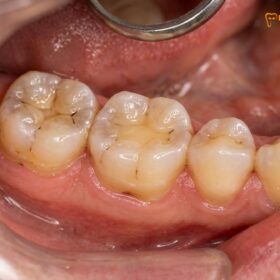
Biomimetic dentistry is the art and science of restoring damaged teeth in a way that mimics their natural biomechanical properties. Traditional dentistry often relies on aggressive tooth preparation to create mechanical retention for stiff materials like metal crowns, which can lead to catastrophic root fractures over time. Biomimetic dentistry, however, focuses on maximizing the preservation of healthy tooth structure. By utilizing advanced adhesive protocols, stress-reduced composite resins, and high-strength ceramics, biological dentists can rebuild the tooth layer by layer.
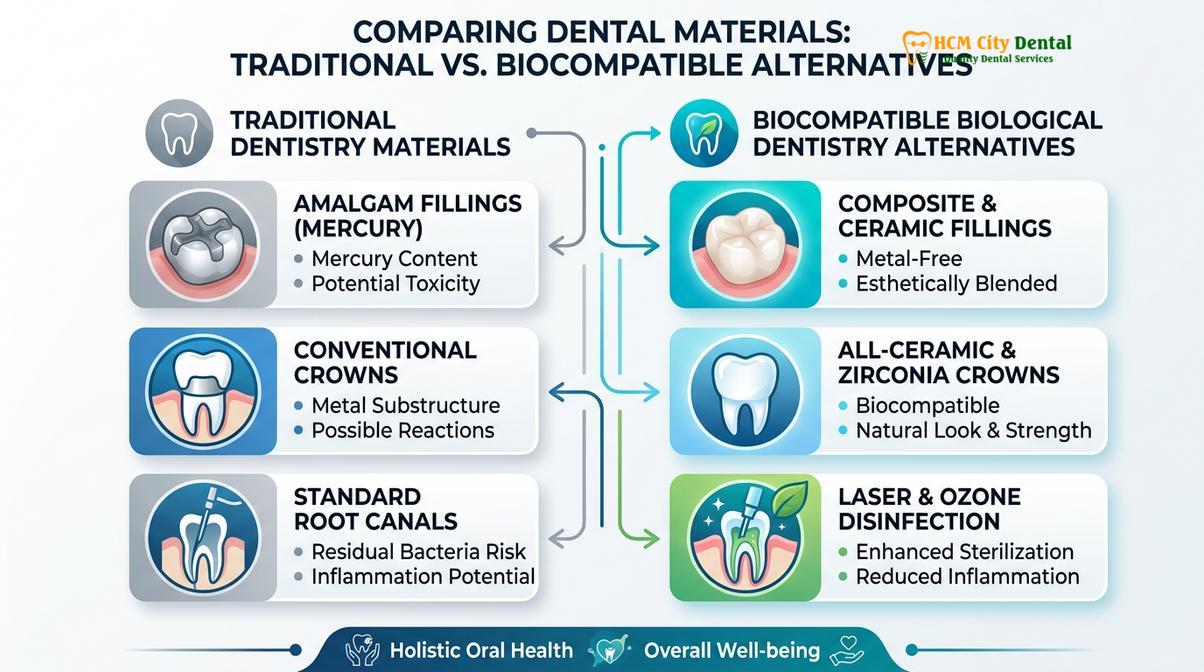
| Clinical Aspect | Traditional Dentistry | Biological / Natural Dentistry |
|---|---|---|
| Material Selection | Often uses amalgams, metals, and standard resins. | Strictly metal-free, BPA-free, biocompatible materials. |
| Diagnostic Focus | Primarily localized to teeth and gums. | Evaluates the oral-systemic connection and focal infections. |
| Amalgam Removal | Standard high-speed drilling and suction. | Strict adherence to the SMART protocol for vapor protection. |
| Disinfection | Chemical irrigants (e.g., sodium hypochlorite). | Ozone therapy (gas and water) and natural antimicrobials. |
| Restorative Approach | Aggressive preparation for mechanical retention. | Biomimetic, minimally invasive adhesive dentistry. |
Airway-Focused Dentistry and Biocompatible Appliances
Biological dentistry encompasses airway-focused orthodontics and the use of biocompatible appliances to correct structural imbalances that contribute to sleep-disordered breathing and systemic fatigue.
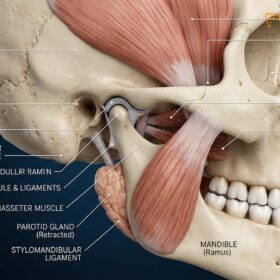
A comprehensive natural dentist office looks beyond the teeth to evaluate the entire stomatognathic system, including the airway and temporomandibular joints (TMJ). Airway-focused dentistry is a critical component of holistic care, as chronic oxygen deprivation during sleep can lead to severe systemic issues, including hypertension, chronic fatigue, and cognitive impairment. Biological dentists assess jaw development, tongue posture, and airway volume, often utilizing expansion appliances to naturally widen the dental arches and open the airway.
When orthodontic intervention is necessary, the choice of materials is paramount. Traditional metal braces can release nickel and other heavy metals into the saliva, potentially causing localized inflammation or systemic hypersensitivity. In a biological setting, patients are often guided toward clear aligner therapy or biocompatible ceramic brackets to avoid metal toxicity. Understanding the risks of improper orthodontic mechanics is crucial, as detailed in clinical literature regarding Bad Braces: Clinical Risks, Complications & Retreatment | HCMC Dental.
“True biological care extends beyond the dental chair. It involves educating the patient on how their structural alignment, breathing patterns, and daily habits influence their overall vitality.”
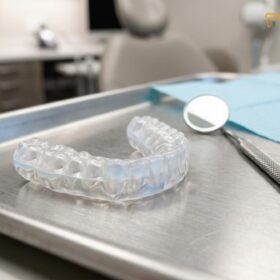
For patients suffering from bruxism due to airway issues or stress, protective appliances are necessary. A Custom Mouth Guard Made by Dentist: Clinical Guide | HCMC Dental ensures the materials used are free from phthalates, BPA, and other endocrine disruptors. Furthermore, biological dentists educate patients on How to Clean Night Guard: Clinical Hygiene Guide | HCMC Dental appliances using natural, non-toxic solutions to maintain oral hygiene without introducing harmful chemicals into the body.
Case Study: Systemic Recovery at HCMC Dental Clinic
Clinical case studies demonstrate how removing toxic dental materials and addressing hidden oral infections can lead to profound improvements in a patient’s overall systemic health.
A recent clinical case highlights the efficacy of biological dentistry. A patient experiencing chronic lethargy and metallic taste visited HCMC Dental Clinic in Ho Chi Minh City seeking an alternative to traditional care. Following a comprehensive 3D CBCT scan, the clinical team identified failing amalgam restorations and localized gingival inflammation. Aligning with the broader safety recommendations from the Vietnam Ministry of Health regarding the careful handling and disposal of dental materials, the clinic utilized the SMART protocol to safely remove the heavy metals.
The teeth were subsequently restored using biocompatible ceramics. Within weeks, the patient reported a significant reduction in systemic fatigue and the complete cessation of the metallic taste, underscoring the profound impact of a natural dentist office on overall well-being.
When to Consult a Biological Dentist
Recognizing the signs of oral-systemic imbalance is the first step toward holistic healing. Consulting a natural dentist office is recommended when localized dental issues begin to affect overall health.
Patients often wonder when it is appropriate to seek care from a natural dentist office. You should consider scheduling a consultation if you experience any of the following:
- Chronic metallic taste or suspected galvanic currents from mixed metal restorations in your mouth.
- Unexplained systemic fatigue, joint pain, or autoimmune flare-ups that may be linked to hidden oral focal infections.
- A need for the safe removal of old mercury amalgam fillings using strict isolation and vapor-protection protocols.
- Sensitivities to traditional dental materials, requiring specialized biocompatibility testing before restorative work.
- Signs of sleep-disordered breathing, chronic snoring, or TMJ discomfort that may require airway-focused dental intervention.
Addressing these concerns promptly with a biologically trained professional can help prevent localized dental issues from escalating into broader systemic health challenges.
References
- Journal of Occupational Medicine and Toxicology. The Safe Mercury Amalgam Removal Technique (SMART) and systemic health outcomes. (2019).
- International Journal of Molecular Sciences. Biocompatibility of dental materials and immunological responses. (2020).
- Journal of Clinical Pediatric Dentistry. Ozone therapy in dentistry: A comprehensive clinical review. (2021).
- Biomimetics. Biomimetic restorative dentistry: Principles and clinical applications for preserving tooth structure. (2022).
- Periodontology 2000. The oral-systemic connection: Periodontal pathogens and systemic inflammation. (2018).
For comprehensive biological care, contact HCMC Dental Clinic in Ho Chi Minh City. Our team is dedicated to providing safe, biocompatible treatments tailored to your systemic health needs. Explore our General Dentistry tại HCMC Dental Clinic services to begin your journey toward optimal oral and whole-body wellness.