The cost of dentist wisdom teeth removal typically ranges from $50 to $300 for a simple extraction, while complex surgical removal of impacted teeth can cost between $200 and $800 per tooth. Exact pricing depends on the tooth’s position, anesthesia requirements, and the specific clinical techniques utilized.
Clinical Summary:
Wisdom tooth extraction is a routine yet highly specialized oral surgery procedure. The financial investment required depends heavily on the anatomical complexity of the third molars, ranging from fully erupted to completely bony impacted. Advanced diagnostic tools like 3D CBCT scans and minimally invasive surgical instruments such as Piezotome technology ensure precise, atraumatic removal. A thorough clinical evaluation by an experienced oral surgeon is essential to determine the exact surgical approach, appropriate anesthesia protocol, and comprehensive cost estimate tailored to the patient’s unique dental anatomy.
Key Takeaways:
- Simple extractions of fully erupted wisdom teeth are the most affordable option.
- Bony impacted wisdom teeth require complex surgical intervention, increasing the overall cost.
- Advanced technologies like Piezotome ultrasonic surgery minimize trauma and accelerate recovery.
- Local anesthesia is standard, but sedation options are available for anxious patients.
- Comprehensive pricing usually includes pre-operative 3D imaging and post-operative care.
Factors Influencing Dentist Wisdom Teeth Removal Cost
The total expense of extracting third molars is primarily dictated by the tooth’s eruption status, the angle of impaction, and the type of anesthesia administered during the procedure.
When patients inquire about the financial aspects of oral surgery, it is crucial to understand that no two wisdom teeth are anatomically identical. The clinical complexity of the extraction is the primary driver of the final fee. Dentists and oral surgeons utilize specific classification systems, such as the Pell and Gregory classification or Winter’s classification, to evaluate the depth and angle of the third molar in relation to the adjacent second molar and the surrounding mandibular or maxillary bone. These anatomical variables directly dictate the surgical time, the instruments required, and the level of expertise necessary to perform the procedure safely[4].
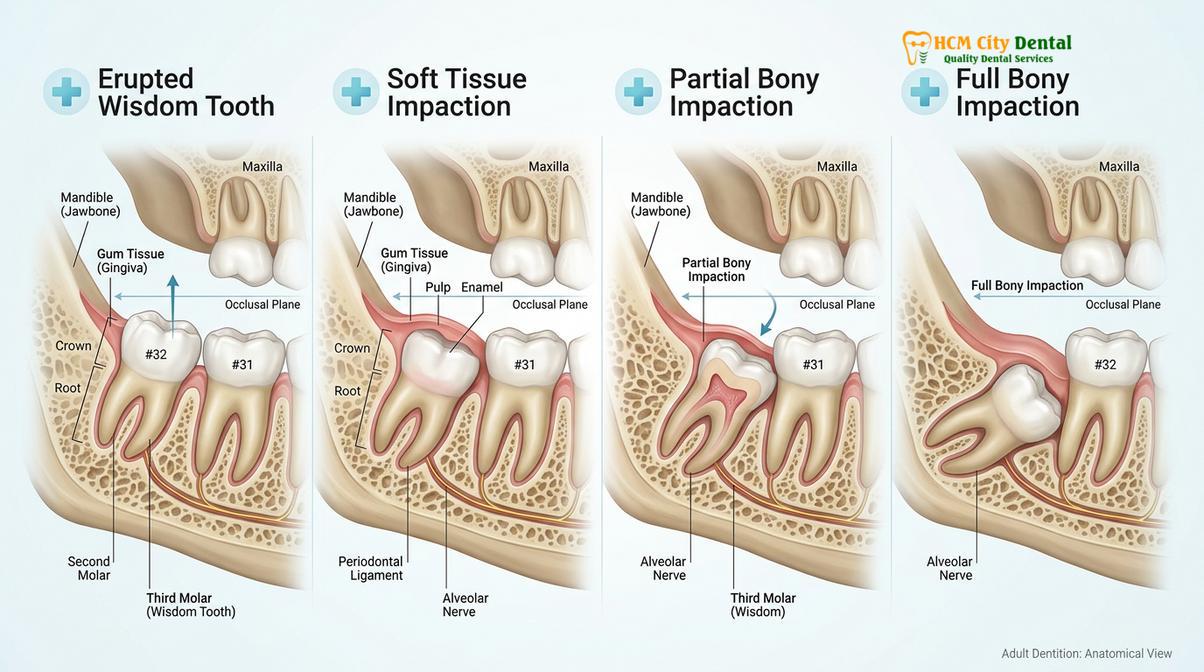
The first major factor is the eruption status of the tooth. A fully erupted wisdom tooth that has emerged completely through the gingival tissue can often be removed using standard elevation and forceps techniques. Because this procedure requires less surgical time and does not involve bone removal, it represents the most cost-effective scenario[3]. Conversely, when a tooth is trapped beneath the gums or encased in jawbone, the surgical protocol becomes significantly more intricate.
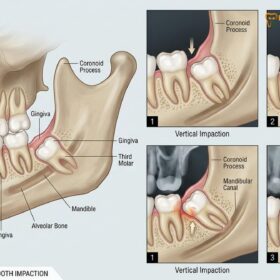
Impaction types are generally categorized into three levels of severity, each correlating with an increase in surgical complexity and cost:
- Soft Tissue Impaction: The crown of the tooth has penetrated the bone but remains covered by a flap of gingival tissue (the operculum). The surgeon must incise and reflect the gum tissue to access and remove the tooth.
- Partial Bony Impaction: The tooth is partially erupted but remains partially encased in the jawbone. This requires a mucoperiosteal flap and the removal of a small amount of overlying bone to free the tooth.
- Full Bony Impaction: The tooth is completely encased within the jawbone. This is the most complex scenario, requiring extensive bone guttering and the sectioning of the tooth into multiple pieces for safe removal without damaging adjacent structures.
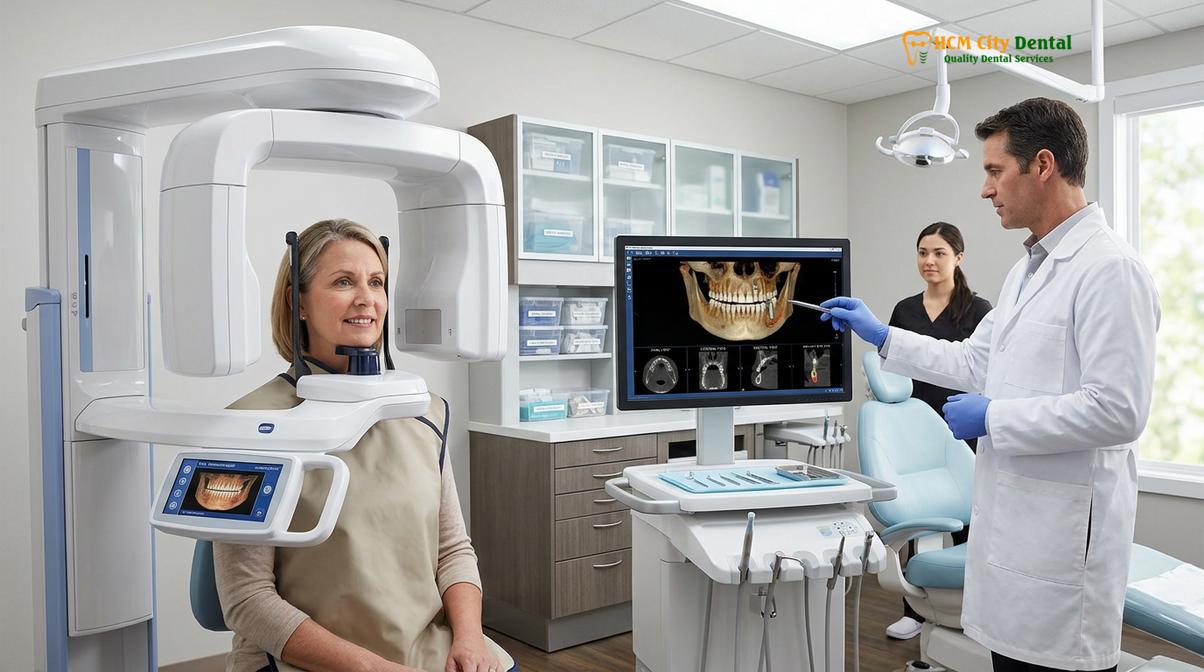
Another critical factor influencing the cost is the proximity of the tooth roots to vital anatomical structures, particularly the inferior alveolar nerve in the lower jaw and the maxillary sinus in the upper jaw. High-resolution 3D Cone Beam Computed Tomography (CBCT) is indispensable for mapping these structures. While a CBCT scan adds to the initial diagnostic cost, it is a vital investment that significantly reduces the risk of permanent nerve damage or sinus perforation during complex extractions.
Average Cost Breakdown for Wisdom Tooth Extraction
While exact fees vary by clinic and geographic location, patients can expect a tiered pricing structure based on the surgical difficulty of each specific wisdom tooth.
Understanding the estimated financial commitment helps patients make informed decisions regarding their oral health care. It is important to note that the fees provided are general estimates and can fluctuate based on the region, the clinician’s level of specialization, and the specific technologies utilized during the procedure. Patients visiting a specialized facility like HCMC Dental Clinic in Ho Chi Minh City can expect a transparent fee schedule based on a meticulous clinical assessment.
The following table outlines the estimated cost ranges for different types of wisdom tooth extractions. These figures typically represent the fee per tooth and may not include adjunctive services such as 3D imaging, sedation, or specialized bone grafting materials.
| Type of Extraction | Clinical Description | Estimated Cost Range (Per Tooth) |
|---|---|---|
| Simple Extraction (Erupted) | Tooth is fully visible above the gum line; removed without incisions. | $50 – $300 |
| Soft Tissue Impaction | Tooth is covered by gum tissue requiring a surgical incision. | $200 – $400 |
| Partial Bony Impaction | Tooth is partially encased in bone; requires bone removal and sectioning. | $300 – $600 |
| Full Bony Impaction | Tooth is completely encased in bone; highly complex surgical removal. | $400 – $800+ |
| CBCT 3D Imaging | Advanced diagnostic scan for nerve mapping and surgical planning. | $100 – $350 |
When evaluating the total cost, patients should also consider the potential long-term financial implications of leaving problematic wisdom teeth untreated. Impacted third molars can lead to severe complications, including pericoronitis (infection of the overlying gum tissue), cystic lesions that destroy surrounding jawbone, and irreversible root resorption of the adjacent healthy second molars. Addressing these complications often requires far more extensive and expensive treatments, such as root canal therapy, periodontal surgery, or even the extraction and replacement of multiple teeth.
For patients wondering what age do wisdom teeth grow, the typical eruption window is between 17 and 25 years old. Dental professionals generally recommend evaluating third molars during the late teenage years. At this stage, the tooth roots are not fully formed, and the surrounding bone is less dense, which often makes the surgical extraction easier, reduces the risk of nerve injury, and promotes faster post-operative healing, potentially lowering the overall surgical costs.
The Clinical Workflow: What to Expect During Surgery
A standardized surgical protocol involves comprehensive 3D radiographic planning, precise administration of local anesthesia, and atraumatic tooth sectioning to preserve surrounding bone and tissue.
The surgical removal of a wisdom tooth is a meticulously planned procedure designed to maximize patient safety and minimize tissue trauma. The clinical workflow begins long before the actual surgery, starting with a comprehensive diagnostic phase. During the initial consultation, the clinician will review the patient’s medical history, assess the oral cavity, and analyze radiographic images. If standard 2D panoramic X-rays indicate that the tooth roots are in close proximity to the inferior alveolar canal, a 3D CBCT scan is mandated to provide a millimeter-accurate spatial representation of the anatomy[1].
On the day of the surgery, the first clinical step is the administration of anesthesia. For patients undergoing the procedure under local anesthesia, the dentist will apply a topical anesthetic gel to the mucosa before administering profound nerve blocks. The goal is to achieve complete anesthesia of the tooth, surrounding gingiva, and bone, ensuring the patient feels only pressure, but absolutely no sharp pain during the intervention.
“The paradigm of modern oral surgery has shifted from forceful extraction to atraumatic sectioning. By deliberately dividing a complex impacted wisdom tooth into smaller, manageable fragments, we significantly reduce the mechanical stress placed on the jawbone and virtually eliminate the risk of damaging adjacent vital structures.”
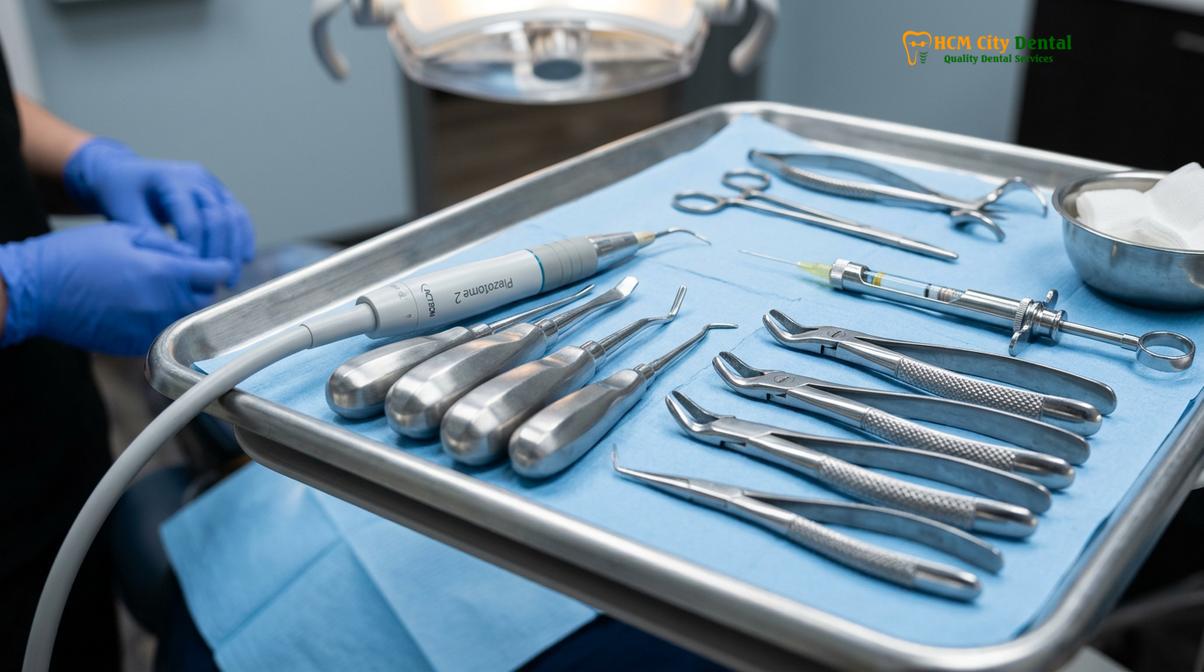
Once profound anesthesia is confirmed, the surgical phase commences. For an impacted tooth, the surgeon designs and elevates a mucoperiosteal flap. This involves making a precise incision along the gum line and gently reflecting the tissue to expose the underlying bone and the hidden tooth. If bone is obstructing the pathway of removal, a specialized surgical handpiece is used to perform an ostectomy (bone removal), creating a small gutter around the crown of the tooth.
After the entire tooth and any associated follicular tissue are removed, the surgical site is thoroughly irrigated with sterile saline to flush out debris. The surgeon will then inspect the socket, smooth any sharp bony edges, and reposition the gingival flap. The site is typically closed using resorbable sutures, which dissolve naturally over the following one to two weeks, eliminating the need for a separate suture removal appointment. Patients are then provided with sterile gauze to bite down on, applying firm pressure to achieve hemostasis.
For patients who are anxious about the procedure and wondering should wisdom teeth be removed, understanding this controlled, step-by-step clinical workflow often helps alleviate fear. The emphasis is entirely on precision, safety, and creating the optimal conditions for rapid post-operative healing.
Advanced Technologies in Third Molar Surgery
Modern oral surgery utilizes ultrasonic bone-cutting devices and platelet-rich plasma (PRP) therapy to enhance surgical precision, reduce post-operative swelling, and promote faster soft tissue healing.
The field of oral and maxillofacial surgery has witnessed significant technological advancements that directly impact both the clinical outcomes and the overall patient experience. While traditional rotary instruments are still widely used, many progressive clinics have integrated Piezosurgery into their surgical protocols. Piezosurgery utilizes ultrasonic micro-vibrations to cut bone with extreme precision. The most significant clinical advantage of this technology is its tissue selectivity; it cuts mineralized tissue but will not cut soft tissue even upon direct contact[2].
When extracting deeply impacted lower wisdom teeth that are intimately associated with the inferior alveolar nerve, the use of a Piezotome drastically reduces the risk of temporary or permanent paresthesia (numbness). Furthermore, the ultrasonic vibrations create a cavitation effect that minimizes bleeding during the surgery and results in significantly less post-operative swelling and discomfort compared to traditional burs.
“Integrating autologous PRF into the extraction socket acts as a biological catalyst. It not only accelerates the regeneration of bone and soft tissue but also significantly reduces the incidence of alveolar osteitis, ensuring a smoother and more predictable recovery trajectory for our patients.”
Another groundbreaking advancement frequently utilized in complex extractions is the application of Platelet-Rich Plasma (PRP) or Platelet-Rich Fibrin (PRF). This technique involves drawing a small amount of the patient’s own blood just before the surgery and spinning it in a centrifuge. This process isolates and concentrates the platelets, growth factors, and white blood cells into a biological membrane or plug, which has been shown to accelerate tissue healing[5].
When this PRF plug is placed into the empty extraction socket before suturing, it serves multiple clinical purposes. It stabilizes the blood clot, provides a scaffold for new bone formation, and releases a steady stream of growth factors that accelerate healing and reduce inflammation. While the use of Piezosurgery and PRF may slightly increase the initial dentist wisdom teeth removal cost, the reduction in complications and the enhanced speed of recovery make them highly valuable investments in patient care.
Pharmacological Management and Recovery Protocols
Effective post-operative care relies on a strict regimen of prescribed analgesics, anti-inflammatory medications, and meticulous oral hygiene practices to prevent infection and ensure optimal healing.
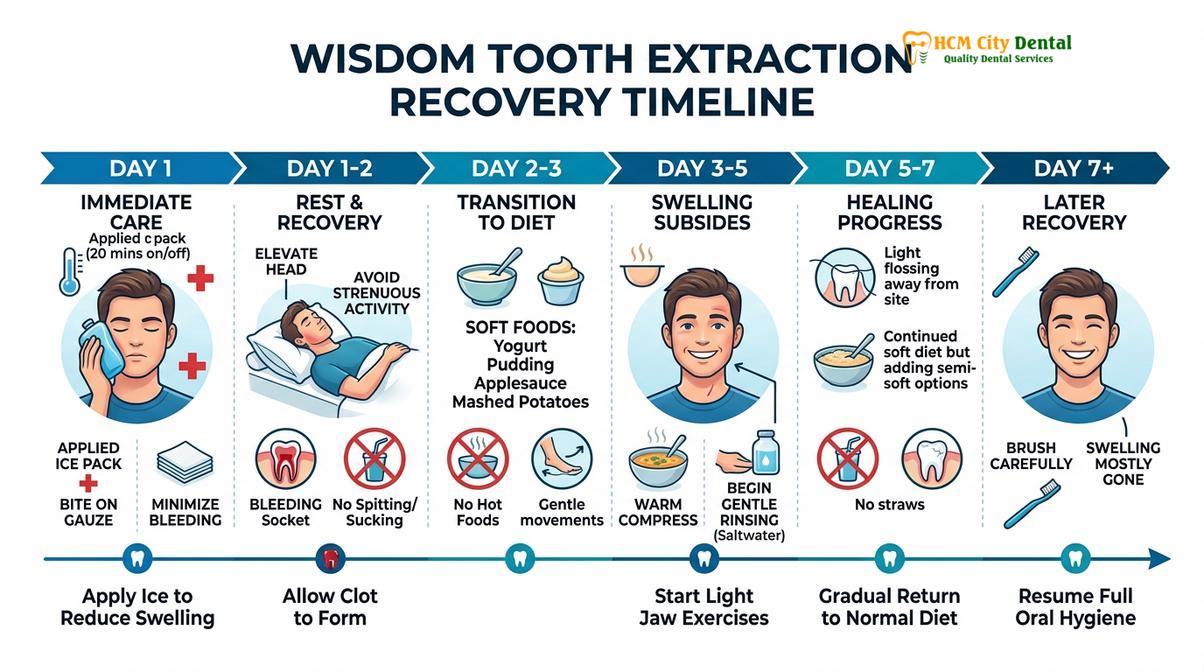
The success of a wisdom tooth extraction is not solely dependent on the surgical procedure itself; the patient’s adherence to post-operative protocols is equally critical. Immediately following the surgery, the primary clinical objective is to establish and protect the blood clot within the socket. Patients are instructed to maintain firm, continuous bite pressure on a gauze pad for the first 30 to 45 minutes. Dislodging this clot can lead to a painful condition known as alveolar osteitis, commonly referred to as dry socket.
Dr. Nguyen Van Cuong, a leading specialist in oral surgery, emphasizes that personalized post-operative care is paramount to a successful recovery. He routinely advises patients to strictly follow their prescribed medication schedules and dietary restrictions to minimize discomfort. For detailed post-operative guidance, patients can review his comprehensive insights on tooth extraction recovery, ensuring a smooth and predictable healing process.
Swelling is a normal physiological response to surgical trauma and typically peaks between 48 and 72 hours post-operatively. Patients are advised to apply ice packs to the outside of the face in 20-minute intervals during the first 24 hours to induce vasoconstriction and limit edema. After 48 hours, transitioning to warm, moist compresses can help stimulate blood flow and resolve residual swelling and jaw stiffness.
When to Consult an Oral Surgeon: Important Clinical Notes
Recognizing the early warning signs of wisdom tooth complications can prevent severe infections and protect the structural integrity of adjacent teeth.
Patients should not wait for excruciating pain before seeking a professional evaluation. Early consultation is highly recommended if you experience localized swelling behind the last visible molar, difficulty opening your mouth fully, or a persistent bad taste or odor originating from the back of the oral cavity. These symptoms often indicate pericoronitis, an infection of the gum tissue overlying a partially erupted wisdom tooth.
Furthermore, clinical protocols at our facility strictly adhere to the infection control and surgical guidelines established by the Vietnam Ministry of Health (MOH), ensuring the highest standards of patient safety. By following these rigorous national health standards, we guarantee that every extraction is performed in a completely sterile environment, minimizing the risk of post-operative infections and cross-contamination.
If you have been told you have no wisdom teeth, it is still advisable to confirm this with a panoramic X-ray, as the teeth may simply be deeply impacted and asymptomatic rather than congenitally absent. Conversely, if you are experiencing unexplained facial pain, it is worth investigating can wisdom teeth cause headaches, as referred pain from impacted molars is a well-documented clinical phenomenon.
Clinical Case Study: Complex Extraction in Ho Chi Minh City
A real-world clinical scenario demonstrates how advanced diagnostic imaging and precise surgical techniques resolve severe impactions while minimizing patient discomfort.
A 24-year-old patient recently visited HCMC Dental Clinic in Ho Chi Minh City presenting with intermittent, throbbing pain in the lower right quadrant of their jaw. Initial clinical examination revealed a partially erupted third molar with inflamed surrounding gingival tissue. To accurately assess the anatomical risks, a 3D CBCT scan was performed, revealing a full bony horizontal impaction with the tooth roots positioned dangerously close to the inferior alveolar nerve canal.
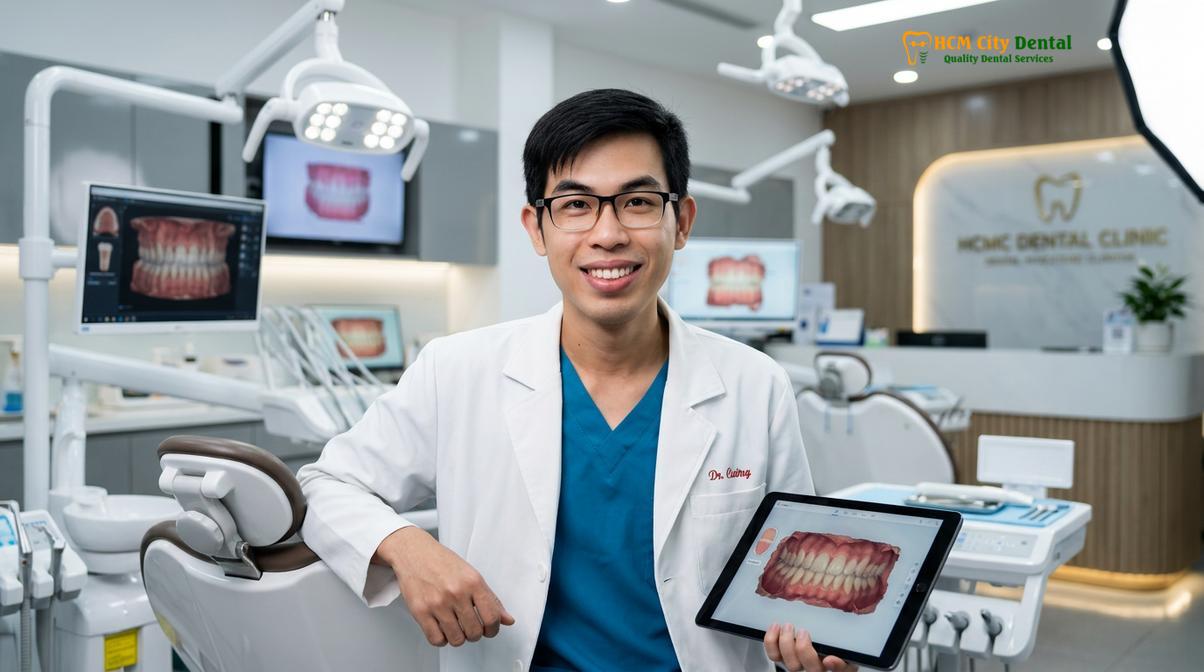
Given the complexity of the case, the surgical team at HCMC Dental Clinic opted for a minimally invasive approach utilizing Piezosurgery. Under local anesthesia, a precise mucoperiosteal flap was raised, and the ultrasonic Piezotome was used to carefully remove the overlying bone without risking damage to the adjacent nerve. The tooth was then sectioned into three distinct fragments and elevated atraumatically. To promote rapid healing and prevent dry socket, a PRF plug derived from the patient’s own blood was placed into the surgical site before suturing.
The patient reported minimal swelling and required only over-the-counter analgesics for the first two days post-surgery. By the one-week follow-up appointment, the soft tissue had healed beautifully, and the patient had fully resumed their normal diet and daily activities, highlighting the profound impact of combining advanced technology with expert surgical execution.
Conclusion
Understanding the dentist wisdom teeth removal cost involves recognizing the intricate balance between surgical complexity, advanced diagnostic requirements, and the specialized skills of the clinical team. While simple extractions are relatively straightforward and affordable, impacted teeth demand a higher level of surgical intervention to ensure patient safety and optimal outcomes. By investing in modern technologies like 3D imaging and Piezosurgery, patients can significantly reduce their risk of complications and enjoy a faster, more comfortable recovery.
If you are experiencing discomfort or require a professional evaluation of your third molars, we invite you to schedule a comprehensive consultation. Discover expert care and transparent pricing for Tooth Extraction tại HCMC Dental Clinic, Ho Chi Minh City, where our dedicated team is committed to safeguarding your oral health.
References
- Journal of Oral and Maxillofacial Surgery. Clinical outcomes of third molar extractions and associated surgical complications.
- International Journal of Oral and Maxillofacial Surgery. The efficacy of Piezosurgery in impacted mandibular third molar extraction.
- British Dental Journal. Cost-benefit analysis of prophylactic versus symptomatic third molar removal.
- Journal of the American Dental Association. Guidelines for the management of impacted third molars and risk assessment.
- Clinical Oral Investigations. Platelet-rich plasma applications in oral surgery for accelerated tissue healing.