Experiencing wisdom teeth symptoms at age 35 is a well-documented clinical scenario. While these molars typically erupt in early adulthood, delayed eruption or late-onset complications like infection, cystic changes, or damage to adjacent teeth frequently necessitate surgical extraction in your mid-thirties.
Clinical Summary:
Managing wisdom teeth at age 35 requires a specialized clinical approach due to increased jawbone density, fully developed tooth roots, and a higher proximity to the inferior alveolar nerve. Unlike extractions performed in late adolescence, adult third molar surgery carries a slightly elevated risk of postoperative complications and demands a longer recovery period. Advanced diagnostic imaging, such as Cone Beam Computed Tomography (CBCT), is essential to map nerve pathways and plan minimally invasive surgical techniques, including coronectomy when appropriate. Timely intervention prevents irreversible damage to adjacent second molars and mitigates the risk of chronic infections or cyst formation.
Key Takeaways:
- Wisdom teeth can remain dormant for years before causing acute symptoms or structural damage at age 35.
- Adult jawbones are highly calcified, making surgical extraction more complex than in younger patients.
- Fully formed roots in adults often sit dangerously close to major facial nerves, requiring 3D CBCT imaging.
- Postoperative recovery in your mid-thirties is generally slower, necessitating strict adherence to aftercare protocols.
- Procedures like coronectomy offer a safer alternative when full extraction poses a high risk of nerve injury.
Why Do Wisdom Teeth Cause Problems at Age 35?
Wisdom teeth cause issues at age 35 because the jawbone has reached maximum density, roots are fully developed, and dormant impacted teeth can suddenly trigger infections or cysts due to localized tissue changes.
The human dentition undergoes various developmental stages, with the third molars—commonly known as wisdom teeth—being the final set to develop. While the standard eruption window is between 17 and 25 years of age, it is not clinically anomalous for these teeth to remain impacted and asymptomatic for a decade or more. When a patient reaches their mid-thirties, the anatomical landscape of the oral cavity has significantly matured, altering how these teeth interact with surrounding structures[1].
One of the primary reasons wisdom teeth become problematic at age 35 is the process of bone calcification. In a teenager, the jawbone is relatively pliable and forgiving, allowing teeth to be extracted with minimal resistance. By age 35, the mandibular and maxillary bones are highly dense and rigid. This increased bone density means that if a wisdom tooth begins to shift or attempts a delayed eruption, it faces immense physical resistance, leading to acute pain and pressure[1].
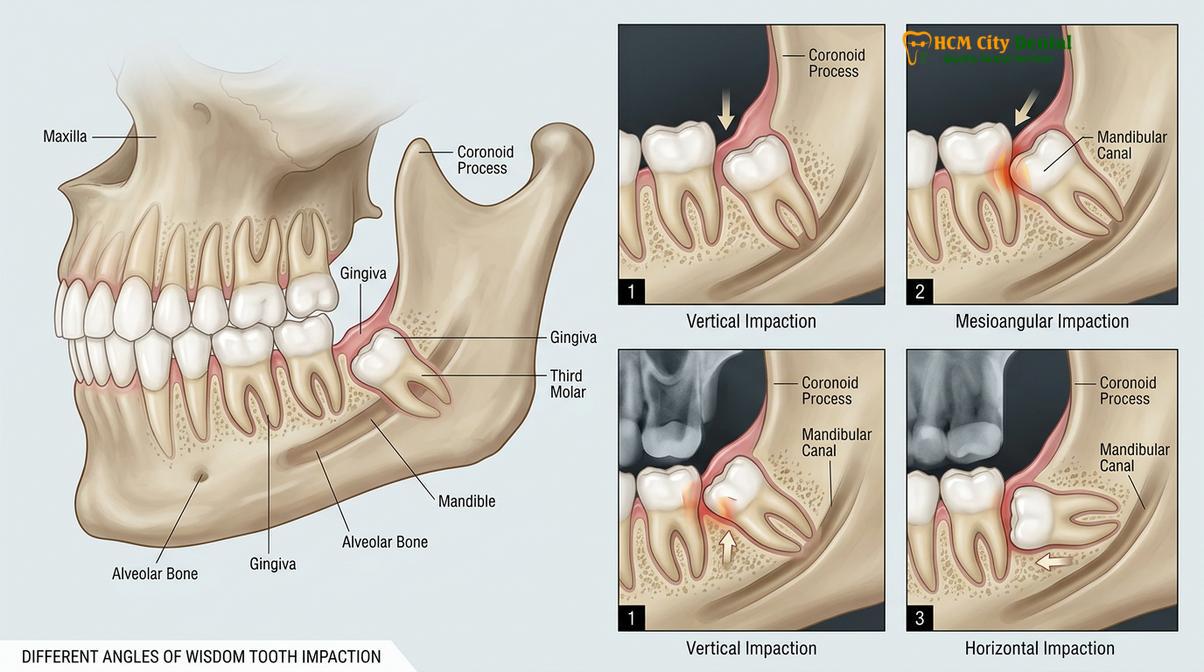
Furthermore, the roots of the wisdom teeth are completely formed by this age. Fully developed roots are longer, often curved, and frequently anchored deep within the jawbone. In the lower jaw, these mature roots frequently sit in close proximity to, or even wrap around, the inferior alveolar nerve (IAN)—the nerve responsible for providing sensation to the lower lip, chin, and teeth. This anatomical reality makes Tooth Extraction in adults a highly precise surgical endeavor rather than a routine dental procedure.
Another contributing factor is the cumulative effect of oral microflora. A partially impacted wisdom tooth creates a deep periodontal pocket—a flap of gum tissue known as an operculum—that is virtually impossible to clean effectively. Over years of microscopic food impaction and bacterial colonization, a chronic, low-grade infection can suddenly flare into an acute episode of pericoronitis, prompting the need for immediate clinical intervention in your thirties.
Common Symptoms and Clinical Complications
Symptoms at age 35 include localized pain, severe gum swelling, and jaw stiffness, which can rapidly progress to complications like dentigerous cysts, adjacent tooth decay, and periodontal bone loss.
When an impacted or partially erupted wisdom tooth becomes active or infected at age 35, the symptomatology can be intense and disruptive. Patients frequently report a dull, throbbing ache at the back of the jaw that radiates to the ear or neck. This is often accompanied by localized edema (swelling) of the gingival tissues, making it difficult to chew or close the mouth comfortably.
If left untreated, these symptoms can evolve into severe clinical complications. The most prevalent issue is pericoronitis, an acute inflammation of the gum tissue overlying the tooth. Because the adult immune system responds robustly to localized infections, pericoronitis can cause significant facial swelling, lymphadenopathy (swollen lymph nodes), and trismus (restricted jaw opening)[2].
Clinical Warning: Persistent numbness or a tingling sensation in the lower lip or chin associated with wisdom tooth pain is a critical red flag. This indicates that the impacted tooth or associated inflammation is compressing the inferior alveolar nerve, requiring immediate evaluation by an oral surgeon.
Beyond immediate infections, impacted wisdom teeth pose a silent threat to the adjacent second molars. Because the wisdom tooth often erupts at a mesial angle (tilting forward), it creates a physical trap for plaque and bacteria against the back of the second molar. Over time, this leads to deep dental caries (cavities) on the root surface of the second molar—an area that is notoriously difficult to restore. In severe cases, the pressure from the wisdom tooth can cause root resorption, literally dissolving the root of the healthy adjacent tooth[3].
Additionally, the follicle surrounding an impacted wisdom tooth can undergo cystic degeneration. A dentigerous cyst can form and slowly expand within the jawbone. Because these cysts are usually asymptomatic in their early stages, they can grow large enough to hollow out a significant portion of the jawbone, weakening its structural integrity and increasing the risk of a pathological fracture before they are finally detected on a routine radiograph.
Diagnostic Workflow and Extraction Techniques for Adults
Adult extractions require 3D CBCT imaging to map nerve proximity, followed by surgical techniques like tooth sectioning, bone removal, or coronectomy to ensure safe and predictable outcomes.
The clinical approach to removing a wisdom tooth at age 35 differs vastly from extracting one in a 19-year-old. The cornerstone of adult third molar management is advanced diagnostic imaging. While a standard two-dimensional panoramic X-ray provides a general overview, it is often insufficient for assessing the exact three-dimensional relationship between fully formed tooth roots and the inferior alveolar nerve.
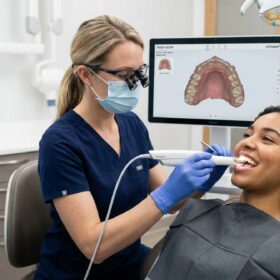
Therefore, a Cone Beam Computed Tomography (CBCT) scan is considered the gold standard for adult patients. This 3D imaging allows the dental surgeon to view the tooth from every angle, measure the exact thickness of the surrounding bone, and trace the precise pathway of the nerve canal[4]. Based on this comprehensive general dental guide and diagnostic data, a personalized surgical plan is formulated.
“In adult patients, the margin for error is significantly reduced due to bone density and root maturity. Utilizing 3D CBCT imaging is not just an option; it is a clinical necessity to prevent iatrogenic nerve injury and ensure a predictable surgical outcome.”
— Dr. Nguyen Van Cuong, Lead Surgeon
During the surgical procedure, the density of the adult jawbone necessitates specialized techniques. Rather than attempting to elevate the tooth in one piece—which could fracture the jaw or damage the nerve—the surgeon will typically perform an ostectomy (conservative removal of surrounding bone) followed by an odontotomy (sectioning the tooth). By dividing the tooth into smaller fragments using a high-speed surgical handpiece or a piezoelectric device, each piece can be removed atraumatically, preserving as much native bone as possible.
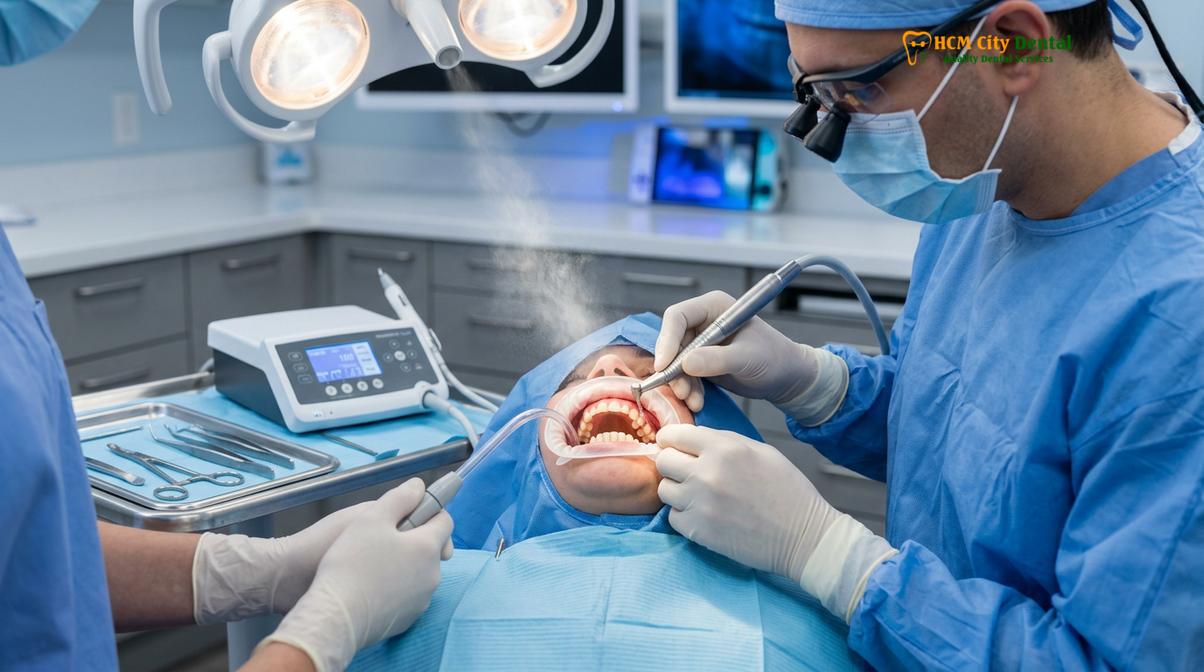
In cases where the CBCT scan reveals that the roots are intimately entangled with the nerve canal, a full extraction may pose an unacceptably high risk of permanent paresthesia (numbness). In such scenarios, a procedure known as a coronectomy is highly recommended. A coronectomy involves amputating the crown of the wisdom tooth—which is the portion exposed to bacteria and causing the infection—while intentionally leaving the vital roots undisturbed within the jawbone. Over time, the bone heals over the retained roots, safely neutralizing the threat without endangering the nerve[2].
Recovery, Risks, and Post-Operative Care
Recovery at age 35 is slower, taking 7-10 days for initial healing, and requires strict adherence to post-operative protocols to prevent complications like dry socket or delayed bone regeneration.
It is a clinical reality that the body’s regenerative capacity slows down as we age. Consequently, patients undergoing wisdom tooth extraction at age 35 should anticipate a more prolonged and potentially more uncomfortable recovery period compared to their younger counterparts. The inflammatory response is often more pronounced, leading to increased postoperative swelling and bruising along the jawline.
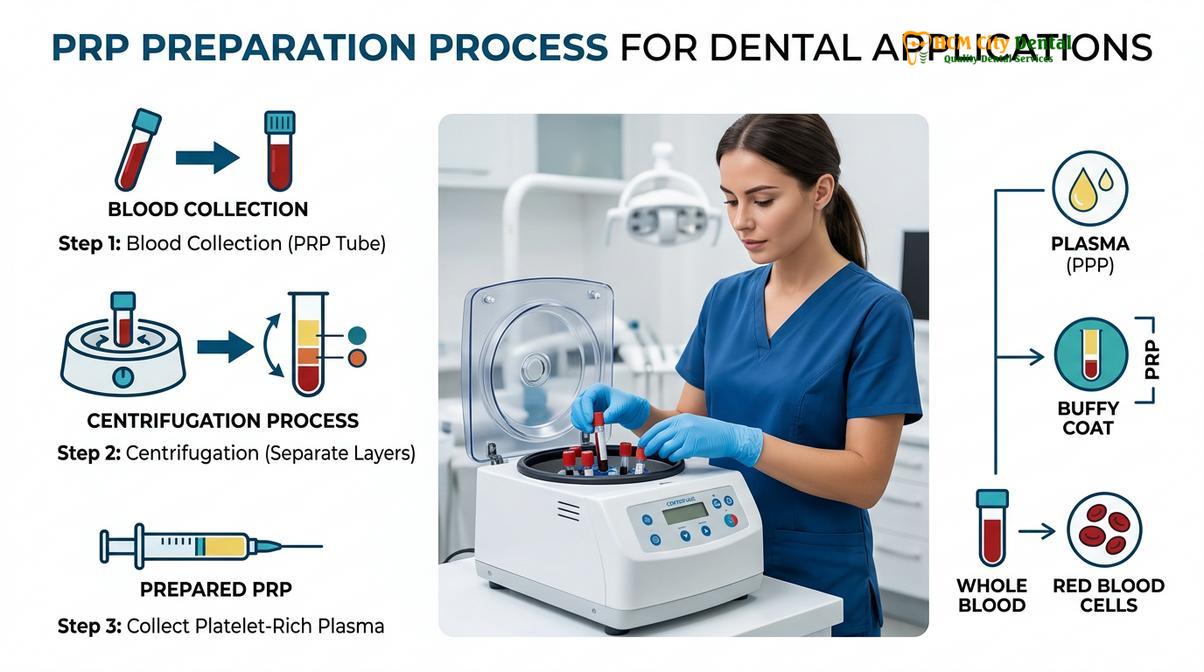
To optimize healing, modern surgical protocols often incorporate the use of Platelet-Rich Fibrin (PRF). Following the extraction, a small sample of the patient’s blood is drawn and centrifuged to isolate a concentrated matrix of platelets, white blood cells, and growth factors. This PRF clot is then placed directly into the extraction socket before suturing. Clinical studies demonstrate that PRF significantly accelerates soft tissue healing, reduces postoperative pain, and lowers the incidence of complications[5].
| Recovery Phase | Adolescents (Ages 17-21) | Adults (Age 35+) |
|---|---|---|
| Initial Clot Formation | 12 – 24 hours | 24 – 48 hours |
| Peak Swelling | Day 2 | Days 3 – 4 |
| Return to Normal Diet | 3 – 5 days | 7 – 10 days |
| Complete Bone Fill | 3 – 4 months | 6 – 8 months |
One of the most significant risks during the recovery phase is the development of alveolar osteitis, commonly known as dry socket. This occurs when the protective blood clot at the extraction site dislodges or dissolves prematurely, exposing the underlying bone and nerves to the oral environment. Because adult bone has a slightly lower blood supply than teenage bone, the risk of dry socket is marginally higher. Patients must strictly avoid smoking, using straws, or vigorous rinsing for at least 72 hours post-surgery.
Pain management typically involves a multimodal approach. Rather than relying solely on narcotic analgesics, a staggered regimen of NSAIDs (like Ibuprofen) and Acetaminophen is highly effective at managing both pain and inflammation. Patients are also instructed to maintain meticulous oral hygiene, using a prescribed antimicrobial mouthwash (such as Chlorhexidine) to keep the surgical site free of debris while the gums close.
Cost and Treatment Planning at HCMC Dental Clinic
Treatment costs vary based on surgical complexity and anesthesia needs, with comprehensive planning ensuring transparent pricing, high success rates, and dedicated post-operative support.
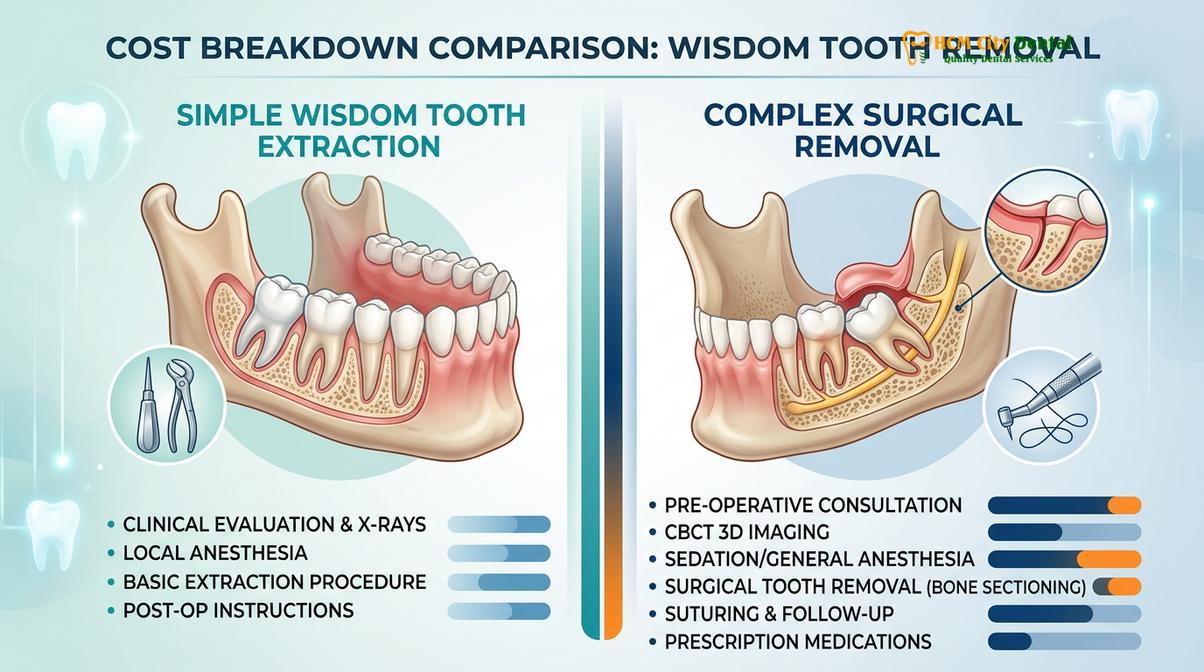
Understanding the financial investment required for adult wisdom tooth extraction is a crucial part of the treatment planning process. Because extractions at age 35 often involve complex surgical techniques, 3D imaging, and advanced healing protocols like PRF, the cost is generally higher than a simple, routine extraction. Currently, according to the latest clinic fee schedule, the estimated cost for surgical removal of an impacted wisdom tooth ranges depending on the degree of impaction (soft tissue, partial bony, or full bony impaction).
At **HCMC Dental Clinic** in **Ho Chi Minh City**, we prioritize complete transparency in our treatment planning. During your initial consultation, our surgical team will provide a detailed breakdown of all associated costs, including the CBCT scan, the surgical procedure, anesthesia options (ranging from local anesthesia to conscious sedation), and any necessary postoperative medications. We also offer comprehensive warranties on restorative procedures, should your adjacent teeth require treatments like a fixed dental bridge due to prior wisdom tooth damage.
Clinical Case Study: A 36-year-old male presented to **HCMC Dental Clinic** in **Ho Chi Minh City** with severe pain in the lower right quadrant. A CBCT scan revealed a horizontally impacted wisdom tooth causing deep root resorption on the adjacent second molar. Dr. Cuong performed a complex surgical extraction utilizing piezoelectric technology to safely bypass the inferior alveolar nerve. PRF was applied to the socket. The patient reported minimal swelling by day four and achieved complete soft tissue closure within two weeks, successfully preserving the adjacent molar.
For patients traveling or seeking immediate care, finding the nearest dentist to me equipped with advanced surgical technology is vital. Our facility is designed to handle complex adult surgical cases with the highest standards of safety and sterilization. Whether you are experiencing acute pain or simply need a proactive evaluation, you can easily book dentist appointment online to secure a consultation with our specialists.
When to See a Doctor
While mild discomfort during the eruption or shifting of a wisdom tooth can sometimes be managed with over-the-counter pain relievers, certain clinical signs require immediate professional evaluation. Delaying treatment can lead to systemic infections or irreversible damage to your oral anatomy.
You should seek immediate dental care if you experience any of the following red flags:
- Severe, unyielding pain that is not relieved by standard analgesic medications.
- Significant facial swelling that extends to the cheek, neck, or under the jaw, which may indicate a spreading infection.
- Difficulty swallowing or breathing, a medical emergency suggesting the infection has compromised the airway spaces.
- Trismus (lockjaw), where you are unable to open your mouth more than a few millimeters.
- Pus or foul-tasting discharge originating from the back of the gums.
- Fever and chills accompanying your dental pain.
“Adult patients often tolerate chronic, low-grade dental pain for years, assuming it will eventually resolve. However, when an impacted wisdom tooth becomes symptomatic at age 35, it rarely improves without surgical intervention. Early diagnosis is the key to preventing extensive damage to adjacent healthy teeth.”
— Dr. Nguyen Van Cuong
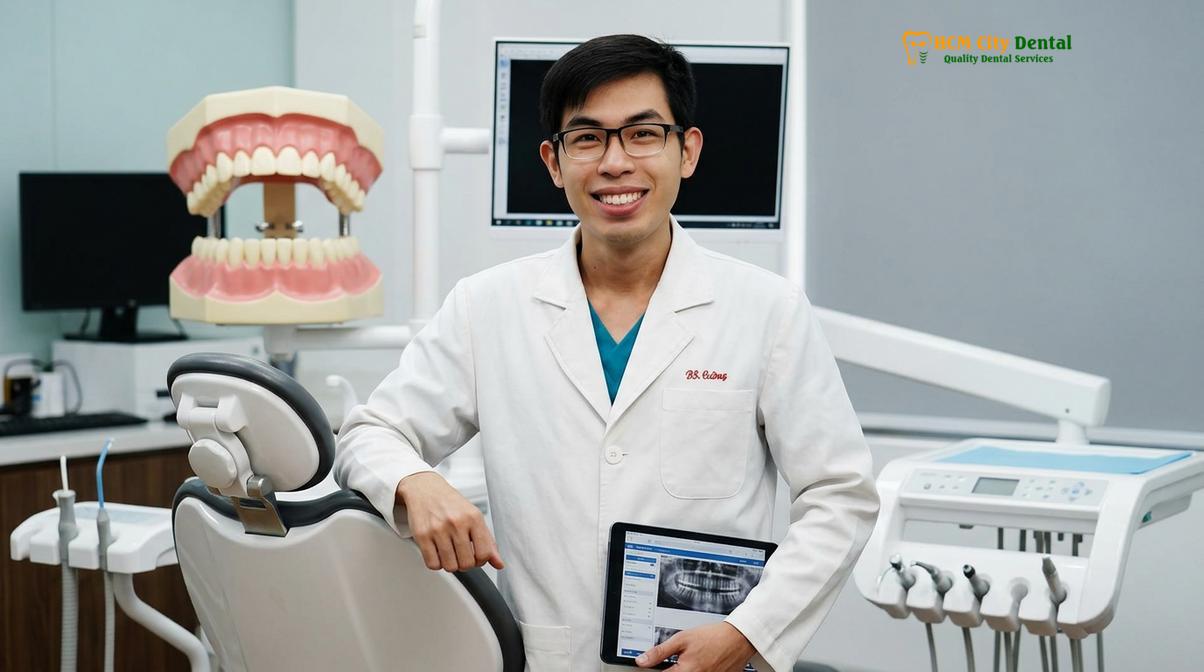
Even if you are not experiencing acute symptoms, a proactive evaluation is highly recommended if you have retained your wisdom teeth into your thirties. A comprehensive clinical exam and 3D imaging can assess the status of these teeth and determine if they pose a latent risk to your overall oral health. Just as early intervention is crucial in pediatric dental care, proactive monitoring remains essential throughout adulthood.
Frequently Asked Questions
Is it normal for wisdom teeth to erupt at age 35?
Yes, while uncommon, delayed eruption of wisdom teeth at age 35 is a recognized clinical phenomenon. It often occurs due to changes in jawbone density, shifting of adjacent teeth, or localized gum tissue changes that suddenly allow the impacted tooth to break through the surface. Even if they do not fully erupt, they can become symptomatic due to chronic inflammation.
Is wisdom tooth extraction more painful in your thirties?
The extraction procedure itself is not more painful due to advanced local anesthesia, but the postoperative recovery can be more uncomfortable. Denser bone and fully formed roots in adults require more complex surgical techniques, which can lead to increased swelling and a slightly longer healing timeline compared to teenage patients.
What happens if I ignore an impacted wisdom tooth at 35?
Ignoring an impacted wisdom tooth can lead to severe clinical complications over time. These include chronic pericoronitis, the formation of dentigerous cysts that destroy surrounding jawbone, and irreversible periodontal damage or root resorption of the adjacent second molar, potentially leading to the loss of multiple teeth.
How long does it take to recover from wisdom tooth removal at age 35?
Initial clinical recovery typically takes 7 to 10 days for patients in their mid-thirties. However, complete bone regeneration and soft tissue healing at the extraction site can take several months, requiring strict adherence to postoperative care instructions to prevent complications like dry socket or secondary infections.
Can I opt for a coronectomy instead of full extraction?
Yes, a coronectomy is a viable alternative if the wisdom tooth roots are intimately entangled with the inferior alveolar nerve. This procedure removes only the crown of the tooth, intentionally leaving the roots in place to eliminate the risk of permanent nerve damage while resolving the source of infection.
References
- Journal of Oral and Maxillofacial Surgery. Age-related complications in third molar surgery and postoperative morbidity. (2020).
- International Journal of Oral and Maxillofacial Surgery. Coronectomy vs total extraction for mandibular third molars: a clinical review. (2019).
- British Dental Journal. Periodontal healing of the adjacent second molar after delayed wisdom tooth extraction. (2021).
- Journal of the American Dental Association. Radiographic assessment of impacted third molars using CBCT in adult patients. (2022).
- Clinical Oral Investigations. Platelet-rich fibrin applications in third molar surgery recovery for adult demographics. (2018).