What Age Do Wisdom Teeth Grow? [Ages 17-25 Explained] | Dr. Cuong

At what age do wisdom teeth grow? As a dental specialist, this is one of the most common questions I receive from teenagers and young adults. Dr. Cuong...
One of the most frequently asked questions in dental practice, particularly from adolescents and young adults, concerns the eruption of wisdom teeth: “At what age do wisdom teeth grow?” These final molars often emerge during a pivotal stage of life, prompting a range of concerns from patients and their families. Many wonder about the typical timeline, the signs of their arrival, potential complications, and, crucially, when professional dental intervention might be necessary.
Understanding the journey of wisdom teeth—from their initial development to their eventual emergence—can alleviate much of the apprehension. This comprehensive guide, informed by extensive clinical experience, is designed to demystify the process. We will explore the common age range for eruption, explain the factors influencing their growth, discuss potential issues such as impaction or pain, and provide clear guidance on when to consult with a dental professional for evaluation and management. Our aim is to provide clear, trustworthy answers to ensure optimal oral health during this significant dental milestone.
The Typical Age Range for Wisdom Teeth Growth
One of the most frequent questions I get from patients and their parents is about the timing of these final molars. There’s a common window, but also significant variation, which can be a source of confusion.
The Scientific Answer: When Do Wisdom Teeth Come In?
Medically known as third molars, wisdom teeth are the last set of teeth to emerge. According to the American Dental Association and extensive clinical research, the vast majority of people will see their wisdom teeth begin to erupt between the ages of 17 and 25. This period in late adolescence and early adulthood is why they are colloquially called “wisdom teeth”—they arrive at a time when one is presumably becoming wiser. While the teeth themselves begin forming under the gums much earlier, often around age 7-10, their journey to break through the gumline happens years later.
Why This Wide Age Window? Factors Influencing Eruption
It’s important to understand that the 17-25 age range is an average, not a strict rule. In my experience, I’ve seen patients whose wisdom teeth appeared as early as 16 or remained dormant until their late twenties. Several factors contribute to this variability:
- Genetics: Your genetic makeup plays a significant role in your entire dental development timeline, including when your wisdom teeth decide to make an appearance.
- Jaw Development and Space: A primary factor is whether there is enough room in the jaw to accommodate these new teeth. Our modern jaws are often smaller than our ancestors’, which can delay or prevent eruption. * Individual Development Pace: Just as people grow at different rates, so do their teeth. Hormonal changes during puberty can also influence the timing.
From Dr. Cuong’s Clinical Experience: “A common scenario at our clinic is a 19-year-old patient who is concerned because their friends all have their wisdom teeth, but they show no signs. After a simple panoramic X-ray, we can see the teeth are developing perfectly fine below the gums, just on their own schedule. This is why we emphasize monitoring over worrying about a specific date.”

what age do wisdom teeth grow
How to Recognize Wisdom Teeth Eruption: Key Signs and Symptoms
As wisdom teeth push through the gums, they can cause a range of symptoms. Some individuals experience very little discomfort, while for others, it can be quite painful. Recognizing the signs early can help you manage discomfort and identify potential problems before they become severe.
The most common first sign is a dull, persistent ache or pressure in the back of the jaw. This may be accompanied by tenderness and swelling of the gum tissue behind your second molars. You might even see a small white speck, which is the very top of the new tooth breaking through.
To help you distinguish between normal eruption sensations and signs of a problem, I’ve created this simple table:
| Common Eruption Symptoms | Warning Signs of a Potential Problem |
|---|---|
| Dull ache or pressure in the back of the jaw. | Severe, throbbing, or radiating pain. |
| Mildly tender, red, or swollen gums. | Significant swelling in the gums, cheek, or side of the face. |
| Minor discomfort when chewing or biting. | Difficulty opening your mouth (trismus) or swallowing. |
| An occasional bad taste or bad breath. | Persistent bad taste, bad breath, or visible pus. |
| Low-grade fever as the tooth breaks the gum. | Fever or swollen lymph nodes in the neck. |

what age do wisdom teeth grow
Is It Normal for Wisdom Teeth to Grow Early or Late?
Patients often ask, “At what age does wisdom teeth grow if I’m outside the typical window?” It’s a valid concern, but variations are more common than you might think.
Early Eruption: What It Means
Seeing wisdom teeth before age 17 is less common but not necessarily a cause for alarm. It simply means an individual’s dental development is ahead of the average schedule. The principles of monitoring for pain, infection, and impaction remain exactly the same, regardless of the age of onset.
Late Bloomers: Understanding Delayed Wisdom Teeth Growth
It is not unheard of for wisdom teeth to emerge in a person’s late 20s or even into their 30s or 40s. While rare, this can happen. Often, these teeth have been dormant or impacted for years and a change, such as the removal of another tooth, creates space for them to move. However, eruption later in life can come with a higher risk of complications, as the jawbone is denser and healing can be slower.
From Dr. Cuong’s Clinical Experience: “I recently consulted with a patient in his early 30s who was experiencing jaw pain for the first time. An X-ray revealed an impacted wisdom tooth was shifting and pressing on a nerve. He was surprised, assuming he was ‘too old’ for wisdom tooth problems. This illustrates a critical point: the absence of symptoms doesn’t mean the absence of teeth. Regular dental check-ups, especially with X-rays in your late teens, are the only way to know for sure what’s happening beneath the gums.”

what age do wisdom teeth grow
Potential Problems Associated with Wisdom Teeth Growth
The primary reason dentists like myself pay such close attention to wisdom teeth is their high potential for causing problems. Our modern jaws often lack the space to accommodate them, leading to a variety of complications.
The Most Common Issue: Impacted Wisdom Teeth
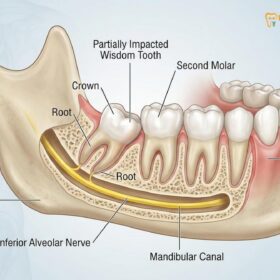
An impacted tooth is one that is stuck and cannot fully erupt into its proper position. This can be due to being blocked by another tooth, bone, or soft tissue. They can grow at an angle, sometimes even horizontally, pushing against the roots of the neighboring second molar. This pressure can cause chronic pain, root damage, and misalignment of other teeth.
Pericoronitis: A Painful Gum Infection
When a wisdom tooth only partially breaks through the gum, it creates a small flap of tissue called an operculum. This flap is a perfect trap for food particles and bacteria, leading to a painful infection known as pericoronitis. Symptoms include severe pain, red and swollen gums, a foul taste, and sometimes pus. If left untreated, the infection can spread and become a serious health risk.
Other Complications: Cysts, Crowding, and Damage to Adjacent Teeth
Beyond impaction and infection, other issues can arise:
- Cysts or Tumors: In rare cases, a fluid-filled sac called a cyst can form around an impacted wisdom tooth. This cyst can destroy the surrounding jawbone and damage nearby teeth and nerves.
- Tooth Decay: Impacted or partially erupted wisdom teeth are notoriously difficult to clean, making both them and the adjacent molar highly susceptible to cavities.
- Gum Disease: The difficulty in cleaning also increases the risk of localized gum disease (periodontitis).
If you experience severe pain, significant facial swelling, fever, or difficulty opening your mouth, this is a dental emergency. Call our Hotline/WhatsApp now at +84853020003 for a direct, completely free consultation with Dr. Cuong!

what age do wisdom teeth grow
What Should You Do? Your Action Plan
Understanding the potential issues is the first step. The next is having a clear, proactive plan. As a dental professional, my advice centers on monitoring and timely intervention.
The Importance of Professional Monitoring
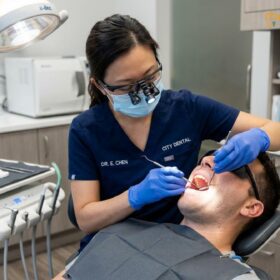
You cannot see an impacted wisdom tooth. The only way to know the position, development, and potential risks of your wisdom teeth is through a dental examination that includes a panoramic X-ray. I recommend an initial evaluation around the ages of 16-19. This allows us to establish a baseline and determine the best course of action, whether it’s continued monitoring or planned removal.
At-Home Care for Minor Discomfort
For the mild, temporary pain associated with normal eruption, you can find relief with simple measures:
- Warm Saltwater Rinses: Gently swishing with warm salt water can soothe sore gums and help keep the area clean.
- Over-the-Counter Pain Relievers: Medications like ibuprofen or acetaminophen can help manage dull aches.
- Gentle Cleaning: Do your best to gently brush the area to prevent food buildup, even if it’s tender.
When is Wisdom Tooth Removal Necessary?
At HCMCDental, we do not believe every wisdom tooth needs to be removed. If they erupt fully, are positioned correctly, are disease-free, and can be cleaned effectively, they can remain. However, removal is often the safest and most effective solution when problems arise or are highly likely to occur.
| Management Strategy | Who It’s For | Key Considerations |
|---|---|---|
| Watchful Monitoring | Individuals with fully erupted, healthy, and functional wisdom teeth, or asymptomatic, deeply impacted teeth with low risk of complications. | Requires regular dental check-ups and X-rays to ensure no problems like cysts or decay are developing silently. |
| Proactive Removal | Individuals with pain, infection (pericoronitis), cysts, damage to adjacent teeth, gum disease, or significant decay. Also recommended for teeth that are partially erupted or positioned in a way that makes future problems almost certain. | Removal is often easier in younger patients (late teens/early 20s) when the tooth roots are not fully formed and the bone is less dense, leading to a quicker recovery. |
Unsure about your wisdom teeth? Let’s create a personalized plan based on your specific needs. Get a 10% discount on your first appointment! Book online today at HCMCDental.com.

what age do wisdom teeth grow
Expert Advice from Dr. Cuong
A common mistake I see patients make is ignoring early, mild symptoms. They hope the discomfort will just go away. While sometimes it does, often it’s the first sign of an underlying problem like impaction or pericoronitis. Proactive monitoring and addressing a small issue early is always less invasive, less costly, and involves a much simpler recovery than treating an emergency complication like a severe abscess or a large cyst. Don’t wait for the pain to become unbearable.

what age do wisdom teeth grow
Frequently Asked Questions (FAQ)
At what age do wisdom teeth typically start to cause problems?
Problems most commonly arise between the ages of 15 and 25, which coincides with the main eruption period. This is when issues like impaction, pain, and gum infections are most likely to first appear.
Can wisdom teeth grow in your 30s or 40s?
Yes, while uncommon, it is possible for wisdom teeth to emerge later in life. This is considered a delayed eruption and should be evaluated by a dentist, as it can carry a higher risk of complications.
Do I need an X-ray to know at what age my wisdom teeth will come in?
An X-ray is the only definitive way to see the presence, position, and developmental stage of your wisdom teeth long before they erupt. It allows a dentist to predict potential issues and determine if and when intervention might be needed, taking the guesswork out of their arrival.
What are the first signs of wisdom teeth coming in?
The very first signs are often subtle. You might feel a dull ache or pressure in the back of your jaw, or notice that your gums behind the last molars are tender and slightly swollen.
Is it possible to have no wisdom teeth at all?
Yes, it is quite normal. A significant portion of the population is congenitally missing one or more wisdom teeth, a condition known as agenesis. This is often due to genetics and is considered a normal variation in human development.
How long does the pain from growing wisdom teeth last?
The eruption process itself isn’t continuous; it happens in phases. A study in the Science Repository found that the clinical eruption process can take nearly 3 years from when the tooth first emerges to when it’s fully in position. During this time, you may experience intermittent discomfort lasting a few days at a time. However, persistent or severe pain is not normal and requires a dental evaluation.
Your Health is Our Priority
To summarize, while the typical age for wisdom teeth to grow is between 17 and 25, this can vary significantly. The key is not to focus on a specific age, but on professional monitoring to ensure they are developing safely. Symptoms like mild discomfort can be normal, but severe pain, swelling, and infection are clear signals that you need to see a dental specialist.
At HCMCDental, we are committed to providing you with expert, evidence-based care in a trustworthy environment. We believe in conservative treatment and will only recommend removal when it is truly necessary for your long-term health.
Still have questions? Your peace of mind is important. Call our Hotline/WhatsApp now at +84853020003 for a direct, completely free consultation with me, Dr. Cuong. Let’s ensure your smile stays healthy for a lifetime.
This article was medically reviewed and written by Dr. Cuong.
Important Disclaimer
This article is intended for informational and educational purposes only. It is not a substitute for professional medical advice, diagnosis, or treatment. Always seek the advice of your dentist or another qualified health provider with any questions you may have regarding a medical condition. Never disregard professional medical advice or delay in seeking it because of something you have read on this website.
Written and Medically Reviewed By
Dr. Cuong, Specialist in Odontostomatology. With over a decade of dedicated clinical experience, Dr. Cuong has established himself as a leading expert in dental health, particularly in the diagnosis and management of wisdom teeth. He has successfully treated thousands of patients at HCMCDental, applying a patient-centric approach that prioritizes comfort, clarity, and long-term oral health. Dr. Cuong is committed to continuous education and integrating the latest dental research and technology to provide the highest standard of care.