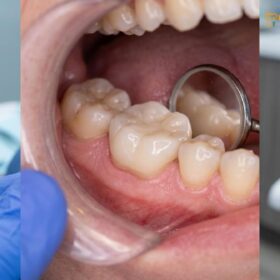
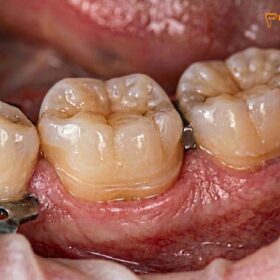
Experiencing a loose inlay emergency repair in HCMC requires immediate clinical attention to prevent bacterial contamination and structural damage. Retrieve the restoration, keep it safe, and seek an urgent appointment. A dentist can often re-cement the intact ceramic piece using advanced resin-adhesive protocols if the underlying tooth remains healthy.
Clinical Summary:
A dislodged dental inlay or onlay exposes vulnerable dentin, making prompt intervention critical. This comprehensive guide outlines the immediate steps to secure the restoration and protect the prepared tooth using temporary materials. It details the clinical workflow for professional re-cementation, emphasizing the strict prohibition against using household adhesives. Furthermore, it explores the diagnostic criteria used to determine whether an existing restoration can be re-bonded or if a new CAD/CAM milled ceramic piece is necessary. By adhering to a preservation philosophy, modern dental protocols aim to restore optimal function and marginal integrity while maximizing the retention of natural tooth structure.
Key Takeaways:
- Remove the loose restoration immediately to prevent accidental swallowing or aspiration.
- Never use household glues; they destroy tooth structure and prevent professional re-cementation.
- Protect the exposed tooth with over-the-counter temporary dental cement until your appointment.
- Intact restorations can often be re-bonded using advanced resin-adhesive protocols.
- If secondary decay is present, a new CAD/CAM restoration will be required to ensure a precise marginal seal.
Immediate Action Steps If Your Inlay or Onlay Falls Out
If your dental restoration dislodges, carefully remove it from your mouth to avoid swallowing, rinse it gently with water, and store it in a hard container. Contact a dental clinic immediately for an urgent appointment to evaluate the prepared tooth.
When a dental restoration becomes dislodged, the immediate priority is to secure the physical piece and prevent any secondary complications. A loose inlay or onlay is not merely an inconvenience; it represents a sudden breach in the protective barrier of your tooth. The first and most crucial step is to carefully remove the loose restoration from your oral cavity. According to guidelines for the management of dental emergencies, leaving a mobile ceramic piece in your mouth poses a significant risk of accidental swallowing or, more dangerously, aspiration into the airway during speaking, eating, or sleeping [3].
Once you have safely retrieved the restoration, handle it with extreme care. High-end materials like IPS e.max lithium disilicate or Cercon HT Zirconia are incredibly strong when bonded to tooth structure, but they can be fragile and susceptible to fracture when isolated. Rinse the piece gently under lukewarm water to remove any saliva or food debris. Do not scrub it vigorously or use harsh chemicals, as this could damage the delicate internal fitting surface or the precise chamfer margins designed to seal against your tooth.
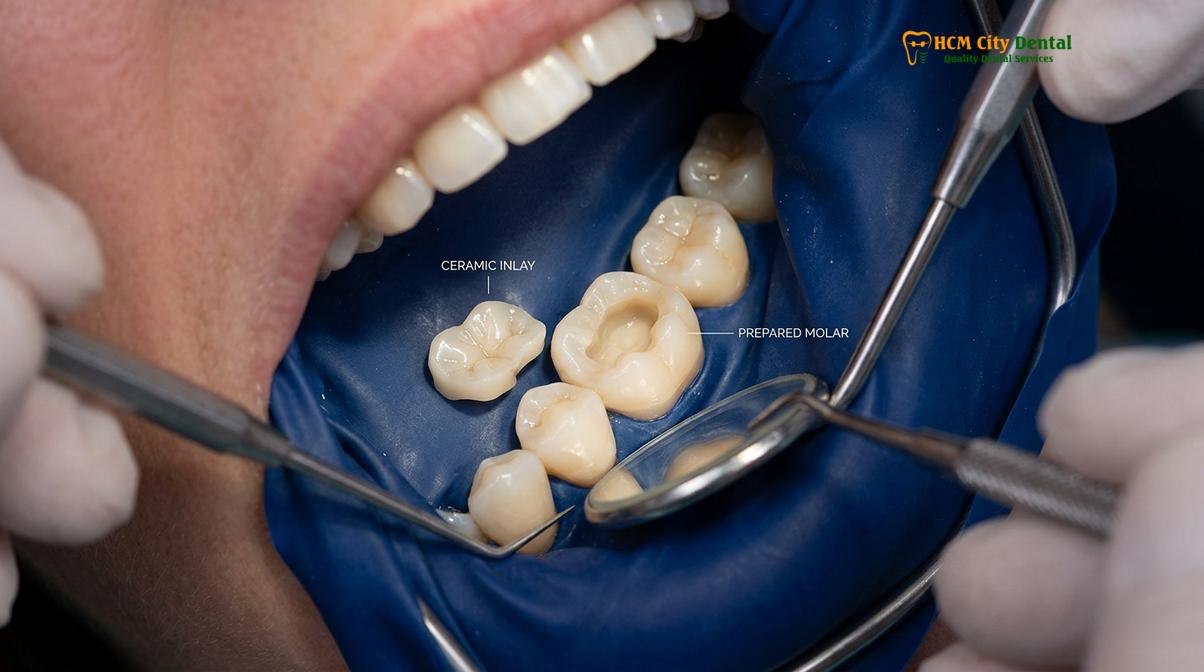
After rinsing, allow the restoration to air dry and place it in a secure, hard-sided container. A small pill bottle or a dedicated retainer case is ideal. Avoid wrapping it in tissue paper or a napkin, as these are frequently mistaken for trash and accidentally discarded. Securing the physical piece is essential because, in many cases, an intact restoration can be successfully re-bonded, saving you the time and expense of having a new one fabricated.
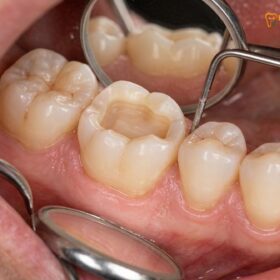
Simultaneously, you must address the exposed tooth. The cavity outline form, which was meticulously prepared by your dentist, is now open to the oral environment. This exposes the underlying dentin, a porous tissue filled with microscopic tubules that communicate directly with the dental pulp. Consequently, you may experience immediate and acute sensitivity to temperature changes, sweet foods, and even the air you breathe. This situation constitutes a true emergency, requiring prompt professional intervention to determine if you need a simple re-cementation or a more complex overlay after root canal if the pulp is compromised.
How to Protect Your Prepared Tooth Temporarily
Protect the exposed dentin by keeping the area clean, avoiding chewing on that side, and applying a temporary filling material available at pharmacies to seal the cavity until your dental visit.
While awaiting your urgent appointment, safeguarding the exposed tooth structure is paramount. The prepared tooth is highly vulnerable to both biological and mechanical threats. Biologically, the exposed dentinal tubules provide a direct pathway for oral bacteria to infiltrate the tooth, potentially leading to secondary decay or pulpal inflammation. Mechanically, the unsupported enamel walls and cusps are susceptible to fracture under the immense forces of mastication.
To mitigate these risks, you must modify your oral habits immediately. Cease all chewing on the affected side of your mouth. Stick to a soft diet consisting of foods that require minimal mastication, such as yogurt, scrambled eggs, or smoothies. Avoid extreme temperatures—both hot and cold—as these will trigger sharp pain due to the lack of protective enamel and ceramic coverage. Furthermore, abstain from highly acidic or sugary foods, which can accelerate bacterial activity and exacerbate sensitivity.
Maintaining meticulous oral hygiene is critical, but it must be done gently. Brush the affected area with a soft-bristled toothbrush, taking care not to aggressively scrub the exposed dentin. Rinsing your mouth with a warm saltwater solution can help neutralize oral acids, reduce bacterial load, and soothe any mild gingival inflammation surrounding the tooth.
For enhanced protection, consider utilizing an over-the-counter temporary filling material. Studies on the effect of temporary filling materials on dentin bond strength indicate that these over-the-counter solutions provide a crucial physical barrier against thermal shocks and bacterial ingress without permanently compromising future professional bonding [5]. These products, typically composed of zinc oxide and eugenol, are widely available at most pharmacies.
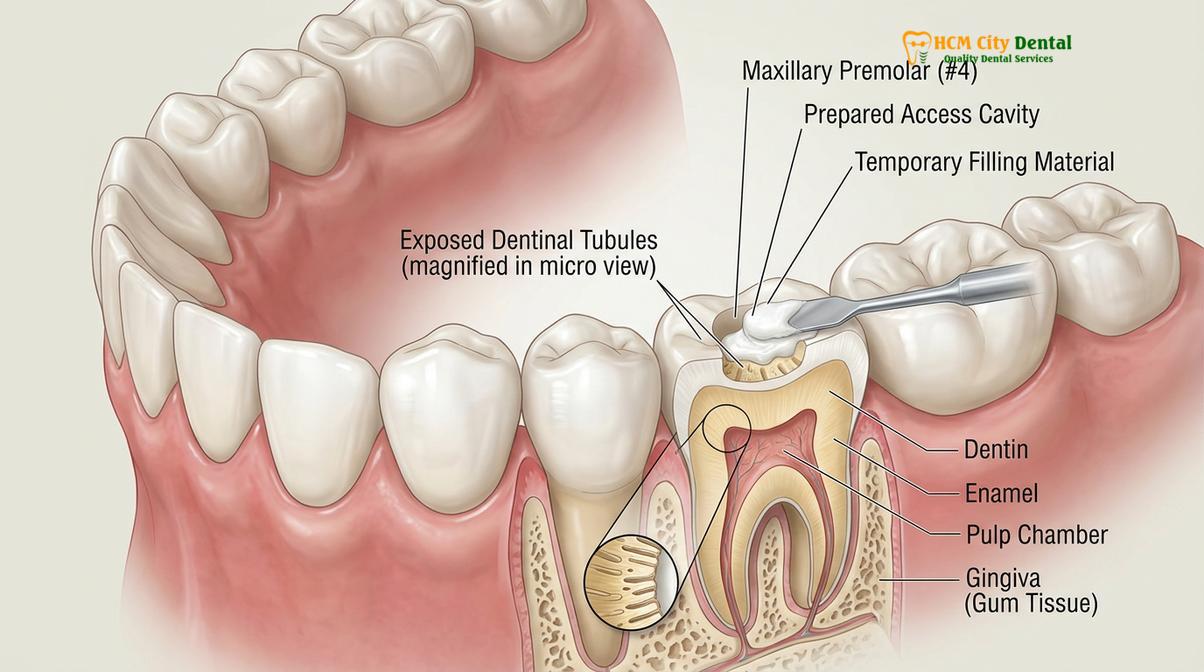
To apply the temporary material, first ensure the cavity is as clean and dry as possible. Pinch off a small piece of the putty-like material, roll it into a tiny ball, and gently press it into the void left by the dislodged restoration. Use a moistened cotton swab to smooth the surface and ensure it does not interfere with your bite. It is crucial to understand that this is strictly a stopgap measure. Temporary cements lack the compressive strength and marginal sealing capabilities of professional dental materials and will wash out or degrade rapidly.
Why You Must Not Glue the Restoration Back Yourself
Using household adhesives or over-the-counter glues on a dislodged restoration is strictly prohibited, as these toxic chemicals destroy the tooth structure, ruin the ceramic margin sealing, and make professional re-cementation impossible.
Clinical Warning: Never attempt to reattach a dislodged dental restoration using household adhesives, superglue, or over-the-counter cements. These toxic substances can cause irreversible chemical burns to the dental pulp and permanently ruin the precise ceramic margins, making professional re-cementation impossible.
In the panic of a dental emergency, patients are sometimes tempted to take matters into their own hands, attempting to reattach the dislodged restoration using household adhesives such as superglue, epoxy, or craft glues. This is a catastrophic error that can transform a simple re-cementation procedure into a complex, costly, and potentially irreversible clinical failure.
Household adhesives are highly toxic and entirely non-biocompatible. When applied to exposed dentin, the harsh chemicals in these glues can cause severe chemical burns to the vital pulpal tissues, leading to irreversible pulpitis and necessitating root canal therapy. Furthermore, these adhesives are not designed to withstand the moist, dynamic environment of the oral cavity, nor can they endure the immense compressive and shear forces generated during mastication.
“The application of cyanoacrylate or other non-dental adhesives to a prepared tooth surface irreversibly contaminates the dentinal tubules. This contamination prevents the successful application of professional resin-adhesive bonding protocols, often requiring the removal of additional healthy tooth structure to achieve a clean bonding surface.”
From a mechanical perspective, household glues possess a high film thickness. Professional dental cements are engineered to flow into microscopic irregularities, creating a film thickness of mere microns. Research on the marginal adaptation of CAD/CAM milled restorations shows that household glues create a thick, uneven layer that prevents the inlay from seating fully, leading to open margins and rapid secondary decay [4]. This microscopic gap between the restoration and the tooth serves as a harbor for bacterial plaque.
Moreover, an improperly seated restoration alters your vertical dimension of occlusion. Even a discrepancy of a fraction of a millimeter can cause premature occlusal contacts. When you bite down, the entire force of your jaw is concentrated on this single high spot, leading to acute pain, trauma to the periodontal ligament, and a high probability of fracturing either the ceramic restoration or the opposing natural tooth.
When to Seek Immediate Medical Attention
Certain symptoms accompanying a loose restoration indicate a severe underlying issue that requires immediate medical or specialized dental intervention to prevent systemic infection or irreversible tooth loss.
While a loose inlay or onlay is always an urgent dental matter, specific clinical signs elevate the situation to a severe emergency. The Vietnam Odonto-Stomatology Association (VOSA) clinical guidelines for the management of restorative dental emergencies emphasize that severe, throbbing pain indicates potential pulpal involvement requiring immediate professional assessment [6]. If you experience unremitting pain that radiates to your jaw, ear, or neck, this is a strong indicator that the dental pulp has become irreversibly inflamed or infected.
Additionally, if you notice any swelling in your gums, face, or lymph nodes, you must seek care without delay. Swelling is a hallmark sign of an active bacterial infection or abscess that has spread beyond the confines of the tooth. Left untreated, dental infections can spread rapidly through the fascial spaces of the head and neck, posing a severe risk to your overall health.
If the dislodgement of the restoration was caused by physical trauma—such as a fall or a sports injury—and is accompanied by bleeding from the gums, mobility of the adjacent teeth, or difficulty opening your mouth, you should visit an emergency dental clinic or a hospital emergency department immediately. In such cases, the priority shifts from simply replacing the restoration to stabilizing the entire dentoalveolar complex and ruling out jaw fractures or severe cracked tooth repair needs.
Urgent Appointment Booking at HCMC Dental (District 1)
Securing an urgent dental visit ensures your exposed tooth is professionally evaluated, cleaned, and sealed before secondary decay develops or the cavity outline form is compromised.
When dealing with a dislodged restoration, time is of the essence. Prompt professional care is the only way to ensure the long-term viability of both the tooth and the restoration. For patients seeking an urgent dental repair, HCMC Dental Clinic in Ho Chi Minh City offers streamlined emergency protocols designed to address acute clinical needs swiftly and effectively.
Clinical Case Review: A patient visiting HCMC Dental Clinic (Ho Chi Minh City) presented with a dislodged IPS e.max onlay after biting into a hard candy. Clinical examination revealed the restoration was completely intact, but the tooth preparation was contaminated with food debris. Following strict isolation and micro-sandblasting protocols, the onlay was successfully re-bonded using a dual-cure resin cement, restoring full occlusal function and aesthetic harmony without the need for a new fabrication.
Upon contacting our clinic, our patient coordination team will prioritize your situation, aiming to schedule an urgent appointment as quickly as possible. During this initial communication, it is helpful to provide specific details: when the restoration fell out, whether you have retained the piece, and the severity of any pain or sensitivity you are experiencing. This information allows our clinical team to prepare the necessary diagnostic and treatment armamentarium before you even arrive.
| Restoration Type (Lab-Made Ceramic) | Standard Walk-in Price | WhatsApp Pre-Booking (-40%) |
|---|---|---|
| Inlay / Onlay (IPS e.max / Cercon HT) | ~$385 (10.0M VND) | From $231 (6.0M VND) |
| Overlay / Partial Crown | ~$446 (11.6M VND) | From $269 (7.0M VND) |
If your existing restoration is intact and the underlying tooth is healthy, the procedure will simply involve a professional re-cementation. The re-cementation cost is generally minimal, covering the clinical time, isolation protocols, and the high-performance dual-cure resin cements utilized in the procedure. If a new restoration is needed, our team will guide you through the options, helping you choose between a partial crown vs full crown or other suitable materials.
When Can the Restoration be Re-cemented vs. Remade?
A restoration can be re-cemented if both the ceramic piece and the underlying tooth are completely intact; however, if secondary decay or structural fractures are present, a new restoration must be fabricated.
Determining whether a dislodged inlay or onlay can be salvaged or if it must be replaced is a critical clinical decision. The primary factor is the condition of the underlying tooth structure. If the tooth preparation remains pristine, with no signs of secondary caries or marginal breakdown, re-cementation is highly probable. However, if the restoration failed because decay undermined the foundation, the tooth must be re-prepared to remove the diseased tissue. This alters the cavity outline form, meaning the old restoration will no longer fit precisely, and a new one must be fabricated to replace failing fillings with onlay techniques.
The condition of the ceramic restoration itself is equally important. Clinical evaluation of resin-bonded ceramic inlays and onlays dictates that even microscopic fractures or chips along the delicate chamfer margins render the piece unusable [1]. An imperfect margin will inevitably lead to microleakage, bacterial infiltration, and recurrent decay. If the restoration is structurally compromised, a new CAD/CAM milled or lab-pressed ceramic piece is required to ensure a hermetic seal and long-term success.
How Dr. Cuong Cleans and Re-cements Your Restoration
The re-cementation protocol involves meticulous removal of old cement, disinfecting the cavity preparation, treating the ceramic surface with hydrofluoric acid and silane, and bonding the restoration using dual-cure resin cement.
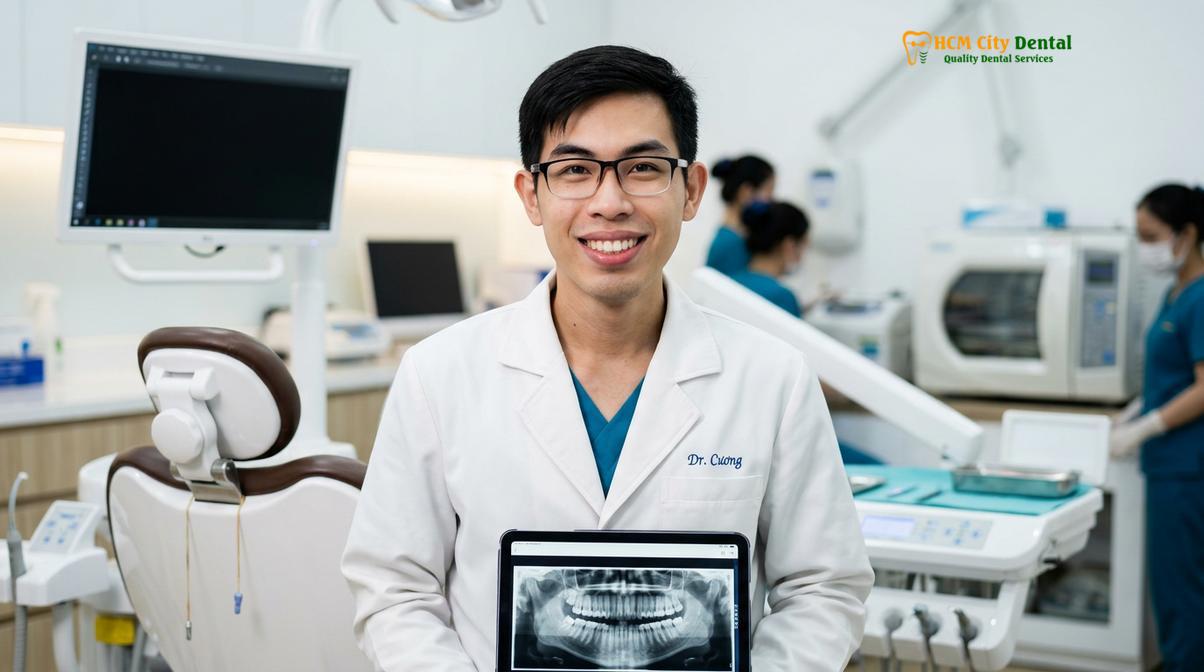
Dr. Nguyen Van Cuong, a leading restorative specialist, emphasizes the importance of immediate intervention when a restoration fails. Dr. Cuong utilizes advanced magnification and strict isolation protocols to ensure that every re-cemented piece achieves optimal marginal integrity. His meticulous approach at our clinic aims to preserve natural tooth structure while restoring full masticatory function, often utilizing advanced Inlays & Onlays techniques to deliver exceptional clinical outcomes.
The successful re-attachment of a dislodged restoration is a highly technique-sensitive procedure that demands absolute precision. The first phase of the procedure is comprehensive diagnostics. Dr. Cuong will carefully examine the dislodged restoration under magnification to ensure there are no micro-fractures or structural defects. Simultaneously, the prepared tooth is evaluated. The cavity outline form must be pristine, and there must be absolutely no signs of secondary decay or compromised enamel margins.
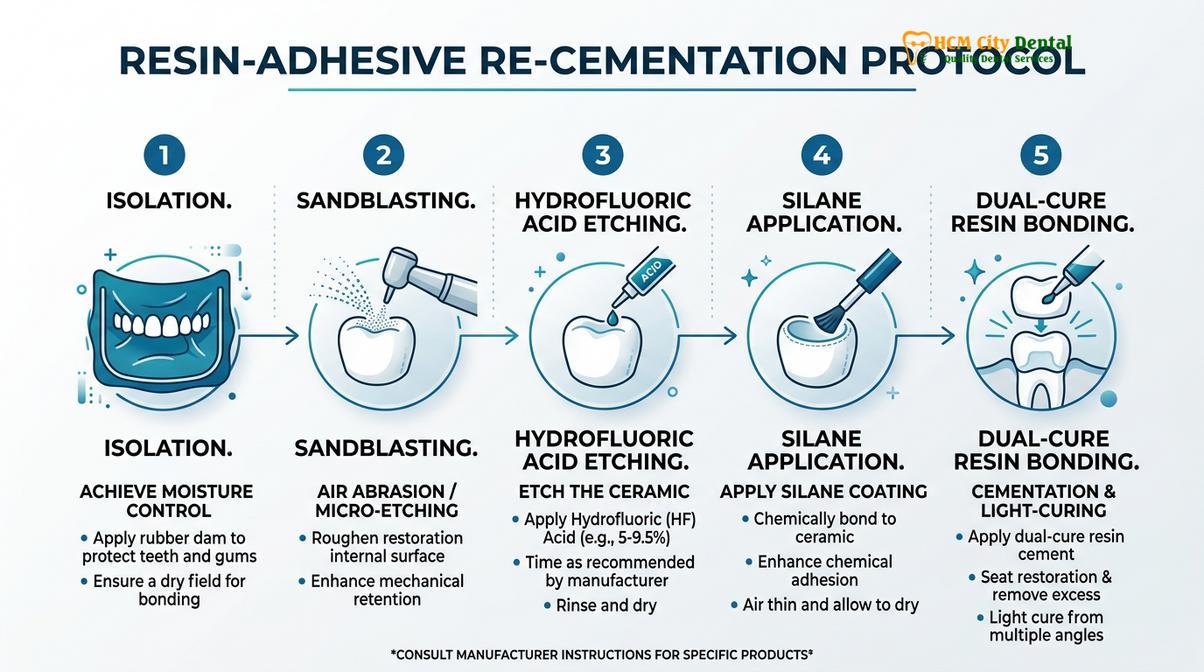
Once the viability of the restoration and the tooth is confirmed, the meticulous cleaning process begins. The internal surface of the ceramic restoration must be completely divested of any residual cement. The tooth preparation is similarly cleaned, often utilizing an ultrasonic scaler and a pumice slurry to remove temporary filling material, plaque, and residual adhesive.
The core of the re-cementation process is the resin-adhesive bonding protocol. Advanced adhesion protocols for lithium disilicate restorations require absolute moisture control to prevent catastrophic bond failure [2]. Dr. Cuong utilizes strict isolation techniques, often employing a rubber dam, to create a pristine, dry operating field.
“Achieving a durable bond with ceramic restorations relies entirely on the precise execution of surface treatment protocols. The synergistic effect of hydrofluoric acid etching and silane coupling agents creates a chemical bridge between the inorganic ceramic and the organic resin cement, ensuring long-term retention.”
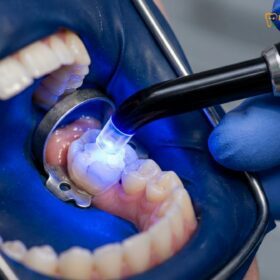
The internal surface of the ceramic is etched with hydrofluoric acid to create micro-porosities, followed by the application of a silane coupling agent. The tooth structure is etched with phosphoric acid and treated with a dentin bonding agent. Finally, a high-performance dual-cure resin cement is applied, and the restoration is seated with firm, even pressure. Excess cement is meticulously removed before final light-curing, ensuring a smooth, imperceptible margin.
If you are experiencing a dental emergency, do not delay treatment. Contact HCMC Dental Clinic in Ho Chi Minh City today to schedule an urgent evaluation. Our specialists will determine the best course of action, whether it involves a simple re-cementation or exploring options like an onlay vs crown to restore your smile safely and effectively.
Frequently Asked Questions
What should I do if my inlay fell out?
Immediately remove the dislodged restoration from your mouth, rinse it gently, and store it in a secure, hard container. Contact your dentist promptly to schedule an urgent evaluation, as the exposed tooth structure is highly vulnerable to bacterial contamination, sensitivity, and physical fracture.
Is a loose onlay a dental emergency?
Yes, a loose or dislodged onlay is considered a dental emergency because the underlying prepared dentin is exposed to the oral environment. Delaying treatment can lead to severe thermal sensitivity, rapid bacterial ingress causing secondary decay, or irreversible structural damage to the unprotected cusps.
Can a dentist glue a fallen inlay back?
A dentist can successfully re-cement a fallen inlay if the ceramic restoration is completely intact and the underlying tooth structure remains free of secondary decay or fractures. The clinical process involves meticulous cleaning, surface decontamination, and the application of professional resin-adhesive bonding protocols.
How much does emergency re-cementation cost?
The re-cementation cost for an intact restoration is generally minimal compared to fabricating a new piece, often covering just the clinical time and bonding materials. If a new restoration is required, prices at our clinic start from $231 for pre-booked appointments, depending on the material selected.
Does a loose inlay mean there is decay underneath?
Not always, but secondary decay is a leading cause of restoration failure because it undermines the structural foundation and degrades the marginal seal. Other common causes include heavy occlusal forces from bruxism, degradation of the original cement layer, or physical trauma to the tooth.
References
- Journal of Prosthetic Dentistry. Clinical evaluation of resin-bonded ceramic inlays and onlays. (2021).
- International Journal of Prosthodontics. Adhesion protocols for lithium disilicate restorations. (2020).
- American Dental Association. Guidelines for the management of dental emergencies. (2019).
- Journal of Esthetic and Restorative Dentistry. Marginal adaptation of CAD/CAM milled restorations. (2022).
- Journal of Dentistry. The effect of temporary filling materials on dentin bond strength. (2018).
- Vietnam Odonto-Stomatology Association (VOSA). Clinical guidelines for the management of restorative dental emergencies. (2021).