To clean dental onlays effectively, brush twice daily using a soft-bristled toothbrush and non-abrasive toothpaste to protect the ceramic glaze. Floss carefully around the margins to remove plaque without snagging the restoration, and incorporate a water flosser for optimal interdental cleaning and long-term margin preservation.
Clinical Summary:
Maintaining the longevity of indirect restorations requires a targeted approach to oral hygiene that prioritizes the integrity of the marginal seal. Dental inlays, onlays, and overlays are conservative restorations designed to preserve maximum natural tooth structure. However, the microscopic junction where the ceramic meets the natural enamel—known as the margin—is highly susceptible to bacterial colonization if not properly maintained. Effective cleaning protocols involve utilizing soft-bristled brushes, avoiding abrasive dentifrices that can scratch the ceramic glaze, and employing specific flossing techniques to prevent accidental dislodgement. Furthermore, integrating advanced interdental cleaning tools and adhering to a strict professional maintenance schedule ensures that the resin-adhesive cementation remains intact, thereby preventing secondary decay and safeguarding your investment in holistic, biocompatible dentistry.
Key Takeaways:
- Use only soft-bristled toothbrushes to prevent micro-abrasions on the ceramic surface and gingival recession around the margins.
- Avoid whitening or charcoal toothpastes; their high abrasivity can permanently dull the restoration’s protective glaze.
- Employ a lateral pull-through flossing technique to safely clean interproximal spaces without exerting upward force on the onlay.
- Water flossers are highly effective adjuncts for flushing out debris from complex restorative margins without damaging the cement seal.
- Routine professional cleanings using specialized, non-scratching instruments are mandatory for the long-term success of partial crowns.
Why Marginal Hygiene is Critical for Indirect Restorations
Meticulous marginal hygiene prevents acidogenic bacteria from degrading the resin cement, which is the primary defense against secondary decay beneath your restoration.
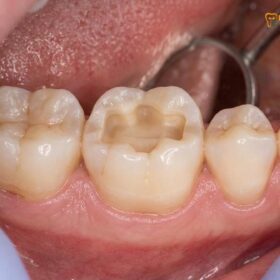
Understanding the anatomy of your restoration is the first step in mastering how to clean dental onlays. Unlike traditional silver amalgam fillings that are packed directly into a cavity, Inlays & Onlays are indirect restorations. They are custom-fabricated outside the mouth and subsequently bonded into place. The “Preservation Philosophy” behind these treatments emphasizes saving as much healthy tooth structure as possible, standing in stark contrast to full dental crowns which require aggressive 360-degree shaving of the tooth.
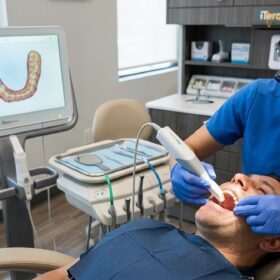
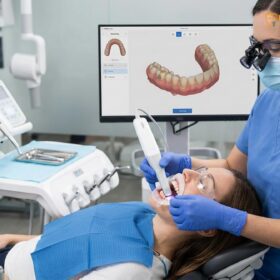
The most critical anatomical feature of any indirect restoration is the margin—the precise microscopic line where the custom-milled ceramic seamlessly transitions into your natural tooth enamel. At HCMC Dental Clinic in Ho Chi Minh City, we utilize advanced digital dentistry, including iTero and Medit i700 intraoral scanners. These digital scanning technologies eliminate the need for uncomfortable silicone impressions and provide highly precise 3D data. This data is then used in CAD/CAM milling to create an exact marginal fit, which is essential for preventing secondary decay[1].
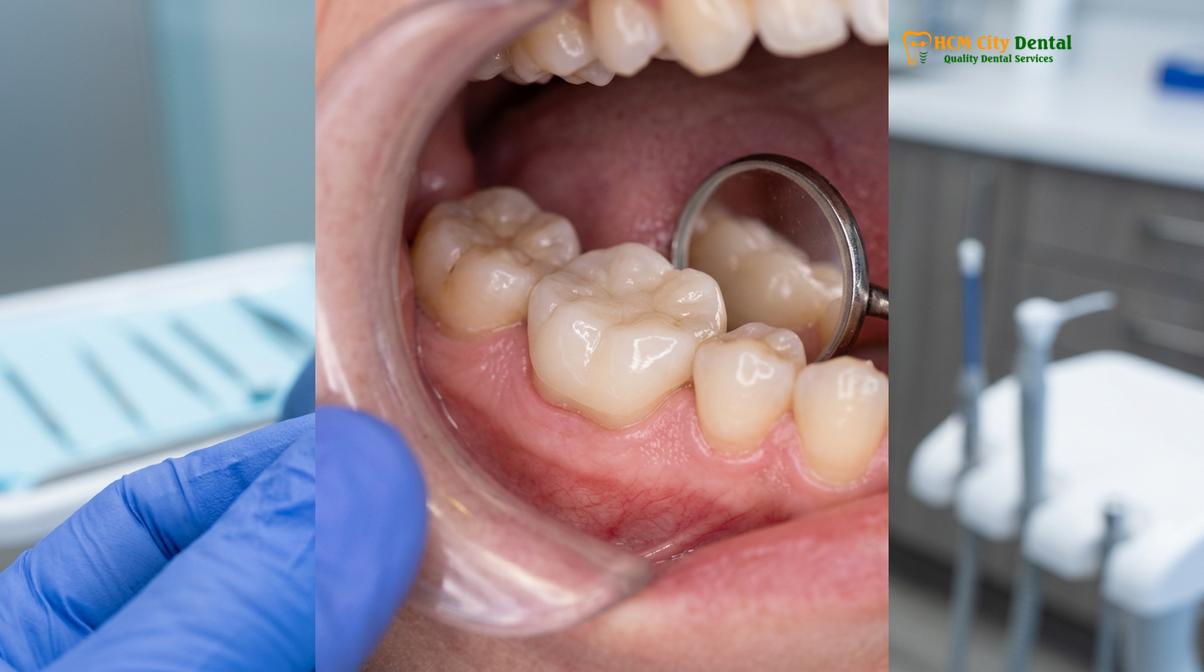
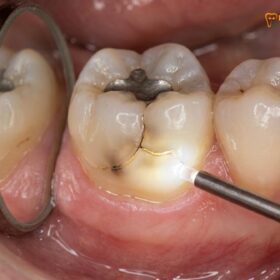
Despite this microscopic precision, the margin remains the most vulnerable area of the restored tooth. If marginal plaque is allowed to accumulate, the bacteria within the biofilm produce lactic acid. Over time, this acid can slowly degrade the resin-adhesive cementation that holds the onlay in place. This degradation creates a micro-gap, allowing bacteria to infiltrate beneath the restoration, leading to recurrent caries (secondary decay) and potentially compromising the entire tooth structure.
“The clinical success of a conservative ceramic restoration is heavily dependent on the patient’s ability to maintain a plaque-free environment at the restorative margin. Even the most precisely milled CAD/CAM onlay will fail if the marginal seal is compromised by chronic biofilm accumulation.”
Dr. Nguyen Van Cuong frequently emphasizes to his patients that the transition from a failing silver filling to a biocompatible ceramic onlay is only half the journey; the other half is the patient’s commitment to meticulous home care. By focusing your hygiene efforts on the gumline and the restorative margins, you protect the enamel bonding protocols that give these restorations their immense strength.
Brushing Techniques: Soft Bristles and Non-Abrasive Paste
Proper brushing requires soft bristles and low-abrasivity formulas to effectively remove biofilm without scratching the highly polished ceramic surface of your restoration.
When considering how to clean dental onlays, the physical tools you use are just as important as your technique. High-end restorative materials, such as Ivoclar IPS e.max lithium disilicate (used for the anterior aesthetic zone) and Dentsply Sirona Cercon HT Zirconia (used for heavy posterior biting forces), are incredibly durable against compressive chewing forces. However, their highly polished surface glazes can be susceptible to micro-scratches from improper brushing habits.
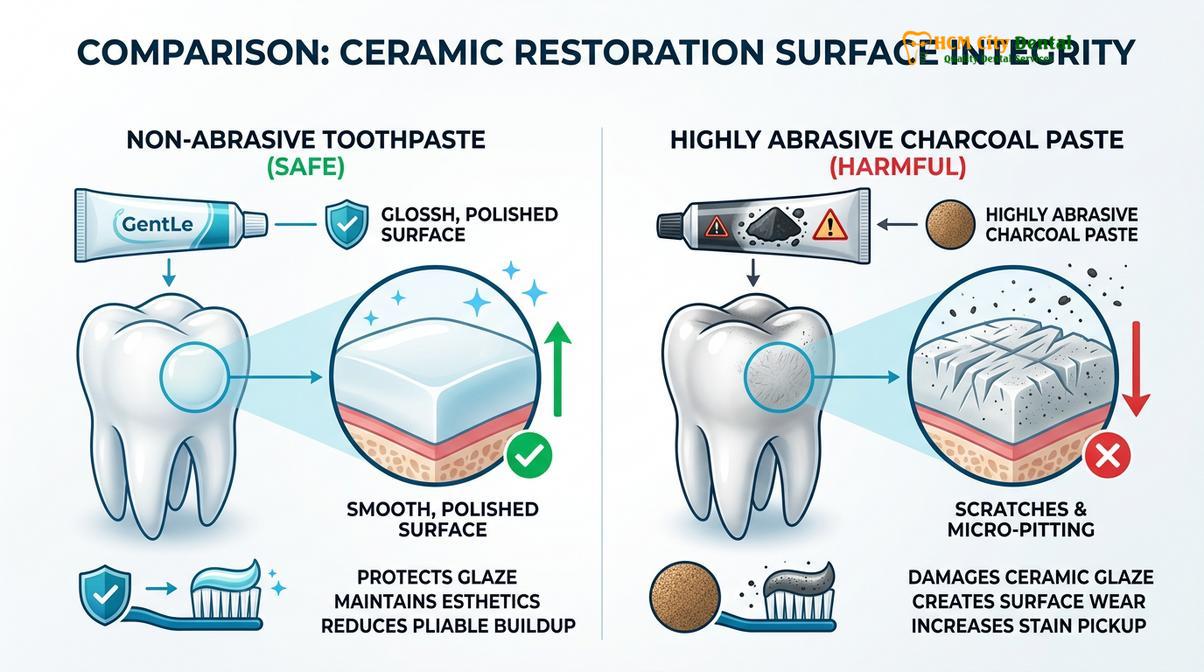
It is imperative to use a non abrasive toothpaste. Many over-the-counter whitening toothpastes, smoker’s toothpastes, and trendy charcoal pastes contain harsh abrasives like heavy silica or baking soda. While these might scrub surface stains off natural enamel, they act like microscopic sandpaper on ceramic restorations. Once the protective glaze is scratched, the ceramic becomes porous and rough, making it a magnet for plaque retention and extrinsic staining[2].
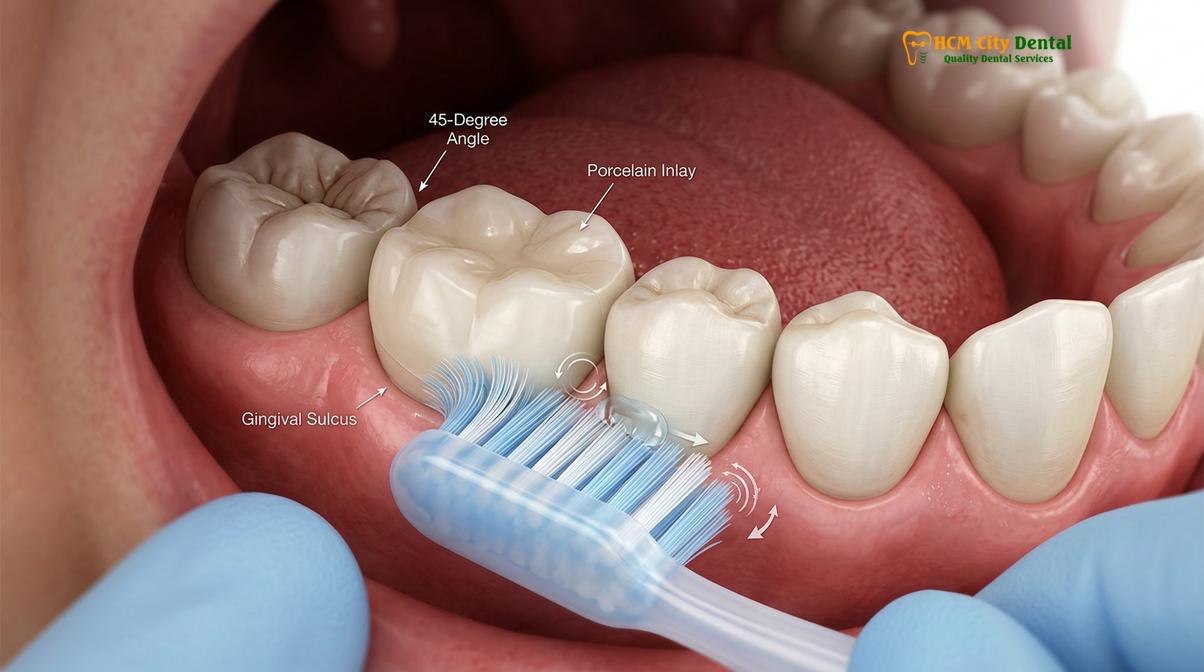
To ensure the longevity of your onlays, adopt the Modified Bass brushing technique:
- Angle the Brush: Hold a soft-bristled toothbrush at a 45-degree angle towards the gumline, where the restoration margin meets the gingival tissue.
- Micro-Movements: Use short, gentle, circular or vibratory strokes. Do not use aggressive back-and-forth sawing motions, which can cause gingival recession and expose the root surface.
- Sweep Away: After vibrating at the gumline, sweep the bristles away from the gums to clear the dislodged plaque.
- Occlusal Surfaces: Gently brush the chewing surfaces (the cavity outline form) to remove debris from the anatomical grooves of the onlay.
| Toothpaste Type | Abrasivity Level (RDA) | Safety for Ceramic Onlays | Clinical Recommendation |
|---|---|---|---|
| Standard Fluoride Gel | Low (30-70) | Highly Safe | Recommended for daily use to protect margins. |
| Sensitivity Paste | Low to Medium (40-80) | Safe | Excellent for patients with mild post-op sensitivity. |
| Whitening/Tartar Control | High (100-150) | Unsafe | Can scratch ceramic glaze; avoid use. |
| Charcoal/Smoker’s Paste | Very High (150-250+) | Extremely Unsafe | Strictly prohibited; causes severe micro-abrasions. |
Flossing Around Inlays/Onlays: Avoiding Snagging
Flossing must be performed with a lateral pull-through technique rather than a vertical snap to prevent dislodging the restoration or damaging the delicate marginal seal.
Interproximal cleaning—cleaning between the teeth—is where many patients encounter difficulties after receiving indirect restorations. The contact point where your onlay touches the adjacent tooth is meticulously designed to prevent food impaction. However, improper flossing technique can jeopardize the restoration.
A common concern is dental floss snagging. If you force the floss down aggressively and then snap it back up vertically, the upward shear force can catch on the margin of the onlay. Over time, this repetitive upward pulling can weaken the resin-adhesive bond, potentially leading to the dislodgement of the partial crown.
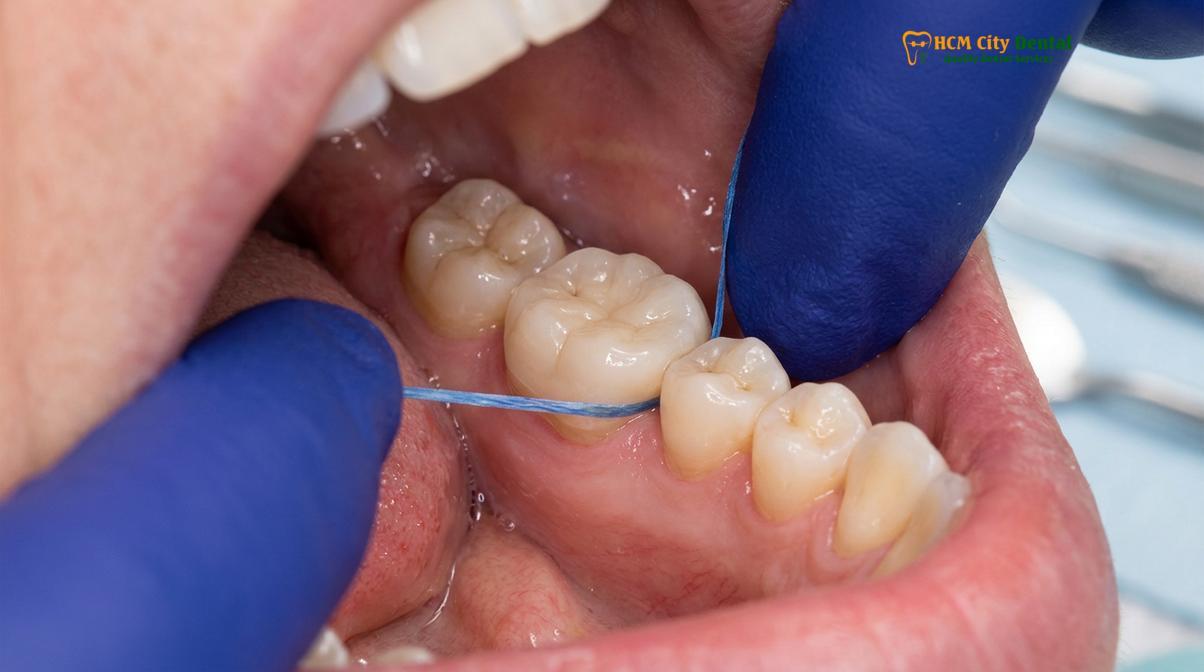
To safely practice flossing around dental inlays and onlays, follow the lateral pull-through method:
- Gentle Insertion: Carefully ease the floss between the teeth using a gentle zig-zag motion. Do not snap it forcefully past the contact point.
- The C-Shape: Wrap the floss into a “C” shape around the base of the tooth and the restoration, sliding it gently under the gumline to clean the chamfer margins.
- Lateral Release: Instead of pulling the floss back up through the tight contact point, let go of one end of the floss and gently pull it out sideways (laterally) through the embrasure space.
Clinical Warning: If your floss consistently shreds, catches, or breaks around a specific restoration, do not ignore it. This is a primary clinical indicator of a marginal discrepancy, cement flash (excess cement), or the early stages of secondary decay. Schedule a clinical evaluation promptly to address the issue before it compromises the tooth.
The Role of Mouthwash and Water Flossers
Supplementing your routine with an antimicrobial mouthwash and a water flosser significantly reduces interproximal biofilm and flushes debris from hard-to-reach restorative margins.
While string floss is indispensable for mechanically scraping plaque from the tooth surface, it can sometimes be challenging to maneuver around complex posterior restorations. This is where advanced interdental cleaning devices become invaluable adjuncts to your oral hygiene routine.
Water flossers (oral irrigators) utilize pulsating hydrodynamic shear forces to flush out food debris and disrupt bacterial biofilm along the gumline and within the interproximal spaces. They are exceptionally safe for ceramic onlays and overlays, provided they are used correctly. When introducing a water flosser to your routine, always start on the lowest pressure setting. Direct the stream at a 90-degree angle to the gumline and trace along the margins of the restoration. The pulsating water can reach microscopic crevices that string floss might miss, ensuring the chamfer margins remain pristine[3].
In addition to mechanical cleaning, chemical adjuncts like mouthwash play a supportive role. However, material science dictates careful selection. It is advisable to use alcohol-free, fluoride-rich mouthwashes. High-alcohol mouthwashes can cause dry mouth (xerostomia), which reduces the natural washing effect of saliva and increases the risk of decay. Furthermore, prolonged use of harsh chemical rinses can theoretically degrade the composite resin cements used at the margins over an extended period.
For patients who have recently undergone the placement of a porcelain overlay, a short-term course of chlorhexidine gluconate mouthwash may be prescribed to manage localized gingival inflammation. However, this should only be used under clinical supervision, as chlorhexidine can cause extrinsic staining on natural teeth and the margins of restorations if used for more than two weeks.
Dietary Advice: Hard and Sticky Foods to Avoid
Protecting your onlay requires avoiding excessively hard or sticky foods that can exert undue shear forces or physically pull the restoration from its bonded cavity outline form.
The structural integrity of your dental onlay is heavily influenced by the biomechanics of your bite alignment and your dietary choices. While materials like Cercon HT Zirconia possess immense flexural strength and can withstand heavy compressive forces (biting straight down), all dental restorations are vulnerable to extreme shear forces (grinding side-to-side) and tensile forces (pulling upwards).
Sticky foods such as caramels, taffy, gummy candies, and chewing gum pose a significant risk. When you bite into a sticky substance, it adheres to the occlusal surface of the onlay. As you open your mouth, the sticky food exerts a tensile pull on the restoration. While the enamel bonding protocols used at our clinic are exceptionally strong, repetitive tensile stress over months or years can eventually fatigue the bond, leading to premature failure.
Similarly, excessively hard items like ice cubes, hard candies, unpopped popcorn kernels, and hard nuts should be avoided. Biting down on these items can concentrate massive localized stress on a single cusp of the ceramic restoration, potentially causing micro-fractures or catastrophic chipping of the porcelain.
For patients who suffer from bruxism (chronic teeth grinding or clenching), dietary modifications alone are insufficient. The immense forces generated during nocturnal grinding can easily fracture both natural teeth and ceramic restorations. In these cases, restoring the vertical dimension of occlusion (VDO) and fabricating a custom-fitted nightguard is a mandatory clinical protocol to protect your investment.
Professional Cleanings: What Your Hygienist Needs to Know
Routine professional maintenance involves specialized scaling instruments and non-abrasive polishing pastes designed specifically to protect the integrity of ceramic restorations.
Even with impeccable home care, adhering to a regular oral hygiene routine must be supplemented by professional maintenance. Maintaining a consistent dental checkup schedule—typically every six months—is vital for the long-term survival of indirect restorations[4].
When you visit the hygienist, it is important that they are aware of the specific locations of your inlays, onlays, and overlays. Professional cleaning protocols for ceramic restorations differ slightly from those used on natural teeth. Standard stainless steel scalers can scratch the surface of lithium disilicate or zirconia. Therefore, your hygienist should utilize specialized plastic, carbon fiber, or titanium scaling instruments when working directly around the margins of your restorations.
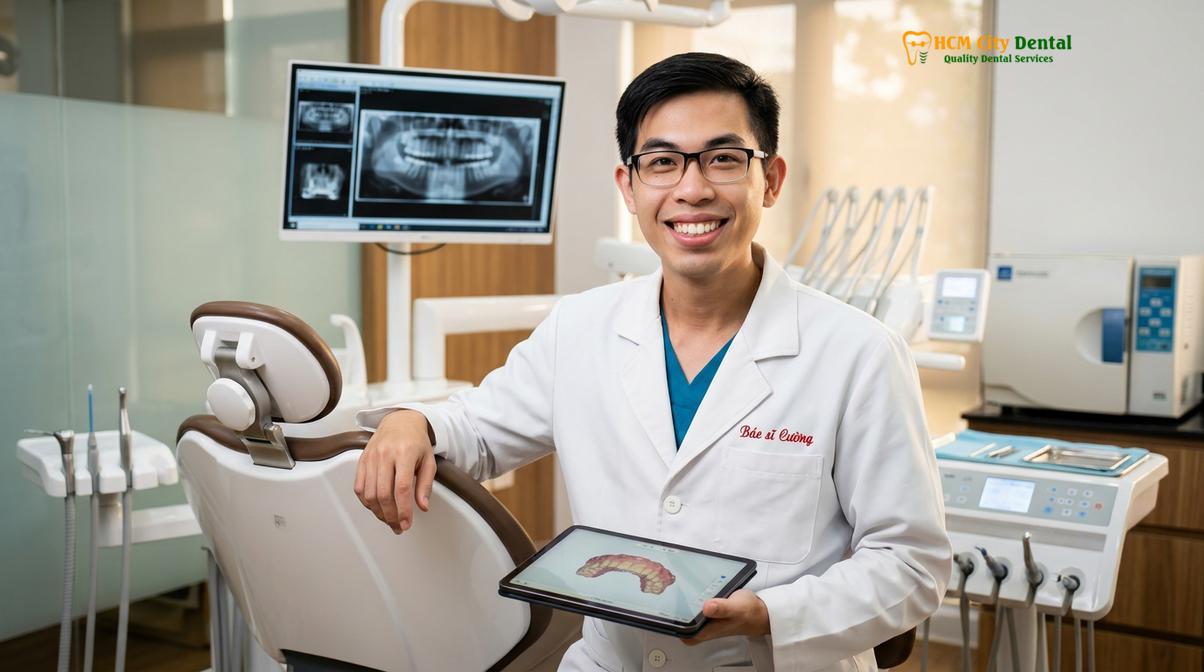
Furthermore, the use of ultrasonic scalers must be carefully managed. While ultrasonic scaling is excellent for removing heavy calculus, the vibrating metal tip should never be applied directly to the ceramic margin, as the high-frequency vibrations can chip the delicate edge or disrupt the cement seal. Finally, during the polishing phase, the hygienist must use a fine, non-abrasive polishing paste rather than coarse pumice to maintain the high-gloss finish of the ceramic.
Clinical Case Example: A patient visited HCMC Dental Clinic in Ho Chi Minh City for a routine maintenance visit two years after receiving multiple IPS e.max onlays. Because the patient adhered strictly to a non-abrasive brushing routine and attended bi-annual professional cleanings where specialized titanium scalers were used, the clinical evaluation revealed zero marginal degradation, perfectly healthy gingival contours, and a ceramic glaze that looked as pristine as the day it was bonded.
Clinical Workflows, Material Science, and Investment
Understanding the advanced digital workflows, biocompatible materials, and transparent pricing structures helps patients appreciate the long-term value of their conservative restorations.
The success of cleaning and maintaining your dental onlays is deeply intertwined with the quality of the initial clinical workflow and the material science behind the restoration. Dr. Nguyen Van Cuong advocates for a direct lab partnership utilizing digital CAD/CAM milling. This ensures that every restoration is crafted with microscopic precision, minimizing the marginal gap where plaque typically accumulates.
The choice of material also plays a crucial role in oral hygiene. The ceramics used, such as Ivoclar IPS e.max and Dentsply Sirona Cercon HT, are 100% metal-free and highly biocompatible. Unlike older metal restorations that can cause gum line irritation or allergic reactions, these biocompatible ceramics promote a healthy gingival response, making it easier for patients to maintain clean margins without discomfort[5].
“Biocompatibility is not just about avoiding allergic reactions; it is about creating a restorative environment where the gingival tissues can adapt seamlessly to the ceramic margin, facilitating easier and more effective plaque control for the patient.”
Understanding the investment in these high-end restorations also reinforces the importance of proper maintenance. At HCMC Dental Clinic, we maintain a transparent pricing structure designed to make world-class dentistry accessible. According to the latest clinic fee schedule, the estimated cost for an Inlay or Onlay (Lab-made ceramic) for a walk-in patient is approximately $385 (10.0M VND). However, patients who utilize the WhatsApp pre-booking discount can secure this treatment from just $231 (6.0M VND), representing a significant 40% savings. Similarly, an Overlay or Partial Crown is priced at ~$446 (11.6M VND) for walk-ins, but is available from $269 (7.0M VND) with the pre-arrival discount.
To provide complete peace of mind, these restorations are backed by a global warranty and remote WhatsApp checkup support, ensuring that even international patients can receive ongoing guidance on how to clean dental onlays and maintain their oral health from afar.
When to See a Doctor
Immediate clinical evaluation is required if you experience localized pain, sensitivity, or notice physical changes around the restoration margins.
While proper oral hygiene significantly extends the life of your restorations, you must remain vigilant for signs of potential complications. You should schedule a clinical examination immediately if you experience any of the following symptoms:
- Persistent Sensitivity: A sharp pain when consuming hot, cold, or sweet foods, which may indicate that the marginal seal has been compromised and secondary decay is reaching the dentin.
- Floss Shredding: If your dental floss consistently catches, frays, or shreds in a specific area around the onlay, it strongly suggests a marginal discrepancy or a chipped edge.
- Gingival Inflammation: Localized redness, swelling, or bleeding gums around a specific restoration that does not resolve with proper brushing and flossing.
- Mobility or Shifting: If the restoration feels loose, clicks when you chew, or if your bite suddenly feels misaligned.
Early detection of these issues allows your dentist to perform conservative interventions, potentially saving both the restoration and the underlying natural tooth structure. Never attempt to adjust or re-cement a loose onlay at home.
Frequently Asked Questions
Can I floss normally around an inlay?
Yes, you can floss normally around an inlay, but you should use a lateral pull-through technique rather than snapping the floss vertically. This prevents accidental dislodgement of the restoration and protects the delicate marginal seal from undue stress. Once the floss is gently guided between the teeth and the interproximal plaque is cleared, release one end of the floss and pull it out sideways. If you experience consistent shredding, it may indicate a marginal discrepancy that requires clinical evaluation.
Does toothpaste affect porcelain restorations?
Yes, highly abrasive toothpastes can scratch the polished glaze of porcelain restorations, leading to plaque accumulation and a dull appearance. It is crucial to use a low-abrasivity gel or paste to maintain the ceramic surface integrity. Whitening toothpastes containing baking soda, charcoal, or heavy silica should be strictly avoided. Instead, opt for fluoride-rich, non-abrasive formulas that protect both your natural enamel and the custom-milled ceramic without causing micro-abrasions.
How do I prevent decay at the onlay margins?
Preventing decay at the onlay margins requires meticulous daily plaque removal using soft-bristled brushing, proper interdental cleaning, and routine professional maintenance. The margin is the most vulnerable area where the ceramic meets the natural tooth. Utilizing a water flosser on a low setting can help flush out debris from this micro-gap. Additionally, maintaining a strict dental checkup schedule allows your dentist to monitor the marginal seal and detect any microscopic breakdown before secondary caries develop.
Is a water flosser safe for ceramic onlays?
Yes, a water flosser is entirely safe and highly recommended for cleaning around ceramic onlays when used on a low to medium pressure setting. The pulsating hydrodynamic forces effectively disrupt biofilm along the restoration margins without damaging the resin-adhesive cement. It serves as an excellent adjunct to traditional string floss, particularly for reaching posterior molars and flushing out trapped food particles from complex cavity outline forms.
How often should I schedule a dental checkup for my onlays?
You should schedule a comprehensive dental checkup every six months to ensure the long-term success and structural integrity of your onlays. Regular professional evaluations allow your dentist to assess the marginal seal, check for signs of occlusal wear, and perform specialized cleanings. Patients with a history of bruxism or heavy bite forces may require more frequent monitoring to ensure their custom nightguards are functioning correctly and protecting the restorations.
References
- Journal of Prosthetic Dentistry. Marginal adaptation and microleakage of CAD/CAM ceramic restorations. (2021).
- International Journal of Prosthodontics. The effect of abrasive dentifrices on the surface roughness of lithium disilicate. (2020).
- Journal of Clinical Periodontology. Efficacy of interdental cleaning devices in biofilm removal. (2019).
- American Dental Association. Clinical guidelines for the maintenance of indirect restorations. (2022).
- Journal of Esthetic and Restorative Dentistry. Long-term survival rates of bonded partial crowns and overlays. (2018).