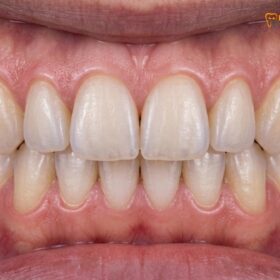
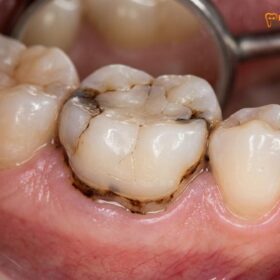
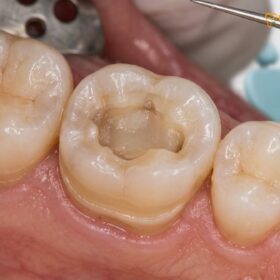
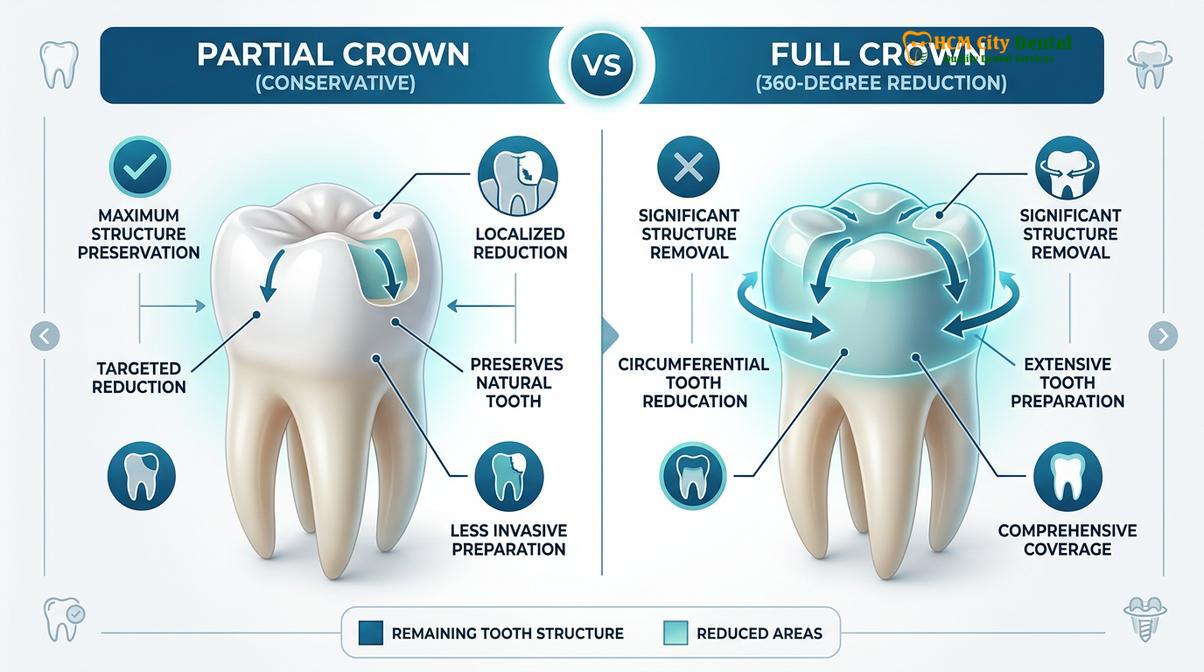
When comparing a partial crown vs full crown, the primary difference lies in the philosophy of tooth structure preservation. A partial crown selectively covers only the damaged or weakened cusps while leaving healthy enamel intact, whereas a full crown requires comprehensive 360-degree shaving to encase the entire tooth above the gum line.
Clinical Summary:
The decision between a partial crown and a full crown represents a critical juncture in restorative dentistry, balancing the need for structural reinforcement with the biological imperative to preserve natural tooth tissue. Partial crowns (including inlays, onlays, and overlays) embody a conservative preservation philosophy, utilizing advanced CAD/CAM milling and high-strength ceramics to restore function without sacrificing intact enamel walls. Conversely, full crowns remain the gold standard for severely compromised teeth requiring maximum circumferential support. Modern clinical workflows leverage digital precision via intraoral scanners, combined with rigorous resin-adhesive cementation protocols, to ensure long-term biocompatibility, optimal bite alignment, and exceptional aesthetic integration.
Key Takeaways:
- Preservation Philosophy: Partial crowns save maximum natural tooth structure, avoiding the aggressive 360-degree reduction required for full crowns.
- Digital Precision: Intraoral scanners eliminate messy silicone impressions, ensuring flawless CAD/CAM marginal fit.
- Advanced Materials: Restorations utilize biocompatible, metal-free ceramics like lithium disilicate and high-translucency zirconia.
- Adhesive Bonding: Success relies on complex enamel bonding protocols rather than traditional mechanical retention.
- Clinical Application: Ideal for replacing large failing fillings where the buccal and lingual walls remain structurally sound.
What is a Partial Crown (3/4 or 7/8 Crown)?
A partial crown is a conservative dental restoration designed to replace missing or damaged cusps while intentionally preserving the healthy, intact walls of the natural tooth.
In the realm of modern restorative dentistry, the paradigm has shifted significantly toward minimally invasive techniques. A partial coverage dental crown—often referred to clinically as an inlay, onlay, or overlay—is engineered to restore the structural integrity of a tooth that has suffered moderate to severe damage, yet still retains a substantial amount of healthy enamel and dentin. Unlike traditional methods that demand aggressive tooth preparation, these conservative restorations are meticulously designed to replace only what is lost. [1]
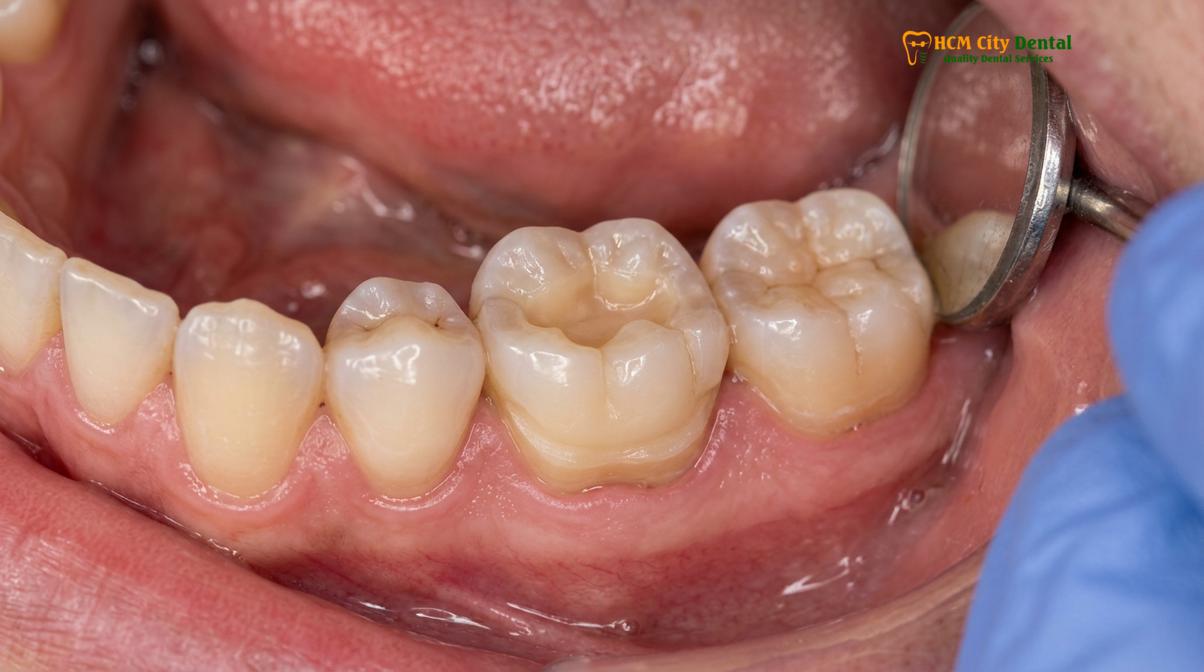
When discussing the specific nomenclature, a three quarter crown vs full crown comparison highlights the exact amount of tooth structure involved. A 3/4 crown typically covers the occlusal (chewing) surface and three of the four axial walls of the tooth, usually leaving the facial or buccal surface completely untouched. A 7/8 crown extends slightly further, often covering all but one specific cusp or a portion of the facial wall. In Vietnamese dental terminology, this distinction is often discussed as mão bán phần vs mão toàn phần, emphasizing the partial versus total coverage approach.
The preservation philosophy is the cornerstone of this treatment modality. Every millimeter of natural enamel is precious. Enamel is the hardest substance in the human body, providing unparalleled protection against thermal changes, bacterial invasion, and occlusal wear. By opting for a partial crown, the clinician avoids the 360-degree shaving required for a full crown. This conservative approach not only maintains the tooth’s natural flexural biomechanics but also significantly reduces the risk of pulpal trauma (nerve damage) during the preparation phase.
“The ultimate goal of restorative dentistry is not merely to replace lost tissue, but to preserve what remains. A well-executed partial crown respects the biological boundaries of the tooth, offering strength without unnecessary sacrifice.”
Partial crowns are exceptionally well-suited for scenarios involving silver filling replacement. Older amalgam fillings often require large cavity preparations that weaken the surrounding tooth structure over time, leading to micro-fractures. When these fillings fail or when extensive tooth decay undermines the cusps, a direct composite filling is often insufficient to withstand the heavy forces of mastication. Here, dental inlays and onlays provide the perfect intermediate solution—stronger than a filling, yet less invasive than a full crown.
Keeping the Aesthetic Buccal Surface Natural
Preserving the natural buccal surface allows partial crowns to deliver superior aesthetic results, as the visible enamel blends flawlessly with adjacent teeth without exposing artificial margins.
One of the most compelling advantages of a partial crown, particularly the three quarter crown, is its profound impact on cosmetic dentistry. The buccal surface—the front-facing side of the tooth visible when you smile or speak—possesses complex optical properties. Natural enamel exhibits a unique combination of translucency, opalescence, and fluorescence that is incredibly challenging to replicate perfectly, even with the most advanced dental ceramics.
By designing a restoration that intentionally leaves the healthy buccal surface intact, the clinician ensures that the most visible portion of the tooth remains completely natural. The transition line between the ceramic restoration and the natural tooth is typically placed on the occlusal surface or hidden along the interproximal (side) walls. This strategic placement completely eliminates the risk of margins exposure near the gum line—a common aesthetic complication with traditional full crowns where a dark line or opaque margin may become visible if the gums recede over time.
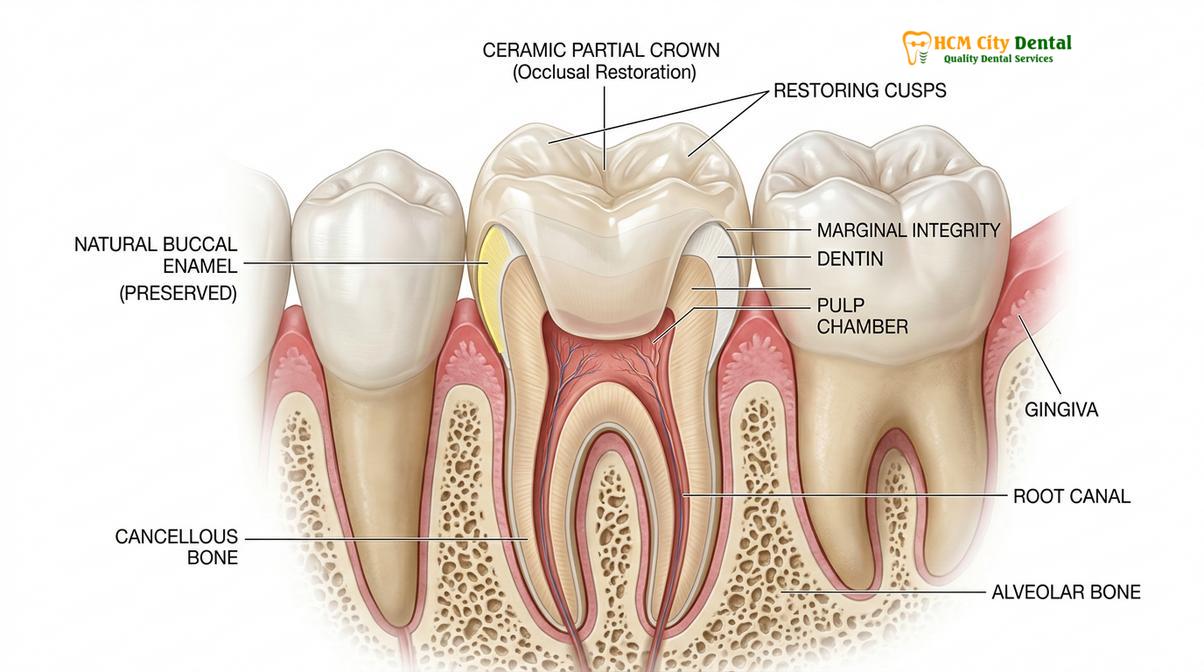
Furthermore, the materials used for these restorations prioritize biocompatibility. Modern partial crowns are entirely metal-free, utilizing advanced glass-ceramics or zirconia. This eliminates the risk of metal allergies, galvanic toxicity, and the chronic gingival inflammation sometimes associated with subgingival metal margins. The surrounding gum tissue responds exceptionally well to highly polished, biocompatible ceramics, maintaining a healthy, pink, and stippled appearance that is essential for a truly holistic cosmetic outcome.
Preparation Design and Margin Placement
Clinical preparation for partial crowns demands precise cavity outline forms and smooth chamfer margins to ensure optimal structural retention and a flawless digital scan.
The clinical preparation for a partial crown is arguably more complex and technique-sensitive than that of a full crown. A full crown preparation is relatively straightforward: the dentist reduces the tooth circumferentially to create a miniature stump. In contrast, a partial crown requires a highly customized cavity outline form dictated entirely by the specific pattern of decay or fracture. The clinician must carefully navigate the topography of the tooth, removing only the compromised tissue while establishing a geometry that allows the rigid ceramic restoration to seat perfectly.
Margin placement and design are critical factors in the success of partial coverage restorations. Dentists typically employ heavy chamfer margins or rounded shoulder preparations. These specific margin designs provide adequate bulk for the ceramic material at the edges, preventing chipping or fracture under occlusal load. Furthermore, smooth, continuous margins are essential for achieving a hermetic margin sealing, which is the primary defense against bacterial microleakage and subsequent secondary decay detection.
Clinical Case Review: Conservative Onlay
A patient presented to HCMC Dental Clinic in Ho Chi Minh City with a fractured mesio-lingual cusp on a lower first molar due to an old, failing amalgam filling. Instead of a full crown, the clinical team opted for a conservative porcelain overlay. By utilizing a precise chamfer margin design and preserving the entire buccal wall, the tooth’s natural flexure was maintained. The digital workflow ensured a perfect marginal fit, resulting in a restoration that restored full chewing capacity while remaining completely invisible when the patient smiled.
The evolution of digital dentistry has revolutionized how these complex preparations are captured and fabricated. Traditional silicone putty impressions were often uncomfortable for the patient and prone to dimensional distortion, which could compromise the fit of a delicate partial crown. Today, the use of advanced intraoral scanners has transformed the workflow, capturing highly accurate digital impressions that eliminate traditional errors. [2]
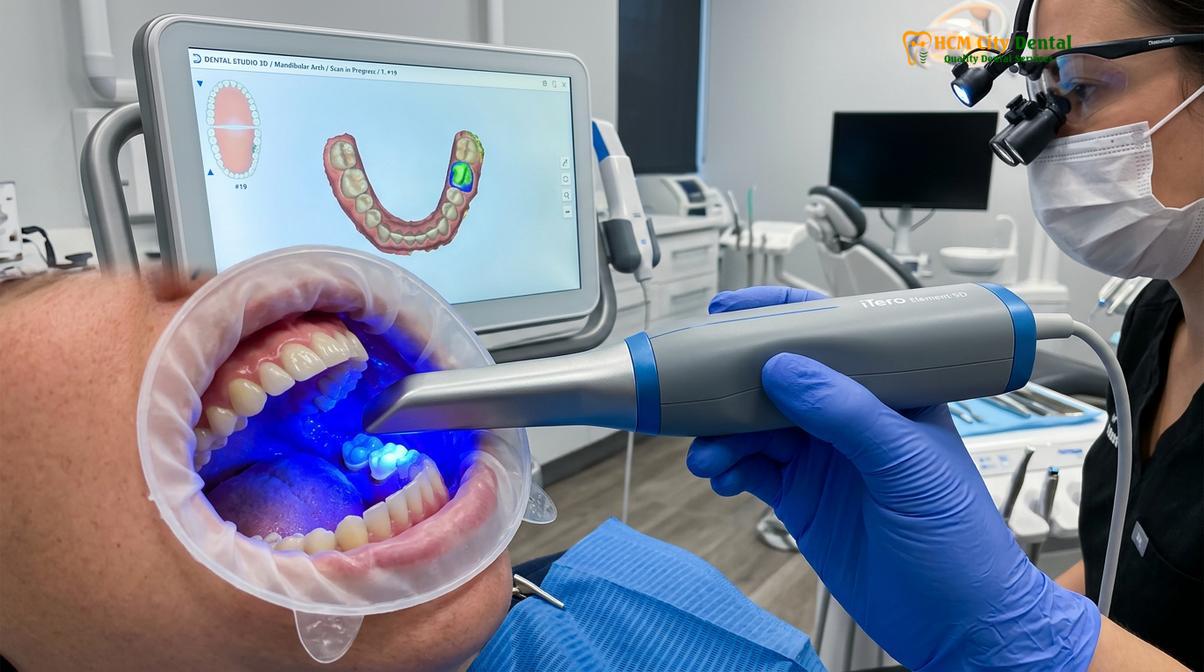
These digital scanners capture thousands of 3D images per second, creating a highly accurate virtual model of the prepared tooth and the surrounding dentition. This digital data is then transmitted instantly to the laboratory. The software allows the dental technician to design the restoration with microscopic precision, ensuring that the internal fit and the marginal adaptation are exact. This seamless digital workflow not only enhances patient comfort but drastically reduces the margin of error, resulting in restorations that fit flawlessly on the first try.
Structural Strength and Resistance Form
The long-term durability of a restoration depends on establishing proper resistance form and selecting high-strength materials capable of withstanding heavy occlusal forces.
When evaluating structural retention, the biomechanics of a partial crown differ fundamentally from a full crown. A full crown relies heavily on mechanical retention—the parallel walls of the prepared tooth stump physically hold the crown in place, much like a thimble on a finger. A partial crown, however, often lacks this extensive mechanical resistance form due to its conservative nature. Instead, it relies on a combination of precise geometric preparation (such as boxes and grooves) and, most importantly, advanced adhesive bonding.
| Feature | Partial Crown (Inlay/Onlay) | Full Crown |
|---|---|---|
| Tooth Reduction | Conservative (only damaged areas removed) | Aggressive (360-degree circumferential shaving) |
| Enamel Preservation | High (buccal/lingual walls often saved) | Low (most natural enamel is removed) |
| Retention Method | Chemical resin-adhesive bonding | Mechanical friction + traditional cement |
| Gum Line Impact | Supragingival (above the gums), healthier tissue | Often subgingival (below the gums), risk of irritation |
| Clinical Indication | Moderate decay, fractured cusps, large filling replacement | Severe decay, post-root canal, massive structural loss |
The choice of material is paramount in ensuring the restoration can withstand the immense pressures of the posterior bite. Historically, the debate often centered around gold or ceramic. Cast gold partial crowns have an exceptional clinical track record, offering unparalleled longevity and wear characteristics that mimic natural enamel. However, the rising demand for cosmetic dentistry has made gold less desirable for many patients.
Today, the focus has shifted entirely to high-performance ceramics. For the anterior aesthetic zone and premolars, lithium disilicate is often the material of choice. It offers a remarkable combination of high flexural strength and exceptional translucency, making it ideal for porcelain overlays that must blend seamlessly with natural teeth. For patients with heavy posterior biting forces, monolithic zirconia is frequently recommended due to its superior fracture resistance. [3]
Modern high-translucency zirconia has overcome the opaque, chalky appearance of older generations, providing both indestructible strength and excellent aesthetics. Proper bite alignment is carefully calculated during the CAD/CAM design phase to ensure that the new restoration harmonizes with the patient’s dynamic jaw movements, preventing premature wear or joint discomfort.
Cementation Protocol for Partial Coverage
The clinical success of partial crowns relies entirely on meticulous enamel bonding protocols and resin-adhesive cementation to create a unified, fracture-resistant tooth structure.
The final, and arguably most critical, step in the delivery of a partial crown is the cementation phase. Unlike full crowns, which can often be cemented using traditional luting agents that rely on mechanical friction, partial crowns mandate strict resin-adhesive cementation. This process does not merely glue the restoration to the tooth; it chemically fuses the ceramic to the enamel and dentin, creating a single, cohesive biomechanical unit. [4]
The enamel bonding protocols require absolute moisture control. The clinician must isolate the tooth, often using a rubber dam, to prevent any contamination from saliva or crevicular fluid. The internal surface of the ceramic restoration is first treated to increase its surface area and chemical reactivity. For glass-ceramics, this involves etching with hydrofluoric acid followed by the application of a silane coupling agent. For zirconia, the surface is typically sandblasted with aluminum oxide particles and treated with a specialized primer.
“Adhesive dentistry has redefined what is possible in tooth preservation. By chemically bonding high-strength ceramics directly to the enamel, we effectively rebuild the tooth from the inside out, restoring its original biomechanical strength.”
Simultaneously, the natural tooth structure is prepared. The enamel and dentin are etched with phosphoric acid to create microscopic porosities. A bonding agent (adhesive resin) is then applied and cured. Finally, a dual-cure resin cement is extruded into the preparation, and the restoration is seated under firm pressure.
This advanced adhesive approach offers several profound benefits. First, it significantly reinforces the remaining weakened tooth structure, binding the fragile cusps together and preventing them from flexing and fracturing under load. Second, it virtually eliminates the risk of microleakage, ensuring a watertight seal that protects against recurrent decay. Lastly, by utilizing indirect CAD/CAM restorations rather than massive direct composite fillings, the clinician completely avoids the issue of polymerization shrinkage, ensuring a passive, stress-free fit.
Clinical Scenarios: Choosing the Right Option
Selecting the appropriate restoration requires a careful evaluation of the remaining tooth structure, the patient’s bite forces, and the specific location of the damage.
Determining whether a patient needs a partial crown or a full crown is a nuanced clinical decision. A partial crown is generally indicated when a tooth has sustained moderate damage—such as a fractured cusp or a large cavity—but still retains strong, healthy buccal and lingual walls. In these scenarios, removing intact enamel simply to fit a full crown would be unnecessarily destructive. Clinical evaluations of conservative posterior restorations consistently show that preserving these natural walls leads to better long-term outcomes and fewer endodontic complications. [5]
Conversely, a full crown becomes the necessary choice when the structural compromise is severe. If a tooth has undergone root canal therapy, it becomes brittle and prone to catastrophic splitting under chewing forces. In such cases, a full crown provides the essential 360-degree ferrule effect, binding the remaining tooth structure together to prevent vertical root fractures. Additionally, teeth with extensive decay that undermines all cusps, or teeth that have already suffered multiple large fractures, require the comprehensive coverage that only a full crown can provide.
The patient’s occlusal habits also play a vital role in this decision. Individuals with severe bruxism (chronic teeth grinding) exert immense forces on their dentition. While high-strength zirconia partial crowns can withstand significant pressure, a full crown might be recommended if the grinding has caused widespread enamel wear across the entire tooth surface, necessitating a complete restoration of the tooth’s vertical dimension.
When to Consult a Dentist & Important Clinical Notes
Early consultation and precise diagnostic imaging are crucial for determining the most conservative and effective restorative treatment plan for damaged teeth.
If you experience sharp pain when chewing, sensitivity to temperature changes, or notice a visible crack in an old filling, it is imperative to consult a dental professional promptly. Delaying treatment can allow micro-fractures to propagate deeper into the tooth, potentially reaching the nerve and necessitating a root canal, which would subsequently require a full crown rather than a conservative partial restoration.
During your consultation, the dental team will utilize advanced diagnostic tools, including digital X-rays and 3D intraoral scanning, to assess the exact extent of the structural damage. This comprehensive evaluation ensures that the chosen treatment aligns with modern guidelines on conservative restorative dentistry and tooth preservation, prioritizing the retention of healthy tissue whenever clinically viable. [6]
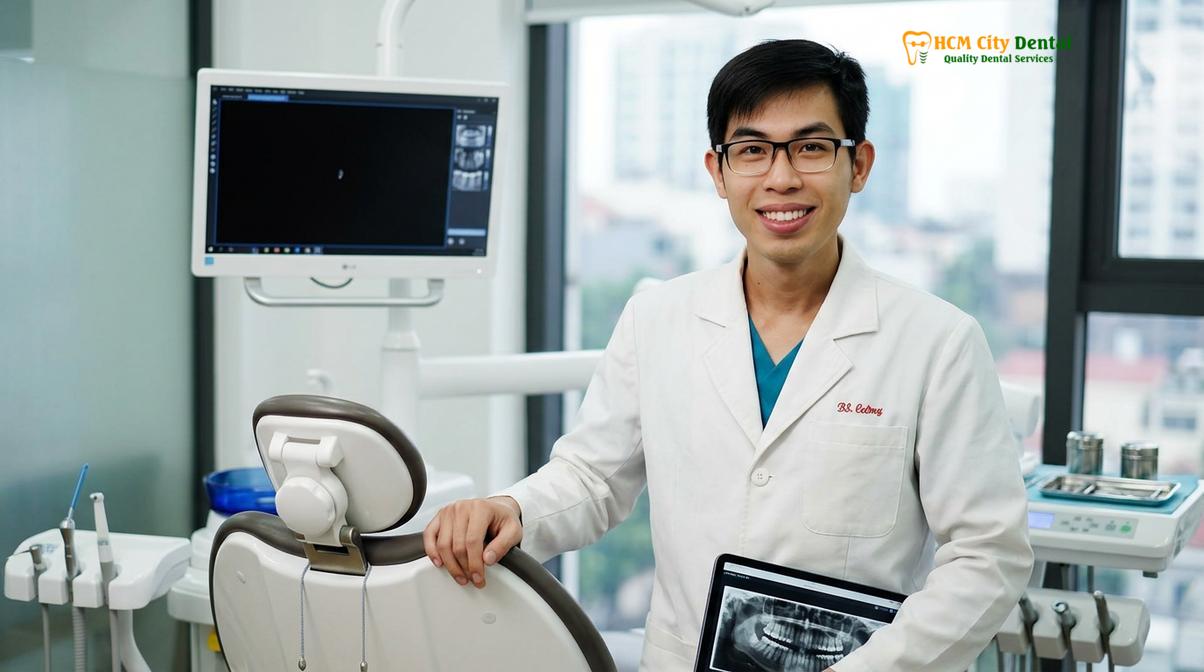
Dr. Nguyen Van Cuong, a leading restorative specialist, emphasizes that the decision between a partial and full crown should always prioritize long-term biological health. At HCMC Dental Clinic, his clinical approach focuses on utilizing advanced digital diagnostics to preserve as much natural enamel as possible, ensuring that every restoration is both functionally robust and aesthetically seamless.
Ultimately, the goal of modern dentistry is to intervene as conservatively as possible while providing durable, long-lasting results. By understanding the distinct advantages of partial crowns and the specific clinical scenarios where full crowns are necessary, patients can make informed decisions about their oral health.
Frequently Asked Questions
What is a 3/4 dental crown?
A 3/4 dental crown is a type of partial coverage restoration that replaces three-quarters of the tooth’s clinical crown, typically leaving the front-facing buccal surface intact. This conservative approach preserves healthy enamel, maintains natural aesthetics, and provides excellent structural support for teeth with moderate decay or fractures.
Does a partial crown look more natural than a full crown?
Yes, a partial crown often looks more natural because it preserves your own natural buccal enamel, allowing light to transmit through the tooth exactly as it always has. By avoiding margins exposure near the visible gum line, the transition between the ceramic restoration and your natural tooth remains virtually undetectable.
Is the preparation for a partial crown difficult?
The preparation for a partial crown is highly technique-sensitive and requires advanced clinical precision from the dentist. Because the goal is maximum tooth preservation, the dentist must carefully design complex cavity outline forms and chamfer margins to ensure proper structural retention without over-reducing the healthy remaining enamel.
How long do partial crowns last?
Partial crowns can last for many years when properly bonded and maintained with good oral hygiene. Their longevity depends heavily on the quality of the resin-adhesive cementation, the strength of the chosen material like lithium disilicate or zirconia, and the patient’s daily bite forces.
Are partial crowns more expensive than full crowns?
Partial crowns are generally comparable in price or slightly less expensive than full crowns, depending on the clinic and materials used. While they require less physical material, the clinical preparation, digital scanning, and complex adhesive bonding protocols demand significant expertise and time, which reflects in the overall treatment investment.
References
- Journal of Prosthetic Dentistry. Survival rates of partial coverage restorations.
- International Journal of Computerized Dentistry. Accuracy of digital impressions using intraoral scanners.
- Dental Materials. Fracture resistance of lithium disilicate and zirconia partial crowns.
- Journal of Adhesive Dentistry. Bonding protocols for glass-ceramic restorations.
- Operative Dentistry. Clinical evaluation of conservative posterior restorations.
- Vietnam Odonto-Stomatology Association (VOSA). Guidelines on conservative restorative dentistry and tooth preservation.
Are you experiencing discomfort from a cracked tooth or a failing large filling? Discover how conservative treatments can restore your smile while saving your natural enamel. Contact HCMC Dental Clinic in Ho Chi Minh City today to schedule a comprehensive evaluation and learn more about our advanced dental inlays and onlays.