CAD/CAM digital onlays in Vietnam provide a highly precise, conservative restoration method for moderately damaged teeth. By utilizing advanced 3D scanning and computer-guided milling, this approach preserves maximum natural tooth structure while delivering exceptional marginal fit and long-lasting biocompatible ceramic strength.
Clinical Summary:
The integration of Computer-Aided Design and Computer-Aided Manufacturing (CAD/CAM) has revolutionized restorative dentistry, particularly in the fabrication of inlays, onlays, and partial crowns. This digital workflow replaces traditional silicone impressions with highly accurate intraoral scanning, allowing for the precise virtual modeling of restorations. By milling high-strength materials like lithium disilicate and zirconia, clinicians can achieve superior marginal sealing and biomechanical stability. This conservative approach prioritizes the preservation of healthy enamel and dentin, offering a durable, aesthetically pleasing, and biocompatible alternative to aggressive full-coverage crowns.
Key Takeaways:
- Conservative Approach: Digital onlays preserve maximum natural tooth structure compared to traditional 360-degree crown preparations.
- Advanced Scanning: Modern optical scanners eliminate messy molds, providing highly accurate 3D digital impressions.
- Premium Materials: Restorations are milled from biocompatible lithium disilicate or high-translucency zirconia.
- Transparent Pricing: WhatsApp pre-booking offers a 40% discount, with onlays starting from $231 (6.0M VND).
- Long-Term Success: Strict enamel bonding protocols ensure optimal margin sealing to prevent secondary decay.
The Shift to Digital Dentistry
The transition to digital dentistry allows clinicians to prioritize tooth preservation over aggressive shaving, utilizing advanced software to create highly accurate partial restorations.
For decades, the standard approach to restoring a severely decayed or fractured tooth involved either placing a massive direct filling or grinding the tooth down to a small peg to accommodate a full-coverage crown. However, modern clinical protocols emphasize a strict preservation philosophy. The goal of contemporary restorative dentistry is to maintain as much healthy, natural tooth structure as possible. This paradigm shift has been largely driven by the advent of CAD/CAM technology, which enables the creation of highly precise, custom-milled partial restorations that fit seamlessly into the damaged portions of the tooth without requiring the removal of healthy enamel.
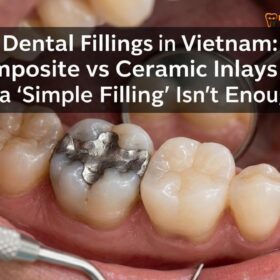
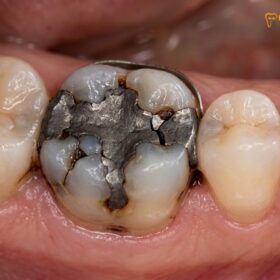
Patients seeking cad cam digital onlays vietnam benefit directly from this conservative philosophy. Unlike full crowns, which necessitate a 360-degree reduction of the tooth’s circumference, dental inlays and dental onlays only replace the compromised tissue. This is particularly crucial when addressing the failure of old restorations, such as during a silver filling replacement. Large amalgam fillings often cause micro-fractures in the surrounding enamel over time due to thermal expansion and contraction. When these old fillings are removed, the remaining tooth structure is often too weak to support a new direct composite filling, as large composites are prone to polymerization shrinkage, which can pull away from the cavity walls and lead to microleakage.[1]
By utilizing digital workflows, clinicians can design porcelain overlays and partial crowns that act as structural reinforcements. These conservative restorations distribute occlusal forces evenly across the remaining tooth, preventing catastrophic fractures while maintaining the tooth’s natural vitality. The integration of digital technology ensures that the transition from diagnosis to final restoration is seamless, highly predictable, and biologically respectful.
Intraoral Scanning: No More Messy Molds
Modern intraoral scanners capture exact 3D topographical data of the prepared tooth, eliminating the discomfort and distortion associated with traditional silicone impressions.
The foundation of any successful CAD/CAM restoration lies in the accuracy of the initial data capture. Historically, dentists relied on elastomeric impression materials to create physical molds of the patient’s teeth. This process was notoriously uncomfortable, often triggering severe gag reflexes, and was susceptible to numerous clinical errors, including air bubbles, material shrinkage, and distortion during transport to the dental laboratory.
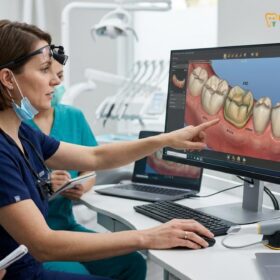
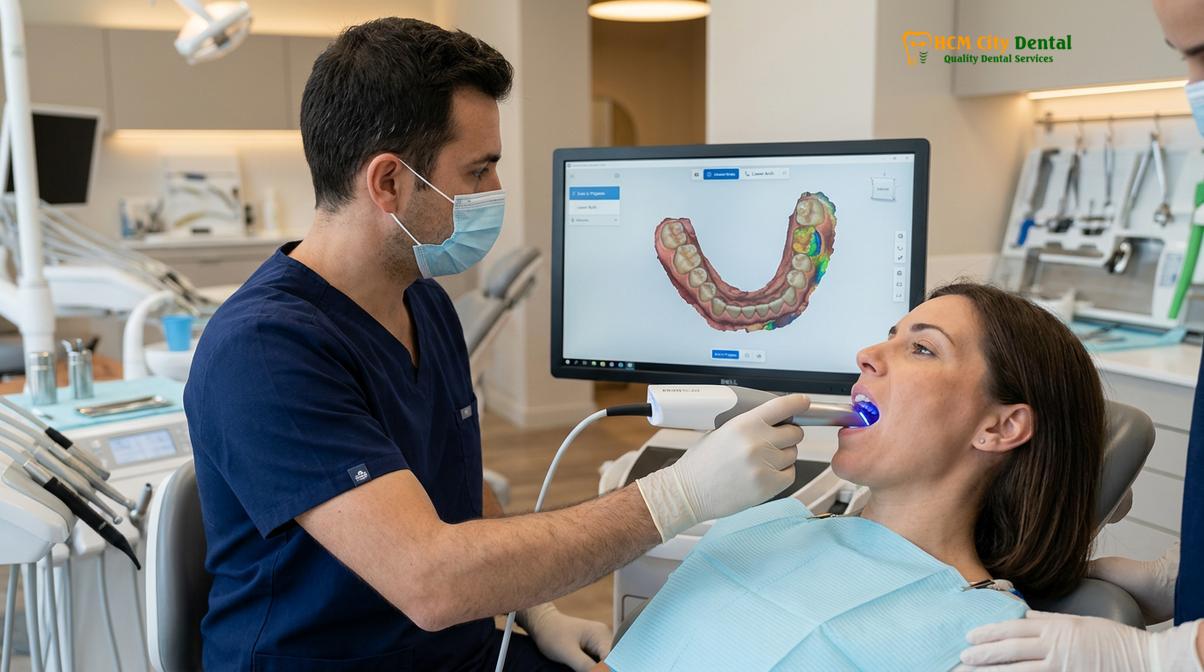
Today, the implementation of intraoral scanning has completely transformed this phase of treatment. High-performance devices utilize advanced optical technology, such as confocal microscopy and optical triangulation, to capture thousands of images per second. These images are instantly stitched together by powerful software to generate a highly detailed, full-color 3D digital impression of the dental arches.[2]
“The transition from analog impressions to digital intraoral scanning not only dramatically improves patient comfort but also provides clinicians with an unparalleled level of microscopic accuracy, ensuring that the final milled restoration fits with absolute precision.”
During the preparation phase, the clinician carefully shapes the tooth, ensuring smooth internal line angles and clear margins. The intraoral scanner is then gently guided over the prepared tooth, the adjacent teeth, and the opposing arch. The software also captures the patient’s dynamic bite alignment, recording exactly how the upper and lower teeth interact. This digital data is immediately available for review on a high-definition monitor, allowing the dentist to magnify the preparation, verify the clarity of the margins, and make any necessary micro-adjustments before the design phase begins.
CAD Software: Custom Designing Your Onlay
Advanced 3D computer design software enables the precise virtual modeling of restorations, ensuring optimal occlusal alignment and ideal cavity outline form.
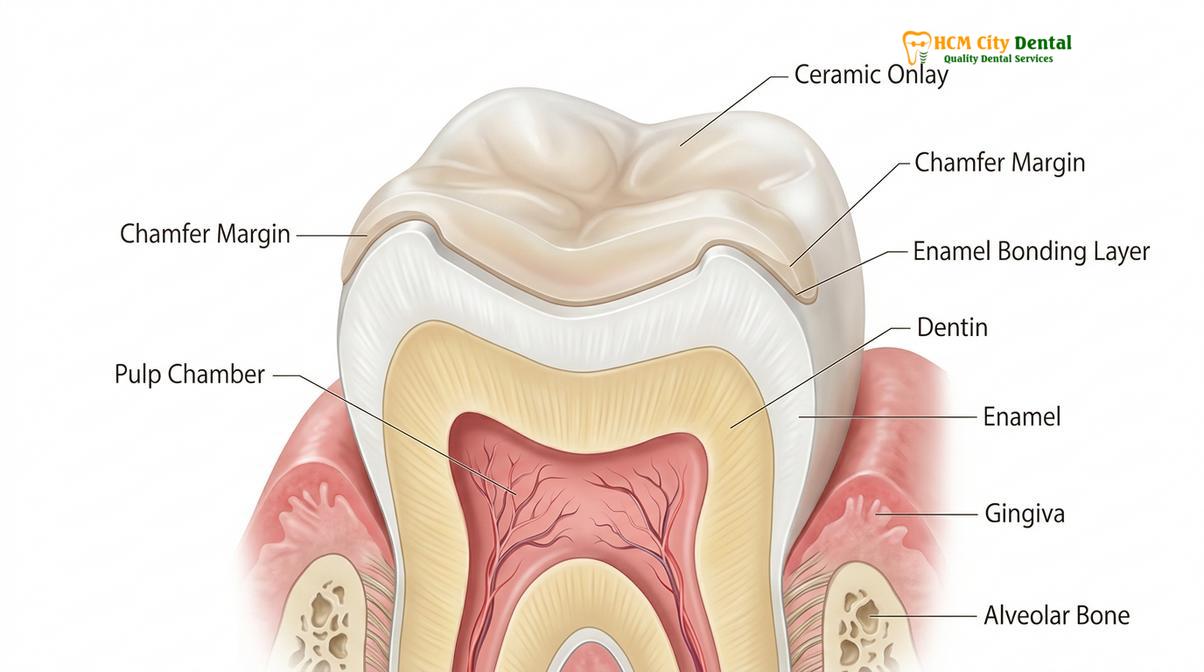
Once the digital impression is captured, the data is imported into sophisticated CAD (Computer-Aided Design) software. This is where the true artistry and engineering of modern dentistry intersect. The 3D computer design process allows the clinician or specialized dental technician to virtually construct the missing portion of the tooth with mathematical precision. The software analyzes the surrounding anatomy, the opposing dentition, and the specific cavity outline form to propose an initial design.
Dr. Nguyen Van Cuong, a leading expert in restorative dentistry, emphasizes the importance of digital occlusal analysis during this phase. He notes that designing an onlay requires engineering a functional anatomical surface that harmonizes perfectly with the patient’s natural bite. His meticulous approach to digital modeling ensures long-term biomechanical stability and optimal periodontal health for every patient.
The design phase is critical for ensuring the long-term success of the restoration. The software allows the operator to meticulously define the restoration’s boundaries, ensuring that the virtual model perfectly adapts to the chamfer margins prepared by the dentist. Furthermore, the CAD program calculates the exact thickness of the ceramic material required to withstand heavy chewing forces, alerting the designer if any areas are too thin and prone to fracture. This meticulous attention to detail ensures that the final restoration will not only look like a natural tooth but will also function flawlessly, preventing food impaction.[3]
CAM Milling: Precision Fabrication of Ceramic Blocks
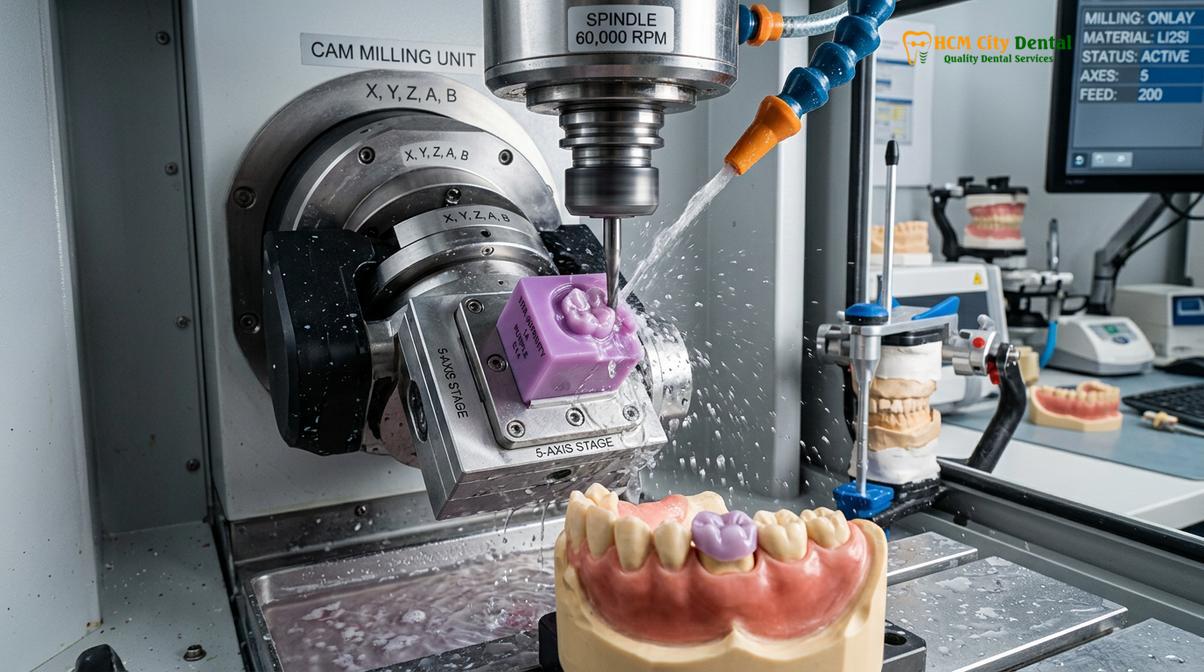
Computer-aided manufacturing translates digital designs into physical restorations by milling high-strength ceramic blocks with microscopic accuracy.
Following the completion of the 3D design, the digital file is transmitted to a CAM (Computer-Aided Manufacturing) milling unit. This seamless dental lab connection is a hallmark of the modern digital workflow. The milling machine utilizes highly precise, multi-axis diamond burs to carve the restoration out of a solid, industrially manufactured block of ceramic. Because these blocks are fabricated under optimized factory conditions, they possess a homogeneous structure, free from the microscopic internal flaws and porosities that can occur in hand-layered porcelain.
Material selection is a paramount consideration in this phase. The choice of ceramic depends on the specific clinical requirements of the tooth being restored:
| Material Type | Clinical Indications | Key Characteristics |
|---|---|---|
| Lithium Disilicate | Anterior teeth, premolars, aesthetic zones | Exceptional translucency, mimics natural enamel, high bond strength, excellent flexural strength. |
| High-Translucency Zirconia | Molars, heavy bite forces, bruxism patients | Extreme durability, highly resistant to fracture, massive flexural strength, opaque core. |
| Hybrid Ceramic | Small inlays, stress-absorbing areas | Blends ceramic strength with resin elasticity, excellent milling properties, less abrasive to opposing teeth. |
Both lithium disilicate and zirconia offer exceptional biocompatibility. Being entirely metal-free, these materials eliminate the risk of galvanic toxicity, allergic reactions, and the unsightly gray margins often associated with older porcelain-fused-to-metal crowns. Once the CAM milling is complete, the restoration is carefully removed from the machine, polished, and often placed in a specialized ceramic furnace for crystallization or sintering.
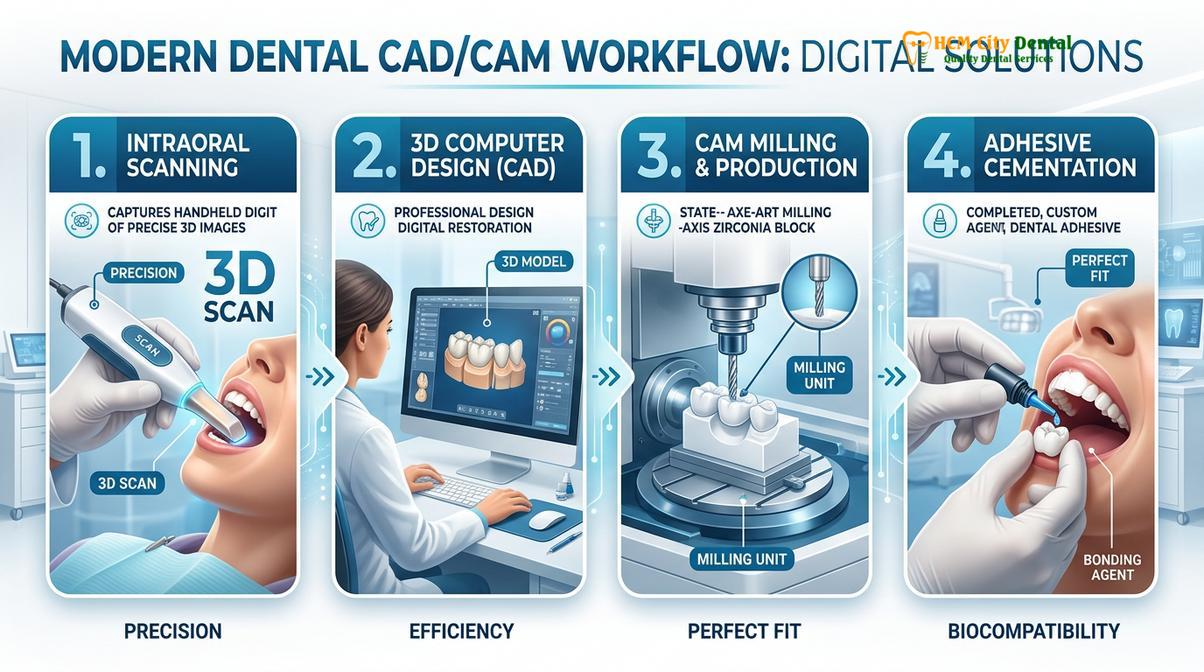
Fit and Sealing: Preventing Recurrent Decay
A flawless marginal seal achieved through strict enamel bonding protocols prevents bacterial microleakage and ensures the long-term success of the restoration.
The ultimate success of CAD/CAM digital onlays relies heavily on the clinical execution of the final cementation phase. Unlike traditional metal crowns that rely on mechanical retention and friction to stay in place, modern ceramic restorations are chemically fused to the tooth structure. This requires meticulous isolation and the strict adherence to advanced enamel bonding protocols.
Before the restoration is permanently affixed, the dentist will perform a try-in to verify the fit, the interproximal contacts, and the occlusal alignment. Because of the precision of the CAD/CAM milling process, the internal adaptation of the onlay to the prepared tooth is usually flawless. Once the fit is confirmed, the internal surface of the ceramic restoration is treated to create a highly reactive surface for the adhesive resin.
“The integrity of the resin-adhesive bond is the most critical factor in preventing microleakage; a perfectly sealed margin acts as an impenetrable barrier against the bacteria responsible for secondary decay.”
Simultaneously, the tooth structure is prepared. The enamel and dentin are etched, thoroughly rinsed, and coated with a high-performance dentin bonding agent. A dual-cure resin-adhesive cement is then applied, and the restoration is carefully seated into the cavity. The dentist meticulously removes any excess cement before using a specialized curing light to polymerize the resin, effectively welding the ceramic to the tooth.[4]
When to Consult a Specialist for Digital Onlays
Identifying the right time to seek professional restorative care can prevent minor dental issues from escalating into severe structural failures.
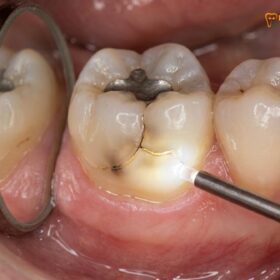
Patients should consider consulting a restorative specialist if they experience symptoms such as sharp pain when biting down, heightened sensitivity to hot or cold temperatures, or if they notice visible cracks in their existing fillings. These are often early indicators that a tooth’s structural integrity has been compromised. Delaying treatment can lead to the propagation of micro-fractures, eventually resulting in a split tooth that may require extraction or root canal therapy.
Furthermore, individuals with large, aging amalgam fillings should have them evaluated periodically. Over time, these metal fillings can expand and contract, placing immense stress on the surrounding enamel. According to the Vietnam Ministry of Health (MOH) guidelines on conservative restorative dentistry, transitioning from failing direct restorations to precision-milled indirect restorations like digital onlays is a highly recommended protocol for preserving long-term dental function and preventing catastrophic tooth loss.[5]
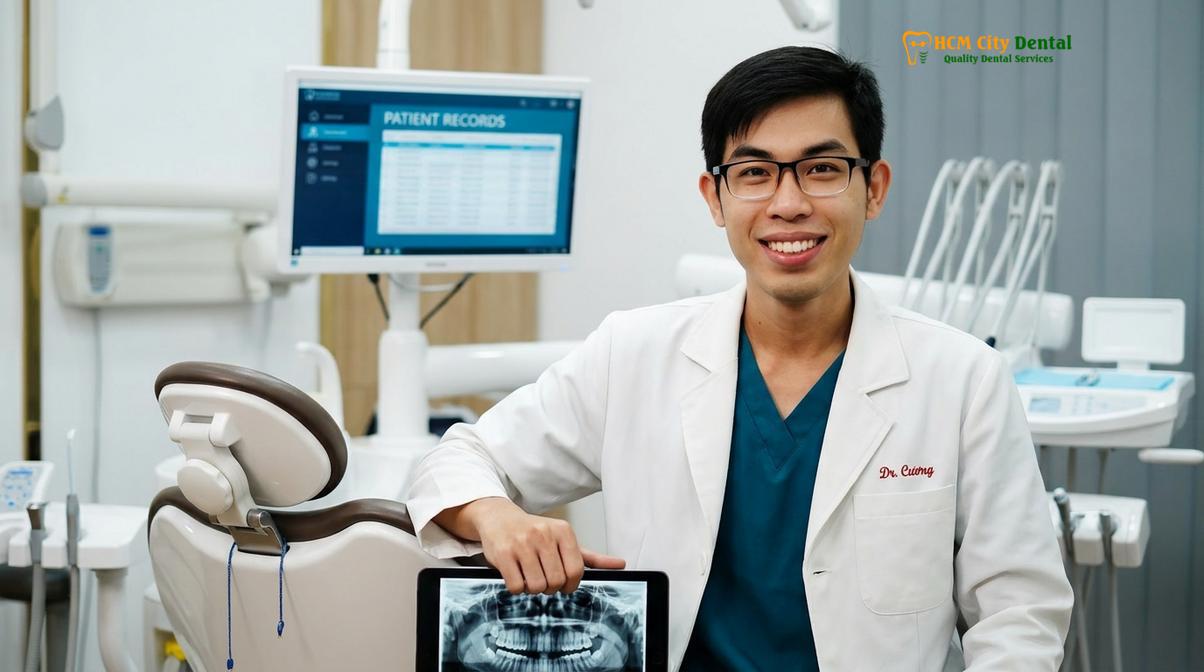
The Clinical Turnaround at HCMC Dental
Combining top-tier digital technology with transparent pricing and global warranty support ensures a seamless and highly successful treatment experience for international patients.
For international patients seeking high-quality restorative care, navigating the options for a cad cam dental onlay saigon can be overwhelming. However, premier facilities like HCMC Dental Clinic in Ho Chi Minh City have streamlined this process, offering world-class digital dentistry combined with exceptional patient care and transparent pricing structures.
Clinical Case Example:
A 45-year-old international patient visited HCMC Dental Clinic (Ho Chi Minh City) presenting with a fractured mesio-occlusal-distal (MOD) amalgam filling on a lower first molar. Traditional protocols might have dictated a full crown, requiring aggressive tooth reduction. Instead, the clinical team utilized an advanced intraoral scanner to capture the defect. A custom digital onlay was designed using CAD software to preserve the remaining buccal and lingual cusps. The restoration was milled, crystallized, and adhesively bonded, restoring the tooth to full function and natural aesthetics while preserving over 60% of the original healthy tooth structure.
Understanding the financial considerations of international patients, HCMC Dental Clinic offers a highly competitive and transparent pricing structure. Patients who utilize the WhatsApp pre-booking system receive a significant 40% discount on advanced restorative treatments. The pricing parameters are structured as follows:
- Inlay / Onlay (Lab-made ceramic): Walk-in price is approximately $385 (10.0M VND). With the WhatsApp pre-booking discount, the cost is From $231 (6.0M VND).
- Overlay / Partial Crown: Walk-in price is approximately $446 (11.6M VND). With the WhatsApp pre-booking discount, the cost is From $269 (7.0M VND).
Beyond the immediate clinical procedure, long-term peace of mind is paramount. The clinical team at HCMC Dental Clinic, Ho Chi Minh City, ensures that every patient receives comprehensive post-operative instructions and ongoing support. If you are experiencing symptoms of a failing filling or a cracked tooth, do not wait for the damage to worsen. Contact our specialists today to learn more about how Inlays & Onlays can restore your smile with unparalleled precision and durability.
Frequently Asked Questions
What is CAD/CAM dentistry?
CAD/CAM dentistry refers to Computer-Aided Design and Computer-Aided Manufacturing technologies used to design and mill custom dental restorations. This digital workflow allows clinicians to create highly precise inlays, onlays, and crowns from solid ceramic blocks, ensuring superior marginal fit and structural integrity compared to traditional handmade methods.
How accurate are digital impressions?
Digital impressions captured by modern intraoral scanners are exceptionally accurate, often measuring within microns of the actual tooth structure. By eliminating the physical distortion, shrinkage, and air bubbles associated with traditional silicone impression materials, optical scans provide a flawless 3D foundation for the fabrication of precision-fitting dental restorations.
Are digital onlays stronger than traditional ones?
Yes, digital onlays milled from monolithic ceramic blocks are generally stronger and more durable than traditional layered restorations or large composite fillings. Materials like lithium disilicate and high-translucency zirconia offer immense flexural strength, resisting occlusal wear while preventing the polymerization shrinkage commonly seen in direct resin applications.
How long does digital milling take?
The actual CAM milling process for a single ceramic onlay typically takes between 10 to 20 minutes, depending on the complexity of the anatomy and the specific material used. Following the milling phase, the restoration undergoes a brief crystallization or sintering process in a specialized furnace to achieve its final strength and aesthetic properties.
Is the digital onlay procedure painful?
The digital onlay procedure is highly comfortable and performed under local anesthesia, ensuring a virtually pain-free experience. Furthermore, the use of optical intraoral scanners eliminates the gag reflex and discomfort associated with traditional impression trays, making the entire diagnostic and preparatory phase much more pleasant for the patient.
References
- Journal of Prosthodontic Research. Marginal adaptation of CAD/CAM ceramic restorations.
- International Journal of Computerized Dentistry. Accuracy of intraoral scanners in clinical practice.
- Journal of Esthetic and Restorative Dentistry. Clinical performance of lithium disilicate onlays.
- Journal of Dentistry. Bonding protocols for CAD/CAM indirect restorations.
- Vietnam Ministry of Health (MOH). National guidelines on conservative restorative dentistry and digital workflows.