Lingual braces are advanced orthodontic devices attached to the back (lingual) surfaces of teeth, offering complete invisibility. While they provide excellent aesthetic benefits and precise biomechanical control, they require a temporary adaptation period for speech and tongue comfort, and typically involve a higher financial investment.
Clinical Summary:
Lingual orthodontics represents a highly specialized branch of dental alignment where brackets and wires are bonded to the interior surfaces of the dental arch. This approach provides the robust, continuous biomechanical force of traditional fixed appliances while remaining entirely hidden from view. The fabrication process relies heavily on advanced CAD/CAM technology to create custom-milled brackets that perfectly adapt to the unique lingual morphology of each tooth. While the aesthetic advantages are unparalleled, prospective patients must carefully weigh the pros and cons, particularly the initial period of phonetic adaptation, potential tongue irritation, and the rigorous oral hygiene protocols required to maintain periodontal health during treatment.
Key Takeaways:
- Bonded to the inner tooth surfaces, providing a completely hidden orthodontic solution.
- Utilizes advanced digital scanning and CAD/CAM technology for custom bracket fabrication.
- Requires a temporary adaptation period for speech articulation and tongue comfort.
- Demands meticulous, specialized oral hygiene routines due to reduced direct visibility.
- Offers precise, continuous biomechanical control capable of correcting complex malocclusions.
What are Lingual Braces? Hidden Behind Your Teeth
Lingual braces function identically to traditional fixed appliances but are bonded to the inner surfaces of the teeth, making them virtually undetectable from the outside while providing continuous orthodontic force. When evaluating the overall pros and cons of braces, understanding lingual braces pros and cons helps patients choose between complete invisibility and standard buccal options. When evaluating the overall pros and cons of braces, understanding lingual braces pros and cons helps patients choose between complete invisibility and standard buccal options.
Orthodontic treatment has evolved significantly, moving beyond the standard metal brackets placed on the facial (front) surfaces of the teeth. Lingual braces represent a sophisticated alternative designed specifically for patients who require comprehensive tooth movement but desire a completely discreet appearance. By utilizing the lingual surfaces—the side of the teeth facing the tongue—these appliances offer a unique combination of biomechanical efficiency and aesthetic discretion. The concept of placing brackets on the inside of the teeth is not entirely new, but recent advancements in digital dentistry have transformed it into a highly predictable and comfortable treatment modality.[1]
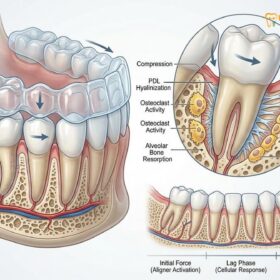
The biomechanics of lingual orthodontics differ subtly from traditional buccal (outside) braces. Because the brackets are placed closer to the center of resistance of the tooth, the force vectors applied during treatment can be highly efficient, particularly for specific movements such as intrusion of anterior teeth or expansion of the dental arch. However, the interbracket distance—the space between adjacent brackets—is significantly shorter on the lingual side, especially in the lower anterior region. This requires the use of highly resilient, custom-bent archwires to deliver light, continuous forces without causing excessive friction or binding.
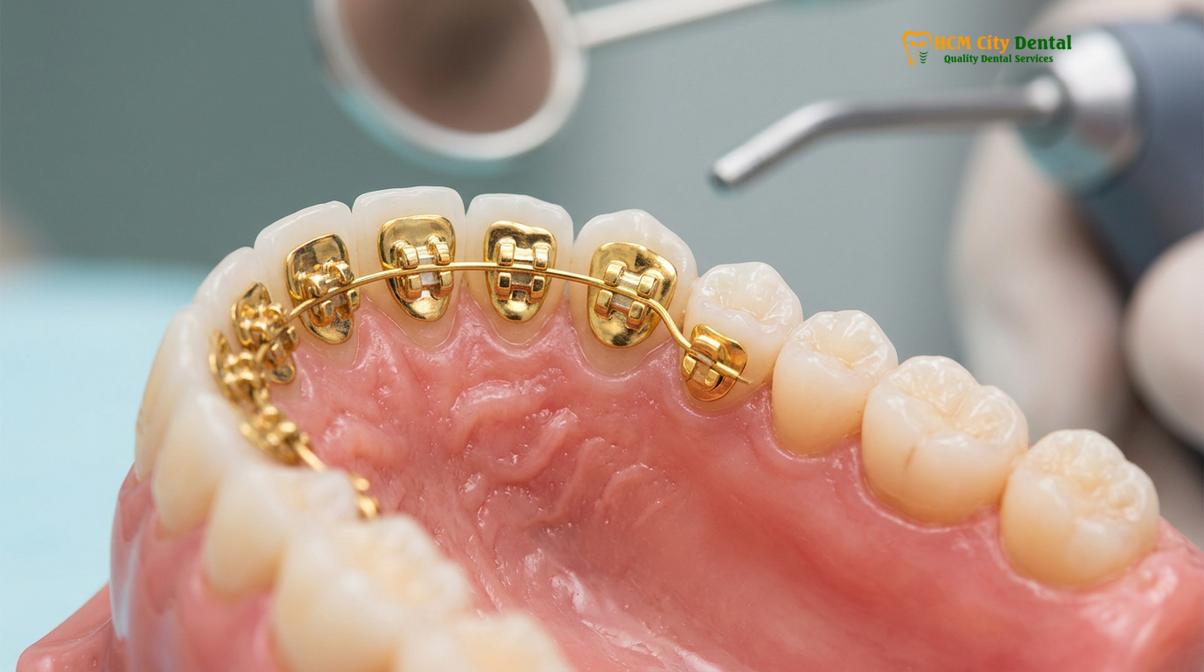
From a clinical perspective, the application of invisible braces behind teeth requires specialized training and meticulous technique. The lingual surfaces of teeth are highly variable in their anatomy, featuring prominent ridges, deep fossae, and varying degrees of inclination. Unlike the relatively flat facial surfaces, the inner contours demand brackets that are custom-fitted to each specific tooth to ensure accurate expression of torque, tip, and rotation. When a patient undergoes this treatment, the orthodontist must carefully manage these unique biomechanical variables to achieve the desired occlusal outcome. For a comprehensive overview of how these systems integrate into broader treatment plans, patients can explore our dedicated guide to Orthodontics.
Dr. Nguyen Van Cuong emphasizes that the success of lingual orthodontics relies heavily on the initial diagnostic phase. “The precision required for lingual bracket placement leaves no room for error,” notes Dr. Cuong. “We must account for the patient’s specific bite relationship, ensuring that the upper teeth do not prematurely contact and dislodge the lower lingual brackets during normal function.” This careful planning is what allows lingual systems to effectively treat a wide range of malocclusions, from simple crowding to complex surgical cases, without compromising the patient’s outward appearance.
The Aesthetic Advantage: True Invisibility for Professionals
By hiding the orthodontic hardware behind the dental arch, lingual braces offer an uncompromised aesthetic solution for adults and professionals who require discreet treatment without sacrificing clinical efficacy.
One of the primary barriers to orthodontic treatment for adults is the social and professional stigma often associated with visible metal or ceramic braces. Many adults, particularly those in public-facing roles, executive positions, or the entertainment industry, feel that traditional braces may detract from their professional image. Lingual braces directly address this concern by providing true invisibility. Because the appliances are bonded to the lingual surfaces, patients can speak, smile, and laugh without revealing any signs of ongoing orthodontic treatment.[2]
This aesthetic advantage goes beyond mere vanity; it has profound psychological benefits. Patients who might otherwise decline necessary orthodontic correction due to aesthetic concerns are empowered to achieve optimal oral health and function. The confidence to interact naturally during the months or years of treatment is a significant factor in patient satisfaction. In the realm of aesthetic dentistry Saigon, the demand for such uncompromised solutions continues to rise as more adults seek to enhance their smiles without disrupting their daily lives.
“The psychological relief of undergoing complex orthodontic correction without the world knowing is immeasurable. Lingual braces allow adult patients to maintain their professional presence and self-esteem throughout the entirety of their treatment journey, removing the most significant barrier to achieving a healthy bite.”
Furthermore, lingual braces eliminate the risk of visible decalcification marks (white spot lesions) on the front of the teeth. In traditional orthodontics, if a patient struggles with oral hygiene, plaque accumulation around the brackets can lead to permanent enamel demineralization. While hygiene remains critical with lingual systems, any potential decalcification that might occur is hidden on the back of the teeth, preserving the pristine appearance of the facial enamel. This makes lingual braces an excellent choice for patients who want to ensure that their post-treatment smile is both straight and free of visible blemishes.
Speech Adaptation and Tongue Comfort: What to Expect
Because the brackets occupy space near the tongue, patients typically experience a temporary adjustment period involving mild speech alterations and localized tongue sensitivity that resolves as neuroplasticity occurs. As the tongue adjusts to the back-facing brackets, patients should brace for impact regarding initial speech changes and mild soft-tissue soreness during the first week. As the tongue adjusts to the back-facing brackets, patients should brace for impact regarding initial speech changes and mild soft-tissue soreness during the first week.
While the aesthetic benefits of lingual braces are clear, prospective patients must be fully informed about the initial adaptation phase. The tongue is a highly sensitive and dynamic organ that rests against the lingual surfaces of the teeth and the palate. When brackets and wires are introduced into this space, the tongue’s resting posture and its movement during speech and swallowing are temporarily disrupted. This disruption is the primary source of the initial challenges associated with lingual orthodontics.[3]
Speech alteration, commonly manifesting as a slight lisp, is the most frequently reported side effect during the first few weeks of treatment. Sibilant sounds—such as ‘s’, ‘z’, ‘sh’, and ‘ch’—require the tongue to articulate precisely against the back of the upper incisors. The presence of brackets alters the airflow and the tactile feedback the tongue relies on to produce these sounds. However, the human brain is remarkably adaptable. Through neuroplasticity, the tongue gradually learns to navigate the new spatial boundaries, and speech typically returns to normal within two to four weeks. Reading aloud and practicing enunciation can significantly accelerate this adaptation process.

Tongue irritation is another common concern. The constant friction between the soft tissues of the tongue and the metallic components of the braces can lead to soreness, redness, or the formation of minor ulcerations. This tongue irritation orthodontics phenomenon is most pronounced during the first week after placement and following subsequent wire adjustments. To manage this, orthodontists provide specialized dental wax or silicone barriers that can be applied over the brackets to create a smooth surface, allowing the tongue to heal and develop a natural tolerance (a mild, unnoticeable callusing of the mucosa).
Clinical Advisory on Tongue Comfort: During the first 7 to 14 days of lingual brace wear, patients should proactively apply orthodontic wax to the brackets before severe irritation develops. Rinsing with warm salt water and avoiding highly acidic or spicy foods can also help soothe the tongue mucosa as it adapts to the new appliances.
Modern lingual systems have made significant strides in improving patient comfort. The profile of the brackets has been dramatically reduced, and the contours have been smoothed to minimize sharp edges. Custom-milled brackets, in particular, are designed to sit as flush against the tooth surface as possible, maximizing the available space for the tongue. Despite these advancements, a commitment to the initial adaptation period is essential for anyone considering this treatment modality.
Custom Bracket Fabrication: The Lab and Digital Process
Modern lingual systems utilize advanced CAD/CAM technology and robotic wire bending to create highly personalized brackets that perfectly match the unique contours of each individual tooth. Premium custom appliances like Incognito lingual braces are fabricated from gold alloy, which naturally increases the Incognito braces cost compared to standard non-custom systems. Premium custom appliances like Incognito lingual braces are fabricated from gold alloy, which naturally increases the Incognito braces cost compared to standard non-custom systems.
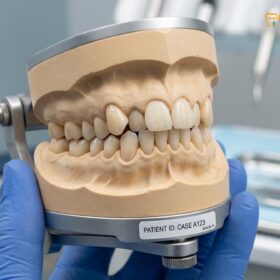
The fabrication of lingual braces is a marvel of modern digital dentistry. Unlike traditional buccal brackets, which are often mass-produced with standard prescriptions, lingual brackets must be entirely customized. The lingual surfaces of teeth vary wildly from person to person, and even from tooth to tooth within the same mouth. To achieve precise tooth movement, the bracket base must intimately adapt to this complex anatomy. This requirement has driven the development of sophisticated digital workflows that ensure unparalleled accuracy.[4]
The process begins with a highly accurate digital impression of the patient’s teeth using an intraoral 3D scanner. This digital model is then uploaded into specialized orthodontic software, where the orthodontist plans the exact final position of every tooth—a process often referred to as a digital setup. Once the final occlusion is designed, the software works backward to determine the precise geometry and placement of each bracket required to achieve that result. This level of digital planning allows for a highly predictable treatment outcome.
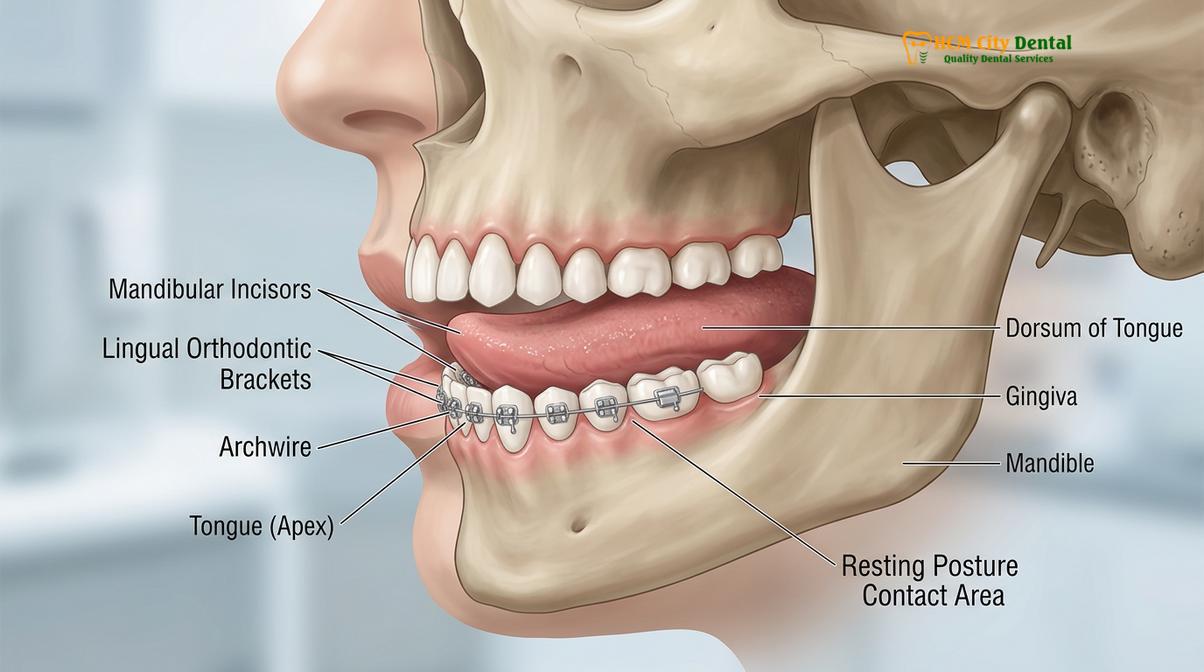
Following the digital design, the custom lingual brackets are fabricated using Computer-Aided Design and Computer-Aided Manufacturing (CAD/CAM) technology. Depending on the specific system used, the brackets may be 3D printed in a castable resin and then cast in a high-noble gold alloy, or they may be directly milled from a solid block of stainless steel or cobalt-chromium. Gold alloys are frequently used in premium systems because they can be cast with extreme precision and are highly biocompatible, reducing the risk of allergic reactions.
The customization extends beyond the brackets to the archwires themselves. Because the interbracket distances are short and the bracket positions are highly individualized, standard pre-formed archwires cannot be used. Instead, robotic wire-bending machines are employed to shape the wires with microscopic precision. These robots bend the wires to incorporate the exact first, second, and third-order bends required to move the teeth into their programmed positions. This integration of digital planning, custom bracket milling, and robotic wire bending makes incognito lingual braces HCMC one of the most technologically advanced treatments available in orthodontics today.
Pros, Cons, and Cost Comparison: Lingual vs. invisalign
While both options offer discreet treatment, lingual braces provide continuous fixed biomechanical control, whereas Invisalign offers removability and easier hygiene at a generally lower cost.
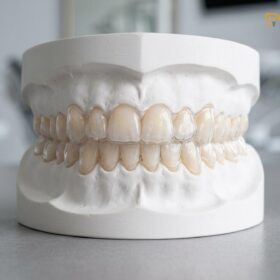
When patients seek invisible orthodontic solutions, the decision typically comes down to lingual braces versus clear aligner therapy (such as Invisalign). Both modalities offer excellent aesthetics, but they operate on fundamentally different biomechanical principles and require different levels of patient compliance. Understanding the pros and cons of each system is crucial for making an informed clinical decision.[5]
Lingual braces are fixed appliances, meaning they are bonded to the teeth and remain in place 24/7. This provides continuous, uninterrupted orthodontic force, which is highly efficient for complex tooth movements, such as severe rotations, vertical discrepancies (deep bites or open bites), and bodily translation of teeth during extraction space closure. The patient does not need to remember to wear them, eliminating the compliance issues often associated with removable aligners. However, the fixed nature of lingual braces makes oral hygiene significantly more challenging. Plaque and calculus can easily accumulate around the brackets, requiring diligent use of water flossers and interdental brushes.
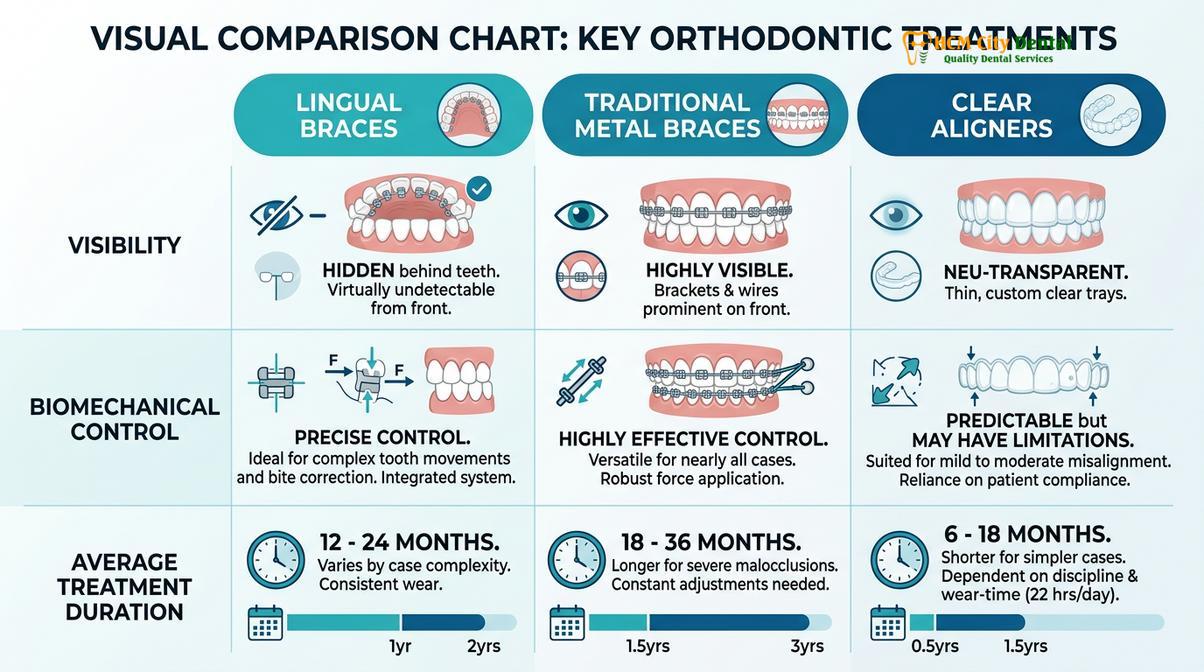
In contrast, clear aligners are removable, allowing patients to eat without restrictions and maintain their normal brushing and flossing routines. This significantly reduces the risk of gingival inflammation and decalcification. However, aligners must be worn for 20 to 22 hours a day to be effective. If a patient lacks the discipline to wear the trays consistently, the treatment will stall. Furthermore, while aligners have improved dramatically, they may still struggle with certain complex biomechanical movements compared to fixed lingual appliances.
| Feature | Lingual Braces | Clear Aligners (Invisalign) | Traditional Metal Braces |
|---|---|---|---|
| Visibility | Completely hidden (behind teeth) | Nearly invisible (clear plastic) | Highly visible (front of teeth) |
| Removability | Fixed (bonded to teeth) | Removable (for eating/cleaning) | Fixed (bonded to teeth) |
| Biomechanical Control | Excellent for complex movements | Good, but relies on compliance | Excellent for all movements |
| Speech Impact | Moderate initial lisp (2-4 weeks) | Mild initial lisp (few days) | Minimal impact |
| Oral Hygiene Difficulty | High (requires specialized tools) | Low (normal brushing/flossing) | Moderate (requires threaders) |
When considering the lingual braces price Vietnam, patients should expect a higher financial investment compared to both traditional braces and clear aligners. The increased cost is a direct reflection of the sophisticated CAD/CAM laboratory fabrication, the use of premium materials (such as gold alloys), and the extended chair time required for the orthodontist to meticulously bond and adjust the appliances in a challenging clinical environment. While the initial cost is higher, many patients find the uncompromised aesthetics and reliable results to be well worth the investment.
When to See an Orthodontist
Determining candidacy for lingual braces requires a comprehensive clinical and radiographic evaluation by a qualified orthodontist. While lingual systems are highly versatile, they are not universally suitable for every patient. Specific anatomical and functional factors must be carefully assessed to ensure the safety and efficacy of the treatment.
One of the primary clinical considerations is the patient’s vertical bite relationship. Patients with a severe deep overbite—where the upper front teeth significantly overlap the lower front teeth—may present a challenge for lingual braces. In a deep bite scenario, the biting edges of the upper incisors may strike the lingual brackets bonded to the lower incisors during normal closure. This premature contact can cause severe discomfort, prevent the back teeth from touching (posterior open bite), and lead to frequent bracket debonding (breakage). In such cases, the orthodontist may need to build up the posterior teeth with temporary composite bite turbos to open the bite and protect the appliances.
Periodontal health is another critical prerequisite. Because lingual braces complicate oral hygiene, patients must have healthy gums and adequate bone support before initiating treatment. Active periodontal disease, severe gingival recession, or a history of poor oral hygiene are significant contraindications. The orthodontist will work closely with a periodontist to ensure the supporting tissues are stable enough to withstand orthodontic forces and the increased plaque retention associated with the brackets.
Clinical Case Review: Complex Adult Alignment
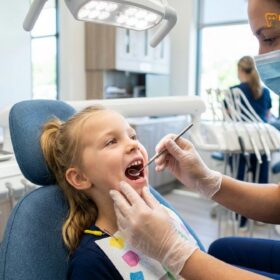
A 34-year-old professional presented to HCMC Dental Clinic in Ho Chi Minh City with moderate lower anterior crowding and a Class II malocclusion. Due to her career in public relations, visible braces were not an option. Dr. Nguyen Van Cuong utilized a custom-milled lingual bracket system to address the crowding and correct the bite relationship. Despite initial speech adaptation challenges lasting three weeks, the patient maintained excellent oral hygiene. The treatment was successfully completed in 22 months, achieving optimal alignment without any visible signs of orthodontic intervention during the process.
Following the active phase of any orthodontic treatment, including lingual braces, the retention phase is absolutely critical to prevent relapse. Teeth have a natural tendency to shift back toward their original positions once the braces are removed. Patients will require custom retainers, which can be removable (like clear Essix retainers or traditional Hawley retainers) or fixed (a thin wire bonded to the lingual surfaces of the anterior teeth). Understanding the long-term commitment to retention is essential.
For patients navigating the post-treatment phase, maintaining the integrity of these retainers is paramount. If a bonded retainer fails, prompt attention is required. Patients can review our clinical guide on repairing a broken fixed retainer to understand the necessary steps. Similarly, if a removable retainer is misplaced, timely replacement is crucial to prevent shifting, as detailed in our guide on replacing a lost retainer. For international patients or expatriates evaluating the long-term financial aspects of orthodontic retention, we provide comprehensive retainer cost comparisons, insights into international orthodontic retention costs, and analyses of long-term retention investments to help you make informed decisions regarding your ongoing dental care.
“The completion of active tooth movement with lingual braces is only the first milestone. The true success of orthodontic treatment is measured by the stability of the results years later, which relies entirely on strict adherence to the prescribed retention protocols.”
If you are considering discreet orthodontic options and want to determine if lingual braces are the right choice for your specific dental anatomy, a personalized consultation is the first step. Advanced diagnostic imaging, including 3D intraoral scanning and cephalometric analysis, will provide the necessary data to formulate a precise, customized treatment plan tailored to your aesthetic and functional goals.
Frequently Asked Questions
How long does it take to speak normally with lingual braces?
Most patients adapt and return to normal speech within two to four weeks after the placement of lingual braces. The tongue gradually adjusts to the new spatial boundaries, and practicing reading aloud can significantly accelerate this phonetic adaptation process. During the initial days, sibilant sounds like ‘s’ and ‘z’ may sound slightly altered, but neuroplasticity allows the brain and tongue to quickly recalibrate articulation patterns.
Are lingual braces harder to clean than regular braces?
Yes, lingual braces require more meticulous oral hygiene because their placement on the back of the teeth reduces direct visibility. Patients must utilize specialized tools like water flossers, interdental brushes, and orthodontic mirrors to effectively remove plaque and prevent gingival inflammation. The area behind the lower front teeth is particularly prone to calculus buildup due to its proximity to the submandibular salivary glands, making diligent daily cleaning essential.
How much do lingual braces cost in Ho Chi Minh City?
The cost of lingual braces in Ho Chi Minh City typically ranges from 80,000,000 VND to 140,000,000 VND, depending on the complexity of the case and the specific custom bracket system used. This investment reflects the advanced laboratory fabrication and specialized clinical expertise required. The use of CAD/CAM technology, robotic wire bending, and premium materials like gold alloys contributes to the higher price point compared to traditional buccal braces.
Can lingual braces fix severe overbites?
Lingual braces are highly effective at correcting severe overbites and complex malocclusions due to their robust biomechanical control. However, patients with extremely deep bites may require bite turbos or temporary bite opening to prevent the upper teeth from shearing off the lower brackets. The continuous force applied by the fixed brackets allows the orthodontist to achieve precise vertical control and intrusion of the anterior teeth.
Do lingual braces take longer than traditional braces?
Treatment duration with lingual braces is generally comparable to traditional buccal braces, typically ranging from 18 to 36 months. In some cases, the highly customized nature of robotically bent lingual wires can even optimize tooth movement and slightly reduce overall treatment time. The exact duration depends heavily on the biological response of the patient’s tissues, the complexity of the initial malocclusion, and strict adherence to oral hygiene protocols.
References
- American Journal of Orthodontics and Dentofacial Orthopedics. Biomechanical considerations and clinical outcomes in lingual orthodontics. (2021).
- Journal of Clinical Orthodontics. Psychological impact and aesthetic perceptions of adult orthodontic appliances. (2020).
- European Journal of Orthodontics. Speech impairment and oral discomfort during the initial phases of lingual orthodontic treatment. (2019).
- International Journal of Computerized Dentistry. CAD/CAM applications and robotic wire bending in modern lingual bracket systems. (2022).
- Angle Orthodontist. Comparative analysis of periodontal health and plaque accumulation: Lingual braces versus clear aligners. (2018).